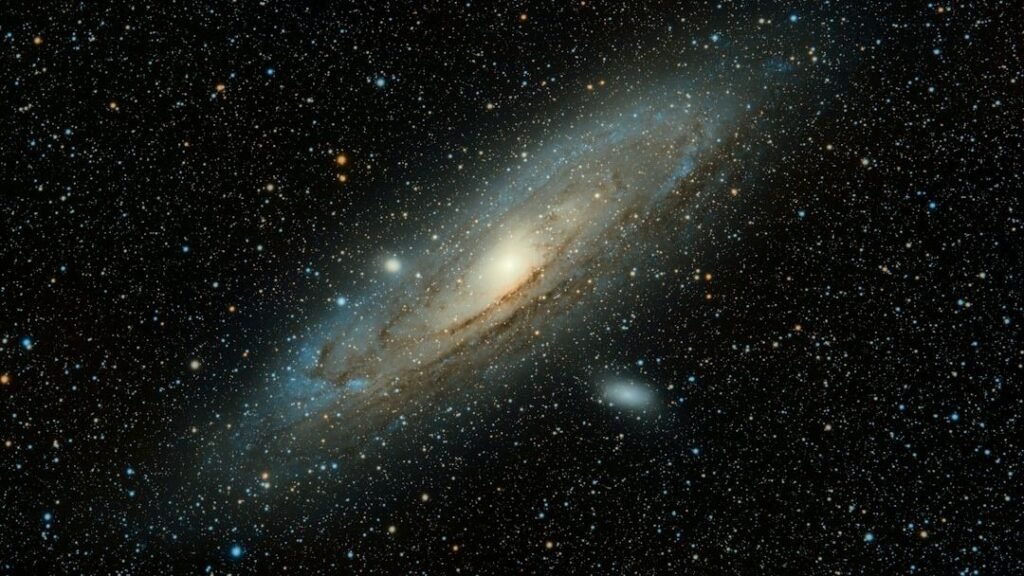

You’ve probably heard that the universe is expanding. It’s getting bigger every single second. That’s not breaking news anymore, right? Still, what many people don’t quite grasp is that how fast this expansion happens and how that speed might change over time could tell us exactly how everything ends. We’re talking about the actual, literal end of existence as we know it. Scientists are now piecing together measurements, theories, and some genuinely unsettling possibilities about what awaits our cosmos.
The observations we’re making today are like reading the universe’s diary, and honestly, the final chapters look pretty wild. From mysterious forces pushing galaxies apart to debates over whether we’ve been measuring things wrong all along, the story of cosmic expansion is turning into one of the most gripping mysteries in modern science. Let’s be real, understanding the universe’s ultimate fate might not change your Monday morning, but it’s still kind of amazing that we can even ask these questions.
Dark Energy Drives the Cosmic Speed-Up
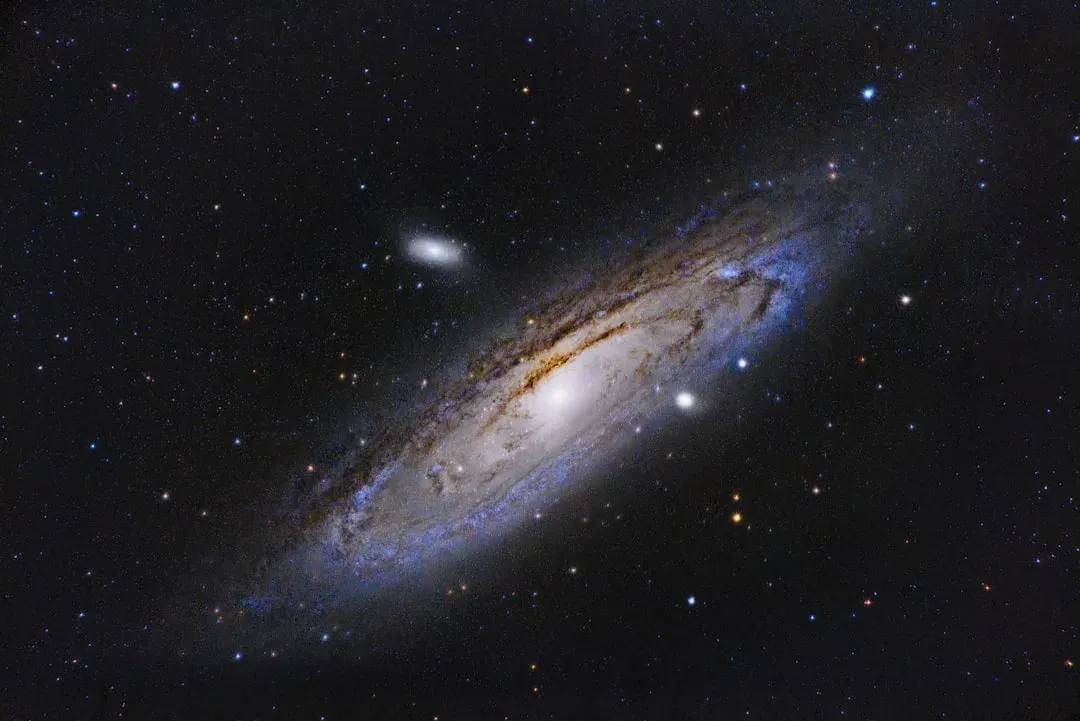
The expansion of the universe isn’t slowing at all but is actually speeding up, faster and faster, propelled by some force we still don’t understand. This discovery, made back in the late 1990s, completely flipped cosmology on its head and earned its discoverers a Nobel Prize. Two independent teams of cosmologists used distant supernovae to discover that the universe’s expansion is accelerating rather than slowing, proposing dark energy as responsible for driving this accelerated expansion. What’s bizarre is that this force acts as a kind of antigravity, pushing things apart instead of pulling them together.
Dark energy dominates the universe, contributing roughly 68 percent of the total energy in the present-day observable universe while dark matter and ordinary matter contribute 27 percent and 5 percent respectively. Think about that for a moment. Nearly everything that makes up reality is completely invisible and fundamentally mysterious to us. We can measure its effects, see what it does to galaxies and light, but we have no direct handle on what it actually is. That’s both humbling and a little unsettling when you consider we’re using it to predict the end of everything.
Heat Death Points to a Cold, Empty Future
The preponderance of evidence to date favors a universe that will continue to expand indefinitely, resulting in the Big Freeze scenario. This is probably the most widely accepted ending among cosmologists today. In this scenario, the universe just keeps expanding and cooling until there’s nothing left but a vast, dark emptiness. Heat Death occurs when the universe reaches a state of maximum entropy, also called thermodynamic equilibrium, dictated by the second law of thermodynamics which states that total entropy must always increase.
Eventually, all the stars will burn out. Eventually, 100 trillion years from now, all star formation will cease, ending the Stelliferous Era. After that, even black holes will evaporate through Hawking radiation. What you’re left with is a universe so spread out and so cold that nothing interesting can ever happen again. No life, no light, no energy flows. Just particles drifting farther and farther apart through infinite darkness. It’s not exactly an uplifting vision, but it’s what the math seems to suggest if dark energy continues behaving the way it does now.
The Big Rip Could Tear Everything Apart
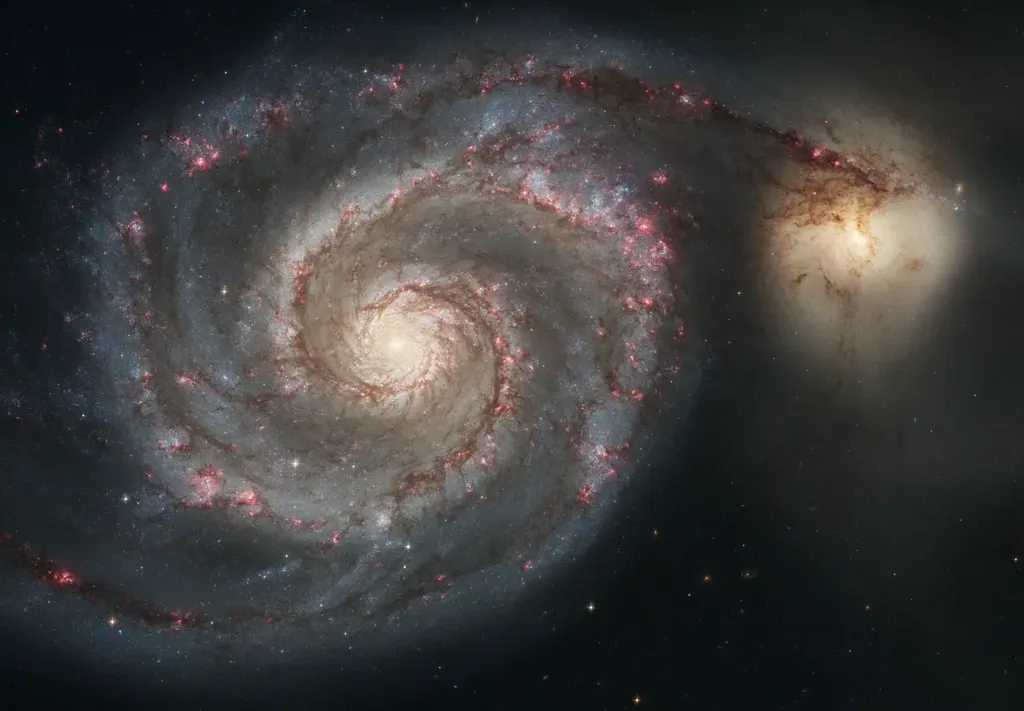
There’s another possibility, though, and it’s considerably more dramatic. The ultimate fate of an open universe with dark energy is either universal heat death or a Big Rip where acceleration becomes so strong that it completely overwhelms gravitational, electromagnetic and strong binding forces. If dark energy isn’t constant but actually gets stronger over time, it could eventually overcome every force holding matter together. Galaxies would be ripped apart first, then solar systems, then planets, then eventually atoms themselves.
In a hypothetical example, the Big Rip would happen approximately 22 billion years from the present, with galaxies separated about 200 million years before, galaxies disintegrating about 60 million years before, and planetary systems becoming unbound about three months before. The scenario requires what physicists call phantom dark energy, a hypothetical form with some pretty implausible properties. Most current measurements suggest we’re not headed for a Big Rip, but the uncertainties are still large enough that it can’t be completely ruled out. That’s the thing about the future of the universe: we’re making educated guesses based on incomplete information.
Recent Findings Suggest Dark Energy Might Be Changing
Here’s where things get really interesting. Latest DESI data release suggests that dark energy, long called a cosmological constant given that astronomers thought it was unchanging, is behaving in unexpected ways and may even be weakening over time. If confirmed, this would be absolutely huge. It would mean that dark energy isn’t some fixed property of space but something dynamic that evolves as the universe ages.
If dark energy continues weakening, eventually it will not be the dominant force in the universe, meaning the universe expansion will stop accelerating and will go at a constant rate or could even stop and collapse back, though these futures would take billions and billions of years to happen. So depending on how dark energy behaves, we could be looking at completely different endings. The universe could keep expanding forever, or it might eventually stop and collapse back in on itself in a Big Crunch. Honestly, it’s hard to say for sure, but scientists are working on narrowing down the possibilities.
The Hubble Tension Creates a Cosmological Puzzle
Scientists call the discrepancy between different measurements of the Hubble Constant the Hubble Tension, and today it remains a mystery. Measurements of how fast the universe is expanding right now don’t agree depending on how you measure them. Late universe techniques using distance ladder methods have converged on a value of approximately 73 kilometers per second per megaparsec, while early universe techniques based on the cosmic microwave background agree on a value near 67.7.
That might not sound like much of a difference, but in cosmology, it’s massive. It could mean there’s something fundamentally wrong with our models of how the universe works. The tension may indicate the presence of exotic dark energy, exotic dark matter, a revision to our understanding of gravity, or the presence of a unique particle or field. Some researchers think we’re on the verge of discovering new physics, while others suspect there are subtle measurement errors we haven’t accounted for yet. Either way, resolving this tension is crucial for understanding where the universe is headed.
Alternative Theories Challenge the Standard Model
Using an extended version of Einstein’s gravity, researchers found that cosmic acceleration can arise naturally from a more general geometry of spacetime. This research, published in early January, suggests we might not need dark energy at all to explain the accelerating expansion. This is an exciting indication that we may be able to explain the accelerated expansion of the universe without dark energy, on the basis of a generalized spacetime geometry.
Meanwhile, other researchers are questioning whether our standard measuring tools have been reliable. If the universe is already decelerating, this will change the ultimate fate of the universe, with a Big Crunch now a possibility rather than a Big Rip. Some studies suggest the measurements we’ve been relying on for decades might have systematic biases we didn’t account for. If that’s true, the whole conversation about the universe’s fate needs to be reconsidered. It’s a reminder that even our most confident scientific conclusions are always provisional, always subject to revision when better data comes along.
Multiple Cosmic Endings Remain Possible
The ultimate fate of the universe depends on its overall shape, how much dark energy it contains and on the equation of state which determines how the dark energy density responds to the expansion. Each possible ending has different implications for what happens to matter, energy, and even time itself. The Big Freeze leaves us with eternal cold darkness. The Big Rip tears spacetime apart. A Big Crunch collapses everything back to a singularity, possibly triggering a new Big Bang.
There are even more exotic possibilities. Cyclic Models propose that the Big Bang was one phase in an infinite loop of expansion and contraction, with the Big Bounce version suggesting the universe avoids the singularity by undergoing a quantum bounce that triggers a new cycle. These scenarios sound almost like science fiction, but they’re based on serious theoretical physics. The truth is, we simply don’t know which of these futures awaits us. What we do know is that the universe’s expansion rate today holds crucial clues.
The Expansion Reveals Our Cosmic Destiny
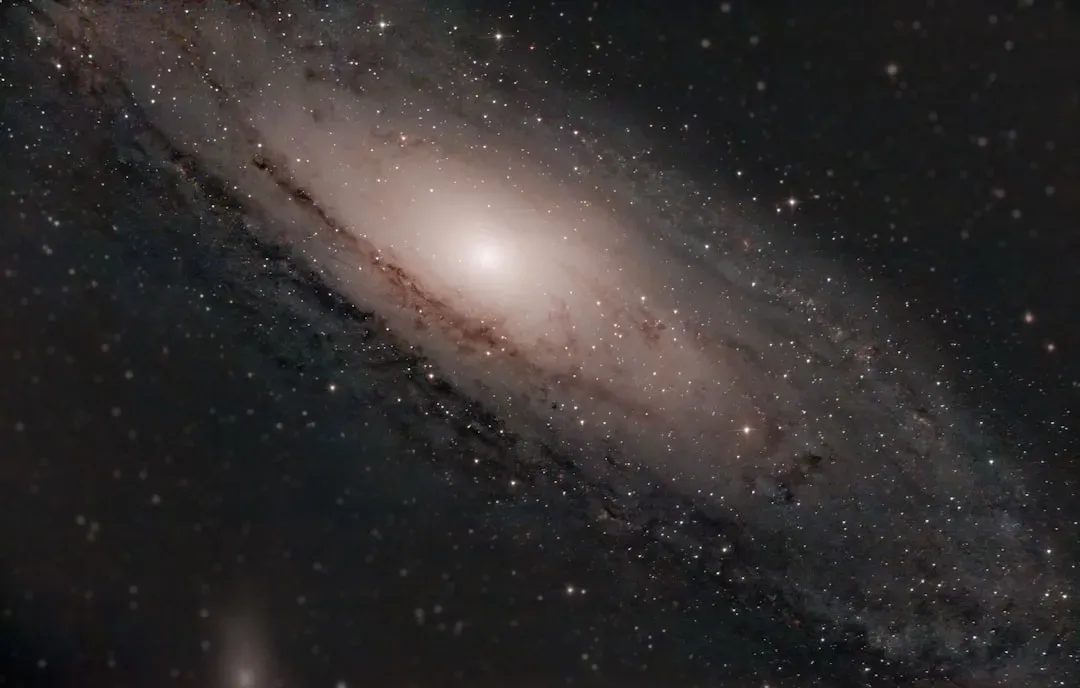
Dark energy, in the form of a cosmological constant, makes up about 70 percent of the universe, causing the expansion rate to speed up. This observation has transformed our entire understanding of cosmic destiny. Before the discovery of accelerating expansion, many scientists thought gravity might eventually win and cause the universe to contract. Now we know that’s almost certainly not happening, at least not in the way people once imagined.
The measurements scientists are making today of galaxy speeds, supernova brightnesses, and the cosmic microwave background are essentially fortune-telling on a universal scale. Given that dark energy makes up about 70 percent of the universe, confirming that it changes over time would mark a profound shift in our understanding of the cosmos’ fate. Every new data point refines our predictions, but also occasionally throws in a curveball that forces us to reconsider everything. That’s what makes this such a compelling area of research. The ultimate fate of literally everything hangs in the balance, and we’re living through the era when humanity is finally gaining the tools to answer these ancient questions.
Conclusion: Watching the Universe Write Its Final Chapter
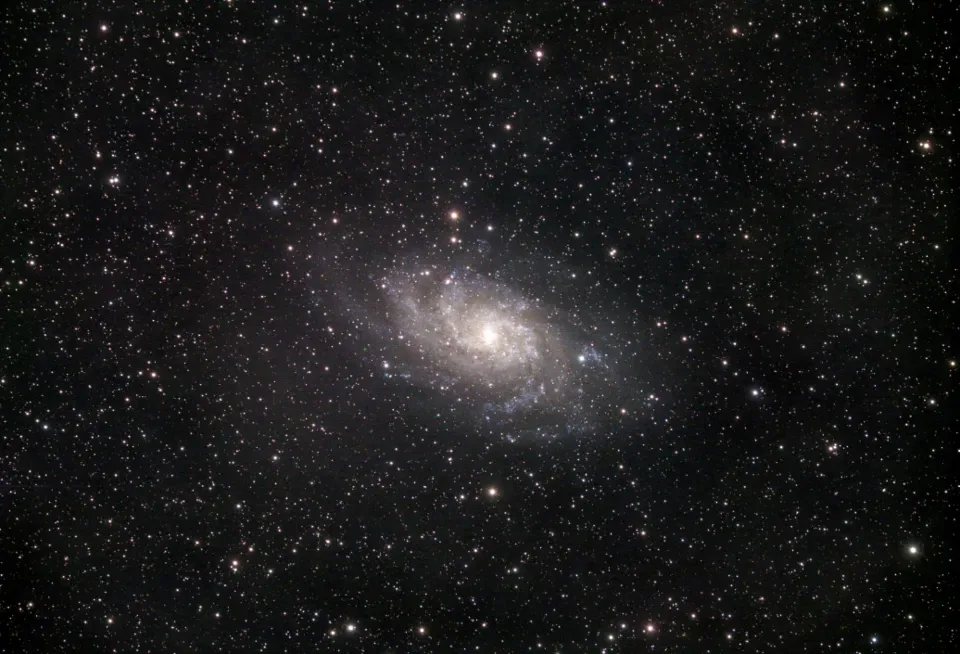
The universe’s expansion isn’t just some abstract concept for textbooks. It’s actively determining how this whole cosmic story ends. Whether we’re headed for an eternal freeze, a violent rip, or something we haven’t even imagined yet depends on forces we’re only beginning to understand. Scientists are making progress, with better telescopes, more precise measurements, and increasingly sophisticated theories. Still, major mysteries remain. The nature of dark energy, the resolution of the Hubble tension, and the exact fate awaiting us all remain tantalizingly out of reach.
What’s remarkable is that we can even ask these questions and make meaningful progress toward answers. A century ago, we didn’t even know other galaxies existed. Now we’re mapping the universe’s expansion history across billions of years and predicting its end trillions of years in the future. The next decade of observations, from instruments like the James Webb Space Telescope and next-generation dark energy surveys, should bring us closer to solving these cosmic mysteries. What do you think the universe’s fate will turn out to be?