
Stand outside on a clear night, look up, and you’re staring into a mystery that cuts right to the bone of what it means to exist: does the universe just keep going forever, or is there some kind of edge, a last frontier where “space” simply runs out? Our telescopes can see astonishingly far, but only out to a kind of shimmering horizon: the observable universe. Beyond that, everything fades into mathematical guesses and physical hunches, and that’s where things get really wild.
In the past decade, cosmology has quietly become one of the most mind-bending areas of science, not because we’ve solved everything, but because we’ve realized just how tiny our cosmic keyhole really is. What lies beyond that keyhole could be more of the same, or it could be something so different that our language barely touches it. Let’s walk right up to that horizon together and push as hard as we can on what we actually know.
The Cosmic Horizon: Why We Can’t See It All
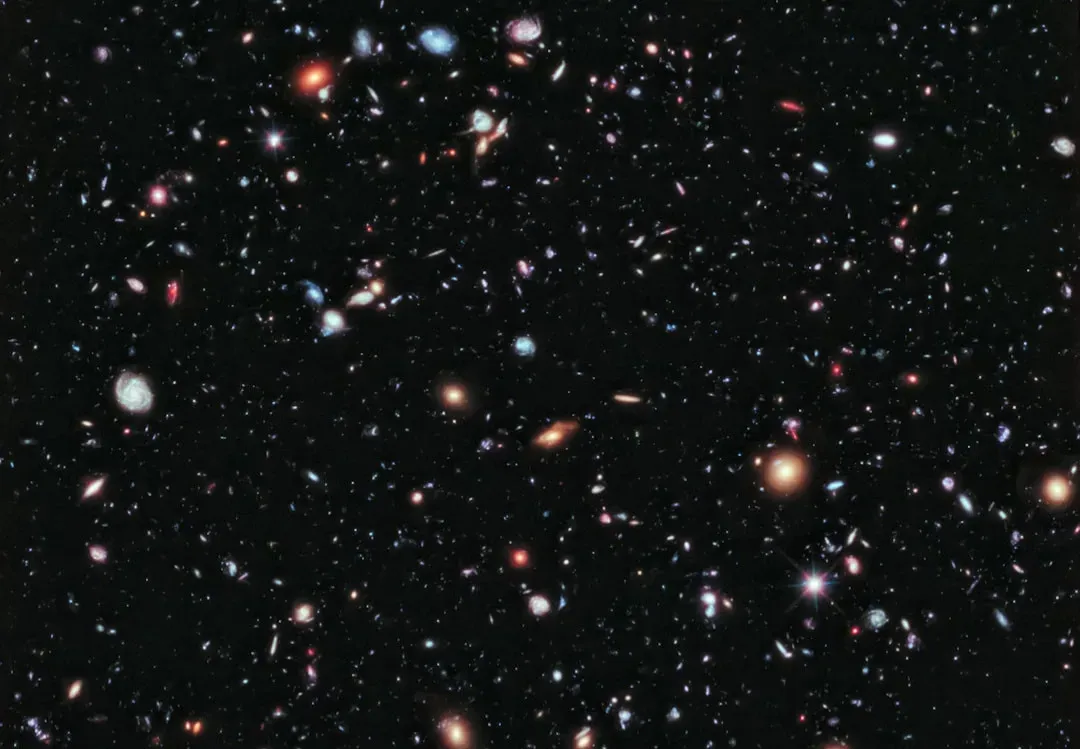
Imagine standing in a dense fog with a flashlight: you can see a glowing circle around you, but you know the world doesn’t stop where your light fades. That glowing circle is like our observable universe. We can see galaxies out to a distance of about forty-six billion light-years in every direction, not because the universe is that old, but because space itself has been stretching while light travels toward us. Anything farther than that is hidden, not by clouds or dust, but by the simple fact that its light has not had enough time to reach us since the Big Bang.
This boundary is called the cosmic horizon, and it’s a hard physical limit, not just a technological one. Even if you built a telescope the size of the Solar System, you still wouldn’t see past it, because the rule is set by the speed of light and the age and expansion of the universe, not by how fancy your lenses are. The strange part is that there’s no wall out there in space; the horizon is more like a moving deadline in time. As the universe ages, more distant regions come into view, and yet other regions recede away so quickly that they slip forever beyond what we can reach, even in principle.
Is There an Edge in Space, or Just an Edge in What We Can See?
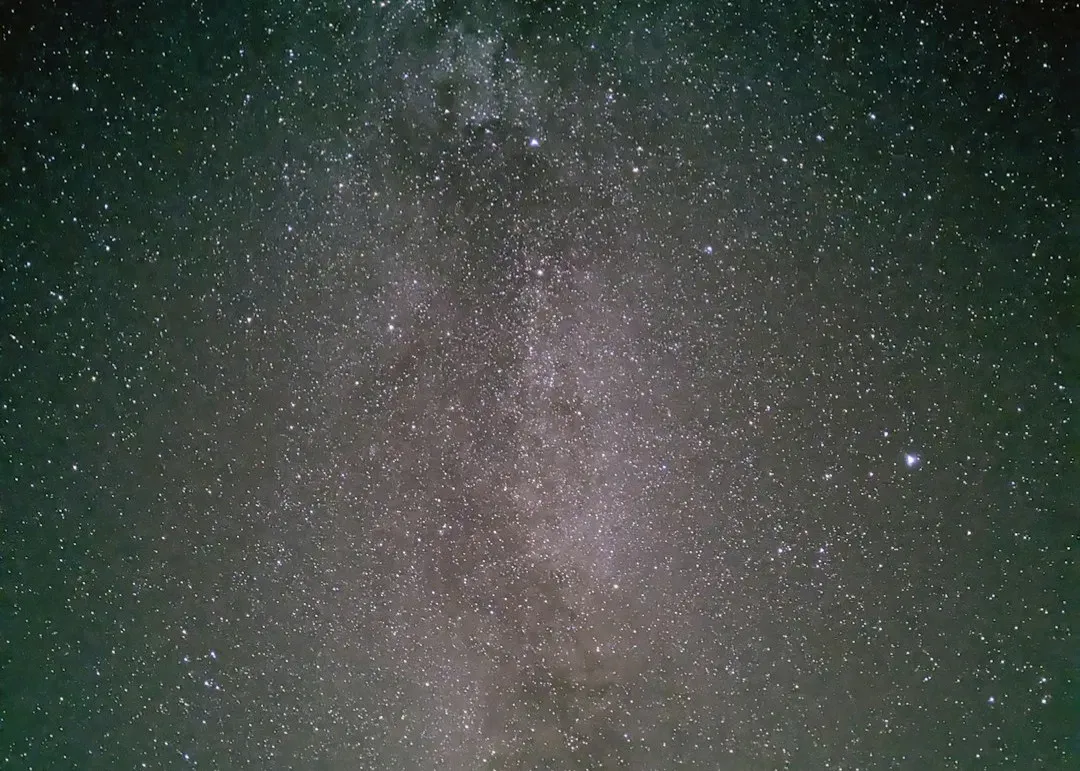
When people ask about the “edge of the universe,” they often picture some kind of invisible barrier, like the end of a video game map where your character suddenly hits an invisible wall. Current cosmology points to something very different: space itself, as far as our best models go, has no edge in the usual sense. It’s more like the surface of the Earth; if you walk far enough in any direction, you never hit a cliff where the planet stops, you just keep going, even though the surface is finite and curved. In some models, the universe might be like that: finite in volume but without any boundary to crash into.
Other models allow for an infinite universe, extending without limit in all directions, filled with matter and energy beyond our view that simply continue more or less the same way. In that scenario, our observable universe is a tiny, bubble-sized patch inside an endless cosmic ocean. Here’s the unsettling part: you can’t stand outside and look at the whole thing. We only ever see from one vantage point, and all our talk of edges and infinities comes from mathematics that fits the data we do have, not from some god’s-eye snapshot of the entire cosmos laid out on a table.
Beyond the Horizon: More of the Same, or Something Completely Different?
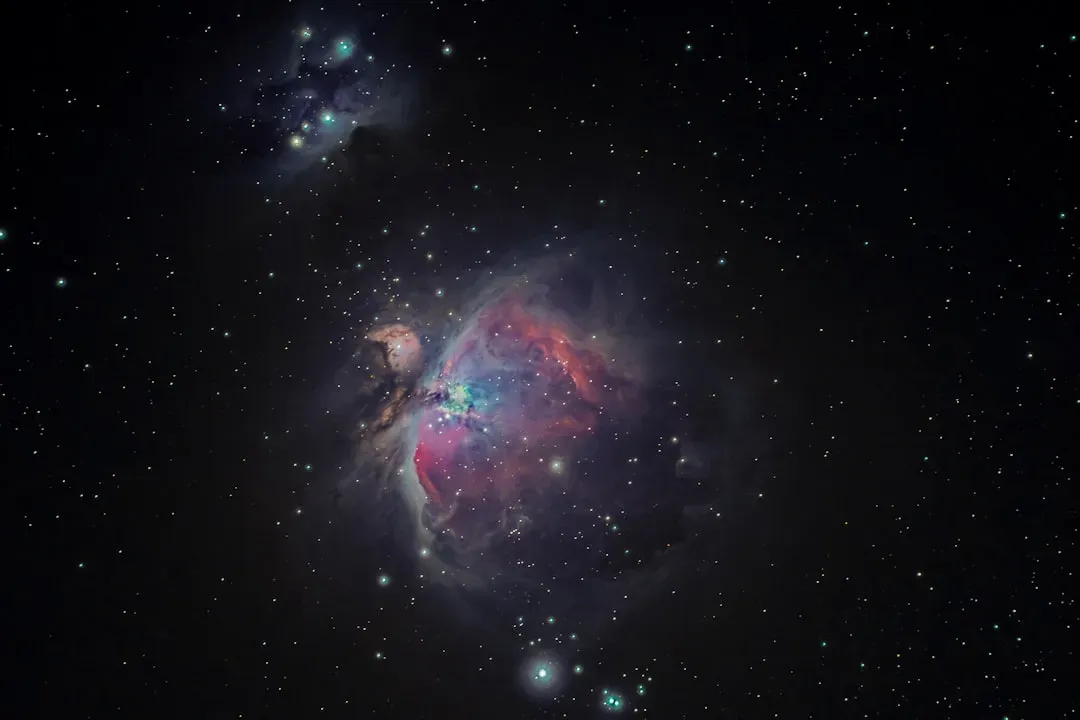
One possibility is surprisingly tame: beyond the observable universe, things might just keep going pretty much as we see them now – galaxies, clusters, dark matter, dark energy, all arranged on the same cosmic web. In this view, our horizon is like the part of an enormous forest visible from a single hilltop; the trees do not suddenly stop at the limit of your eyesight. The idea that the universe is statistically the same everywhere on large scales, called the cosmological principle, still fits observational data quite well, especially the near-uniform temperature of the cosmic microwave background radiation.
But some scientists have floated the idea that conditions might shift once you go far enough, maybe in ways we can only hint at indirectly. Just as climates change from tropics to polar regions on Earth, perhaps there are “cosmic climates” where the densities of matter and dark energy vary on scales vastly beyond our horizon. If that were true, it could mean that the laws we measure here are just one local dialect of a deeper cosmic language. The frustrating part is that, because of the horizon, even if such differences exist, they might always stay just out of reach, forever teased by theory but never confirmed by direct observation.
The Multiverse Idea: Other Bubbles, Other Realities
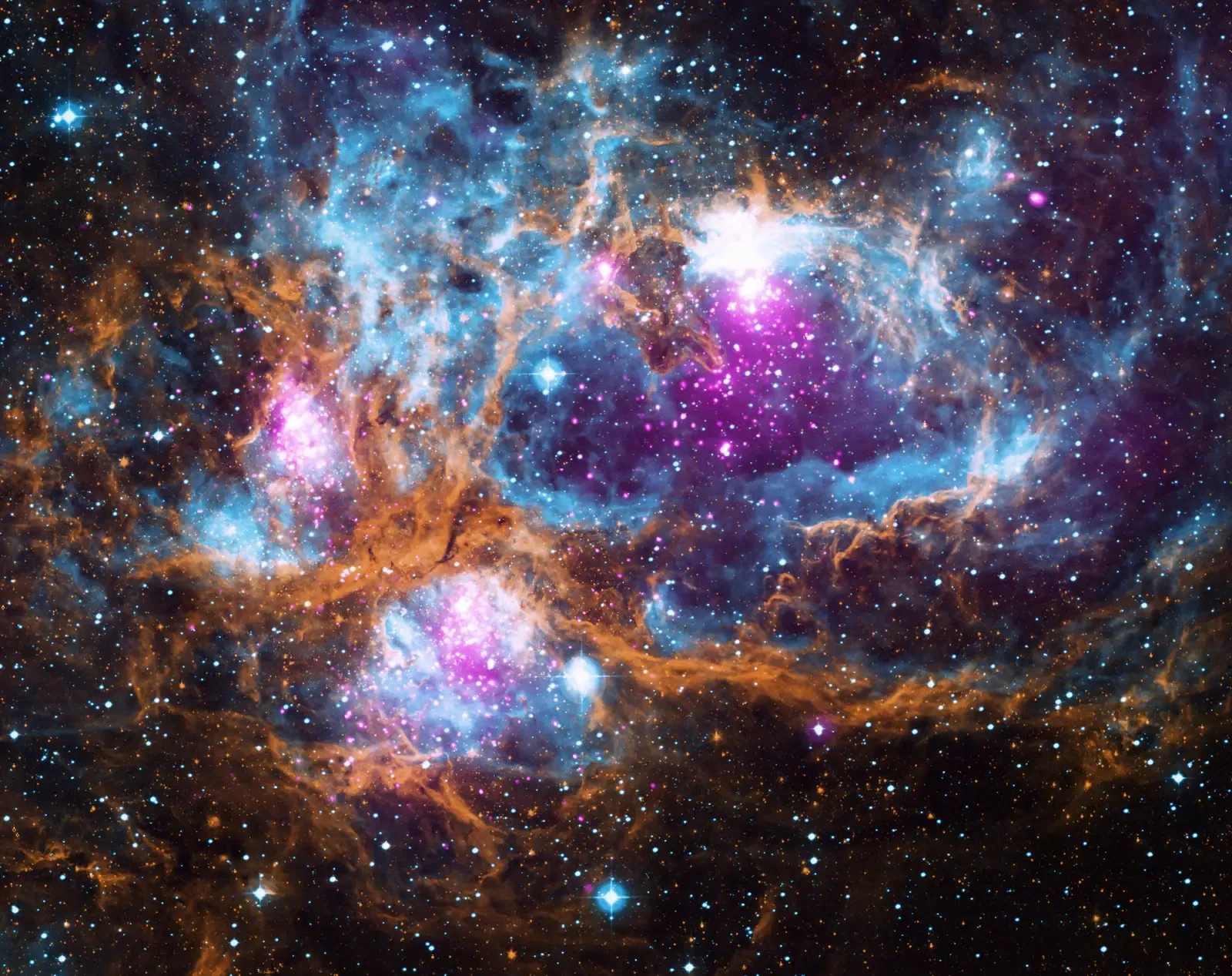
If you really want to lean into the mind-bending possibilities, step into the multiverse picture, where our entire observable universe is just one bubble in a frothy sea of countless others. In some inflationary models, the early universe went through an extremely rapid expansion, and not all of space stopped inflating at the same time. Little regions “froze out” into bubble universes like ours, each possibly with its own values for things like particle masses, strengths of forces, or even the number of spatial dimensions that become large and accessible. In that kind of scenario, what lies beyond our cosmos isn’t just more of the same – but somewhere we can never travel to, even in theory.
From a distance (if such a distance made sense), it might look like a vast, eternally boiling sea of space, constantly birthing new bubble universes while others drift away beyond one another’s horizons. Most of these ideas are, at best, speculative: they grow from attempts to connect inflation, quantum theory, and the strange fine-tuning of our own cosmic parameters. Still, I remember the first time I learned about the multiverse as a teenager; it was like someone quietly slid reality a few inches to the left. You realize that the word “universe,” which used to mean “everything,” might only mean “our patch,” and that’s a strangely humbling jab to the ego.
Cosmic Inflation and Why “Beyond” Might Be Forever Hidden
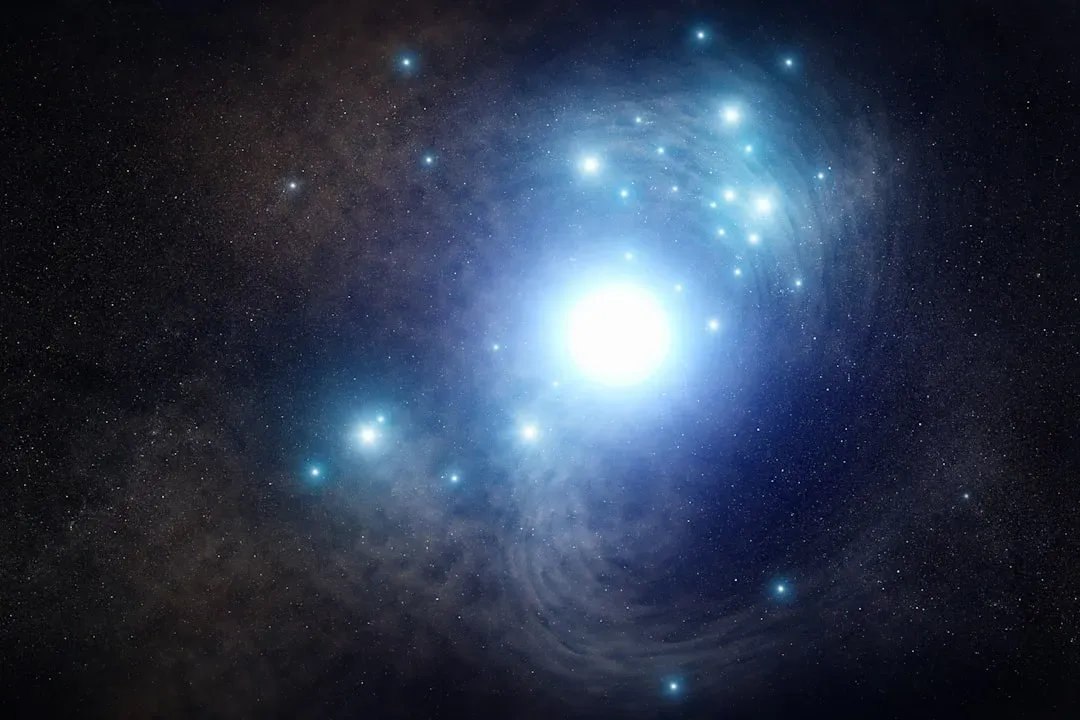
To understand why “beyond” our observable universe is so hard to probe, you have to grapple with cosmic inflation, the idea that in a fraction of a second after the Big Bang, the universe expanded faster than any explosion you can picture. This ultra-fast expansion would have stretched tiny quantum fluctuations into vast, universe-spanning ripples, which later became the seeds of galaxies and clusters. In many inflation models, space grew so unbelievably huge that our observable universe today is an almost microscopic speck in comparison, like a tiny tile in a floor that extends farther than you could ever walk.
If inflation went on in other parts of space while it stopped in ours, it could mean that regions beyond our horizon are not just distant, but locked away behind a permanent causal curtain. No signal, no matter how fast or clever, could ever cross from there to here. This isn’t just a practical limitation, like saying we don’t have good enough rockets yet; it is a built-in feature of the way spacetime itself evolved. So when cosmologists talk about what lies beyond, they do it with a peculiar mix of boldness and restraint, aware that they’re building castles of possibility on foundations we may never be able to directly inspect.
Do the Laws of Physics Change Beyond Our Cosmic Patch?
Most working physicists assume a kind of stubborn regularity: that the laws of physics are the same everywhere. It’s a clean, elegant assumption, and it’s supported so far by everything we’ve measured within our observable patch. But once you allow for ideas like the multiverse or different vacuum states in quantum field theory, a more chaotic picture emerges. In that view, what we call the “laws” of physics might be more like the specific settings on one phone model, while other universes run different “firmware” with altered constants, altered forces, or even alternative versions of space and time.
There are real, technical reasons people entertain this: for example, certain theories suggest that the values of constants like the cosmological constant could naturally vary across different patches of a grander reality. We just happen to live in a patch where those values allow complex structures and, eventually, life. From the inside, everything feels necessary and lawlike, but from the outside, it might look like a lottery that we simply won. It’s unsettling to think that beyond our observable cosmos, particles might behave differently, atoms might not form, or chemistry might be so alien that even the word “chemistry” stops making sense.
Can We Ever Get Evidence About What Lies Beyond?
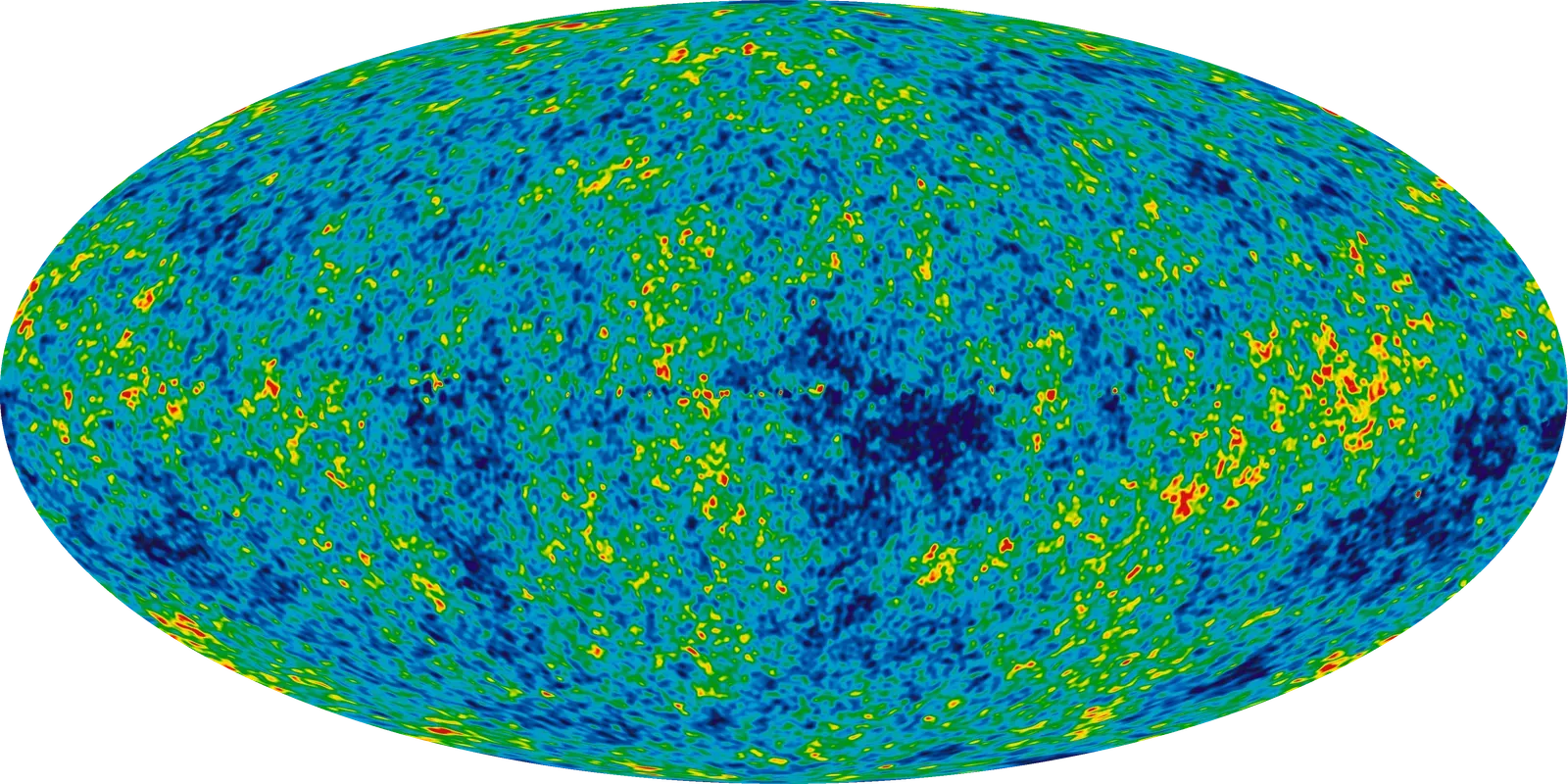
On the face of it, talking about what lies beyond our observable universe sounds like pure philosophy, the kind of thing you debate at two in the morning over coffee. But cosmologists are stubborn; they keep trying to wring testable hints out of the seemingly untestable. People look for subtle fingerprints in the cosmic microwave background, like unusual alignments or temperature patterns, that might betray collisions between our bubble universe and others, or reveal that space is finite and wrapped in a particular topology. So far, nothing has risen to the level of a clear, widely accepted signal, but the search continues with ever-better data and more sophisticated statistical tools.
There is also the indirect route: we test theories in regimes we can reach – particle accelerators, gravitational wave detectors, precise cosmological surveys – and see which models survive. If only the theories that predict certain structures beyond our horizon turn out to match what we can measure here, that gives those wilder parts of the theory a bit more credibility. It’s not a smoking gun, but it’s stronger than pure daydreaming. As instruments improve in the 2030s and beyond, especially new space telescopes and next-generation cosmic microwave background experiments, we may at least sharpen the line between plausible and implausible visions of the invisible cosmic beyond.
Living at the Edge of What We Can Know
The universe’s “edge” is not a wall we can sail to like the old maps that warned of dragons; it is a shifting boundary in time and information, defined by how far light and gravity can whisper their stories to us. Beyond that horizon, there might be more of the same – endless galaxies marching on in familiar patterns – or a vast, fractured landscape of other cosmic patches, some sterile, some wildly different, all forever cut off from our direct reach. Either way, our observable universe starts to look less like the whole story and more like a single chapter in a book whose remaining pages we may never physically turn.
Some people find that thought terrifying, others find it exhilarating; to me, it feels strangely grounding. We are tiny, yes, and limited, yes, but we’re also a species that has figured out how to read the faint afterglow of the Big Bang and argue seriously about the shape of everything. Maybe the real power of wondering what lies beyond our cosmos is that it keeps us honest about how much we do not know, while still daring us to push the boundary of what we can. When you look up tonight, will you see just the stars, or will you feel the pull of the horizon you’ll never cross?