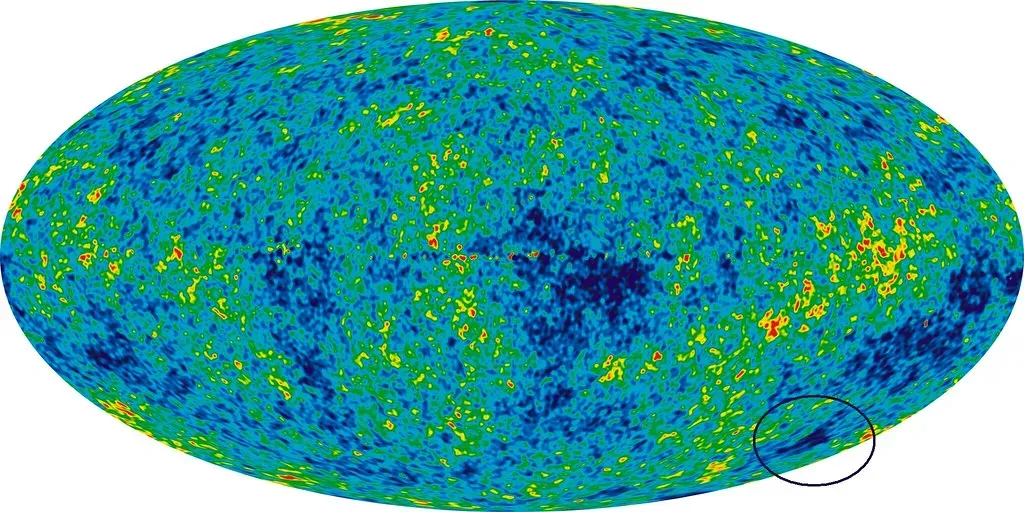

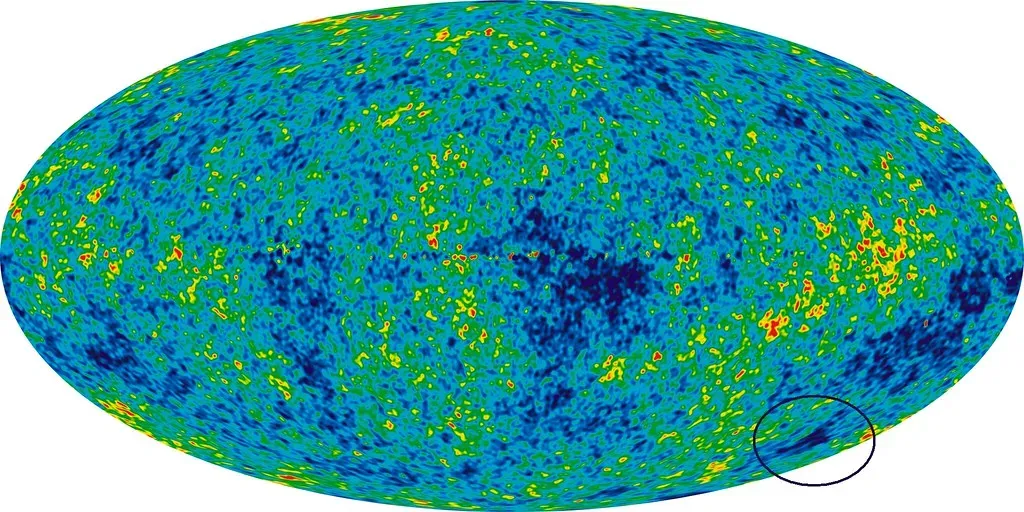
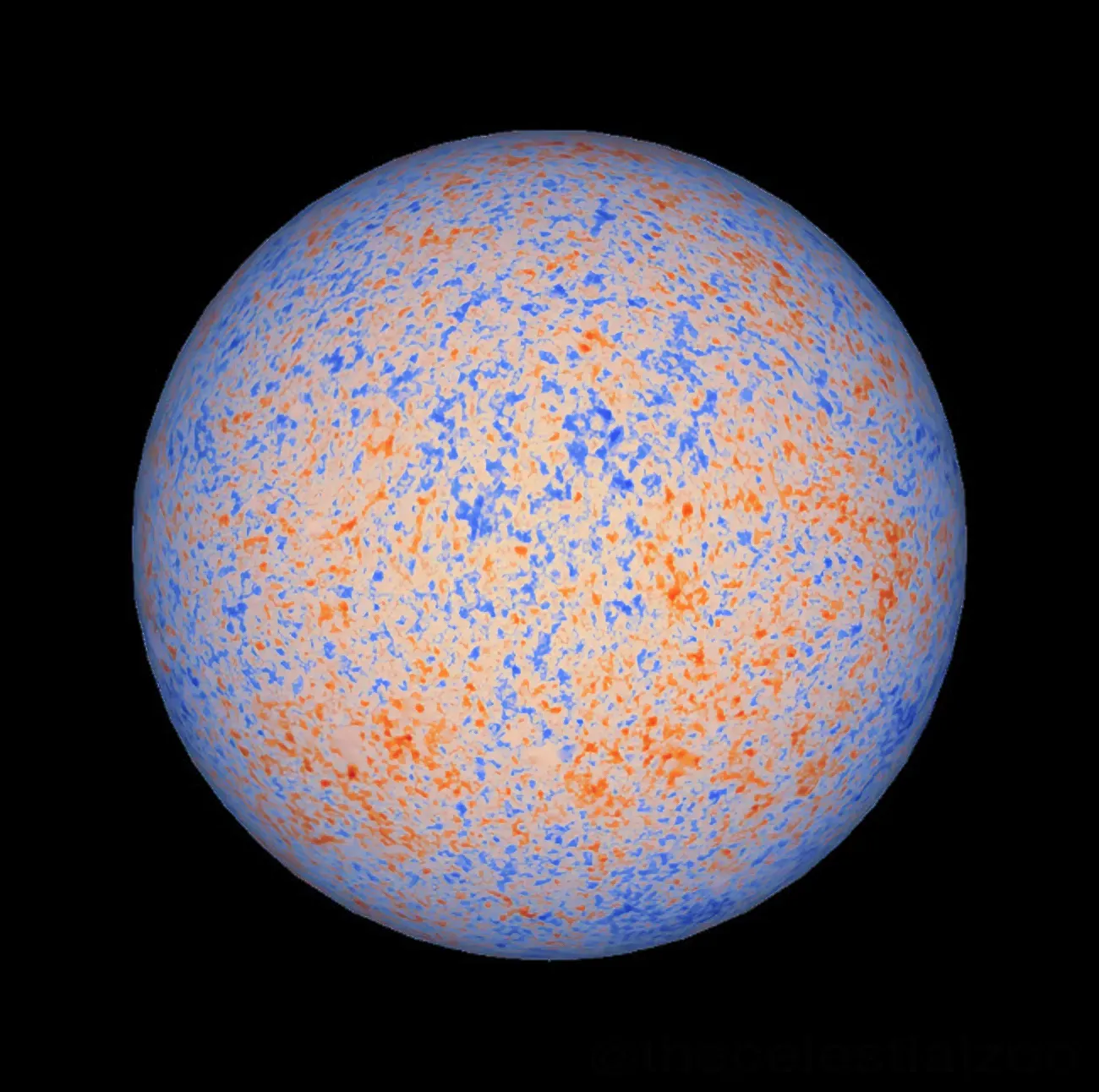
Imagine holding a photograph of the universe at just 380,000 years old. Not a painting, not a simulation – an actual image encoded in radiation that has been traveling across the cosmos for nearly 13.8 billion years, and is still arriving at your doorstep right now. That image exists. It surrounds you, invisible to the naked eye, rippling through every cubic centimeter of space around you at this very moment.
One of the most profound remnants of the early universe is the cosmic microwave background (CMB) radiation – a faint, nearly uniform glow that fills the cosmos. Scientists have spent decades decoding it, and what they keep finding is nothing short of astonishing. There is far more hidden in this ancient light than most people ever imagine. Let’s dive in.
What Exactly Is the Cosmic Microwave Background?
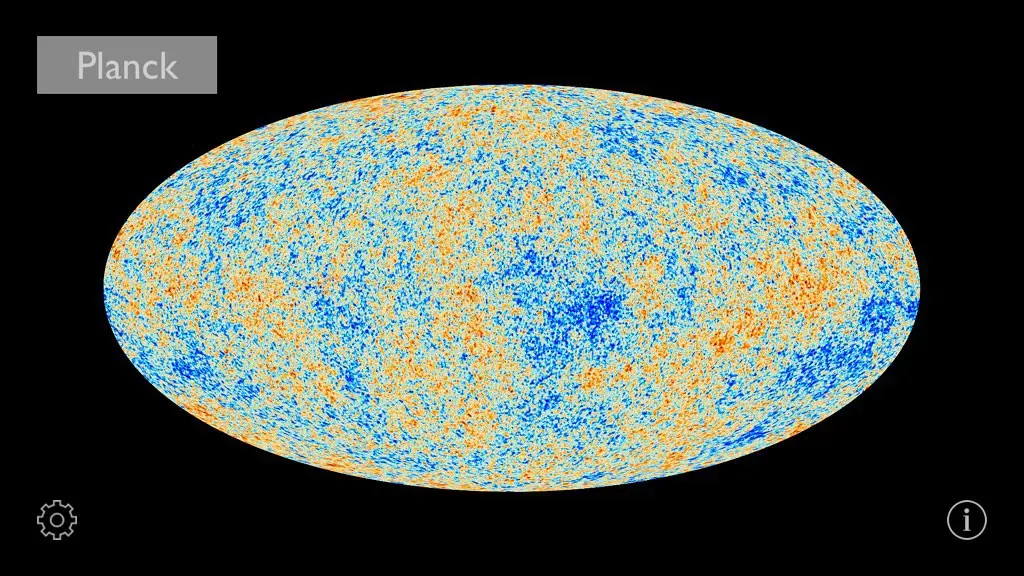
The Cosmic Microwave Background is the cooled remnant of the first light that could ever travel freely throughout the universe – a “fossil” radiation, the furthest that any telescope can see, released soon after the Big Bang. Think of it like the afterglow of the greatest explosion ever to exist, still faintly glowing even today, billions of years later.
You can’t see the CMB with your naked eye, but it is everywhere in the universe. It is invisible to humans because it is so cold – just 2.725 degrees above absolute zero. That’s extraordinarily close to the coldest temperature anything in physics can ever reach. Yet this ancient whisper still carries enormous amounts of information, if you know how to listen.
The Accidental Discovery That Changed Everything
In 1964, Arno A. Penzias and Robert W. Wilson at Bell Telephone Laboratories began investigating microwave radio emissions. They had a very sensitive detector connected to a large horn-shaped antenna, and when they tuned their equipment to the microwave portion of the spectrum, they discovered an annoying background static that simply wouldn’t go away. No matter where they pointed the antenna, or when, the microwave static remained the same. They spent months running down every possible cause, including pigeon droppings inside the antenna, but they couldn’t find a source or a solution.
Honestly, there’s something wildly poetic about this. The greatest cosmological discovery of the 20th century was initially treated as an inconvenient radio glitch. Penzias and Wilson had stumbled onto the first observational evidence to support the Big Bang theory of the origin of the universe – and for this discovery, they shared the Nobel Prize for Physics in 1978. What looked like noise turned out to be the universe itself, speaking to us from its very beginning.
How the Early Universe Gave Birth to This Light
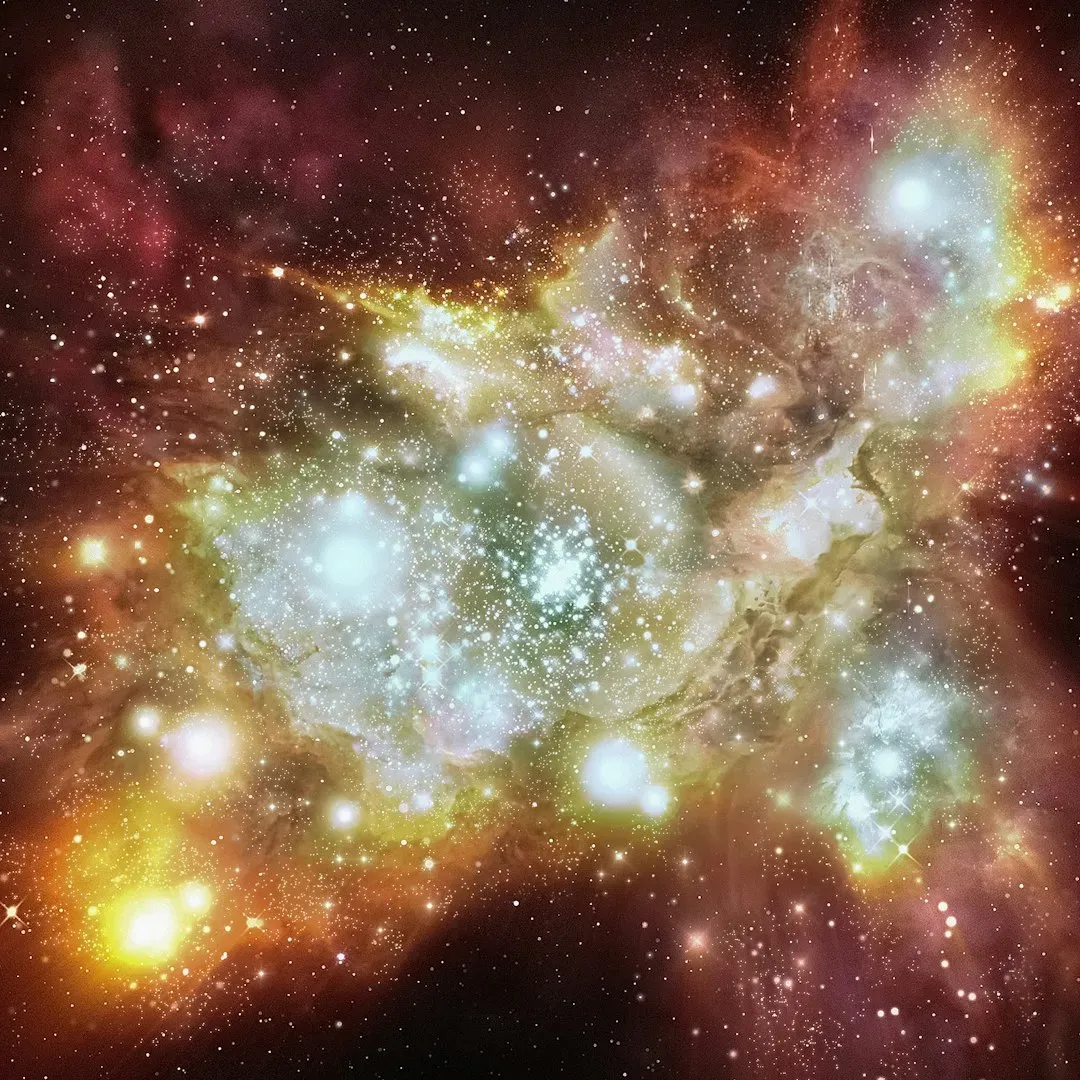
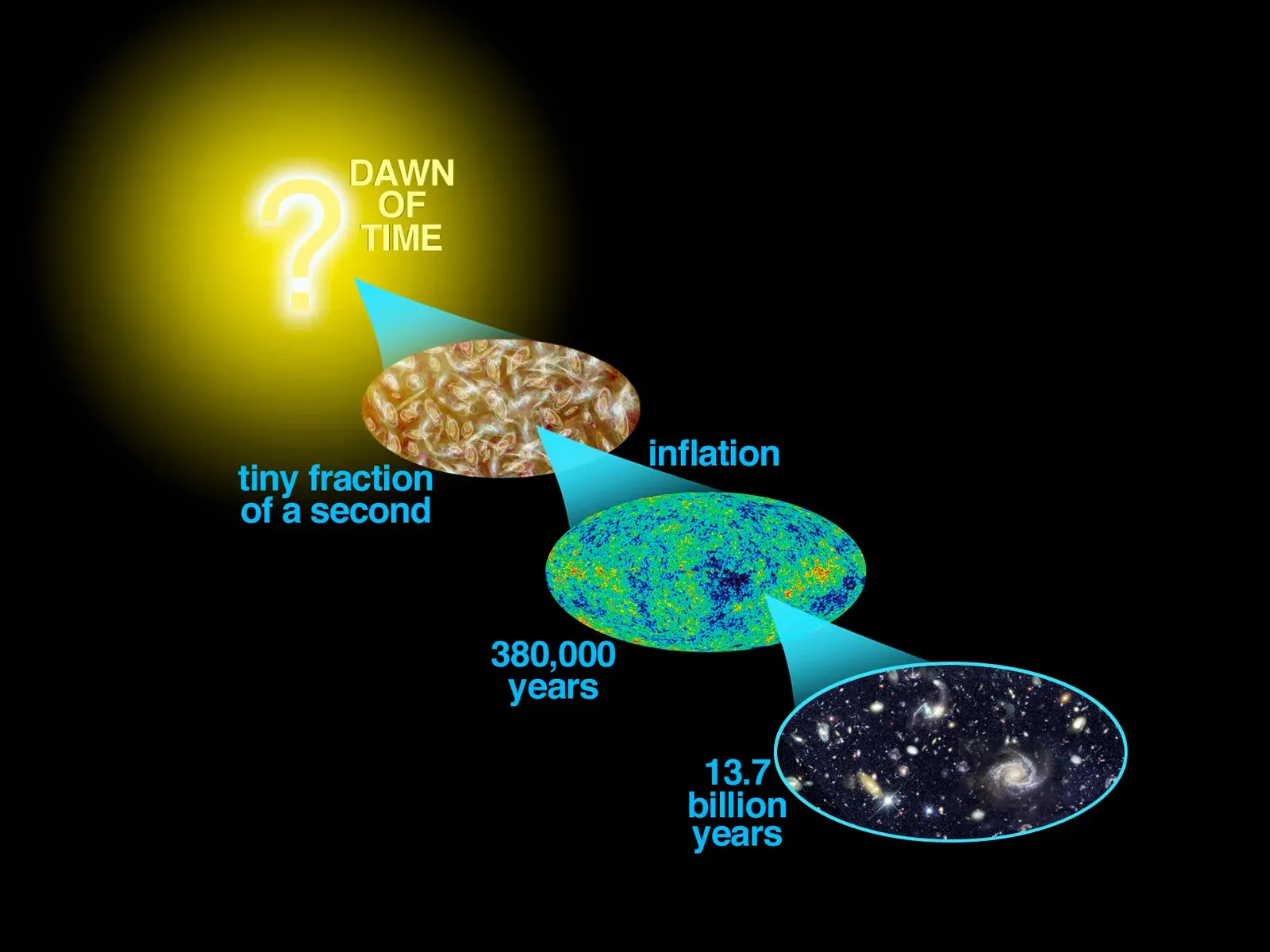
For the first 380,000 years or so after the Big Bang, the entire universe was a hot soup of particles and photons, too dense for light to travel very far. However, as the cosmos expanded, it cooled and became transparent. Light from that transition could then travel freely, and we see a lot of it today. This light is called the cosmic microwave background, and it carries information about the very early universe.
The universe was expanding and, as it expanded, it cooled, as the fixed amount of energy within it spread over larger volumes. After about 380,000 years, it had cooled to around 3,000 Kelvin, and at this point, electrons were able to combine with protons to form hydrogen atoms. It’s like watching steam slowly cool until water droplets form – except the “droplets” here were the first atoms in existence, and their formation lit up the entire universe in a flash of light that never stopped traveling.
The Tiny Temperature Ripples That Shaped Everything
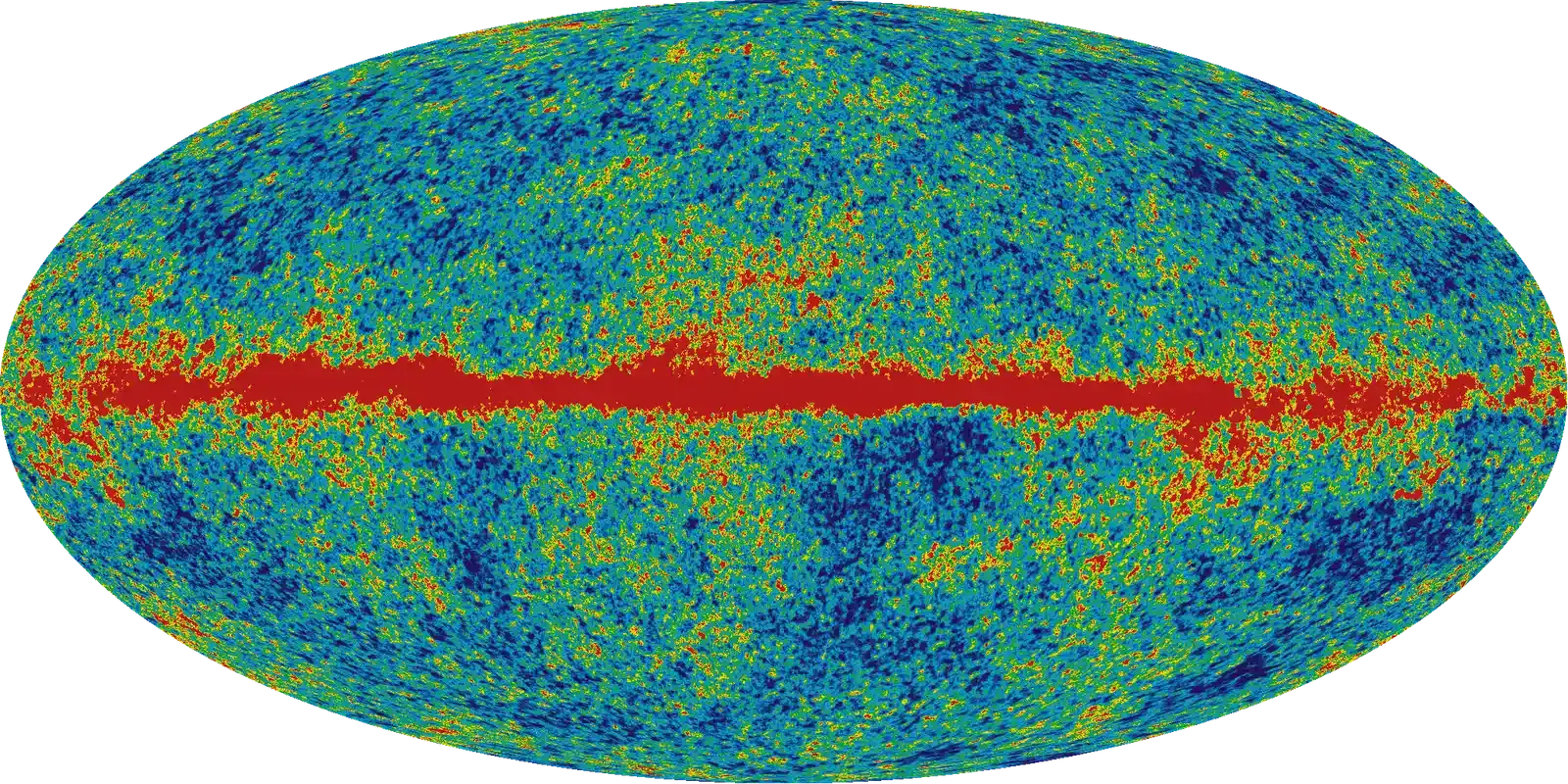
The anisotropy structure of the CMB is influenced by various interactions of matter and photons up to the point of decoupling, resulting in a characteristic pattern of tiny ripples that varies with angular scale. The distribution of this anisotropy across the sky has frequency components displayed in a power spectrum of peaks and valleys. The peak values of this spectrum hold important information about the physical properties of the early universe – the first peak determines the overall curvature of the universe, while the second and third peaks detail the density of normal matter and dark matter, respectively.
Measuring the larger-sized anisotropies reveals how much dark energy, dark matter, and ordinary matter are contained in the universe. The smaller anisotropies reveal the tiny fluctuations in density that gave rise to the pattern of galaxies and galaxy clusters we see today, which astronomers call the large-scale structure of the universe. Without those small irregularities, there wouldn’t be any galaxies, and we wouldn’t be here to observe them. Let that sink in. The reason you exist today is because of microscopic temperature variations in a radiation field that formed nearly 14 billion years ago.
What the CMB Tells Us About Dark Matter and Dark Energy
WMAP’s accurate measurements revealed that the early universe was roughly 63 percent dark matter, 15 percent photons, 12 percent atoms, and 10 percent neutrinos. Today the universe is approximately 72.6 percent dark energy, 22.8 percent dark matter, and just 4.6 percent atoms. Here’s the thing – that means the ordinary matter you, your friends, your planet, and every star you’ve ever seen are made of accounts for less than 5 percent of everything that exists. The CMB gave us that humbling number.
Observations of the cosmic microwave background radiation are described with remarkable accuracy by the six-parameter ΛCDM cosmology. However, the key ingredients of this model – namely dark matter, dark energy, and cosmic inflation – are not understood at a fundamental level. So the CMB helps us measure what’s out there with extraordinary precision, yet it also reminds us, honestly and without apology, that the universe’s most dominant ingredients remain deeply mysterious. That’s the dual nature of this extraordinary signal.
The Hubble Tension: When the Universe Disagrees With Itself
There is an ongoing debate on the rate of expansion of the universe, known as the “Hubble tension,” which has significant ramifications for our understanding of the universe and in which the cosmic microwave background plays a key role. Essentially, when you measure how fast the universe is expanding using the CMB, you get one number. When you measure it directly using nearby stars and supernovae, you get a different, higher number. The gap between them won’t go away, no matter how carefully scientists refine their tools.
This tension arises from a disagreement in measuring the Hubble constant, which describes how fast the universe is expanding. Different measurements – especially those based on CMB radiation and supernovae observations – have produced inconsistent values for this constant. This inconsistency is a major concern and has prompted researchers to look for solutions. Some cosmologists think this is a sign of completely new physics waiting to be discovered. Others suspect a subtle measurement error somewhere. I think it’s one of the most thrilling unsolved puzzles in all of science right now.
Next-Generation Telescopes and the CMB Frontier
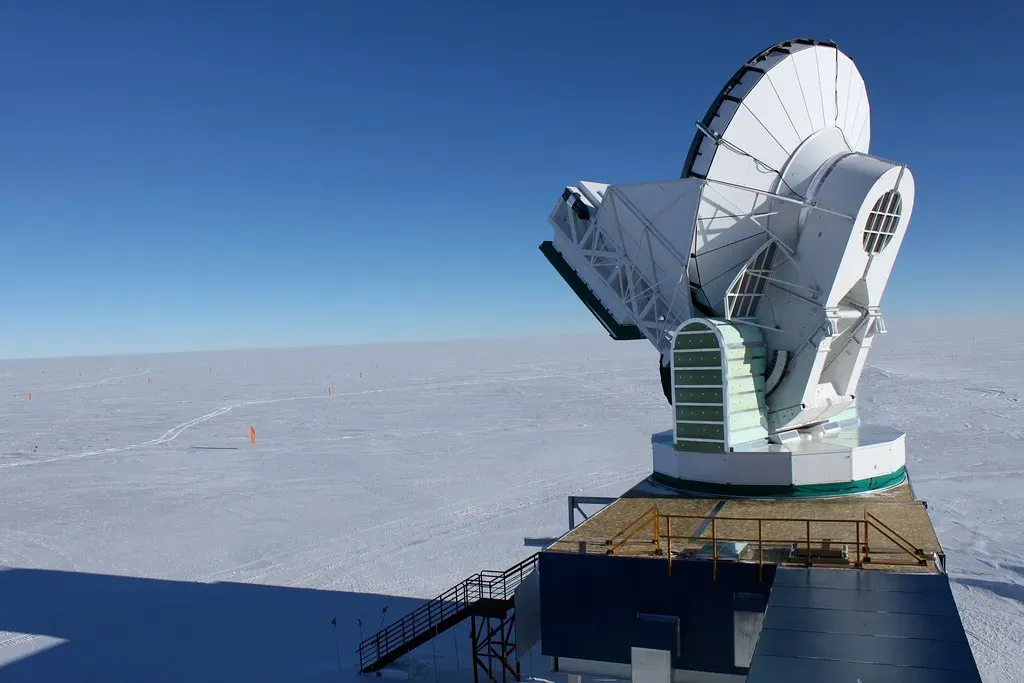
Researchers have released unprecedentedly sensitive measurements of the cosmic microwave background from two years of observations using an upgraded camera on the South Pole Telescope. The telescope, located at the National Science Foundation’s Amundsen-Scott South Pole Station, was designed specifically to map the very faint light from the microwave background. The results are impressive – the precision on the fine details of the cosmic microwave background exceeds that of all previous measurements, even those taken from space.
These findings confirm the Hubble tension independently at very high statistical significance, while remaining consistent with other CMB constraints, including those from the Planck satellite mission and the Atacama Cosmology Telescope in Chile. They also sharpen a newly appearing anomaly in our cosmological picture – the disagreement between CMB constraints and those from large-scale surveys of the movements of galaxies. The tools are getting sharper, the data is getting cleaner, and the mysteries, if anything, are getting more intriguing rather than less. Future CMB observations expected from experiments like Simons Observatory and CMB-S4 may discriminate between the standard cosmological model and evolving dark energy scenarios.
Conclusion: The Universe Is Still Talking. Are We Listening?
The cosmic microwave background is far more than a relic. It is the universe’s original transmission, still broadcasting, still encoded with secrets that humanity is only beginning to decode. From revealing the recipe of all matter and energy to flagging cracks in our best cosmological theories, this ancient light continues to be the most informative signal ever detected by science.
Its discovery and subsequent study have revolutionized our understanding of cosmology, transforming speculative theories into precise science. As technology advances, the CMB continues to whisper its secrets to those who listen, guiding humanity closer to answering the most profound questions about the origin and fate of the universe. We are living in a remarkable era – one where ground-based telescopes at the South Pole and in the Chilean desert are pushing past what space missions once achieved, and where the answers encoded in a 13.8-billion-year-old glow may soon rewrite the textbooks entirely.
The universe spoke at the very beginning. The echo is still reaching us. The only question is – how much are we ready to hear? What part of the CMB’s secrets surprises you most? Tell us in the comments.