

What if everything you’ve ever touched, seen, or felt is not truly real in the way you think it is? Not in a poetic, philosophical sense, but in a cold, hard, mathematical one. What if the stars above you, the ground beneath your feet, and even the thoughts racing through your mind right now are all projections, rendered from information encoded on a distant, flat surface at the edge of existence?
It sounds like something pulled straight from a science fiction screenplay. Honestly, the first time you encounter this idea, it’s tempting to laugh it off. Yet some of the world’s most brilliant theoretical physicists aren’t laughing. They’ve spent decades running the numbers, and the math keeps pointing in the same shocking direction. Be surprised by what the universe might actually be made of.
What Exactly Is the Holographic Principle?

One of the weirdest theories in cosmology is the holographic principle, the idea that our universe is a three-dimensional image projected off a two-dimensional surface, the idea that we are living in a hologram. Think of it like the sticker on your credit card. That tiny, flat, shimmery image appears to have depth and dimension, yet it’s entirely encoded on a two-dimensional surface. Now scale that concept up to the size of everything that has ever existed.
The holographic principle asserts that a mathematical description of the universe actually requires one fewer dimension than it seems. What we perceive as three dimensional may just be the image of two dimensional processes on a huge cosmic horizon. It’s not an exaggeration to say this is one of the most staggering ideas in the history of human thought.
Where Did This Wild Idea Come From?

This strange idea was born from a very serious scientific dilemma: the black hole information paradox. When something falls into a black hole, does the information about it simply vanish? That troubled physicists enormously, because the laws of quantum mechanics strictly forbid information from being destroyed.
Physicist Gerard ‘t Hooft introduced the holographic principle as a way to reconcile the behavior of black holes with the laws of quantum mechanics. Later, Leonard Susskind expanded on this idea and linked the principle to string theory and quantum gravity, which provided a theoretical foundation for how it applies more broadly to the universe. It was born from crisis, and that’s often when the best physics happens.
The Man Who Changed Everything: Juan Maldacena

The idea, put forth by Juan Maldacena of the Institute for Advanced Study in Princeton, suggested something profound: that our universe could be a hologram. Much like a 3D hologram emerges from the information encoded on a 2D surface, our universe’s 4D spacetime could be a holographic projection of a lower-dimensional reality. Maldacena proposed this in 1997, and the physics world has never quite recovered.
In 1997, physicist Juan Maldacena formulated what’s now known as AdS/CFT duality. It states that a universe with gravity inside (an anti-de Sitter space) is mathematically equivalent to a universe without gravity on its boundary (a conformal field theory). In simple terms: a three-dimensional world with gravity equals a two-dimensional world without it. That’s a head-spinning equation, but physicists treat it like a gold mine, still digging deeper today.
Black Holes: The Universe’s Holographic Clue
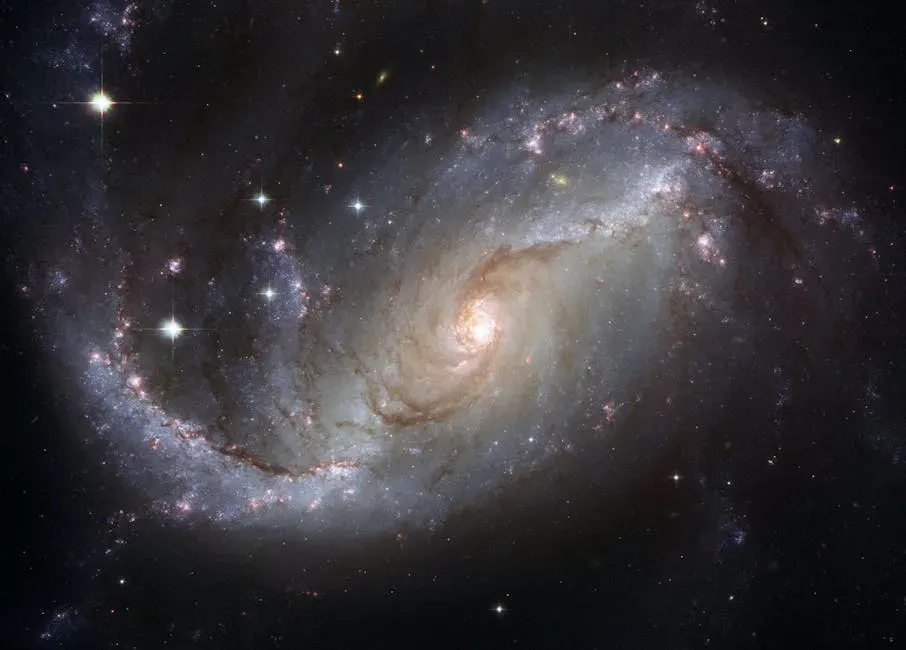
A major motivation for the principle came from research on black hole thermodynamics. Scientists noticed that the maximum amount of entropy (information) inside black holes seemed to be dependent on the surface area of the event horizons rather than the volume of the black holes. This led to the idea that perhaps this relationship applies to all regions of space, not just black holes alone. When you realize that the surface of a black hole tells you everything about what’s inside it, the idea that the universe works the same way stops being absurd.
The holographic principle presents a potential solution in suggesting that the information pulled into a black hole isn’t lost. Instead, it remains encoded on the event horizon, an idea that allowed scientists to preserve the principles of both systems. Physicists Jacob Bekenstein and Stephen Hawking demonstrated how black hole entropy is tied to surface area instead of volume. This discovery is one of the strongest pieces of evidence supporting the holographic principle. So every black hole in the cosmos could be a tiny working model of the theory itself.
Is There Any Real Evidence Out There?
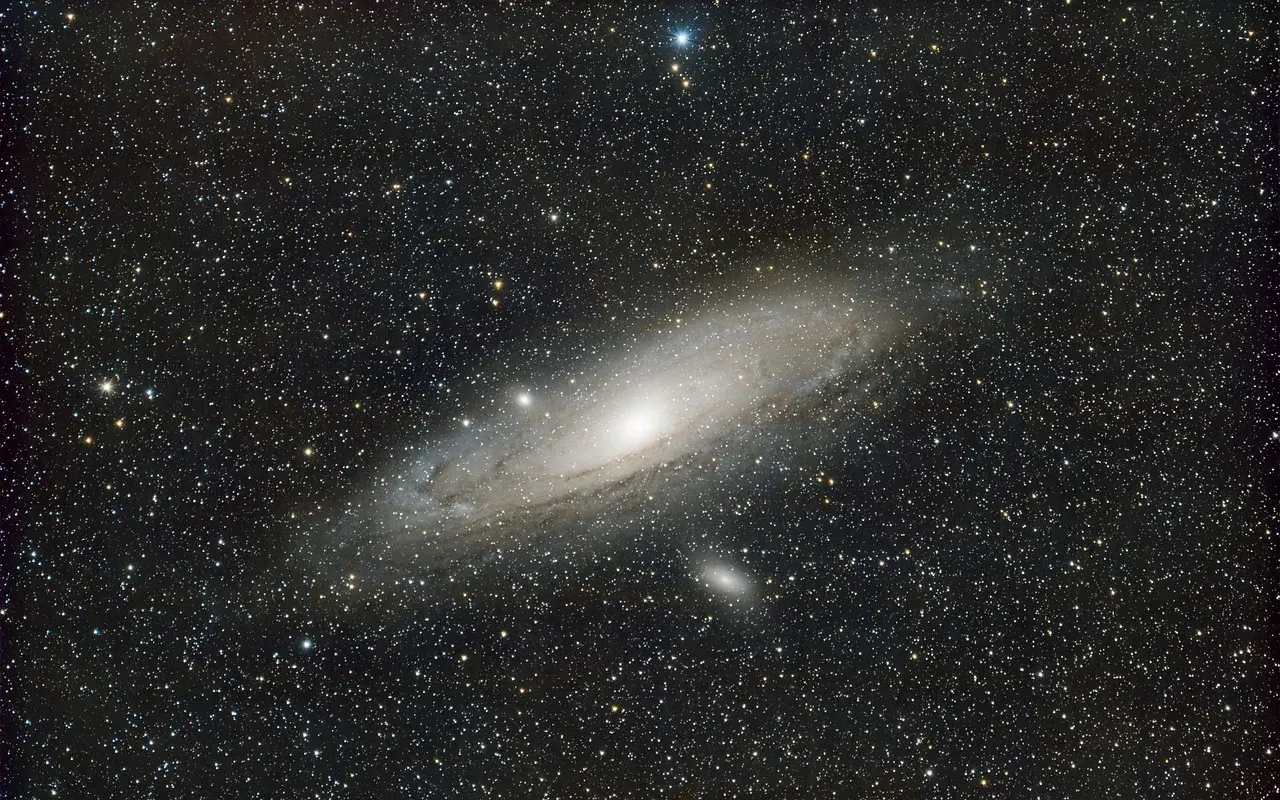
A UK, Canadian and Italian study provided what researchers believe is the first observational evidence that our universe could be a vast and complex hologram. Theoretical physicists and astrophysicists, investigating irregularities in the cosmic microwave background (the afterglow of the Big Bang), have found there is substantial evidence supporting a holographic explanation of the universe, in fact, as much as there is for the traditional explanation of these irregularities using the theory of cosmic inflation. That’s not a fringe paper, either. It was published in Physical Review Letters, one of the most respected journals in physics.
Experiments such as the GEO600 gravitational wave detector have detected strange noise patterns, some interpret these as signs of space being grainy, like a projected hologram. Others look to the cosmic microwave background, searching for imprints of a deeper, encoded reality. Here’s the thing: you can’t call something “just a theory” when it’s showing up in the data from multiple experiments across multiple continents. That deserves serious attention.
The Problem: Our Universe Doesn’t Quite Fit the Model
Here’s where things get tricky. Our universe isn’t an anti-de Sitter space, it’s expanding, with a positive cosmological constant (de Sitter space). The AdS/CFT duality doesn’t apply directly. Still, physicists, including Maldacena himself, are working on ways to extend the holographic idea to universes like ours. It’s like discovering a map that perfectly describes a place very much like your hometown, but not quite your hometown.
Despite its intriguing nature, the holographic universe theory faces skepticism from many in the scientific community. One reason is that, while mathematically compelling, the holographic principle often feels speculative and abstract, lacking the direct experimental evidence that typically underpins established scientific theories. Critics argue that without concrete proof, it remains more of a theoretical curiosity than a validated description of our universe. It’s hard to say for sure where this will land, but the search is very much alive.
What It Would Mean If It’s True
The theory is anchored on a holistic entangled state that is fundamental, with all dynamical properties of our universe, including the very notion of time itself, arising as emergent descriptions of that state. Let that sink in. Time, as you experience it, might not be a fundamental feature of the cosmos. It could be something that simply emerges, like the warmth you feel from sunlight, derived from something deeper and stranger.
If the holographic principle turns out to be correct, it could change how scientists understand the universe, from its origin to its future. It could very well reshape the way physicists think about the Big Bang, the existence of black holes, and the shape of the cosmos. It may also improve the development of technologies like quantum computing or techniques used in material sciences. We’re not just talking about a philosophical curiosity here. We’re talking about consequences that could ripple into actual technology and engineering in the decades ahead.
Conclusion: Are You Ready to Question Everything?
The holographic universe theory sits in a strange, electrifying space between verified physics and profound mystery. It’s not science fiction, it’s not magic, and it’s definitely not something the world’s leading theoretical physicists dismiss lightly. A new mathematical test of the holographic principle has been developed to advance understanding of quantum gravity, aiming to reconcile quantum mechanics and general relativity. The work continues, right now, in laboratories and on chalkboards around the world.
What makes this idea so persistently powerful is that it keeps surviving contact with evidence. Every time researchers study the faint afterglow of the Big Bang, every time they probe the surface of a black hole, the holographic interpretation refuses to be ruled out. One fundamental insight from AdS/CFT is that any theory of quantum gravity will most likely be holographic, in that it’ll have a dual description in the form of a theory with one fewer dimension, without gravity. We may be standing at the edge of the most significant scientific revelation in human history, a revelation that what you call reality is a breathtaking projection of something far simpler and far deeper.
So the next time you reach out and touch something solid, pause for just a moment. Ask yourself: what if that surface, that warmth, that texture, is information rendered into sensation? What would it mean if the greatest secret of the universe turns out to be written, not in the stars, but on the very boundary that surrounds them? What do you think? Drop your thoughts in the comments below.