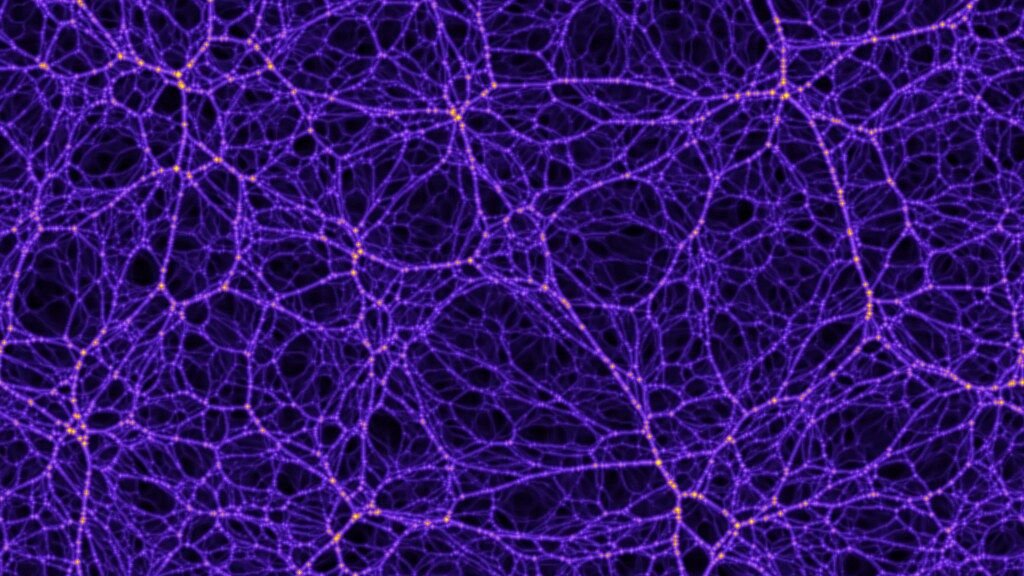

Most of us grow up picturing space as an infinite stretch of darkness, sprinkled with a few lonely stars and the occasional spiral galaxy. It’s a beautiful image, but honestly, it’s also a spectacular underestimation of what’s actually out there. The universe is not a passive, static void. It’s alive with structure, pattern, and invisible architecture so vast it makes the grandest human constructions look laughably tiny.
What you’re about to discover is that between every galaxy you’ve ever seen in a photograph, there are threads, bridges, and filaments of gas, matter, and mysterious dark energy woven into something scientists call the cosmic web. The sheer scale of it will make you rethink everything you thought you knew about emptiness itself. So let’s dive in.
What Exactly Is the Cosmic Web?
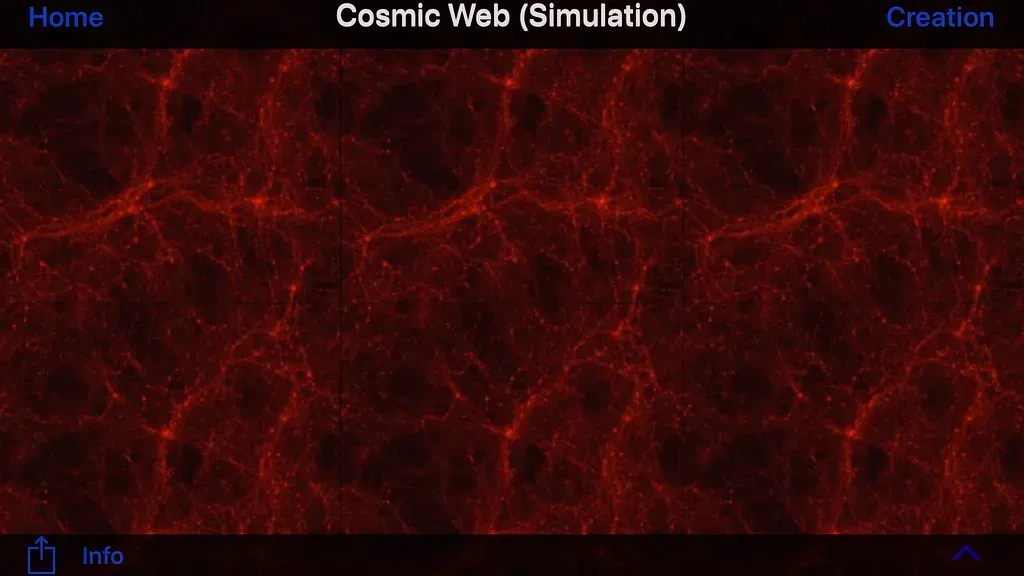
Stars are organized into galaxies, which in turn form galaxy groups, galaxy clusters, superclusters, sheets, walls, and filaments, which are separated by immense voids, creating a vast foam-like structure sometimes called the “cosmic web.” Think of it like a three-dimensional spider web, except each strand is hundreds of millions of light-years long and carries the gravitational skeleton of the entire observable universe.
On a large scale, the universe is like a complex spider web, full of cosmic filaments of gas, dust, and dark matter, separated by large voids. Cosmic filaments stretch across millions of light-years and form what’s known as the “cosmic web.” Galaxies are strung together to form large filaments, and at their intersections are galaxy clusters – the densest regions of the web. It’s genuinely one of the most astonishing structural patterns in all of science, and the fact that it was hiding in plain sight for most of human history is both humbling and thrilling.
The Dark Matter Backbone That Holds It All Together
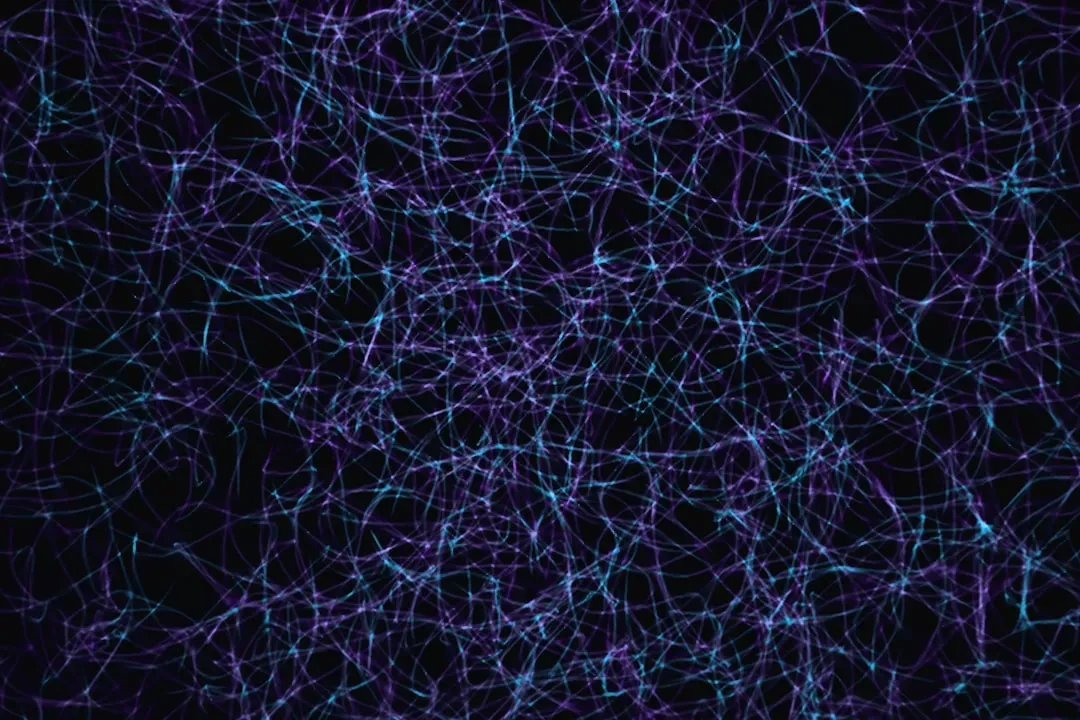
Using data from NASA’s James Webb Space Telescope, scientists have made one of the most detailed, high-resolution maps of dark matter distribution ever produced. It shows how the invisible, ghostly material overlaps and intertwines with “regular” matter, the stuff that makes up stars, galaxies, and everything we can see. Dense regions of dark matter are connected by lower-density filaments, forming a weblike structure known as the cosmic web. Without this invisible scaffolding, none of the structure you see in the universe would exist at all.
More than 85 percent of the matter in the universe is dark, hugely dominating gravitationally over the luminous matter. In fact, the gravity of dark matter keeps galaxies and clusters together in the first place, as without it, these systems would simply disperse on timescales around a billion years. The luminous matter distribution turns out to closely follow that of dark matter for the same reason, at least on cosmic web scales. We see galaxies in filaments or clusters only because dark matter has formed these structures, while the luminous matter simply follows dark matter’s gravitational attraction. I think that’s one of the most mind-bending facts in all of cosmology. The universe you can see is basically just the glowing trail left behind by forces you can’t see.
How the Cosmic Web Was Born From the Big Bang
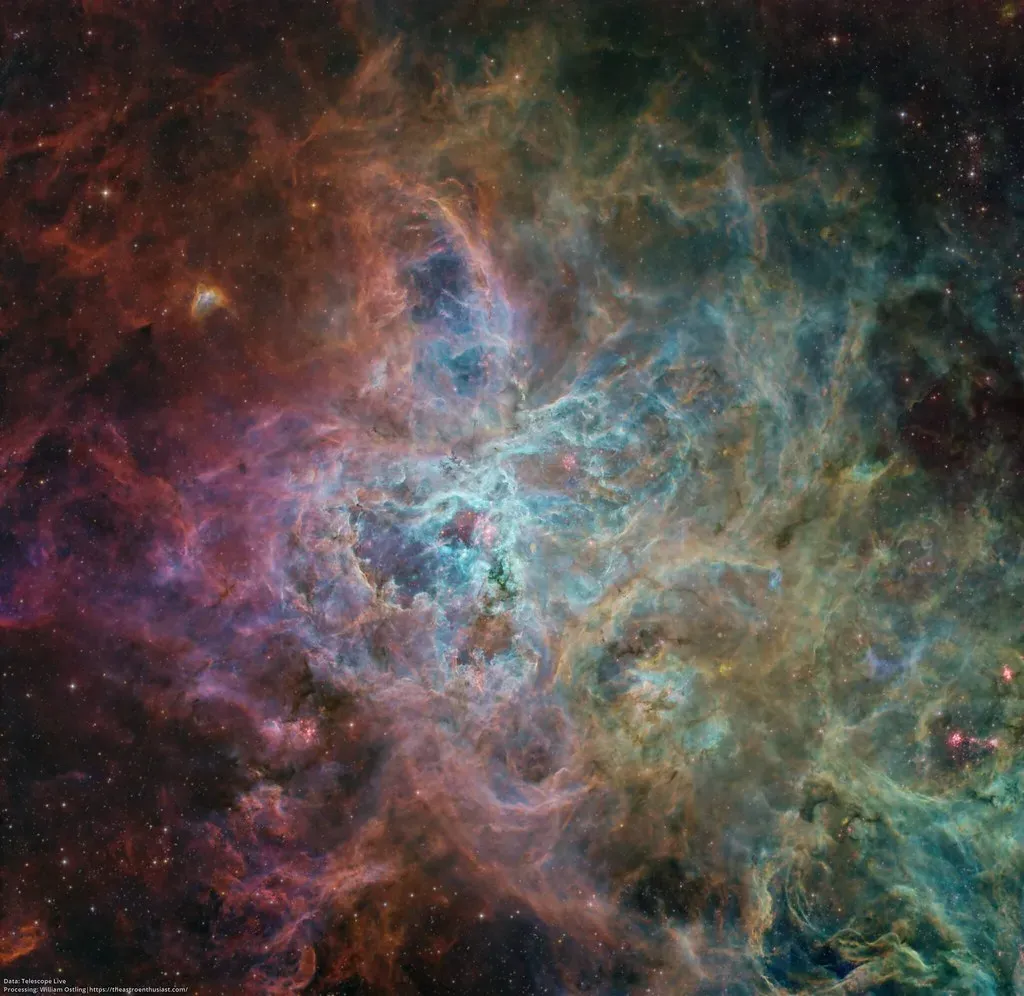
Astronomers theorize that the early universe was very smooth, and that the distribution of matter was uniform with tiny variations in density that grew into a web-like pattern. These areas of slightly higher density also had slightly more gravity to attract more matter. Over time, the universe evolved into a web of filaments and vast sheets, largely made of dark matter, which form the structure of the universe today. This cosmic web forms the large-scale backbone of the universe.
The Dark Ages, which extend from about 400,000 years after the Big Bang to about 50 million years later, saw the initial formation of the cosmic web: gravity takes time to grow structures, a process that was just beginning in earnest during the Dark Ages. Over time, the contrast between the sheets and filaments of the cosmic web grew – the gravity of the extra matter in the web continued to collect more and more matter – and the voids in between grew emptier and emptier. Today, nearly all galaxies are arrayed along the filaments of the cosmic web, and their intersections host vast clusters of thousands of galaxies. In other words, the cosmic web wasn’t designed. It emerged, organically and inevitably, from the physics of gravity acting on tiny imperfections in the infant universe.
Filaments, Nodes, Walls, and Voids: A Guided Tour
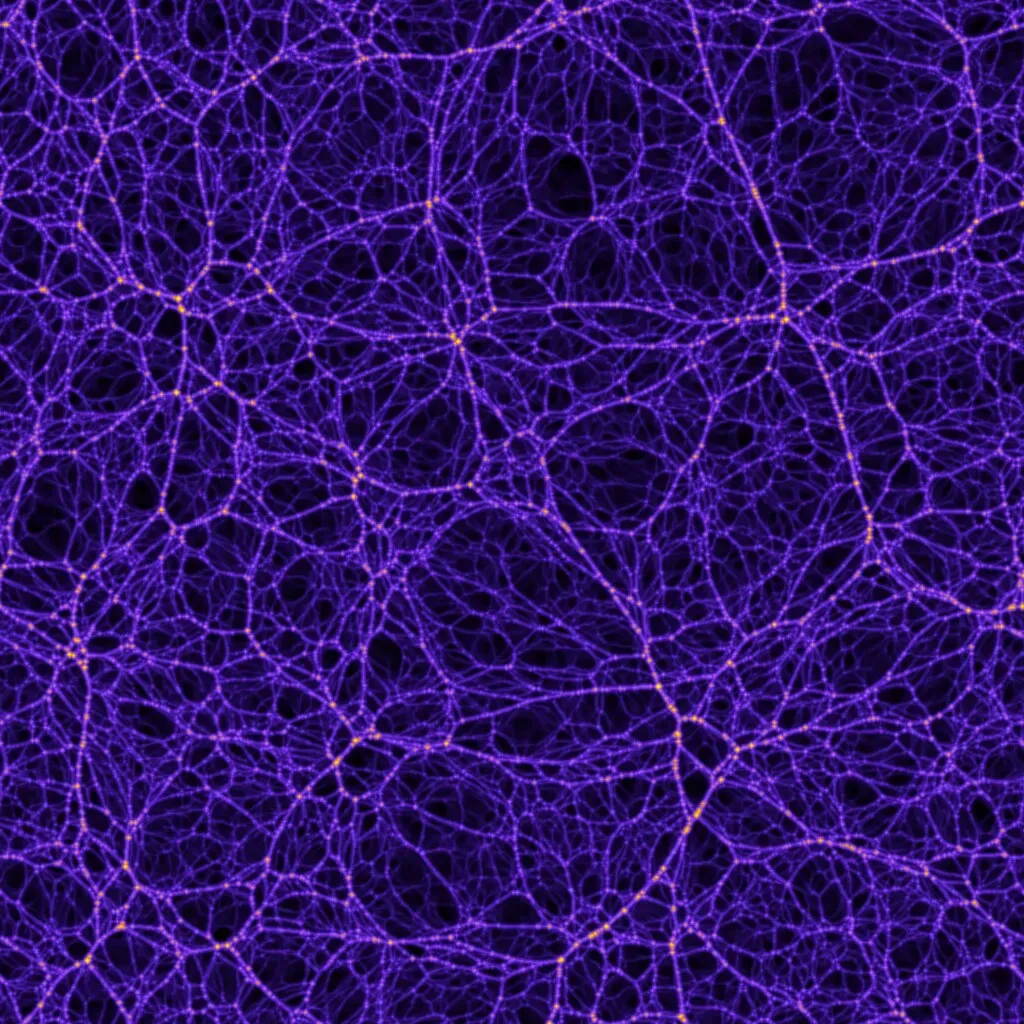
These fluctuations, amplified by gravity over 13.8 billion years, formed a sprawling network composed of filaments, nodes, walls, and voids. Current research in cosmology views this interconnected web as the largest structure in the universe, offering unprecedented insights into how galaxies form, the formation of galaxy clusters, and the distribution of unseen matter. Each component has its own role to play, like different organs in a single living body.
Filaments and sheets are separated by cosmic voids – vast regions nearly empty of galaxies. While prominent filaments can reach lengths of several hundred million light-years, voids have typical diameters between 30 and 300 million light-years. By far most of the cosmic volume turns out to be empty. In places where two or more large filaments intersect, the density of matter becomes so high that massive clusters of galaxies can form, which may contain hundreds or thousands of member galaxies. Being the largest and most massive gravitationally bound objects in the universe, galaxy clusters represent the high-density “nodes” of the cosmic web. Honestly, it’s like a city skyline. The skyscrapers cluster at the busiest intersections, and the streets between them carry all the traffic.
The First Direct Image of a Cosmic Web Filament
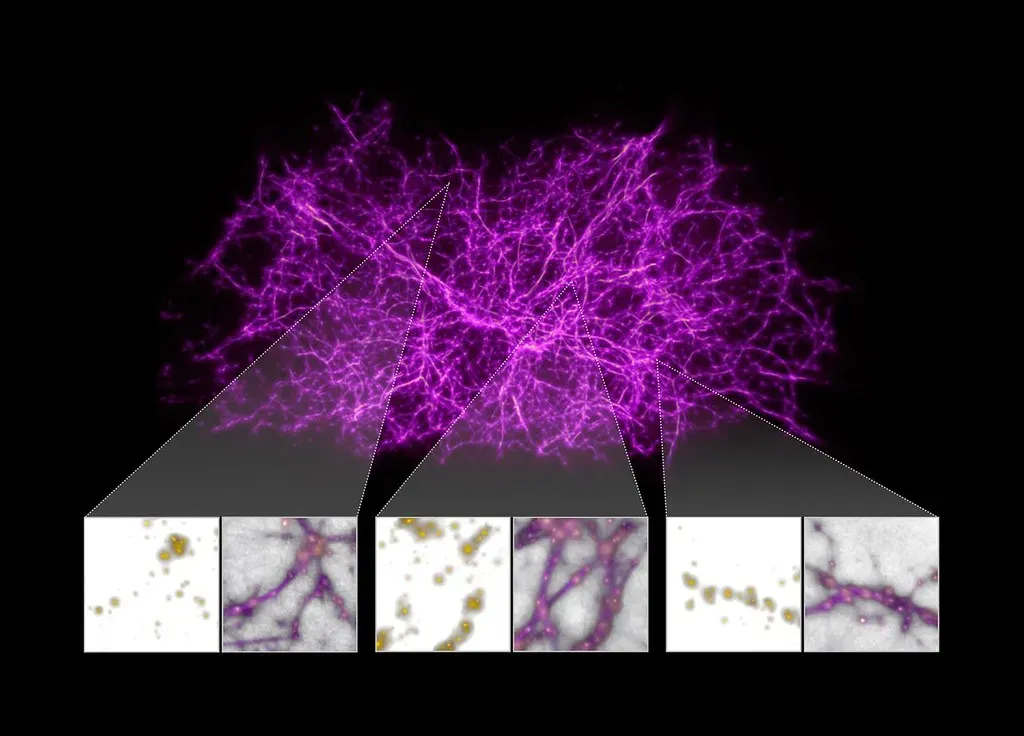
Matter in intergalactic space is arranged in a vast network of interconnected filaments, known as the cosmic web. After hundreds of hours of observations, an international team of researchers has captured the sharpest-ever image of one of these cosmic filaments. This filament links two actively forming galaxies and dates back to a time when the Universe was only about 2 billion years old. This was a genuinely staggering achievement. For decades, these structures existed almost entirely in supercomputer simulations. Actually photographing one was a different matter entirely.
This image from the new study reveals a single ancient filament of the cosmic web, with diffuse gas connecting two galaxies over an enormous distance of roughly 3 million light-years. The remarkable sensitivity of the MUSE instrument allowed the team to capture the filament’s light after it had traveled for almost 12 billion years to reach Earth. Let that number sink in for a moment. You’re seeing light that set off on its journey when the universe was barely a teenager. It’s the kind of image that belongs in every science classroom on Earth.
The Universe’s Missing Matter Found in the Web’s Hidden Threads
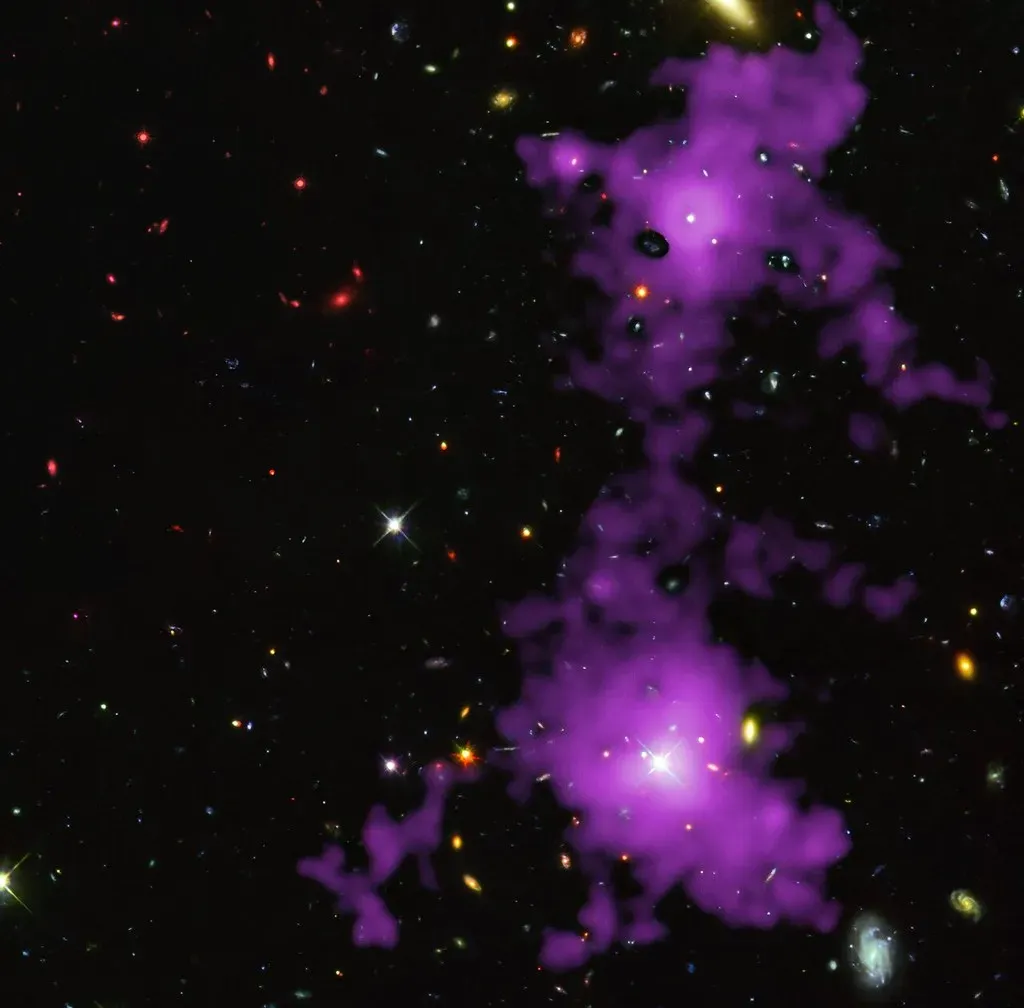
Analyses of the cosmic microwave background by the Planck satellite pinned ordinary matter to just under five percent of everything that exists. Surveys of nearby galaxies, however, kept coming up one-third short, a quandary dubbed the missing-baryon problem. For years, astronomers knew the math wasn’t adding up. Something was hiding, and they had a pretty good idea where.
Astronomers have uncovered a colossal, searing-hot filament of gas linking four galaxy clusters in the Shapley Supercluster, a discovery that could finally solve the mystery of the Universe’s missing matter. This giant thread, ten times the mass of the Milky Way and stretching 23 million light-years, is one of the best confirmations yet of what cosmological simulations have long predicted: that vast, faint filaments connect the Universe’s largest structures in a cosmic web. The analysis reveals that the filament consists mainly of free electrons and protons with a temperature of more than 10 million degrees Celsius. The density is about 10 particles per cubic meter. That is 30 to 40 times the average density of the universe. It’s brutally hot, almost impossibly thin, and yet somehow massive enough to shift our entire accounting of the universe’s matter budget.
Galaxies That Spin in Sync With the Web
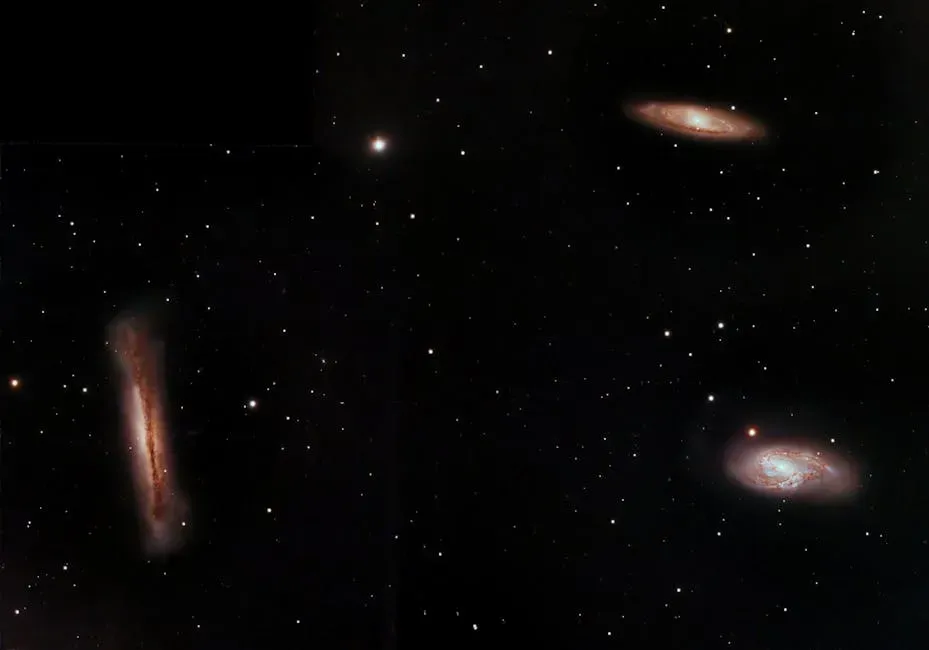
Scientists have discovered a giant cosmic filament where galaxies spin in sync with the structure that holds them together. The razor-thin chain of galaxies sits inside a much larger filament that appears to be slowly rotating as a whole. Here’s the thing – this discovery is genuinely shocking. We already knew galaxies formed along filaments. But the idea that individual galaxies inherit their spin direction from the cosmic web itself is something else entirely.
This coordinated motion is far stronger than expected by chance and hints that galaxy spin may be inherited from the cosmic web itself. The finding opens a new window into how galaxies formed and how matter flows across the universe. An international research team led by the University of Oxford has identified one of the largest rotating structures ever observed. The object is a razor-thin chain of galaxies embedded within a vast cosmic filament located about 140 million light-years from Earth. It’s a little like realizing that how you were born not only determines where you live, but also which direction you spin for the rest of your life.
The Next Generation of Cosmic Web Mapping
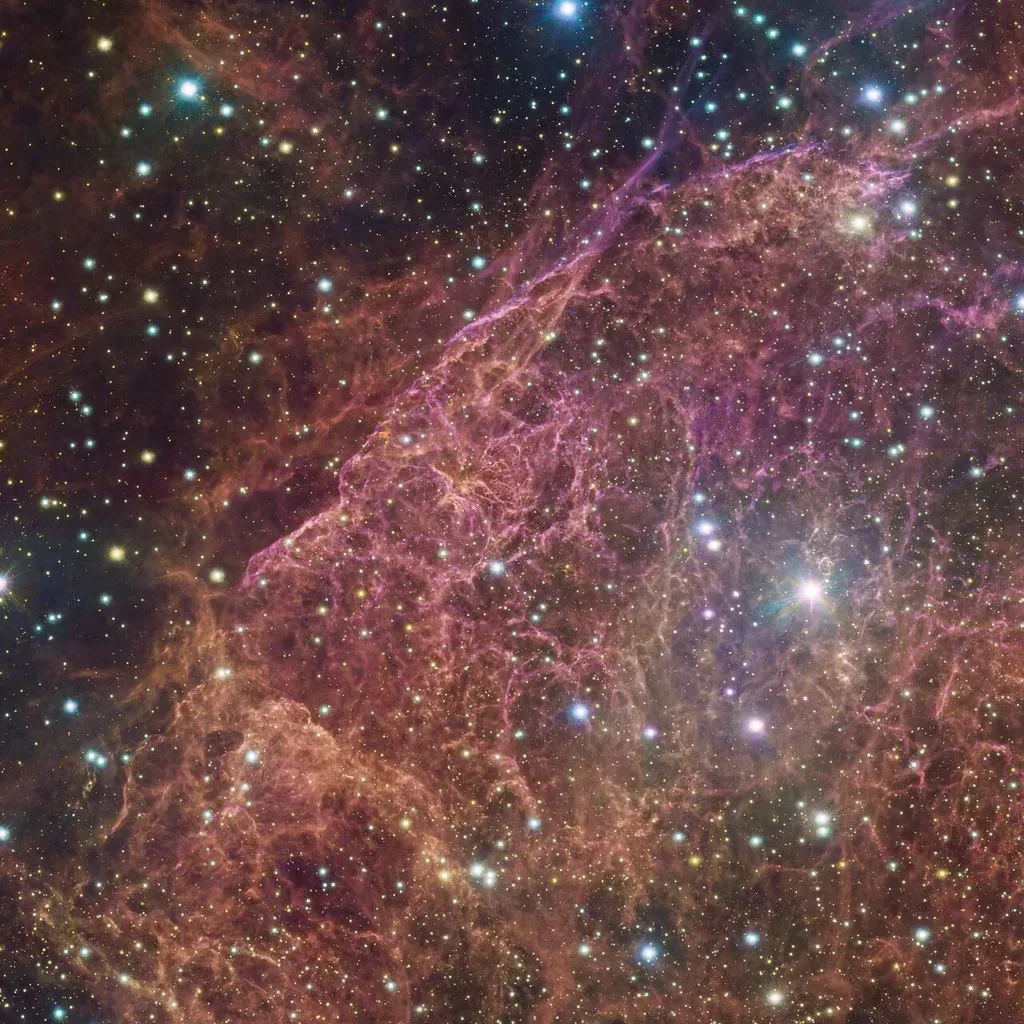
By mapping Lyman alpha light from 11 billion years ago, astronomers revealed previously invisible structures that form the cosmic web. Scientists processed 600 million spectra from the Hobby-Eberly Telescope to detect this signal. Specialized software and supercomputers were essential to extract these faint features from half a petabyte of observational noise. The technology required to actually see the cosmic web is itself an engineering miracle. Half a petabyte of noise to filter through. That’s more data than most of us can even conceptualize.
South Africa’s MeerKAT radio telescope has uncovered 60 entirely new cosmic structures previously invisible to scientists. This remarkable achievement marks a leap forward in astronomical research, allowing researchers to explore the unseen and dynamic energy processes taking place between galaxies. The findings offer a rare glimpse into the invisible universe, providing crucial insights into the forces that govern the largest cosmic structures. MeerKAT’s success is part of a broader effort to build the Square Kilometre Array (SKA), a massive global project set to become the world’s largest and most sensitive radio telescope. While MeerKAT has already provided vital insights into cosmic structures, the SKA, set to be fully operational by 2030, will take these discoveries to the next level. The scale and sensitivity of the SKA will enable astronomers to detect thousands of new structures and gain an even deeper understanding of the universe’s hidden energy processes.
Conclusion: The Universe Is Far More Connected Than You Think
If there’s one takeaway from everything you’ve just read, it’s this: the universe is not a collection of isolated objects floating in emptiness. It is a single, deeply interconnected structure where galaxies are born from invisible threads, where missing matter hides in glowing gas bridges, and where something as colossal as a 23-million-light-year filament can elude detection for most of human history simply because it was too faint to see.
You live inside the cosmic web. The Milky Way, your solar system, the very atoms in your body, all of it emerged from the same vast, gravity-driven architecture that astronomers are only now beginning to fully map. It’s hard to say for sure where these discoveries will take us next, but with instruments like JWST, MeerKAT, and the upcoming SKA pushing deeper every year, the web is slowly coming into focus. What other invisible highways are still waiting to be found? That question alone should keep you up at night – in the best possible way.
What surprises you most about the cosmic web? Drop your thoughts in the comments below.