
Imagine the universe as an ancient library, every wall covered floor to ceiling with text you cannot quite read. The books are written in radio waves, gravitational ripples, invisible particles, and ghost-like signals echoing from billions of years ago. Most of us walk through life unaware that this cosmic library even exists. Scientists, though, have been straining to read it for decades, squinting at the faintest whispers from the deepest reaches of space.
You might think the universe is simply empty darkness scattered with stars. Honestly, it’s anything but. Right now, researchers are racing to decode signals so mysterious and ancient they challenge everything we thought we knew about reality. From eerie fast radio bursts to invisible dark matter fingerprints, the cosmos is sending us messages. We just haven’t figured them all out yet. So let’s dive in.
The Wow! Signal: The Mystery That Refuses to Die
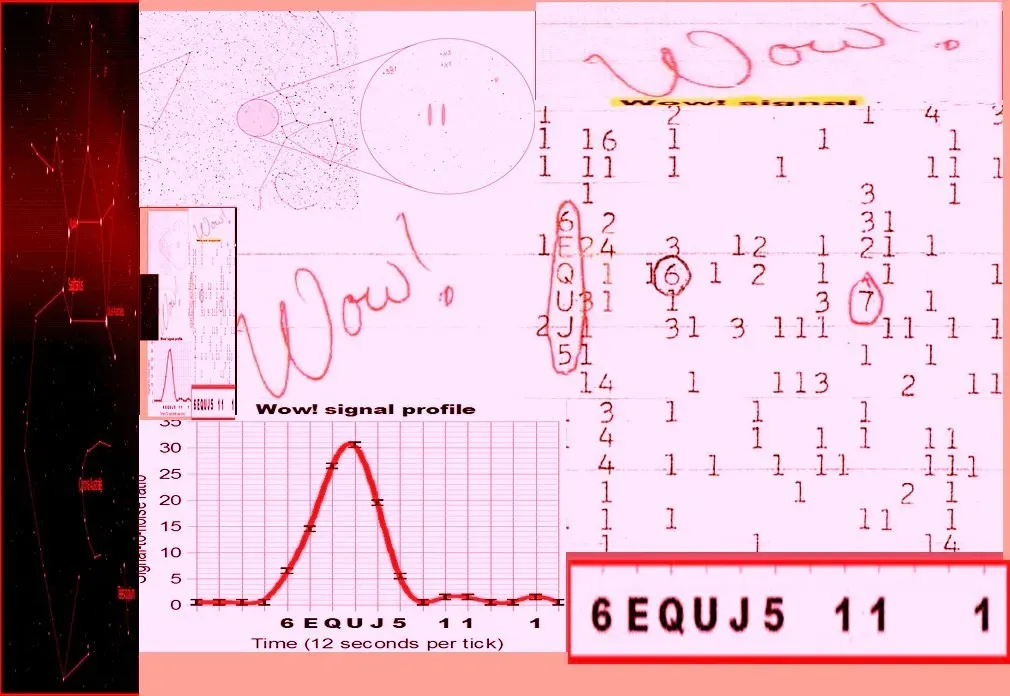
Picture this: it’s August 1977. An astronomer named Jerry Ehman is flipping through data from the Big Ear radio telescope in Ohio, and he sees something so shocking he scribbles “Wow!” beside the printout. The Wow! signal was a strong narrowband radio signal detected on August 15, 1977, by Ohio State University’s Big Ear radio telescope, and it appeared to come from the direction of the constellation Sagittarius, bearing expected hallmarks of extraterrestrial origin. It lasted for 72 seconds and then vanished, never to repeat.
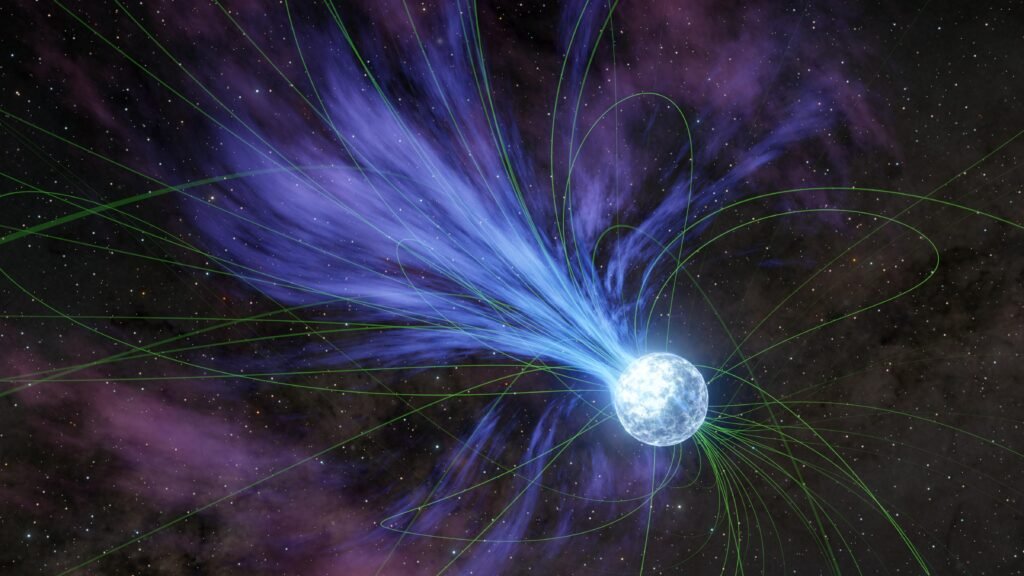
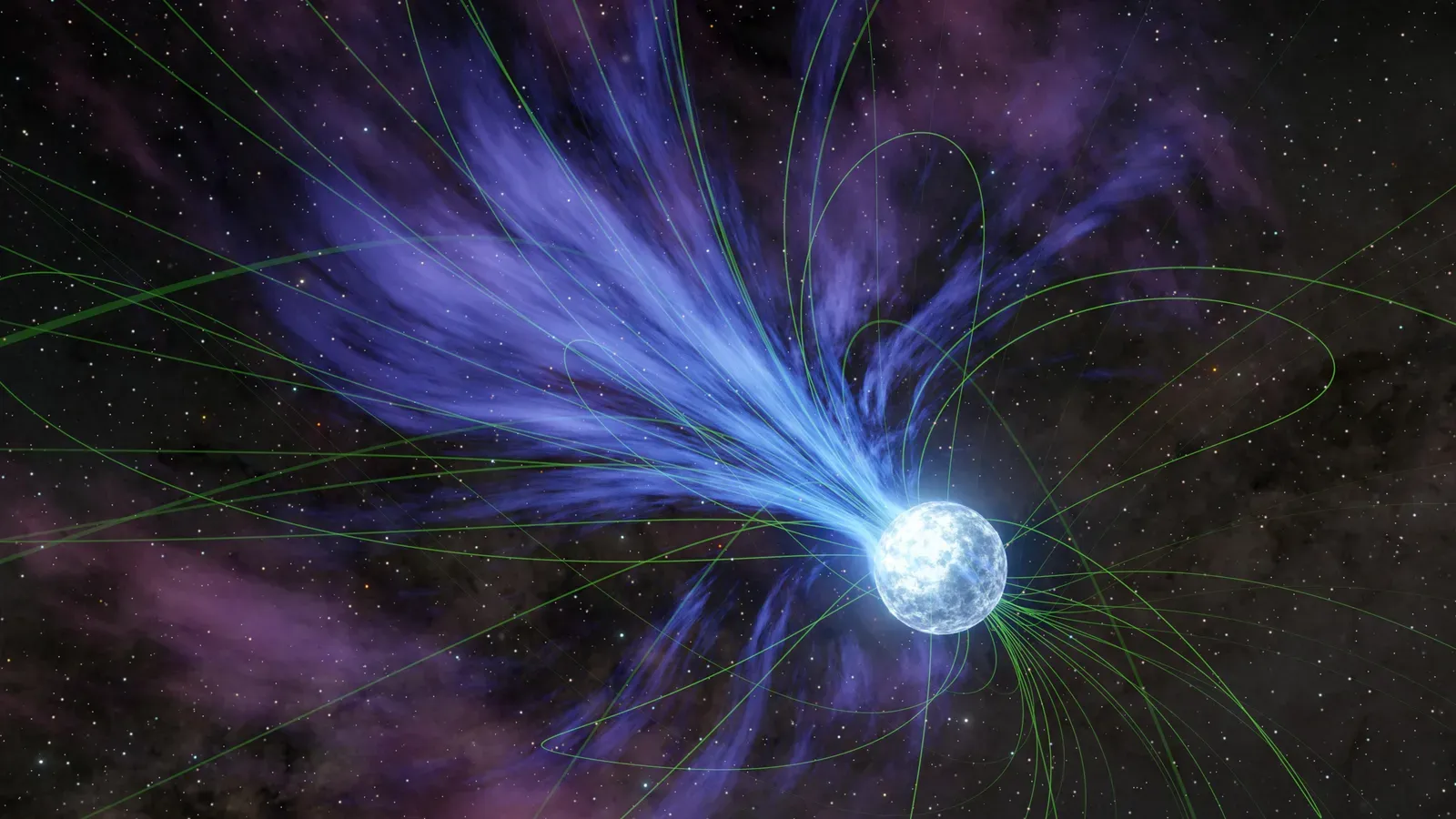
Decades later, the mystery is still very much alive. One of astronomy’s grandest riddles may have just gotten even more interesting, according to new research suggesting the source of the mysterious signal may have been the result of a remarkably rare cosmic event. Researchers from the Planetary Habitability Laboratory at the University of Puerto Rico now hypothesize that the Wow! Signal was caused by a sudden brightening of the hydrogen line in interstellar clouds, triggered by a powerful transient radiation source such as a magnetar flare or soft gamma repeater. It’s hard to say for sure, but this new explanation makes the case far more interesting than simply calling it interference or coincidence.
Fast Radio Bursts: Cosmic Flashes from the Edge of Everything
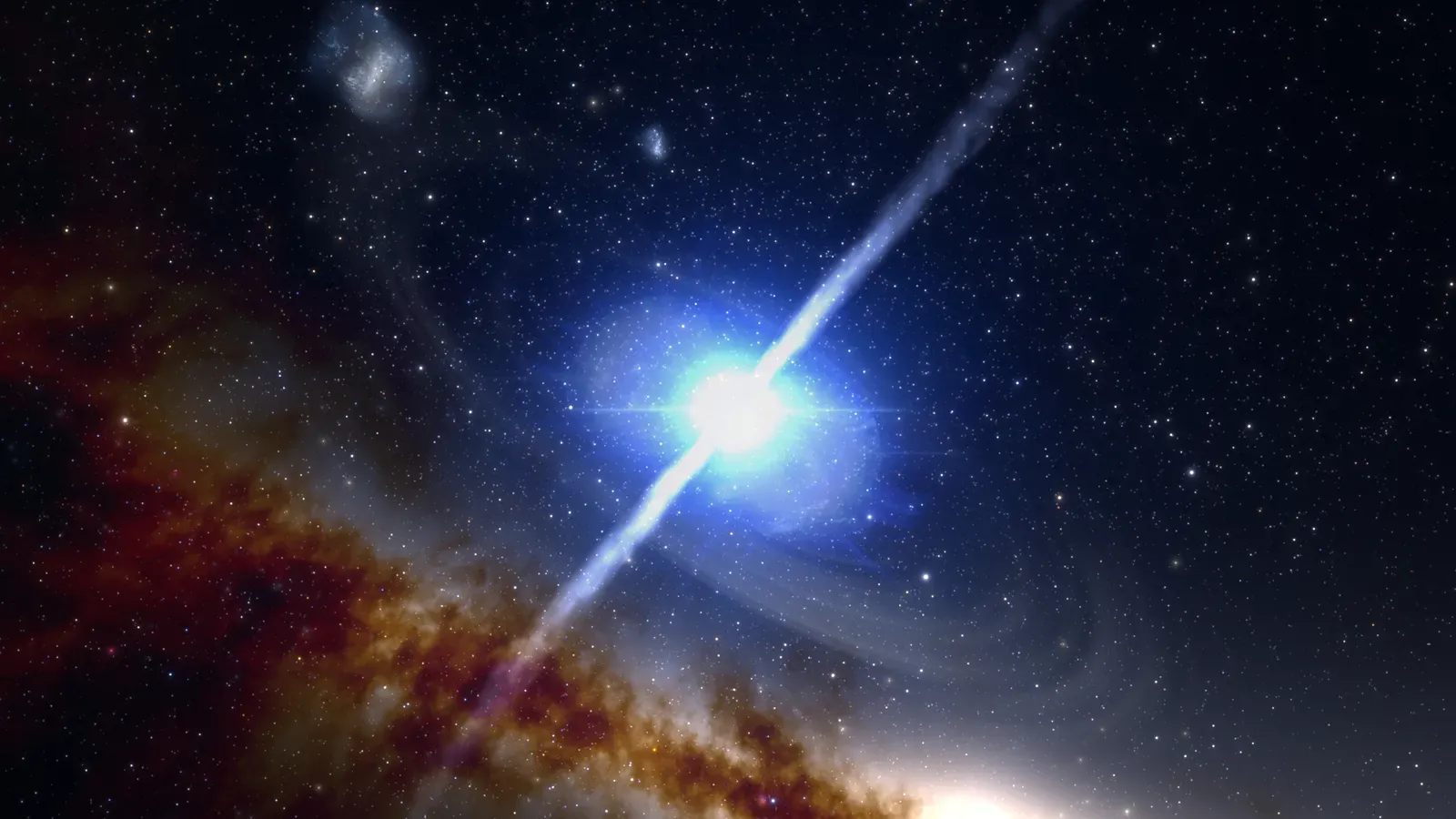
Let’s be real: few things in science sound more dramatic than a burst of radio energy that arrives from billions of light years away, lasts only a few milliseconds, and then disappears. A research team led by Peter Blanchard at the Harvard Center for Astrophysics may have found the first object that produced a fast radio burst in another galaxy. These FRBs are powerful bursts of radio wave emission that last only a few milliseconds, and since astronomers first discovered FRBs in 2007, they have determined the waves originate from outside our galaxy.
First detected in 2007, fast radio bursts were thought by some, including physicist Avi Loeb, to be the product of powerful alien civilizations, a signal beamed to Earth from billions of light years away. That idea has since been tempered, but the truth turned out to be almost equally mind-bending. Scientists say these explosive radio waves, which last mere milliseconds at most but contain massive amounts of energy, are likely to come from collapsed stars, also known as neutron stars, or possibly even black holes. Think of it like thunder without lightning, except the storm is happening across an entire galaxy.
Dark Matter’s Cosmic Fingerprints: The Invisible Sculptor
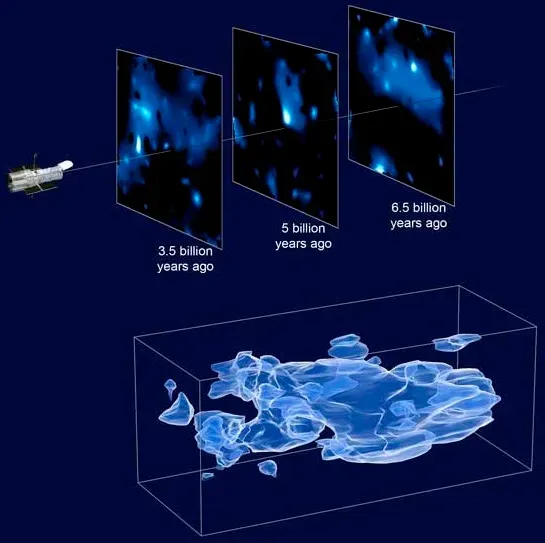
Here’s something that should stop you in your tracks: the vast majority of matter in the universe is completely invisible. You can’t see it, touch it, or detect it with your eyes. Dark matter is a mysterious substance that doesn’t emit light or energy and cannot be seen, but it makes up most of the matter in the universe, and scientists know it exists because its gravity affects how galaxies move and how these vast cosmic systems are arranged in space.
The good news is that researchers have been making real progress in reading dark matter’s hidden signature. Scientists at Rutgers and collaborators have traced the invisible dark matter scaffolding of the universe using over 100,000 Lyman-alpha emitting galaxies, and by studying how these galaxies clustered across three eras shortly after the Big Bang, they mapped dark matter concentrations, uncovering cosmic fingerprints that reveal how galaxies grow and evolve. I think of it like reading someone’s footprints in wet cement. You never see the person, but you know exactly where they walked.
Radio Echoes from the Cosmic Dark Ages
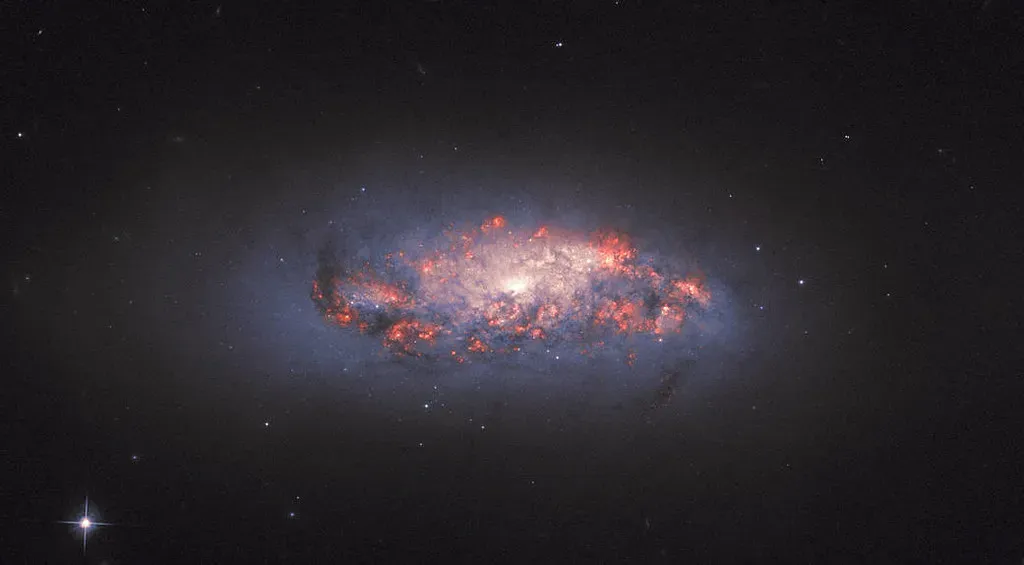
If you thought reading ancient history was impressive, try listening to radio signals from a time when the universe was less than a hundred million years old. Scientists are peering into the universe’s mysterious Cosmic Dawn using the faint whispers of hydrogen radio waves emitted over 13 billion years ago. That’s not a metaphor. These faint signals are literally still travelling through space, and we might be on the verge of picking them up.
Researchers propose that hydrogen gas from the early universe emitted detectable radio waves influenced by dark matter, and studying these signals, especially from the Moon’s radio-quiet environment, could reveal how dark matter clumped together before the first stars formed. This approach opens a new window into the mysterious cosmic era just 100 million years after the Big Bang. The Moon, of all places, might be humanity’s best radio dish for eavesdropping on the universe’s infancy. That’s both poetic and completely practical.
Gravitational Waves: The Universe Speaks in Ripples
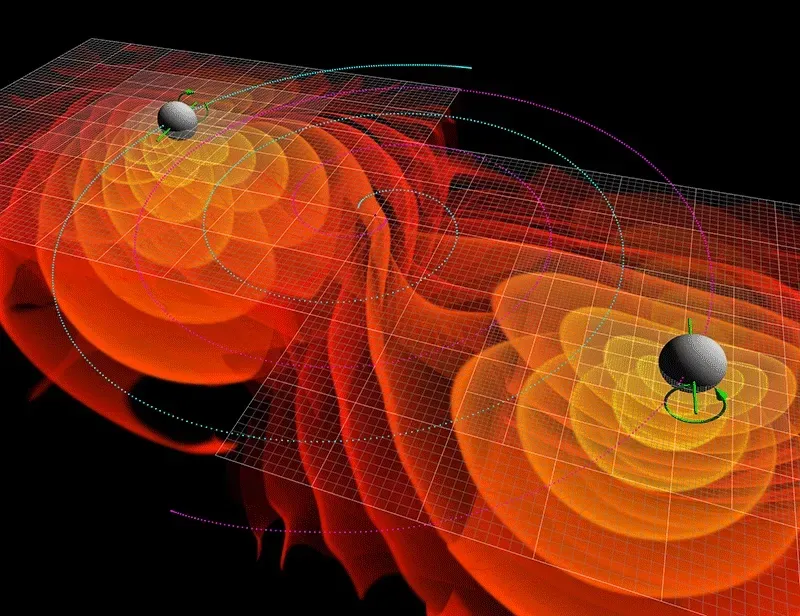
Gravitational waves are perhaps the most cinematic of all cosmic messages. When two black holes collide, the shockwave they send through the very fabric of spacetime eventually reaches Earth as a ripple smaller than a fraction of a proton. Gravitational waves, ripples in the fabric of spacetime, have emerged as a revolutionary tool for astrophysical exploration. These waves, produced by cataclysmic events such as the merger of black holes or neutron stars, provide a pristine medium to probe the universe’s most enigmatic phenomena. Unlike electromagnetic radiation, which can be obscured or altered by intervening matter, gravitational waves travel undisturbed, offering a direct glimpse into their sources.
The implications go far beyond just detecting collisions. Gravitational waves from black holes may soon reveal where dark matter is hiding. A new model shows how dark matter surrounding massive black holes leaves detectable fingerprints in the waves recorded by future space observatories. Meanwhile, researchers are even using quasars to detect the low-level gravitational hum that fills all of space. University of Colorado Boulder astrophysicist Jeremy Darling is pursuing a new way of measuring the universe’s gravitational wave background, the constant flow of waves that churn through the cosmos, warping the very fabric of space and time. The research could one day help unlock some of the universe’s deepest mysteries, including how gravity works at its most fundamental level.
Ghost Particles and the Secret of Our Existence
You probably haven’t spent much time thinking about why matter exists at all. It’s one of those questions that sounds philosophical until you realize it has a real scientific answer lurking somewhere in the data. By combining years of data from two massive neutrino experiments, researchers took a big step toward understanding how these invisible ghost particles might have tipped the cosmic balance in favor of matter over antimatter. Without that imbalance, you, this planet, and every star in the sky simply wouldn’t exist.
Neutrinos are extraordinarily strange. They barely interact with anything, which is exactly what makes them so useful as cosmic messengers. An international team combining two major neutrino experiments has uncovered stronger evidence that neutrinos and antimatter don’t behave as perfect mirror images. That subtle difference may hold the key to explaining why the universe is built the way it is. These “ghost particles” pass through entire planets without flinching, yet they carry clues about the universe’s most fundamental design choices.
Earth as a Giant Cosmic Detector: The New Scientific Frontier
What if you didn’t need a telescope pointed at the sky? What if the entire planet, or even nearby space, could be converted into one enormous sensor for hidden cosmic forces? That’s exactly where science is heading. SQUIRE aims to detect exotic spin-dependent interactions using quantum sensors deployed in space, where speed and environmental conditions vastly improve sensitivity. The concept is genuinely staggering: using Earth’s own natural properties to sense forces we can’t yet measure.
Earth acts as an enormous natural source of polarized spins. Unpaired geoelectrons within the mantle and crust, aligned by the geomagnetic field, supply roughly 10 to the power of 42 polarized electrons, exceeding the capabilities of standard laboratory spin sources by an enormous margin. Meanwhile, researchers are developing detectors of almost unthinkable sensitivity. Scientists are developing detectors so sensitive they can spot particle interactions that might occur once in years or even decades. These experiments aim to uncover what shapes galaxies and fuels cosmic expansion. If that doesn’t feel like something out of science fiction, I’m not sure what does.
Conclusion: We Are the Universe Learning to Read Itself
There’s something deeply moving about all of this. The universe has been broadcasting its secrets for over 13 billion years, and only recently have we evolved the ears to start hearing them. From the legendary Wow! signal to the ghost-like whisper of ancient hydrogen radio waves, from the gravitational “ringing” of colliding black holes to the invisible scaffolding of dark matter holding galaxies together, the cosmos is not silent. It never was.
What’s remarkable is how much progress has been made in just the past few years. New space missions, quantum sensors, AI-driven data analysis, and global collaborations are all converging on the same goal: cracking the universe’s deepest code. Every discovery pulls back one more curtain on a stage so vast and ancient it humbles the imagination entirely.
The universe is full of hidden messages. You just have to know how to listen. The real question isn’t whether those messages are there. It’s whether we’ll be patient, clever, and bold enough to finally read them. What do you think we’ll find when we do? Share your thoughts in the comments below.