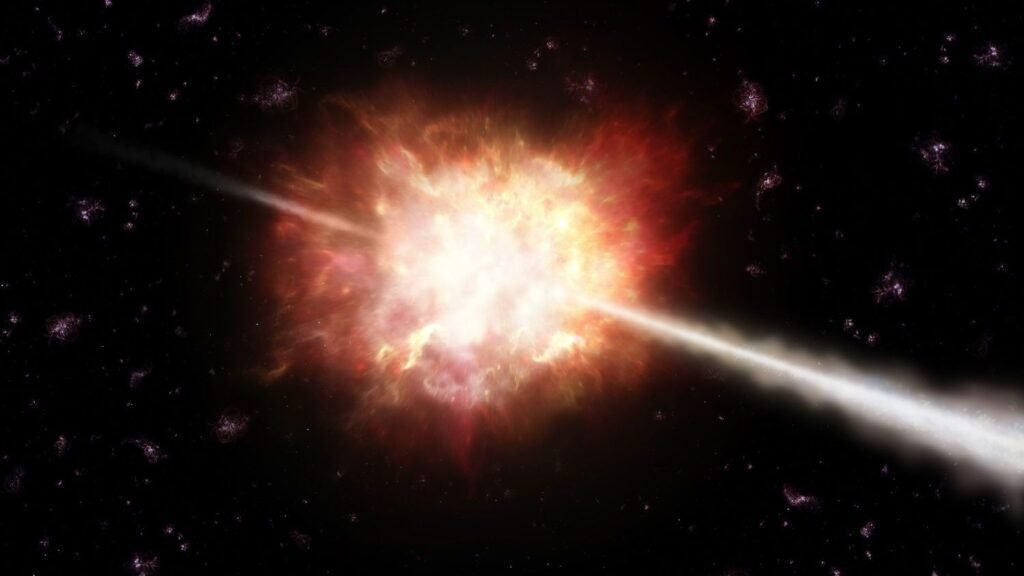

Imagine waking up one day to find out that everything you thought you knew about the house you live in was wrong. The walls are in the wrong place, the ceiling is higher than the blueprints said, and nobody quite knows why. That is not too far from what cosmologists are dealing with right now. The universe, our cosmic home, is behaving in ways that simply do not match the rulebook we have been trusting for decades.
Scientists have long had a handle on the big picture of cosmic expansion, or so they believed. The deeper they look, the stranger things get. There is a growing rift between what our best theoretical models predict and what our most powerful telescopes actually observe. The numbers just are not adding up, and the implications of that disagreement are, honestly, staggering. Let’s dive in.
The Discovery That Started It All: Edwin Hubble and an Expanding Universe
It all began nearly a century ago with one of the most consequential observations in scientific history. The concept of an expanding universe dates back to Edwin Hubble’s groundbreaking discovery in 1929, which revealed that galaxies are moving away from one another. That single realization flipped the entire picture of the cosmos on its head. Before Hubble, many scientists believed the universe was static, eternal, unchanging.
Determining the expansion rate of the universe, known as the Hubble constant, has been a major scientific pursuit ever since 1929, when Edwin Hubble first discovered that the universe was expanding. Think of it like trying to figure out how fast a balloon is inflating by measuring dots painted on its surface. Easy in theory, but incredibly complicated in practice. Coined by astronomer Edwin Hubble, who first calculated it in 1929, the Hubble constant is the rate at which the universe expands. This number reveals not only the universe’s current speed of growth, but also its age and history.
What Exactly Is the Hubble Tension and Why Should You Care?
Here is the thing. Scientists have two separate methods for measuring how fast the universe is expanding, and they keep getting different answers. The Hubble constant can be measured in two ways, one probing the universe at early times and another probing the universe at times near today. The early universe probe favors an expansion rate of about 67 km/s/Mpc, while the late universe probe, which measures the local universe as it exists today, favors an expansion rate of 73 km/s/Mpc. That gap might look small written out in numbers, but in cosmic terms it is enormous.
This discrepancy between predictions and actual measurements, known as the Hubble tension, is getting stronger with every new result. You might wonder why a small numerical mismatch matters so much. Well, it matters because the two methods are both very carefully designed and meticulously tested. If this discrepancy was real, it would mean that our prevailing model of the universe, the so-called Standard Model of Cosmology, was incomplete or even incorrect. That is not a minor footnote. That is a crisis.
Confirmed: The Universe Really Is Expanding Faster Than Our Models Predict
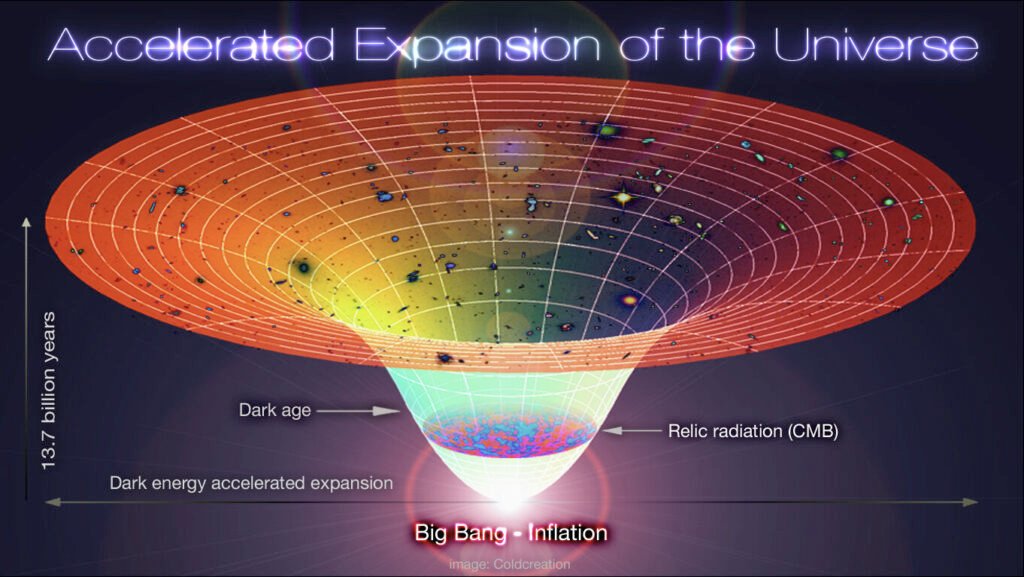
A new measurement confirms what previous and highly debated results had shown: the universe is expanding faster than predicted by theoretical models, and faster than can be explained by our current understanding of physics. Honestly, I find this one of the most thrilling and unsettling things happening in science right now. Multiple teams, using completely different methods, keep arriving at the same uncomfortable conclusion.
A precise distance to the Coma Cluster was determined using Type Ia supernovae, leading to a Hubble constant of 76.5 km/s/Mpc. That is a higher value than the standard model predicts from the early universe, and it matches what other research teams have measured independently. The longstanding question is: is the flaw in the measurements or in the models? Scolnic’s team’s new results add tremendous support to the emerging picture that the root of the Hubble tension lies in the models. In other words, it might be our understanding of physics that is broken, not our instruments.
The Cosmic Distance Ladder: How Scientists Measure the Unimaginable
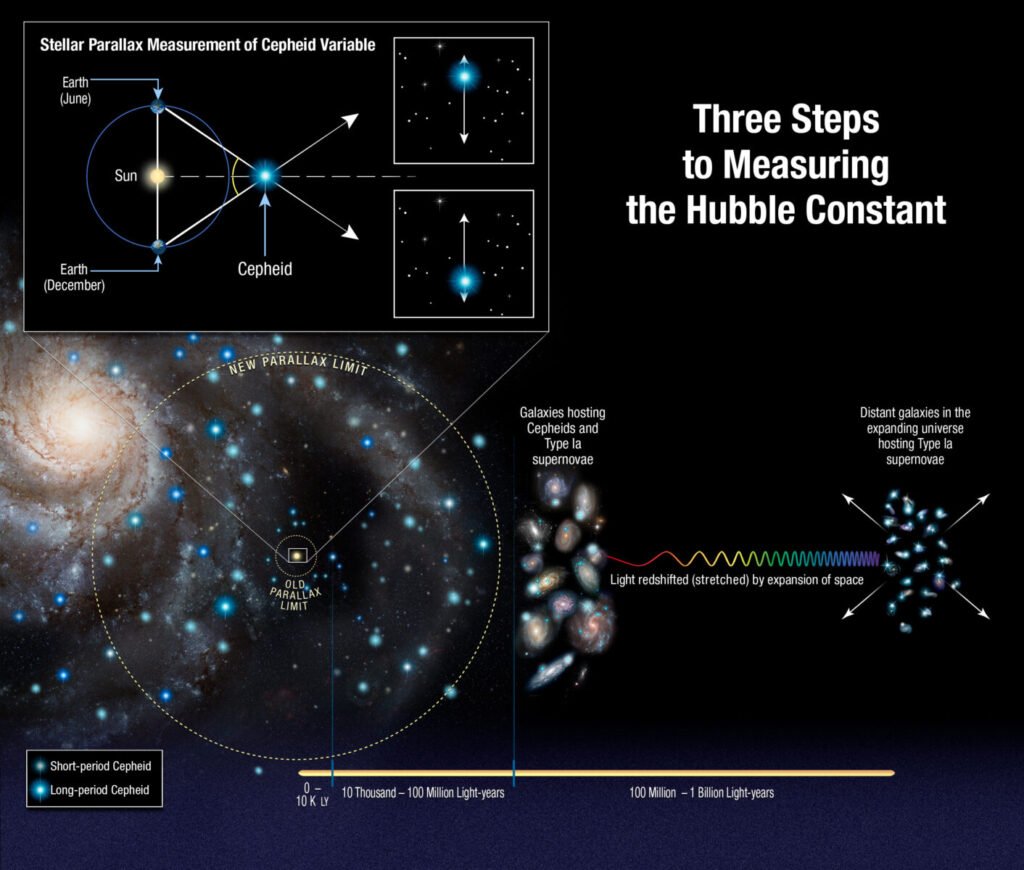
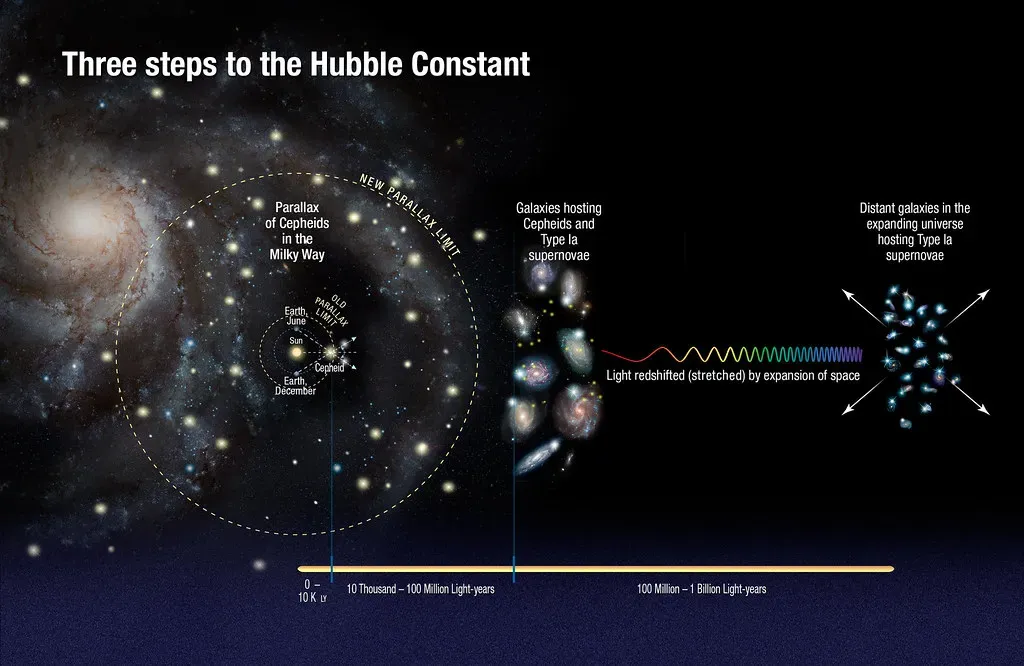
So how do you actually measure the expansion rate of something as vast as the entire observable universe? The answer involves a clever, multi-step process that scientists call the cosmic distance ladder. To tackle the Hubble tension, researchers have relied on a method called the cosmic ladder, which uses a series of calibrated steps to measure distances to celestial objects. Each “rung” on the ladder depends on precise observations, starting with nearby stars and extending to distant galaxies. You start with what you can measure directly, then use that to reach farther, then farther still.
Measuring distance requires standard candles, celestial objects whose intrinsic brightness is known, allowing scientists to determine how far away they are based on how dim they appear. One class of these standard candles is Type Ia supernovae, the spectacular explosions of dying white dwarf stars. These explosions reach a consistent peak brightness, which makes them excellent tools for gauging distance. It is a bit like judging how far away a lighthouse is by knowing exactly how powerful its light bulb is. The James Webb Space Telescope, with a 6.5-meter mirror and cutting-edge infrared sensors, has been able to pierce through dust and resolve individual stars that Hubble could only see as fuzzy blobs. Its instruments are 10 times more sensitive and offer four times the resolution of its predecessor, enabling astronomers to make measurements with unprecedented clarity.
A New Way to Measure the Universe: Gravitational Lensing and Time Delays
Let’s be real, measuring cosmic distances is incredibly hard. That is why scientists are desperately searching for independent measurement methods that do not rely on the same potential errors as the distance ladder. One exciting new approach involves gravitational lensing. Much like a funhouse mirror bends and distorts reflections, massive galaxies bend the light of more distant galaxies and quasars, producing multiple images of the same object. When the distant object’s brightness changes, astronomers can measure how long it takes those changes to appear in each image. Those “time delays” act like cosmic yardsticks, allowing scientists to calculate distances across the universe and ultimately determine how fast it is expanding.
Putting the timing and mass-distribution data together gave researchers a measurement of the Hubble constant with about 4.5 percent precision. This measurement supports the higher expansion rate seen in local universe studies, hinting that the Hubble tension may reflect real physics rather than just measurement error. That is a crucial distinction. Their results match “local” measurements but clash with early-universe estimates, strengthening the mysterious Hubble tension. This mismatch could point to new physics rather than observational error. The idea that we might need genuinely new physics to explain this is both thrilling and deeply humbling.
Dark Energy: The Mysterious Force Nobody Fully Understands
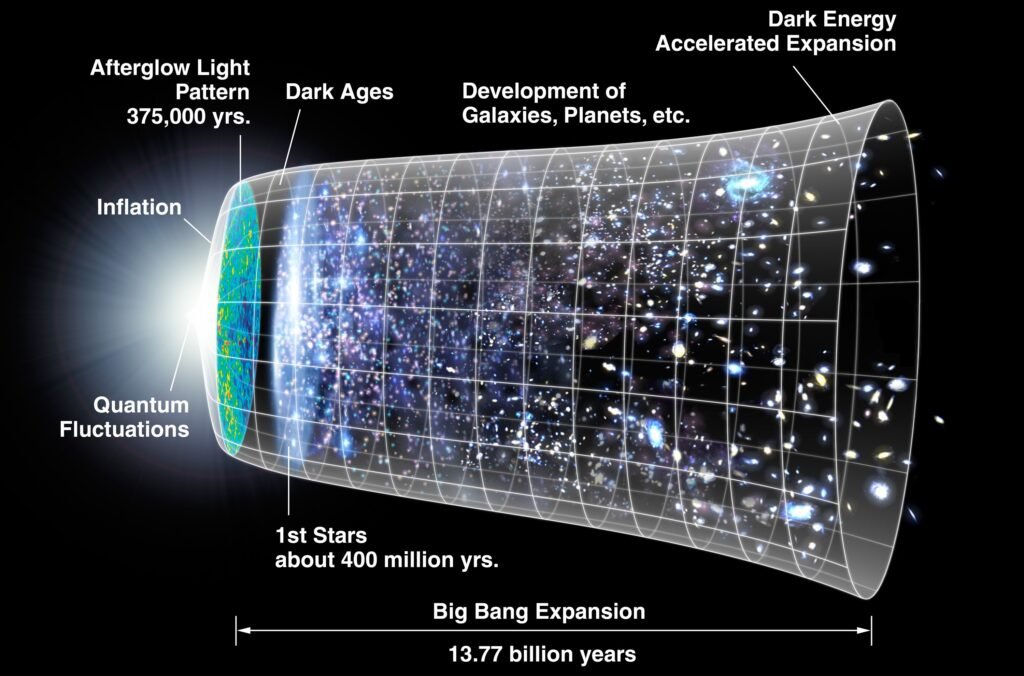
Not only is the universe expanding, the expansion is accelerating. Some mysterious “dark energy” seemed to be pushing the cosmos apart. Dark energy was only discovered in 1998, and since then it has become the single biggest unresolved mystery in all of physics. Imagine a force that makes up the vast majority of everything in the cosmos, yet we have absolutely no idea what it actually is.
To explain cosmic acceleration, scientists invoked dark energy, an unknown something that, unlike matter, gravitationally repels instead of attracts, pushing the universe apart almost like “anti-gravity.” The simplest version of dark energy is Einstein’s original idea for a cosmological constant, as a way to balance the action of gravity in his theory of general relativity. The mysterious dark energy constitutes nearly 70% of the universe today. Think about that. Nearly three quarters of everything that exists is something we essentially cannot detect, cannot directly observe, and cannot yet explain. A groundbreaking simulation study has revealed that dark energy, the mysterious force driving the universe’s accelerated expansion, may not be constant after all. If dark energy is changing over time, then our cosmological rulebook needs a complete rewrite.
Could Our Cosmological Model Actually Be Broken?
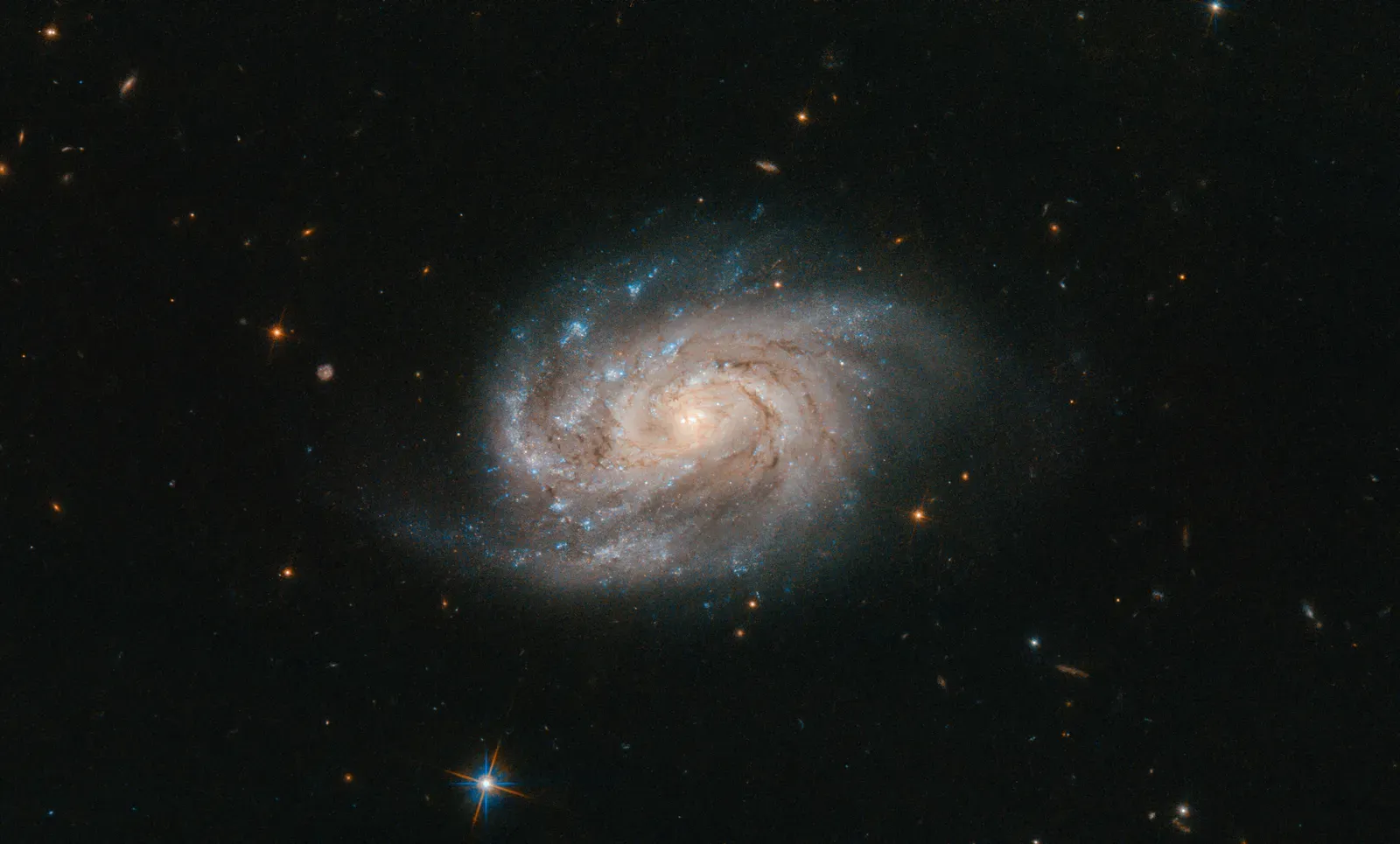
I know it sounds crazy, but here is the thing: more and more evidence is pointing toward a truly radical possibility. The standard model of cosmology, a framework that has guided our understanding for roughly two and a half decades, may simply be incomplete. Known as the Hubble tension, this discrepancy between predictions and observations could signal the need for new physics to explain why galaxies are spreading apart faster than expected. The tension has sparked intense debate among scientists, with some questioning whether the standard model of cosmology is still adequate.
Researchers are now faced with the possibility that key aspects of the universe’s behavior, such as the influence of dark energy, dark matter, or other unknown forces, may not yet be fully understood. Some researchers are going even further. A new cosmological model proposes that the effects attributed to dark matter and dark energy can be explained by the gradual weakening of fundamental forces as the universe ages. Others suggest rethinking gravity itself. Their work indicates that the universe’s expansion might be explained, at least partially, without invoking dark energy at all. The scientific conversation right now is electric, and nobody knows which idea will eventually win out.
What Comes Next: New Telescopes, New Data, and a Possible Revolution in Cosmology
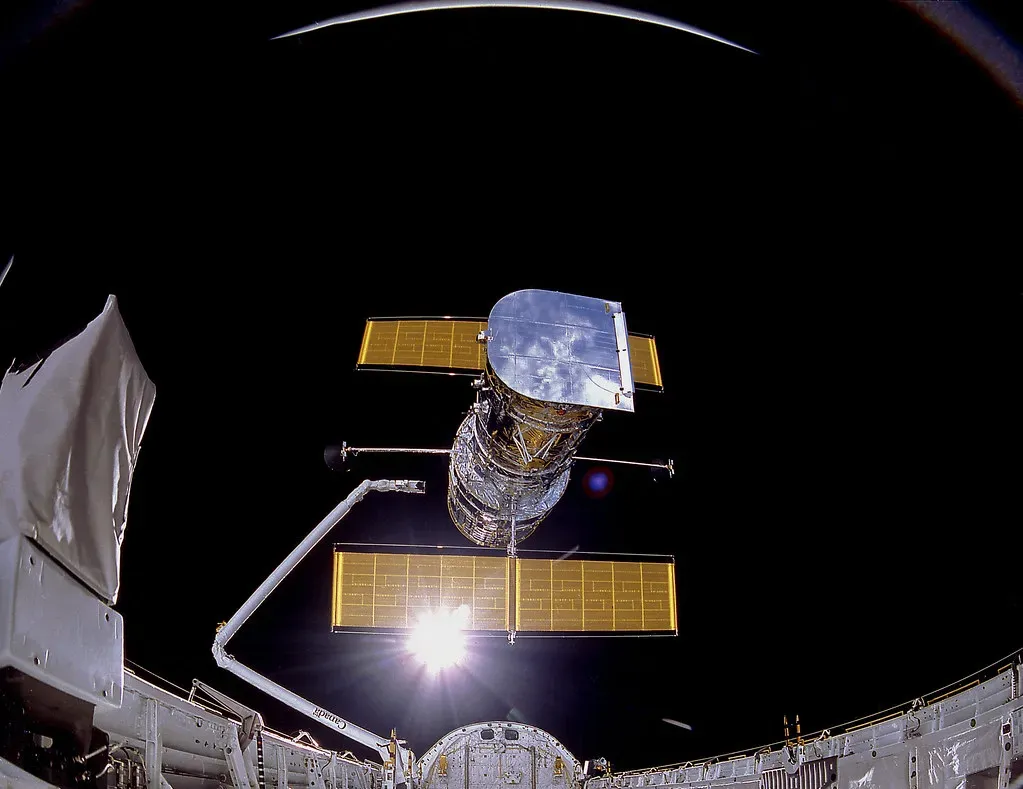
The next few years are going to be extraordinary for cosmology, and that is not an exaggeration. Several powerful new observatories are either already online or coming online very soon. Located high in the Chilean Andes, the Vera C. Rubin Observatory houses the world’s most powerful digital camera. Having begun scientific operations this year, it is expected to revolutionize our understanding of both the solar system and the broader universe. The sheer volume of data it will produce is genuinely mind-bending.
NASA’s Nancy Grace Roman Space Telescope, set to launch by May 2027, is designed to investigate dark energy, among many other science topics, and will also create a 3D dark matter map. Its resolution will be as sharp as the Hubble Space Telescope’s, but with a field of view 100 times larger, allowing it to capture more expansive images of the universe. This will allow scientists to map how matter is structured and spread across the universe and explore how dark energy behaves and has changed over time. Meanwhile, researchers are also pursuing a controversial but provocative idea: the universe may not fade away endlessly. A Cornell physicist has calculated that the universe may be nearing the halfway point of a total lifespan of about 33 billion years. Using newly released data from major dark energy observatories, he concludes that the cosmos will continue expanding for roughly another 11 billion years before reaching its largest size. After that, it would begin to shrink, eventually collapsing back into a single point, much like a stretched rubber band snapping back.
Conclusion
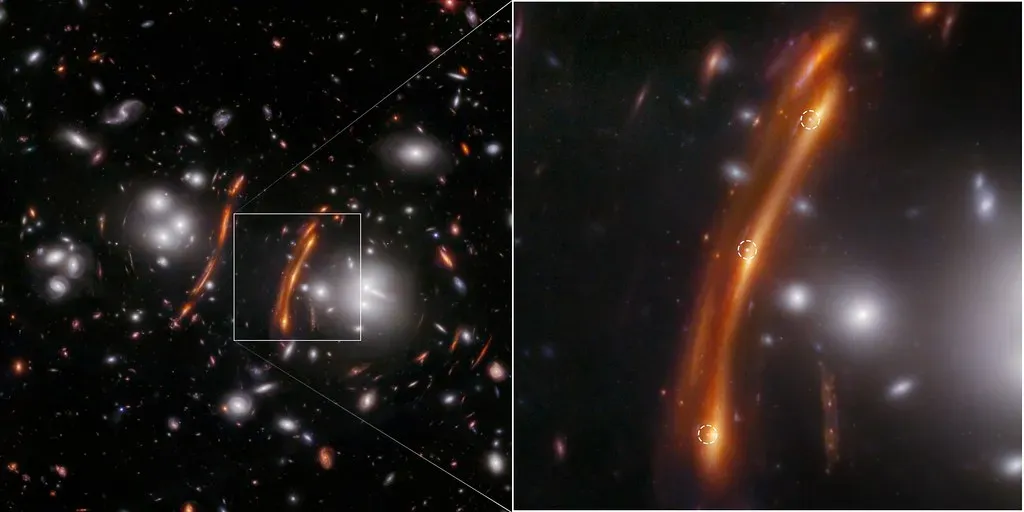
We are living through one of the most fascinating and disorienting moments in the history of science. The universe is not behaving the way our best theories say it should, and every new measurement seems to deepen the mystery rather than resolve it. Measurements of the universe’s expansion rate derived from early-universe observations continue to conflict with values obtained from nearby galaxies, raising the possibility that something fundamental may be missing from current cosmological models. Despite increasingly precise data from the Hubble Space Telescope and other observatories, the discrepancy has only grown sharper. Whether the solution lies in unknown physics, hidden systematic errors, or a deeper revision of cosmology itself remains one of the most closely watched questions in astrophysics.
It is hard to say for sure where all of this leads. But one thing is certain: the universe is forcing us to be humble. Everything we thought we knew is being tested, and that is not a cause for alarm. That is what science looks like when it is working at its very best. Maybe the greatest discoveries in human history are still ahead of us, hiding somewhere in the gap between what our models predict and what the cosmos actually does.
What would you have guessed about the universe’s fate before reading this? Drop your thoughts in the comments below.