
Imagine waking up one morning to discover that everything you thought you knew about the most fundamental laws of physics might need to be rewritten. That is essentially the situation cosmologists are grappling with right now. Scientists have been tracking the expansion of the universe for nearly a century, and with every new tool, every new telescope, and every new measurement, something strange keeps happening. The numbers don’t add up.
It is not a minor rounding error. It is a deep, persistent, and growing crack in our best model of the cosmos. Something is out there pulling space apart faster than our equations say it should. Let’s dive in.
The Universe Is Racing Away, Faster Than It Should Be
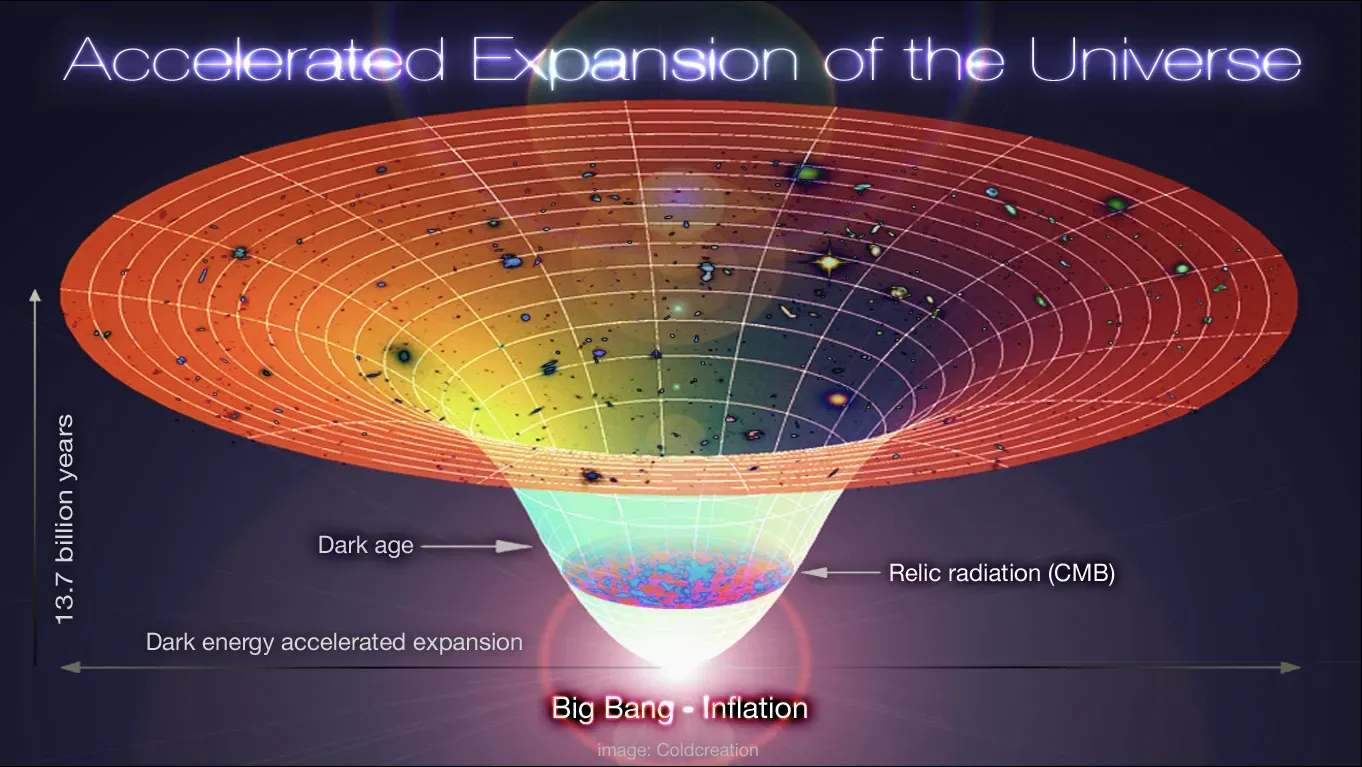
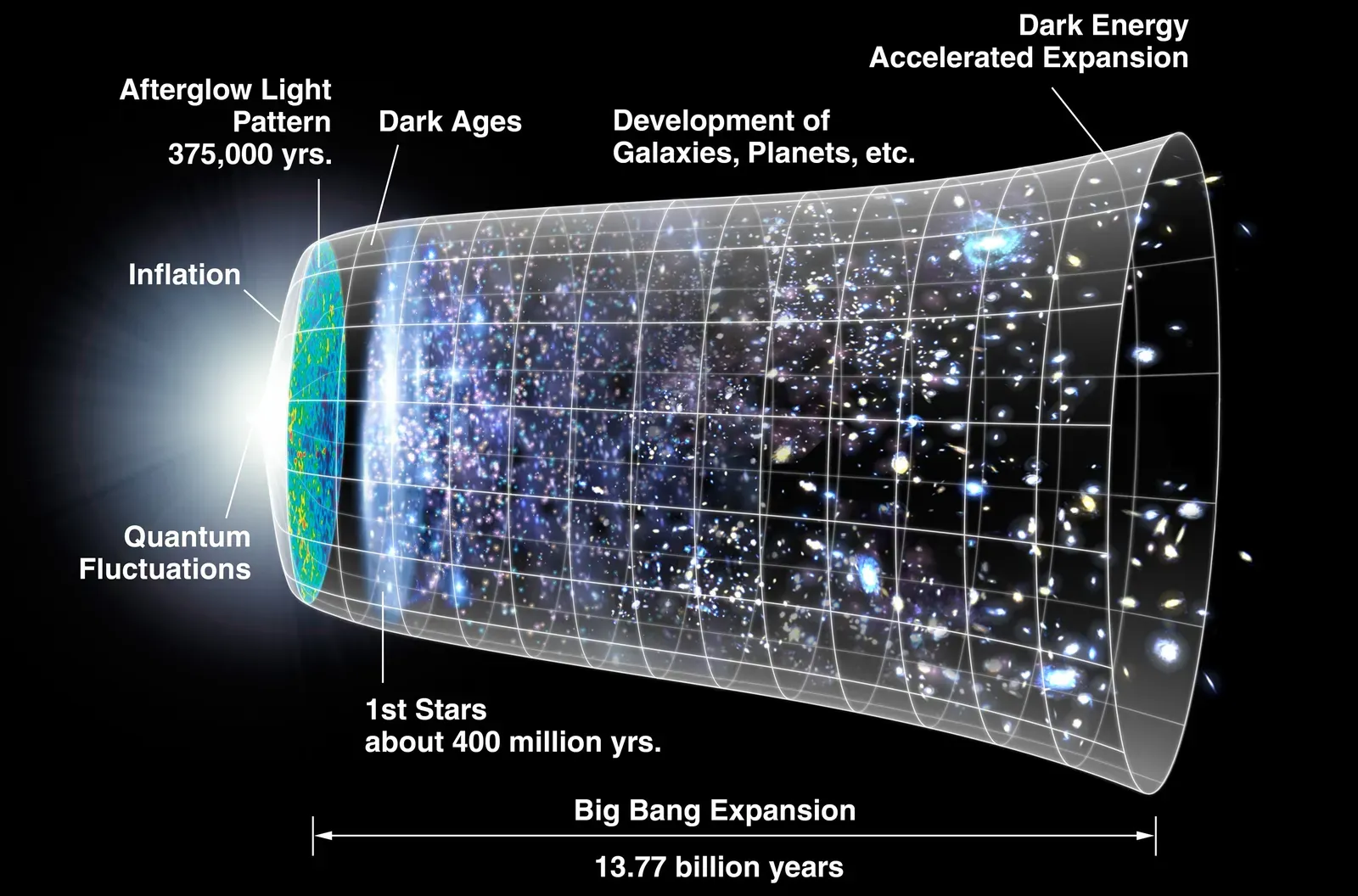
Here’s the thing about the universe: it has been expanding since the Big Bang, roughly 13.8 billion years ago. That part, scientists have known for a long time. What they didn’t expect, though, was just how stubbornly fast it appears to be expanding today.
A new measurement confirms what previous and highly debated results had shown: the universe is expanding faster than predicted by theoretical models, and faster than can be explained by our current understanding of physics. That sentence alone should make you stop and read it again. The universe isn’t just expanding. It’s expanding in a way that breaks the rules.
A new study confirmed what many researchers have long suspected: the universe is expanding much faster than our current understanding of physics can explain, and this discrepancy between predictions and actual measurements, known as the Hubble tension, is getting stronger with every new result. Honestly, calling it a “tension” almost feels like an understatement at this point.
Edwin Hubble and the Discovery That Changed Everything
It all started with one man and a remarkable moment in history. Determining the expansion rate of the universe, known as the Hubble constant, has been a major scientific pursuit ever since 1929, when Edwin Hubble first discovered that the universe was expanding. Think about how seismic that was. Before Hubble, many scientists believed the universe was static, eternal, and unchanging.
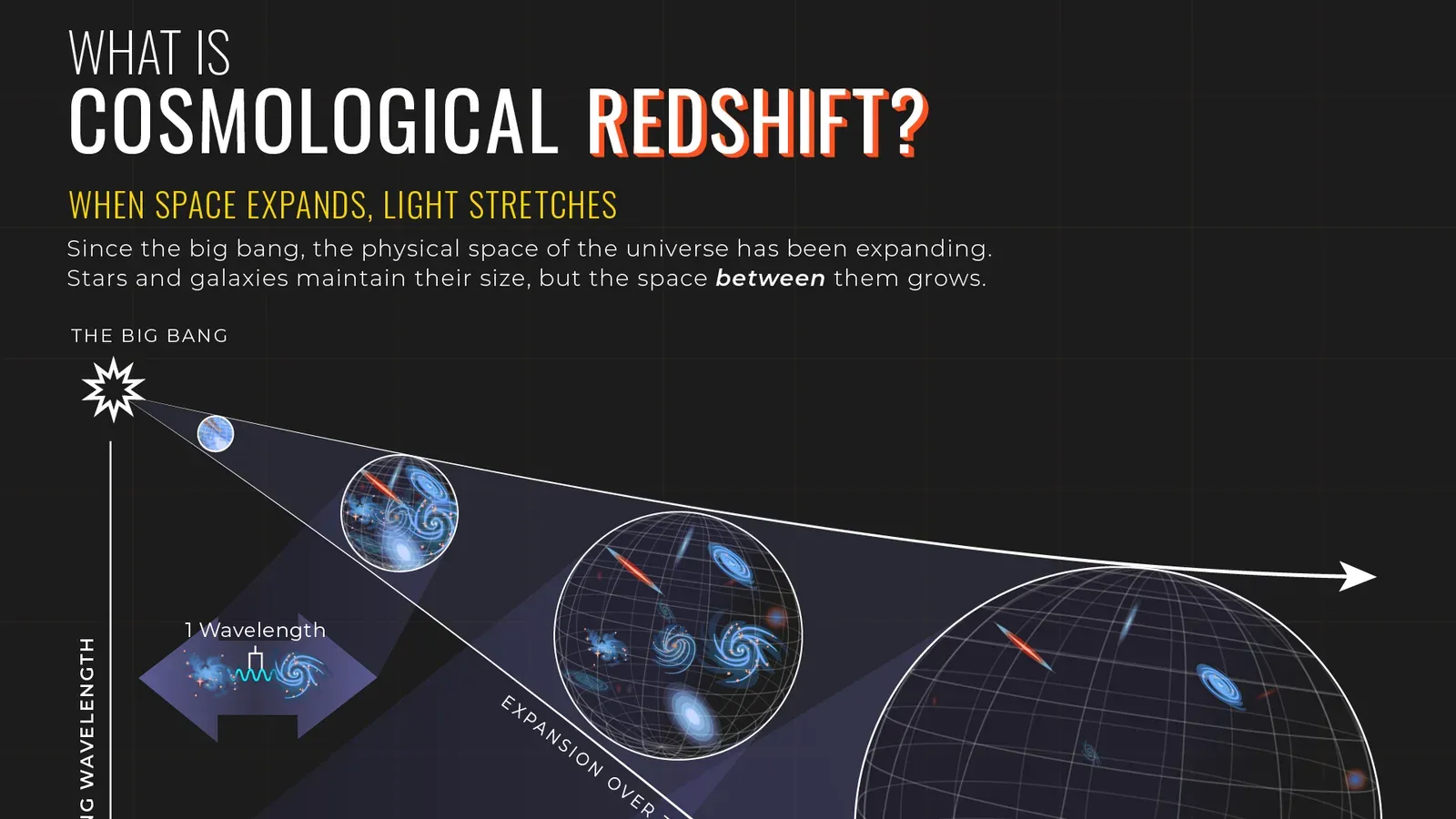
The light arriving from distant galaxies appeared stretched toward the red end of the spectrum, a phenomenon known as redshift, and the farther away a galaxy was, the stronger this effect appeared. This pattern suggested that space itself was expanding and carrying galaxies along with it, an insight first supported by the work of astronomer Edwin Hubble in 1929.
Think of it like dots drawn on a balloon. As you blow air into the balloon, the dots don’t move across the surface. The surface itself stretches, and the dots just come along for the ride. Galaxies are not simply flying outward from a central point through empty space. Instead, the structure of space itself stretches over time, carrying galaxies with it much like dots on the surface of an inflating balloon. Beautifully simple, and yet wildly difficult to measure.
What Is the Hubble Constant and Why Does It Matter?
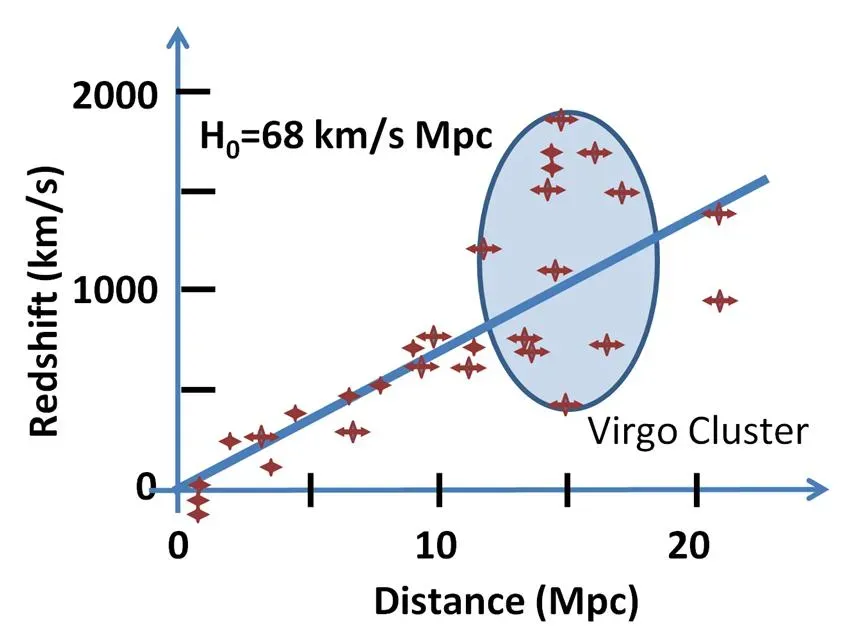
The Hubble constant refers to the rate at which the universe is expanding, and scientists have been working for decades to measure this value, which tells us how quickly galaxies are moving apart. It sounds straightforward. Measure how fast galaxies are running away from each other, divide by their distance, and there’s your number.
The problem? Two completely different methods of measuring this constant give two completely different answers. The first method examines tiny fluctuations in the cosmic microwave background, the faint afterglow of the Big Bang observed by the Planck satellite between 2009 and 2013, and this approach gives a value of about 67 kilometers per second per megaparsec. Riess’s team measured a rate closer to 74 km/s/Mpc, noticeably faster than the value derived from the cosmic microwave background.
That gap, roughly 7 kilometers per second per megaparsec, might sound tiny. But in cosmological terms, it is enormous. In other words, measurements match the universe’s expansion rate as other teams have recently measured it, but not as our current understanding of physics predicts it. The longstanding question is: is the flaw in the measurements or in the models?
The Cosmic Distance Ladder: Humanity’s Ruler for the Universe
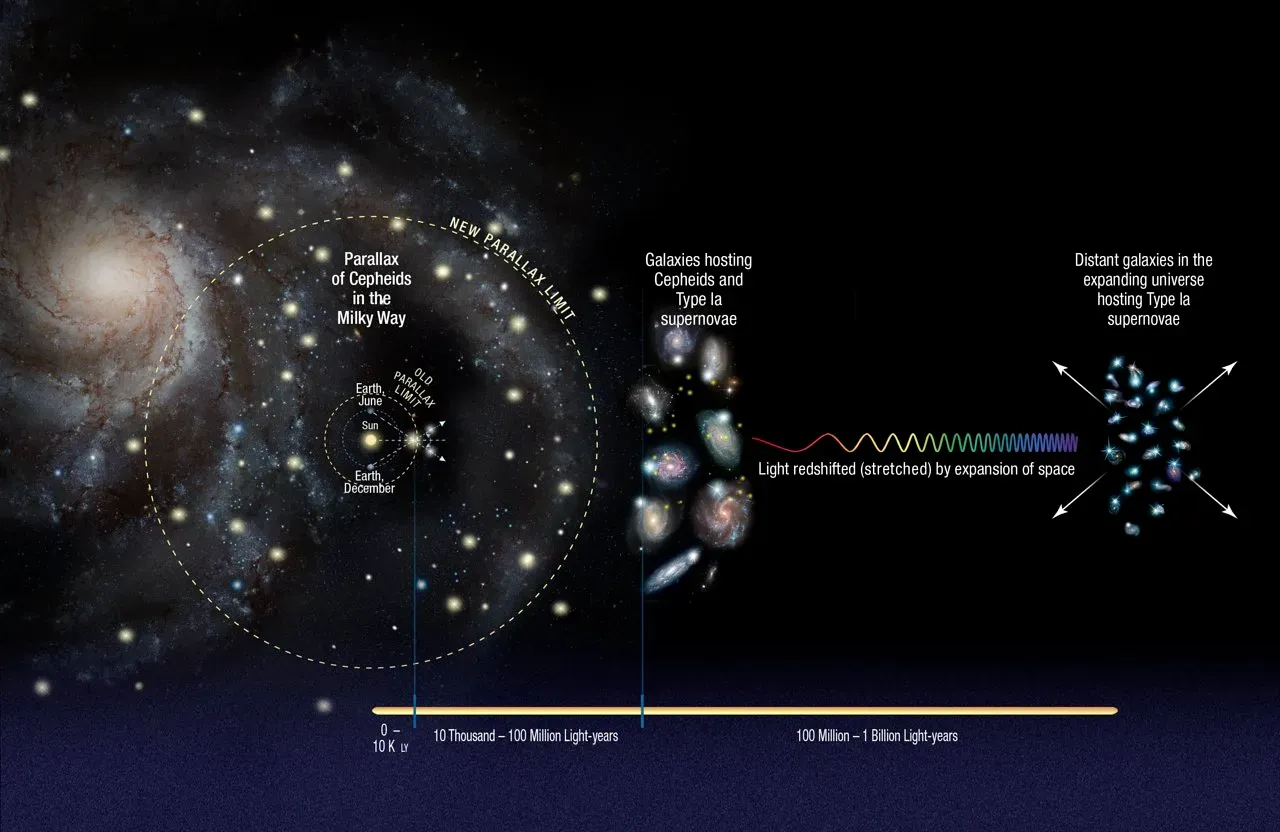
To understand why measuring the universe’s expansion is so incredibly difficult, you need to understand the concept of the cosmic distance ladder. It’s exactly what it sounds like. Think of it like trying to measure the distance across a pitch-black ocean by starting with a ruler, then a rope, then a sonar device, each step dependent on the last.
Our understanding of the size of the universe is dependent upon the cosmic distance ladder, a series of measurements of different kinds of objects and phenomena, each building upon the previous step in the ladder, and by extending the ladder with different kinds of measurements, we can measure larger and larger distances in the universe. The first rungs use nearby stars. Then Cepheid variable stars. Then Type Ia supernovae.
Cepheid variable stars provide the crucial first step because their predictable pulsations reveal their true brightness, and by comparing that intrinsic brightness with how bright the stars appear from Earth, astronomers can determine their distance and use those measurements to calibrate Type Ia supernovae observed in the same galaxies. Those supernovae then act as bright markers visible across enormous cosmic distances. It is an ingenious system. But it’s also one where errors can build up and compound with every step.
When Webb and Hubble Tag-Teamed the Mystery
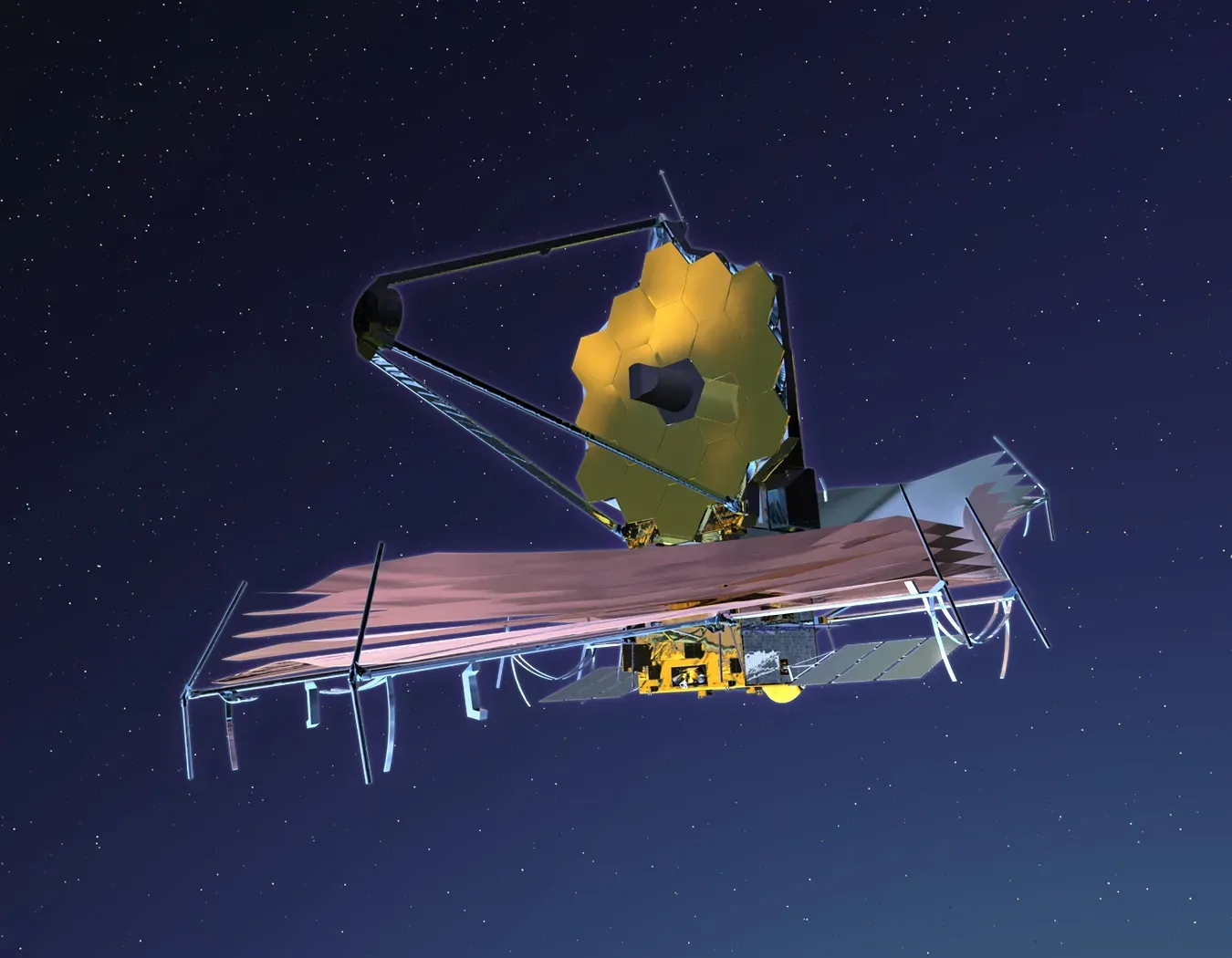
For years, some scientists hoped that the Hubble tension would quietly dissolve once measurement errors were identified and corrected. The James Webb Space Telescope was supposed to settle that debate once and for all. Spoiler: it didn’t go quite as planned.
Hubble has been measuring the current rate of the universe’s expansion for 30 years, and astronomers wanted to eliminate any lingering doubt about its accuracy. Now, Hubble and NASA’s James Webb Space Telescope have tag-teamed to produce definitive measurements, furthering the case that something else, not measurement errors, is influencing the expansion rate.
Webb slices through the dust and naturally isolates the Cepheids from neighboring stars because its vision is sharper than Hubble’s at infrared wavelengths. With those sharper eyes, Webb gave researchers a chance to double-check everything. With measurement errors negated, what remains is the real and exciting possibility we have misunderstood the universe, said Adam Riess, a physicist at Johns Hopkins University in Baltimore. That is not a small thing for a Nobel Prize-winning physicist to say.
Dark Energy: The Mysterious Force Behind It All
So if the expansion is real and accelerating, what is actually driving it? The answer scientists have been working with for over two decades is dark energy. I know it sounds crazy, but dark energy is a placeholder name for something that has never been directly detected, yet appears to make up the vast majority of the universe.
Scientists previously thought that the universe’s expansion would likely be slowed down by gravity over time, an expectation backed by Einstein’s theory of general relativity. But in 1998, everything changed when two different teams of astronomers observing far-off supernovae noticed that the stellar explosions were dimmer than expected, and these groups were led by astronomers Adam Riess, Saul Perlmutter, and Brian Schmidt, a trio who won the 2011 Nobel Prize in Physics for this work.
Observations suggested that whatever this dark energy was, it accounted for more than two-thirds of the energy in the universe, far more than all the visible matter we can see. Yet for all that dominance, its true nature remains one of science’s deepest unsolved riddles. Recent high-precision measurements are enabling increasingly detailed tests of dark energy, the invisible force that’s thought to drive the universe’s accelerating expansion, and researchers are re-examining the long-standing assumption that dark energy remains constant over time, with several studies indicating that its force may be variable.
Is the Expansion Actually Slowing Down? A Jaw-Dropping Twist
Just when you thought the story couldn’t get more complicated, a stunning new twist emerged in late 2025. While most scientists were scrambling to explain why the universe expands faster than expected, a team at Yonsei University in South Korea dropped a bombshell: the expansion may actually be starting to slow down.
The universe’s expansion may actually have started to slow rather than accelerating at an ever-increasing rate as previously thought, a new study suggests. Remarkable findings published in Monthly Notices of the Royal Astronomical Society cast doubt on the long-standing theory that a mysterious force known as dark energy is driving distant galaxies away increasingly faster, and instead show no evidence of an accelerating universe. If confirmed, this would reshape everything.
A team of astronomers at Yonsei University put forward new evidence that Type Ia supernovae, long regarded as the universe’s standard candles, are in fact strongly affected by the age of their progenitor stars, and even after luminosity standardization, supernovae from younger stellar populations appear systematically fainter, while those from older populations appear brighter. It is like discovering that your ruler has been slightly wrong all along. Every measurement made with it needs to be reconsidered.
What Comes Next: The Telescopes That Could Crack the Code
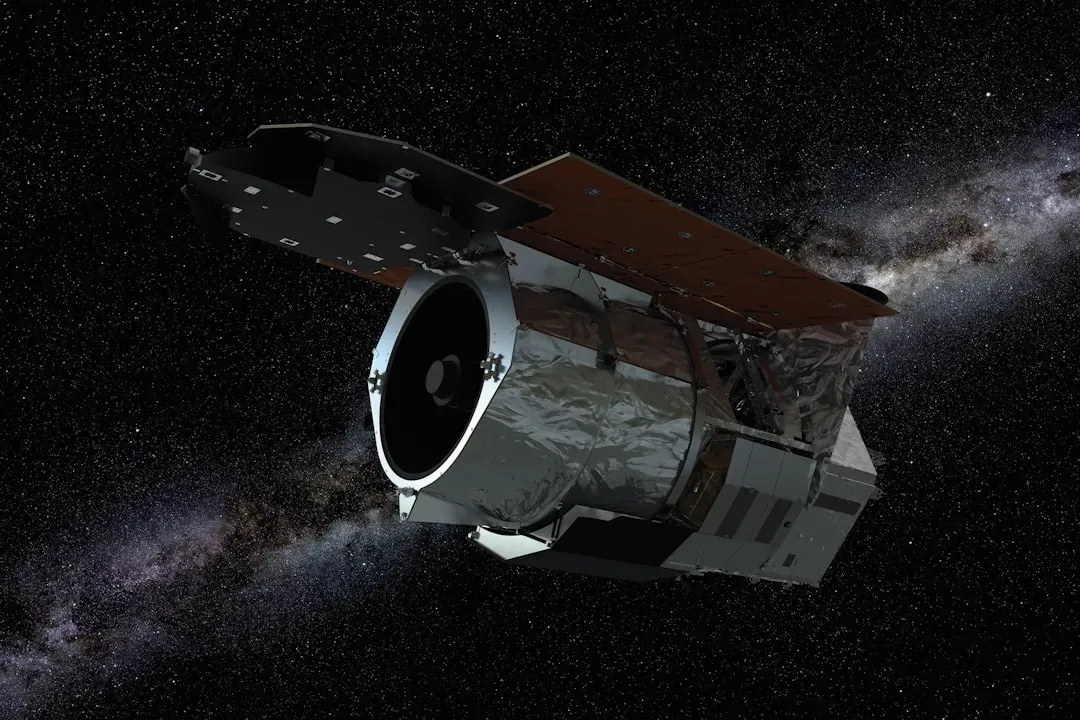
The good news, if you want to call it that, is that humanity is not sitting still. A new generation of observatories is either already operational or coming online very soon, each designed specifically to tackle these cosmic mysteries head-on.
NASA’s upcoming Nancy Grace Roman Space Telescope will do wide celestial surveys to study the influence of dark energy, the mysterious energy that is causing the expansion of the universe to accelerate. NASA’s Nancy Grace Roman Space Telescope, set to launch by May 2027, is designed to investigate dark energy and will also create a 3D dark matter map, with a resolution as sharp as NASA’s Hubble Space Telescope’s but with a field of view 100 times larger, allowing scientists to map how matter is structured and spread across the universe and explore how dark energy behaves and has changed over time.
Scientists’ next step is to expand the number of time-delay lenses, collect sharper images, and rule out any remaining sources of error, and with new, powerful telescopes now online, study authors are confident the method can soon deliver more accurate measurements. It’s hard to say for sure when the definitive answer will arrive, but the tools to find it are finally within reach. New data from major dark-energy observatories suggest the universe may not expand forever after all, and a Cornell physicist calculates that after reaching its maximum size in about 11 billion years, it could begin collapsing, ultimately ending in a big crunch roughly 20 billion years from now. A universe with a deadline. That changes things.
Conclusion: The Most Humbling Mystery in Science
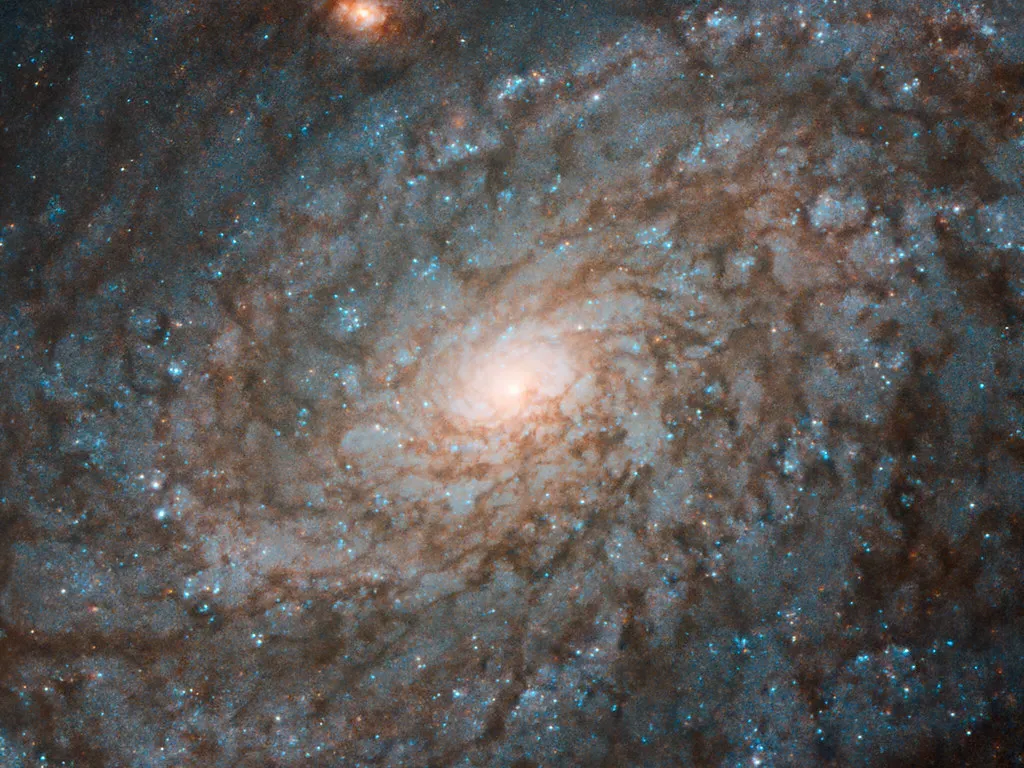
What the Hubble tension ultimately reveals is not a flaw in our telescopes or our math. It reveals something far more profound: our model of the cosmos, the framework we’ve trusted for decades, may genuinely be missing something. Something big.
Researchers are now faced with the possibility that key aspects of the universe’s behavior, such as the influence of dark energy, dark matter, or other unknown forces, may not yet be fully understood, and this growing challenge to established theories marks a pivotal moment in cosmology, one that could reshape our grasp of the cosmos and its evolution.
There is something strangely beautiful about all of this. The universe is so vast, so ancient, and so complex that even our most powerful instruments, placed in the cold silence of space, return data that whispers: you still don’t fully know me. Every measurement that deepens the mystery is also an invitation to go further. The universe keeps surprising us and humbling us, and the Hubble tension remains a vivid reminder that even our most advanced tools can expose how little we truly know, urging scientists worldwide to rethink and redefine the future of cosmology.
So here is a question worth sitting with: if the universe is already defying the very physics we used to describe it, what else might we have gotten wrong? What do you think? Share your thoughts in the comments below.