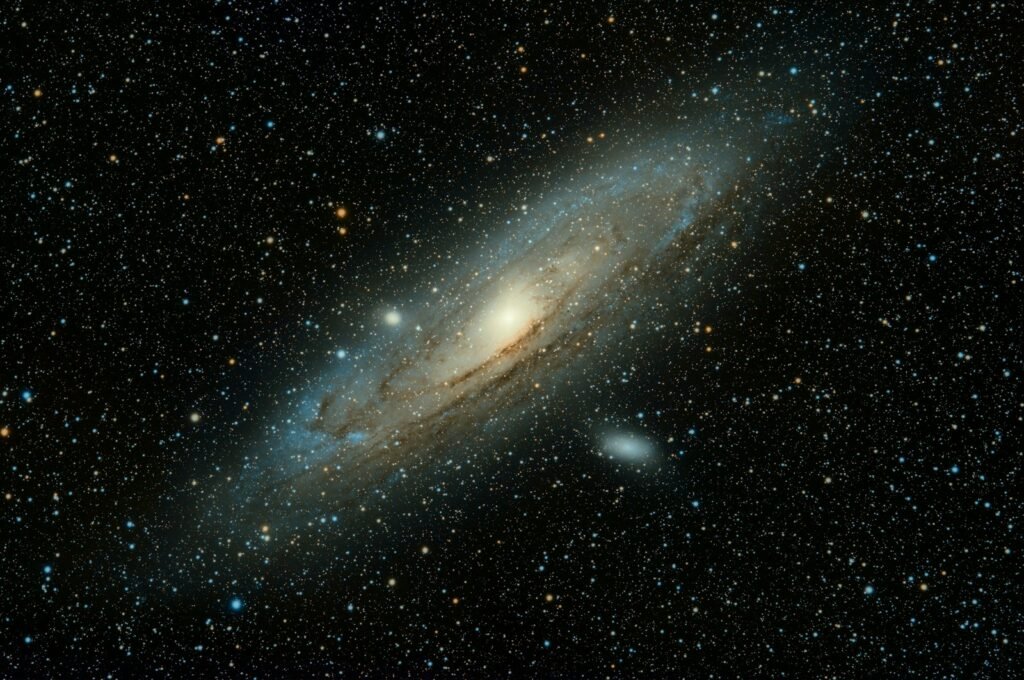

For more than a century, astronomers thought they had a decent grasp on how fast the universe is growing. Now, that confidence has cracked. Precise new measurements of cosmic expansion disagree in a way that stubbornly refuses to go away, hinting that something deep in our understanding of physics may be missing. What began as a technical mismatch between two methods has transformed into one of the most urgent mysteries in modern cosmology. Are we on the brink of discovering new physics, or have we simply not understood our tools as well as we thought?
The Hidden Clues in Starlight
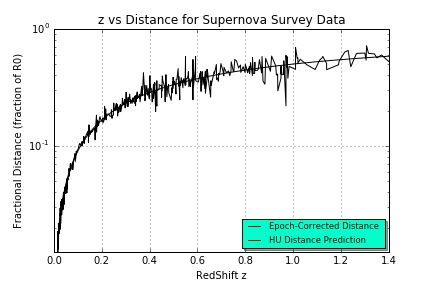
The claim that the universe is expanding faster than expected does not come from a single telescope snapshot; it comes from years of watching how light changes over unimaginable distances. Astronomers track special exploding stars called Type Ia supernovae, which act like standardized cosmic streetlights, to measure how fast galaxies are moving away from us. By comparing how bright these supernovae appear with their redshift – the stretching of their light due to cosmic expansion – researchers can infer the Hubble constant, the key number that describes the expansion rate. What they keep finding locally, in the nearby universe, is a value that is notably higher than what early-universe measurements predict.
This mismatch, known as the “Hubble tension,” is not a trivial rounding error; the discrepancy is far larger than you would expect from random noise. Observations using the Hubble Space Telescope and, more recently, the James Webb Space Telescope have consistently pointed toward a faster present-day expansion than the standard cosmological model would allow. What makes this so gripping is that both camps – the early-universe view from the cosmic microwave background and the late-time view from supernovae and stars – are individually precise and internally consistent. It is as if two different clocks in the same room keep perfect time, but never agree on what time it is. Something, somewhere, is off.
From Ancient Tools to Modern Space Telescopes
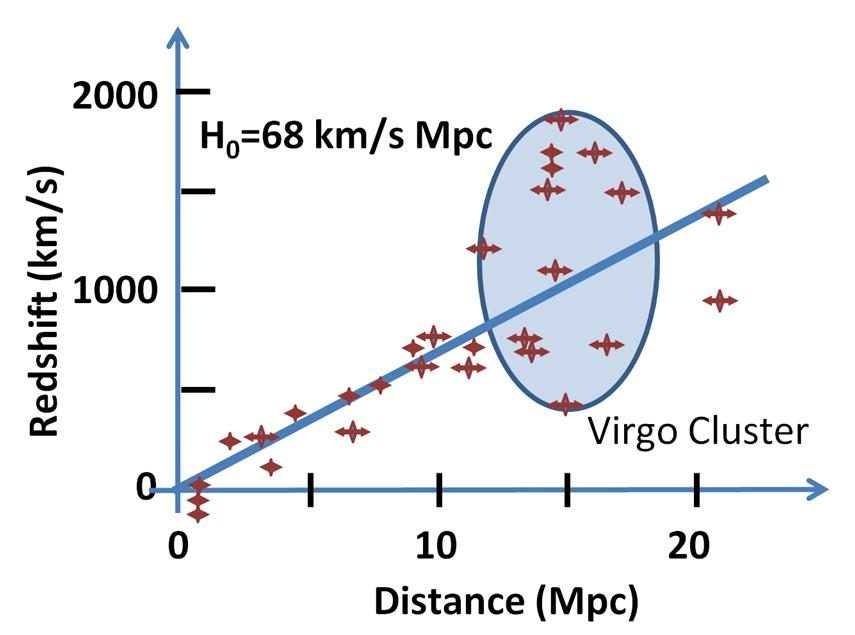
The story of cosmic expansion began humbly, with fuzzy photographic plates and hand-drawn plots. In the 1920s, Edwin Hubble used Cepheid variable stars – pulsating stars whose brightness relates to their intrinsic power – to show that distant galaxies are rushing away from us, revealing that the universe itself is stretching. His original estimates of the expansion rate were wildly off by today’s standards, but the core idea was revolutionary: space is not static. Over the decades, better detectors, bigger telescopes, and more careful calibrations steadily sharpened the value of the Hubble constant, giving astronomers the sense they were closing in on the truth.
Fast-forward to the twenty‑first century, and the field has transformed from rough guesses to precision cosmology. Satellites like WMAP and Planck mapped the afterglow of the Big Bang, the cosmic microwave background, extracting an exquisitely detailed picture of the early universe. From that primordial pattern of tiny hot and cold spots, cosmologists derived a value for the Hubble constant assuming the standard “Lambda‑CDM” model, where dark matter and dark energy dominate. At the same time, teams on the ground and in orbit used Cepheids, red giant stars, and supernovae to build an independent distance ladder in the nearby universe. What no one anticipated was that instead of converging, these methods would diverge in a way that keeps growing more statistically significant.
Two Universes, One Problem: The Hubble Tension
Today, the Hubble tension boils down to this: the early universe and the late universe seem to be telling different stories about how fast space expands. Measurements from the cosmic microwave background, interpreting conditions when the universe was just a few hundred thousand years old, suggest one expansion rate. Detailed observations of supernovae and stars in nearby galaxies, reflecting the universe over the past few billion years, suggest another, higher value. The gap is large enough that most cosmologists no longer feel comfortable explaining it away as a fluke of statistics or a small systematic error.
To visualize this, imagine two different road‑trip apps giving you arrival times that differ by hours, even though you are already halfway through your journey and driving at a steady speed. It would be natural to suspect that either your car is behaving in some unexpected way or one of the apps is using the wrong map. In cosmology, that “wrong map” might be an incomplete set of assumptions about dark energy, dark matter, or the basic behavior of gravity. The tension forces researchers to interrogate every step: the calibration of stellar distances, the modeling of the early universe, and the instruments themselves. So far, none of those checks has delivered a simple fix.
Dark Energy, New Physics, or Just Better Data?

One of the most thrilling possibilities is that the Hubble tension is a clue that dark energy, the mysterious driver of accelerated expansion, is more complex than the standard model assumes. In the simplest picture, dark energy behaves like a constant energy density of empty space, unchanging over time. But if dark energy evolves – even slightly – as the universe ages, that could change the expansion history in a way that explains the mismatch. Some theorists have proposed “early dark energy” models, where a brief, extra burst of dark energy in the young universe tweaks the cosmic microwave background enough to reconcile the numbers.
Others look beyond dark energy and ask whether gravity itself might need an upgrade. Modified gravity theories suggest that on the largest scales, Einstein’s general relativity may not tell the whole story, much like how Newton’s laws had to be extended to describe the cosmos accurately. At the same time, a more conservative camp argues that the universe may not be hiding exotic new physics at all; instead, the culprit could be subtle biases in distance measurements, dust obscuring stars, or sample selections that skew the results. In practice, both lines of inquiry are moving forward in parallel. As new telescopes bring in sharper data, the space for purely “boring” explanations is shrinking, but it has not vanished yet.
Why It Matters: A Stress Test for Our Cosmic Story
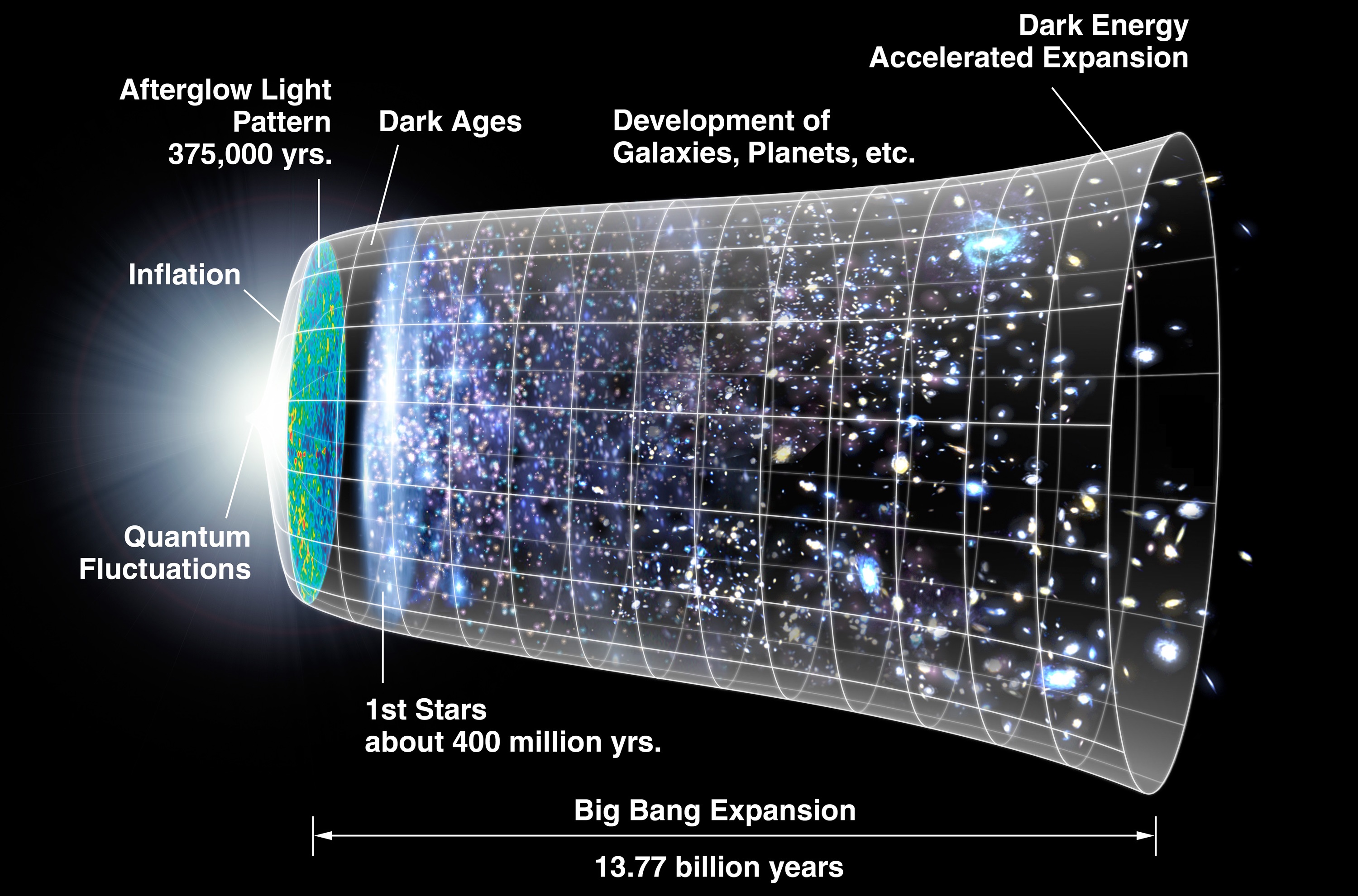
It is tempting to see the Hubble tension as an obscure technical squabble over a single number, but its implications cut to the heart of cosmology. The expansion rate is a linchpin that connects the age, size, and ultimate fate of the universe, so if we are off there, other key inferences could be tilted as well. Our best model of the cosmos – this neat mixture of dark matter, dark energy, and ordinary matter – has been incredibly successful at explaining a wide range of observations. If that model stumbles on the Hubble constant, it is like finding a crack in the foundation of an otherwise solid building.
There is also a philosophical weight to all of this. For decades, scientists celebrated entering the era of precision cosmology, where uncertainties shrank and the broad outlines were considered settled. The current tensions remind us that nature does not obey our desire for neat closure; sometimes, the most precise measurements are precisely what reveal that we have missed something big. In that sense, the disagreement is not a failure but a feature, a stress test that shows where our assumptions creak under pressure. Whether the resolution turns out to be a small correction or a sweeping revision, it will reshape how we talk about the universe’s past and future.
New Eyes on the Sky: Telescopes Rewriting the Numbers
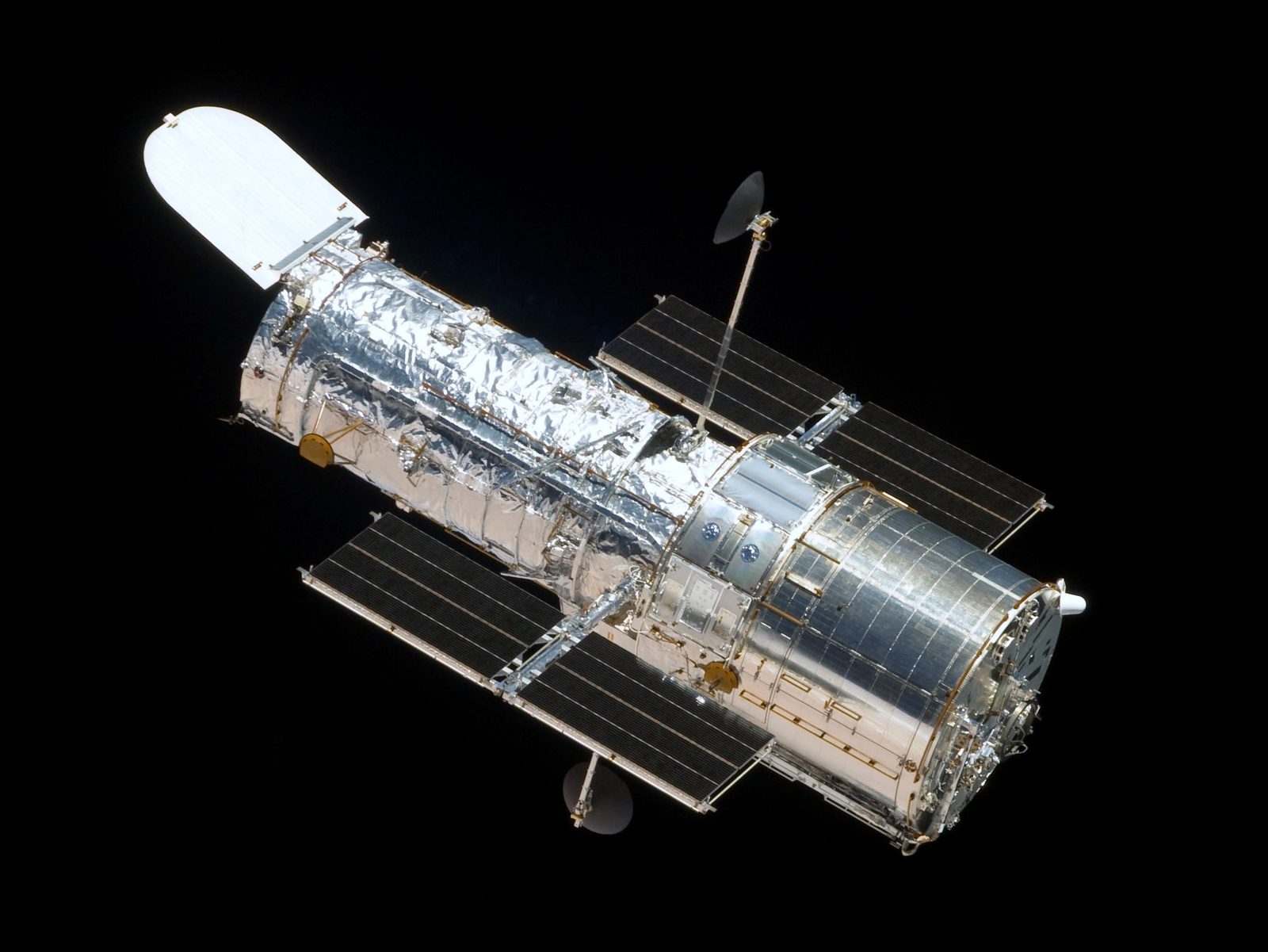
The latest phase of this story is driven by an armada of new instruments that make earlier surveys look almost quaint. The James Webb Space Telescope has pushed the distance ladder deeper, resolving individual stars in galaxies that were once just blurry smudges. By observing red giant stars and Cepheids in unprecedented detail, astronomers have more ways to cross‑check the rungs of their distance ladder. These independent methods are crucial, because if several different tracers of distance all agree on a faster expansion, it becomes harder to blame any single technique.
On the ground, wide‑field surveys like those conducted by the Dark Energy Survey and upcoming observatories such as the Vera C. Rubin Observatory are mapping vast swaths of sky. They track patterns in the distribution of galaxies and the subtle distortions caused by gravitational lensing, using them as cosmic yardsticks. These large‑scale structures encode how the universe has expanded and clumped over billions of years. Together, space‑based and ground‑based data create something like a multi‑angle medical scan of the cosmos: if the expansion history is unusual, it should eventually show up in more than one diagnostic. That redundancy is exactly what cosmologists are counting on.
Beyond Numbers: Human Curiosity and the Expanding Universe
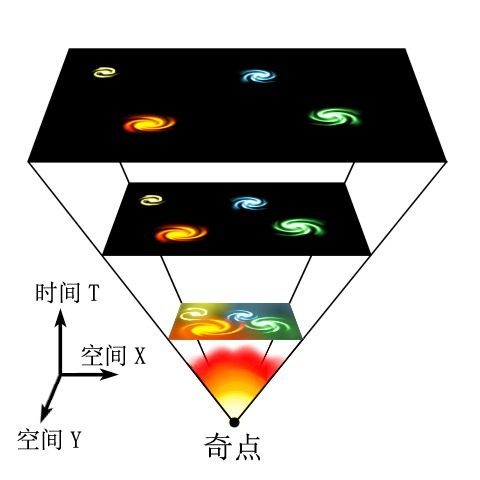
What makes this story so compelling is not only the technical puzzle but the very human response to it. Teams around the world have invested years, sometimes decades, in calibrating one particular method, only to be confronted with another equally careful team reaching a different conclusion. The tension is not just between measurements; it is between scientific cultures, tools, and traditions. Watching how researchers argue, collaborate, and revise their positions in real time is a reminder that science is a living process, not a static collection of facts.
For the rest of us, the idea that the universe might be expanding faster than predicted carries a strange emotional charge. On one hand, it reinforces a sense of cosmic vertigo: everything is running away from everything else, and faster than we thought. On the other, it highlights the remarkable reach of human curiosity, that we can detect tiny shifts in distant starlight and use them to question the very fabric of reality. Personally, I find it oddly grounding; even when the numbers refuse to line up, the shared effort to understand them is a kind of anchor. In a universe that will keep expanding long after our species is gone, the fact that we even get to argue about the rate feels like a small miracle.
The Future Landscape: What the Next Decade Could Reveal
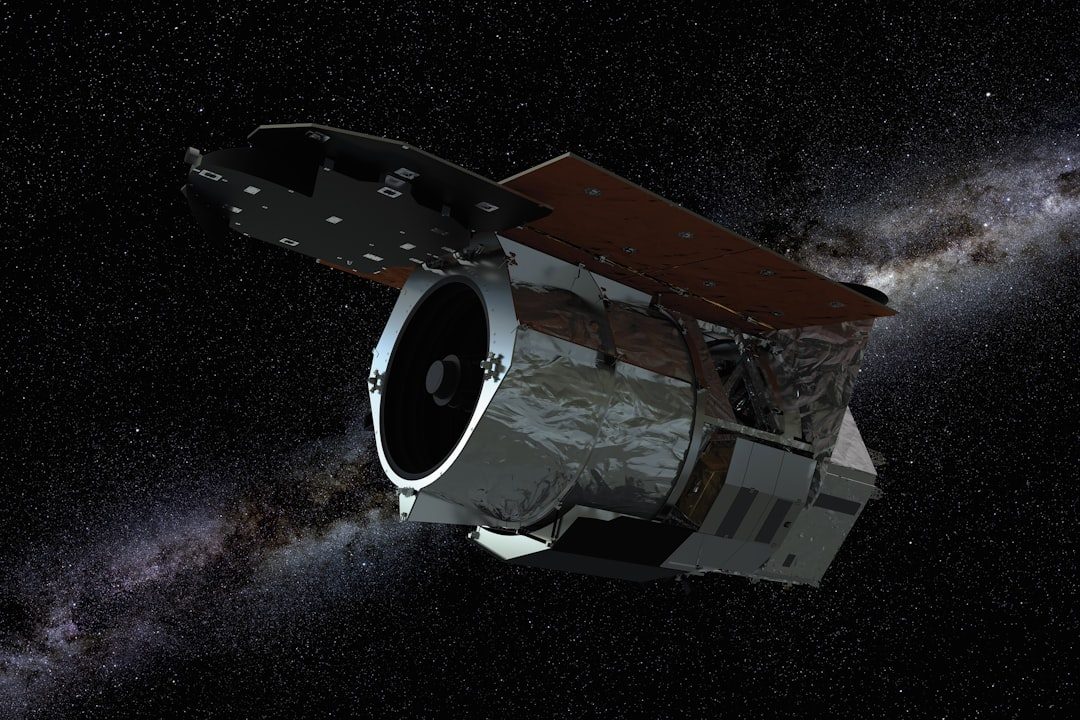
Looking ahead, the next ten years should push this mystery toward some kind of resolution, one way or another. The Vera C. Rubin Observatory is expected to deliver an avalanche of data on supernovae, variable stars, and the growth of structure over time, vastly expanding the sample sizes that current studies rely on. New missions focused on dark energy, such as the European Space Agency’s Euclid telescope and NASA’s Roman Space Telescope, are designed specifically to chart cosmic expansion with multiple, independent methods. If they all land on the same higher‑than‑expected expansion rate, the case for new physics will strengthen considerably.
At the same time, improved modeling of stellar physics, better understanding of dust, and more sophisticated data analysis techniques could reveal hidden biases that have slipped through older pipelines. It is entirely possible that the eventual solution will be a hybrid: a universe that is mostly as we thought, but with a twist – perhaps a slight evolution in dark energy or an unexpected early‑universe effect. For now, the field sits in a kind of suspended tension, with tantalizing hints but no definitive answer. Whatever emerges, the process will leave us with sharper tools, more robust models, and a richer sense of how fragile even our most confident cosmic stories can be.
How You Can Engage With the Expanding Universe
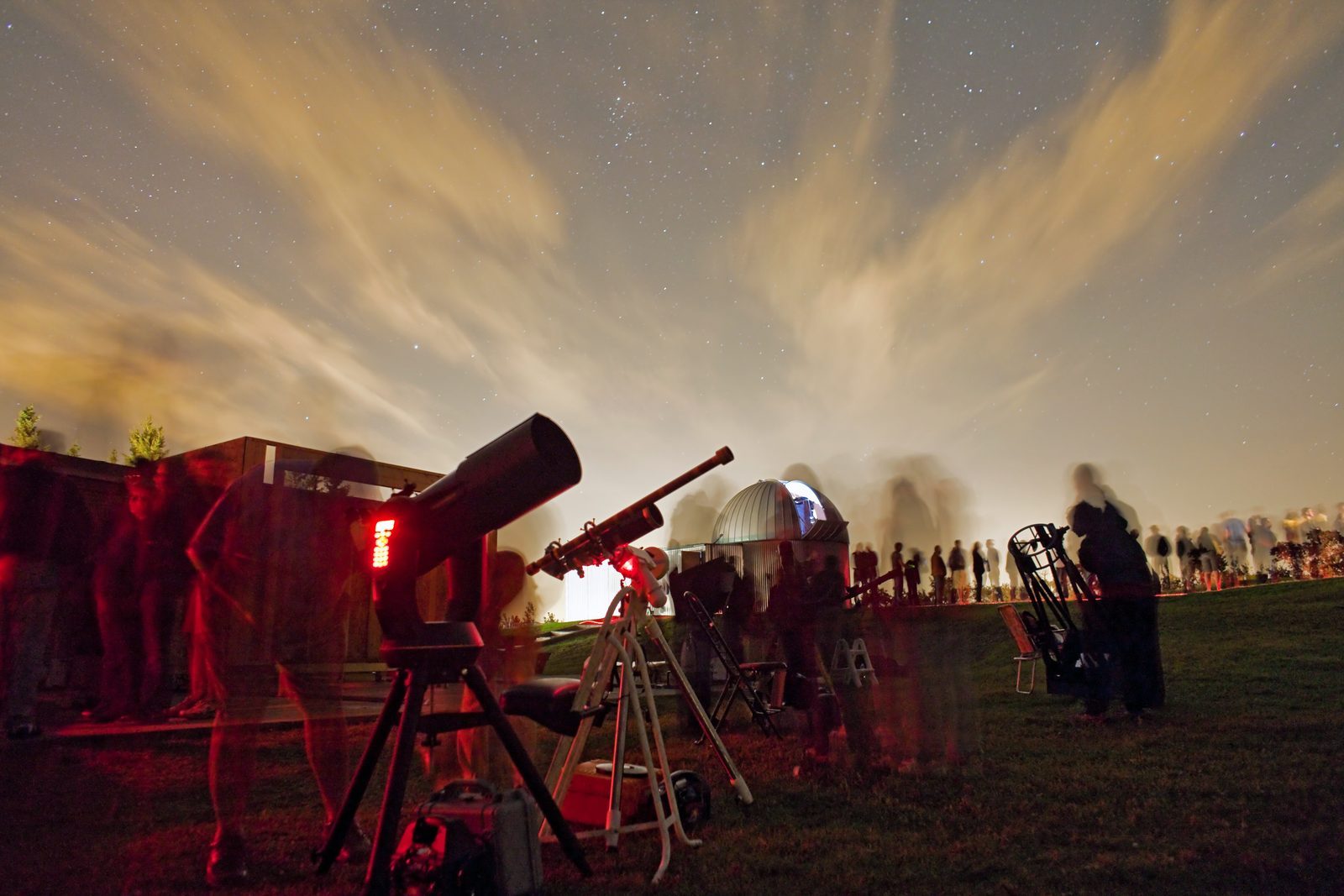
It is easy to assume that questions about the expansion of the universe live in a distant, abstract realm far removed from everyday life, but there are simple ways to connect with this unfolding story. One step is to follow and support public observatories, science museums, and outreach projects that translate cutting‑edge cosmology into accessible experiences. Many major telescopes and space missions share open data, images, and educational materials that turn the sky into a shared public resource. By engaging with these resources, you help keep pressure on institutions and policymakers to see fundamental research as a public good, not a luxury.
On a more personal level, you can treat nights under the stars as invitations to ask better questions, not just to admire the view. Encourage kids, friends, or students to wonder out loud about how we know what we claim to know, from distances to galaxies to the age of the cosmos. Support journalism, books, and podcasts that do the hard work of explaining complex ideas without dumbing them down. And when you hear that the universe is expanding faster than predicted, resist the urge to shrug it off as an obscure detail. Instead, see it as a sign that our cosmic story is still being revised – and that curiosity, collectively applied, remains one of the most powerful forces we have.
Suhail Ahmed is a passionate digital professional and nature enthusiast with over 8 years of experience in content strategy, SEO, web development, and digital operations. Alongside his freelance journey, Suhail actively contributes to nature and wildlife platforms like Discover Wildlife, where he channels his curiosity for the planet into engaging, educational storytelling.
With a strong background in managing digital ecosystems — from ecommerce stores and WordPress websites to social media and automation — Suhail merges technical precision with creative insight. His content reflects a rare balance: SEO-friendly yet deeply human, data-informed yet emotionally resonant.
Driven by a love for discovery and storytelling, Suhail believes in using digital platforms to amplify causes that matter — especially those protecting Earth’s biodiversity and inspiring sustainable living. Whether he’s managing online projects or crafting wildlife content, his goal remains the same: to inform, inspire, and leave a positive digital footprint.