
In the late twentieth century, astronomers set out to measure how fast the universe was slowing down. Instead, they stumbled on something far stranger: the cosmos is not just expanding, it is speeding up, as if some invisible hand were pressing the accelerator. That discovery, confirmed and sharpened over decades, has reshaped modern cosmology and forced scientists to admit that most of the universe is made of something they still cannot directly detect. Today, this mystery goes under the uneasy name of dark energy, a phrase that says more about our ignorance than our understanding. Yet from this ignorance, a new, surprisingly precise picture of the universe has emerged – one where fate, structure, and even the ultimate survival of galaxies are governed by an unseen component of reality. The story of accelerating expansion is not just a tale of numbers and distant explosions; it is a story of how we learn, and how the universe keeps being weirder than we dared to imagine.
The Night the Universe Broke the Script
Ask most people what gravity should do, and they will say it makes things pull together, not fly apart faster and faster. For much of the twentieth century, cosmologists agreed: the universe’s expansion, born in the Big Bang, was expected to slow down as matter’s mutual gravity tugged it inward over billions of years. When two teams of astronomers in the 1990s used exploding stars as cosmic mile markers, they thought they were about to measure exactly how quickly that slowdown was happening. Instead, the supernovae they observed in faraway galaxies looked dimmer than expected, meaning those galaxies were farther away than any decelerating universe model allowed. Something was not just off; it was upside down.
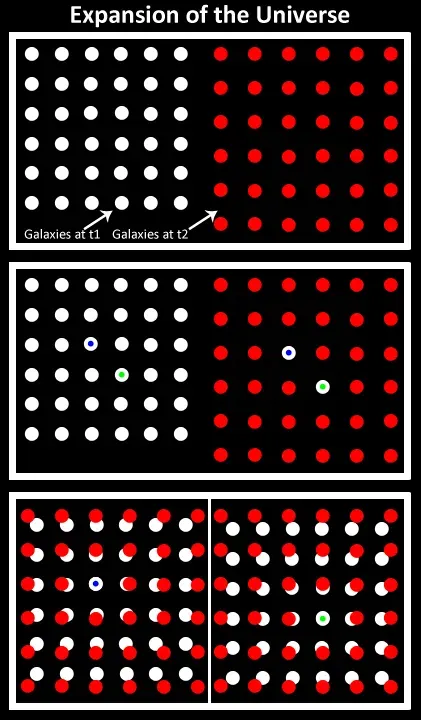
The data implied that, on the largest scales, space itself was behaving like a stretched rubber sheet that someone kept pulling faster and faster. Rather than braking, cosmic expansion was accelerating, as if a repulsive form of energy were baked into the fabric of space. Astronomers were forced to confront the idea that the universe contained an unknown ingredient, one that does not clump like matter, does not shine like stars, and yet dominates the cosmic energy budget. This was not a tweak to an existing theory; it was a plot twist that rewrote the ending. Overnight, the question shifted from “How does the universe slow down?” to “What in the world is pushing it apart?”
The Hidden Clues in Dying Stars
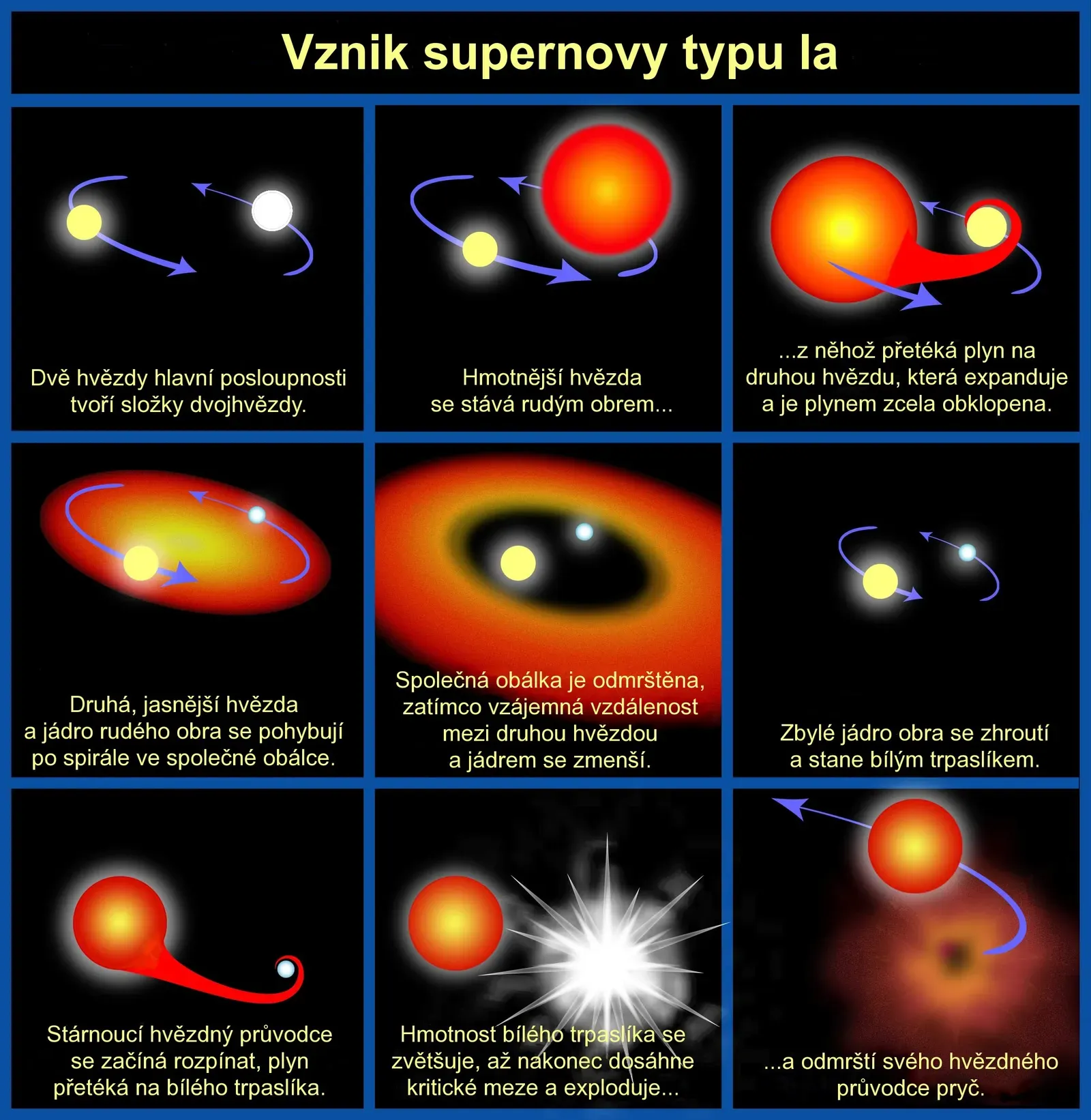
The key to this revolution came from some of the most dramatic deaths in the universe: Type Ia supernovae. These explosions occur when a dense, Earth-sized stellar remnant, a white dwarf, steals matter from a companion star until it crosses a critical threshold and detonates. Because this critical mass is nearly the same each time, the resulting explosions have remarkably similar intrinsic brightness. Astronomers can compare how bright these supernovae appear to us with how bright they should be and infer their distances, turning them into standard candles scattered across the cosmos.
By combining those distances with measurements of how fast the host galaxies are receding – using the familiar redshift of their light – researchers effectively drew a timeline of the universe’s expansion history. When supernovae in very distant galaxies appeared too dim, it signaled that those galaxies were farther away than a steadily slowing universe would produce. Layer by layer, as more data poured in from telescopes around the world and in space, a consistent pattern emerged: the expansion had begun to speed up several billion years ago. It was not a single oddball measurement but a chorus of dying stars all telling the same unsettling story.
From Einstein’s “Blunder” to Dark Energy
Ironically, the idea that empty space might carry its own energy was sitting in the equations of general relativity for more than a century. In 1917, Albert Einstein added a term called the cosmological constant to his theory of gravity to allow for a static universe, which was what most scientists believed at the time. When observations later showed the universe is expanding, he reportedly dismissed that term as a mistake. Fast forward to the era of accelerating expansion, and the cosmological constant suddenly looked less like a blunder and more like a candidate for the missing repulsive force. If space has a tiny, uniform energy density that does not dilute as the universe grows, it can naturally drive acceleration.
Today, that simple idea competes with a zoo of alternatives. Some theorists propose that dark energy is a new dynamic field that evolves over time, sometimes called quintessence. Others suggest that perhaps Einstein’s theory of gravity itself needs modification on the largest scales, so that what we interpret as dark energy is really a sign that gravity behaves differently across cosmic distances. What complicates matters is that, whichever option is chosen, it has to reproduce the exquisite success of general relativity in the solar system and in galaxies while still explaining acceleration. The universe, in other words, has handed us a multiple-choice question where all the answers are hard.
Painting a Universe Dominated by the Invisible
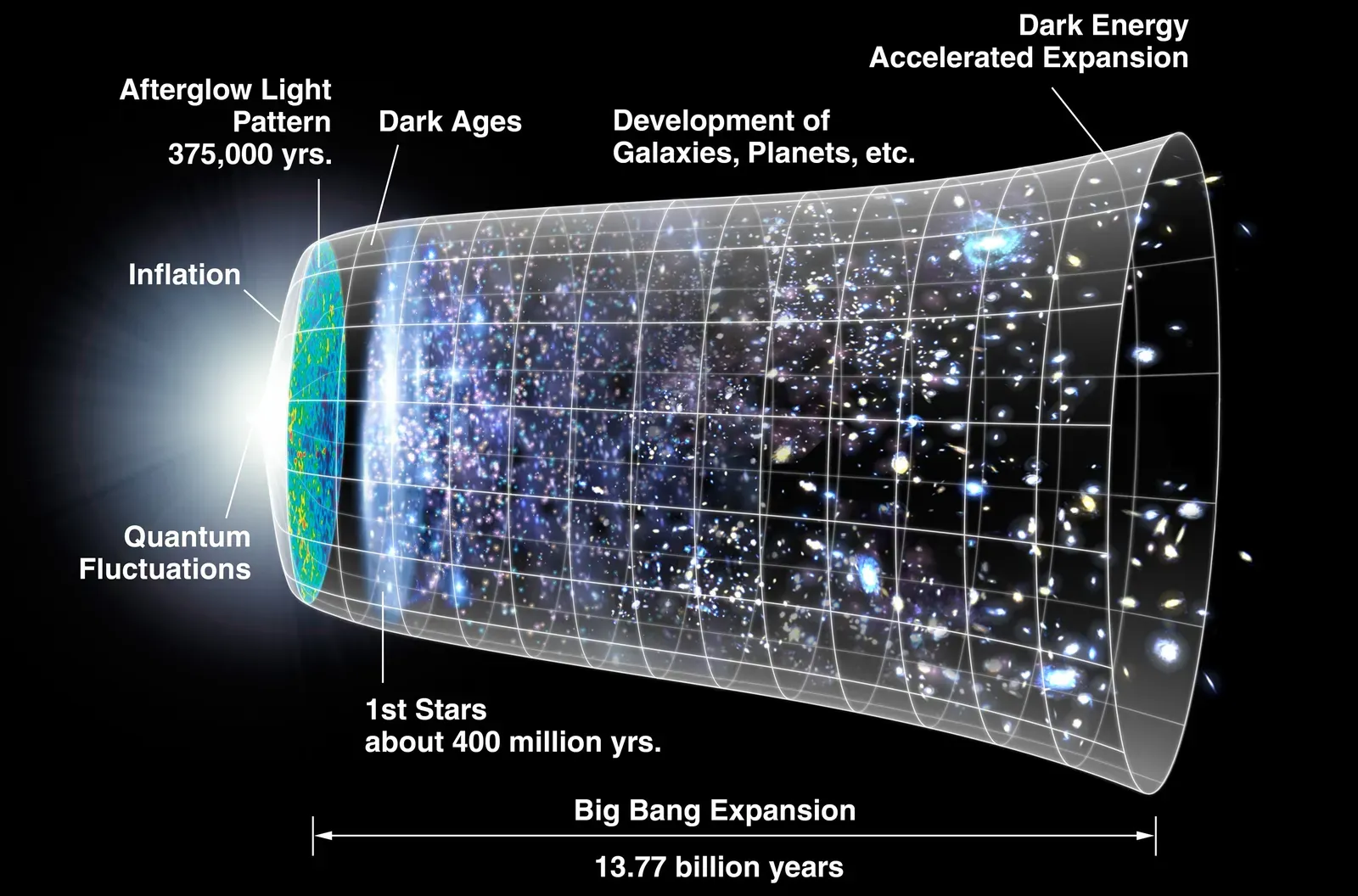
As measurements improved, scientists began assembling a cosmic budget sheet, tallying what the universe is actually made of. Observations of the cosmic microwave background – the leftover glow from about four hundred thousand years after the Big Bang – revealed subtle ripples in the early universe’s matter and radiation. Combined with galaxy surveys and supernova data, these ripples allowed cosmologists to pin down the proportions of different components in a model known as Lambda-CDM. The result is startlingly lopsided: only a small fraction of the universe consists of familiar atoms, the stuff that makes up stars, planets, and people.
The rest is split between dark matter, which exerts gravity but does not interact with light, and dark energy, which drives acceleration. In broad strokes, roughly about one twentieth of the universe is ordinary matter, about five times more is dark matter, and the vast majority is dark energy. This picture is humbling; everything we can see directly is just the foam on the surface of a much deeper ocean. Yet despite the mystery, this framework does a remarkably good job of fitting the data across a huge range of scales and epochs. The accelerating universe story is therefore less a wild speculation and more a carefully constrained inference drawn from independent lines of evidence that happen to agree.
Why It Matters: Rewriting the Story of Cosmic Fate
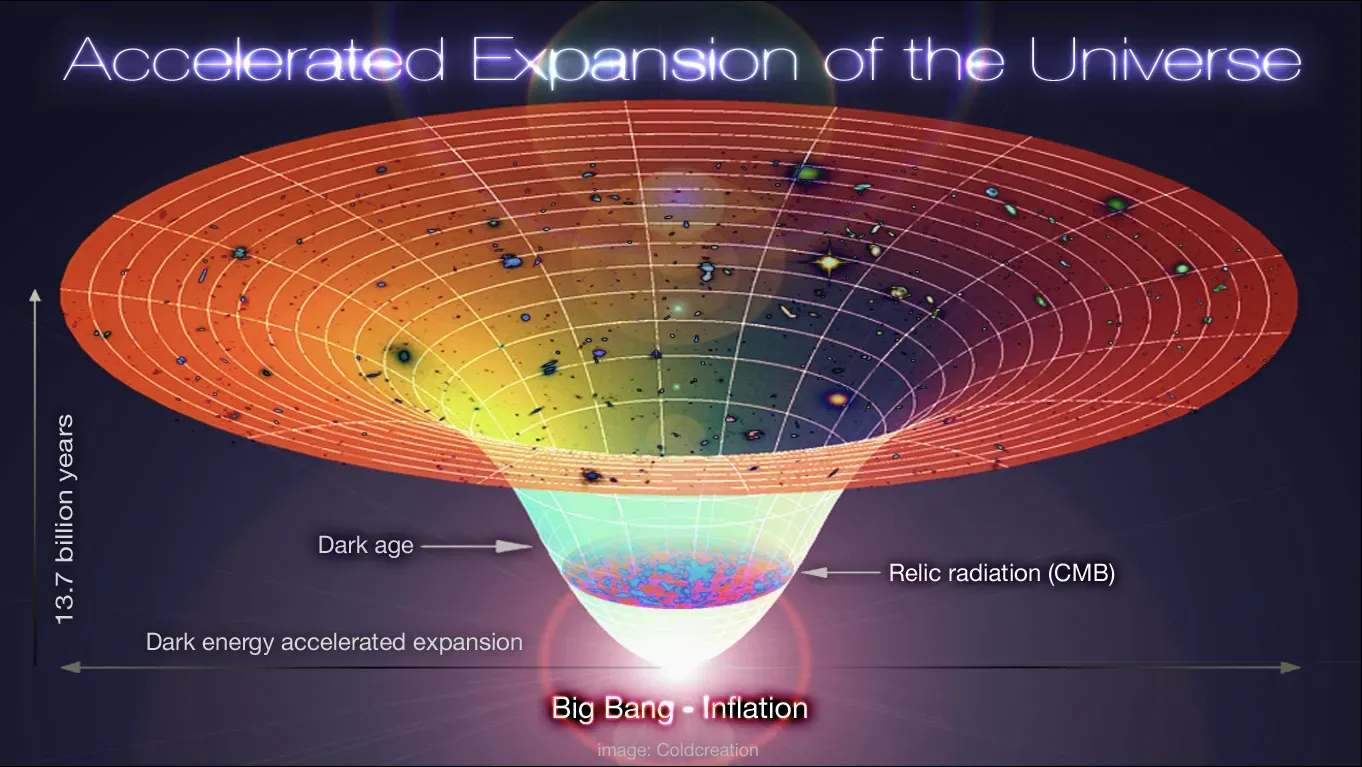
It is easy to think of accelerating expansion as a remote curiosity, the kind of fact that belongs in a trivia night more than in everyday life. But in cosmology, how the universe expands is not just a background detail; it determines the grand arc of cosmic history and destiny. In a decelerating universe rich in matter, gravity could in principle halt expansion and pull everything back in a so-called Big Crunch, or at least slow things enough that distant galaxies always remain in view. In an accelerating universe, that classical picture is gone. Instead, space grows so rapidly that more and more galaxies slip beyond the cosmic horizon, forever unreachable even in principle.
On unimaginably long timescales, this has sobering consequences. Future observers, living in a far-flung epoch, would see only their local group of galaxies, with the rest of the cosmos effectively erased from view by expansion. Our era, when the sky is still crowded with galaxies and the cosmic microwave background is detectable, is uniquely privileged for doing cosmology. Understanding acceleration now is not just an intellectual flex; it is a way of reading the story of the universe while the pages are still visible. If dark energy turns out to change with time, the ending may be even stranger, with possibilities ranging from a slow fade into thin, cold emptiness to more violent scenarios where structures are torn apart. Either way, the stakes are cosmic in the literal sense.
Measuring the Unseen: New Tools for a Dark Energy Era
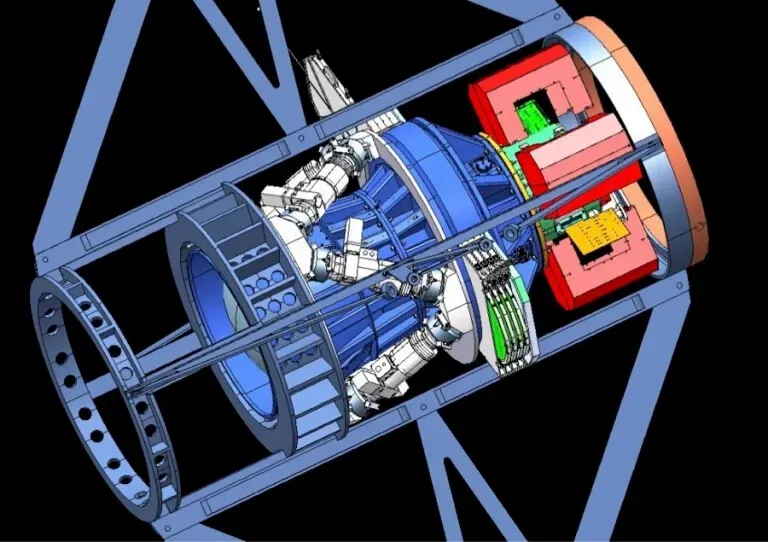
Despite its name, dark energy leaves fingerprints that telescopes can chase. One powerful approach tracks baryon acoustic oscillations, the fossil imprint of sound waves that rippled through the early universe’s hot plasma and froze into the large-scale distribution of galaxies. These ripples act like a standard ruler: by measuring their apparent size at different distances, astronomers can infer how the expansion rate has changed over time. Another method stacks up weak gravitational lensing signals, where light from distant galaxies is subtly distorted as it passes through intervening matter, revealing how structures grow under the combined influence of gravity and dark energy.
To push these measurements further, observatories such as the Dark Energy Survey, the Subaru Telescope, and space missions like the European Space Agency’s Euclid and NASA’s Roman Space Telescope are mapping enormous volumes of the sky. They gather statistics on hundreds of millions of galaxies, supernovae, and galaxy clusters, feeding into models that test whether dark energy behaves like a simple cosmological constant or something more exotic. For readers who like concrete numbers, these projects aim to tighten constraints on dark energy’s properties by factors of several compared with earlier surveys. The sheer scale of the effort – both in data and collaboration – reflects how seriously the scientific community takes this quiet, invisible driver of cosmic evolution.
Tensions in the Data: Cracks in Our Cosmic Confidence
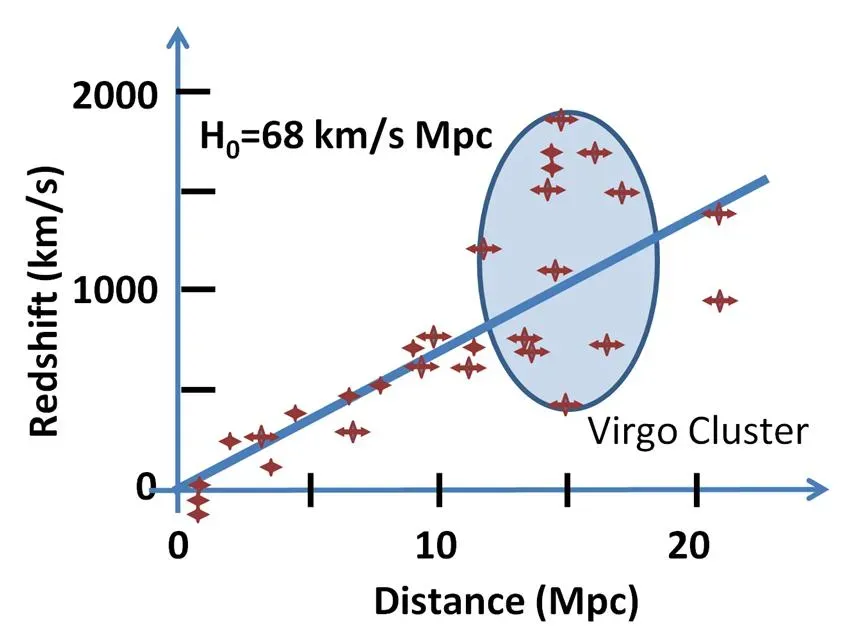
Of course, no major scientific shift comes without friction, and the accelerating universe is no exception. In recent years, astronomers have noticed that different ways of measuring the universe’s expansion rate today, known as the Hubble constant, give slightly but persistently different answers. Local measurements, using nearby supernovae and Cepheid variable stars, tend to produce a higher value than estimates inferred from the early universe’s cosmic microwave background. The discrepancy is not enormous in everyday terms, but in precision cosmology it is more than just a rounding error. It raises an uncomfortable question: is our standard model of the universe subtly incomplete?
Some researchers suggest that new physics related to dark energy or dark matter could resolve the tension, perhaps by changing how the universe expanded at intermediate times. Others argue that unknown systematics in the observations might be skewing the results, and that better calibration and more independent checks are needed. This debate, while technical, is a reminder that cosmology is a living science, not a finished chapter. The accelerating universe framework is robust, but the exact numbers within it are still under active negotiation. For anyone watching from the outside, it is a front-row seat to the scientific process: messy, competitive, and, at its best, self-correcting.
The Future Landscape: Telescopes, Simulations, and New Ideas
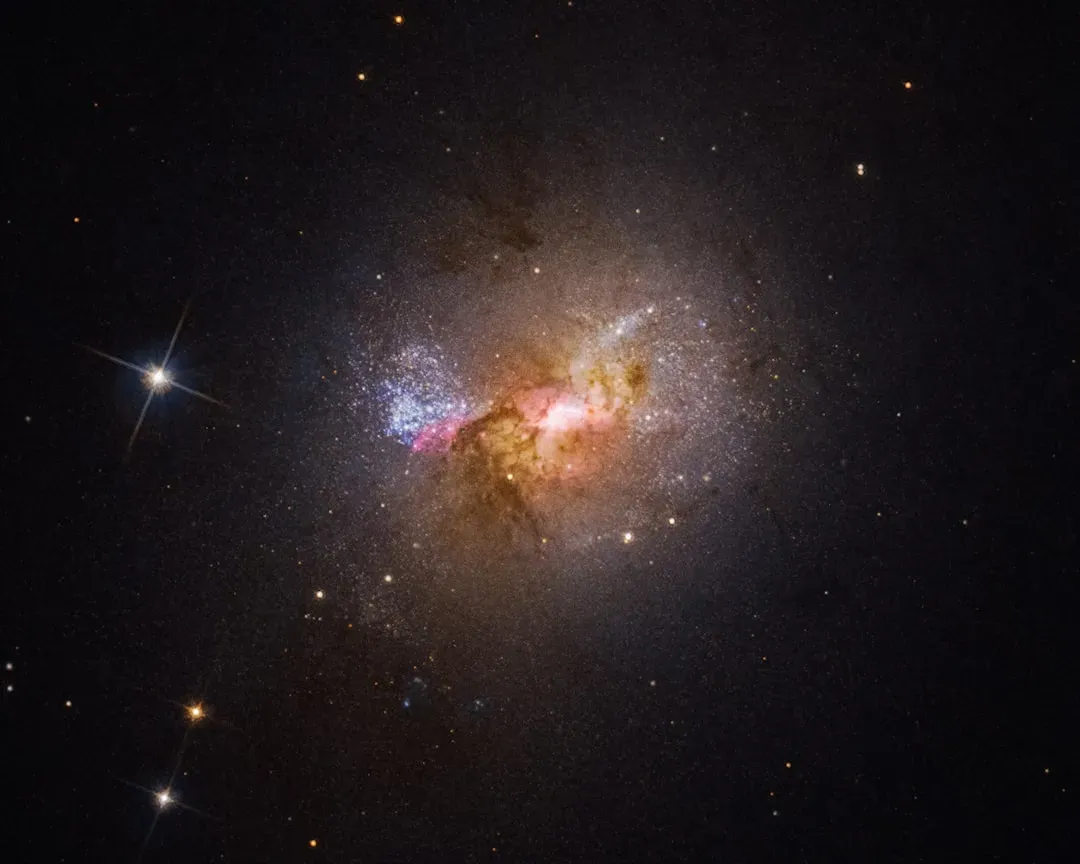
Looking ahead, the quest to understand accelerating expansion is about to move into an even more data-rich era. Upcoming surveys will combine ground-based powerhouses like the Rubin Observatory’s Legacy Survey of Space and Time with space-based missions to track billions of galaxies across large swaths of cosmic time. These efforts will not only refine dark energy parameters but also test gravity on scales far beyond the solar system, searching for subtle deviations from general relativity. On the theoretical side, high-resolution simulations of structure formation are exploring how different dark energy models would sculpt the cosmic web, giving observers patterns to look for in the real sky.
At the same time, completely new ideas are being floated, from links between dark energy and quantum vacuum fluctuations to radical proposals that our understanding of spacetime itself needs revision. Most of these concepts will not survive contact with data, and that is exactly the point. What makes this moment exciting is not that we have answers, but that we finally have tools precise enough to discard bad ones. In a sense, dark energy has turned the universe into a vast laboratory, one where every distant galaxy and every distortion in a background image is a potential clue. Whether the final explanation is simple or bizarre, the search will likely reshape our understanding of reality in ways we cannot yet predict.
How You Can Stay Connected to a Changing Cosmos
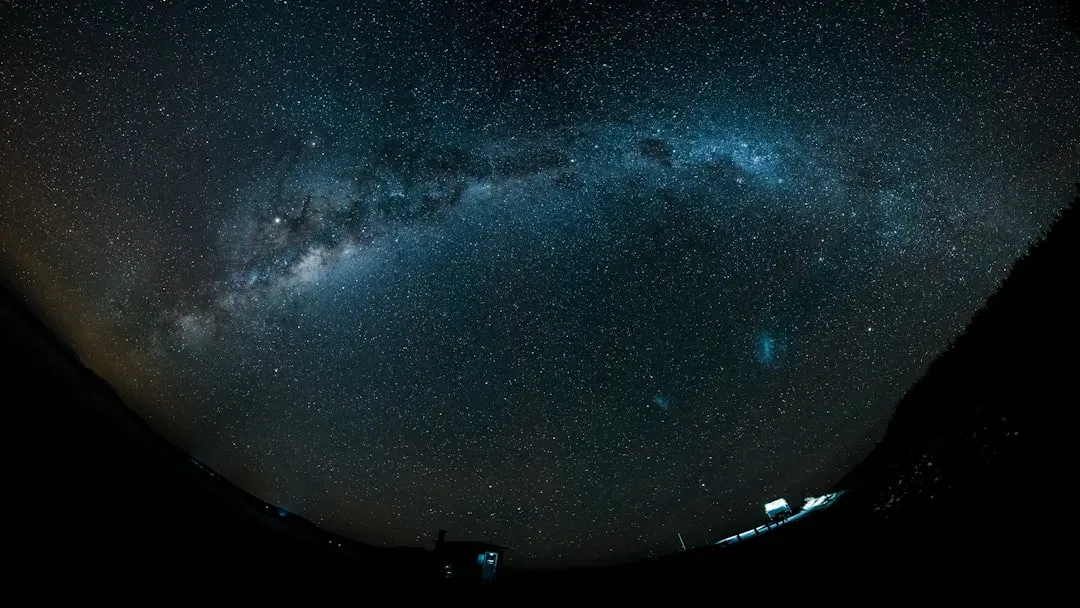
It might seem like accelerating expansion is a topic reserved for professional cosmologists hunched over supercomputers, but there are practical ways to engage with this unfolding story. Many of the major dark energy surveys release data and visualizations to the public, and planetariums and science museums increasingly weave these discoveries into their shows. Supporting these institutions – through visits, memberships, or donations – helps keep complex, abstract topics like dark energy accessible and engaging. On a more personal level, simply staying curious, asking how we know what we know, and seeking out reliable science journalism makes a difference. The more informed the public conversation is, the easier it is for ambitious, long-term research projects to earn and keep support.
If you want to go a step further, some citizen science platforms host projects where volunteers help classify galaxies or spot gravitational lenses, indirectly contributing to cosmology. Schools and libraries often welcome guest speakers or discussion groups centered on space, and bringing the accelerating universe into those conversations can inspire the next generation of scientists. Even small actions – sharing an article that goes beyond the headline, questioning misleading claims, or attending a public lecture – help build a culture that values deep understanding over instant answers. In a universe that refuses to stop surprising us, that kind of culture might be our best tool for keeping up.
Suhail Ahmed is a passionate digital professional and nature enthusiast with over 8 years of experience in content strategy, SEO, web development, and digital operations. Alongside his freelance journey, Suhail actively contributes to nature and wildlife platforms like Discover Wildlife, where he channels his curiosity for the planet into engaging, educational storytelling.
With a strong background in managing digital ecosystems — from ecommerce stores and WordPress websites to social media and automation — Suhail merges technical precision with creative insight. His content reflects a rare balance: SEO-friendly yet deeply human, data-informed yet emotionally resonant.
Driven by a love for discovery and storytelling, Suhail believes in using digital platforms to amplify causes that matter — especially those protecting Earth’s biodiversity and inspiring sustainable living. Whether he’s managing online projects or crafting wildlife content, his goal remains the same: to inform, inspire, and leave a positive digital footprint.