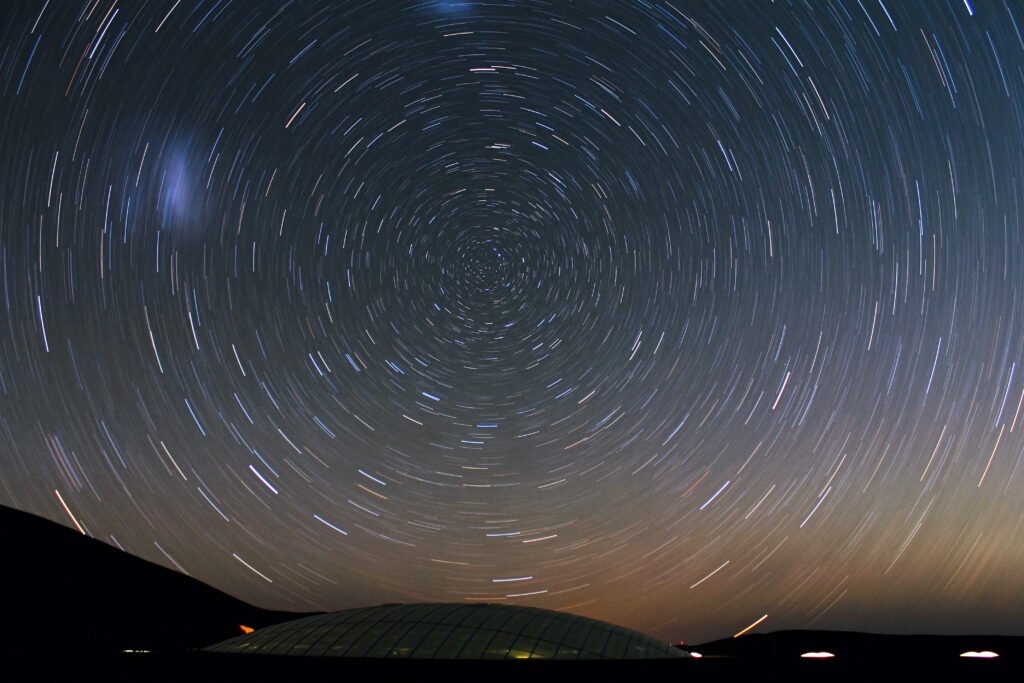

You have stared at the night sky and felt something stir in your chest. Something beyond wonder. A quiet, almost unsettling feeling that the cosmos is not just a backdrop for your life – but a participant in it. That feeling? Honestly, it might not be as irrational as you think.
The universe, it turns out, communicates in ways that most of us walk past every single day without a second glance. From spinning pulsars to spiraling sunflowers, from ripples in the very fabric of space-time to recurring numbers that seem to follow you around – there is a language embedded in existence itself. You just need to know how to read it. Let’s dive in.
Mathematics: The Original Cosmic Alphabet
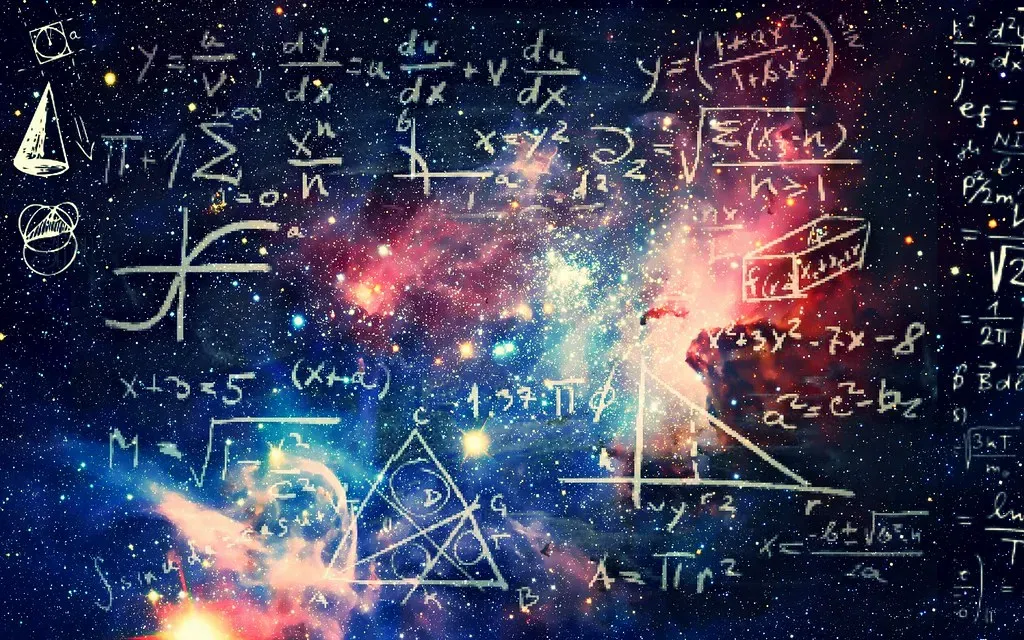
Here’s the thing – long before smartphones, emails, or spoken language, the universe was already broadcasting in its preferred tongue: mathematics. Galileo Galilei noted that the book of nature is written in the language of mathematics, and its characters are triangles, circles, and other geometric figures, without which it is humanly impossible to understand a single word of it. That observation, made four centuries ago, has only grown more profound with time.
As a result of continuous observation, it became evident that there is an underlying simplicity and regularity in the plentitude of phenomena we witness around us, with the quantities of nature found to be interrelated. Think about that for a moment. Every falling apple, every orbiting moon, every collapsing star – all of it following rules written in the same mathematical dialect. At its core, mathematics allows a species bound to its solar system to probe the depths of the cosmos from behind a desk. That’s not just impressive. It’s almost eerie.
The Golden Ratio: Nature’s Most Stunning Signature
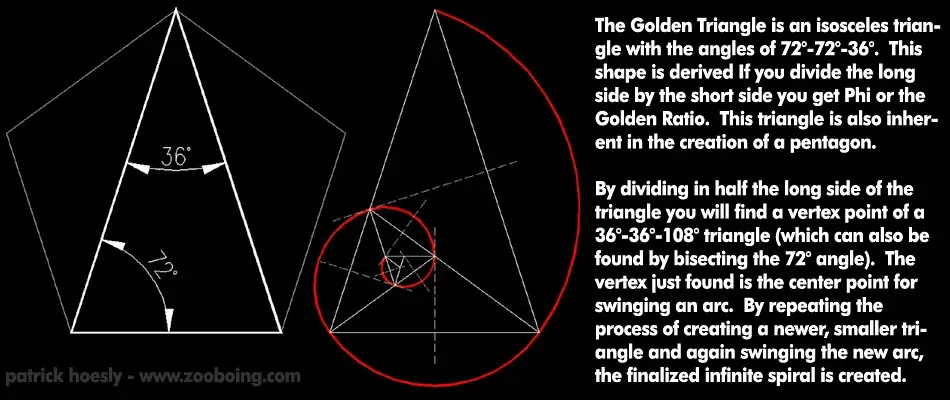
If you want proof that the universe has a preferred aesthetic, look no further than the golden ratio. The golden ratio, represented by the Greek letter phi, is a special number approximately equal to 1.618 and is also known as the divine proportion, the golden mean, or the golden section. It shows up everywhere – in places you would never expect. It’s like the universe stamped its initials on everything.
Sunflower seeds inside the center of the sunflower are arranged in spirals that follow Fibonacci numbers, and if you count spirals in both directions and divide the larger number by the smaller one, you’ll get a value close to the golden ratio. The golden ratio isn’t just found in plants and animals; it is woven into our own anatomy in ways we’ve never imagined. Your face, your fingers, your heartbeat – all quietly echoing this same cosmic proportion. It’s hard not to find that breathtaking.
Fractals: The Universe Repeating Itself Endlessly
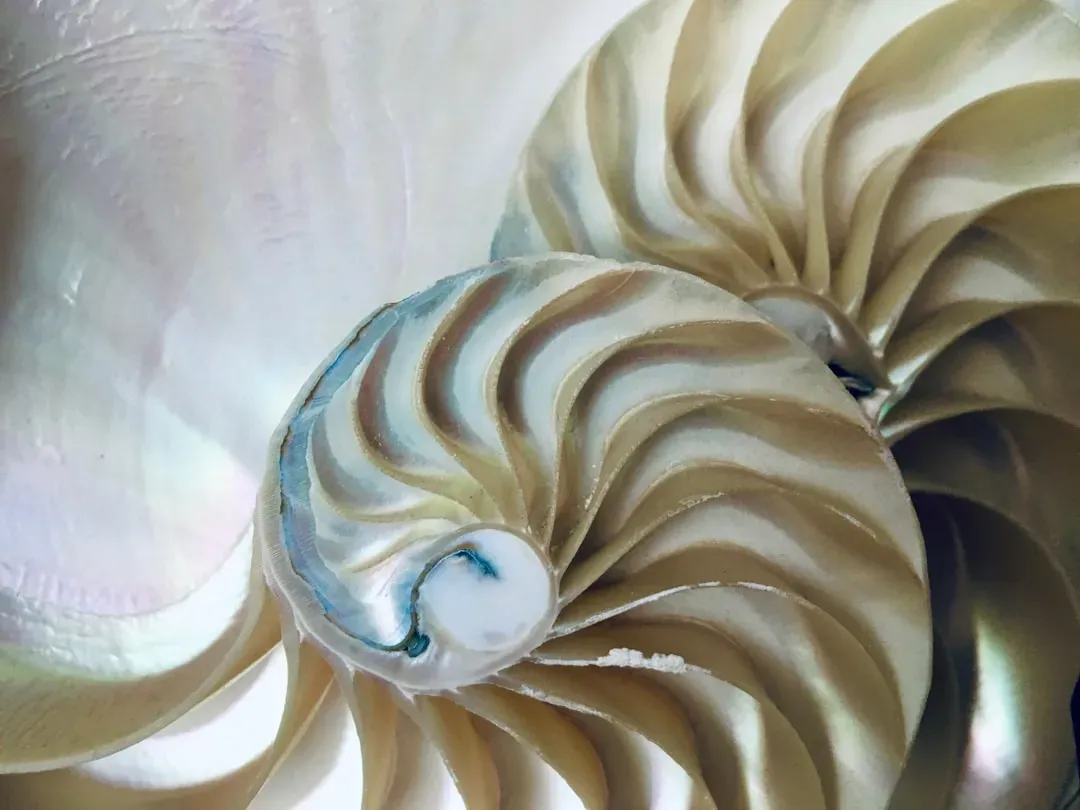
First named by Polish-born mathematician Benoit Mandelbrot, fractals refer to complex, irregular geometric shapes that possess approximate self-similarity – forms whose individual parts reflect the whole, with patterns repeating at scales both small and large, carrying on indefinitely so that any isolated component appears the same when enhanced. Zoom into a coastline and you see smaller coastlines. Zoom into a snowflake and you see smaller snowflakes. The universe seems obsessed with recycling the same ideas at different scales.
Geometric, self-similar patterns known as fractals can be found all throughout nature: in snowflakes, galaxies, and even our own DNA. Tree roots, especially fibrous roots, are an example of fractals, forming a network-like branching structure where smaller parts that match the bigger ones grow into smaller parts, and so on – tree branches are another example, as they replicate themselves into similar structures. The universe, it seems, does not reinvent the wheel. It just keeps spinning the same one, at every imaginable size.
Gravitational Waves: The Universe’s Deepest Voice
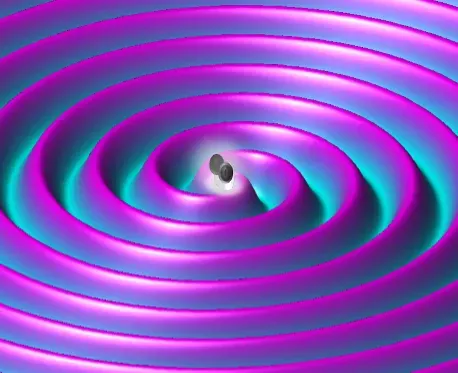
Imagine the universe producing sound – not sound you hear with your ears, but vibrations rippling through the very fabric of space and time. Albert Einstein predicted the existence of gravitational waves in 1916 in his general theory of relativity, showing that massive accelerating objects such as neutron stars or black holes orbiting each other would disrupt space-time in such a way that waves of undulating space-time would propagate in all directions, traveling at the speed of light and carrying with them information about their origins.
The first direct observation of gravitational waves was made in September 2015, when a signal generated by the merger of two black holes was received by the LIGO gravitational wave detectors in Livingston, Louisiana, and in Hanford, Washington. For over 100 years, scientists understood that the universe is humming a symphony of gravitational waves, tiny ripples in spacetime first predicted as part of Einstein’s 1915 theory of general relativity. You have always lived inside this cosmic hum. You just couldn’t hear it – until now.
Pulsars and the Cosmic Clock
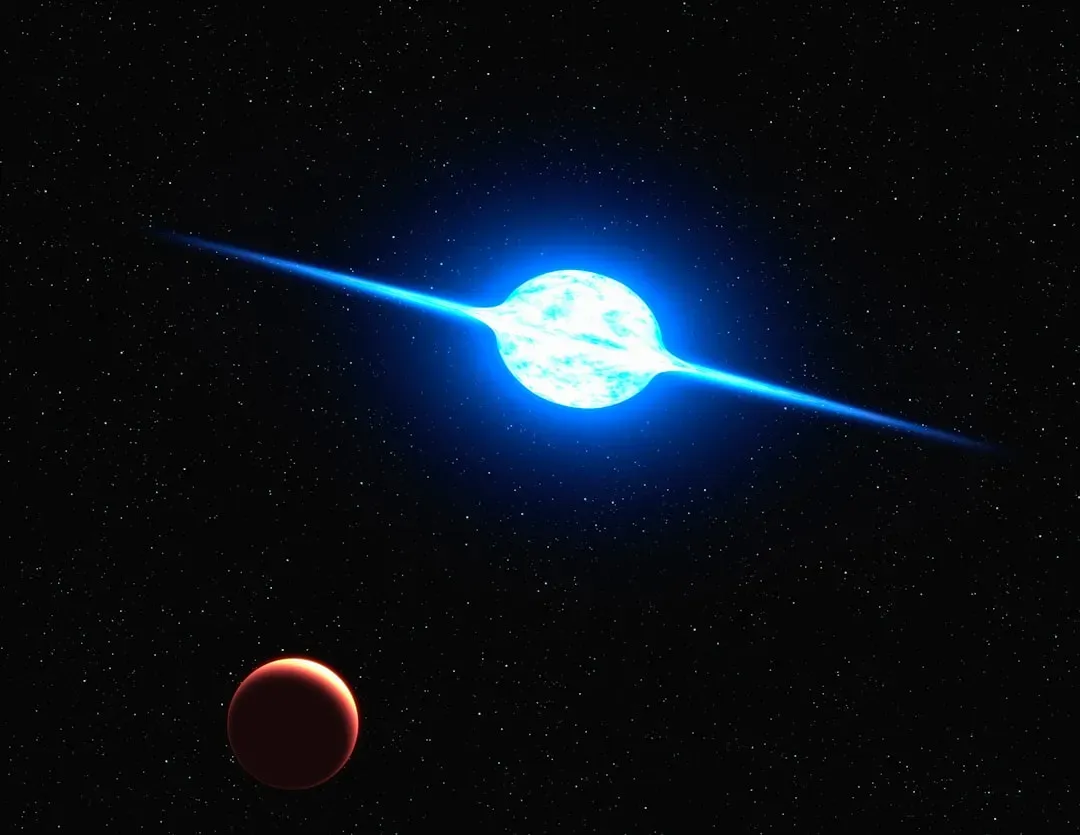
Let’s be real – if you were going to design a cosmic timing system, you could hardly do better than a pulsar. Pulsars, dense stars made purely of neutrons, have a strong enough spin and magnetic field to funnel their radiation emissions to their poles, and as a pulsar spins and one of its poles faces our planet, telescopes on Earth see a flash of light – with their spin, and therefore the frequency of their flashes, being incredibly constant, so any change in this frequency could be evidence of an external influence.
Gravitational waves stretch and compress the space-time fabric between us and the pulsars, distorting their otherwise meticulously regular pulses from anywhere between tens of nanoseconds to five or more years, resulting in the light flashes arriving earlier or later than normal. Scientists are using these cosmic clocks like an enormous galactic antenna, listening for the whispers of colliding black holes billions of light-years away. Gravitational waves are a novel and powerful tool for probing the universe’s hidden corners, and their study promises to further our understanding of the cosmos. Every pulse is a word in a language we are only just beginning to decode.
Signs, Synchronicities, and the Patterns You Keep Seeing
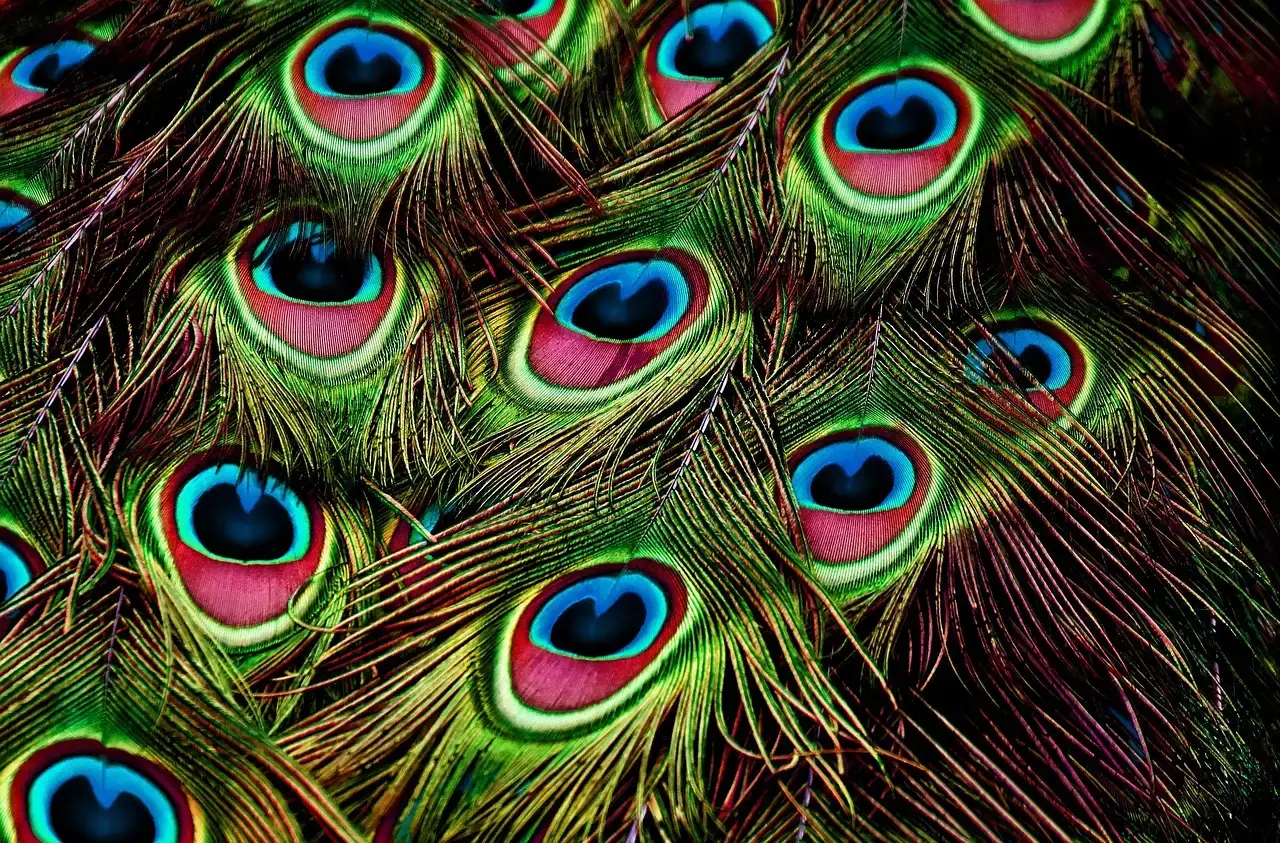
The universe speaks to us in myriad ways, not just through grand pronouncements, but through subtle cues. You’ve probably experienced this yourself – you think of someone and your phone rings seconds later. You notice the same number appearing on license plates, clocks, and receipts. You can call it coincidence, but there’s a long and surprisingly serious tradition of treating these as something more meaningful.
It is an intricate layout where the human spirit aligns with the cosmos, suggesting that every element of the world is created to be inherently connected and purposeful. You are not an isolated entity but rather a part of a vast network where each person, object, and phenomenon is intimately linked to the rest, which underscores the importance of each individual’s actions and their effects on the surrounding world. Whether you interpret these patterns through physics, philosophy, or something more personal, the experience of feeling connected to something larger is remarkably universal.
Decoding the Language: How You Can Begin to Listen
I think the most extraordinary thing about all of this is that you don’t need a physics degree to start paying attention. While we may never fully decipher the intricate code of the universe, we can explore patterns, phenomena, and observations that hint at a hidden, profound communication system. It starts simply – with curiosity. With slowing down enough to notice what most people scroll past.
Mathematics, music, and visual symbols could serve as universal languages, not just as tools for conveying information but as bridges connecting different forms of consciousness, offering a means to convey fundamental human experiences and knowledge in a way that might resonate with the consciousness of other intelligent beings. Language itself is a complex system that mirrors the universe’s very fabric, and its geometric representation can uncover profound connections between words, meanings, and the underlying structure of reality. Start looking for patterns in your daily life. In the shapes of clouds, in the timing of events, in the numbers that keep reappearing. You might be more fluent in this secret language than you realize.
Conclusion: You Were Never Meant to Miss This

The universe has been speaking all along. In the spiraling seeds of a sunflower, in the gravitational hum of merging black holes, in the fractal branches of a winter tree, and in the precise beat of a pulsar a thousand light-years away. The omnipresence of these patterns in the universe is fascinating and extremely powerful – through a simple sequence of numbers and a related ratio, we share an inherent connection with all living beings and the entirety of the universe.
The secret language of the universe isn’t hidden in some remote galaxy or locked inside a particle accelerator. It’s written into the geometry of a seashell on a beach you could visit this weekend. There may be a universal code underlying all of reality, and language – in its broadest sense – is the key to unlocking this code. Once you start seeing the patterns, you won’t be able to stop. The real question is: how long have you already been reading it without knowing?