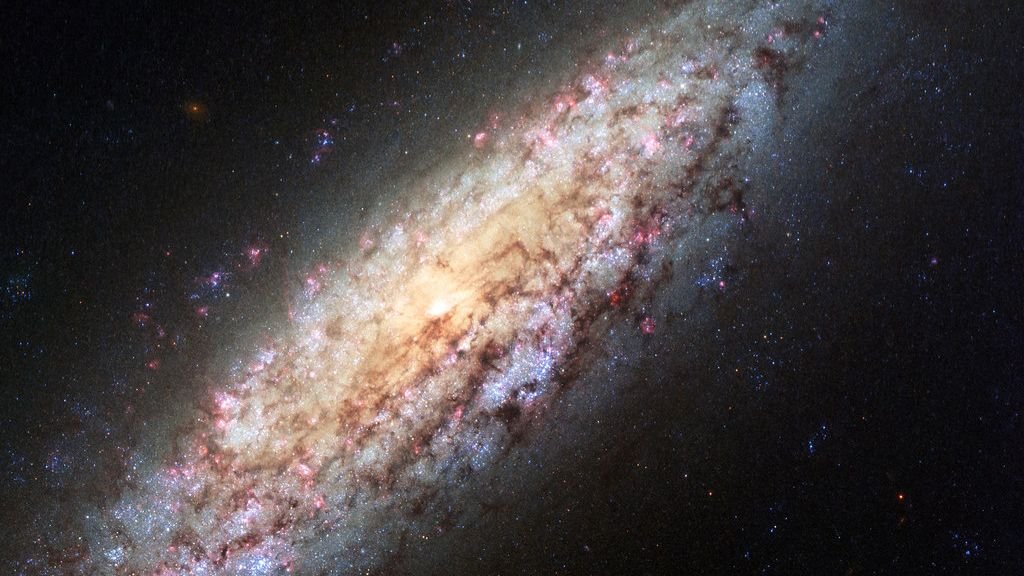

You might think the universe exists independently, ticking along whether anyone observes it or not. Solid, material, objective. Here’s the thing though: some of the world’s most respected physicists now suggest the opposite might be true. They’re investigating whether your consciousness plays an active role in creating the reality you perceive, and the findings are stirring up questions that reach far beyond laboratory walls into the deepest mysteries of existence itself.
The debate isn’t new, yet it has gained serious momentum in recent years. Quantum mechanics, that strange branch of physics dealing with particles smaller than atoms, has forced scientists to reconsider assumptions about observation, measurement, and the role you play in the cosmic story. When you peer into the quantum realm, reality behaves like it’s waiting for you to look before deciding what to be.
The Observer Effect: When Reality Depends on You
The observer effect states that the process of observing a particle changes the way the particle behaves. Let’s be real, this sounds completely bonkers at first. Yet decades of experiments confirm it. When scientists observe quantum particles like electrons or photons, these particles behave differently than when left alone.
The Copenhagen Interpretation states that a quantum particle doesn’t exist in one state or another but in all of its possible states at once, and when we observe its state, the particle is forced to choose one probability. Picture a coin spinning in the air, existing as both heads and tails simultaneously until you catch it and force it to pick one. While most physicists agree that humans are not an essential part of this observation, some branches of probability called QBism argue that an observer’s personal beliefs about a quantum system could result in the observation of distinct outcomes or realities.
A Universal Field of Consciousness as the Foundation
The theory is based on the idea that consciousness constitutes the fundamental element of reality, and that individual consciousnesses are parts of a larger interconnected field. Maria Strømme, Professor of Materials Science at Uppsala University, recently published work suggesting that consciousness is not viewed as a byproduct of brain activity but as a fundamental field underlying everything we experience.
Consciousness is fundamental; only thereafter do time, space and matter arise, and this is a theory in which consciousness comes first and structures arise afterwards. Think about that for a moment. Matter doesn’t create consciousness in this model. Consciousness creates matter. According to this model, matter is secondary, and much of what we experience is representation or illusion.
Dark Matter, Dark Energy, and the Consciousness Connection
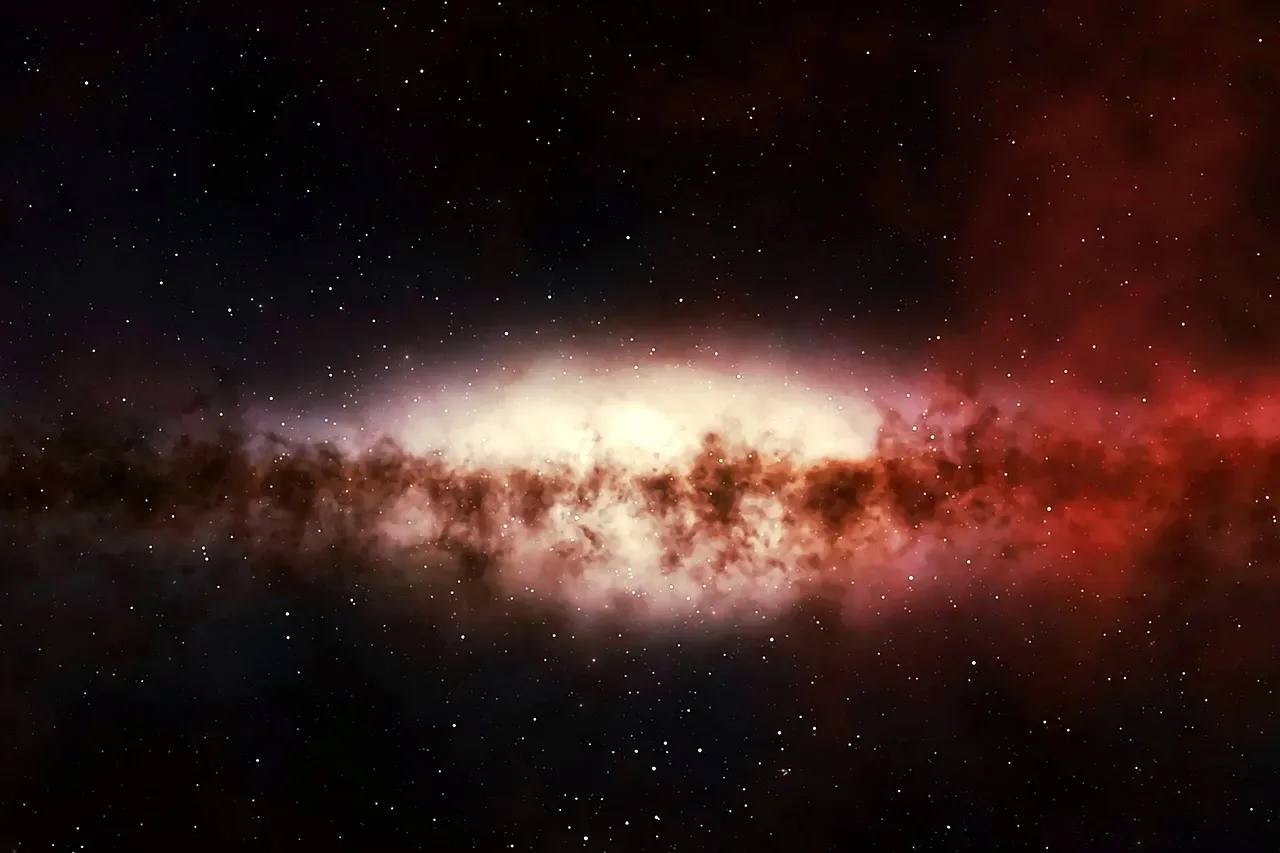
Now here’s where things get really fascinating. You’ve probably heard that scientists can only account for roughly five percent of the universe’s content. Scientists estimate that ordinary matter makes up only about 5% of the universe, while dark matter makes up about 27%, and the rest is thought to be dark energy which is its own mystery, with the universe made up of normal matter, dark matter, and dark energy.
Some researchers are exploring whether consciousness itself might explain these cosmic mysteries. Dark matter can be understood as variations in the density of the universal consciousness field that manifest gravitational effects without corresponding electromagnetic interactions, showing that what we perceive as dark matter arises from gradient patterns in the consciousness field. It sounds like science fiction, honestly, but the math is being worked out in peer-reviewed journals.
Dark energy, which drives the accelerating expansion of the universe, can be understood as a fundamental property of the consciousness field’s evolutionary dynamics, describing dark energy as an intrinsic property of the consciousness field’s evolution over cosmic time. Essentially, the universe expands not just physically but as consciousness itself expands.
The Quantum Measurement Problem and Conscious Collapse
After the discovery of quantum mechanics several prominent physicists suggested that consciousness plays a fundamental role in governing particle motion, and one way of addressing this is to replace measurement causes collapse with conscious observation causes collapse. Eugene Wigner, a Nobel Prize winner, proposed this radical idea in 1961.
The idea that consciousness causes collapse is attributed to Eugene Wigner who first wrote about it in his 1961 article and proposed that the consciousness of an observer is the demarcation line that precipitates collapse. The notion remains controversial. Most physicists have moved away from it because consciousness itself is poorly defined scientifically. While historically influential, consciousness causes collapse is now a minority stance among physicists, with polls indicating that only a small fraction, around 6% in one notable survey, believe consciousness has a unique physical role in quantum measurement.
Still, the question lingers. The status of this question in physics at the moment is that we have many options but there’s no consensus on what the right answer is.
Experiments Testing Consciousness in Quantum Systems

Despite skepticism, Christof Koch from the Allen Institute is collaborating with scientists at Google Quantum AI and universities worldwide to explore the role quantum mechanics might play in shaping consciousness, and a paper published in Entropy offers their novel theory on the links between quantum mechanics and consciousness detailing a series of experiments to test it.
Koch and team drew upon Penrose’s theory but propose the opposite, that conscious experience arises whenever a quantum superposition forms, and it implies a graded model of consciousness where the complexity of consciousness correlates with the number of potential states in a superposition. What’s perhaps more surprising? This also implies that at least simple forms of consciousness are far more widespread than conventionally assumed.
In a 2018 study researchers in China explored how four forms of xenon affected consciousness, and the finding suggested a link between quantum processes and the modulation of consciousness, with the xenon form with a larger spin value possibly creating larger superpositions correlating with more complex conscious experiences.
The Hard Problem and Why Physics Alone Cannot Solve It
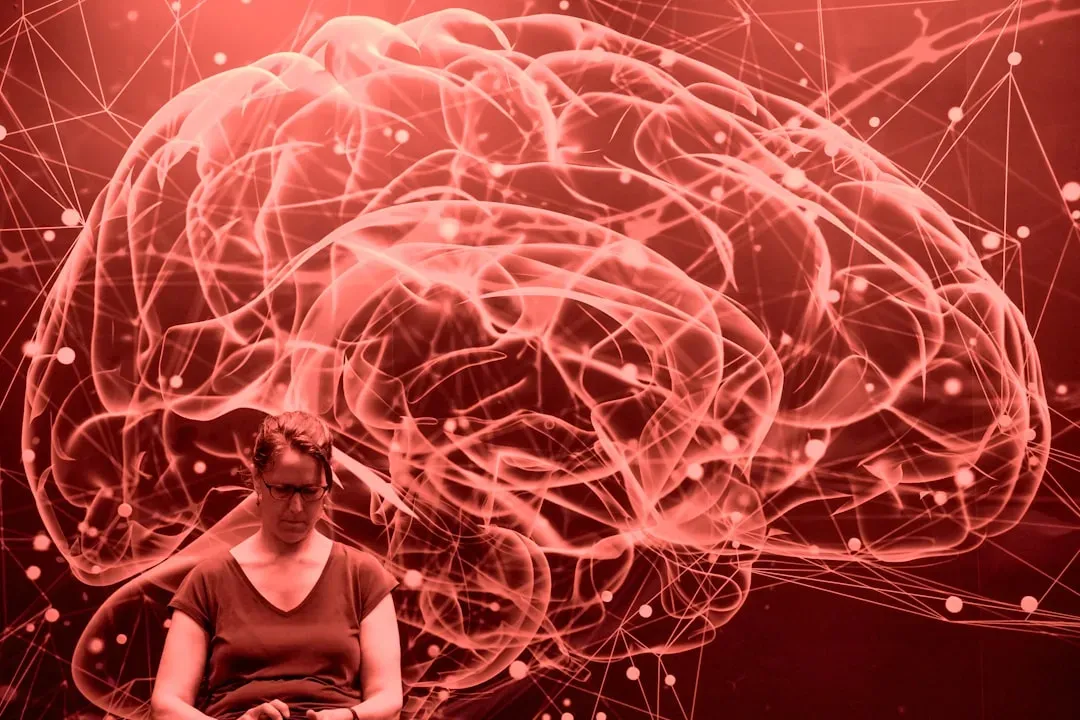
Neuroscientists call it the hard problem of consciousness. You can map every neuron, trace every electrical impulse, measure every chemical reaction in the brain. Yet none of that explains the subjective feeling of what it’s like to experience redness, taste chocolate, or feel sadness. This is quite a mystery since it seems that our conscious experience cannot arise from the brain and cannot arise from any physical process, as the neural pattern will perfectly correlate with the conscious feeling but it is not the actual feeling.
Other contemporary physicists and philosophers considered these arguments unconvincing, with Victor Stenger characterizing quantum consciousness as a myth having no scientific basis that should take its place along with gods unicorns and dragons. The skepticism is understandable. Without clear definitions and testable predictions, theories about consciousness risk drifting into pseudoscience.
Yet the problem persists. The hard problem of consciousness, explaining how subjective experience arises from physical processes, remains a persistent challenge in philosophy and science, with quantum physics and its probabilistic non local and observer dependent nature emerging as a provocative framework.
Dark Energy as a Consciousness Self-Reference Loop
Here’s one of the wildest ideas out there. A connection between self reference and consciousness has been previously discussed due to their similar nature of making a reference to itself, and vacuum observation has the property of self reference and consciousness in the sense that the observer is observing one’s own reference frame of energy.
The cyclical loop model of self reference is applied to the vacuum observation such that the discrepancy between the energy density resulting from the first part of the causal loop and the other part corresponds to the cosmological constant problem. In simpler terms, the massive gap between what quantum physics predicts for vacuum energy and what we actually observe might be explained by consciousness observing itself through the universe.
The mind causes change to occur as the potential energies dark energy dark matter and normal matter, and consciousness represents dynamic differences through constant change and a particular end. The universe itself becomes a kind of self aware computational system processing information through consciousness.
What This Means for You and Reality Itself

If consciousness truly shapes reality at a fundamental level, the implications are staggering. Consciousness becomes the bridge between information matter and the observer, and a new theory proposes universal consciousness as a fundamental field shaping space time matter and the emergence of awareness. You aren’t just a passive observer watching the universe unfold. You’re an active participant creating it.
The theory suggests that our individual consciousness does not cease at death but returns to the universal field of consciousness from which it once emerged, with phenomena that are now perceived as mysterious such as telepathy or near death experiences explained as natural consequences of a shared field of consciousness. Death in this framework isn’t an ending but a reintegration with the source field.
Does this clash with materialism? Absolutely. This interpretation relies upon an interactionist form of dualism that is inconsistent with the materialism commonly used to understand the brain and accepted by most scientists, with materialism assuming that consciousness has no special role in relation to quantum mechanics. Most scientists remain deeply skeptical, and for good reason. Extraordinary claims require extraordinary evidence.
The consciousness framework provides a unified explanation for dark matter dark energy and the Hubble tension, by recognizing consciousness as fundamental rather than emergent, and transcends the limitations of purely materialist physics while making specific testable predictions. The coming years may tell us whether these predictions hold up to experimental scrutiny. Until then, the mystery endures, pulling at the edges of what we know and challenging us to reimagine the very nature of existence itself.
What do you think? Could your consciousness truly be shaping the cosmos, or is this just fascinating speculation dancing at the boundary between science and philosophy? The universe might just be waiting for you to decide.