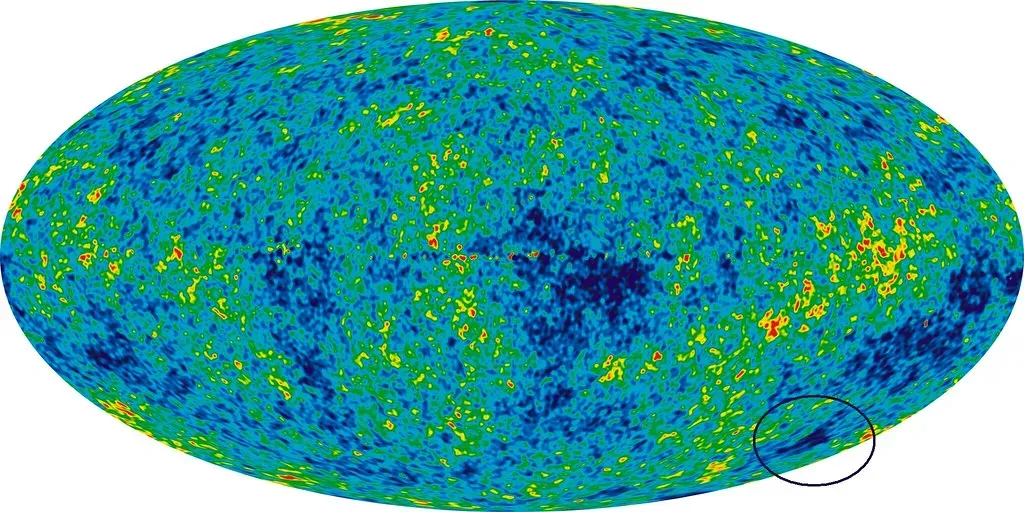

In a universe that seems ruled by common sense – drop a mug, it falls; flip a switch, the light turns on – quantum entanglement is the rule-breaker that refuses to behave. Physicists have spent nearly a century arguing over how two particles can remain mysteriously linked, even when separated by distances that stretch across a lab, a city, or potentially entire galaxies. The effect has been confirmed again and again in experiments, yet the mechanism behind it still feels almost offensively strange. Some see it as a glitch in our understanding, others as a clue that reality is deeper and weirder than our everyday intuition can handle. What started as a philosophical headache is now quietly becoming the backbone of tomorrow’s technologies, from ultra-secure communication to quantum computers that could crack problems classical machines may never solve.
The Hidden Clues Behind Spooky Connections
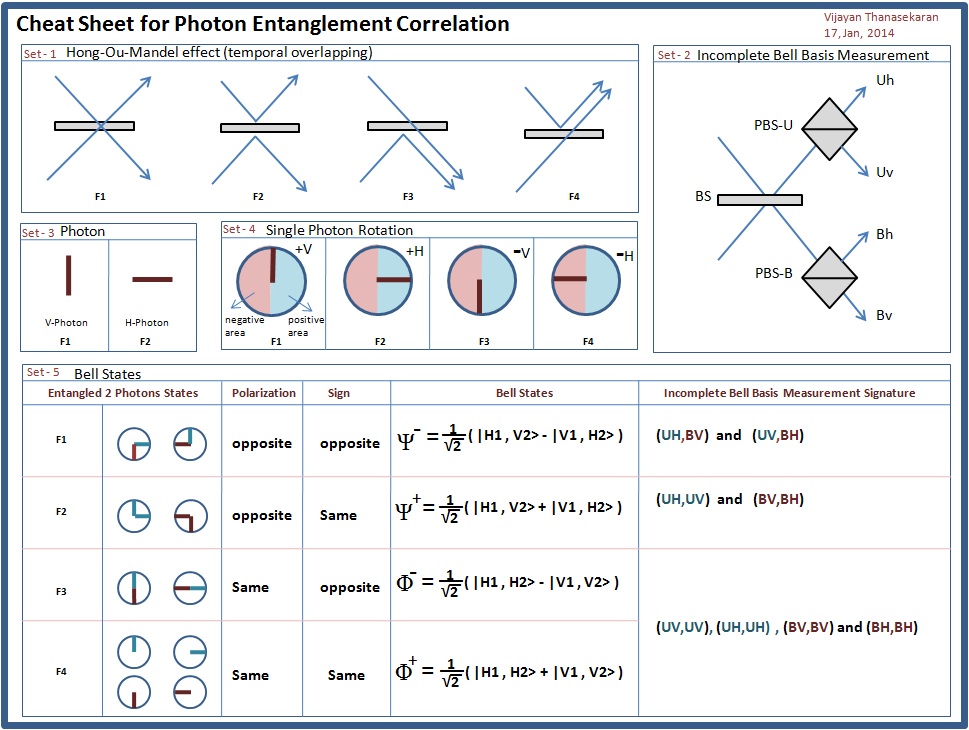
Imagine rolling two dice on opposite sides of the planet and getting the same number every single time, no matter how many rolls you try. At some point you’d stop believing in coincidence and start suspecting a rigged game. That’s roughly the feeling early physicists had when they started thinking about quantum entanglement: if two particles are created together and then separated, their properties can end up correlated in ways that ordinary cause-and-effect cannot easily explain. These particles do not just share a common history; they behave as if they are parts of a single system, even after they’ve flown far apart. When you measure one, the outcome of the other is instantly constrained, as though nature is finishing a sentence it began somewhere else.
What makes this so unsettling is that nothing visible travels between the particles, at least not in any way we can detect or that fits into everyday concepts of signals and messages. Classical physics expects information to move gradually, with clear carriers like light, sound, or physical contact, but entanglement shrugs at that picture. To be clear, it does not let us send usable messages faster than light, so it does not violate relativity in a simple way, but it forces us to rethink what we mean by “separate objects” in the first place. The hidden clue, if there is one, may be that our idea of independent particles is just a convenient fiction, and the quantum world plays by a more holistic script than we’re used to.
From Einstein’s Skepticism to Today’s Experiments

Quantum entanglement did not enter physics as a beloved idea; it showed up more like an unwanted guest at a very serious party. In the 1930s, Albert Einstein and his colleagues used it as a thought experiment to argue that quantum mechanics must be incomplete, calling the phenomenon a kind of “spooky influence” at a distance. They suggested that there might be hidden variables – unknown details lurking under the surface – that would restore a tidy, local picture of reality where everything has definite properties all along. For decades, this argument stayed mostly philosophical, the sort of thing that sparked heated discussions at conferences and in letters, but did not seem testable in a straightforward way. The weirdness remained on the chalkboard, frustrating but unproven.
That stalemate changed in the 1960s when physicist John Bell derived a set of mathematical inequalities that drew a clear line between quantum mechanics and any hidden-variable theory that obeyed local realism. If experiments violated Bell’s inequalities, it would be strong evidence that the quantum description, strange as it is, was onto something real. Starting in the 1970s and accelerating in the 1980s and 1990s, ever more precise experiments began testing these ideas using photons, electrons, and even larger systems. Over time, researchers systematically closed loopholes, such as ensuring detectors were efficient and that measurement choices were made quickly and independently. The accumulated results have overwhelmingly favored the quantum view and pushed local hidden-variable explanations into an increasingly tight corner.
How Entanglement Actually Works (Without the Jargon)
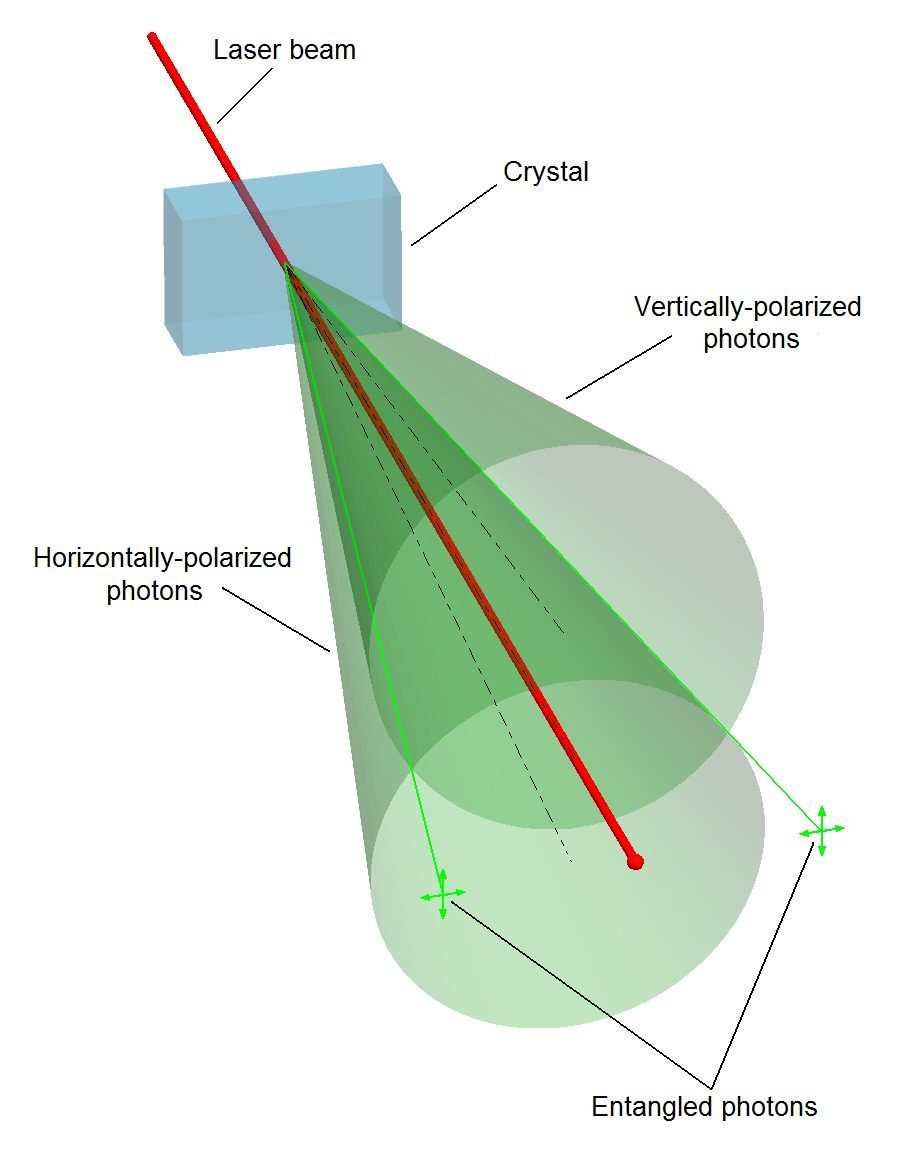
At the heart of entanglement is a concept that already stretches intuition: the quantum state. Instead of a particle having a definite property – like spin up or spin down – before you look, quantum theory says it can exist in a superposition, a blend of possibilities. When two particles interact and become entangled, their joint state is described in a way that you can no longer cleanly separate into “particle A” and “particle B.” It is more like having a single instruction manual that applies to both at once, rather than two separate books. Until a measurement is made, the theory does not assign a definite outcome to either one, only probabilities that are linked together.
When you finally measure one particle, the shared state collapses into a specific pattern of outcomes, and the other particle’s result is instantly constrained, no matter the distance between them. The key is that nothing physically travels when this happens in the mathematical description; instead, the underlying state of the pair is updated as a whole. A metaphor that helps, imperfect as it is, is to think of two pages of a story that are printed in such a way that changing one forces the narrative on the other to align, even if they’re far apart. The real quantum picture is more subtle and less visual than that, but the essential point is that entangled particles are not independent objects holding pre-written answers – they are parts of a shared question that only gets resolved when a measurement is made.
The Strange Evidence: Bell Tests and Quantum Networks
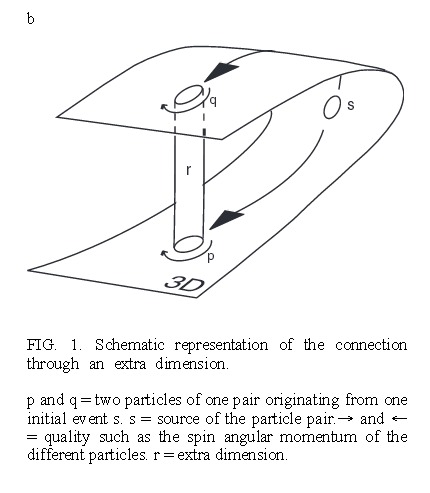
However strange entanglement sounds, it would be just an intellectual curiosity if experiments had not repeatedly backed it up. Over recent decades, physicists have carried out Bell test experiments in cities, on islands, and even using light from distant stars to choose measurement settings, all in an effort to rule out simple alternative explanations. These tests compare the correlations between measurements made on entangled particles with the maximum allowed by any theory that respects local realism. Time and again, quantum mechanics has won, with measured correlations exceeding those classical bounds by a substantial margin. The results have stood up even when experimenters separated detectors by many kilometers and synchronized them with precise atomic clocks.
Out of these fundamental tests, something more practical has started to grow: prototype quantum networks that rely on entanglement as a resource, not just as a philosophical puzzle. In laboratories around the world, researchers have entangled photons sent through optical fibers across cities, and in some cases linked ground stations to satellites orbiting hundreds of kilometers above Earth. These demonstrations hint at the possibility of a global quantum internet that could one day distribute entanglement between distant users on demand. What once seemed like a theoretical oddity now sits at the core of engineering plans for communication systems that treat quantum effects not as noise to be tamed, but as tools to be harnessed.
Why Quantum Entanglement Matters Far Beyond Physics Labs
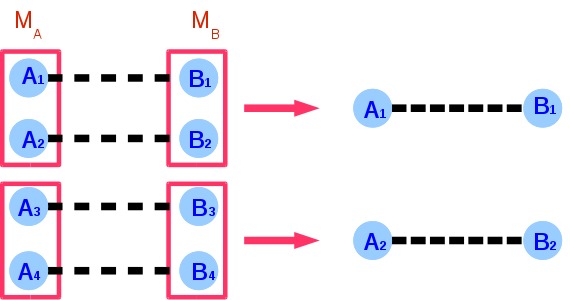
It is tempting to file entanglement under “cool but irrelevant” science trivia, yet that would miss just how disruptive it may become. Compared to traditional communication methods that rely on copying and sending signals, entanglement offers a different kind of link: a shared resource that can be consumed to do things ordinary signals cannot. In quantum key distribution, for example, entangled particles allow two parties to generate a shared secret key with the guarantee that any attempt at eavesdropping will leave telltale traces in their measurements. That stands in sharp contrast to many current encryption schemes, which are secure mainly because computers are too slow to break them – an assumption that future quantum computers may undermine. Entanglement, in that sense, is not just a curiosity but a possible shield against the very technologies it helps create.
On a deeper level, entanglement forces us to rethink comfortable assumptions about separateness and locality. Classical physics treats objects as independent unless a force acts between them, like billiard balls colliding on a table, but entangled systems behave more like notes in a chord – meaningless in isolation, understandable only as part of a whole. That shift in thinking spills over into other fields, from condensed matter physics, where entanglement helps explain exotic phases of matter, to quantum gravity, where some researchers suspect spacetime itself may emerge from patterns of entanglement. The subject reaches far beyond its origins as an argument between theoretical physicists, touching the way we imagine the building blocks of reality. Whether we like it or not, the everyday picture of separate, self-contained things is giving way to a more interconnected quantum view.
From Classical Computing to Quantum Advantage

To see why entanglement has technologists so excited, it helps to compare it with the workhorse of the digital age: the classical bit. A classical computer represents information using bits that are either zero or one, and every operation is essentially about flipping, combining, or moving those definite states around. Quantum computers, by contrast, use quantum bits, or qubits, which can exist in superpositions and can be entangled with each other. When engineers carefully arrange entanglement among many qubits, they create a computational resource that allows certain calculations to unfold in ways that no classical circuit can easily mimic. It is not that quantum computers are simply faster; they are different machines following a different playbook.
There is a wide gap between the messy, error-prone devices being built in labs today and the visionary machines that could solve chemistry problems, optimize logistics, or break widely used cryptographic codes. Yet even at this early stage, entanglement is already recognized as the essential fuel powering any serious quantum advantage. Researchers routinely measure how much entanglement their processors can sustain, much like checking the horsepower of an engine. Classical methods can simulate small amounts of entanglement, but as the number of entangled qubits grows, the computational cost for an ordinary computer explodes. That is why the race to build scalable quantum hardware is, in many ways, a race to tame, stabilize, and exploit large-scale entanglement without letting it crumble under the weight of noise and imperfections.
The Future Landscape: Quantum Internets, Space Links, and New Mysteries

Looking ahead, entanglement is poised to move out of isolated labs and into the infrastructure that underpins modern life. One major goal is the creation of a quantum internet, a network in which entangled states are distributed between nodes, allowing tasks like secure key exchange, distributed sensing, and coordinated quantum computations. Unlike today’s internet, which faithfully copies and forwards bits, a quantum network must cope with rules that forbid copying unknown quantum states, forcing engineers to use tricks like quantum teleportation powered by entanglement. Experimental testbeds already link universities, national labs, and even satellites, demonstrating individual pieces of this puzzle. It is not science fiction anymore; it is early-stage engineering with enormous stakes.
At the same time, new platforms are pushing entanglement into increasingly unfamiliar territory. Physicists are entangling not just single photons or electrons, but collections of atoms, mechanical resonators that vibrate like tiny drumheads, and even larger systems that start to look almost macroscopic. These efforts test how far quantum behavior can be scaled up before everyday classical intuition finally takes over, if it ever truly does. Future space missions may use entangled links to test gravity’s influence on quantum correlations or to probe whether spacetime itself has a quantum structure. Each success deepens the mystery as much as it clarifies it, suggesting that entanglement is less an odd corner case and more a central feature of how the universe knits itself together.
How You Can Engage With the Quantum Revolution
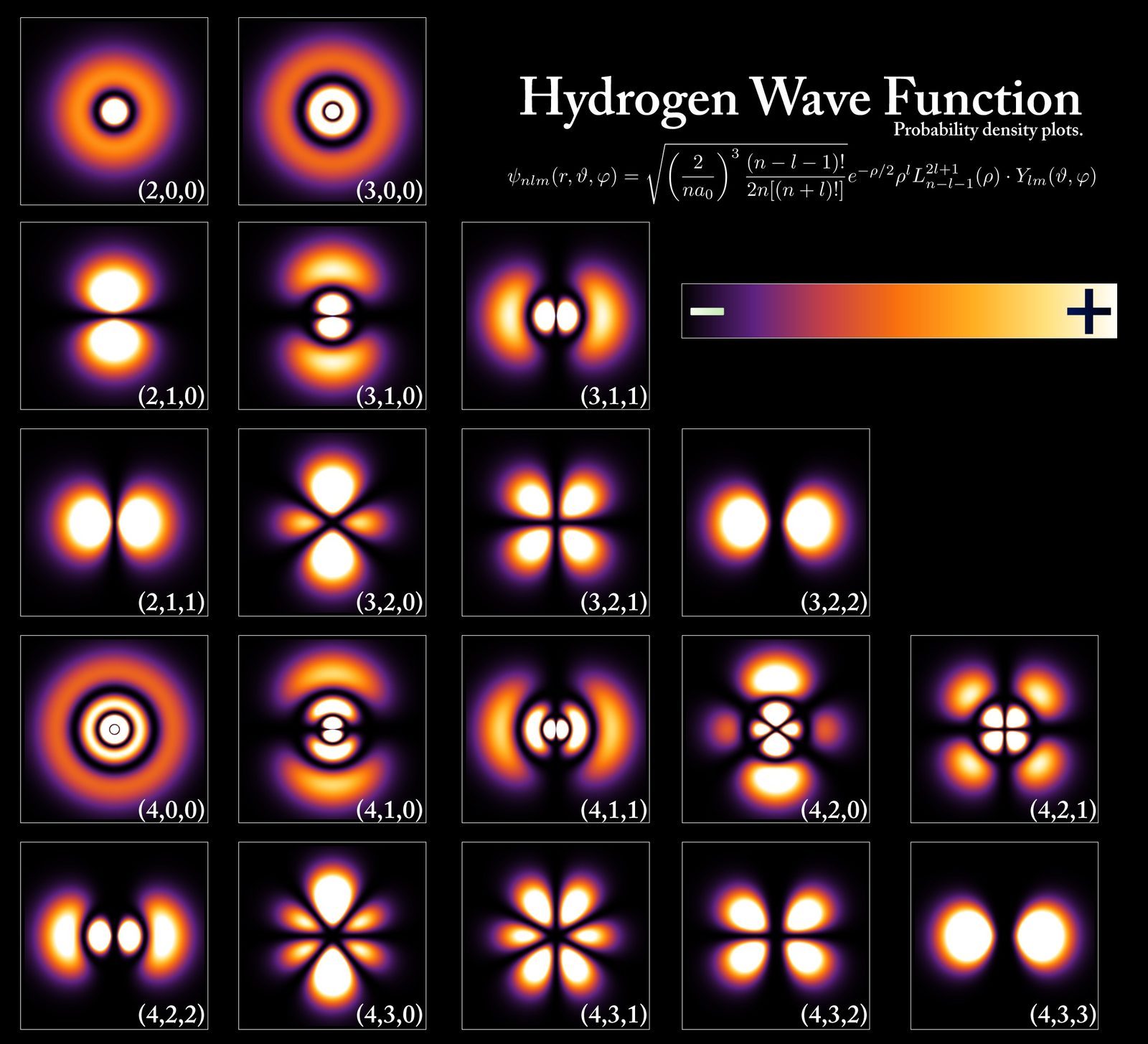
For something as abstract as entanglement, it might seem like there is little for a non-physicist to do beyond nod politely and move on, but that sells short the role of an informed public. Quantum technologies – especially in communication, computing, and security – are likely to shape debates about privacy, national competitiveness, and even ethical uses of powerful new tools. Staying curious and seeking out clear explanations, whether through science journalism, public lectures, or online courses, is a simple but meaningful first step. Supporting education in physics and mathematics, through school programs or community initiatives, helps build the next generation of researchers who will navigate this terrain. If you work in policy, law, or technology, paying attention to how quantum advances intersect with your field can keep you from being blindsided later.
On a more personal level, there is value in letting entanglement stretch your sense of what reality can be. You do not need to follow every equation to appreciate the idea that the universe may be woven together in ways that defy simple, local stories. Sharing engaging explanations, challenging misleading hype, and encouraging kids and adults alike to ask bold questions about nature all contribute to a culture that respects scientific curiosity. The strange case of quantum entanglement is still being written, and it is not just a story for specialists; it is part of a broader human attempt to understand our place in a deeply interconnected cosmos. Paying attention is, in its own way, a form of participation.
Suhail Ahmed is a passionate digital professional and nature enthusiast with over 8 years of experience in content strategy, SEO, web development, and digital operations. Alongside his freelance journey, Suhail actively contributes to nature and wildlife platforms like Discover Wildlife, where he channels his curiosity for the planet into engaging, educational storytelling.
With a strong background in managing digital ecosystems — from ecommerce stores and WordPress websites to social media and automation — Suhail merges technical precision with creative insight. His content reflects a rare balance: SEO-friendly yet deeply human, data-informed yet emotionally resonant.
Driven by a love for discovery and storytelling, Suhail believes in using digital platforms to amplify causes that matter — especially those protecting Earth’s biodiversity and inspiring sustainable living. Whether he’s managing online projects or crafting wildlife content, his goal remains the same: to inform, inspire, and leave a positive digital footprint.