

Few things in the universe command as much fascination and quiet dread as the speed of light. It’s that single number, burned into physics textbooks and pop-science documentaries alike, that seems to quietly govern everything yet remains stubbornly mysterious at its core. You’ve probably heard it tossed around casually, almost like it’s a simple fact. It isn’t. Not even close.
The more you peel back the layers, the stranger it gets. The speed of light isn’t just a fast number that rockets can’t quite reach. It’s woven into the very architecture of reality, the fabric of time, space, causality, and existence itself. So buckle up. Let’s dive in.
A Number That Refuses to Behave Like Other Numbers

Here’s the thing about the speed of light – it doesn’t play by the rules that every other speed in your experience follows. Maxwell’s equations of electromagnetism revealed that the speed of light is independent of the motion of its source or observer. Think about what that actually means. If you’re on a train and you throw a ball forward, its speed adds to the train’s speed. Light, however, simply refuses to do that.
The speed of light is no ordinary speed – it’s a universal constant that emerges from the laws of physics. Specifically, it’s the speed at which electromagnetic waves travel through the vacuum of space, and its value can be predicted by equations unifying our understanding of electricity and magnetism, as discovered over 150 years ago by James Clerk Maxwell. That’s right – even before Einstein, the weirdness was already there, quietly hiding in the math.
Einstein Steps In, and Reality Gets Complicated
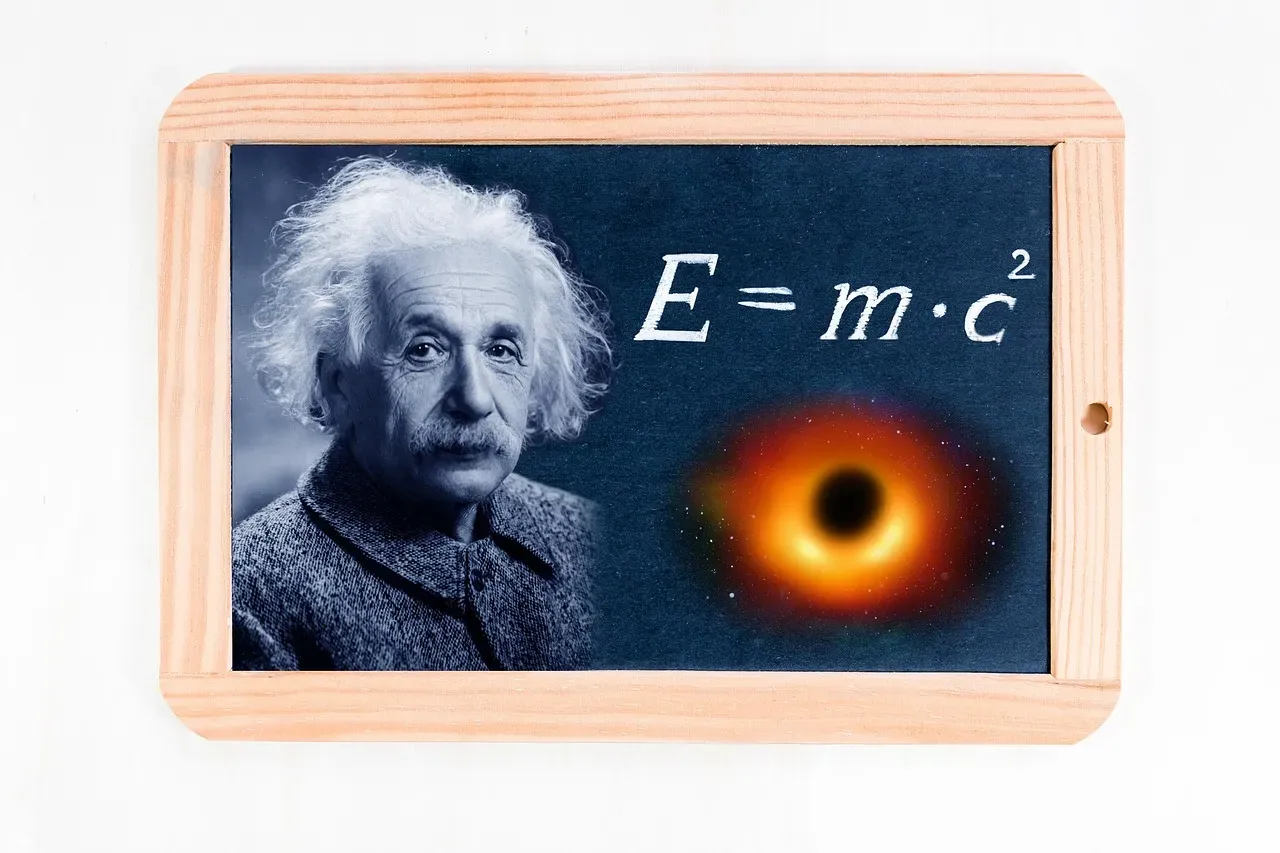
In 1905, Einstein postulated from the outset that the speed of light in vacuum, measured by a non-accelerating observer, is independent of the motion of the source or observer. Using this and the principle of relativity as a basis, he derived the special theory of relativity, in which the speed of light in vacuum featured as a fundamental constant, also appearing in contexts unrelated to light. That last part is crucial. Light speed stopped being just about light.
When Einstein connected the idea of the invariance of the speed of light together with Newton’s laws, it turned out that space and time are stretchy and variable. Honestly, when you sit with that for a moment, it’s a little unsettling. Space and time are not rigid, fixed containers you move through. They bend, stretch, and compress – all to protect the speed of light as the universe’s ultimate constant.
Why You Can Never Actually Reach It
You might wonder: what physically stops you from simply accelerating more and more until you hit light speed? If the mass of objects becomes infinite as they get closer to the speed of light, it makes sense that you cannot break that speed barrier – it would take infinite energy to accomplish. Think of it this way: it’s like trying to push a car that keeps gaining weight with every inch you move it, until it weighs more than the entire universe.
One of Einstein’s professors, a mathematician by the name of Hermann Minkowski, looked at Einstein’s theory of relativity and realized that at its deepest and most fundamental level, the theory said that any object was simply traveling through spacetime – partially through space and partially through time. When Einstein’s theory was pushed harder, what was revealed was that every object travels through spacetime at a single speed – the speed of light. So you’re already moving at light speed. You’re just spending it all on time rather than space right now.
Time Itself Breaks Down Near the Limit
If you could somehow approach the speed of light, time itself would become your strangest companion. Time dilation goes back to Einstein’s theory of special relativity, which teaches us that motion through space actually creates alterations in the flow of time. The faster you move through the three dimensions that define physical space, the more slowly you’re moving through the fourth dimension, time, at least relative to another object. This isn’t science fiction. It’s physics that has been verified repeatedly.
Unlike the Twin Paradox, time dilation isn’t a thought experiment or a hypothetical concept – it’s real. The 1971 Hafele-Keating experiments proved as much, when two atomic clocks were flown on planes traveling in opposite directions. And here’s where it gets deeply strange: Einstein’s work shows that at light speed, time stops altogether. Not slows. Stops. A photon, from its own perspective, experiences no passage of time at all.
The Speed of Light as a Cosmic Barrier to Space Exploration
Let’s be real – nothing reveals the cruelty of the light-speed limit quite like our dreams of exploring the cosmos. Light from the Moon takes just over a second to reach us. Light from the Sun takes about 8 minutes and 20 seconds. Light from the next star takes over 4 years. Four years, and that’s our nearest neighbor. The galaxy is roughly a hundred thousand light-years across. The implications for human space travel are sobering.
Consider a spacecraft traveling at 99 percent of the speed of light to the center of the Milky Way. If everything goes right, the crew would have aged about 21 years. However, back on Earth over 50,000 years would have passed. You’d return as a time traveler with nowhere to go home to. It’s not a technical limitation. It’s a fundamental one embedded in the structure of spacetime itself.
Quantum Mechanics Dares to Push Back
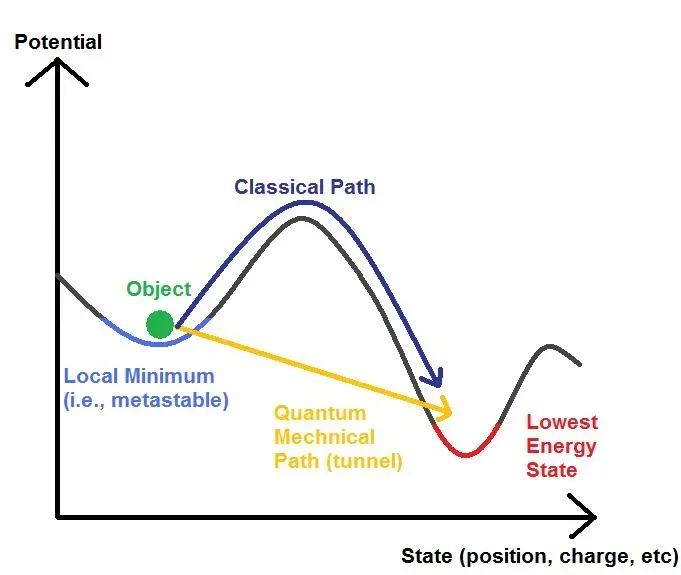
Physics wouldn’t be physics without a wild exception lurking in the fine print. Enter quantum tunneling. In quantum tunnels, particles appear to move faster than the speed of light, seemingly breaking the fundamental rules set by Einstein’s theory of relativity. Seemingly. That word is doing a lot of heavy lifting. In classical physics, if a particle doesn’t have enough energy to overcome a barrier, it will simply bounce back or stop. However, in quantum mechanics, particles exhibit wave-like properties, and there is a probability that the particle can “tunnel” through the barrier, even if it lacks the energy to cross it classically.
I know it sounds crazy, but the real kicker is what this doesn’t allow. In the 1960s, Thomas Hartman showed that tunneling takes a fixed amount of time, no matter what length tunnel the particle traverses. That means a particle could speed up while tunneling and might even surpass the speed of light if the tunnel is long enough or the barrier thick enough. Yet even this apparent loophole stays sealed. The non-local correlations seen in entanglement cannot actually be used to transmit classical information faster than light, so that relativistic causality is preserved.
Light Speed Is Built Into the Universe’s Very DNA
The results of special relativity can be summarized by treating space and time as a unified structure known as spacetime, and requiring that physical theories satisfy a special symmetry called Lorentz invariance, whose mathematical formulation contains the parameter c. Lorentz invariance is an almost universal assumption for modern physical theories, such as quantum electrodynamics, quantum chromodynamics, the Standard Model of particle physics, and general relativity. In other words, remove the speed of light from the equation, and the entire theoretical structure of modern physics collapses.
The speed of light isn’t just a random number. It is built into the way the universe works. It shows up in many formulas in science, like Einstein’s famous equation E=mc². If the speed of light changed, the whole universe would behave differently. Atoms might not hold together. Stars might not shine. Life might not exist. It’s less a speed limit and more a foundational law that makes everything we know possible.
Conclusion: A Limit That Mirrors Our Own
The speed of light is one of those rare scientific facts that manages to be both deeply practical and profoundly philosophical at the same time. It shapes your GPS navigation, the clocks on satellites, and the light reaching your eyes from stars that may no longer even exist. It draws a hard line around what we can ever observe, ever reach, and perhaps ever fully understand about the cosmos we inhabit.
In a strange way, the speed of light is a mirror. It reflects back to us the edges of our own reach as a species. Every particle accelerator, every telescope peering billions of light-years into the past, every thought experiment about twin paradoxes and tunneling electrons – all of it is humanity pressing its fingers against that invisible glass wall and asking what lies beyond. We may never fully answer that question. The universe, it seems, is keeping at least one secret locked away behind the speed of light. What do you think – does a limit this absolute make the universe feel smaller to you, or even more astonishing?