
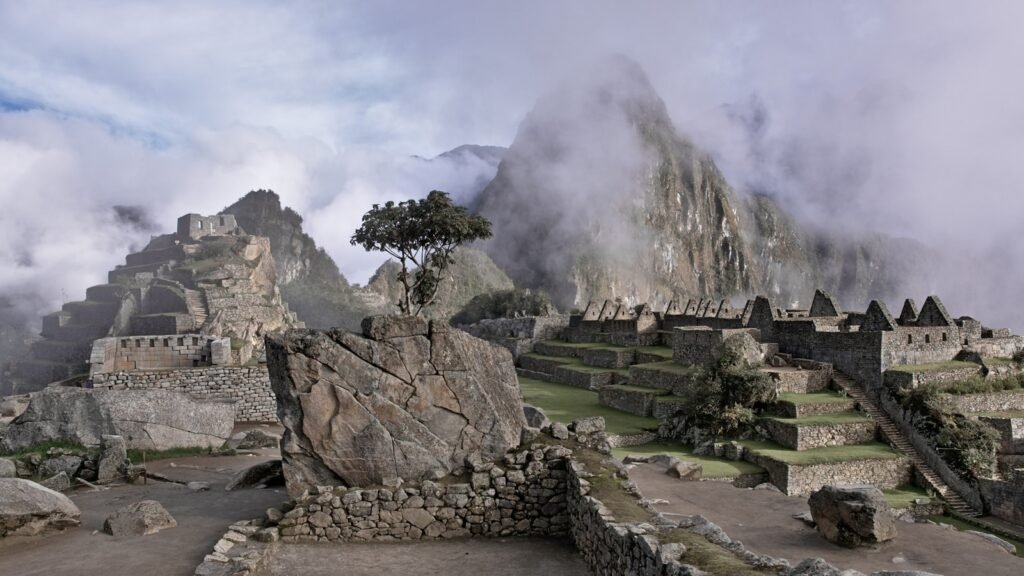

A few years ago, two scientists posed a question that sounds like it belongs in science fiction, yet came wrapped in sober climate data and planetary science: if an industrial civilization had risen and fallen on Earth tens of millions of years before humans, would we even know it? That idea, now known as the Silurian Hypothesis, does not claim that such a civilization actually existed; instead, it challenges how we read the deep-time record locked into rocks, sediments, and ice. The question matters because it forces scientists to confront the limits of geology as an archive and to think harder about what kind of planetary fingerprints civilizations leave behind. It also reframes how we think about our own impact on Earth: not just as a moral problem, but as a detectable geological event. And in the background is a more unsettling possibility – that our planet’s story might be stranger, and more cyclical, than we usually dare to imagine.
An Improbable Question From Serious Scientists
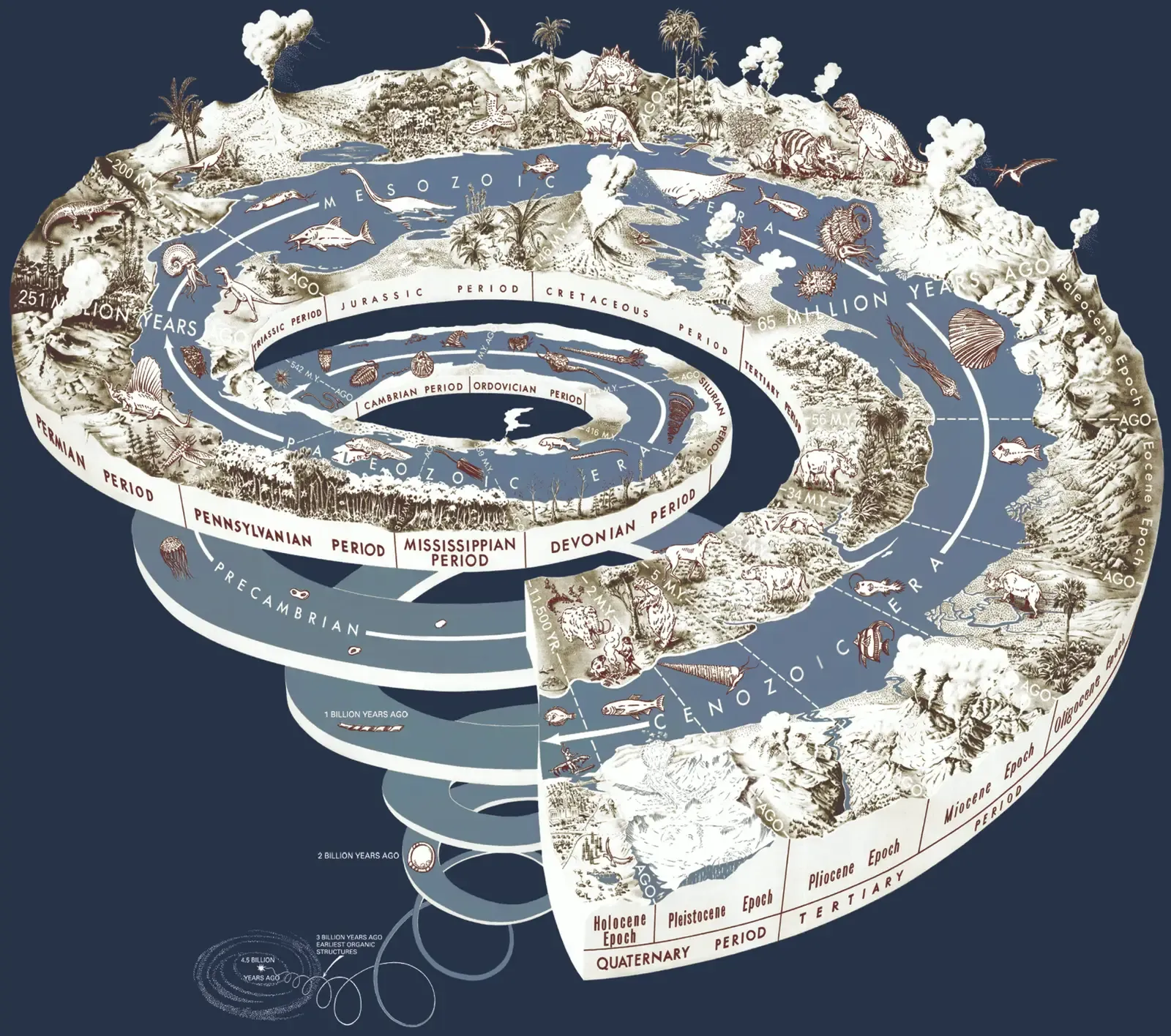
At first glance, the Silurian Hypothesis sounds like a late-night conspiracy theory, but it comes from mainstream researchers working on climate and planetary science. The idea was put forward in 2018 by astrophysicist Adam Frank and climatologist Gavin Schmidt, who were wrestling with a deceptively simple question: how would an advanced civilization show up in the geological record, and could we recognize it in deep time? Their term “Silurian” is a playful nod to a fictional race of ancient reptiles from British television, but the argument itself is deliberately grounded and cautious. They start from what we know about humanity’s own industrial era – fossil fuel burning, synthetic chemicals, mass extinctions – and then ask what traces of similar activity would survive tens of millions of years of erosion, burial, and tectonics.
What grabbed my attention when I first read about their work was how much it inverted the usual framing of alien civilizations. Instead of peering through telescopes and wondering about distant exoplanets, they turned the lens inward and treated us as the test case: we are the data set for understanding what “technological” looks like in rock. That move turns a speculative question into a scientific one, because it can be attacked with measurable quantities like isotope ratios, sediment layers, and fossil turnover. In other words, the Silurian Hypothesis is less about hidden reptile empires and more about calibrating our expectations for what civilizations, including our own, look like in the language of geology.
Why Deep Time Erases Almost Everything
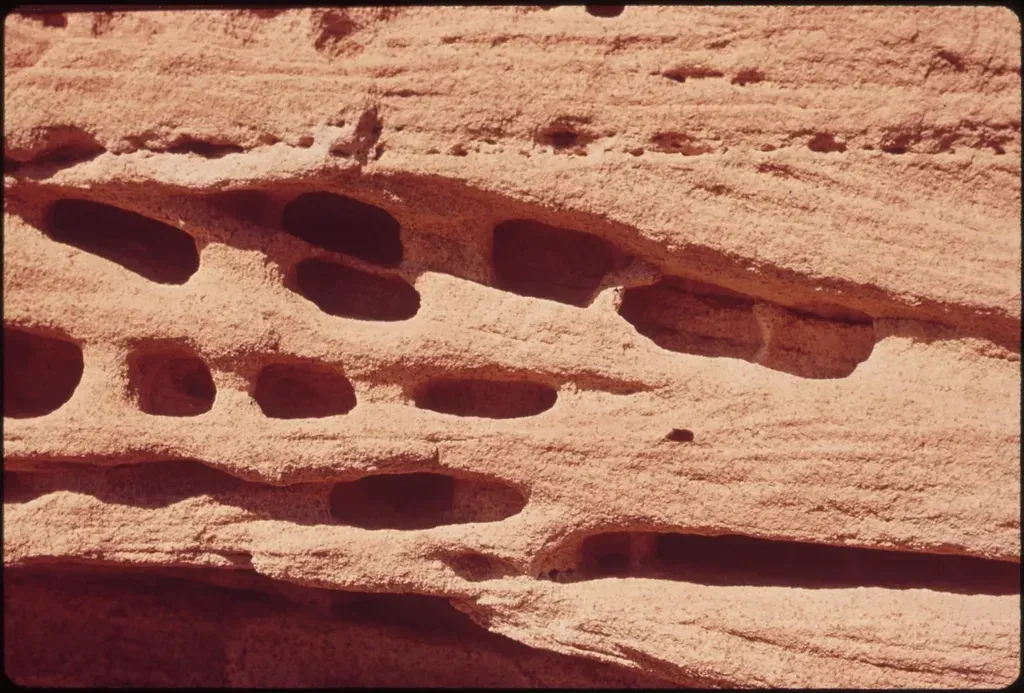
The brute fact working against any ancient civilization theory is that Earth is astonishingly good at erasing its own surface. Over millions of years, continents drift, mountains rise and crumble, oceans open and close, and the top layers of rock are constantly recycled by plate tectonics. If you compress the last hundred million years into a single day, entire mountain ranges appear and vanish in what feels like seconds. Under those conditions, a city made of concrete and steel is like a sandcastle at the edge of the surf: spectacular up close, but doomed on any serious geological timescale. Even modern ocean floor crust older than roughly two hundred million years is nearly all gone, subducted back into the mantle.
Most of the fossils we find are not of delicate things like skyscrapers or microchips but of hard biological materials – bones, shells, teeth – preserved under rather specific conditions. The fraction of all organisms that become fossils is already vanishingly small, and the fraction of human-made objects that might endure for millions of years is even smaller. If our civilization ended tomorrow, our tallest towers would slump and rust in tens of thousands of years, long before they had any real chance to become fossils. What is more likely to survive are indirect signatures: unusual chemical residues, disturbed sediment layers, or sharp shifts in the types of organisms preserved before and after our industrial pulse.
The Geological Fingerprints of Industry
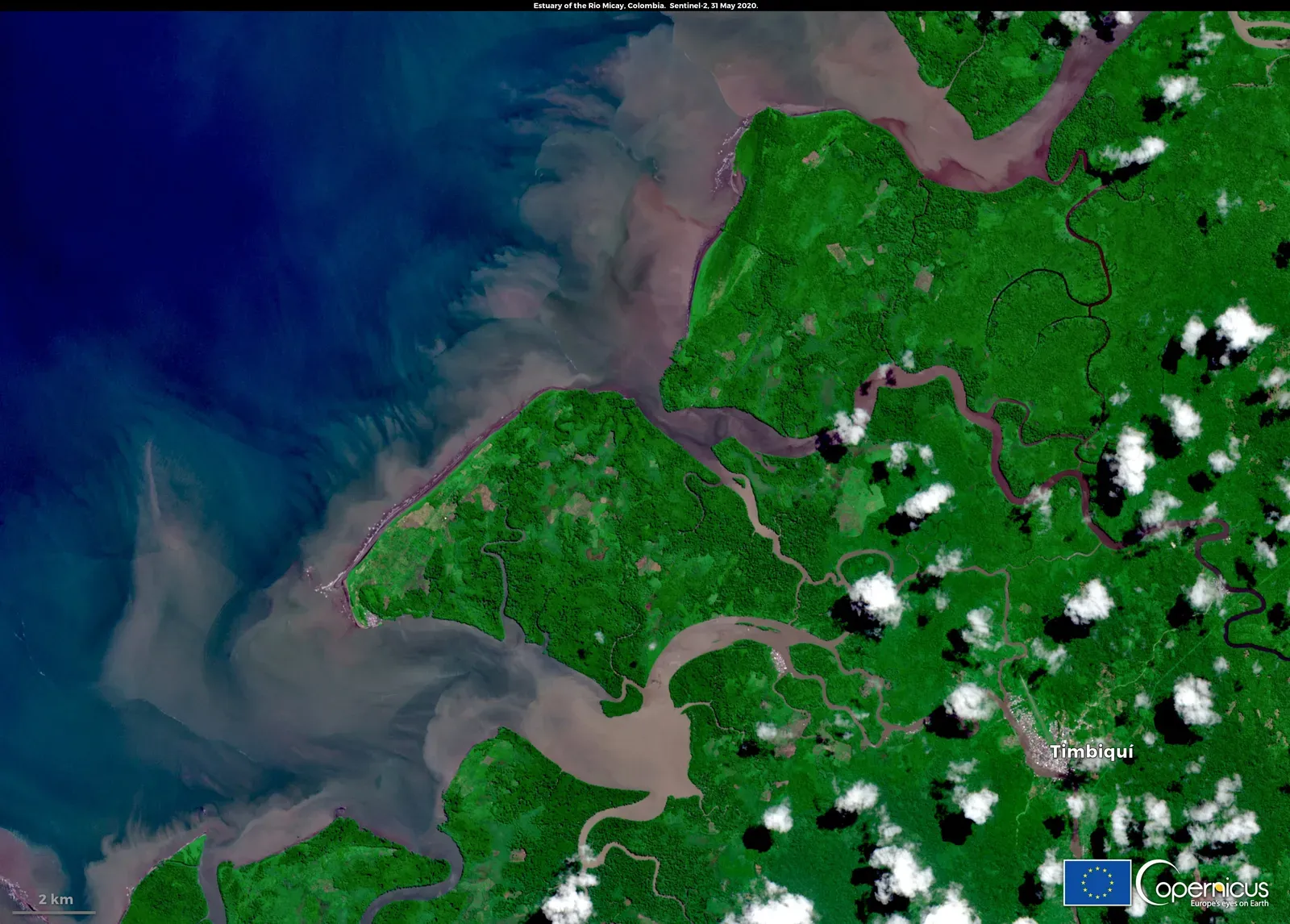
So what would a fossil civilization actually leave behind if you fast-forwarded the clock ten million years? Frank and Schmidt argue that the clearest markers are subtle but global: changes in stable isotopes of carbon and oxygen, spikes of certain metals in sediments, and the spread of synthetic molecules alien to natural chemistry. When humans burn vast amounts of fossil fuels, the carbon we release has a distinctive isotopic signature that shows up as a rapid, sharp excursion in the geological record. The same goes for nitrogen from industrial fertilizers, which alters the chemistry of soils, rivers, and coastal zones and can be traced in sediments as altered nitrogen isotope ratios. On top of that, there are the “technofossils” we are generating in huge volumes – plastics, alloys, and complex organics that nature never produced on its own.
Many of these signals are already being proposed as markers for a new geological interval sometimes called the Anthropocene, defined by human-driven changes beginning in the twentieth century. There is talk of plastic fragments embedded in coastal sediment, fly ash from coal power plants, and artificial radionuclides from nuclear tests acting like a time-stamped layer in riverbeds and lake bottoms. Translated into Silurian Hypothesis language, the question becomes: if a similar industrial surge happened fifty million years ago, and if most of the obvious artifacts were long gone, would these more subtle global markers be enough for us to notice? The uncomfortable answer is that we might easily miss them or misinterpret them as purely natural climate or volcanic events.
Ancient Climate Spikes That Look Strangely Familiar
Earth’s past climate record contains events that already look disturbingly like what we are doing today, but playing out over much longer timescales. One of the best-known is the Paleocene–Eocene Thermal Maximum, roughly fifty-six million years ago, when global temperatures jumped sharply and the oceans became more acidic in a geologically brief burst. The carbon isotope shift from that episode suggests a massive release of carbon to the atmosphere, comparable in total amount to what humans might emit if we burned most available fossil fuels. Sediments from that time show changes in ocean life and patterns of oxygen depletion, echoing modern dead zones tied to nutrient runoff and warming seas. If you view it with Silurian-tinted glasses, it is tempting to ask whether anything more than volcanoes or methane might have been at work.
Most researchers see the Paleocene–Eocene spike as a wholly natural phenomenon, likely tied to feedbacks in the carbon cycle such as methane hydrate release or intense volcanic activity. There is no hard evidence of manufactured chemicals, no clear layer of synthetic materials, and no obvious archaeological remnants in rocks of that age. Still, the episode serves as a useful stress test for the hypothesis: it shows how difficult it can be to separate natural carbon catastrophes from hypothetical industrial ones, especially when you are staring back across tens of millions of years with incomplete data. The Silurian Hypothesis does not claim the Paleocene–Eocene event was artificial; instead, it forces scientists to ask what additional signals would be needed to rule that out decisively.
Could Any Archaeological Trace Really Survive Tens of Millions of Years?
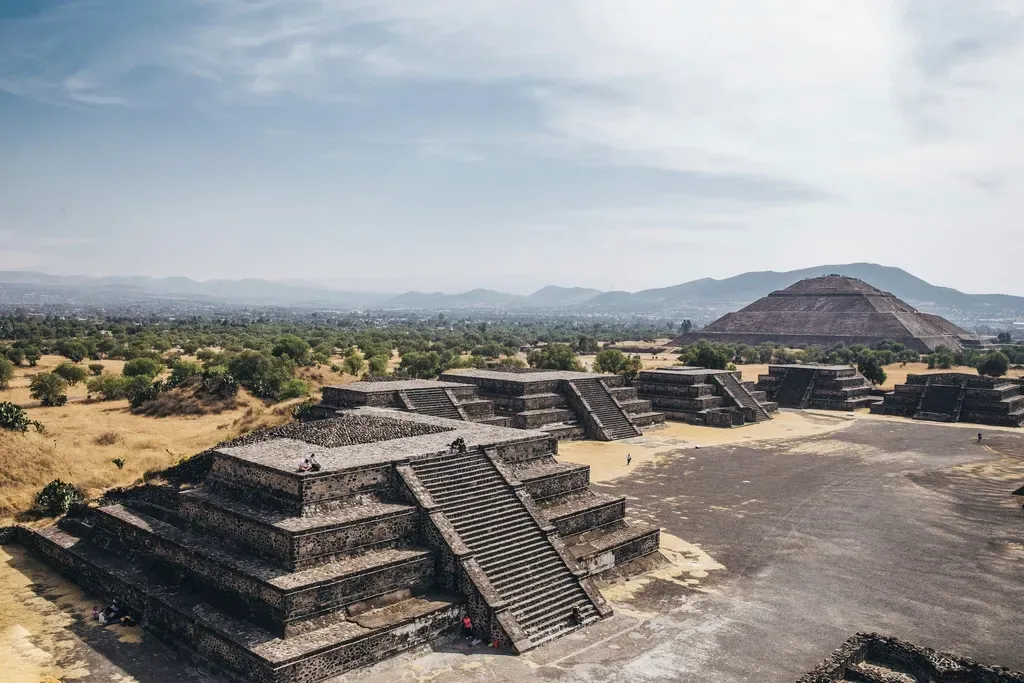
When we imagine a lost civilization, we tend to picture ruined cities, enigmatic monuments, or maybe an alien-looking device buried under layers of rock. The sobering reality is that exposed structures on land weather incredibly fast on geological timescales, while sedimentary environments that favor preservation are patchy and limited. Even for human history, most of our oldest cities sit in regions where climate, erosion, and human redevelopment constantly recycle building materials. If you jump from thousands of years to tens of millions, you are moving from a fragile paper archive into a world where the pages are constantly shredded and rewritten. The odds that a concrete megastructure would be preserved, discovered, and correctly interpreted that far into the future are not just small; they are vanishingly small.
Some materials do better. Buried waste in stable sediment basins – especially in the deep ocean or in anoxic lake beds – has a better chance of long-term survival. Deep mines, bored tunnels, or massive landfill deposits could, in principle, leave unusual physical disturbances in rock that a curious future geologist might notice. There might also be micro-scale traces, like microscopic bits of plastic embedded in ancient clays or alloys that do not match any known natural ore signatures. From the Silurian Hypothesis point of view, the search for an ancient industrial civilization would look less like Indiana Jones and more like a forensic audit of chemical noise and structural oddities in rocks that most people never see.
What the Silurian Hypothesis Really Says About Us

The deeper significance of the Silurian Hypothesis is not that it makes a secret reptile empire more likely, but that it clarifies how civilization and geology intersect. Before this work, discussions about the Anthropocene could sometimes drift into vague metaphors about humanity “leaving a mark” on the planet. By trying to specify exact isotopic shifts, sediment changes, and chemical residues, Frank and Schmidt pushed the conversation toward concrete, measurable signals. That, in turn, sharpens our sense of what we are doing to the Earth system today and how long those changes will echo, long after the last data center goes dark. It also provides a kind of template for interpreting strange signals we might one day find on Mars, Venus, or distant exoplanets, where natural and artificial processes could easily blur together.
From a cultural standpoint, I find the hypothesis strangely humbling. It implies that even a global industrial civilization might be little more than a thin, ambiguous scratch in the rock record, the kind a future geologist might argue about in conference hallways. That contrast between how dominant we feel and how faint our ultimate footprint might be puts our current crises in a different light. It suggests that the real legacy of a technological species is not towering monuments but altered cycles of carbon, nitrogen, and biodiversity that ripple through ecosystems for ages. By reframing our era as just one more experiment in planetary modification, the Silurian Hypothesis quietly invites us to think of ourselves as part of a longer, possibly repeating, story of worlds that briefly wake up.
Unresolved Clues and How Far Speculation Can Go
For all its appeal, the Silurian Hypothesis runs into a hard wall of evidence: so far, there is no convincing geological or archaeological sign of a prehuman industrial civilization. The weird events we do see in deep time – sudden warmings, ocean anoxia, mass extinctions – are well explained by known processes like volcanism, asteroid impacts, and large-scale climate feedbacks. Geologists have spent decades combing through critical intervals in Earth’s history, and while they regularly find surprises, none require invoking ancient technology. That absence of evidence, while not ironclad proof of absence, strongly pushes the idea toward the realm of thought experiment rather than hidden history. It is a useful constraint, reminding us that speculation has to sit inside the boundaries drawn by rocks, fossils, and chemistry.
At the same time, there are still genuinely open questions about just how sensitive our detection methods are when you push back beyond a certain age. Many sediment sequences are incomplete; entire continents have lost their older rock cover; and analytical tools for spotting exotic compounds in very old samples are still evolving. There may be subtle signals – unusual metal distributions, odd microfossil changes, unexpected mineral phases – that we do not yet know how to interpret or that we have not systematically searched for. The key, and this is where the hypothesis remains scientifically honest, is that any claim about ancient industry would have to beat overwhelmingly strong natural explanations. Speculation is allowed as long as it motivates sharper measurements and better models, not as an excuse to conjure a lost civilization where the data do not support it.
How Curious Readers Can Follow the Trail
Even if you are not a geochemist or planetary scientist, there are ways to engage with the ideas behind the Silurian Hypothesis that go beyond a quick social media scroll. One simple step is to pay closer attention to how news stories describe climate and extinction events in deep time, noticing when they mention carbon isotopes, sediment cores, or abrupt ecological shifts. Museum exhibits on Earth history and mass extinctions often highlight the same kinds of data that would be relevant to an ancient civilization search, and it is eye-opening to realize how much of our picture comes from tiny chemical and fossil clues. You can also seek out public lectures or online courses from universities and geological surveys that explain how scientists reconstruct past climates and environments from rock layers. The more you understand those tools, the more you can see why the Silurian Hypothesis is both thrilling and tightly constrained.
On a more personal level, the hypothesis can be a prompt to think differently about our own impact and legacy. If a future species dug through the strata we are laying down now, what would they actually see, and how would they judge our choices? That perspective makes abstract issues like carbon emissions, biodiversity loss, and pollution feel strangely immediate, because they become part of a long, layered conversation between life and planet. Supporting science literacy – by reading critically, backing strong science education, and staying alert to how evidence is used – helps ensure that conversation is guided by understanding rather than wishful thinking. In the end, the most radical part of the Silurian Hypothesis might not be the suggestion of a lost civilization, but the quiet challenge it poses to us: will our own story be legible, and worth reading, in the rocks we leave behind?
Suhail Ahmed is a passionate digital professional and nature enthusiast with over 8 years of experience in content strategy, SEO, web development, and digital operations. Alongside his freelance journey, Suhail actively contributes to nature and wildlife platforms like Discover Wildlife, where he channels his curiosity for the planet into engaging, educational storytelling.
With a strong background in managing digital ecosystems — from ecommerce stores and WordPress websites to social media and automation — Suhail merges technical precision with creative insight. His content reflects a rare balance: SEO-friendly yet deeply human, data-informed yet emotionally resonant.
Driven by a love for discovery and storytelling, Suhail believes in using digital platforms to amplify causes that matter — especially those protecting Earth’s biodiversity and inspiring sustainable living. Whether he’s managing online projects or crafting wildlife content, his goal remains the same: to inform, inspire, and leave a positive digital footprint.


