
You’ve probably looked at a photograph of a strange creature and thought, “There’s no way that thing is real.” Yet the natural world keeps outdoing itself, producing animals so bizarre, so secretive, and so downright mind-bending that even seasoned scientists occasionally find themselves standing with their mouths wide open. Rare animals aren’t just remarkable for how they look. It’s what they do in the shadows, the forests, the deep ocean trenches, and even in plain sight, that truly defies imagination.
Honestly, the more you dig into animal behavior, the more you realize how little we actually know. New discoveries are being made every single year, rewriting textbooks and challenging long-held assumptions about intelligence, communication, survival, and emotion. Buckle up, because what you’re about to read might change the way you see the animal kingdom forever. Let’s dive in.
The Saola: A Ghost With a Secret Life
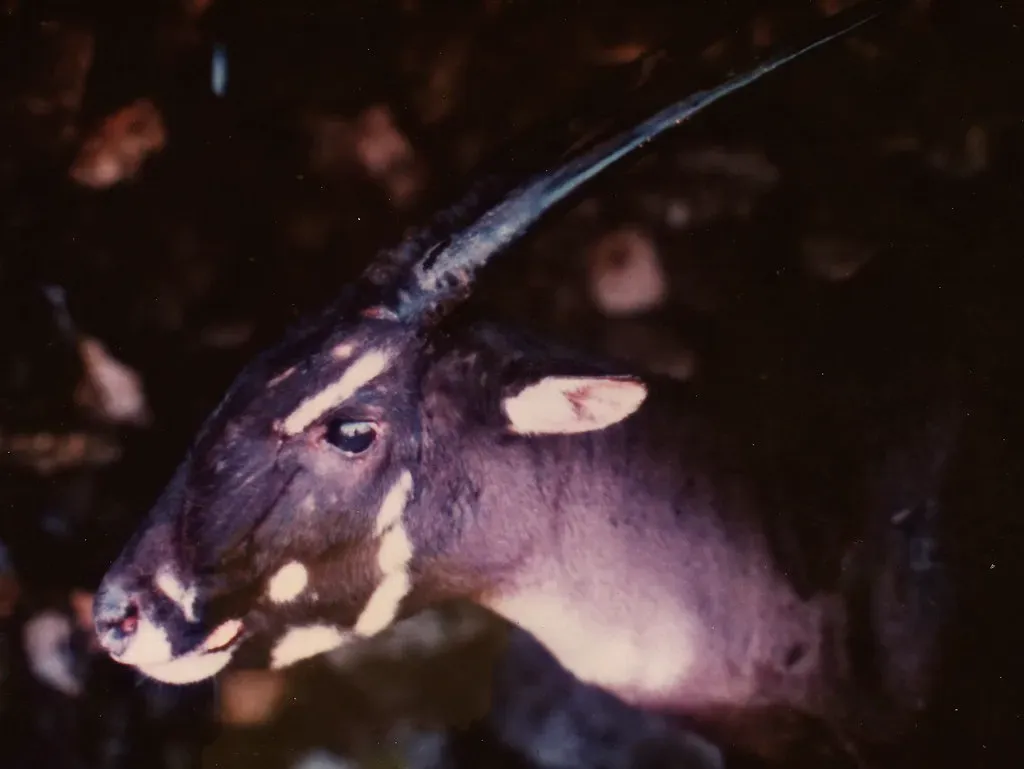
Few animals on this planet carry more mystery than the saola. Discovered only in 1992 in Vietnam’s Annamite Mountains, the saola is one of the rarest and most enigmatic mammals on Earth, with elegant, parallel horns and a gentle face that makes it look like something straight out of a legend. I think it’s almost poetic that an animal this extraordinary was completely unknown to science barely three decades ago.
Scientists have barely observed the saola in the wild. It avoids human contact so successfully that fewer than a dozen photographs exist, and no one understands its behavior, diet, or breeding habits in detail. Some researchers fear it may already be on the edge of extinction, vanishing before we ever truly meet it – a ghost of the forest and a reminder that Earth still holds secrets beyond our sight. That thought alone should make you stop and think.
The Kakapo: The Flightless Parrot That Smells Like Honey
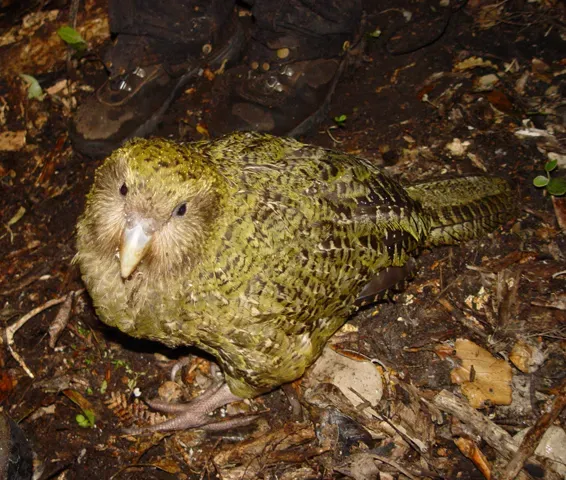
Strigops_habroptilus_1.jpg: Mnolf, CC BY-SA 3.0)
Let’s be real – when you hear about a bird that cannot fly, smells sweet, and only comes out at night, you start to wonder if nature was having a little fun. The kakapo is a giant, flightless parrot from New Zealand and one of the rarest birds on Earth. With its mossy green feathers and owl-like face, it’s nocturnal, smells like honey, and cannot fly – a combination no other bird possesses.
What truly mystifies scientists is how such a species evolved to thrive without flight, relying instead on stealth and scent in a world once free of mammalian predators. Human arrival brought cats and rats, and the kakapo nearly vanished. Today, a small population survives through intense conservation, but its quirky biology – from mating behavior to vocal communication – continues to fascinate and puzzle researchers. It’s the kind of animal that makes you want to sit in a New Zealand forest at midnight just to catch a glimpse.
Bonobos: Peace, Play, and Pretend Tea Parties
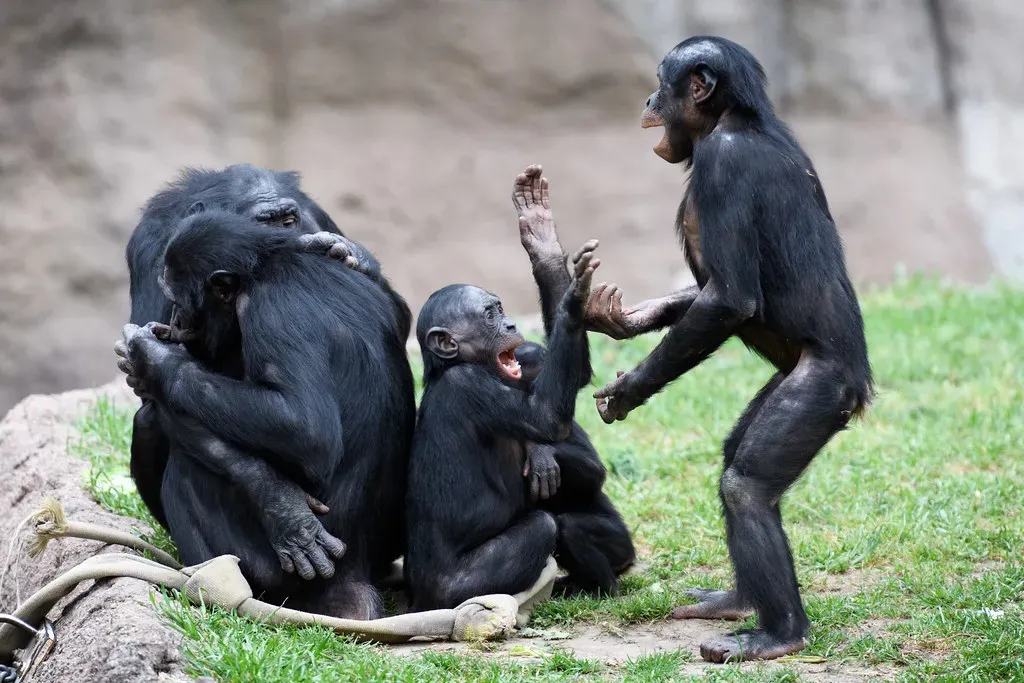
Here’s the thing about bonobos – they’re not your average primate. When things get testy in bonobo communities, they don’t respond by lashing out aggressively. Instead, these apes defuse tension in a remarkably different way. Bonobos seem to be genuinely altruistic creatures, more inclined to share with strangers than fight them for resources, leading to a life that some observers might describe as a near-utopia of cooperation.
What’s even more surprising is just how deep their imaginative capacity goes. A bonobo named Kanzi surprised scientists by successfully playing along in pretend tea party experiments, tracking imaginary juice and grapes as if they were real. Think about that for a second. An ape, engaging in make-believe. Kanzi consistently pointed to the imaginary items as though they were physically present, raising profound questions about animal imagination and cognitive complexity. We may have been dramatically underestimating these animals for a very long time.
Orcas: The Solitary Hunters Rewriting the Rules
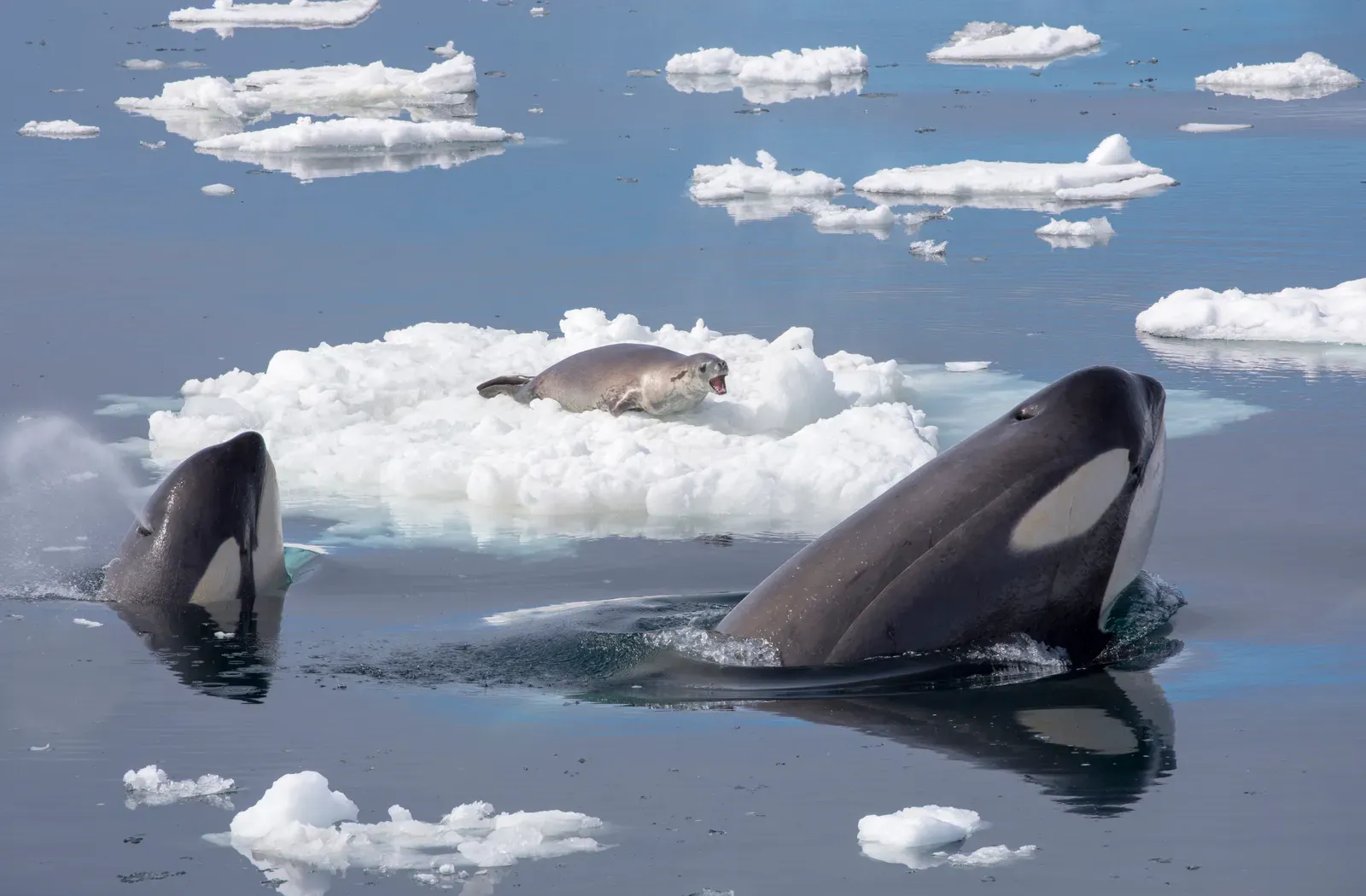
Everyone knows orcas are intelligent. What most people don’t know is just how shockingly flexible and individual their hunting behaviors can be. In South Africa, a solitary orca nicknamed Starboard was observed eating a great white shark for the first time, working alone to incapacitate and consume an eight-foot-long juvenile white shark in only two minutes. Alone. Two minutes. That’s extraordinary.
Starboard was later observed carrying the shark’s liver in its mouth, and this event is now challenging conventional beliefs about orcas’ cooperative hunting behaviors in the region. The world’s biggest fish may also be on the menu for a unique pod of orcas off the coast of Mexico, who appear to be targeting whale sharks – animals that grow to almost sixty feet long. It’s hard to say for sure how widespread these maverick hunting behaviors are, but science is paying closer attention now than ever before.
Fairywrens: Teaching Songs Before Birth
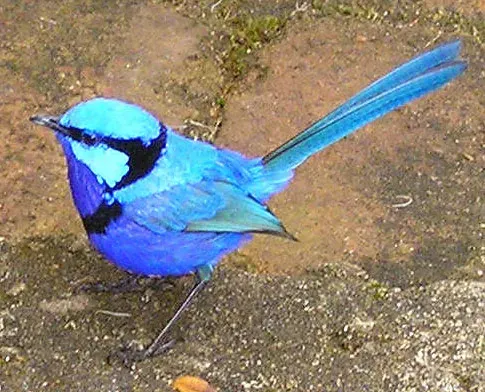
You might think you’ve heard some incredible parenting stories. Wait until you hear this one. Scientists in Australia have found a remarkable fact about wrens: they teach their chicks to sing before the chicks have even hatched. When the young birds emerge from their shells, they sing a tune similar to one their mother sang to them as eggs – a behavior that unveils the songbirds’ astonishing communication skills.
Experts have found this maternal musical bond across multiple species of wren, including the splendid fairywren, the purple-crowned fairywren, and the thick-billed grasswren, suggesting that the practice may have begun millions of years ago with a common ancestor. Scientists are unsure exactly why wrens developed this ability, but one compelling theory is that it stops nest infiltration by cuckoos – sneaky creatures who lay their eggs in other birds’ nests to fool other mothers into raising their young. Nature, it turns out, invented passwords long before the internet did.
The Yeti Crab: Farming Bacteria in the Deep
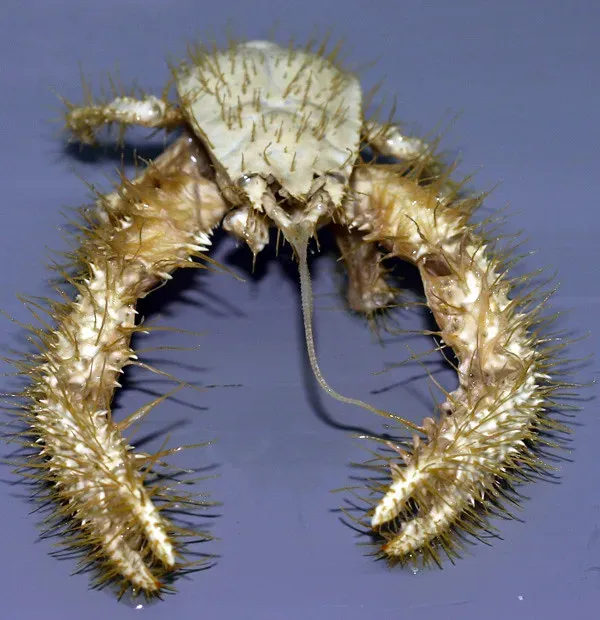
If you’ve ever thought deep-sea creatures couldn’t get any stranger, the Yeti crab is here to change your mind. Discovered in 2005 near hydrothermal vents in the South Pacific, the Yeti crab looks like a creature from a fantasy novel. Its pale, hairy claws are covered in fine setae that host bacteria, and scientists believe the crab farms these bacteria as a food source, brushing them through mineral-rich water to feed them – a strange kind of underwater agriculture.
Think of it like tending a microscopic garden, except you’re doing it at the bottom of the ocean under crushing pressure and scalding heat. The details of its life remain uncertain: how it reproduces, how long it lives, and how exactly it thrives in such extreme heat and pressure remain open questions. Meanwhile, researchers exploring the deep sea are continuing to make astonishing finds. One recent highlight was the detailed anatomical study of Myonera aleutiana, a carnivorous bivalve, whose examination produced more than 2,000 tomographic images, revealing remarkable detail of the animal’s soft tissue and internal structure. The deep ocean is, without question, the last great frontier of animal behavior.
Parrots and Elephants: The Animals That Call Each Other by Name
Language is something we’ve long considered a uniquely human gift. That assumption is crumbling fast. Researchers from Cornell University have discovered that parrots in the wild pass on learned vocal signatures to their offspring, much like in human society – suggesting that every parrot has a name of its own. Parents make contact calls before nestlings can even produce their own sounds, and offspring imitate them as they grow older. Remarkably, this also occurred in nestlings reared by foster parents, proving it is a learned social behavior rather than a genetic feature. So far, only humans, dolphins, and parrots have been shown to mimic the signatures of others throughout their lives.
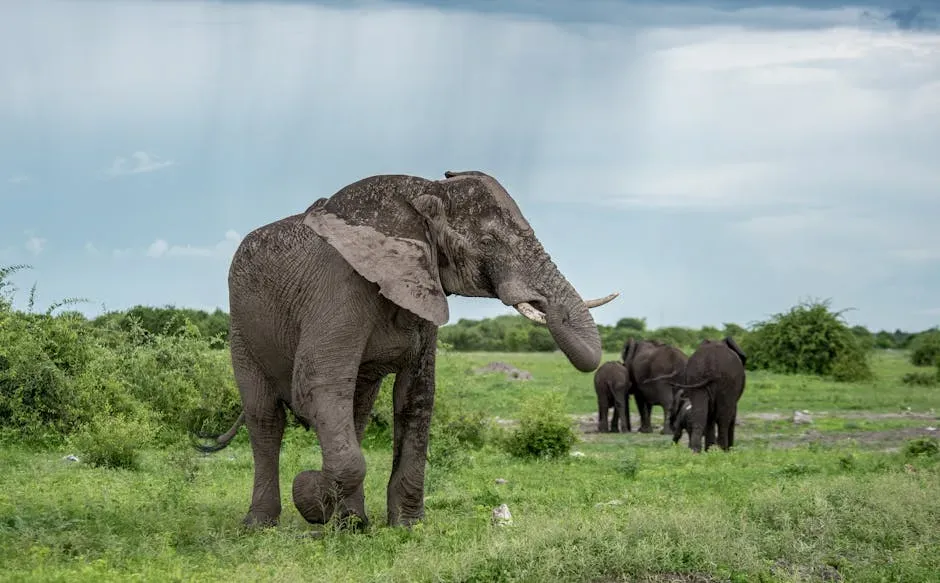
Elephants take this even further. Wild African savannah elephants appear to address one another with name-like calls – a very rare ability among non-human animals. They use various vocal cues to convey meaning and could also be using something genuinely akin to individual names. A research team used machine-learning methods to analyze recordings of 469 calls or rumbles made by wild African elephant female-offspring groups in Kenya’s Amboseli National Park and Samburu and Buffalo Springs National Reserves. The results were stunning. These animals don’t just communicate – they apparently know each other, personally, by name.
Conclusion: The World Is Wilder Than You Think
The deeper science looks, the more it finds. Rare animals aren’t just curiosities for wildlife documentaries. They are living proof that nature operates with a complexity, intelligence, and creativity we are only beginning to understand. From a parrot whispering a name in a rainforest to a deep-sea crab quietly farming its own food in pitch darkness, the behaviors hiding out there in the wild are nothing short of extraordinary.
Every single one of these animals carries a story that took millions of years to write. Some of them, like the saola, might disappear before we even finish reading it. That urgency is real, and it matters. Each of these creatures, with their unique adaptations and intriguing lifestyles, reminds us of the importance of conservation efforts, ensuring that future generations can continue to discover and be inspired by the wonders of our natural world.
The natural world is not done surprising us. Not by a long shot. Which of these hidden animal behaviors shocked you the most? Drop your thoughts in the comments below.