
Everyone knows someone who just seems lucky: the friend who always finds a parking space, lands the dream job, or somehow ends up on the right train at the right time. We tell ourselves it is chance, fate, karma, or cosmic alignment, but scientists have been quietly dissecting this feeling of fortune for decades. What if at least part of what we call “luck” is really a pattern, a set of behaviors and probabilities playing out in ways our brains are terrible at tracking? From casino experiments to brain scans of risk-takers, researchers are beginning to map how randomness collides with perception and decision-making. And while there is no magic spell for winning the lottery, the science of luck suggests we might be able to tilt the odds of a fortunate life more than we think.
The Hidden Clues: How Our Brains Misread Chance
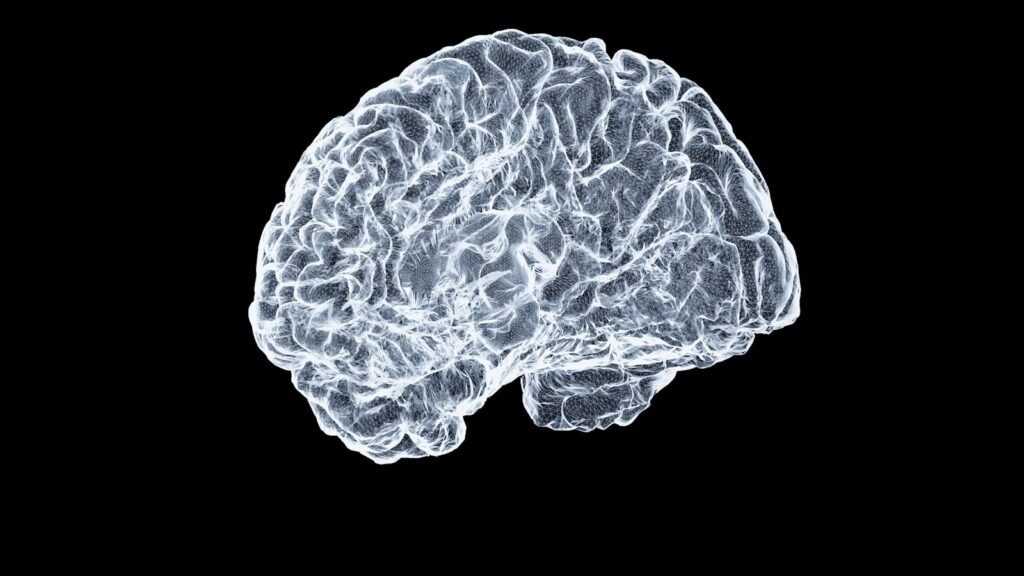
One of the most surprising things researchers have learned is just how badly the human brain understands randomness. We expect “random” to look like a neat alternation of wins and losses, heads and tails, good days and bad, but real randomness is streaky, messy, and counterintuitive. When people see a slot machine hit three jackpots in an hour, many assume it is “hot,” even though the underlying probabilities have not budged. This mismatch between intuition and mathematics is the breeding ground where superstition, rituals, and stories about being “cursed” or “blessed” take root.
Psychologists have documented a swarm of cognitive biases that feed our illusions about luck, including the gambler’s fallacy, where people believe a loss streak means a win is “due,” and the hot-hand belief, where a success streak feels self-sustaining. In everyday life, these misreadings show up when we decide a certain shirt is lucky because we wore it on a good day, or when we avoid certain routes because of one bad experience, despite years of safe travel. Our brains are pattern machines, wired to find connections even when none exist, because in our evolutionary past, spotting patterns quickly was often more important than being perfectly accurate. Luck, in many cases, is the story we tell ourselves after random events have already happened.
From Ancient Omens to Modern Probability

Humans have been trying to decode luck since long before we had equations to describe chance. Ancient civilizations read the flight of birds, the entrails of animals, and the alignment of stars in search of hints about future fortune or disaster. These early systems were elaborate, often beautifully detailed, but they rested on an unspoken assumption that the universe was sending personal signals. It was less a matter of measuring randomness and more a matter of taming anxiety about an uncontrollable world.
The real pivot came with the birth of probability theory in the seventeenth century, when mathematicians started analyzing games of chance like dice and cards. Suddenly, luck was not an invisible force but a set of frequencies and odds that could be calculated and, to some degree, predicted over the long run. This shift did not kill superstition, but it gave scientists and gamblers alike a new language to talk about risk, expectation, and fairness. The same math that once described dice now underpins weather forecasts, medical studies, insurance, and financial markets, all arenas where people still talk about “good luck” and “bad luck” even as they rely on complex models. The old instinct to read omens never really vanished; it was just layered on top of a newer, more numerical world.
Are Some People Truly “Luckier” Than Others?
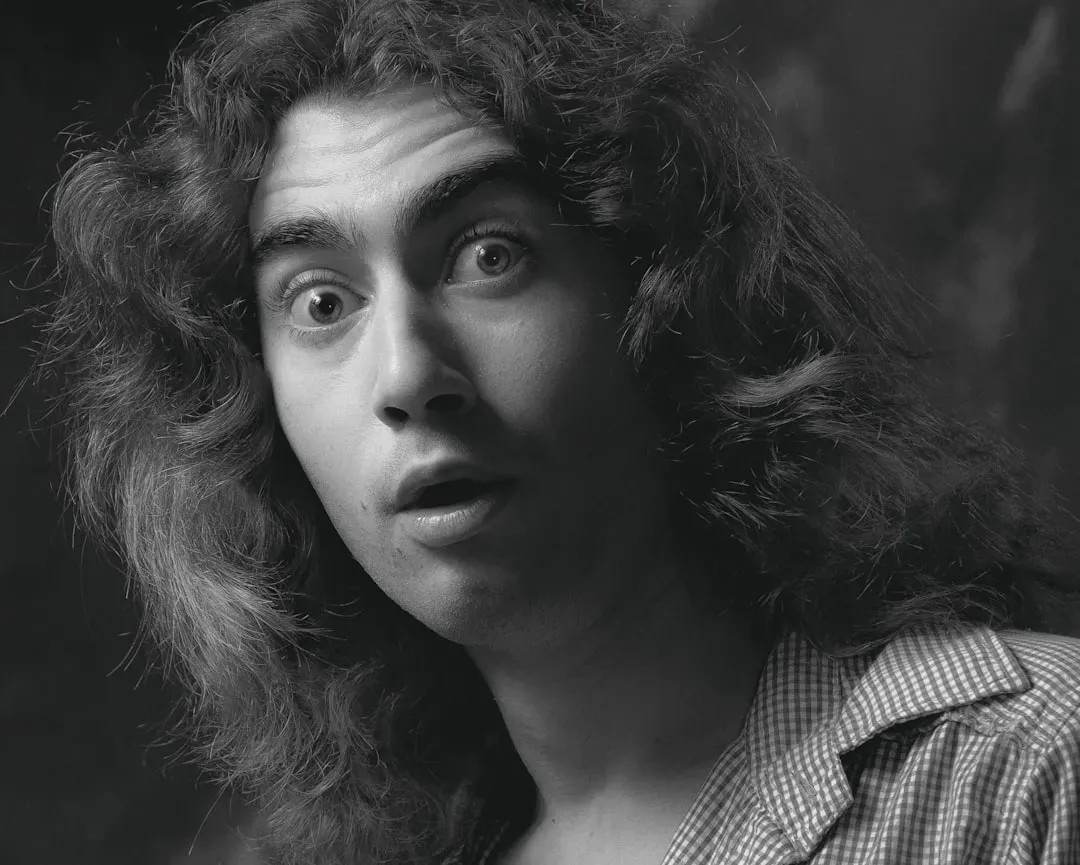
Ask around at any party and you will hear confident claims that some people are naturally lucky. Interestingly, some psychologists have taken this idea seriously – not as a mystical trait, but as a mix of personality, attention, and behavior that changes how often people stumble into opportunities. Studies have found that self-described “lucky” people tend to be more extroverted, more open to new experiences, and less anxious than those who consider themselves unlucky. They strike up conversations with strangers, notice unusual details in a room, and are more willing to deviate from a routine, which all quietly increase the chances of chance encounters.
In classic experiments, volunteers were asked to count photos in a newspaper while researchers secretly included a large message offering cash if the reader noticed it. People who identified as lucky were more likely to spot the message, not because their eyes were better, but because they were less tense and more open to the unexpected. The unlucky group tended to be more focused and stressed, which helped them with the counting task but caused them to miss the surprising reward. In this sense, luck becomes less about random events and more about how permeability to the world’s possibilities shapes which random events actually intersect with your life. The coin toss is the same; it is the radius of your curiosity that changes.
The Mathematics of Rare Wins and Everyday Fortune
When people talk about luck, they often leap straight to extreme events – winning a massive jackpot, surviving a plane crash, or being discovered overnight. Mathematically speaking, those events live in the thin tail of probability distributions, where outcomes are possible but so rare that most of us will never see them. Focusing only on those extreme cases makes luck look impossibly mysterious. In reality, the math of luck is much more visible in ordinary life, where small probabilities accumulate over time.
Consider how many independent chances you get in a year for something good to happen: job applications, conversations, unplanned opportunities, health choices, financial decisions. Even if each one carries only a small chance of a major positive outcome, the cumulative probability of something going your way grows with every attempt. This is why people who “create their own luck” often simply take more shots – apply to more roles, start more projects, talk to more people. On the flip side, ignoring low-probability risks, like rare side effects or unlikely but severe storms, can make bad luck feel inevitable when it finally arrives. The arithmetic of luck does not care about fairness; it only cares about how many times you step up to roll the dice.
Why It Matters: Luck, Inequality, and the Stories We Tell

Luck is not just a parlor game topic; it quietly shapes how we think about success, failure, and fairness in society. When people underestimate the role of chance in life outcomes, they are more likely to over-credit personal merit for wins and over-blame individuals for losses. Economists who simulate career paths using realistic models of random opportunities find that even when everyone starts with similar talent and effort, a small fraction end up vastly more successful largely because of a few lucky breaks. This does not mean talent and hard work do not matter, but it does mean they are not the whole story.
Understanding this has ethical consequences. If we acknowledge that luck plays a powerful role in shaping wealth, health, and status, policies aimed at leveling the playing field – like access to education, healthcare, and social safety nets – become easier to justify. At a personal level, recognizing the role of randomness can make us more compassionate toward others and slightly gentler on ourselves when things go wrong despite sincere effort. It also forces a rethink of the stories we tell about “self-made” individuals versus those who “squandered” their chance, reminding us that behind every narrative is an invisible cloud of near-misses and fortunate timing. Luck, once seen clearly, becomes a quiet argument for both humility and shared responsibility.
Global Perspectives on Luck and Fate

Across cultures, luck is wrapped in different symbols, rituals, and beliefs, but the underlying human impulse is remarkably similar: we want some sense of influence over an uncertain world. In some traditions, luck is tied closely to moral behavior, with good fortune seen as a reward for virtue and bad fortune as a consequence of wrongdoing. In others, it is more intertwined with fate, destiny, or cycles of rebirth, where individual actions matter but are nested in a larger cosmic pattern. These differences change how people respond to risk, failure, and success on a day-to-day basis.
Social scientists have found that in cultures where fate and external forces are emphasized, people may be more tolerant of inequality but also more resigned to their own circumstances. By contrast, in societies that stress individual agency, people may feel more empowered but also more personally responsible when things go wrong, sometimes to a punishing degree. These cultural lenses color everything from business decisions to how people interpret natural disasters or economic shocks. Underneath it all, though, the stochastic nature of events does not change; what shifts is how communities make meaning out of their encounters with randomness. Luck, in this sense, is as much a cultural construct as it is a mathematical reality.
The Future Landscape: Simulating Luck with Data and Algorithms
In the last decade, advances in computing have given scientists new tools to explore how luck unfolds across lifetimes and societies. Researchers now run large-scale simulations where virtual individuals move through synthetic economies or social networks, experiencing random shocks and opportunities governed by known probability rules. These models show how tiny advantages early in life – like a particularly supportive teacher or a timely first job – can snowball into huge differences decades later, a process sometimes described as cumulative advantage. They also reveal how small changes in policy or starting conditions can dampen or amplify the role of sheer luck.
At the same time, algorithms and predictive models are increasingly being used to manage risk and opportunity in finance, insurance, medicine, and hiring. On paper, this looks like an effort to reduce the influence of luck by making outcomes more data-driven and consistent. In practice, these systems can introduce new layers of chance and bias, depending on which data they were trained on and how they are deployed. There is a growing debate over whether algorithmic decision-making is truly more “fair” or whether it simply shifts where randomness and error show up. As our tools for modeling luck become more powerful, so does the responsibility to decide when we should let probabilities rule and when we should override them with human judgment.
Everyday Strategies for Tilting the Odds

There may never be a perfect formula for luck, but the research does hint at practical ways to invite more positive randomness into your life. One simple strategy is to deliberately increase your number of “draws” from the urn of chance: apply for more roles than feels comfortable, talk to more people than you usually would, test more ideas even when they might fail. Each extra attempt slightly raises the probability that something will stick, much like buying more tickets increases the chance of winning a small raffle, even if it does not guarantee the jackpot. Another strategy involves cultivating what psychologists call flexible attention – the ability to focus when needed but also to notice unexpected cues and possibilities.
On a more personal note, I used to think of myself as unlucky because I focused almost exclusively on the rare big wins I never got, like grants I missed or dream roles that went to someone else. It was only after I started tracking smaller, everyday “lucky breaks” – a conversation that led to a story idea, a delayed train that made me bump into an old friend – that I realized how much fortune was hiding in plain sight. Shifting perspective does not change the underlying math, but it does change how willing you are to step into situations where chance can work in your favor. Combining this mindset with sensible risk management – like diversifying investments, maintaining savings, and paying attention to low-probability but high-impact threats – creates a more robust relationship with luck. You are not controlling randomness, but you are choosing how exposed you are to its upside and how protected you are from its downside.
Call to Action: Rethinking Luck in a Random World

Engaging with the science of luck starts with a simple shift: treating fortune not as a mystical verdict, but as a mix of probability, behavior, and context that we can understand and partly influence. On an individual level, you can experiment with expanding your “surface area” for positive chance by joining new communities, learning skills that open more doors, and staying open to serendipity instead of clinging to rigid plans. You can also support policies and initiatives that recognize the role of randomness in life outcomes, from educational programs that give more children a genuine first shot, to social safety nets that help people recover when bad luck strikes.
For those drawn to the numbers, exploring basic probability, statistics, and risk literacy can be a powerful way to strip away some of luck’s false mystique and become a more informed decision-maker. For those drawn to the human side, listening to the untold near-misses and quiet breaks behind success stories can deepen empathy and nuance. Whether you choose to volunteer, advocate, study, or simply pay closer attention to how chance threads through your own days, the first step is the same: stop treating luck as something that happens to other people and start seeing it as a pattern that you are already part of. In a world where we cannot control the roll of every die, the choice to engage, reflect, and act is itself a kind of everyday fortune. What might change for you if you decided to give luck a little more room to move?
Suhail Ahmed is a passionate digital professional and nature enthusiast with over 8 years of experience in content strategy, SEO, web development, and digital operations. Alongside his freelance journey, Suhail actively contributes to nature and wildlife platforms like Discover Wildlife, where he channels his curiosity for the planet into engaging, educational storytelling.
With a strong background in managing digital ecosystems — from ecommerce stores and WordPress websites to social media and automation — Suhail merges technical precision with creative insight. His content reflects a rare balance: SEO-friendly yet deeply human, data-informed yet emotionally resonant.
Driven by a love for discovery and storytelling, Suhail believes in using digital platforms to amplify causes that matter — especially those protecting Earth’s biodiversity and inspiring sustainable living. Whether he’s managing online projects or crafting wildlife content, his goal remains the same: to inform, inspire, and leave a positive digital footprint.