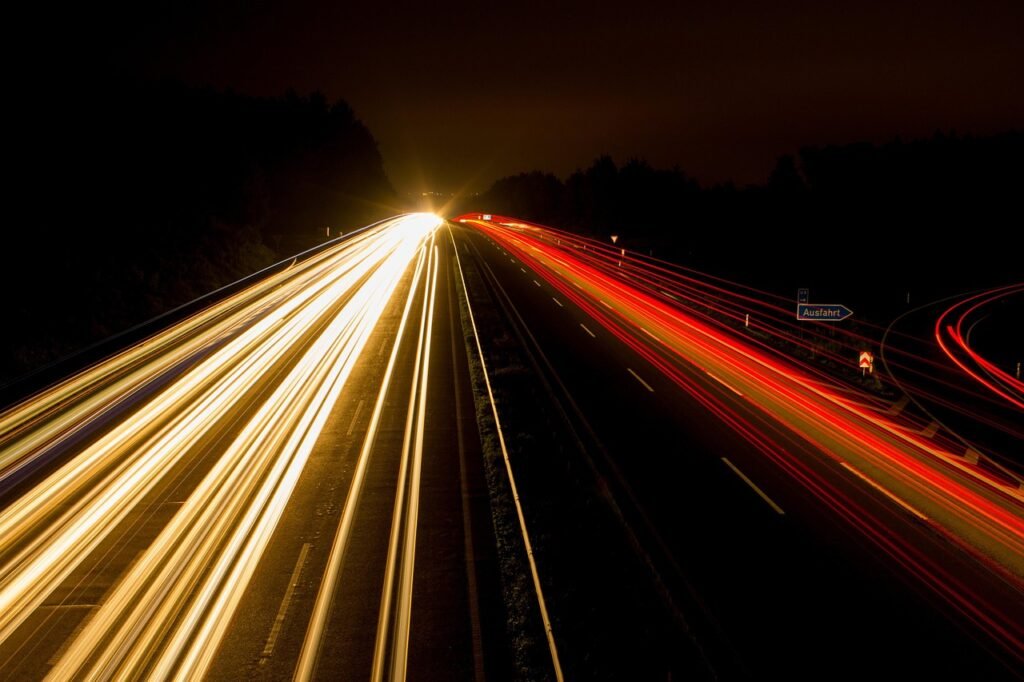

Have you ever stared up at the night sky and wondered what it would be like to zoom past those twinkling stars at the speed of light? The idea sounds thrilling, doesn’t it? Flying through the cosmos, covering unimaginable distances in the blink of an eye.
Here’s the thing, though. Light speed isn’t just a number. It’s exactly 299,792,458 meters per second, and it’s the ultimate speed limit woven into the very fabric of our universe. Traveling at that speed would turn everything you know about time, space, and reality completely upside down. Your body, your perception, even the stars around you would transform in ways that challenge the imagination. Let’s dive in and explore what really happens when you dare to push the boundaries of cosmic velocity.
The Cosmic Speed Limit Exists for a Reason
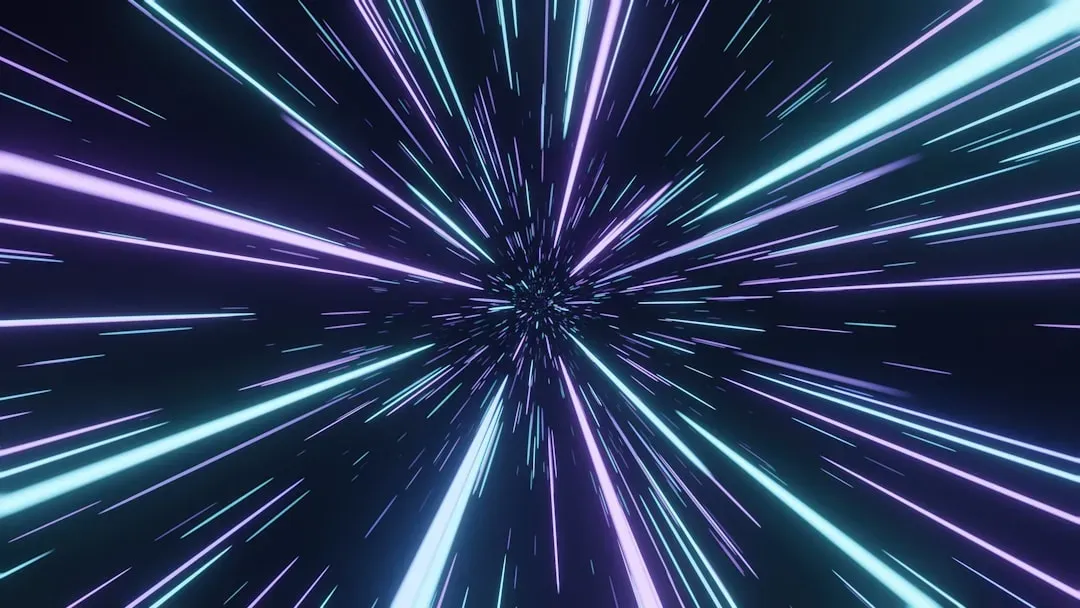
You might think you could just keep accelerating faster and faster indefinitely. After all, that’s how things work when you’re driving a car or flying an airplane, right? Simply press the pedal harder, fire the engine longer, and voilà, more speed. Reality at extreme velocities, however, plays by completely different rules.
Light speed is the upper limit for the speed at which information, matter, or energy can travel through space. This isn’t some arbitrary restriction scientists invented to ruin your space travel dreams. If you have no rest mass as you travel through the vacuum of space, you absolutely are compelled to travel exactly at the speed of light. That applies to photons, the particles of light itself. Mass, on the other hand, changes everything. The moment something has mass, it can never quite reach that cosmic ceiling, no matter how much energy you throw at it.
Time Becomes Your Travel Companion
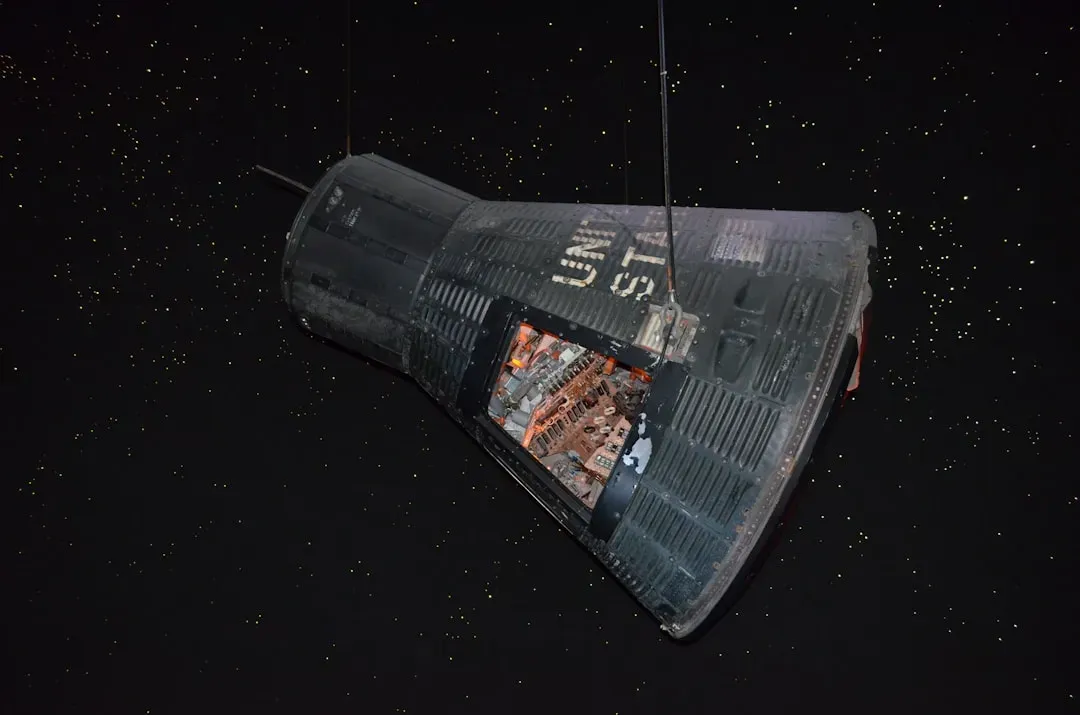
Let’s say you somehow managed to board a spacecraft capable of reaching nearly light speed. You’d experience something bizarre: the faster the relative velocity, the greater the time dilation between observers, with time slowing to a stop as one approaches the speed of light. Time dilation isn’t science fiction, it’s verified physics.
One observer stays on Earth while the other goes off in a spaceship to a planet 9.5 light years away at 0.95c, and the observer on Earth measures a time of 10 years for the trip, but the person on the spaceship measures a much shorter time. From your perspective inside that speeding vessel, only a few years might pass. Meanwhile, everyone you left behind on Earth would age decades. When you returned home, your friends and family might be long gone. That’s not a movie plot, that’s relativity showing you who’s boss.
Your Mass Doesn’t Actually Increase
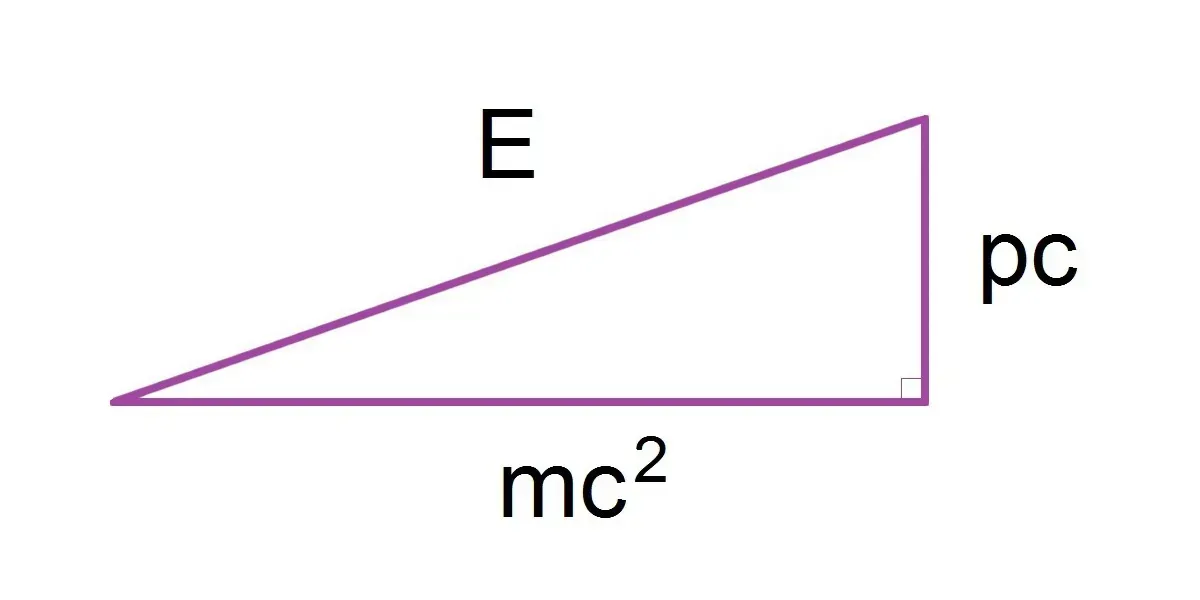
You’ve probably heard the old explanation that objects get heavier as they approach light speed, eventually becoming infinitely massive. Honestly, that’s a simplification that modern physicists have moved away from. Mass does not increase with speed; inertia does.
What’s the difference? Your rest mass stays constant no matter how fast you’re moving. As an object moves faster, its observed mass increases, and as an object approaches the speed of light, its observed mass becomes infinitely large. Think of it more like resistance to further acceleration growing astronomically. An infinite amount of energy is required to make an object move at the speed of light, making it impossible for any matter to travel faster. That’s why photons can do it: they have zero rest mass.
The Universe Around You Would Look Alien

Picture yourself hurtling through space at close to light speed. You glance out the window, expecting to see stars streaking past like in the movies. Wrong. At 0.99c almost all visible radiation from the universe is confined to a region 10 degrees in radius around the direction of travel. The entire starfield would appear squished into a narrow cone straight ahead of you.
Colors would shift dramatically too. Stars in front of you would appear bluer because their light waves compress, while stars behind would stretch into red wavelengths. At truly extreme speeds, those shifts would push wavelengths completely outside the visible spectrum. What was once a brilliant star could simply vanish from your sight, fading into infrared or ultraviolet obscurity. The cosmos would become a strange, distorted place where familiar constellations twist into unrecognizable patterns.
Space Itself Contracts Along Your Path
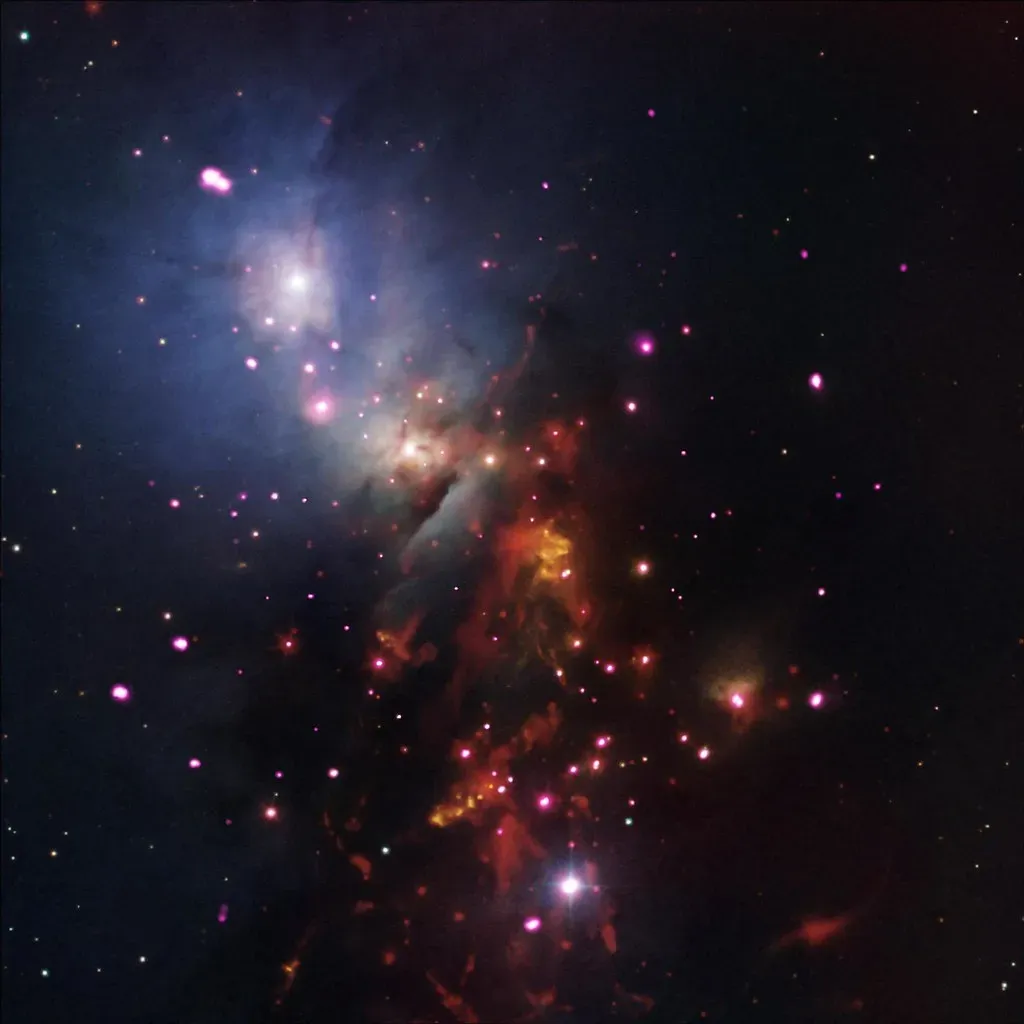
It’s hard to say for sure, but imagine measuring the distance to a star while you’re sitting still versus racing toward it at nearly light speed. Length contraction means moving objects shorten. From your perspective aboard that near-light-speed rocket, the space between you and your destination literally shrinks.
At 0.99c you experience time about 7 times slower than the surrounding universe and measure a covered distance of about 1 light year from your own frame, though space is Lorentz-Fitzgerald contracted 7 times. That means a journey that should take 10 years according to someone on Earth might feel like only 3 years to you. The universe compresses along your direction of motion, making impossible journeys suddenly seem feasible, at least from your perspective inside the ship.
Acceleration Is the Real Challenge
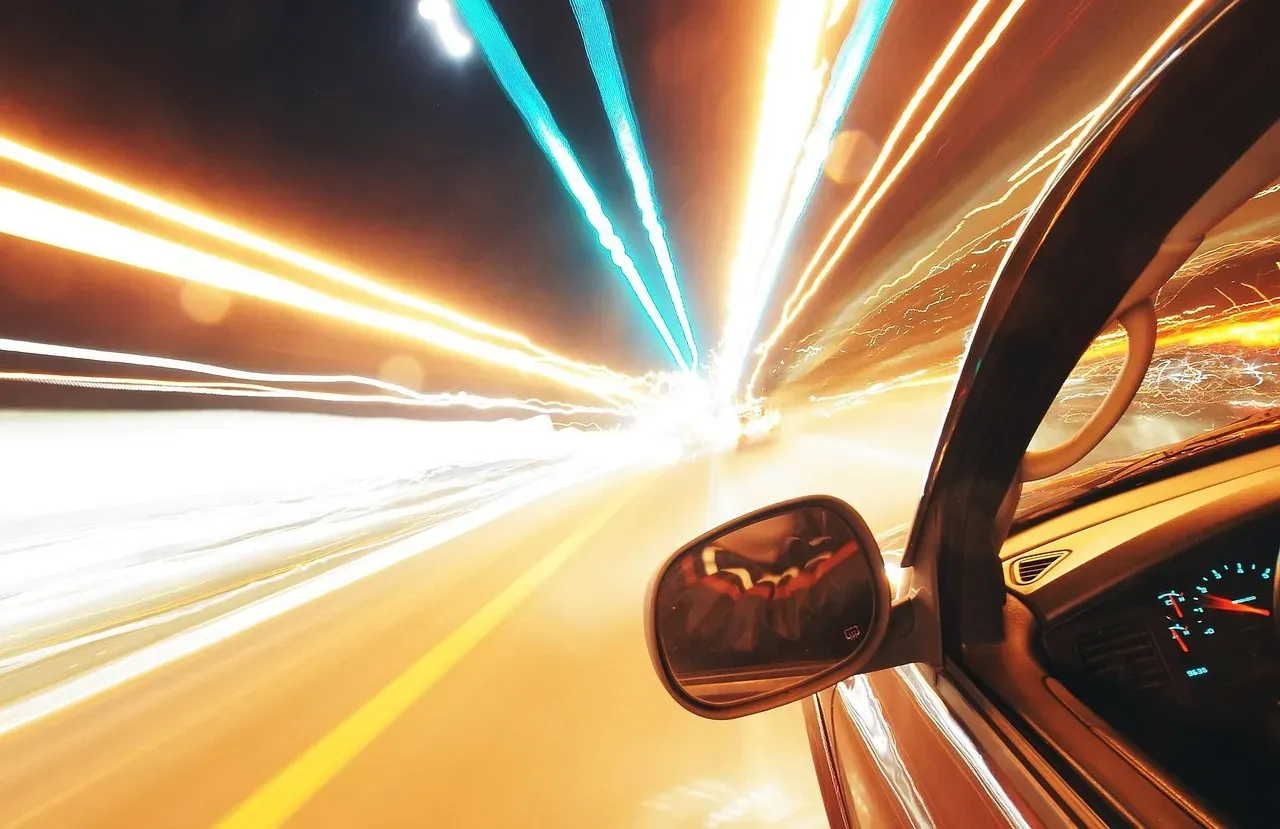
Let’s be real: reaching light speed isn’t just difficult because of the energy requirements. Your body would also need to survive the journey there. To cause the fewest problems for human occupants, it would be best to maintain Earth’s gravitational pull of 9.8 meters per second squared, and accelerating at that rate, it would take 2.65 years to reach 99 percent the speed of light.
That sounds manageable, right? The problem is the fuel. Reaching 99% of lightspeed in a vessel weighing 10 metric tons while accelerating at a tolerable g-force would use more than 200 times the amount of energy consumed on Earth in a year, assuming perfectly efficient fuel with no heat loss. We’re talking about energy scales that dwarf anything humanity currently produces. Even if you solved the fuel problem, collisions with tiny particles at those speeds would be catastrophic. Moving at a speed close to the speed of light and encountering even a tiny stationary object like a grain of sand will have fatal consequences.
Causality Would Break If You Went Faster

You might wonder: what if we found some loophole to go faster than light? Wouldn’t that just be a matter of better technology? Unfortunately, breaking the light barrier would shatter something far more fundamental than physics equations. If something were travelling faster than c relative to an inertial frame of reference, it would be travelling backwards in time relative to another frame, and an effect could be observed before its cause.
Imagine sending a message to yourself in the past, creating paradoxes where you could prevent the very action that sent the message. If faster-than-light travel were possible, causality itself would break; you could send messages to the past, creating paradoxes where effects precede causes, and the universe would unravel into logical contradictions. The speed of light isn’t just a speed limit, it’s a cosmic law protecting the logical structure of reality itself. That’s pretty wild when you think about it.
Particles Already Do This Every Day
While humans can’t achieve light speed, nature has no such problems with tiny particles. Photons travel through a vacuum at 670,616,629 miles per hour, and all across space, from black holes to our near-Earth environment, particles are being accelerated to incredible speeds, some even reaching 99.9% the speed of light. Cosmic rays slam into Earth’s atmosphere constantly, their particles racing at relativistic velocities.
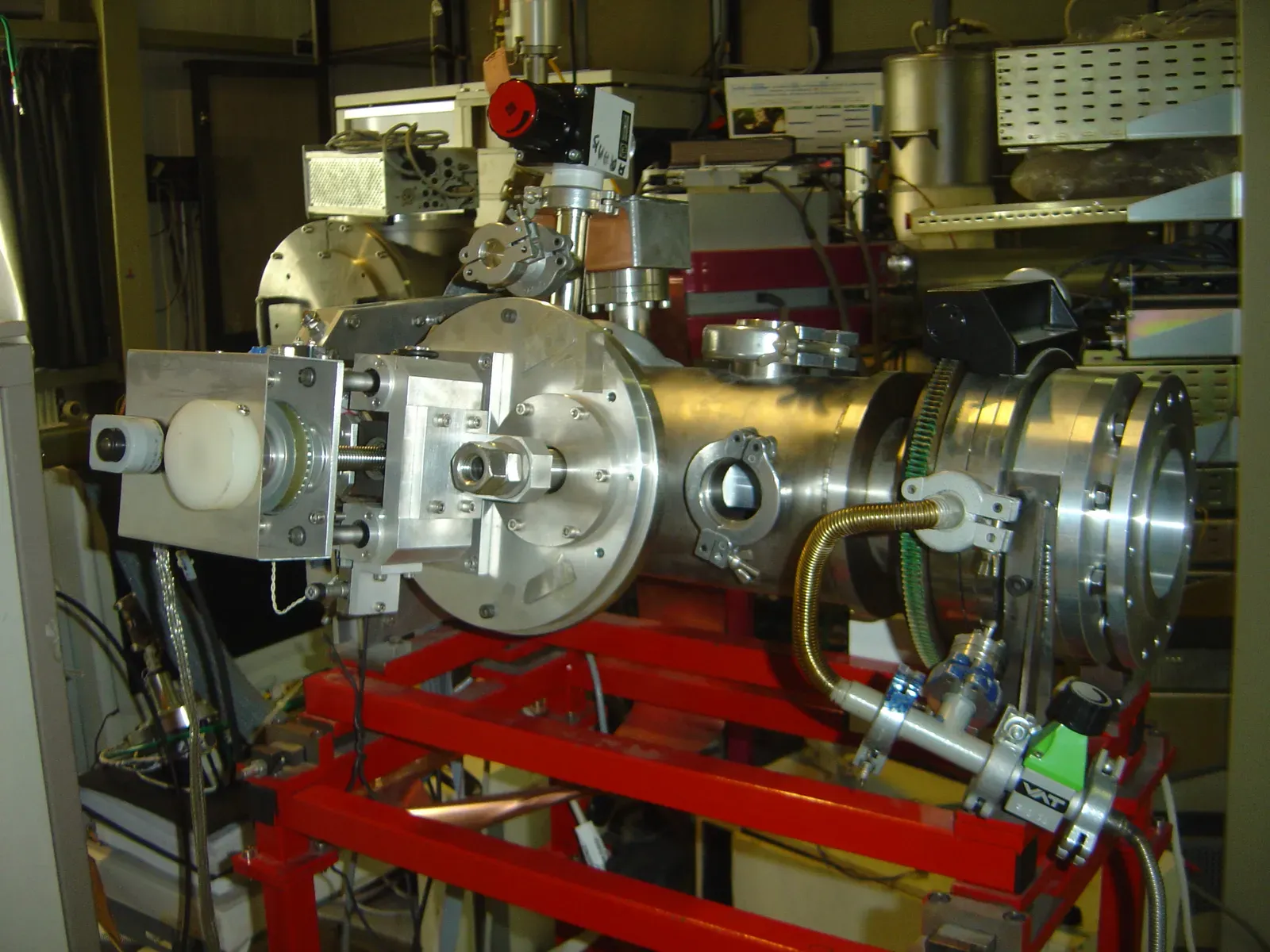
Particle accelerators, like the Large Hadron Collider and Fermilab, use pulsed electromagnetic fields to accelerate charged particles up to 99.99999896% the speed of light. Scientists smash these particles together to recreate conditions from fractions of a second after the Big Bang. If we could somehow scale that technology up to spaceships, interstellar travel might become more than a dream. The physics works for particles; the engineering challenge is making it work for people.
The Twin Paradox Isn’t Really a Paradox
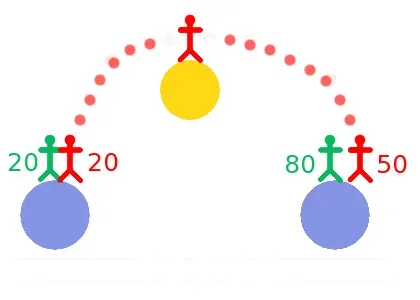
One of the most famous thought experiments in relativity involves identical twins. One twin lives on Earth while their twin takes a round trip to a distant star at velocities approaching the speed of light; when they meet up again, the traveling twin has aged far less than the one who stayed at home. This might sound contradictory because shouldn’t each twin see the other as the one moving?
The situation isn’t symmetrical because when special relativity talks about relative motion, it’s referring to motion at constant speed in a straight line. The traveling twin had to accelerate, turn around, and decelerate. That breaking of symmetry is what makes the difference. After 6 months on the International Space Station, orbiting at about 7,700 meters per second, an astronaut would have aged about 0.005 seconds less than on Earth, and cosmonauts Sergei Krikalev and Sergey Avdeev both experienced time dilation of about 20 milliseconds. The effect is real, measurable, and has been confirmed countless times.
Light Speed Travel Changes Everything We Know
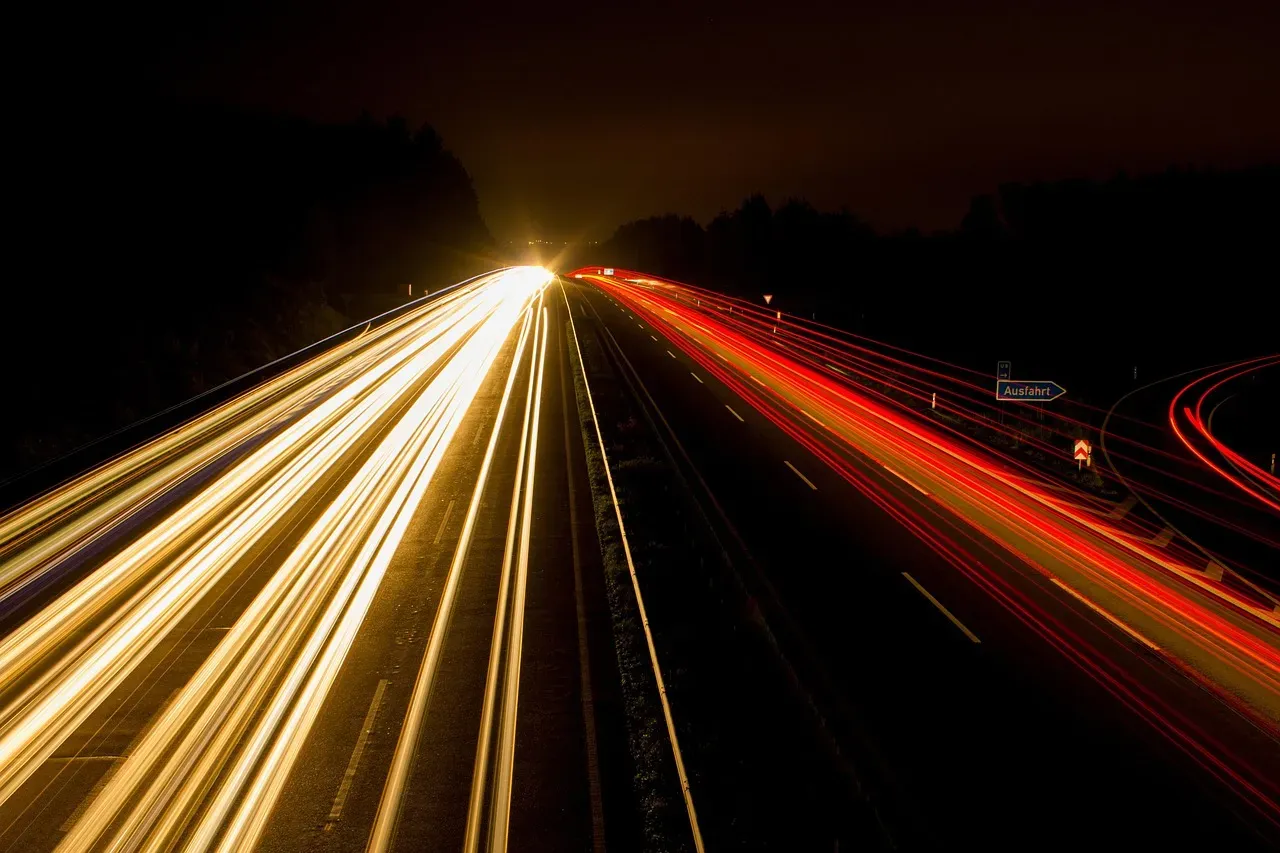
So what would actually happen if you somehow managed to travel at light speed? The short answer: you can’t, not if you have any mass at all. The universe simply won’t allow it. Objects with mass cannot ever reach the speed of light; if an object did reach it, its mass would become infinite, and as a result, the energy required to move the object would also become infinite.
That said, getting close enough would be transformative. Time, space, light, and matter would all behave in ways that defy everyday intuition. You’d age slower than everyone else, distances would shrink, the cosmos would look radically different, and you’d need more energy than currently exists in any practical form. Light-speed travel and faster-than-light travel are physical impossibilities, especially for anything with mass, such as spacecraft and humans. The universe has drawn a line, and that line is the speed of light.
Understanding this cosmic speed limit does more than satisfy curiosity. It reshapes how we think about space, time, and reality itself. The laws of physics aren’t arbitrary restrictions, they’re the rules that make our universe logically consistent and comprehensible. Light speed isn’t just a barrier, it’s a window into the deepest workings of existence. What do you think about it? Would you still want to travel that fast if you could? Tell us in the comments.
Jan loves Wildlife and Animals and is one of the founders of Animals Around The Globe. He holds an MSc in Finance & Economics and is a passionate PADI Open Water Diver. His favorite animals are Mountain Gorillas, Tigers, and Great White Sharks. He lived in South Africa, Germany, the USA, Ireland, Italy, China, and Australia. Before AATG, Jan worked for Google, Axel Springer, BMW and others.