

You drift off to sleep, and suddenly you’re flying over an ocean that turns into a desert. Your childhood friend appears, but now they’re your boss. Time collapses. Logic evaporates. You wake up wondering what on earth just happened inside your skull.
Welcome to the nightly theater of the mind. Every single night, your brain embarks on a journey that defies the rules of reality. Dreams have puzzled humanity for millennia, inspiring myths, poetry, and endless speculation. Today, neuroscience is finally pulling back the curtain on this mysterious phenomenon. The answers are stranger, more intricate, and more fascinating than ancient civilizations ever imagined.
Your Brain Never Actually Sleeps

Here’s the thing: sleep isn’t about shutting down. Your brain, disconnected from the environment, can generate by itself an entire world of conscious experiences. Think about that for a second. While you’re lying motionless in bed, your neural networks are firing wildly, constructing entire realities from scratch.
Rapid eye movement (REM) sleep is the stage of sleep where most dreams happen, and during REM sleep, your brain activity looks very similar to brain activity while you’re awake. Your eyes dart beneath closed lids. Your heart rate picks up. Essentially, your brain is awake inside a sleeping body.
It’s honestly one of the most remarkable tricks biology has up its sleeve. Sleep and dreams carry out what may well be the most sophisticated functions that the human brain performs, building models of ourselves and the world that shape our future and create meaning within our lives.
The Chemical Cocktail Behind Your Dreams
During REM sleep, neurotransmitters like serotonin and norepinephrine, which are central during waking thought, decrease, creating a mental state unlike any we experience while awake – a state where emotion and memory collide. This chemical shift is crucial. Without those stabilizing neurotransmitters, your brain becomes a playground for the bizarre.
The hippocampus, the brain’s memory center, shows powerful bursts of activity during REM sleep, seeming to replay recent experiences and weaving them into the fabric of long-term memory. Meanwhile, your prefrontal cortex, the part responsible for logic and planning, goes relatively quiet. That’s why you can accept the impossible in dreams. The brain’s reality-checker has clocked out for the night.
Why Dreams Feel So Vivid Yet So Weird

Dreams are highly visual, in full color, rich in shapes, full of movement, and incorporate typical wakefulness categories such as people, faces, places, objects, and animals. They feel utterly real in the moment. You’re not just observing a dream; you’re living it.
The weirdness comes from how your brain assembles the narrative. Dreams are characterized by a lack of orientational stability; persons, times, and places are fused, plastic, incongruous and discontinuous. Your ex from ten years ago might suddenly morph into your dentist. You might be in your childhood home, which is simultaneously a spaceship. The brain doesn’t follow the usual rules because it doesn’t have to.
Waking consciousness is more like watching the news in real time, whereas dreaming is more like watching a movie created by an imaginative director who is not particularly choosy and any actor, dress, means of transportation, or object that is readily available will do. It’s improvisational theater with unlimited props and zero budget constraints.
The Memory Workshop Hidden in Sleep

Let’s be real: your brain isn’t just creating bizarre movies for entertainment. One of the strongest scientific theories about why we dream involves memory processing – every day, we absorb an overwhelming amount of information, and sleep provides the brain with a chance to sift through this flood, keeping what is important and discarding the rest.
Dream experiences recalled from sleep bear a transparent relationship to recently encoded information, and the form in which memories are incorporated into dream experience parallels what we know about memory consolidation during sleep. When you dream about that presentation you gave or the argument you had, your brain is actively processing those experiences, deciding what to file away and what to forget.
There’s compelling evidence for this. When a group of 99 individuals were given the task of navigating a complex maze, those whose performance improved the most were those given the opportunity to take a nap and more specifically those who reported dreaming about the maze during that nap. Dreaming isn’t random mental noise. It’s your brain at work.
Dreams as Emotional Therapy Sessions

During REM sleep, a dialogue occurs between the amygdala, which is very strongly activated, the hippocampus, where the information of the day is stored, and the neocortex, the seat of long-term memory – thanks to this three-way dialogue, the brain stores new information by ridding it of its emotional context. Think of it as overnight emotional detox.
People who report dreaming show greater emotional memory processing, suggesting that dreams help us work through our emotional experiences – this is the first evidence that they play an active role in transforming our responses to our waking experiences. Had a terrible day? Your brain might replay fragments of it in dreams, but with a twist. The emotional sting gets dialed down. You wake up feeling a bit better, even if you don’t remember why.
REM sleep is the only time your brain is free of the anxiety-triggering molecule noradrenaline, and any processing that happens during this time may take the emotional edge off difficult memories. It’s basically free therapy while you sleep, courtesy of your neurochemistry.
The Brain Regions Orchestrating Your Dream World
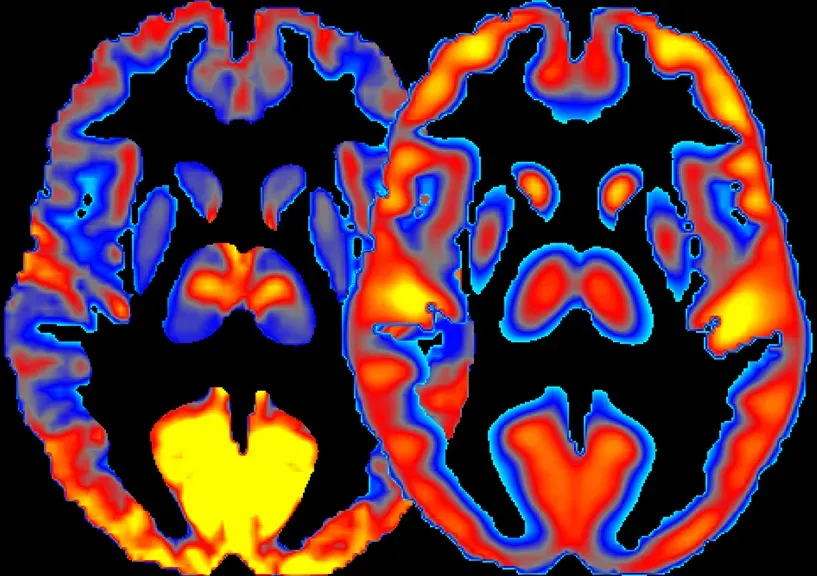
Neuroimaging highlights amygdala and hippocampal hyperactivity alongside prefrontal cortex hypoactivity, elucidating the emotional vividness and cognitive disorganization of dreams. Your emotional centers are firing on all cylinders while your logical brain takes a break. No wonder dreams feel so intensely real yet utterly illogical.
Studies suggest the amygdala, which plays a role in emotional processing, appears to be very active during dreaming, and areas of the brain involved in visual processing are active during dreaming. Meanwhile, parts of the brain involved with our ability to plan, think through things and apply logic and order are less active during dreaming. This neural choreography explains why you can dream vividly about impossible scenarios without questioning them.
When Dreams Turn Nightmares and What That Means

In more recent studies of dreams, about 65% are associated with sadness, apprehension, or anger; 20% with happiness or excitement. Dreams aren’t always pleasant. Nightmares are part of the package, and they might serve a purpose too.
The threat simulation theory suggests dreams serve an evolutionary function by simulating threatening events and rehearsing coping mechanisms in a virtual, safe context, allowing individuals to practice responses to potential dangers without real-world consequences. Your ancestors who mentally rehearsed escaping predators in their sleep may have had a survival edge. Today, you might rehearse confronting your difficult boss or handling a crisis, all while safely tucked in bed.
Sometimes, though, the system malfunctions. In nightmares, this beneficial mechanism malfunctions to the point of interrupting the dream in progress and waking the sleeper, so the process of emotional integration cannot go to the end. You wake up with your heart pounding, the fear unprocessed and lingering.
The Bizarreness Factor: Why Dreams Don’t Follow Rules

I know it sounds crazy, but your dreams’ weirdness might actually be functional. Findings suggest that the bizarreness of dreams serves a purpose – dreams may simply be your brain organizing your experiences, with their strangeness being part of the process. The brain isn’t trying to recreate reality. It’s mixing and matching, testing connections, building new associations.
The desynchronized neuronal activity in REM sleep allows the generation of new associative cell assemblies in highly activated regions such as the hippocampus, and the bizarreness and vividness of dream contents mirror this involuntary associative activity. Essentially, your brain is improvising jazz with your memories, emotions, and imagination.
Lucid Dreaming: When You Wake Up Inside the Dream

Lucid dreaming occurs when the dreamer becomes aware that they are dreaming – in lucid dreams, some people can even control the dream’s direction, and lucid dreaming arises when parts of the prefrontal cortex, usually quiet during REM, re-activate. It’s like gaining consciousness within the unconscious.
Scientists have confirmed this phenomenon isn’t just anecdotal. Neuroscientists have confirmed lucid dreaming by asking dreamers to perform eye movements as signals during sleep. People actually communicated from inside their dreams using pre-arranged eye movement patterns. Think about how wild that is.
There’s growing interest in lucid dreaming for therapeutic purposes. In 2018, the American Academy of Sleep Medicine started to recommend it as a therapy for nightmare disorders, including those associated with PTSD, and neuroscientists have also found ways to treat insomnia with lucid dream therapy.
What Happens When Dreaming Goes Wrong

In REM sleep behavior disorder, patients try to implement the actions in their dreams – some eat an imaginary sandwich while sleeping, and others struggle in bed, grappling with invisible adversaries due to a lesion of the brain stem where movements are not blocked during REM sleep. Normally, your body is paralyzed during REM to prevent you from acting out dreams. When that system fails, things get dangerous.
People with schizophrenia have particular dreams that resemble their way of reasoning during the day – flat, disjointed, limited and undiversified content that portrays the dreamer in everyday life situations. Dreams can reveal much about brain health and mental state. They’re windows into how our neural machinery is functioning, or malfunctioning.
The Future of Dream Science and What It Means for You
Advances in brain imaging, artificial intelligence, and neuroscience are opening new frontiers in dream research – scientists have already used fMRI scans and machine learning algorithms to decode the content of dreams with surprising accuracy. We’re approaching a time when we might be able to record or even modify dreams in real time. It’s both thrilling and a bit unsettling.
This research has practical implications. Understanding how dreams process emotions and consolidate memories could revolutionize treatments for PTSD, depression, and anxiety disorders. This research gives us new insight into the active role dreams play in how we naturally process our day-to-day experiences and might lead to interventions that increase dreaming to help people work through hard life experiences.
Dreams aren’t mystical messages from another realm. They’re your brain doing what it does best: processing, connecting, creating, and preparing you for whatever tomorrow brings. Every night, you get a front-row seat to the most sophisticated virtual reality system ever created, powered entirely by the three pounds of tissue between your ears.
Conclusion: Embracing the Nightly Journey

Far from being a meaningless distraction, dreams may reflect an adaptive process by which new learning is stabilized and integrated with our existing knowledge, and the content of these experiences could provide an important and unique source of information about the functions of the sleeping mind and brain. Your dreams matter. They’re not just random neural fireworks.
The next time you wake from a bizarre dream, remember: your brain just spent the night sorting through your memories, processing your emotions, rehearsing potential challenges, and quite literally building a better version of you for the waking world. The strangeness isn’t a bug. It’s a feature of one of nature’s most elegant solutions to the challenge of being conscious.
What do you think about your dreams now? Do they seem a bit more meaningful, a bit less random? Share your most memorable dream experience in the comments.