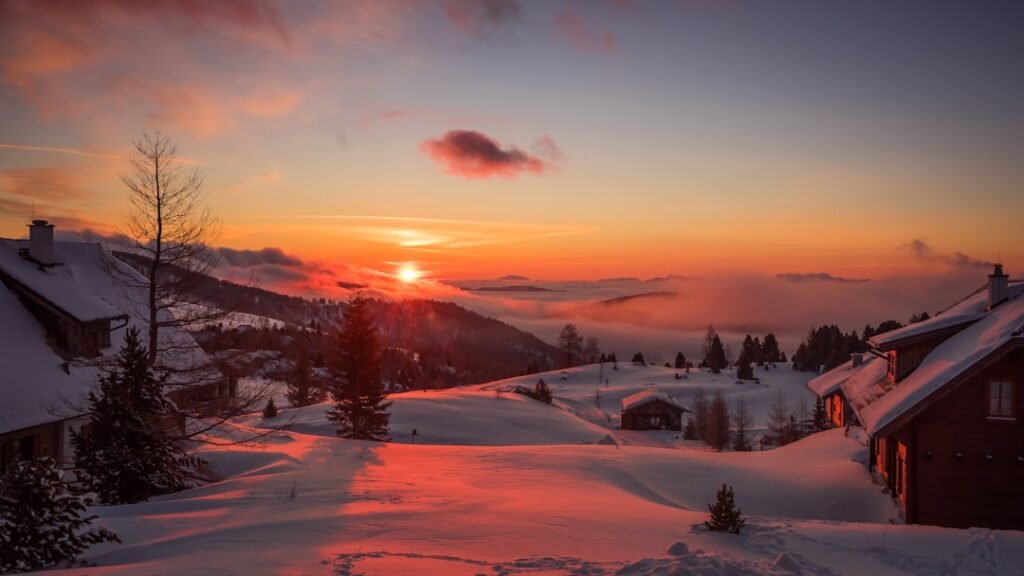

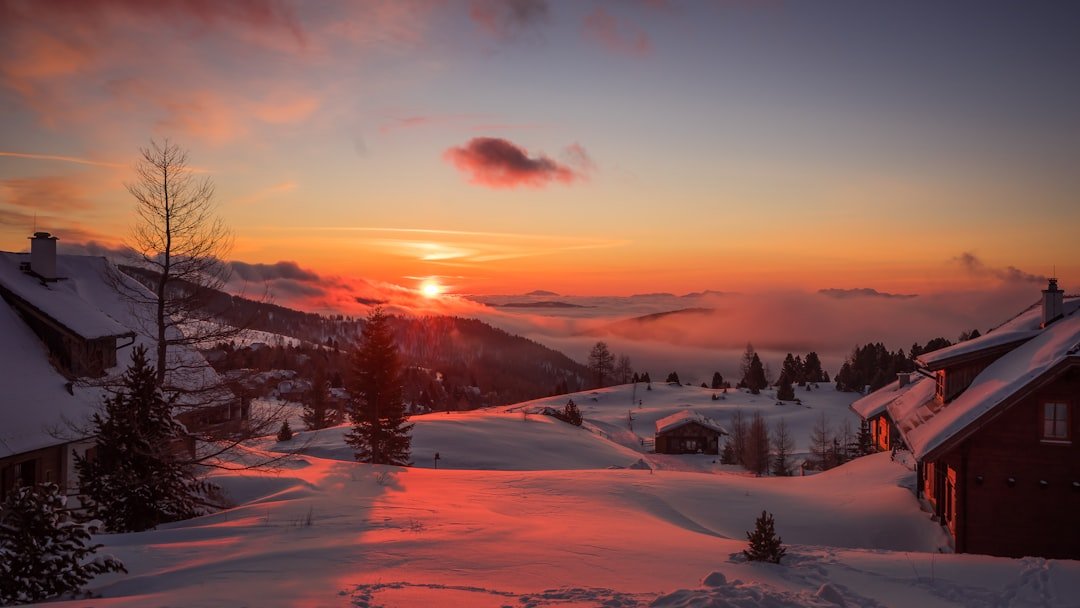
The Sun’s Low Winter Arc Boosts Brilliant Hues (Image Credits: Unsplash)
Vivid crimson skies and golden horizons greet winter mornings and evenings across the Northern Hemisphere, fueling debate over their superiority to summer displays.
The Sun’s Low Winter Arc Boosts Brilliant Hues
In winter, the sun traces a shallower path across the sky due to Earth’s 23.5-degree axial tilt. This position keeps it lower on the horizon throughout the day.
Sunlight must traverse a thicker layer of atmosphere to reach observers. Air molecules scatter shorter blue wavelengths more readily through Rayleigh scattering, leaving dominant reds and oranges. The result intensifies those warm tones familiar at dawn and dusk.[1]
Dry, Crisp Air Sharpens the Spectrum
Colder temperatures in winter reduce humidity levels significantly. Warmer summer air holds more water vapor, and those tiny droplets diffuse incoming light.
This diffusion mutes vibrant reds and oranges. Drier winter conditions allow scattered longer wavelengths to shine clearer and more saturated. Observers often report crisper palettes under these circumstances.
Post-Storm Skies Reveal Pure Colors
Rain and snow events common in winter cleanse the lower atmosphere of dust and pollutants. Fewer particles mean less random light scattering.
Cleaner air permits the precise effects of Rayleigh scattering to dominate. Such conditions follow many winter storms, enhancing displays in their wake across various regions.
Extended Horizon Time Prolongs the Show
The sun lingers near the horizon longer during winter sunrises and sunsets. Its shallow seasonal arc extends the period of low-angle light.
This prolonged exposure lets colors build gradually across wider sky sections. Viewers enjoy drawn-out spectacles compared to the quicker summer transitions.
Daily Routines Align with Peak Views
Shorter winter days position sunrises and sunsets within standard waking hours. Commuters and early risers encounter them routinely. Summer equivalents often coincide with sleep or late evenings, reducing encounters. Greater visibility amplifies perceptions of winter’s dominance.
A combination of astronomical positioning, atmospheric purity, and human schedules elevates winter’s celestial artistry. These factors converge to create memorable vistas, especially now amid ongoing cold snaps.
Key Takeaways
- Lower sun angle increases atmospheric path length for richer scattering.
- Drier air minimizes diffusion, heightening color intensity.
- Clean post-storm atmospheres sharpen vivid hues.
- Longer near-horizon time extends the visual feast.
- Timing matches daily life for more sightings.
Winter skies remind us of nature’s subtle mechanics at play. Spot the next stunning display and ponder its science – what winter sky moment stands out most for you? Tell us in the comments.[1]