
Picture this: hippopotamuses splashing in deep rivers, giraffes striding across grassy savannah, and ancient humans painting vivid scenes of abundant wildlife onto rocky cave walls. Now imagine that same landscape is today the scorching, windswept Sahara Desert. It sounds impossible, right? Yet this is not mythology or science fiction. It is real, documented, and perhaps one of the most extraordinary climate stories our planet has ever told.
You might be surprised to learn that the world’s largest hot desert was once a thriving, green paradise, and the story of how it transformed holds urgent lessons for how we understand Earth’s climate today. From orbital mechanics to ancient lake beds, from mysterious rock paintings to cutting-edge climate models, the truth behind the Green Sahara is as wild as it is fascinating. Let’s dive in.
The Green Sahara: A World That Would Blow Your Mind
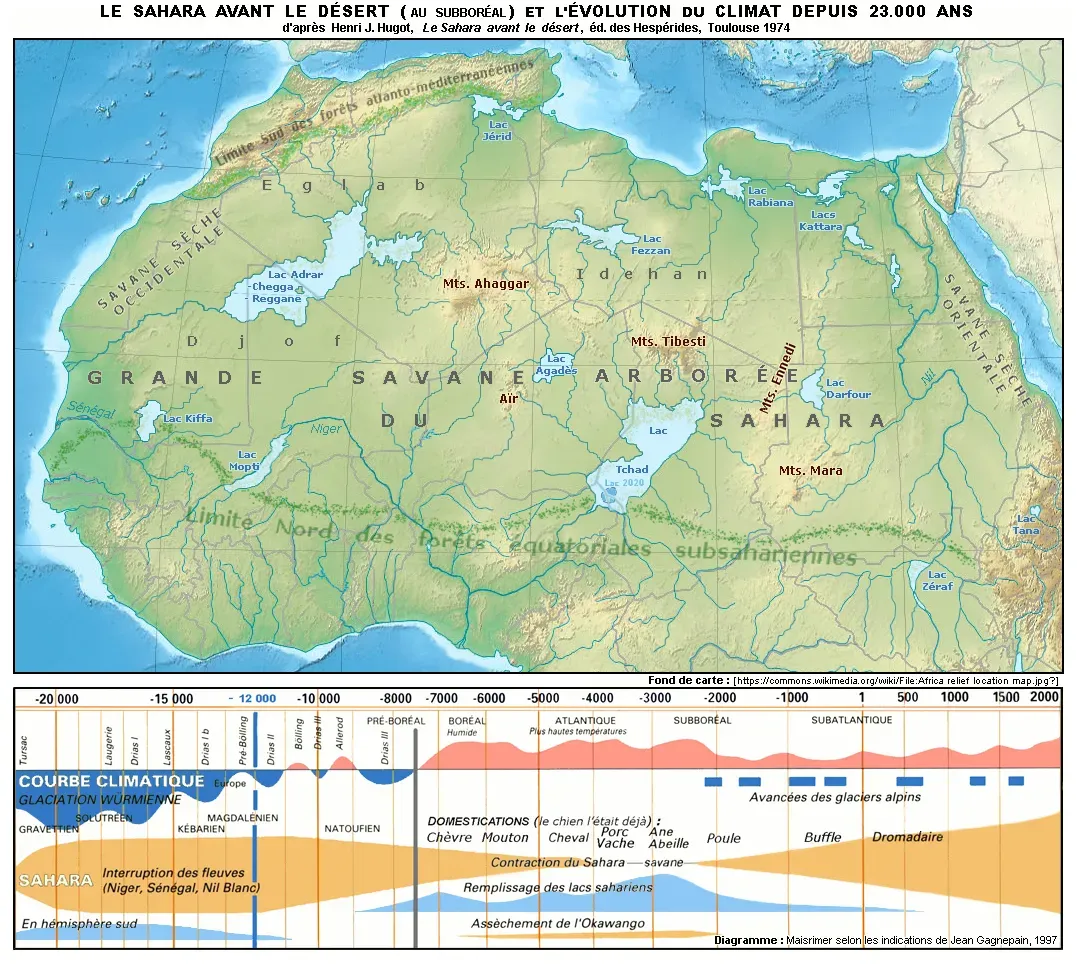
Here’s the thing about the Sahara that most people have never stopped to consider. Around 11,000 years ago, what we know today as the world’s largest hot desert would have been completely unrecognizable. The now-desiccated northern strip of Africa was once green and alive, filled with lakes, rivers, grasslands, and even forests. That is not a poetic exaggeration. It is the scientific consensus.
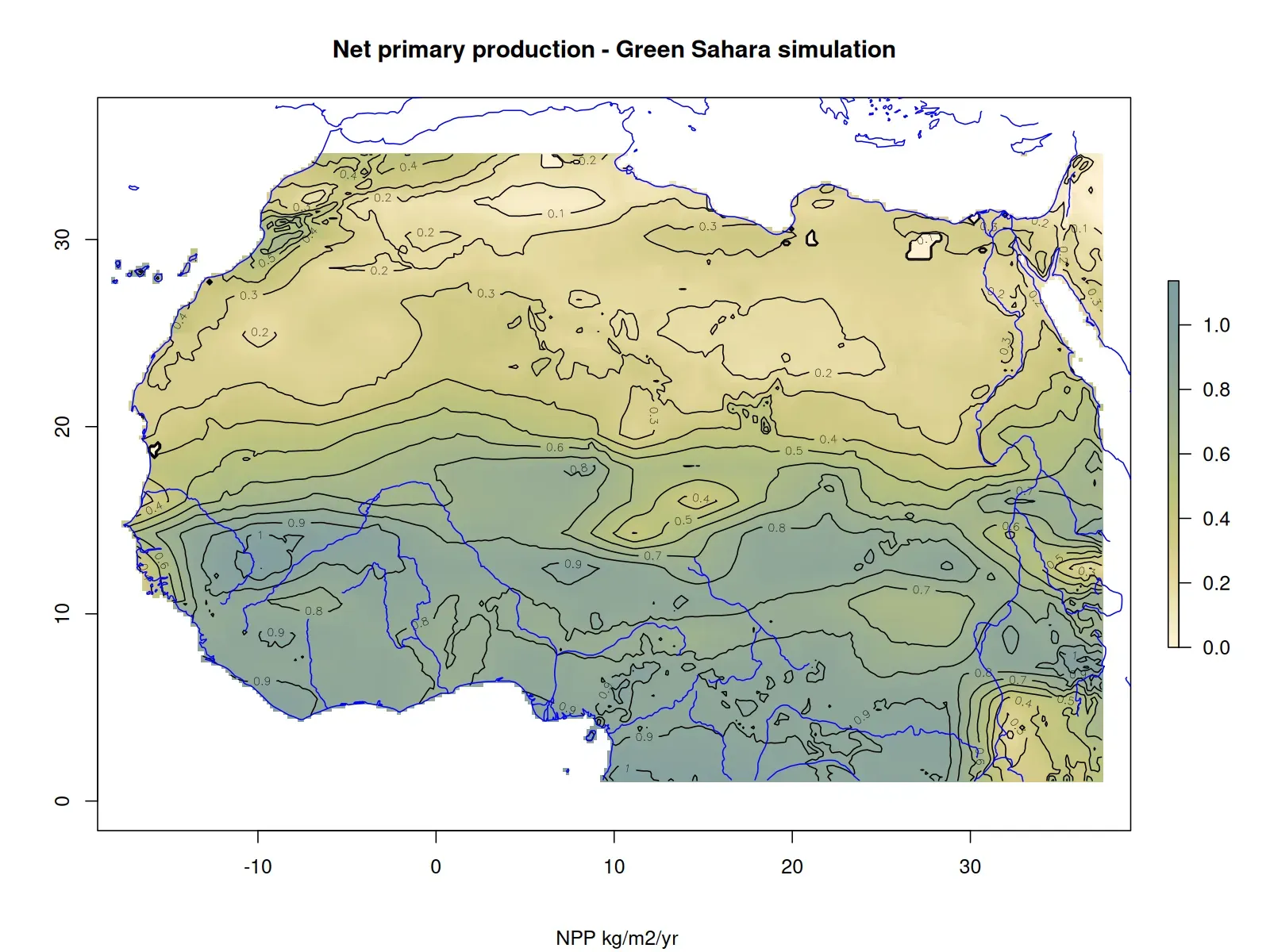
During the African Humid Period, lakes, rivers, wetlands, and vegetation including grass and trees covered the Sahara and Sahel, creating a “Green Sahara” with a land cover that has no modern analogues. Think about what that means for a moment. Today’s satellite images of endless, beige emptiness once looked more like East Africa’s wildlife corridors. The transformation is almost incomprehensible in scale.
When Exactly Did the Green Sahara Exist and How Long Did It Last?
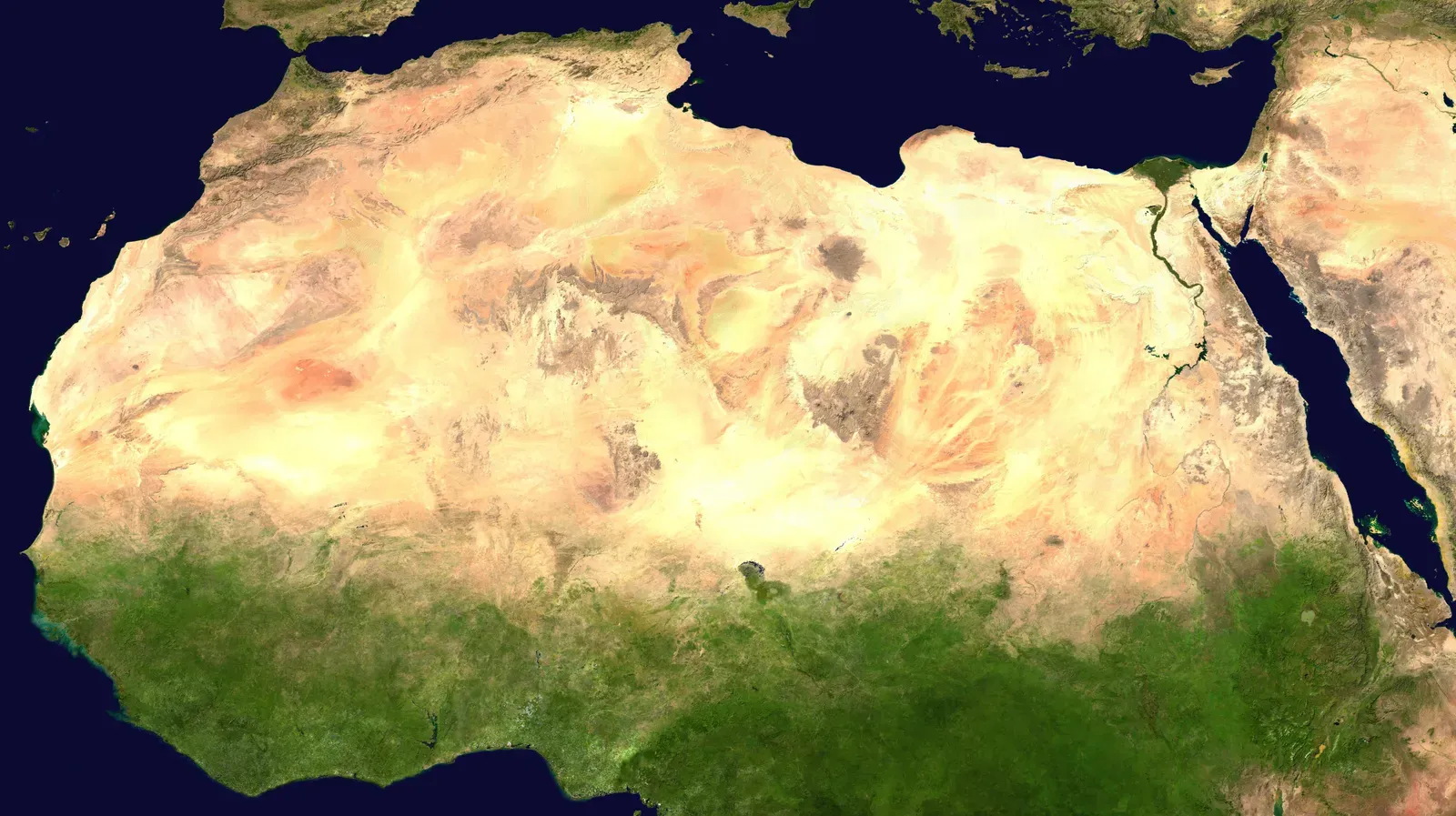
The African Humid Period was a climate period in Africa during the late Pleistocene and Holocene geologic epochs, when northern Africa was wetter than today. Scientists have mapped its timeline with remarkable precision. From approximately 11,000 to 5,000 years before the present, the summer monsoon over northern Africa was considerably stronger than what it is today, and as such this period has come to be called the African Humid Period.
Starting around 15,000 years before the present and peaking between 9,000 and 6,000 years ago, increased boreal summer solar radiation triggered a strengthening of the West African Monsoon. Honestly, 5,000 to 6,000 years is an eternity in human terms. Entire civilizations rose and fell within that window. The Green Sahara was not a brief flicker. It was an epic chapter in Earth’s biography.
What Was Actually Living There? The Wildlife of the Green Sahara
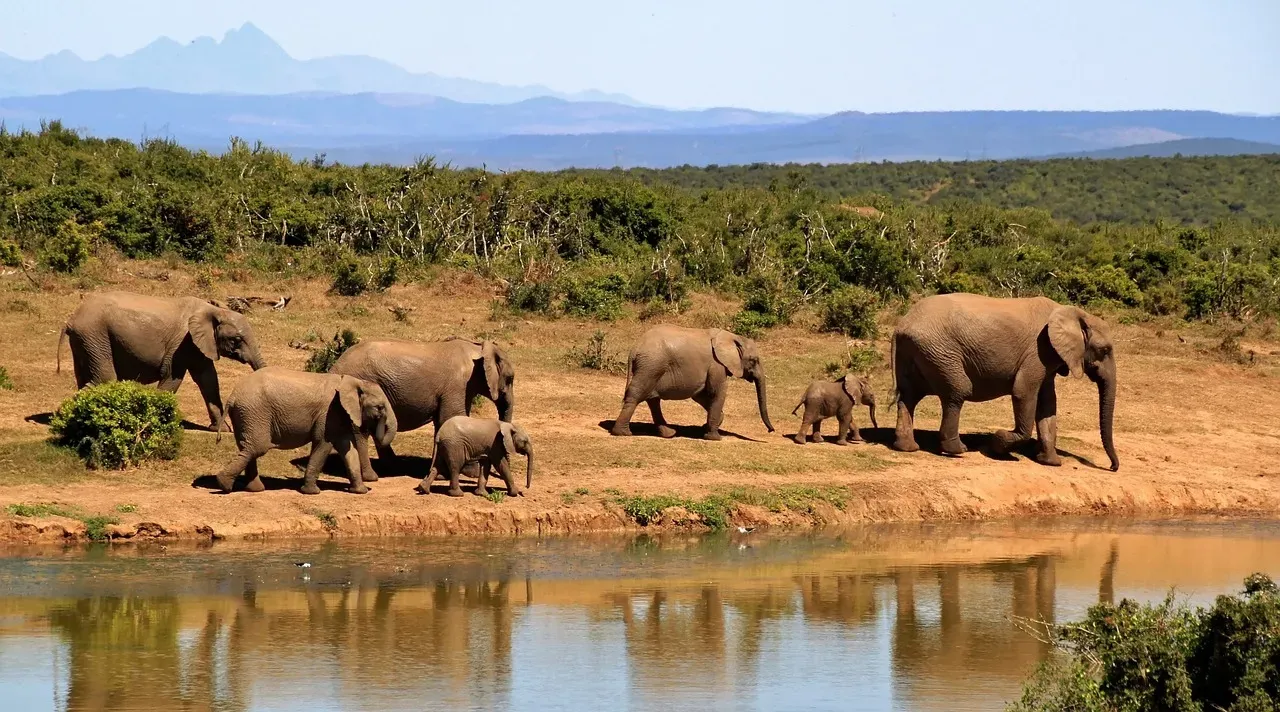
Ancient rock paintings from the Tassili n’Ajjer portray a vibrant savannah inhabited by elephants, giraffes, rhinos, and hippos. These are creatures you would find today in sub-Saharan Africa, not in the lifeless sand dunes of modern Libya or Algeria. The evidence is literally written in stone, left behind by the people who witnessed this world firsthand.
During wet periods in the Sahara, oak and cedar trees grew in the highlands, and the Sahara itself was a savannah grassland with acacia trees, hackberry trees, and shallow lakes and braided rivers. Rock and cave paintings from that time depict abundant wildlife, including elephants and giraffes that lived in the savannahs and hippopotami and crocodiles that lived in the rivers and lakes, alongside people who hunted with bows and arrows, herded animals, collected wild grains, and fished. Honestly, it sounds almost like paradise.
The Science Behind the Climate Switch: Earth’s Orbital Wobble
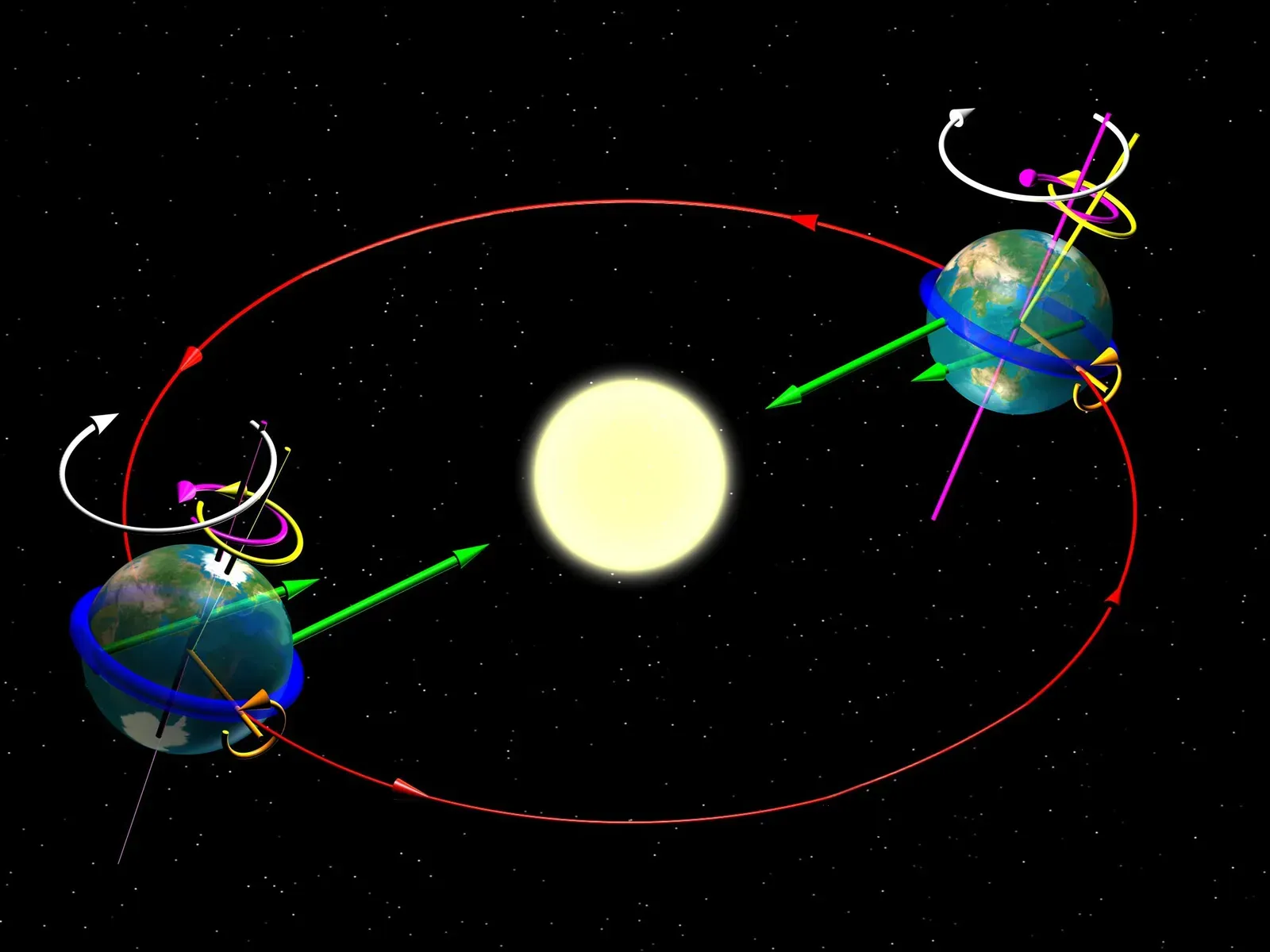
The greening of the Sahara was caused by changes in the Earth’s orbital precession, which is the slight wobbling of the planet while rotating. This moves the Northern Hemisphere closer to the sun during the summer months. Think of Earth’s wobble like a spinning top that gradually leans one way, then another. Over thousands of years, this tiny tilt dramatically changes where sunlight falls and how intensely seasons bite.
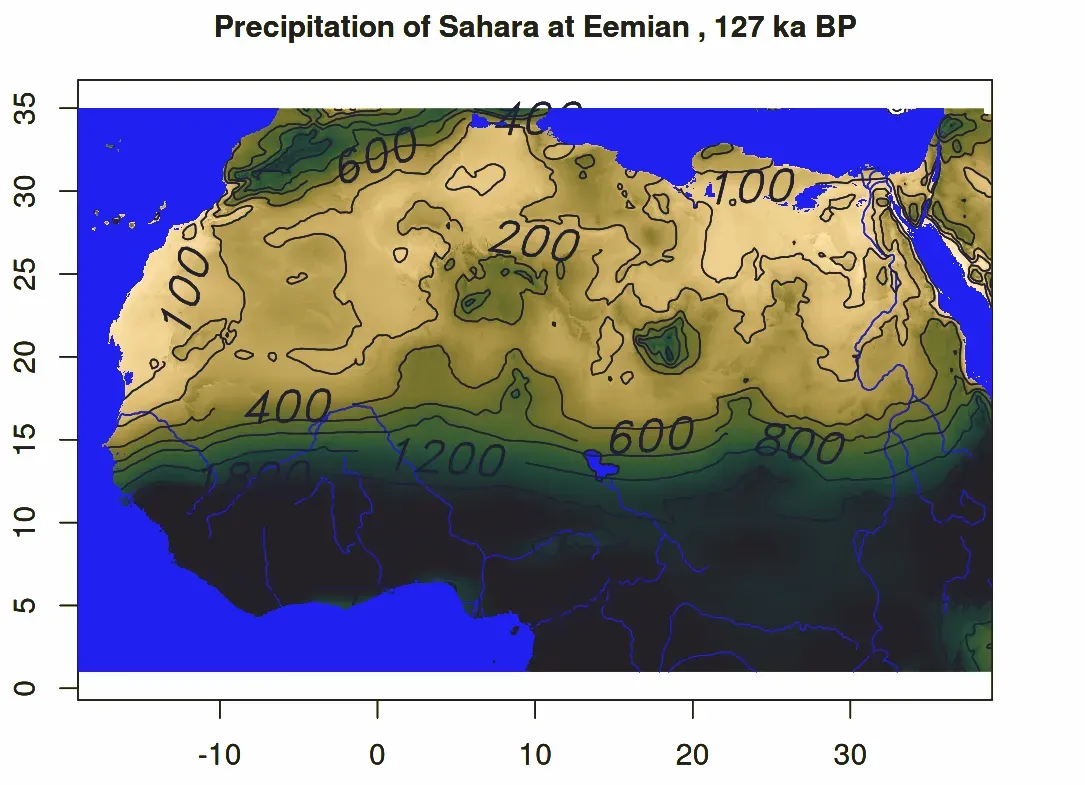
This caused warmer summers in the Northern Hemisphere, and warmer air is able to hold more moisture. This intensified the strength of the West African Monsoon system and shifted the African rainbelt northward, increasing Saharan rainfall and resulting in the spread of savannah and wooded grassland across the desert from the tropics to the Mediterranean. It is a fascinating reminder that Earth’s climate is not just about what we do on the surface. Sometimes, the story starts millions of miles away, in the gentle physics of orbital geometry.
The Role of Ancient Lakes, Megalakes, and the Remarkable Feedback Loop

Geological evidence for past lake basins in the Sahara are commonly found near interdune depressions and other low-lying regions, where ancient lake bed sediment outcrops and shoreline deposits are exposed. Most of the early Holocene paleolakes were small, but numerous and widespread. Some lake basins in North Africa were exceptionally large, as large as the Caspian Sea today. That alone should stop you in your tracks. A lake the size of the Caspian Sea, sitting in what is now barren Libyan desert.
During the African Humid Period, what is today Lake Chad was Megalake Chad, and it was much larger than the largest lake on earth today, larger than all of the US Great Lakes combined, and larger than the entire landmass of the United Kingdom. Once vegetation spread, it created its own feedback loop: increased precipitation increases the amount of vegetation, vegetation absorbs more sunlight, and thus more energy is available for the monsoon. In addition, evapotranspiration from vegetation adds more moisture. It is like a self-watering garden on a continental scale.
Ancient Humans of the Green Sahara: A Lost World of Civilization
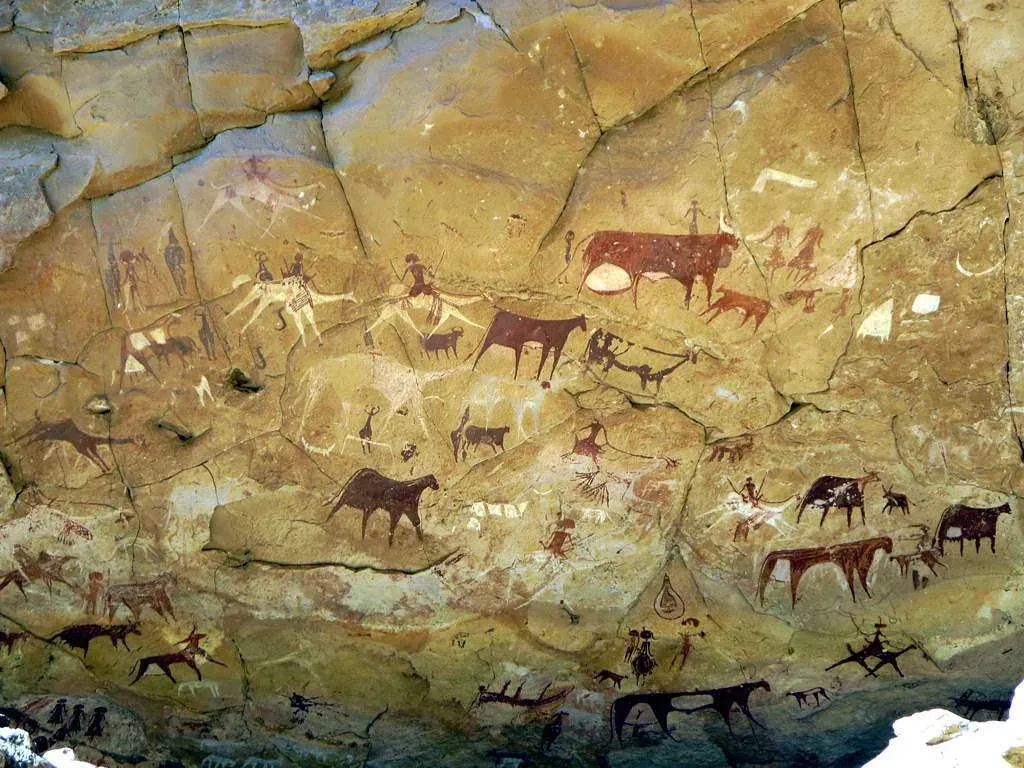
The African Humid Period led to a widespread settlement of the Sahara and the Arabian Deserts, and had a profound effect on African cultures, such as the birth of the Pharaonic civilization. People lived as hunter-gatherers until the agricultural revolution and domesticated cattle, goats, and sheep. They left archaeological sites and artifacts such as one of the oldest ships in the world, and rock paintings such as those in the Cave of Swimmers and in the Acacus Mountains.
With an abundance of goods and resources such as pottery, tools, weapons, plants, and animals at their disposal, communities across the Green Sahara became part of a highly advanced interconnected civilization. When the rains retreated and the desert reclaimed the land, Saharan societies coped with the new ecological setting by moving to less-arid edges, inventing cereal agriculture, and making the first attempts at civilization along the eastern, southern, and northern ends of the desert. I think it is genuinely possible that the collapse of the Green Sahara drove some of the most pivotal moments in all of human history.
How It Ended: The Abrupt Climate Collapse and Tipping Points
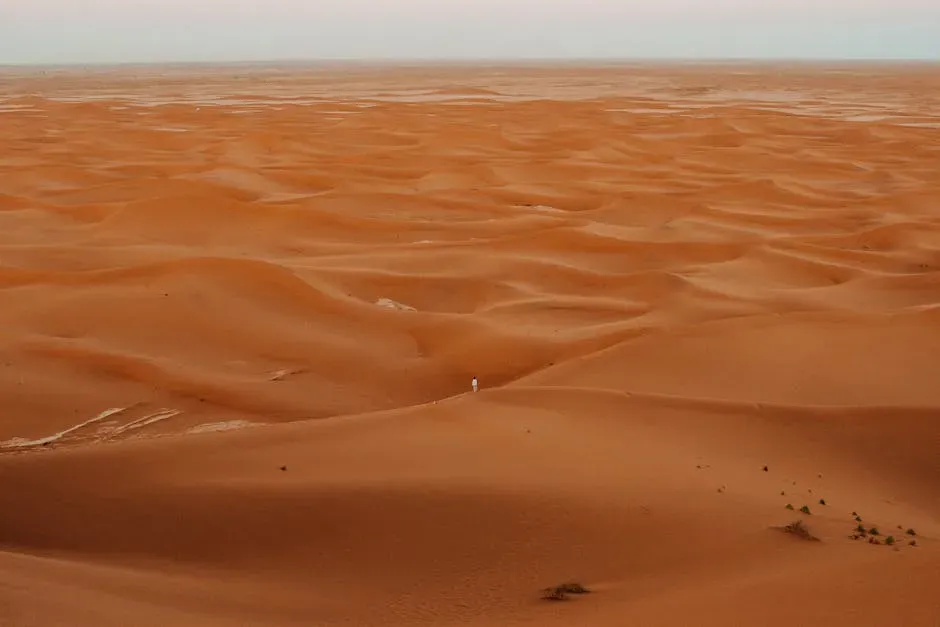
What is particularly striking to climate scientists about the Green Sahara is how abruptly it appeared and vanished. The termination of the Green Sahara took only around 200 years. The change in solar radiation was gradual, but the landscape changed suddenly. Imagine a slow leak in a dam wall. For years, almost nothing happens. Then one day, the whole structure gives way in moments. That is essentially what happened to the Green Sahara.
From the last ice age until around 6,000 years ago, the region now known as the Sahara Desert was a lush, green landscape teeming with life. This “African Humid Period” ended abruptly, transforming this thriving region into the arid terrain seen today. Scientists have long puzzled over how the slow changes in solar radiation due to variations in Earth’s orbit could lead to such an abrupt large-scale climate transition. The answer lies in so-called “tipping points,” where a system’s stability quietly erodes until a threshold is crossed and change becomes catastrophic and rapid.
Could the Sahara Go Green Again? What Science Says Now
This greening of the Sahara did not happen just once. Using marine and lake sediments, scientists have identified over 230 of these greenings occurring about every 21,000 years over the past eight million years. So the question is not really whether the Sahara can green again. It is more a matter of when and what might trigger the next transformation. At present, it is in a dry period, but it is expected that the Sahara will become green again in about 15,000 years based on orbital cycles alone.
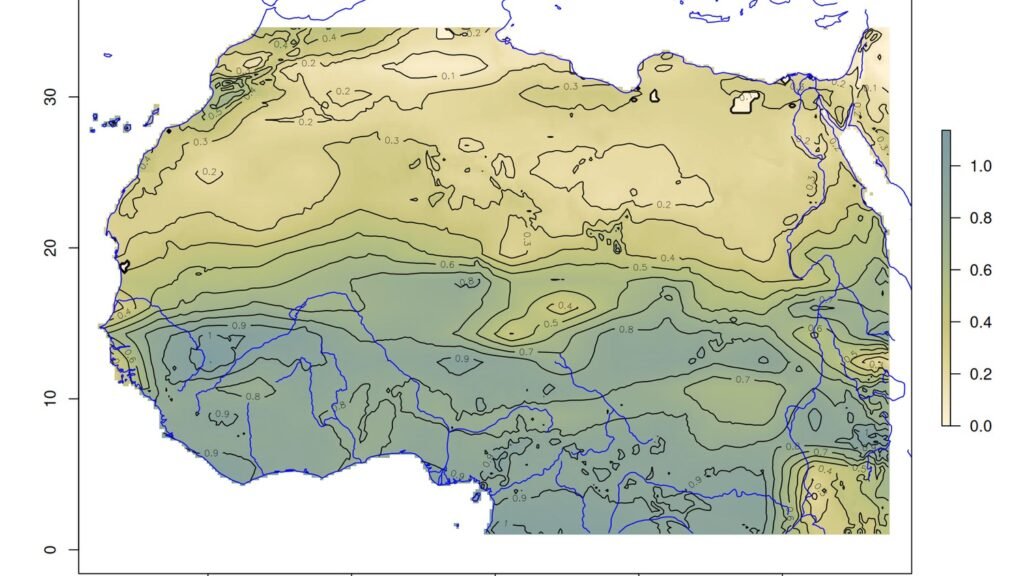
However, human-induced climate change is already nudging things in unexpected directions. Researchers predict that the Sahara Desert could see up to 75% more rain by the end of this century due to rising global temperatures. Using 40 climate models, the team found widespread precipitation increases across Africa, though some regions may dry out. Meanwhile, after an unusual influx of rain, green color can already be seen from space creeping into parts of one of the driest places in the world, with satellites recently capturing plant life blooming in parts of the typically arid southern Sahara after storms moved there when they ordinarily would not. The Sahara is not yet green again. But it is stirring.
Conclusion: What a Once-Green Desert Teaches Us About Our World
The story of the Green Sahara is more than just an astonishing geological footnote. It is a mirror held up to the present. You can look at that vast, sun-scorched desert and know, with certainty backed by science, that it was once something completely unrecognizable. Rivers flowed. Children swam. Hippos wallowed. Civilizations were born. All of that was taken away, not slowly, but in what amounts to a geological blink.
What this tells you is that Earth’s climate is not a fixed, reliable backdrop. It is a dynamic, responsive system that can shift dramatically in response to forces as subtle as a wobble in our planet’s orbit, or as direct as changes in vegetation cover. Understanding the Green Sahara helps us understand what is at stake as the climate changes today, and perhaps, how fragile the conditions that support complex life on this planet really are.
The next time you see a photo of the Sahara, let it stir something in you. It was once alive, and in ways we may not fully predict, it is slowly waking up again. What would you have guessed if someone told you that story 50 years ago?