
In the familiar world, objects stay put, causes follow effects, and a cat is either alive or dead, never both at once. Deep beneath that everyday surface, though, lies a fiercely counterintuitive layer of reality where particles tunnel through walls, influence one another across vast distances, and seem to exist in many states at the same time until we dare to look. This is the quantum realm, the operating system of the universe that quietly governs everything from star cores to smartphone chips. For more than a century, physicists have probed this hidden world with increasingly delicate experiments, and what they’ve found is not just weird but profoundly useful. Today, as quantum technologies race from the lab into the marketplace, the question is no longer whether this strangeness is real – it is how far we’re willing to let it reshape our future.
The First Clues That Reality Was Cracked
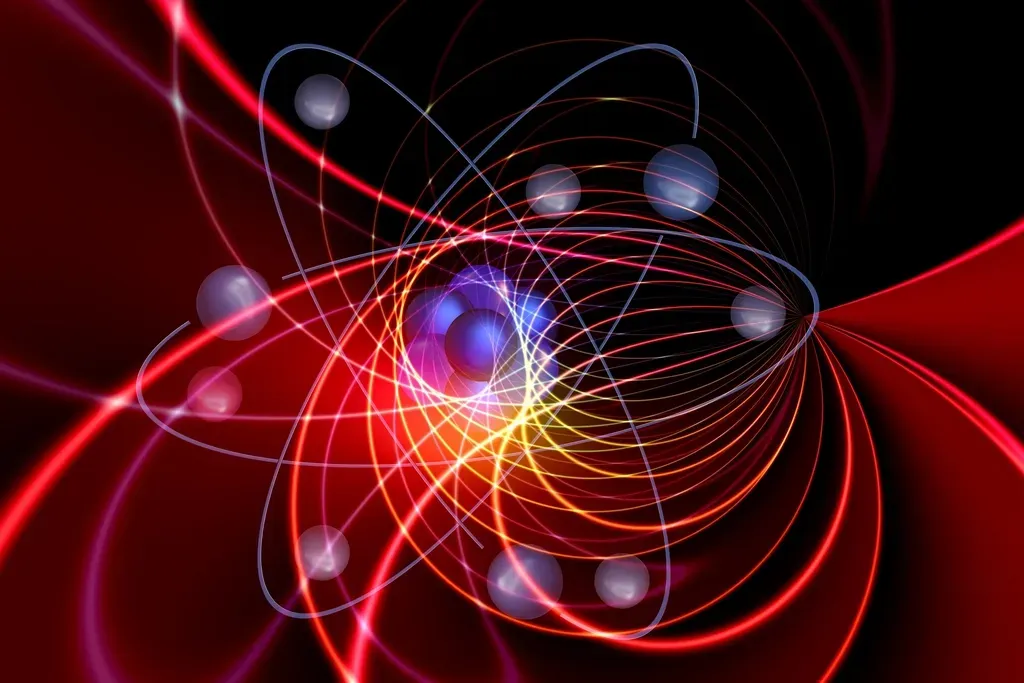
The story of quantum physics begins with an unsettling mismatch between theory and observation at the turn of the twentieth century. Classical physics, the framework that explained falling apples and orbiting planets, failed spectacularly when scientists tried to describe how hot objects glow or how atoms emit light. Instead of a smooth rainbow of energies, atoms spat out light in sharp, discrete colors, like notes on a piano rather than a continuous slide on a violin. This was the first hint that nature might come in packets, or “quanta,” even if no one yet grasped the full implications. In hindsight, it was as if reality had quietly switched from analog to digital without telling anyone.
As more experiments piled up, those early clues turned into a mounting crisis that classical ideas simply could not absorb. Each attempt to patch the old theories only made the discrepancies worse, especially in the microscopic world of electrons and light. When physicists finally accepted that energy, and later many other properties, came in discrete chunks, it felt less like an elegant upgrade and more like a desperate workaround. Yet that conceptual leap cracked open a hidden layer of rules operating beneath the visible world. The crack in classical certainty turned into a doorway to an entirely new understanding of what “real” even means.
Superposition: When Nature Refuses to Choose
One of the most unsettling quantum ideas is superposition – the notion that a particle can exist in several possible states at once until it is measured. In simple terms, an electron in an atom is not orbiting like a tiny planet along a single path but spread out like a fuzzy cloud of possibilities. When we measure its position or energy, that haze of maybes suddenly collapses to one concrete outcome. Before the measurement, asking where the electron “really” was is like asking which single note a chord truly is; the question itself misses what is special. Superposition describes a world where nature delays making up its mind.
In the lab, researchers exploit superposition to create quantum bits, or qubits, that can represent multiple values simultaneously instead of just zero or one. This parallelism is part of what gives quantum computers their predicted power for certain tasks, such as simulating molecules or searching enormous datasets. But it comes with a catch: superpositions are exquisitely fragile and can be destroyed by the slightest nudge from their environment. Even a stray vibration, a whisper of heat, or a random electromagnetic flicker can force a quantum system to “decide” prematurely. Building useful machines out of such finicky building blocks is a bit like trying to sculpt fog without letting it evaporate.
Entanglement: Spooky Links Across Space
If superposition bends our intuition, quantum entanglement snaps it. When two particles become entangled, their properties link so tightly that measuring one instantly influences the description of the other, no matter how far apart they are. It is not that a signal zips between them faster than light; instead, the pair behaves like one extended system with shared information. To many, this sounds like science fiction or a loophole waiting to be closed, yet decades of painstaking experiments have repeatedly confirmed entanglement’s reality. The universe, it seems, allows connections that ignore the usual rules of distance.
Far from being just a philosophical headache, entanglement has become a workhorse resource in cutting‑edge technologies. Quantum communication schemes use entangled particles to detect eavesdropping on encrypted links, because any attempt to intercept the particles inevitably disturbs their correlations. Quantum networks under development aim to distribute entanglement between distant labs, creating the foundation for a future “quantum internet.” In those systems, information is not transmitted as ordinary bits but encoded in delicate correlations that no classical copycat can perfectly reproduce. The same strange glue that once looked like an embarrassment for physics is being rebranded as one of its most valuable tools.
Experiments That Break Our Common Sense
The quantum realm can feel abstract until you see how directly it clashes with everyday expectations in the lab. A classic example is the double‑slit experiment, in which particles like electrons or photons are fired at a barrier with two narrow openings and then recorded on a screen behind it. When both slits are open and no one checks which slit each particle passes through, the pattern on the screen is a set of interference fringes, as if each single particle behaved like a spread‑out wave going through both slits at once. But when detectors are added to monitor the paths, the pattern shifts to one consistent with particles choosing one slit or the other, as if the act of watching changes what they are. It is as though nature resents being forced into a neat, classical story.
Other experiments push this tension even further by delaying the choice of measurement until after a particle has passed the slits or by entangling particles that never directly meet. In setups known as “delayed‑choice” experiments, researchers show that changing how they measure later can alter how we must describe what happened earlier. This does not rewrite the past, but it undermines the comforting idea that the world always follows a single, observer‑independent script. Some tests have even closed loopholes that might have let hidden, classical explanations sneak back in, and the quantum predictions still win. Each new round of evidence reinforces an uncomfortable but inescapable message: our intuitions evolved for throwing rocks, not for tracking waves of probability.
Why This Strange Physics Matters
It is tempting to file all this under “weird but irrelevant,” yet the quantum realm sits at the heart of technologies that quietly run modern life. Lasers that scan barcodes, fiber‑optic cables that carry internet traffic, and magnetic resonance imaging machines in hospitals all rely on quantum rules. The tiny transistors inside computer chips work only because electrons behave like waves in confined spaces, forming quantized energy levels. Without quantum theory, engineers would be poking in the dark, tweaking devices by trial and error instead of designing them with surgical precision. The strange math under the hood is the reason your laptop, phone, and GPS work at all.
At the same time, quantum tools point beyond mere convenience toward deeper questions about how we understand information and reality itself. Traditional physics treats information as a passive label, something we write on top of processes without affecting them. Quantum theory flips that script: what you can know, and how you choose to learn it, becomes part of the dynamics. This shift has spawned entire fields, from quantum information science to quantum thermodynamics, that rethink old concepts like randomness, entropy, and causality. In practical terms, they guide how we build more secure communication, more sensitive detectors, and eventually more capable computers. Seen in this light, quantum physics is less a niche specialty and more a new lens on the entire physical world.
How Quantum Tech Compares With Classical Tools
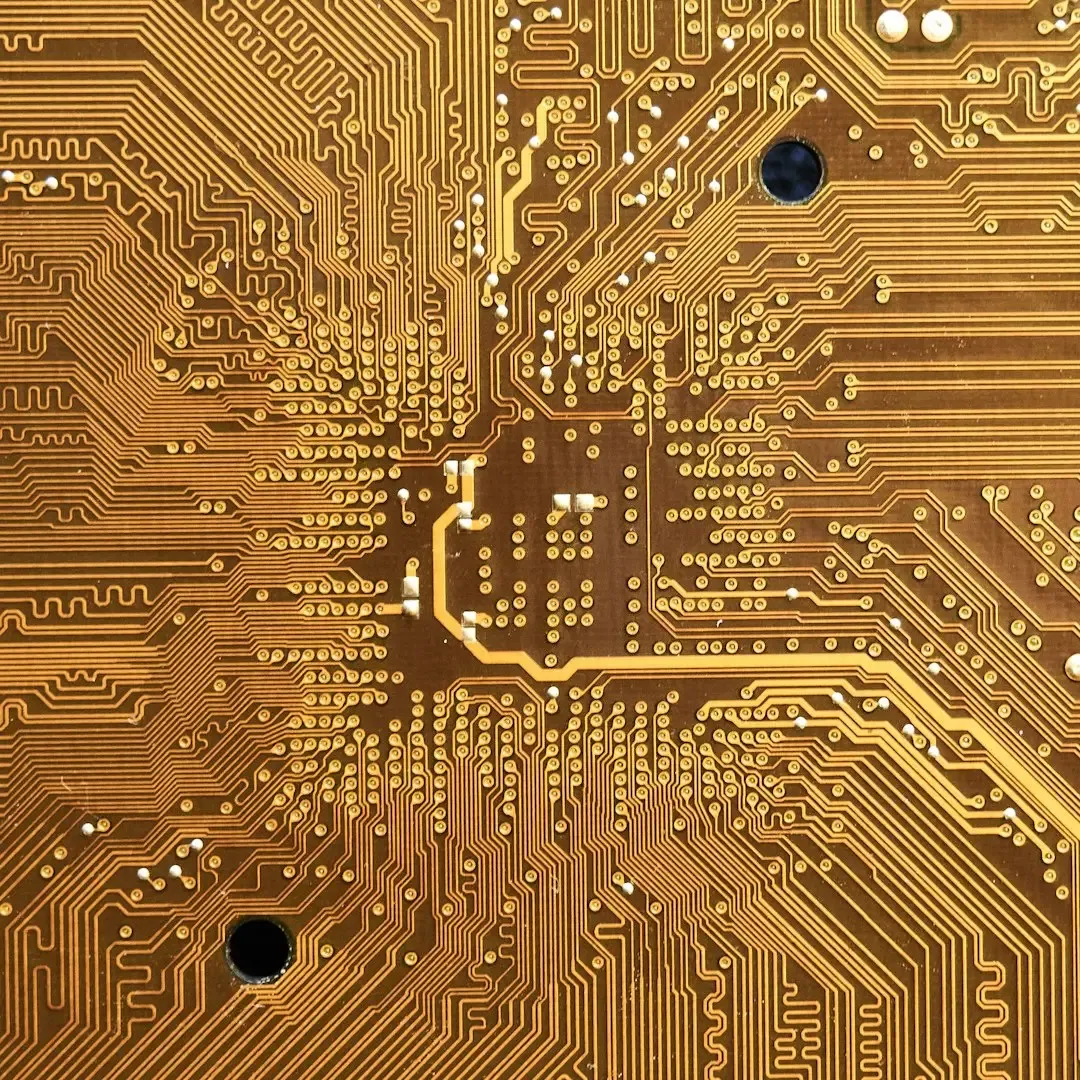
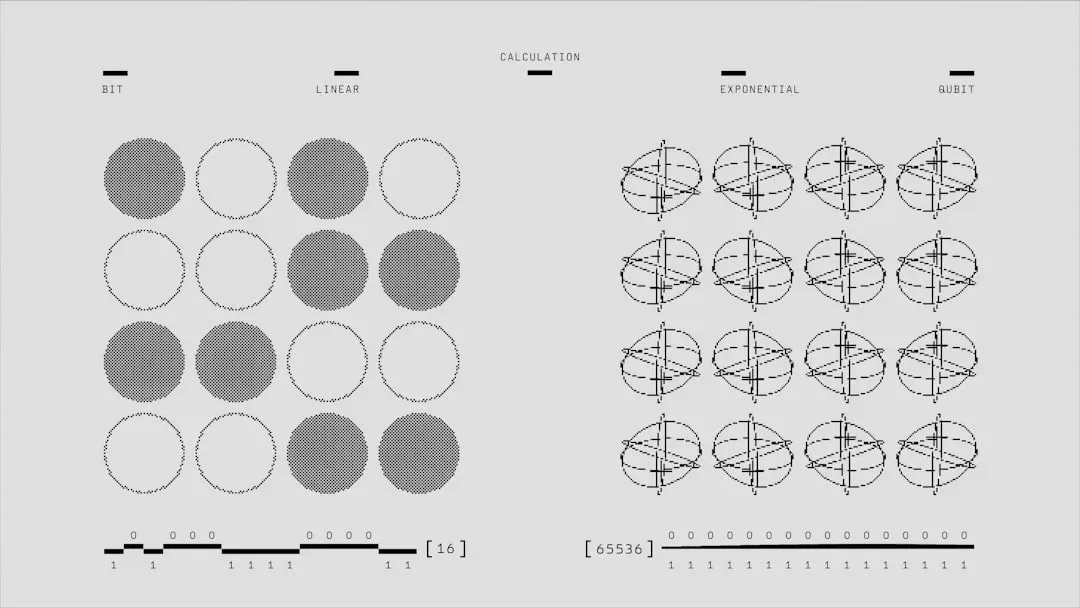
In the classical world, computation and communication rely on bits that are either zero or one, and signals that can be copied freely without disturbing them. This framework has scaled astonishingly well, giving rise to supercomputers, global networks, and sophisticated simulations. Yet there are problems – such as factoring gigantic numbers, simulating complex molecules, or optimizing sprawling networks – that bog down even the fastest classical machines. Quantum devices tackle some of these tasks differently, exploiting superposition and entanglement to explore many possibilities in parallel rather than one by one. They do not speed up everything, but for specific challenges, they change the rules of the game.
Traditional cryptography, for instance, often relies on the practical difficulty of certain mathematical problems, like breaking large numbers into their prime factors. Quantum algorithms threaten some of those schemes by solving the same problems far more efficiently, forcing a shift toward encryption methods that remain secure even in a quantum era. At the same time, quantum communication channels offer ways to detect tampering that classical links cannot match, because any attempt to intercept the quantum states leaves unmistakable scars. In sensing and measurement, quantum techniques already allow clocks so accurate they would lose less than a second over the age of the universe. Compared with their classical cousins, quantum tools are not just faster or smaller; they obey a different logic that can unlock entirely new capabilities.
Some key contrasts between classical and quantum approaches include:
- Classical bits versus quantum qubits that can occupy superpositions of states.
- Freely copyable signals versus quantum states that cannot be cloned without disturbance.
- Security based on computational hardness versus security rooted in the laws of physics.
- Measurements that reveal pre‑existing properties versus measurements that help define the outcomes.
These differences reshape how engineers and scientists think about what is possible in hardware and communication networks.
The Human Side of Quantum Discovery
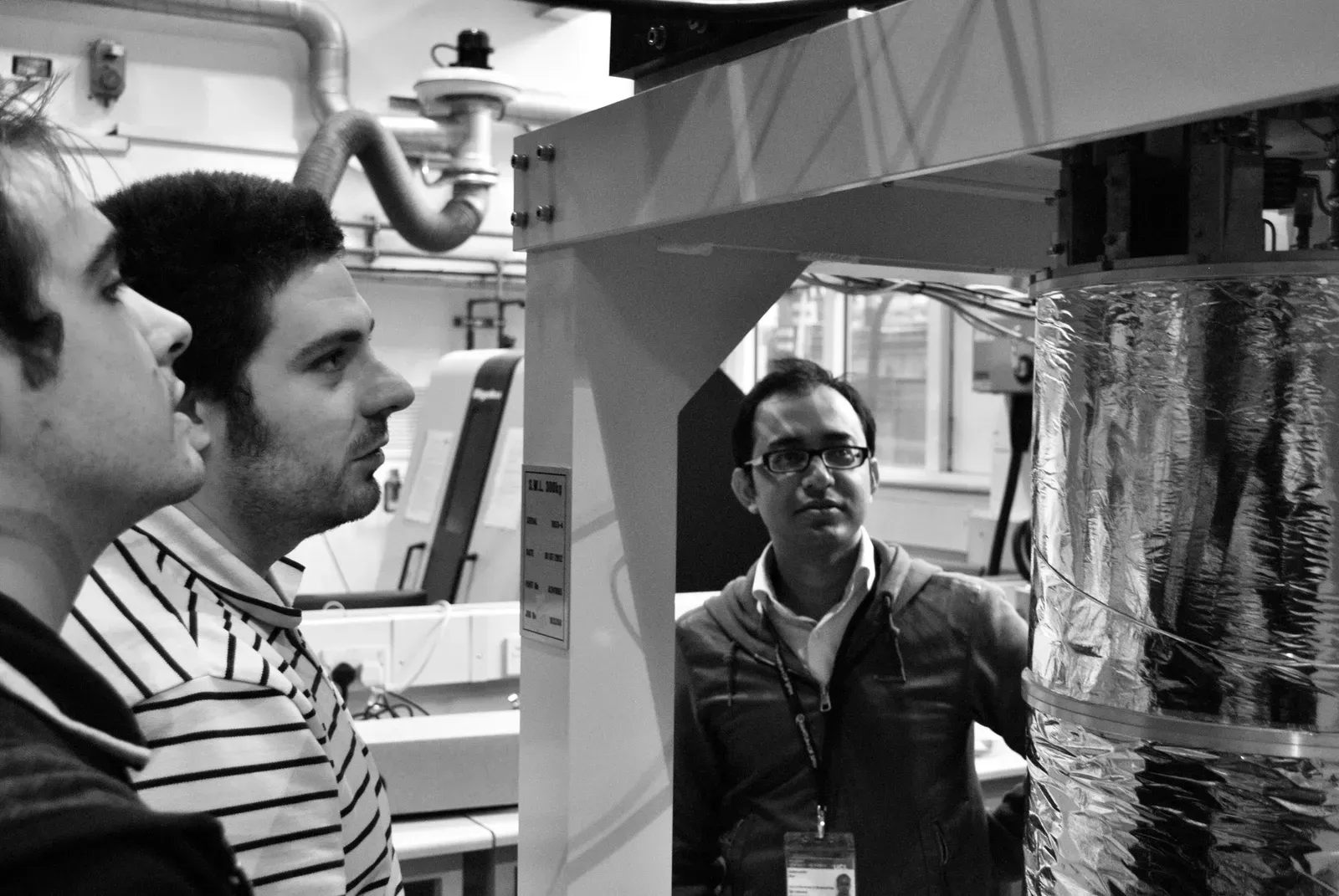
Behind every sleek quantum chip or headline‑grabbing experiment lies an unglamorous world of cryogenic fridges, vibration‑isolated tables, and researchers nursing coffee at 3 a.m. I remember standing once in a dimly lit lab, watching a colleague gingerly align a laser through a maze of mirrors and lenses, knowing that a bump of a few micrometers could erase weeks of progress. In that moment, the abstract talk of wavefunctions and Hilbert spaces collapsed into the reality of tape, foil, and meticulous patience. Quantum research demands not only brainpower but also an almost stubborn resilience in the face of fickle hardware and noisy environments. It is closer to coaxing a skittish animal than programming a machine.
There is also a psychological weight to working in a field that routinely undermines your own intuitions. Students enter thinking of particles as tiny billiard balls and leave with mental pictures that are closer to probability clouds and abstract vectors than anything tangible. Some find this exhilarating, others quietly unsettling, but nearly all report a deep shift in how they think about certainty and evidence. In public conversations, quantum terms are often borrowed for mystical metaphors or marketing slogans, which can both attract attention and confuse. For the people in the trenches of quantum science, the task is to keep the wonder while insisting on clarity, to hold onto the strangeness without surrendering to vagueness.
The Future Landscape of Quantum Technologies
Looking ahead, the quantum realm is poised to move from specialized labs into more ordinary corners of society, though likely in ways that stay largely invisible to most people. Prototype quantum computers hosted by major tech companies are already available through cloud platforms, letting researchers and businesses experiment with new algorithms. Quantum sensors are being tested for tasks like mapping underground structures, detecting subtle gravitational variations, or monitoring brain activity with unprecedented delicacy. In many of these arenas, incremental gains could translate into big advantages in finance, logistics, climate modeling, and medicine. The race is less about a single breakthrough and more about steadily taming fragility and scaling up.
That expansion comes with technical and ethical challenges that will not solve themselves. On the engineering side, keeping qubits stable demands extreme conditions, such as temperatures colder than outer space and meticulous shielding from noise, which drive up cost and complexity. On the societal side, quantum‑enhanced code‑breaking could undermine existing digital security, forcing governments, companies, and individuals to migrate to new safeguards. There is also a risk of geopolitical competition around quantum capabilities, echoing earlier arms and space races. If handled thoughtfully, though, international collaboration on standards and research could turn the quantum push into a shared infrastructure rather than a zero‑sum contest. The choices made over the next decade will shape whether quantum tools arrive as empowering public utilities or opaque, unevenly distributed power multipliers.
How You Can Engage With the Quantum Revolution
Even if you never set foot in a physics lab, the quantum revolution is not something that happens only to other people in white coats. One straightforward step is simply to stay curious and informed, treating quantum news not as impenetrable jargon but as an invitation to explore how the universe really works. Books, podcasts, and open online courses now offer accessible introductions that avoid both empty hype and dull formalism. Supporting science education in your community – through local schools, museums, or public events – helps ensure the next generation can navigate a world where quantum ideas quietly underpin everyday technologies. Curiosity, in this context, is not a luxury; it is a form of preparedness.
There are also more concrete ways to contribute. You can:
- Back organizations that fund basic research, where many quantum breakthroughs begin.
- Encourage policymakers to invest in open, transparent quantum programs rather than purely secretive ones.
- Ask companies using quantum branding to explain clearly what they are actually doing, pushing back against buzzword abuse.
- Share trustworthy explanations with friends and family, helping demystify the field instead of letting it drift into myth.
Little actions like these build a culture that values both wonder and rigor.
Suhail Ahmed is a passionate digital professional and nature enthusiast with over 8 years of experience in content strategy, SEO, web development, and digital operations. Alongside his freelance journey, Suhail actively contributes to nature and wildlife platforms like Discover Wildlife, where he channels his curiosity for the planet into engaging, educational storytelling.
With a strong background in managing digital ecosystems — from ecommerce stores and WordPress websites to social media and automation — Suhail merges technical precision with creative insight. His content reflects a rare balance: SEO-friendly yet deeply human, data-informed yet emotionally resonant.
Driven by a love for discovery and storytelling, Suhail believes in using digital platforms to amplify causes that matter — especially those protecting Earth’s biodiversity and inspiring sustainable living. Whether he’s managing online projects or crafting wildlife content, his goal remains the same: to inform, inspire, and leave a positive digital footprint.