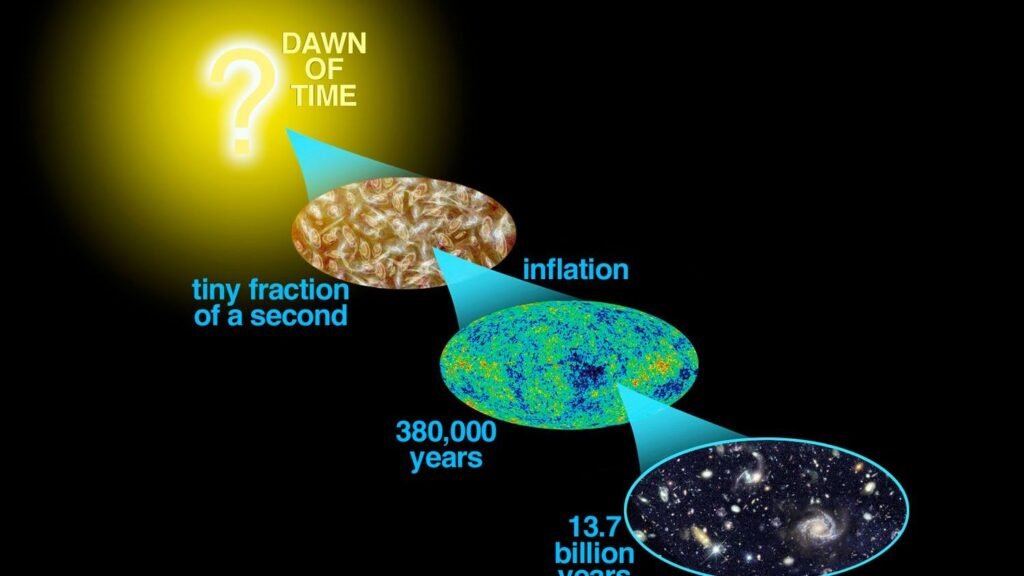

Most of us go through daily life trusting that the world follows predictable rules. Objects stay in one place. Time moves in one direction. Cause precedes effect. Physics as you learned it in school feels reliable, even comforting. Then you zoom down to the scale of atoms and electrons, and every one of those assumptions quietly falls apart.
At the smallest scales, the universe behaves very differently than the everyday world you observe around you. Quantum mechanics is the subfield of physics that describes this bizarre behavior of microscopic particles, from atoms and electrons to photons. What researchers keep uncovering is not just surprising. It’s a reminder that the universe is far stranger, far more intricate, and far more unsettling than even the most imaginative theories once suggested.
Particles That Refuse to Play by the Rules
Amid the many mysteries of quantum physics, subatomic particles don’t always follow the rules of the physical world. They can exist in two places at once, pass through solid barriers, and even communicate across vast distances instantaneously. These aren’t theoretical fantasies. They’re experimentally verified realities that physicists deal with every day.
In the classical or “macroscopic” world, which includes everything you can see around you, everything behaves according to the trustworthy rules of traditional physics. When things get extremely small, to around the scale of an atom, these laws no longer apply. That is when quantum mechanics takes over. The shift is not gradual. It’s a hard boundary between two entirely different realities.
You Can’t Know Everything About a Particle at Once
In quantum physics, it is impossible to know an object’s precise position and momentum at the same time. This limitation is called Heisenberg’s uncertainty principle. It’s not a flaw in your instruments. It’s built into the fabric of reality itself, a fundamental constraint on what nature allows you to know.
The Heisenberg uncertainty principle states that you can’t fully know two properties of a system at the same time. For example, if you want to know exactly where something is in space, you can’t know exactly how fast it’s moving at that moment. The act of pinning down one piece of information automatically blurs the other. You’re not observing the particle. You’re negotiating with it.
Quantum Tunneling: Particles That Walk Through Walls
Quantum tunneling is a strange effect that physicists first theorized almost a century ago. A particle that goes up against a potential barrier can cross it, even if its kinetic energy is smaller than the maximum of the potential. In everyday terms, imagine throwing a ball at a wall and watching it reappear on the other side, not because the wall broke, but because the universe allowed a workaround.
The Nobel-winning work demonstrated that quantum tunneling, previously considered a microscopic phenomenon, can be observed in macroscopic electrical circuits using superconductors. The discovery, which involved an effect called quantum tunneling, laid the foundations for technology now being used by Google and IBM aiming to build the quantum computers of the future. What was once theoretical strangeness is now the engineering cornerstone of cutting-edge computing.
Entanglement: The Universe’s Invisible Thread
The properties of a particle can be “teleported” through quantum entanglement. Einstein argued in favor of an effect that he dubbed “spooky action at a distance.” Today we know that this quantum entanglement is real, but we still don’t fully understand what’s going on. Two particles, linked through entanglement, share a bond that persists regardless of the distance between them.
Entanglement, linking distant particles or groups of particles so that one cannot be described without the other, is at the core of the quantum revolution changing the face of modern technology. Scientists have finally unlocked a way to identify the elusive W state of quantum entanglement, solving a decades-old problem and opening paths to quantum teleportation and advanced quantum technologies. Each solved mystery seems to open three new ones in its place.
New Particles That Don’t Fit Any Known Category

Physicists at Brown University have observed a novel class of quantum particles called fractional excitons, which behave in unexpected ways and could significantly expand scientists’ understanding of the quantum realm. These particles carry no overall charge but follow unique quantum statistics, fitting neatly into neither the category of bosons nor fermions.
Physicists have observed a new class of quantum particles called fractional excitons, which exhibit unique behaviors and do not fit neatly into the categories of bosons or fermions. These particles, observed in a graphene-based system under strong magnetic fields, show characteristics of both bosons and fermions, resembling anyons but with distinct properties. Their discovery suggests that the standard map of quantum particles may still have significant blank spaces left to fill.
Time Itself May Not Be What You Think It Is
Researchers from the University of Surrey have uncovered evidence that in the strange world of quantum physics, time could theoretically run both forward and backward. Their study reveals that certain quantum systems, when interacting with a vast environment, still obey time-reversible laws, even under assumptions that typically favor a one-way “arrow of time.” The ordinary, irreversible march of time you experience may be more a product of scale than an absolute rule of physics.
Scientists found that in certain quantum systems, time behaves symmetrically. It could flow backward just as easily as forward. This challenges the idea that time only moves in one direction. Scientists in Japan also uncovered a strange new behavior in “heavy” electrons, particles that act as if they carry far more mass than usual. These electrons were found to be entangled, sharing a deep quantum link, in ways tied to the fastest possible time in physics. Even more surprising, the effect appeared close to room temperature, hinting that future quantum computers might harness this bizarre state of matter.
Gravity and Quantum Mechanics: The Greatest Unresolved Collision in Physics
The unification of gravity and quantum mechanics remains one of the most profound open questions in science. With recent advances in quantum technology, an experimental idea first proposed by Richard Feynman is now regarded as a promising route to testing this unification for the first time. For decades, these two towering theories of physics have each been spectacularly successful in their own domain, yet they fundamentally refuse to speak the same mathematical language.
Scientists have taken a major step toward probing one of physics’ biggest mysteries by creating the first unified way to detect tiny “ripples” in spacetime itself. These subtle fluctuations, long predicted but poorly defined, are now organized into clear categories with specific signals that real-world instruments can search for. The breakthrough means powerful tools like LIGO and even small tabletop experiments could start testing competing theories of quantum gravity much sooner than expected. The gap between theory and experiment, once seemingly vast, is quietly beginning to close.
Conclusion
What the quantum realm keeps telling you, if you’re willing to listen, is that the universe operates on terms that have little to do with human intuition. Physicist Lu Li has noted that what he uncovers is so unusual that its value lies purely in revealing how strange the universe can be. That honesty carries its own kind of wonder.
Despite giving us insights into many of the fundamental questions in science, including how objects behave in the quantum world, we’re still a long way from understanding the full extent of the subject. The discoveries accumulating in 2025 and 2026 alone, from time-reversible quantum systems to gravity-mediated entanglement to entirely new classes of particles, make that gap feel less like a limitation and more like an open invitation.
Physics has always been most alive at the edges, where the known gives way to the genuinely unknown. Right now, the quantum realm sits squarely at that edge, and every answer uncovered there seems to quietly rewrite what the word “reality” is allowed to mean.