
If you could shrink yourself down far smaller than an atom, the world would stop making sense in the way you’re used to. Objects wouldn’t have definite positions, cause and effect could look scrambled, and particles would sometimes behave like waves that smear across space. The quantum realm is not just a smaller version of our everyday world; it’s a fundamentally different kind of game with rules that feel almost deliberately confusing.
Yet, as alien as it seems, this bizarre set of rules quietly governs everything around us. Your smartphone, GPS, MRI scanners, lasers, and cutting‑edge quantum computers all depend on phenomena that sound more like science fiction than physics. The strangest part is that the universe plays by quantum rules all the time; it’s our everyday perception that’s limited. The closer we look, the more reality turns out to be much weirder than any story we could have invented.
Particles That Are Also Waves (Even If That Sounds Impossible)
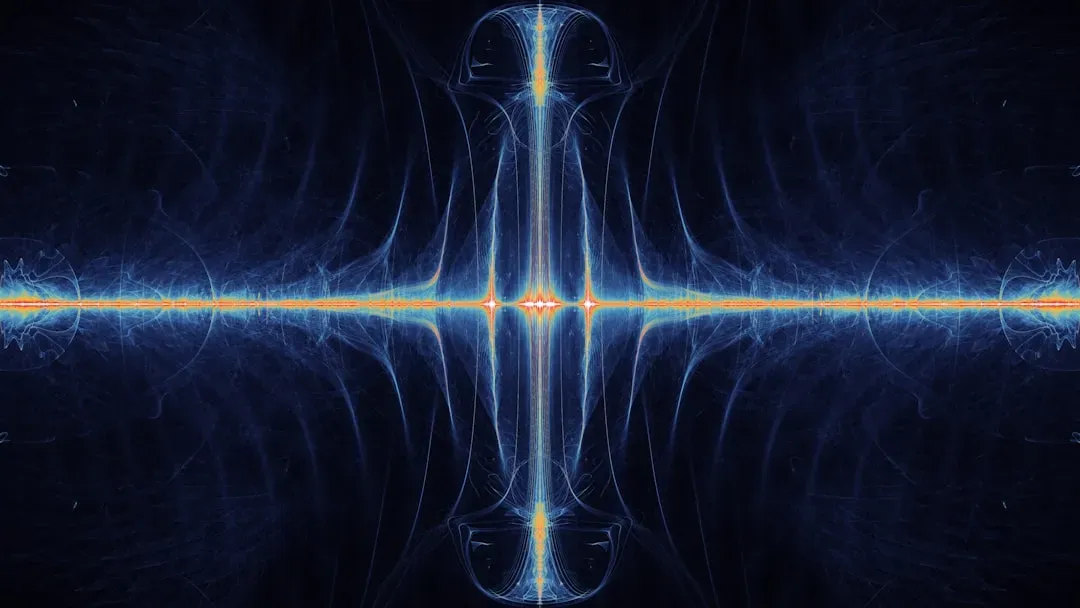
In everyday life, we neatly separate things into categories: a baseball is a solid object, and a water wave is a disturbance in a medium. In the quantum world, that separation falls apart. Electrons, photons, and even large molecules behave as both particles and waves, depending on how we look at them. In classic experiments where particles pass through slits, they form interference patterns like ripples overlapping on a pond, even when fired one at a time.
This wave‑particle duality isn’t just a quirky detail; it’s built into the mathematics that successfully predicts real‑world phenomena. Light, which we once thought of only as a wave, can arrive at detectors in little energy packets called photons. Matter, which we tend to think of as solid stuff, shows wave behavior that can spread out and interfere with itself. It’s like finding out your car is also a song, and sometimes the universe insists on treating it as one rather than the other.
Superposition: When Reality Refuses to Pick Just One Option

In the macroscopic world, a light switch is either on or off, a coin lands heads or tails, and your coffee is either on the table or on the floor. Quantum systems don’t play by that rule. Before we measure them, they can exist in superpositions of many possible states at once. An electron can be in multiple places simultaneously, or a quantum bit in a computer can be both zero and one at the same time, encoded in a delicate blend of possibilities.
Superposition sounds mystical, but it’s a precise, testable feature of quantum theory that we harness in real technologies. Quantum computers exploit superposition to explore many computational paths in parallel, giving them a shot at solving certain problems far faster than traditional machines. The catch is that superpositions are fragile; interactions with the environment tend to collapse them into definite outcomes. It’s a little like trying to balance on the edge of a knife while the whole universe keeps nudging you off.
Entanglement: Connections That Ignore Distance
If there’s one quantum effect that feels tailor‑made to break our intuition, it’s entanglement. When particles become entangled, their properties become linked so deeply that measuring one instantly affects what we can say about the other, no matter how far apart they are. This isn’t a matter of a hidden signal traveling quickly; experiments keep showing that no classical explanation based on local hidden variables works.
These correlations aren’t just philosophical curiosities; they’re now the backbone of emerging technologies in quantum communication and cryptography. Quantum key distribution uses entangled particles to detect eavesdroppers because any interference disturbs the correlations in a measurable way. On a more mind‑bending level, some modern physics research connects entanglement with the very structure of spacetime, hinting that the geometry of the universe itself might be woven from these nonlocal quantum links.
Uncertainty: Limits Built into Nature, Not Just Our Tools
In everyday thinking, if we had perfect instruments, we could in principle measure everything exactly: where an object is and how fast it’s moving, down to the tiniest detail. Quantum mechanics says no. The uncertainty principle states that certain pairs of properties, like position and momentum, cannot both be known with arbitrary precision at the same time. This isn’t due to clumsy measurement; it’s a built‑in feature of reality at small scales.
At first glance, this sounds like chaos, but it actually leads to a surprising kind of structure. Electrons in atoms don’t spiral into the nucleus because their wave‑like nature and the uncertainty principle prevent them from having both a well‑defined location and vanishing motion. Zero‑point energy, the irreducible jitter of particles even at temperatures close to absolute zero, is another consequence. Nature, in a sense, refuses to be perfectly still or perfectly sharp; there is always a minimum blur that cannot be removed.
Quantum Tunneling: Walking Through Walls (Sort Of)

In the classical world, if you don’t have enough energy to climb over a hill, you’re stuck on your side of it. Quantum particles break that rule. Because of their wave‑like character and the uncertainty principle, there’s a small but real probability that a particle will be found on the other side of an energy barrier, even if it seems like it shouldn’t have enough energy to cross. This is quantum tunneling, and it’s been repeatedly observed and measured.
Tunneling isn’t just a theoretical curiosity; it’s essential to how the universe and our technology work. In stars, including our Sun, tunneling helps protons overcome their mutual electric repulsion so nuclear fusion can occur at the temperatures actually found in stellar cores. In electronics, devices like tunnel diodes and the scanning tunneling microscope rely on this phenomenon to function. Even some forms of radioactive decay can be understood as tunneling events, where particles escape atomic nuclei by effectively slipping through the walls that hold them in.
When the Quantum World Scales Up to Everyday Sizes
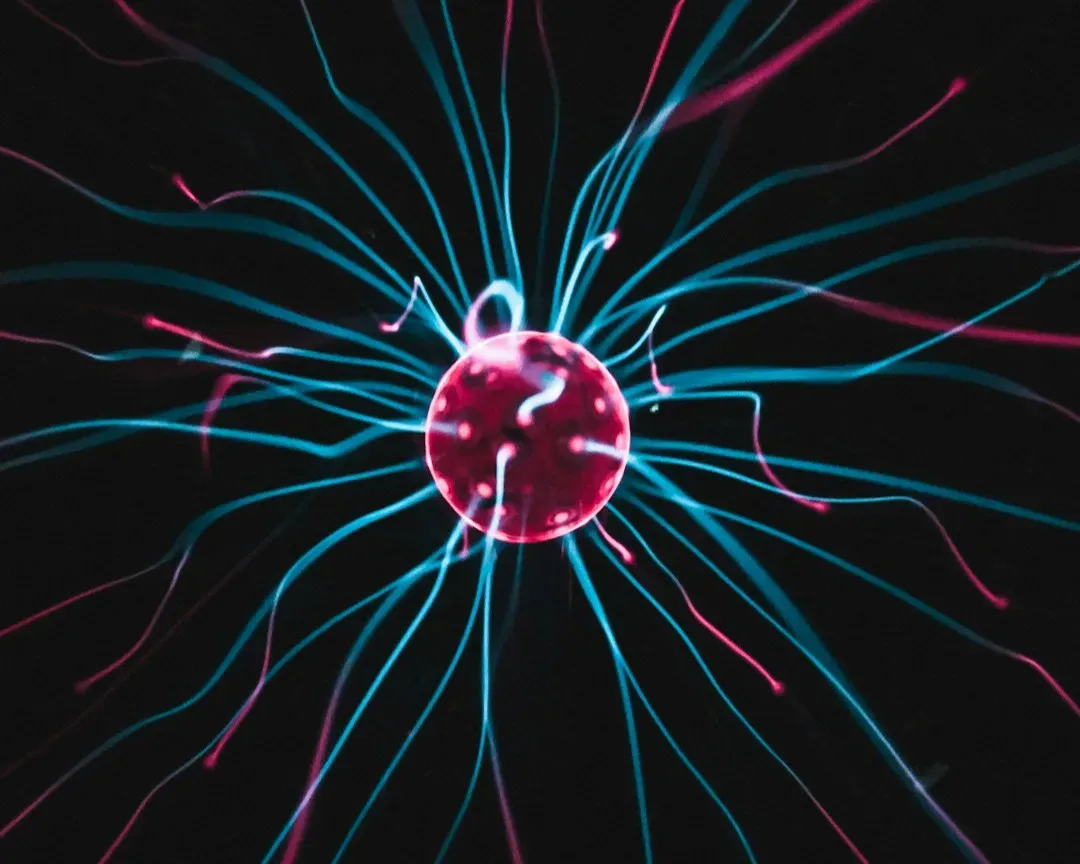
It’s tempting to think quantum effects only matter in tiny, isolated systems, far removed from ordinary life. But under the right conditions, quantum behavior can scale up and become visible to the naked eye. Superconductors, for example, allow electric currents to flow with no resistance, because electrons move in coordinated quantum states that extend across the entire material. Superfluids show frictionless flow and bizarre behaviors like climbing container walls, again due to large‑scale quantum coherence.
In the lab, researchers have cooled small mechanical objects, including vibrating membranes and tiny metal beams, down to their quantum ground states, then manipulated them much like oversized atoms. Interference patterns have even been observed with relatively large molecules, pushing the boundaries of where we see wave‑like behavior. These results hint that the line between the quantum and classical worlds isn’t a hard barrier, but more like a gradual change in behavior as systems get bigger, warmer, and more entangled with their environments.
Why Quantum Strangeness Matters for the Future
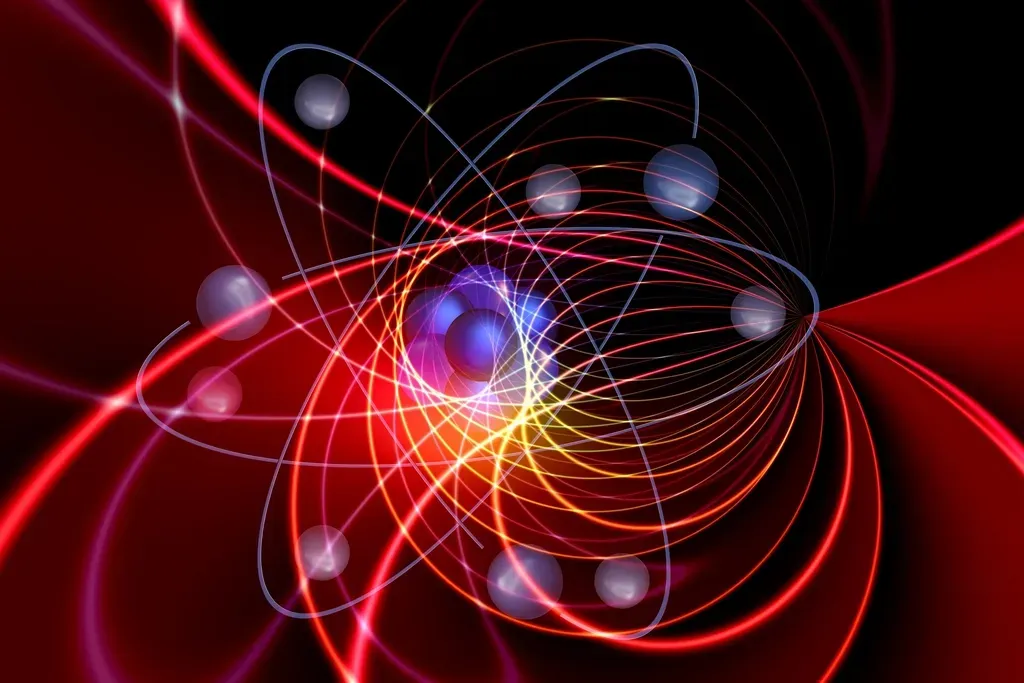
For all its weirdness, quantum theory is arguably the most successful scientific framework humans have ever built, matching experiments with stunning accuracy over an enormous range of conditions. Its strangeness forces us to let go of comforting assumptions: that objects always have definite properties, that influences are strictly local, and that randomness is just ignorance. The universe, as revealed through quantum mechanics, is more like a web of overlapping possibilities than a collection of rigid, well‑defined things.
As we learn to engineer and control quantum systems more precisely, we’re translating those possibilities into concrete tools: quantum computers tackling problems in chemistry and optimization, quantum sensors measuring time and fields with record‑breaking precision, and quantum networks promising new forms of secure communication. The rules of the quantum realm may defy our everyday perceptions, but they’re steadily becoming part of our everyday technology. In the end, the strangest question might be this: is it reality that’s weird, or just our old assumptions about how it was supposed to work?