
Imagine you could shrink yourself down, billions of times smaller than the period at the end of this sentence, and step into a world where nothing behaves the way you’d expect. A world where a single particle can exist in two places simultaneously, where observation itself changes reality, and where invisible threads of connection span distances greater than you can fathom. That world exists. It’s not science fiction. It’s the quantum realm, and it underlies every single atom of the magnificent universe you inhabit.
You live in a cosmos that is both impossibly vast and breathtakingly small. Stars, galaxies, and black holes dominate your view of the cosmos, but their existence traces back to behaviors happening at scales too tiny to see, touch, or intuitively grasp. The story of how those tiny behaviors build into the grandeur of everything around you is one of the most astonishing narratives in all of science. Let’s dive in.
When Classical Physics Runs Out of Answers
You probably grew up learning that the universe plays by logical, predictable rules. A ball thrown in the air follows a curve you can calculate. A planet orbits its star along a path Newton described centuries ago. The macroscopic realm, which consists of everything from falling balls to orbiting planets, can be explained by the laws of classical mechanics. Honestly, that’s a remarkably satisfying idea. The universe as a clockwork machine.
Here’s the thing though: zoom in far enough, and the clock falls apart. When nature reaches the smallest scales, stranger quantum rules kick in, and particles begin to exhibit bizarre properties – they do not have definite positions, and they can remain connected across vast distances and be altered by observation alone. That’s not a minor footnote. That’s reality-rewriting territory right there.
Quantum mechanics is the fundamental physical theory that describes the behavior of matter and of light, and it is the foundation of all quantum physics, which includes quantum chemistry, quantum biology, quantum field theory, quantum technology, and quantum information science. Think of it as the operating system beneath everything you know. You never see the code running your laptop’s screen, but without it, nothing displays. Quantum mechanics is exactly that kind of invisible foundation.
A fundamental feature of the theory is that it usually cannot predict with certainty what will happen, but only gives probabilities. That’s a head-scratcher, especially when you consider that the same theory predicts how semiconductors behave and helps make your smartphone work.
Wave-Particle Duality: You Are Looking at Both, Always
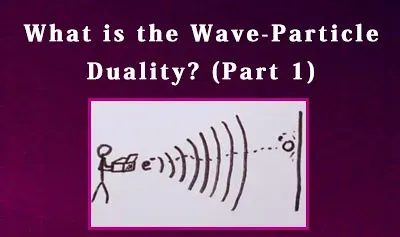
Here is something that will genuinely bend your mind. Every particle you can think of, whether it’s a photon of light or an electron in your nervous system, is simultaneously a particle and a wave. Not sometimes one thing and sometimes another. Both, at the same time. Quantum mechanics is the field of physics that explains how extremely small objects simultaneously have the characteristics of both particles and waves, and physicists call this the “wave-particle duality.”
One of the most famous experiments demonstrating quantum phenomena is the double-slit experiment. It illustrates how particles like electrons and photons can display characteristics of both waves and particles. When a beam of light is shone through two slits onto a screen, it creates an interference pattern typical of waves, even when particles are fired one at a time. Wrap your head around that. You fire a single particle. It somehow goes through both slits. Simultaneously. That’s not a glitch – that’s nature.
Through the work of Albert Einstein, Satyendra Nath Bose, Louis de Broglie, and many others, current scientific theory holds that all particles also have a wave nature, and this has been verified not only for elementary particles but also for compound particles such as atoms and even molecules. So it’s not just subatomic oddities. Entire atoms behave this way. Your reality is far stranger than it looks.
Particles like electrons and photons can act both as particles and as waves, and this dual nature is crucial for technologies like semiconductors and lasers, which rely on the wave properties of electrons and light. In other words, wave-particle duality isn’t just philosophically puzzling. It’s the principle behind the laser in your Blu-ray player and the chips powering modern computers.
Superposition: The Art of Being Everywhere at Once
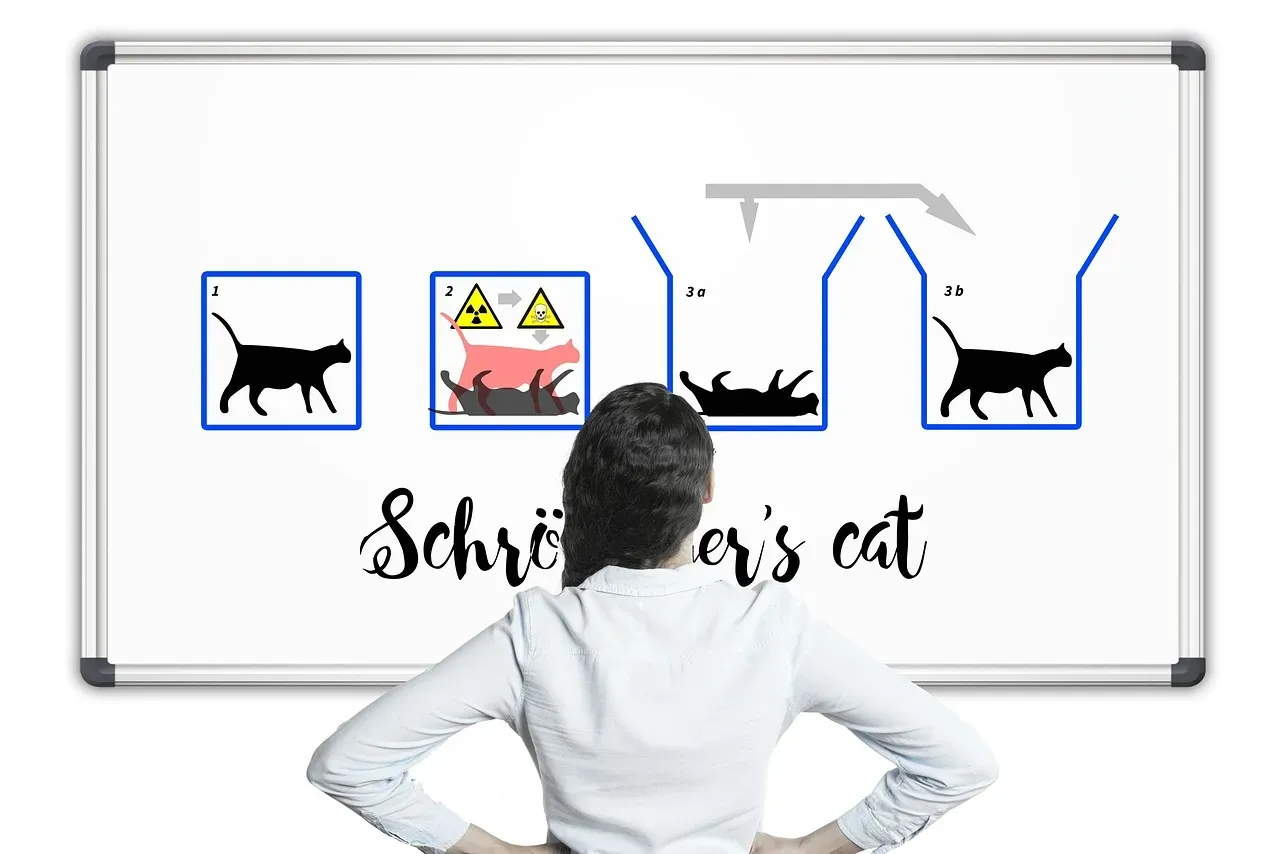
If wave-particle duality was strange, superposition takes it a step further into territory that seems almost absurd. Superposition is the ability of a quantum system to be in multiple states at the same time until it is measured. For example, an electron in a quantum state can simultaneously spin in opposite directions until observed. The moment you look, the system “chooses.” Before you look, all possibilities exist at once, like a coin spinning in the air that is simultaneously heads and tails.
You’ve probably heard of Schrödinger’s cat. In 1935, Schrödinger proposed an experiment in which the life or death of a cat would depend on the random flip of a quantum particle, whose state would remain unseen until a box was opened. Schrödinger hoped to show the absurdity of Bohr’s ideas, and according to Bohr’s interpretation of quantum mechanics, until the box was opened, the cat existed in the impossible dual position of being both alive and dead at the same time. It sounds ridiculous. Yet quantum experiments consistently validate exactly this kind of behavior at the subatomic level.
Schrödinger’s equation states a particle could be in two places at the same time; when you measure it, though, it would only be found in one place. No one could explain what this meant in the everyday world. In fact, to this day, no one completely agrees. I think that’s one of the most honest admissions in all of science. The math works perfectly. The interpretation is still a battleground. Even physicists, after over a century of quantum mechanics, continue debating what superposition really “means.”
Some physicists, like Hugh Everett, have suggested that the multiple possibilities dictated by Schrödinger’s equation actually predict multiple actualities – that is, many worlds, or the “multiverse.” So yes, when your phone autocorrects something wrong and you wish you were in a parallel universe, the physics might actually be on your side. Sort of.
Quantum Entanglement: The Universe’s Spooky Invisible Thread

Of all the phenomena in quantum physics, entanglement is the one that most makes you feel like the universe is hiding something profound. When particles become entangled, the state of one particle instantly correlates with the state of another, no matter how far apart they are. This phenomenon challenges the very notions of space and time. Think of it as a cosmic walkie-talkie with no batteries, no wires, and no distance limits.
In 2022, three scientists won the Nobel Prize in Physics for proving something astonishing: the universe is not locally real. In other words, particles don’t have fixed properties until they are measured. Although it seems to counter everything we perceive, the discovery was established by some of the most rigorous experiments ever conducted, and it aligns with a prediction Albert Einstein and his colleagues made almost 100 years ago: that particles strangely influence one another, even across vast distances.
Recent 2025 research sharpened this picture even further. All particles of the same type – for example, photons or electrons – are entangled with one another, including those on Earth and those in the most distant galaxies. This surprising statement follows from a fundamental postulate of quantum mechanics: particles of the same type are, in their very nature, identical. That means you are connected, through the quantum fabric, to the furthest reaches of existence. Let that settle for a moment.
Distance is not an impediment to correlations; what happens here can be strongly correlated with what happens there, without any classical force mediating the influence. This lays the first brick in understanding cosmic connectivity: if even elementary particles are seamlessly connected across space, then as systems grow in scale, perhaps some remnant of that fundamental connectedness persists or can be harnessed. The universe, at its core, is not a collection of isolated pieces. It is one deeply tangled whole.
The Higgs Boson: The Particle That Gave You Weight
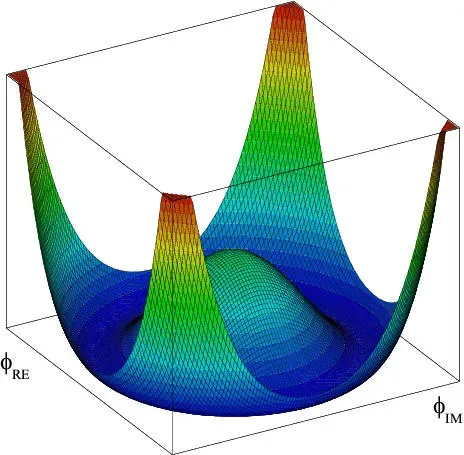
Without mass, no atom could hold together. No planet could form. No star could ignite. You would not exist. So the question of how particles acquire mass is not abstract at all. It is the most personal question in all of physics. It’s hard to overestimate the importance of the Higgs boson. Without this enigmatic aspect of nature, no particles would have mass, meaning no stars, no planets, and no human life.
The Higgs boson is the particle associated with the Higgs field, which permeates the universe. Interactions with this field set the masses of quarks and charged leptons – the building blocks of matter as well as the massive force carriers. So it’s fundamental to everything we know about the universe. Imagine the Higgs field as a kind of cosmic molasses. Particles moving through it experience drag, and that drag is what you call mass. Slower particles acquire more of it. Photons, moving at the speed of light, bypass the field entirely and remain massless.
Physicists want to understand the Higgs potential – the energy landscape of the Higgs field from which the particle is produced. We know what the minimum of that Higgs potential is, but we don’t know whether that’s a universal minimum, or whether it could actually quantum tunnel to a lower energy state. If that happened, it would completely change the fate of the universe. There’s a sobering thought for your Tuesday morning. The universe might be balanced on a quantum knife-edge, stable for now but potentially capable of a catastrophic phase shift.
A simple theoretical extension of the Standard Model posits that existing particles, such as the Higgs boson, act as a “portal” between known particles and dark-matter particles. Since the Higgs boson couples to mass, massive dark-matter particles should interact with it. That possibility has sent researchers racing to probe Higgs decays at the Large Hadron Collider, searching for the invisible signature of dark matter slipping away unseen.
The Uncertainty Principle: Why Knowing Everything Is Impossible
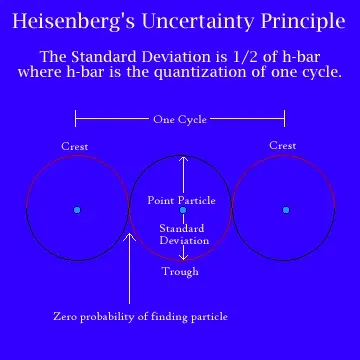
Here’s a concept that trips up almost everyone the first time they hear it. The Uncertainty Principle states that there’s a limit to our ability to measure certain pairs of physical properties at any one time. For instance, you can measure an electron’s position, but you are then limited in how well you can measure its momentum. This isn’t a measurement problem you can fix with better equipment. It’s a fundamental feature of nature itself, baked into the fabric of reality.
It states that the more precisely you know a particle’s position, the less precisely you can know its momentum, and vice versa. This principle highlights the probabilistic nature of quantum mechanics, where outcomes can only be predicted in terms of probabilities rather than certainties. Think of it this way: the universe imposes a kind of privacy on its most intimate details. The more you push to know one thing, the more another hides from you. Nature has secrets it will never give up entirely.
One unexpected, mind-bending feature of this principle is the observed and verified fact that pairs of particles can suddenly appear and disappear literally out of nowhere, as long as it happens in a very short amount of time. Empty space, it turns out, is not empty at all. It seethes with fleeting quantum fluctuations, pairs of particles popping into existence and vanishing before anyone can catch them. The vacuum itself is alive with quantum activity.
These quantum fluctuations in the early universe weren’t just curiosities either. As spacetime stretches or expands during inflation, the vacuum state becomes excited in the new spacetime, leading to the creation of new particles. The large-scale structure you see in the night sky, galaxies arranged in vast cosmic webs, traces back to tiny quantum fluctuations stretched to cosmic proportions. The biggest things you can see were once quantum whispers.
Quantum Technology: How the Subatomic World Changes Your Everyday Life

It’s easy to treat quantum physics as purely abstract, a conversation for physicists in labs. But let’s be real: it already runs your world. Important applications of quantum theory include quantum chemistry, quantum optics, quantum computing, superconducting magnets, light-emitting diodes, the optical amplifier and the laser, the transistor and semiconductors such as the microprocessor, and medical and research imaging such as magnetic resonance imaging and electron microscopy. That’s the phone in your pocket, the hospital scanner, and the internet all wrapped up in quantum physics.
In the quantum realm, a particle can be in a superposition of both here and there, or both 0 and 1. You can use quantum bits, or qubits, to compute on more possibilities at once. When entangled particles are used for those qubits, algorithms could compute tasks that are practically impossible now at speeds far outstripping current capabilities. A quantum computer doesn’t just compute faster. It computes differently, in a way that sidesteps the walls classical machines cannot climb.
Today quantum strangeness is no longer confined to theory. Researchers are entangling objects large enough to see, quantum computers are on the cusp of solving problems no classical machine can touch, and speculative ideas such as vacuum decay and alternative realities are serious science. We are living, right now in 2026, through the dawn of a quantum technological era. It won’t look like a sci-fi movie. It will look like faster drug discovery, unbreakable encryption, and materials that behave in ways engineers are only beginning to imagine.
Quantum mechanics is not just about understanding the universe at a fundamental level; it also holds the key to revolutionary technologies. Quantum cryptography promises secure communication that cannot be eavesdropped on. Quantum sensors could drastically improve the precision of measurements, with applications in everything from navigation to medical diagnostics. When you think about it, the universe handed you the quantum realm not just as a mystery but as a toolkit. You’re only beginning to figure out how to use it.
Conclusion: The Smallest Things Hold the Biggest Answers
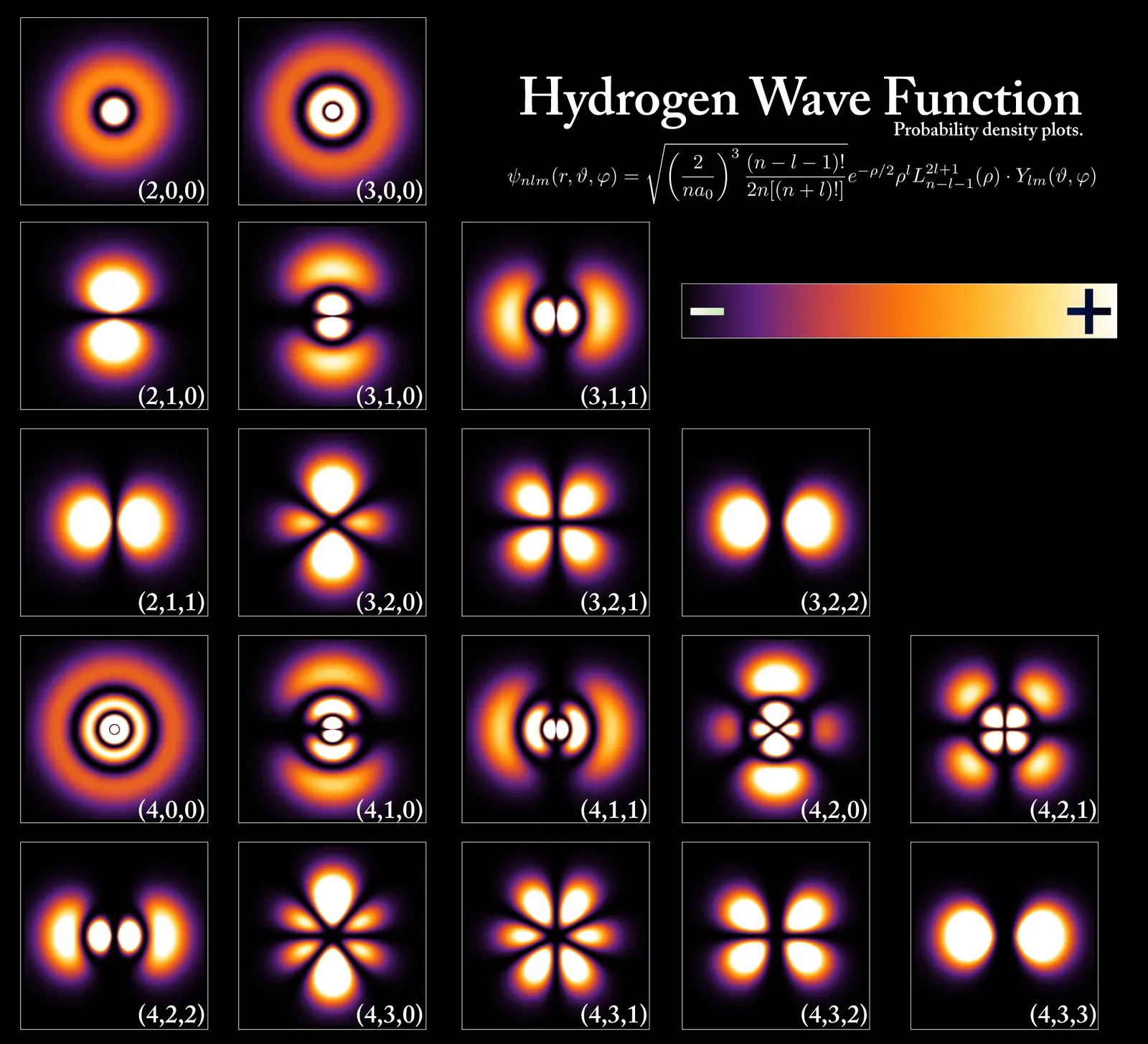
You started this journey at the scale of stars and galaxies, and you’ve arrived at the truth that underpins all of it: the quantum realm is where the rules are written. Every electron, every photon, every quark follows laws so strange they still make seasoned physicists pause. Yet those same laws built the sun that warms your skin, the atoms in your bones, and the neurons firing as you read these words.
The quantum world is not separate from the vast universe you look up at in wonder. It is its blueprint, its author, its pulse. Some researchers interpret the universe as an information system, a vast network woven by entanglement that gives rise to spacetime itself as an emergent phenomenon. That’s not poetry. That’s a serious scientific framework being developed today by some of the sharpest minds on the planet.
There is something genuinely humbling about all of this. The universe you inhabit, with its billions of galaxies, its billions of years of history, its staggering scale and complexity, is ultimately the product of particles that have no definite position, that flicker in and out of existence, and that remain mysteriously connected across impossible distances. Grand things built from quantum whispers. The universe at its most enormous is, at its heart, the quantum realm writ large.
What part of the quantum world surprises you the most? Tell us in the comments – we’d love to know what blows your mind.
Hi, I’m Andrew, and I come from India. Experienced content specialist with a passion for writing. My forte includes health and wellness, Travel, Animals, and Nature. A nature nomad, I am obsessed with mountains and love high-altitude trekking. I have been on several Himalayan treks in India including the Everest Base Camp in Nepal, a profound experience.