

Imagine something so small you could never see it, touch it, or even truly pin it down – yet without it, your smartphone wouldn’t exist, the sun wouldn’t shine, and life itself wouldn’t be possible. That’s the quantum realm for you. It lives right at the edge of what’s even measurable, yet it governs virtually everything around you with a set of rules so bizarre that the greatest minds of the twentieth century spent decades arguing about what those rules actually mean.
The quantum realm refers to the microscopic world of subatomic particles, where the laws of classical physics break down and quantum mechanical principles take over, characterized by phenomena such as superposition, entanglement, and wave-particle duality that defy our everyday intuitions about the nature of reality. Honestly, it sounds like science fiction. In many ways, it’s stranger. Let’s dive in.
A World You Can’t See – But Can’t Live Without

Most of us move through our days completely unaware that an invisible layer of reality is running the show beneath our feet. You flip on a light switch, your heart beats, a flower photosynthesizes – all of these events are ultimately rooted in quantum behavior. It’s a little like discovering that the entire universe is running on a hidden operating system you never knew about.
Quantum mechanics is often the only theory that can reveal the individual behaviors of the subatomic particles that make up all forms of matter, including electrons, protons, neutrons, and photons. Think about that for a second. Every object you’ve ever held in your hands is assembled from particles that follow these wildly counterintuitive rules. This knowledge had profound effects in science and technology, leading to the development of things like lasers, light-emitting diodes, transistors, medical imaging, and electron microscopes.
Wave-Particle Duality: When Light Can’t Make Up Its Mind

Here’s the thing – light shouldn’t be able to be two things at once. Yet it is. For centuries, scientists argued about whether light was a stream of particles or a wave. Turns out, the answer was a firm “both, depending on when you look.” That’s not a cop-out. That’s just quantum reality.
Quantum mechanics is the field of physics that explains how extremely small objects simultaneously have the characteristics of both particles and waves. It’s a phenomenon physicists call wave-particle duality. Subatomic bits of matter don’t follow the same rules as objects we can see, feel, or hold. They are ghostly and strange – sometimes behaving like clumps of matter, like subatomic baseballs, and sometimes spreading out as waves, like ripples on a pond. Try wrapping your head around that the next time you’re standing in sunlight.
Superposition: Being in Two Places at Once
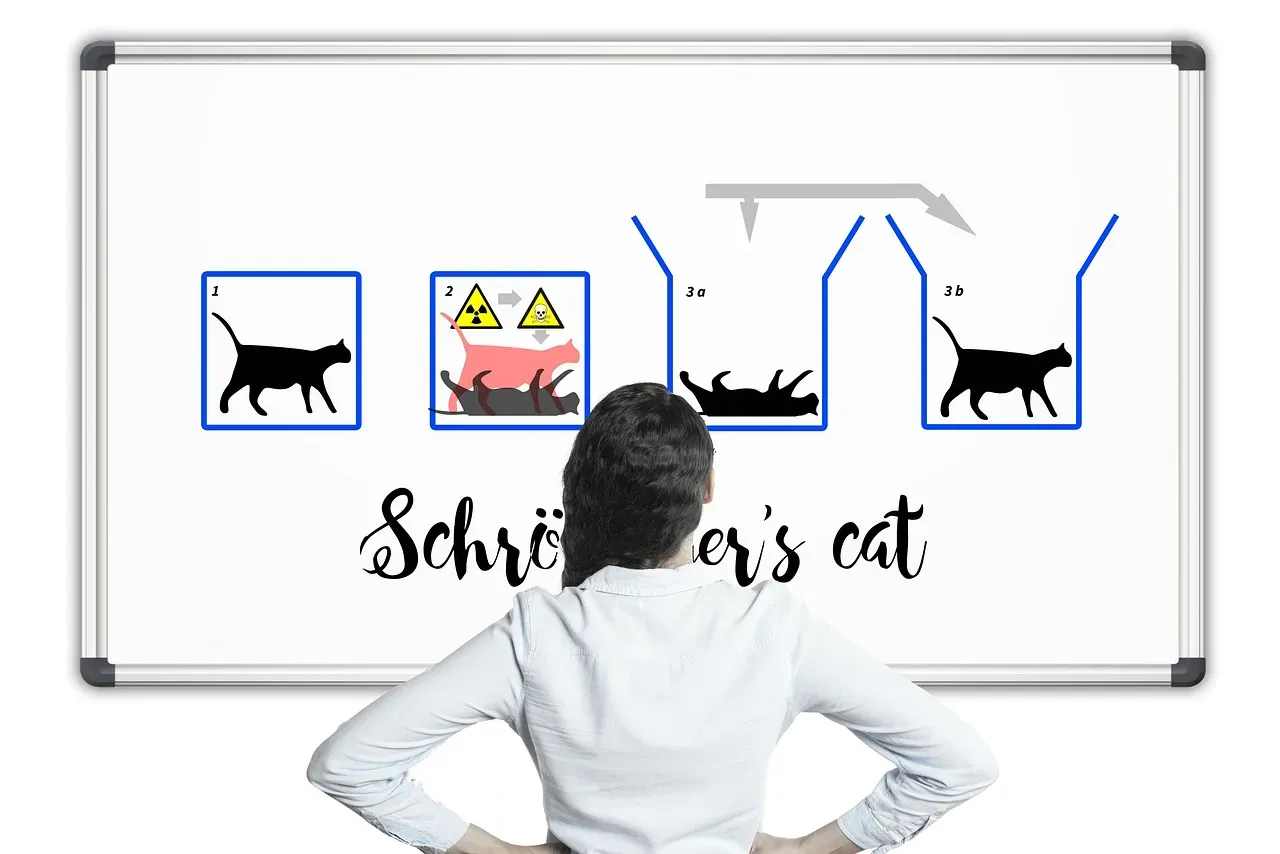
If you told someone on the street that a particle can be in two places at the same time, they’d probably laugh or back away slowly. I know it sounds crazy, but this isn’t science fiction. It’s been tested, verified, and observed repeatedly in laboratories around the world. Superposition is one of the quantum realm’s most head-spinning – and genuinely useful – tricks.
The quantum realm is characterized by phenomena that defy our intuitive understanding of how the world should behave. The principle of superposition states that a quantum particle can exist in multiple states or configurations simultaneously until it is measured or observed. Here’s a useful way to think about it: imagine a coin spinning in the air. Until it lands, it’s neither heads nor tails – it’s both. Schrödinger’s wave equation states a particle could be in two places at the same time. When you measure it, though, it would only be found in one place. No one could explain what this meant in the everyday world. In fact, to this day, no one completely agrees.
The Uncertainty Principle: Nature’s Permanent Secret
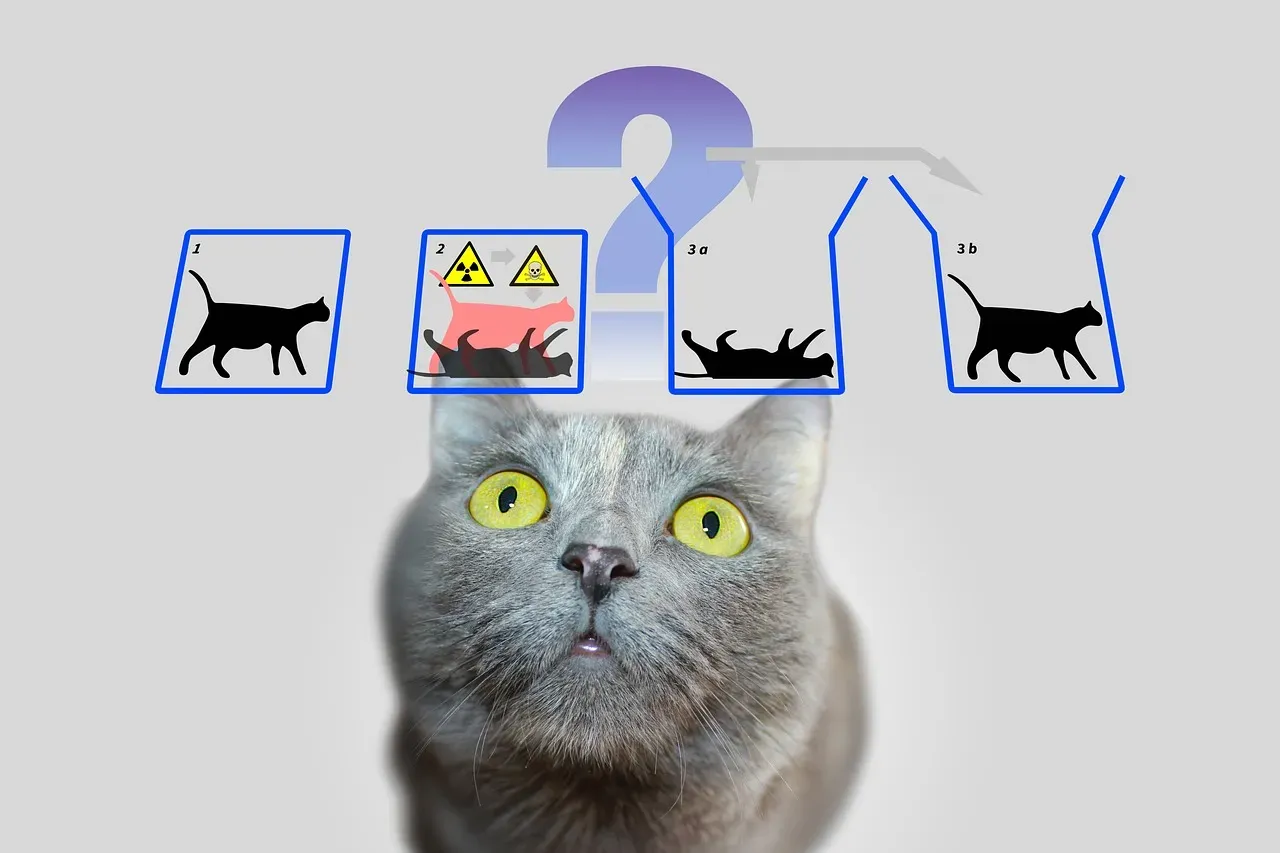
You might think that with advanced enough technology, you could measure anything to absolute precision. Werner Heisenberg proved that idea wrong in a very fundamental way. His Uncertainty Principle doesn’t just describe a limitation in our instruments – it describes a limitation baked into the fabric of reality itself. That’s a deeply unsettling thought, and also a deeply fascinating one.
The uncertainty principle states that the more precisely the position of a particle is determined, the less precisely its momentum can be known, and vice versa. It’s as if nature is deliberately withholding information, and not because we lack better tools. One unexpected, mind-bending feature of this principle is the observed and verified fact that pairs of particles can suddenly appear and disappear literally out of nowhere, as long as it happens in a very short amount of time. These quantum fluctuations in spacetime mean the fabric of the universe, like the ocean, will never be completely still.
Quantum Entanglement: The Universe’s Spookiest Connection

Albert Einstein famously called it “spooky action at a distance” – and even he wasn’t fully comfortable with what it implied. Quantum entanglement is arguably the most philosophically challenging concept in all of physics. Two particles, once connected, can influence each other instantaneously across any distance. Not quickly. Instantaneously. That breaks just about every intuition we have about how information travels.
Thanks to quantum theory, scientists have shown how pairs of particles can be linked even if they’re on different sides of the room or opposite sides of the universe. Particles connected in this way are said to be entangled. So far, scientists have been able to entangle photons that were 1,200 kilometers apart. The practical implications are staggering. The principle of quantum entanglement has led to the development of quantum cryptography, which uses the inherent properties of quantum particles to create unbreakable encryption methods. By exploiting the quantum realm, these technologies have the power to transform fields as diverse as information processing, secure communication, and precision measurement.
Quantum Computing: The Machine That Thinks in Superpositions
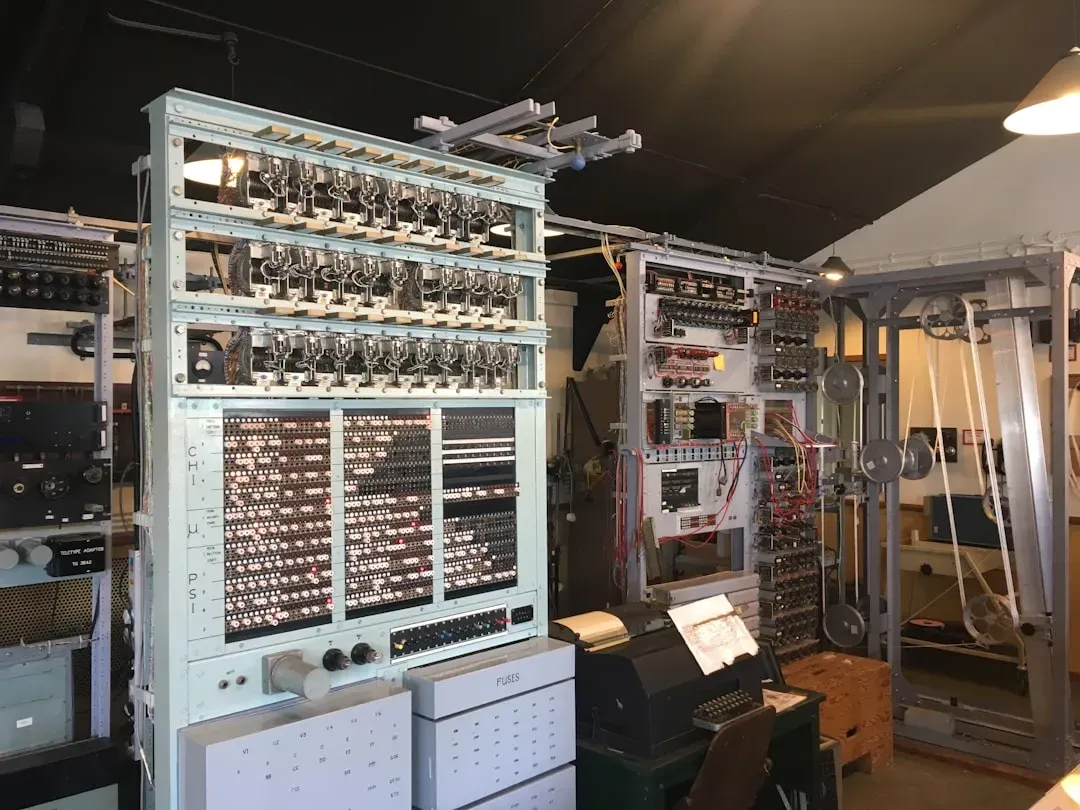
Regular computers are brilliant. They’ve changed everything. Still, they work on a beautifully simple principle: every bit of information is either a 0 or a 1. No in-between. Quantum computers don’t play by those rules. They operate on qubits – quantum bits – which can be 0, 1, or both at the same time. The implications for computing power are almost incomprehensible.
In normal computing, information is transmitted through bytes written in a code of bits, each of which is either 0 or 1. In the quantum realm, a particle can be in a superposition of both 0 and 1. You can use quantum bits, or qubits, to compute on more possibilities at once. When entangled particles are used for those qubits, algorithms could compute tasks that are practically impossible now at speeds far outstripping current capabilities. What would take a modern computer years to compute, a quantum computer could handle in seconds. We’re no longer in the realm of pure theory, either. In March 2025, IonQ and Ansys achieved a significant milestone by running a medical device simulation on IonQ’s 36-qubit computer that outperformed classical high-performance computing by 12 percent, one of the first documented cases of quantum computing delivering practical advantage in a real-world application.
The Quantum Revolution Happening Right Now
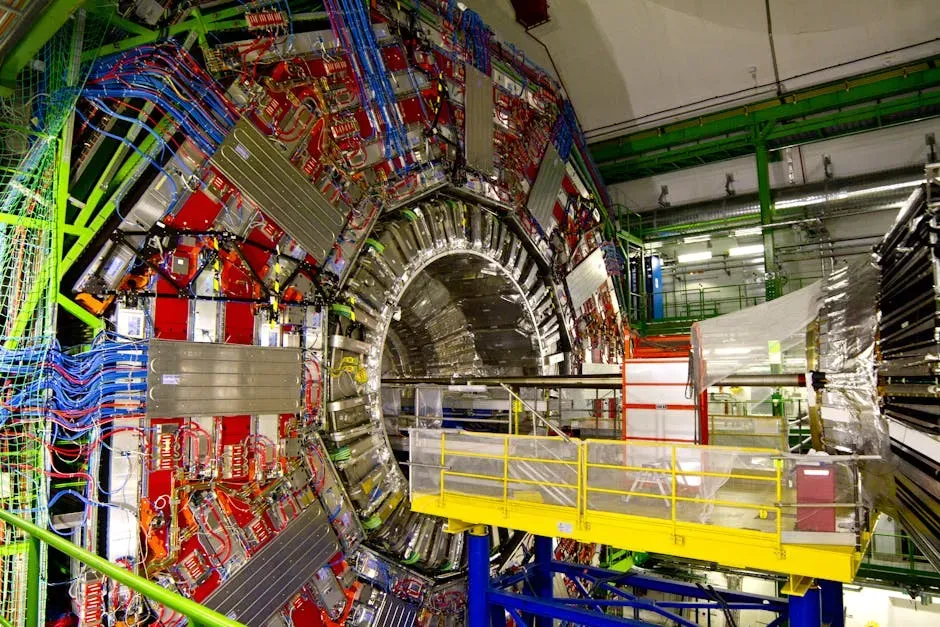
We are living through a genuinely historic moment, even if most people haven’t noticed. The world is in the middle of what scientists and technologists are calling the second quantum revolution. The first one gave you transistors and lasers. This second one is promising something far bigger: computing power that could remake medicine, materials science, artificial intelligence, and global security all at once.
The transition from theory to technology during the first quantum revolution led to transformative innovations such as lasers, MRI scanners, and integrated circuits. We are now experiencing a second quantum revolution – a shift from explaining quantum mechanics to creating artificial quantum states. The numbers behind this revolution are hard to ignore. McKinsey research shows that the three core pillars of quantum technology – quantum computing, quantum communication, and quantum sensing – could together generate up to $97 billion in revenue worldwide by 2035. The United Nations designated 2025 the International Year of Quantum Science and Technology, celebrating 100 years since the initial development of quantum mechanics. That’s not just a symbolic gesture. It’s a signal that the world recognizes what’s at stake.
Conclusion: The Tiniest Things Have the Biggest Story

It’s genuinely humbling to realize that the universe’s most fundamental layer operates nothing like the world we see and touch every day. The quantum realm isn’t some distant abstraction reserved for physicists in lab coats. It’s running through your body, through your devices, through the light hitting your eyes right now as you read these words.
From the eerie logic of superposition and entanglement to the very real breakthroughs happening in quantum computing labs around the world, tiny particles are shaping our entire existence in ways most of us have never stopped to consider. The story of the quantum realm is still being written – and the chapters ahead may be the most astonishing of all.
The next time you turn on your phone or step into an MRI scanner, remember: at the deepest level, you’re benefiting from a set of rules that even the greatest scientists in history found baffling. What would you have guessed was running the universe all along?