
If you could zoom in far beyond what any microscope can see, you’d find a world that behaves nothing like the everyday life you know. In this strange quantum realm, particles can be in two places at once, objects can tunnel through barriers, and the simple act of looking at something can change what it does. It sounds like science fiction, but it’s the framework that underpins all modern physics and most of today’s cutting-edge technology.
What’s even more surprising is how much this invisible world shapes your day-to-day reality. The phone in your pocket, the lasers in supermarket scanners, the GPS in your car, even the chemistry in your brain all run on quantum rules. The smallest particles don’t just quietly exist in the background; they dictate what is possible in our universe. Once you start to see how deeply this hidden layer shapes everything, ordinary reality starts to look a lot less ordinary.
The Weird Rules Of The Quantum World
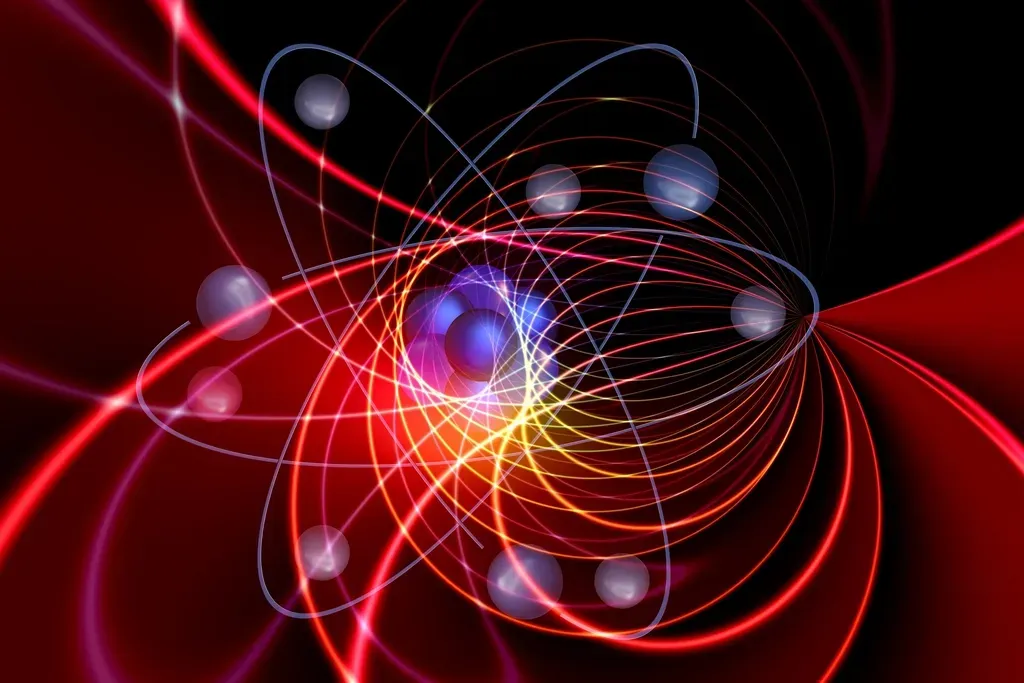
The first shock about the quantum realm is that particles do not act like tiny billiard balls, no matter how much we might want them to. Instead, they behave like blurry clouds of possibility, described by what physicists call a wavefunction. Until something interacts with a particle, there isn’t one definite answer to where it is or what it’s doing; there are many possible outcomes stacked on top of each other in a kind of cosmic maybe.
This is where the idea of wave-particle duality comes in: light and matter can both behave like waves and like particles, depending on the experiment. It’s like having a coin that can be both heads and tails at the same time until you actually flip it and look. Classical logic hates this, but experiments keep confirming it. The quantum world forces us to admit that nature’s rules are stranger and less rigid than our everyday intuition suggests.
Superposition: When One Thing Is Many Things
Superposition is the quantum rule that lets particles exist in multiple states at once, and it’s one of the most unsettling ideas in all of physics. Imagine typing a password that is simultaneously correct and incorrect until your computer checks it. At the quantum level, electrons can be in different energy levels at the same time, and photons can take several paths through an experiment at once, only settling on a single outcome when measured.
What sounds like a philosophical puzzle is actually a tool engineers are trying to harness. Quantum computers, for instance, aim to use quantum bits that can be in a mix of zero and one at the same time, rather than just one or the other. This lets them explore many possible solutions to some problems in parallel. Superposition turns uncertainty into a resource, like having thousands of overlapping drafts of a plan before you’re forced to pick just one.
Entanglement: Spooky Connections Across Space
If superposition sounds wild, entanglement takes it a step further by linking the fates of particles no matter how far apart they are. When two particles become entangled, measuring one instantly tells you something about the other, even if it’s on the other side of the planet. It’s as if you had a pair of gloves in two boxes, and opening one to find the left glove instantly tells you the other box holds the right glove – except in the quantum case, the “left” and “right” weren’t fixed until the moment you looked.
Einstein famously struggled with this, worrying that it might allow influences to travel faster than light, but experiments over decades have backed up entanglement again and again. Rather than letting us send messages faster than light, it instead reshapes what we mean by information and correlation. Today, researchers are using entanglement to build quantum networks, hoping to create ultra-secure communication channels that an eavesdropper simply cannot tap without being noticed.
Quantum Tunneling: Walking Through Walls

Quantum tunneling is the rule that lets particles slip through barriers they seemingly shouldn’t be able to cross. In the everyday world, if you don’t have enough energy to jump over a fence, you’re stuck. At the quantum scale, a particle faced with a barrier it shouldn’t pass still has a small chance of simply appearing on the other side. It’s not breaking the rules of energy; it’s exploiting the fact that its position and energy are fuzzy rather than perfectly sharp.
This ghostlike behavior is not just a curiosity; it keeps the universe running. In stars, tunneling helps atomic nuclei fuse together and release energy, even when they don’t technically have enough oomph to overcome their electric repulsion. In electronics, tunneling plays a key role in devices like flash memory and scanning tunneling microscopes, which can image individual atoms. Something as bizarre as walking through walls becomes, at the quantum scale, a practical engine for both nature and technology.
From Atoms To Everyday Objects: How Quantum Becomes Classical
One of the biggest questions is why the quantum weirdness we see in labs doesn’t show up in our everyday lives. You don’t find your car in a superposition of parking spaces, and your coffee mug doesn’t tunnel through the table. The leading idea is that as systems get bigger and interact with their environment, their fragile quantum states collapse into more stable, classical behavior. This process, called decoherence, is like a delicate whisper being drowned out by crowd noise.
That doesn’t mean quantum effects disappear; instead, they blend into averages and patterns that look smooth and predictable at large scales. The laws of classical physics pop out as a kind of summary version of countless quantum events happening underneath. It’s a bit like watching a flock of birds: individually each bird is darting unpredictably, but from a distance the entire flock looks like one graceful shape. Our reality stays sensible because the microscopic chaos adds up to macroscopic order.
Quantum Technology: Turning Strangeness Into Tools
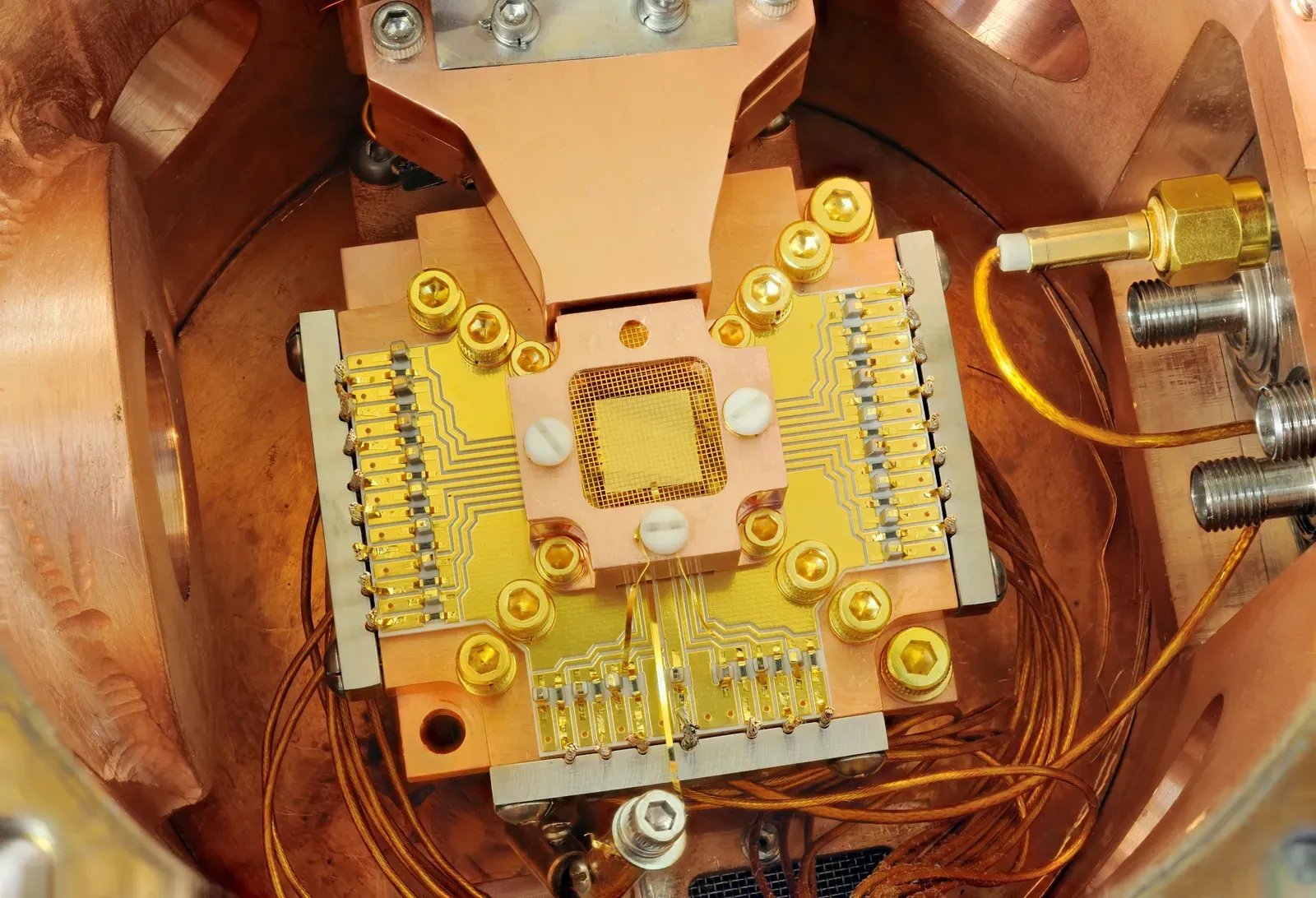
Many of the technologies we rely on already lean heavily on quantum rules, even if we don’t label them that way. The semiconductors inside your phone and laptop rely on quantum behavior of electrons in crystals to control current precisely. Lasers, which show up in everything from fiber-optic internet to barcode scanners, depend on atoms releasing light in tightly synchronized quantum jumps between energy levels.
Looking ahead, newer quantum technologies aim to go even further by using superposition and entanglement directly. Quantum computers may eventually tackle tasks such as simulating complex molecules for new medicines or optimizing huge logistics networks far better than classical machines. Quantum sensors promise to detect tiny changes in gravity, time, or magnetic fields with astonishing sensitivity, potentially transforming navigation, geology, and medical imaging. The strange rules of the quantum realm are quietly turning into the rulebook for the next technological revolution.
Do We Shape Reality Just By Looking?

One of the most emotionally charged questions about quantum physics is the role of the observer. In many experiments, the act of measurement seems to decide which of the many possible quantum outcomes becomes real. It tempts people to say that consciousness creates reality, but the careful view is that interaction with any measuring device or environment is enough to collapse a quantum state. The universe does not need a human to look at it for things to happen, but observation still matters in a deep way.
Different interpretations of quantum mechanics offer different stories about what is actually going on behind the math. Some suggest there are countless branching realities, others treat the wavefunction as just a tool to predict outcomes, and some try to restore hidden rules under the surface. What’s striking is that all of them agree on experimental predictions yet paint very different pictures of what is “really” happening. In that sense, the quantum realm doesn’t just challenge how we build technology; it challenges how we think about existence, causality, and our place in a universe that is far stranger than it first appears.
The quantum realm might be invisible to our eyes, but it quietly writes the rules for everything we touch, see, and feel. The smallest particles decide how stars burn, how chemistry works, and how our most advanced devices compute and communicate. As we learn to understand and harness these bizarre behaviors more fully, the line between what seems impossible and what becomes everyday tech will keep shifting. Which part of this hidden world changes your view of reality the most?