
If you’ve ever felt that everyday life is a bit too predictable, quantum physics is here to blow that comfort to pieces. Beneath the calm surface of our reality, there’s a hidden layer where particles flicker in and out of existence, events don’t have clear causes, and what’s real can depend on how you look at it. It’s not just weird in a fun sci‑fi way; it’s weird in a this-is-how-the-world-actually-works way.
Over the last century and right up through the mid‑2020s, experiments have kept confirming a deeply unsettling message: the more precisely we look at nature, the less it behaves like solid, clockwork machinery and the more it behaves like a shifting haze of possibilities. Think of the universe not as a rigid machine but as a shimmering casino where the rules are statistical, not certain. Let’s walk into that casino and see why the quantum realm might be far stranger than anything we could have comfortably imagined.
When Particles Are Also Waves
Imagine throwing tiny pebbles at a wall with two slits and finding out that each pebble somehow went through both slits at once. That’s essentially what happens in the famous double-slit experiment: electrons, photons, and other particles form interference patterns, as if they are waves spread out in space, even when sent one at a time. At the quantum scale, the universe doesn’t seem to choose a single path until we force it to make that choice by measuring.
This wave-like behavior isn’t just a cute diagram in a textbook; it underpins technologies like electron microscopes and quantum chips being developed today. The unsettling part is that between “emitted” and “detected,” a particle is best described not as a little marble but as a cloud of possibilities. In everyday life, we’re used to objects having definite locations, like keys on a table, but quantum mechanics says at small scales nature plays by a fuzzier rulebook where certainty is replaced by probability.
Superposition: Existing in Many States at Once
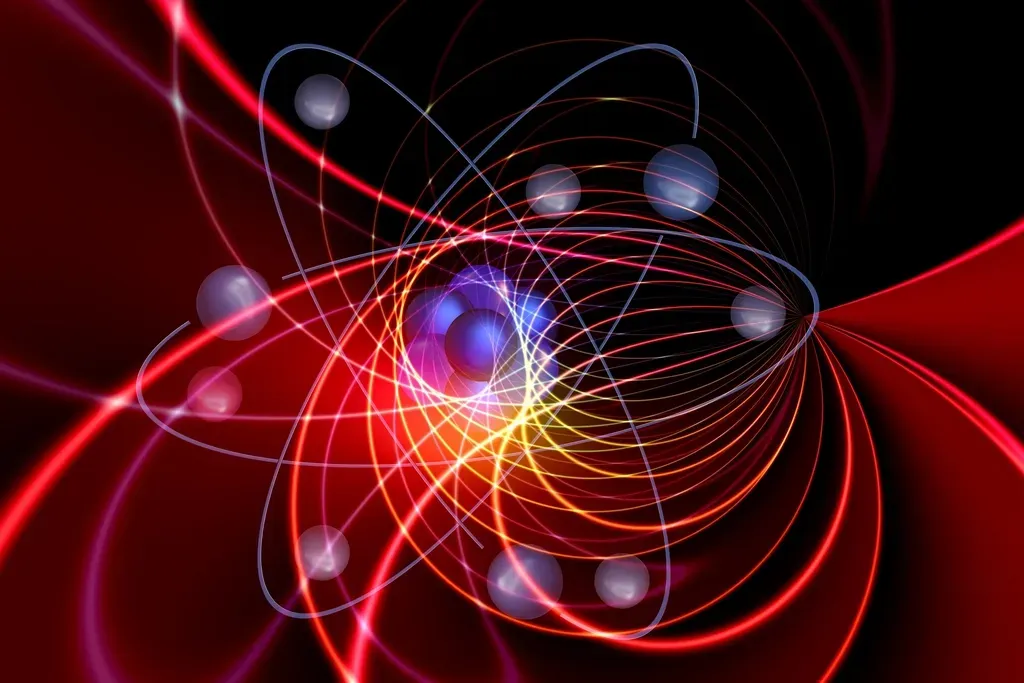
Superposition is the quantum idea that a system can be in multiple states at the same time until it’s measured. It sounds like a riddle, but it’s treated as a practical tool in labs building quantum computers in 2026. A quantum bit, or qubit, can be in a blend of “0” and “1,” which is like having a coin that is simultaneously heads and tails until you look at it.
This bizarre feature is the engine behind quantum computing’s potential power, allowing certain calculations to explore many possibilities in parallel. Yet it also raises uncomfortable questions: if an electron can be in several places at once, what exactly is “reality” before we check? In a way, superposition forces us to accept that our classical idea of a single, definite story of events might be more like a rough summary than the full script.
Entanglement: Spooky Connections Across Space
Entanglement is the quantum phenomenon where two or more particles become linked so that what happens to one instantly affects the others, no matter how far apart they are. It’s as if you had two dice on opposite sides of the galaxy that always land on matching numbers in just the right way, beyond anything simple chance can explain. For decades, this sounded like a philosophical headache, but modern experiments have demonstrated it repeatedly, even across long distances.
Today, entanglement isn’t only a curiosity; it’s a resource. It powers quantum key distribution, a form of secure communication already tested between satellites and ground stations, where any attempt to eavesdrop disturbs the fragile quantum links. The truly strange part is that entanglement forces us to think of the universe not as a collection of separate things, but as a deeply connected whole where boundaries are fuzzier than they appear.
Quantum Randomness: A Universe That Rolls the Dice
In everyday life, randomness usually just means ignorance: you don’t know which way the coin will land, but in principle, you could predict it if you tracked all the forces. At the quantum level, though, randomness seems to be baked into the fabric of reality itself. When an unstable atom decays or a photon passes a polarizer, the exact outcome appears fundamentally unpredictable, even if you know everything that can be known.
This intrinsic randomness is now used in quantum random number generators, which produce sequences so unpredictable that they’re valuable for cryptography and simulations. The unsettling implication is that our universe might not be a perfectly scripted movie but more like an improvisational performance where chance plays a real role. That challenges the old idea that if we just knew enough, we could predict absolutely everything, down to the tiniest detail.
Many Worlds and Other Wild Interpretations
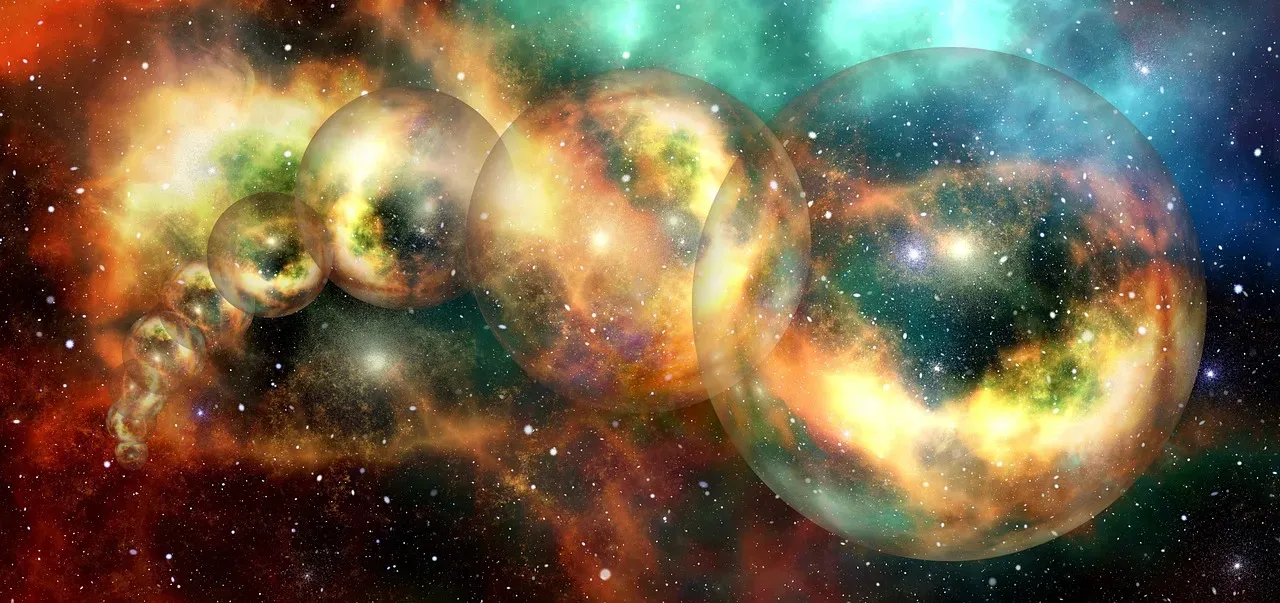
Because quantum theory works so well mathematically but feels so conceptually alien, physicists have developed different interpretations to try to make sense of it. One bold idea, the many‑worlds interpretation, suggests that every quantum event splits reality into branching universes, each realizing a different outcome. In that view, there might be unimaginably many versions of you, each living out a different roll of the cosmic dice.
Other interpretations trade branching universes for hidden variables, pilot waves, or relational viewpoints where reality depends on the interaction between observer and system. None of these proposals has definitively won, because they largely agree on the experiments we can currently perform, yet they paint strikingly different pictures of what is really going on. It’s like several maps describing the same landscape but disagreeing about what kind of world you’re actually walking through.
Quantum Technology: From Theory to Everyday Impact
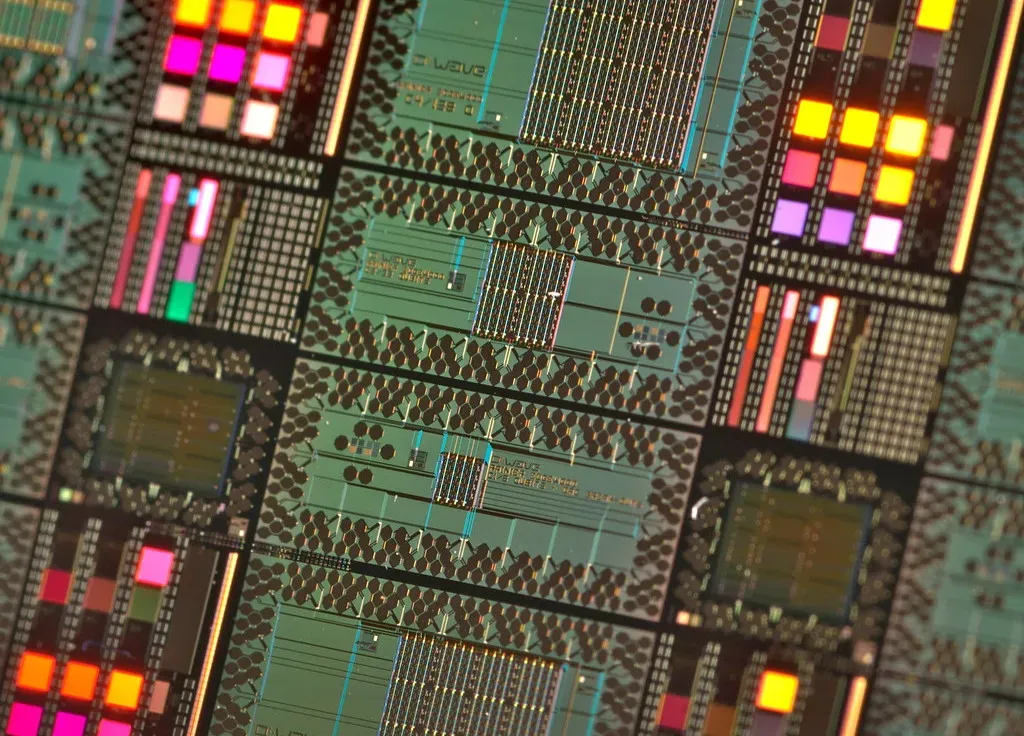
For a long time, quantum physics sounded like an abstract theory tucked away in chalk-covered lecture halls, but it already powers everyday tools. Lasers, MRI scans, semiconductor chips, and GPS timing all rely on quantum principles discovered over the past century. In the 2020s, a second wave of technologies is emerging that leans directly into the quantum weirdness instead of averaging it out.
Experimental quantum computers are being tested by major companies and research labs, exploring tasks like simulating new materials, optimizing logistics, and improving machine learning models. Quantum sensors aim to measure tiny changes in gravity or electromagnetic fields with astonishing precision, potentially reshaping navigation, geology, and medical imaging. Even if these technologies are still in their early stages, their progress makes it clear that the strangeness of the quantum world isn’t just philosophical – it’s becoming a practical toolkit.
Why the Quantum Realm Changes How We See Ourselves
Beyond gadgets and equations, the quantum realm pokes at deep human questions about certainty, free will, and what it means to observe the world. If outcomes at the smallest scales are genuinely probabilistic, it nudges us away from a perfectly clockwork universe where everything is fixed long in advance. That doesn’t magically settle debates about human freedom, but it does undercut the idea that physics is only a rigid chain of inevitabilities.
For me, the most unsettling part of quantum physics isn’t just that it’s strange; it’s that it keeps being confirmed, again and again, by increasingly careful experiments. Reality, it seems, is more like a shifting, interconnected web of possibilities than a collection of little billiard balls. Standing in that realization can feel a bit like looking over the edge of a cliff: uncomfortable, humbling, and strangely beautiful. The universe turns out to be wilder than we thought – so what else might we still be underestimating?