
Stand on a city street, open your phone, look up at a satellite streaking overhead, and you’re already living in a world quietly ruled by quantum physics. Beneath every screen tap, GPS signal, and medical scan lies a restless universe of particles that refuse to behave like anything in our everyday experience. For more than a century, scientists have chased this mystery, wrestling with a world where things can be waves and particles at once, and where cause and effect seem to blur. Today, those once-abstract equations are rapidly turning into technologies that could rewrite computing, communication, and even our sense of reality. Understanding the quantum realm is no longer a niche curiosity – it’s becoming a basic part of understanding the modern world itself.
The Strange Rules Beneath Reality
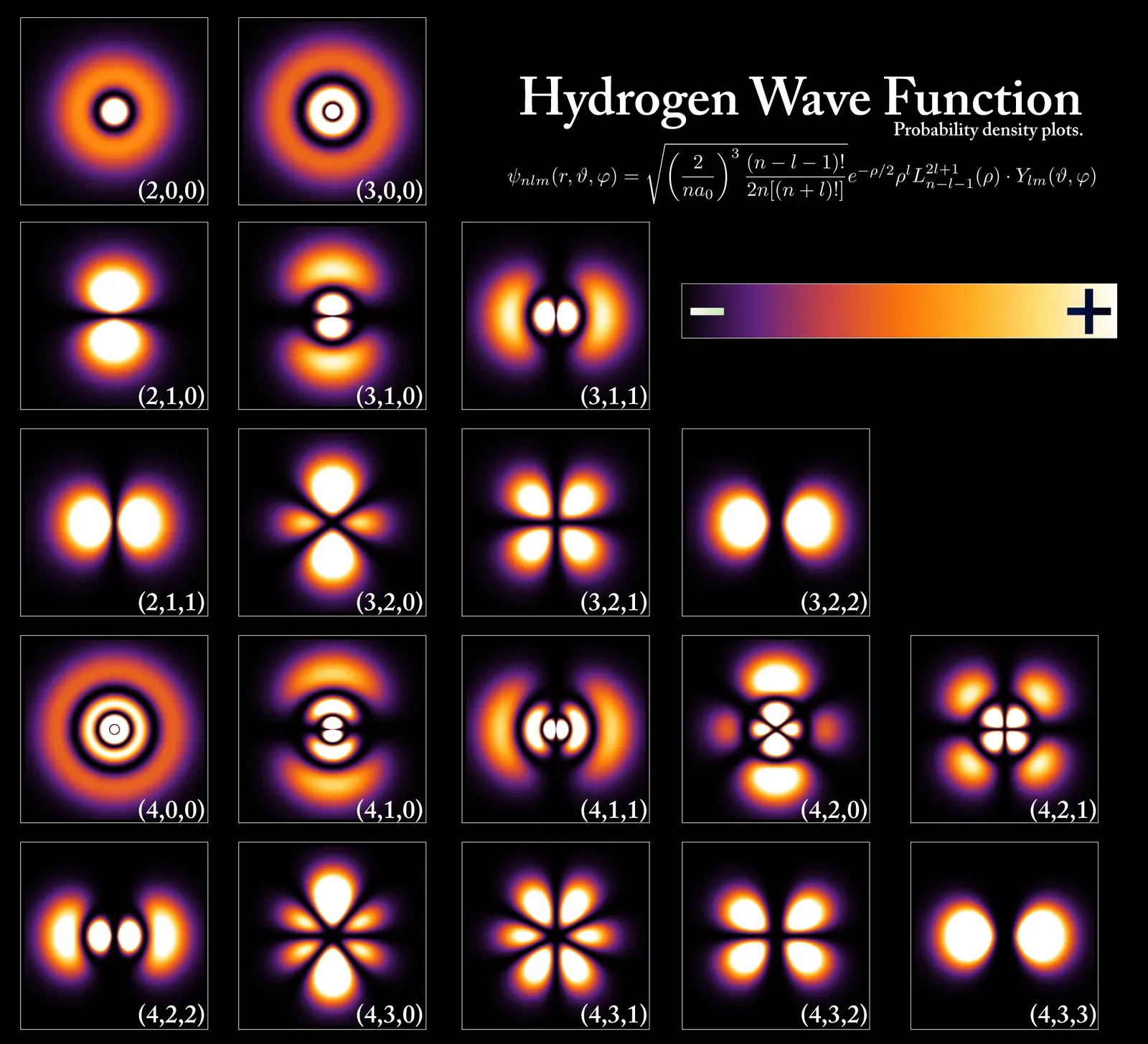
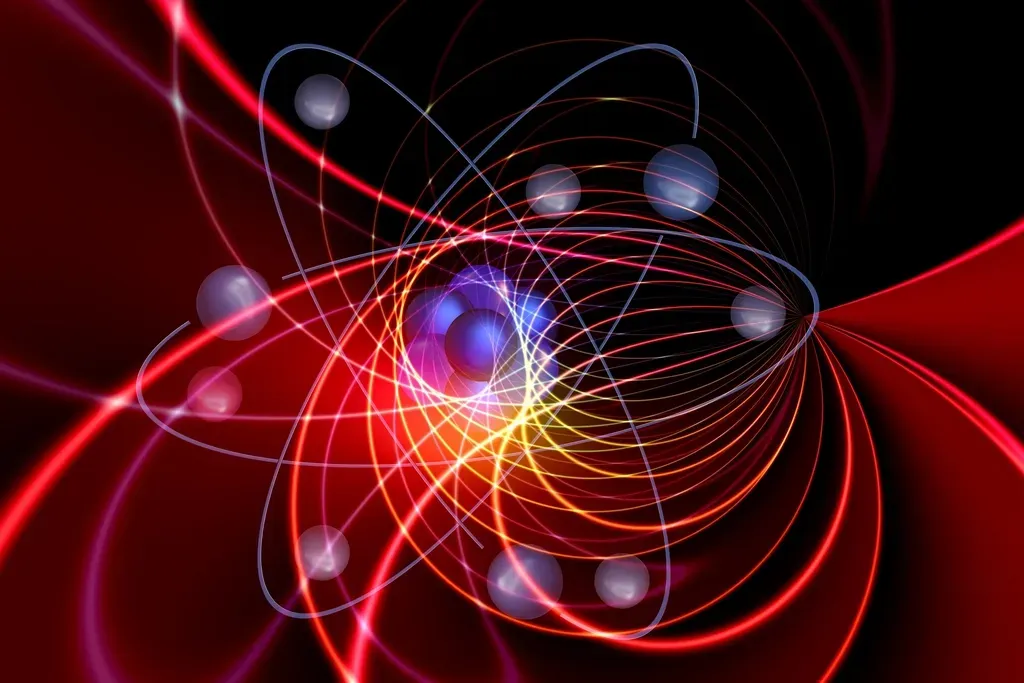
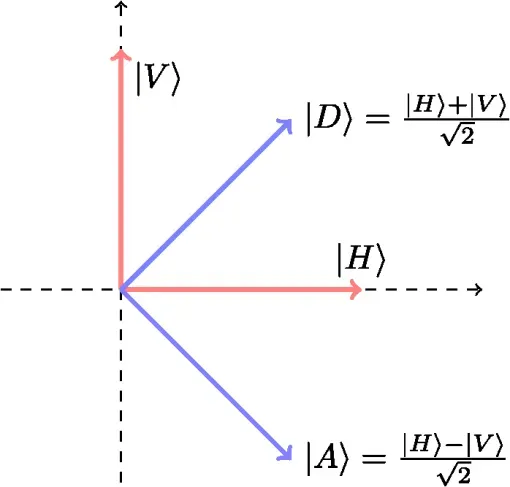
Imagine zooming in on your hand, past the skin, through the cells, deep into the atoms; at some point, the familiar rules of physics simply fall apart. In this hidden domain, particles do not sit still in neat orbits like tiny planets, but smear out into clouds of probabilities, existing in many possible states at once. Physicists call this superposition, and it means that until you measure a particle, you can only speak about what might happen, not what is. It is as if reality, at its smallest scale, is written as a set of maybes rather than certainties. That is deeply unsettling if you grew up thinking of physics as a set of fixed, predictable laws carved in stone.
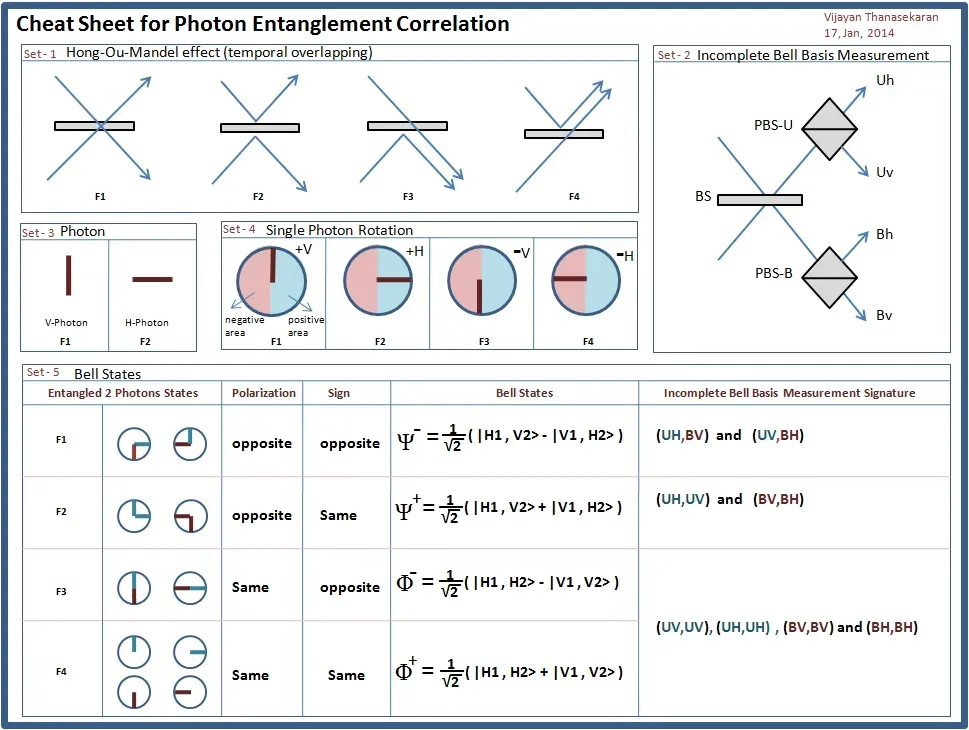
Even stranger, particles can become entangled, forming connections so deep that measuring one seems to instantly affect the other, no matter how far apart they are. Experiments have tested this over distances of hundreds of kilometers, closing loophole after loophole, and the result keeps pointing in the same direction: the quantum world is nonlocal in a way that defies simple storytelling. Instead of tiny billiard balls, the universe closer to its core behaves more like a web of relationships and information. It is this radical shift – from things to relationships – that underpins many of the technologies now racing out of the lab and into the headlines.
From Classical Certainty to Quantum Surprise
For centuries, classical physics painted a comforting picture: give scientists the initial conditions, and in principle they could predict the future. Planets traced graceful ellipses, pendulums swung, and engineers built bridges that behaved themselves. That worldview began to crack in the early twentieth century when experiments with light and atoms refused to match the old equations. Electrons jumped between energy levels instead of sliding smoothly, and light behaved sometimes like a wave and sometimes like a particle. What had seemed like minor quirks turned into a full-blown revolution.
The quantum framework that emerged did not replace classical physics so much as reveal its limits. At everyday scales, Newton’s laws and Maxwell’s equations still work beautifully, predicting orbits, engines, and power grids. But down at atomic and subatomic scales, quantum rules dominate, and the old certainties dissolve into probabilities and wavefunctions. The real surprise is not that quantum physics is weird, but that it is so precise: it predicts the behavior of electrons in atoms and solid materials with an accuracy that is almost unnerving. In a twist that no nineteenth-century physicist would have expected, the most accurate theory we have of nature is also the strangest.
The Hidden Engines in Your Everyday Life
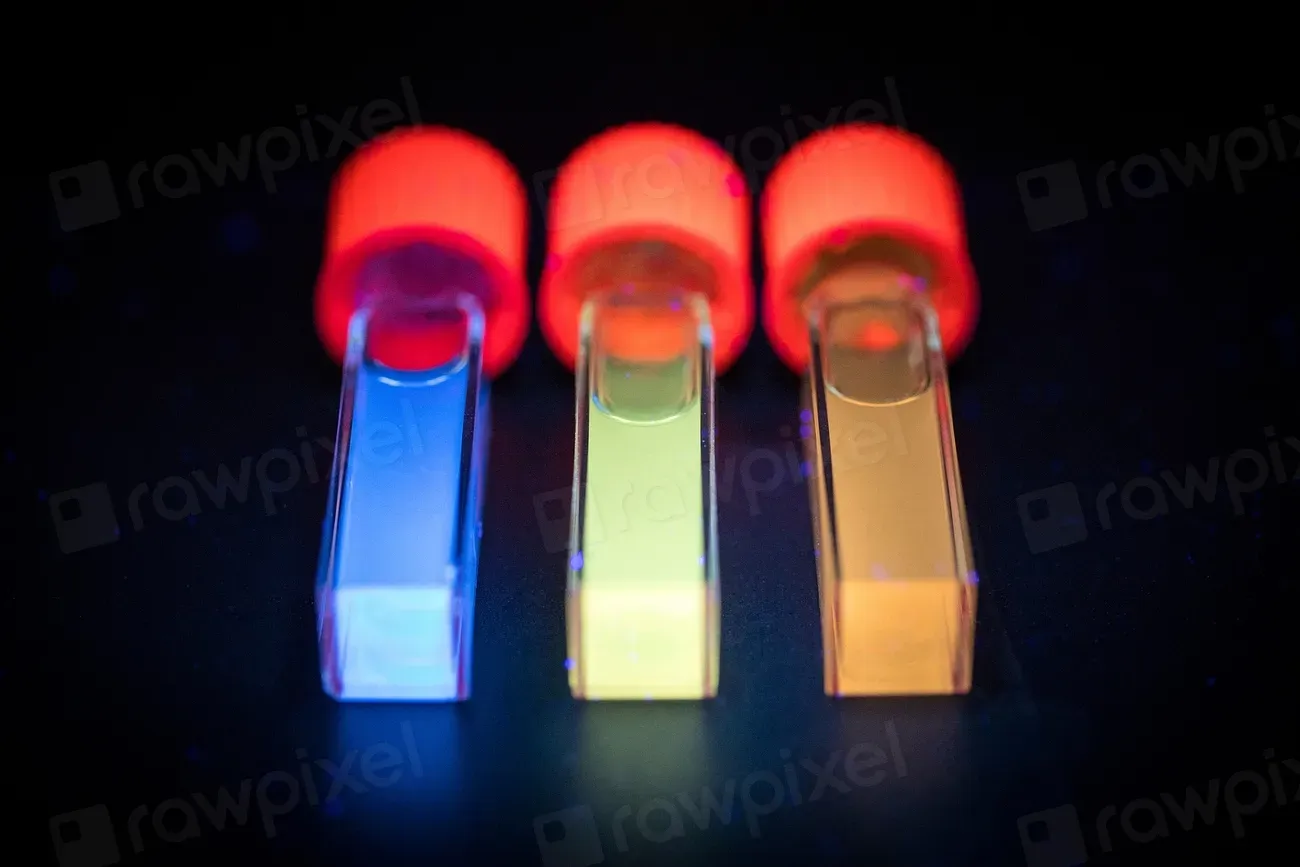
Quantum physics can sound abstract until you realize it already powers much of the technology you use without thinking. Every transistor in your phone, laptop, or car relies on quantum rules governing how electrons move through semiconductors. The very idea of a band gap in materials, which lets a chip act as a controlled gate for electrons, springs straight out of quantum mechanics. Without that, our modern digital world simply would not function. What sounds like philosophical debate about particles and waves is, in practice, why your phone turns on when you press the button.
Other technologies lean even more directly on quantum effects. Magnetic resonance imaging in hospitals exploits the quantum spins of nuclei to generate detailed images of your body’s interior. Laser pointers, barcode scanners, and fiber-optic communication all depend on controlling light at the quantum level, using photons as tidy, countable packets of energy. Even the precise timing signals that keep the global positioning system working are anchored in atomic clocks, whose accuracy flows from quantum transitions in atoms. The quantum realm is not an exotic add-on to our world; it is the invisible engine humming beneath nearly everything that defines modern life.
Qubits, Codes, and the Race for Quantum Computing
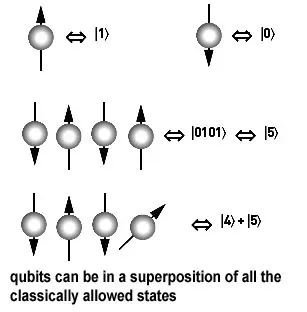
The most widely hyped frontier of quantum technology is computing, where researchers are building machines that swap classical bits for quantum bits, or qubits. A classical bit is either zero or one; a qubit, thanks to superposition, can be in a blend of both at once until it is measured. Link qubits through entanglement, and their combined state grows exponentially richer than anything a classical machine can directly mimic. In certain kinds of problems – like searching vast solution spaces or simulating complex molecules – this could translate into a dramatic speedup over even the fastest supercomputers.
Yet quantum computers are not magic calculators that will replace your laptop anytime soon. The qubits that carry all this delicate quantum information are notoriously fragile, easily disrupted by stray heat, vibration, or electromagnetic noise. Building useful machines means not just stacking more qubits together, but also correcting their errors in real time, using clever schemes that spread information across many physical qubits. There is a global race under way, with companies and research labs investing heavily in rival approaches, from superconducting circuits chilled near absolute zero to trapped ions held in electromagnetic fields. However the race plays out, the core idea remains the same: harness the weirdness of the quantum realm as a new kind of computational resource.
The Hidden Clues: How We Know the Quantum World Is Real
It is fair to ask whether all this talk of superposition and entanglement is just an elaborate mathematical story. The answer lies in decades of experiments that keep confirming quantum predictions, often in ways that feel almost like science fiction. Tiny beams of light have been sent through pairs of slits to show that single photons can interfere with themselves, forming patterns that only make sense if each photon behaves like a spread-out wave. Measurements of entangled particles have repeatedly violated inequalities that any classical, local theory must satisfy, leaving little room for comforting hidden-variable explanations. The data keep nudging us toward the same unsettling conclusion: the quantum description works because nature really does behave this way.
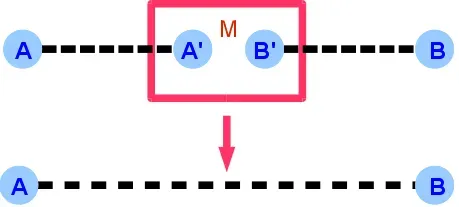
More recently, researchers have pushed these tests into ever more demanding regimes. They have performed loophole-free Bell tests where detectors catch nearly every particle, closing gaps that skeptics once cited as escape routes for classical explanations. Quantum states have been teleported – not matter itself, but the exact information describing a particle’s state – from one location to another using entanglement as the bridge. In laboratories around the world, physicists have cooled atoms and even small mechanical devices to states where their quantum nature becomes visible. Each of these experiments is a clue, like a footprint in fresh snow, pointing to a landscape that is real even if it feels alien to intuition.
Why It Matters: From Physics Curiosity to Global Stakes
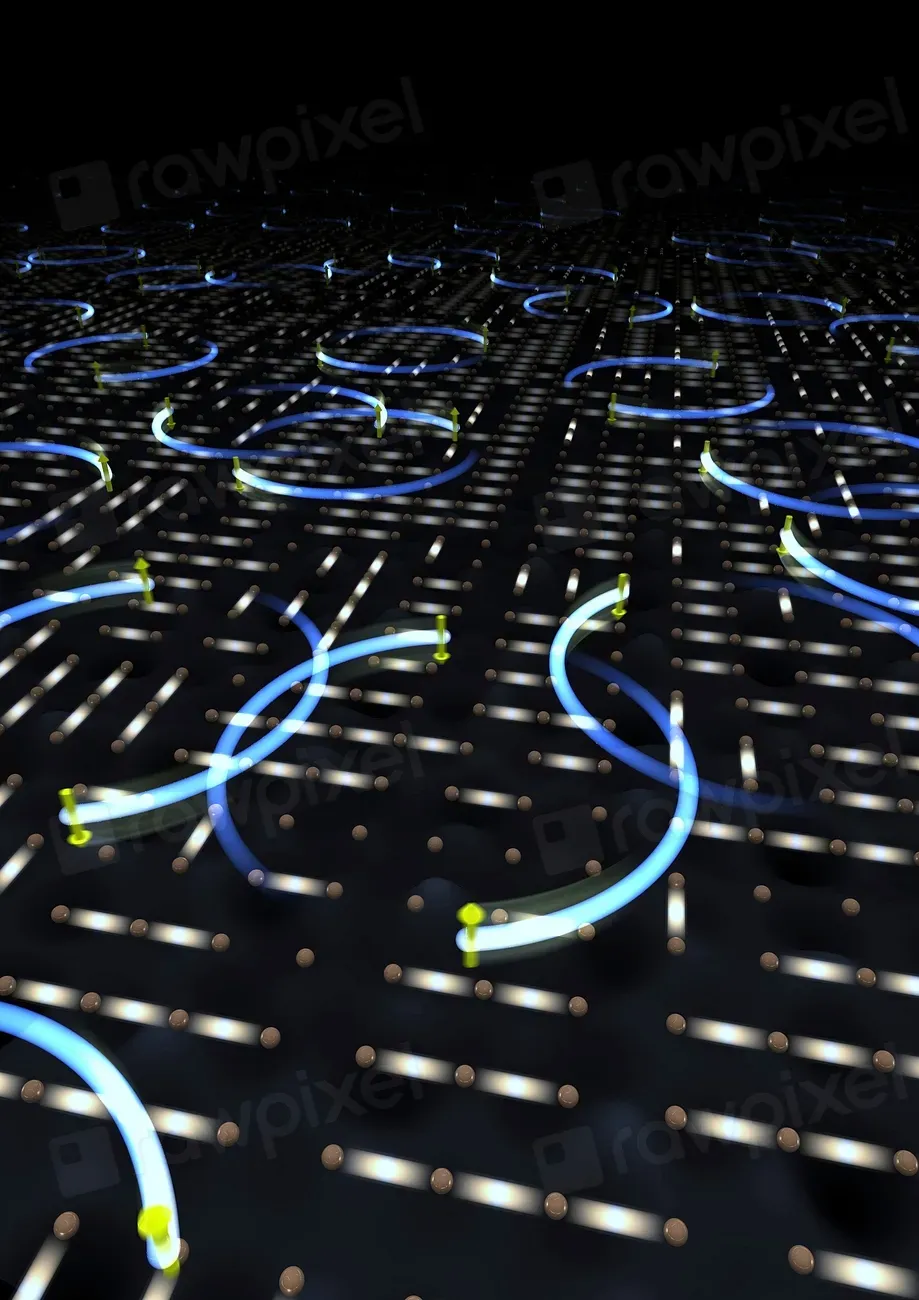
Quantum physics matters not just because it rewrites textbooks, but because it is quickly becoming a strategic resource, economically and geopolitically. Nations are pouring funding into quantum research and development, seeing it as a foundation for next-generation computing, encryption, and sensing technologies. Traditional encryption methods, which rely on the difficulty of certain mathematical problems, may become vulnerable if large-scale quantum computers can crack them faster than any classical machine. That raises serious questions about the security of financial systems, government communications, and personal data. In a very real sense, quantum breakthroughs could reshape the balance of trust and power in the digital age.
At the same time, quantum technologies promise tools that are hard to match with classical approaches. Quantum sensors could detect minuscule changes in gravity, magnetic fields, or time, opening new windows into underground structures, brain activity, or even the early universe. Quantum communication protocols could enable ways of sharing encryption keys where any eavesdropping attempt leaves a detectable trace. Compared with traditional methods, which often trade security for convenience, quantum approaches aim to hardwire certain protections into the physics itself. The stakes are high, but so is the potential to build systems that are not just faster or smaller, but fundamentally more secure and insightful.
From Lab Curiosity to Quantum Everyday
If all of this sounds distant from daily life, it may not stay that way for long. Just as early classical computers once filled rooms and seemed relevant only to specialists, quantum devices today are mostly confined to labs and industrial research centers. Over time, though, those classical machines shrank into chips and slipped into every pocket, reshaping society along the way. Something similar could happen with quantum technologies, even if they never appear as a standalone “quantum phone” in your hand. More likely, quantum components and services will quietly integrate into networks, medical tools, financial systems, and climate models.
That shift will change who needs to understand the basics of the quantum realm. You may not need to solve Schrödinger’s equation any more than you need to derive Maxwell’s equations to use Wi‑Fi, but a rough grasp of what makes quantum approaches different will matter. It will influence debates over privacy, defense, research funding, and education. It will also feed back into culture, inspiring new metaphors and stories for how we think about uncertainty, connection, and information. In this way, the quantum revolution is not just about devices, but about a slow transformation in how society imagines what is possible.
The Future Landscape: Quantum Internets, Sensors, and New Frontiers
Looking ahead, one of the most ambitious visions is a global quantum internet: networks that distribute entangled states over long distances, linking quantum devices the way today’s internet links classical computers. Such a network could enable ultra-secure communication channels and coordinated quantum sensing on scales that sound almost impossible today. Building it will demand solutions to hard engineering problems, like preserving fragile quantum states over fiber-optic cables or through satellite links. Some early prototypes already exist in the form of metropolitan testbeds and satellite demonstrations, hinting at what might come. The roadmap is uncertain, but the direction of travel is clear.
Beyond communications, quantum sensors could become the quiet workhorses of this new landscape. Placed in hospitals, they might detect disease markers earlier by measuring subtle changes in magnetic fields. Deployed in cities, they could map underground infrastructure or monitor seismic signals with unprecedented sensitivity. At the same time, quantum simulations could help design better fertilizers, batteries, and catalysts, with direct implications for climate and food security. These possibilities come with challenges: high costs, technical complexity, and the risk of widening gaps between countries and communities with access to quantum infrastructure and those without. Navigating that future will require not just engineering, but thoughtful policy and public engagement.
How You Can Engage With the Quantum Revolution
You do not need a physics degree to have a stake in how quantum technologies unfold. Start by treating quantum not as a mystical buzzword, but as part of the real toolkit shaping the twenty-first century. When you see headlines about quantum breakthroughs, read beyond the hype and ask simple questions: What problem does this help solve, and who benefits from it? Look for explanations that connect the science to everyday concerns like privacy, healthcare, or climate, rather than just celebrating speed or power. That curiosity alone helps push the conversation toward responsible, grounded use of these tools.
There are also practical ways to support thoughtful quantum progress. Many universities, museums, and science outreach groups now offer public talks, online courses, and interactive resources on quantum ideas – attending or sharing these helps build a more informed community. You can encourage schools to include modern physics in their curricula so that future generations are not blindsided by technologies based on ideas they never encountered. If you work in policy, business, or education, you can push for regulations and investments that prioritize openness, security, and broad access over purely competitive gains. In the end, the quantum realm is not just the domain of distant experts; it is the hidden stage on which more and more of our shared story will play out. How much of that story do you want to understand?
Suhail Ahmed is a passionate digital professional and nature enthusiast with over 8 years of experience in content strategy, SEO, web development, and digital operations. Alongside his freelance journey, Suhail actively contributes to nature and wildlife platforms like Discover Wildlife, where he channels his curiosity for the planet into engaging, educational storytelling.
With a strong background in managing digital ecosystems — from ecommerce stores and WordPress websites to social media and automation — Suhail merges technical precision with creative insight. His content reflects a rare balance: SEO-friendly yet deeply human, data-informed yet emotionally resonant.
Driven by a love for discovery and storytelling, Suhail believes in using digital platforms to amplify causes that matter — especially those protecting Earth’s biodiversity and inspiring sustainable living. Whether he’s managing online projects or crafting wildlife content, his goal remains the same: to inform, inspire, and leave a positive digital footprint.