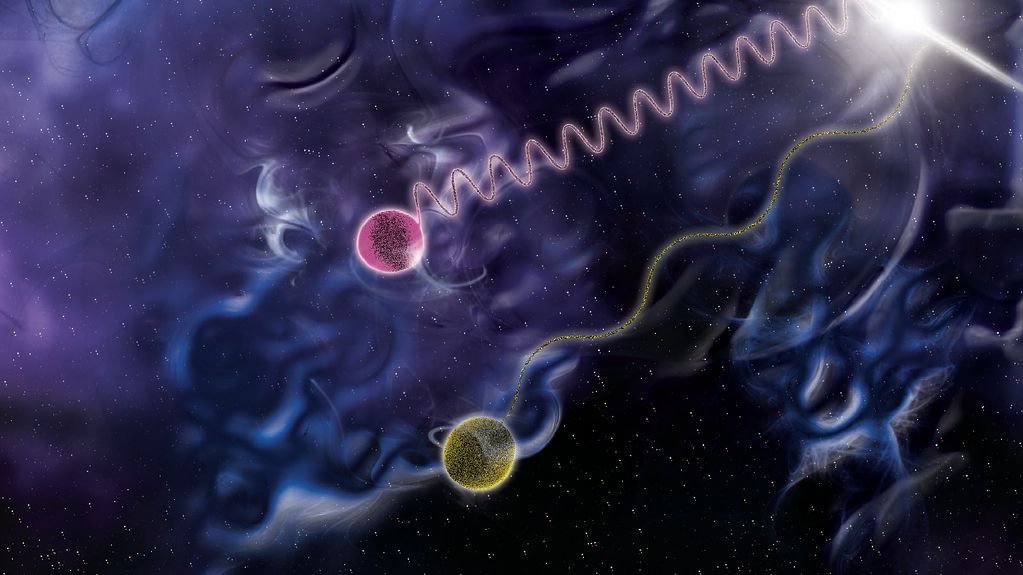

Most of the universe is invisible to us, not because it’s hiding behind galaxies or clouds of dust, but because the rules it obeys are nothing like the ones we feel in everyday life. Down at the quantum level, particles can be in many places at once, influence each other instantly across huge distances, and even seem to pop in and out of existence. It’s unsettling, a bit like realizing the floor you’ve always trusted is actually a shifting ocean of waves.
And yet, that same bizarre quantum realm is quietly running the technology you use every day, from the chips in your phone to the lasers in supermarket scanners. In the last few years – especially by 2026 – researchers have started to do more than just observe these strange effects; they’ve begun to harness them. Step by step, they’re uncovering an unseen fabric of reality that doesn’t just change physics textbooks, but could reshape computing, security, medicine, and how we think about what is “real” in the first place.
The Shocking Idea That Reality Is Built From Probabilities
Imagine if, every time you flipped a light switch, the bulb was neither on nor off until you actually looked at it. That’s the kind of world quantum mechanics describes, where particles exist in superpositions – multiple possible states at once – until something forces a definite outcome. Instead of saying “the particle is here,” quantum theory tells us we can only talk about the probabilities of where it could be found when measured.
That sounds like a math trick, but experiments keep confirming it’s how nature really behaves. When physicists send particles like electrons or photons through a double-slit setup, they don’t act like tiny billiard balls; they form interference patterns as if each one traveled through both slits at the same time. The unsettling part is that the pattern changes if you try to watch which slit they go through, as if reality only settles on a fact once you ask a question. It’s less like a solid brick wall and more like a fog that sharpens into shape under the beam of a flashlight.
Entanglement: When Particles Share a Hidden Connection
One of the most emotionally jarring ideas in quantum physics is entanglement, where two particles become linked so that what happens to one instantly affects the other, no matter how far apart they are. It sounds like the stuff of fantasy, but experiments over the last few decades have rigorously shown that entangled particles behave in ways that can’t be explained by hidden instructions or ordinary signals moving between them. The universe, at some level, seems more deeply interconnected than our intuition allows.
In recent years, researchers have entangled particles over distances of hundreds of kilometers, including satellite-based experiments that push this connection into space. These tests confirm that quantum correlations violate limits set by classical physics, hinting that the fabric of reality is nonlocal in a fundamental way. When you realize that measuring one particle can define the state of another far away, it challenges the idea that objects have completely separate, independent existences. It’s as if parts of the universe can act less like isolated dots and more like notes in the same chord.
Quantum Computing: Turning Weirdness Into Power
If quantum mechanics sounds abstract, quantum computing turns it into something deeply practical – and potentially disruptive. Instead of basic bits that are either zero or one, quantum computers use qubits that can be in superpositions of both zero and one at the same time. When many qubits are entangled, they can process vast sets of possibilities in parallel, offering a fundamentally different way to tackle certain problems.
Over the last few years, tech giants, startups, and national labs have been racing to build more stable and more powerful quantum processors, pushing from dozens to hundreds of qubits and working to keep them coherent longer. The promise is not that quantum machines will replace your laptop, but that they’ll excel at very specific, brutally hard tasks – like simulating complex molecules, optimizing huge networks, or cracking some current encryption methods. The unsettling twist is that the same engines that could speed up drug discovery or better materials might also force us to rethink how we secure information in a world where some old secrets could suddenly become readable.
Quantum Communication and the Push for Unhackable Links
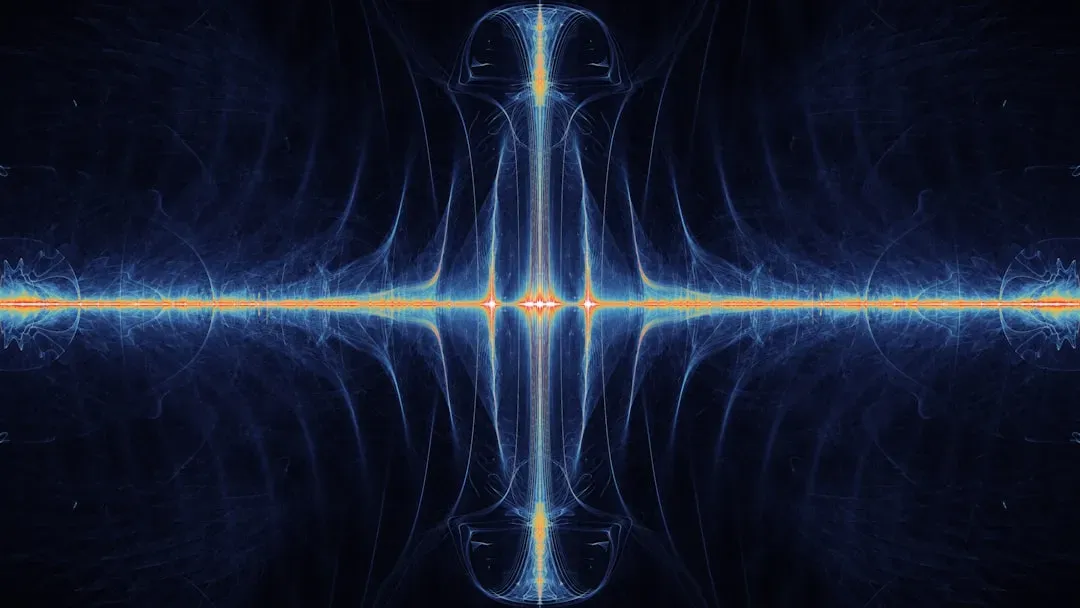
One of the most hopeful frontiers in the quantum realm is secure communication built directly on the laws of physics. Using entangled particles or single photons, quantum key distribution lets two parties share encryption keys in such a way that any eavesdropping attempt leaves detectable traces. Instead of trusting that a code is just mathematically hard to break, you rely on the rule that measuring a quantum system inevitably disturbs it.
Countries in Europe, Asia, and North America have been rolling out test networks, from fiber-based city links to satellite relays spanning hundreds or even thousands of kilometers. Governments see this as a strategic asset, banking on quantum-secure channels for sensitive data in finance, defense, and critical infrastructure. At the same time, there’s a very human angle: in a digital world where breaches feel constant, the idea of communication that is fundamentally tamper-evident taps into a deep desire for privacy and trust. It’s not just a new gadget; it’s a different kind of promise about who gets to listen in.
Quantum Sensing: Seeing the Invisible With Uncanny Precision

While quantum computers and communication grab headlines, some of the most immediate impacts may come from quantum sensing. Here, the same delicacy that makes quantum systems hard to control becomes an advantage, turning atoms, ions, or tiny defects in crystals into hyper-sensitive probes. These sensors can detect unbelievably tiny changes in magnetic fields, gravitational gradients, time, or acceleration.
In practice, that means better medical imaging, more precise navigation without GPS, and earlier detection of geological changes like underground water shifts or potential earthquakes. For example, quantum-based magnetometers can pick up minuscule signals from the brain or heart, potentially enabling less invasive diagnostics. It’s like upgrading from a blurry, grainy map of the world to one where the outlines sharpen and hidden details pop out, revealing patterns that were always there but just below the threshold of what we could measure.
Do We Live in a Quantum Simulation of Space and Time?
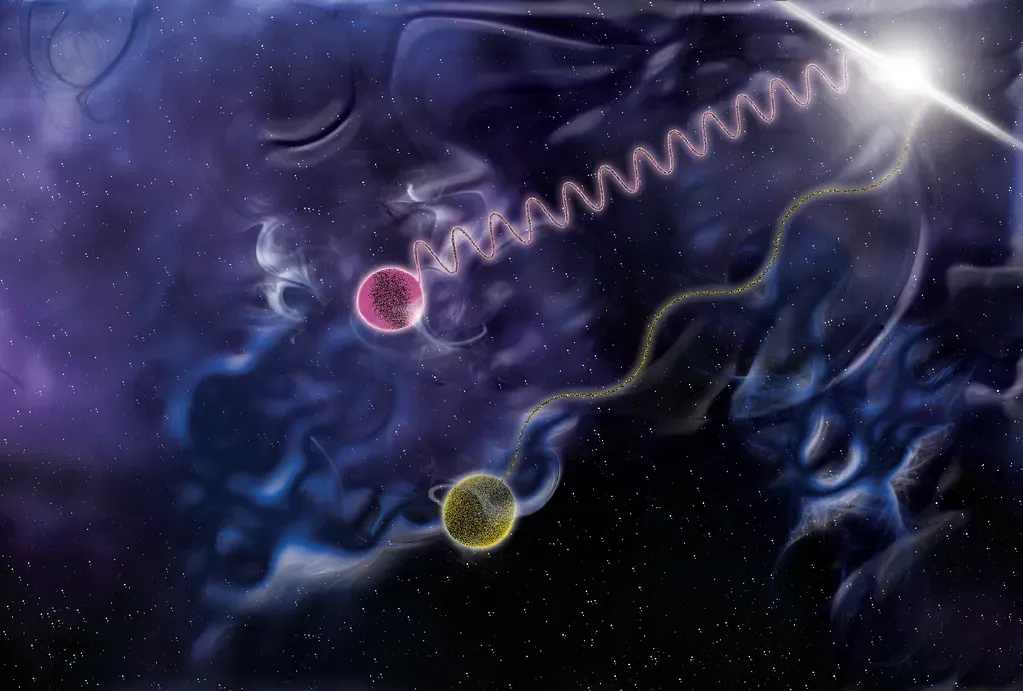
As experiments dig deeper, some physicists have started asking whether space and time themselves might emerge from more fundamental quantum relationships. One line of thought suggests that entanglement patterns could, in a sense, weave together the geometry of spacetime, so that what we see as distance and curvature are byproducts of underlying quantum links. It’s a wild idea, but it grows out of efforts to reconcile general relativity, which governs gravity and the cosmic scale, with quantum mechanics, which rules the very small.
Recent theoretical work and toy models hint that familiar concepts like location and even causality might not be as basic as we once assumed. In these views, the universe is less like a static stage where physics plays out and more like a self-updating web of relations where the stage itself is woven from quantum information. Even if these ideas remain unproven, they nudge us to admit that our everyday mental picture of reality may be only a rough sketch drawn over something far stranger and more intricate.
Living With a Reality That Defies Intuition
What makes the quantum realm so emotionally charged is that it doesn’t politely stay in the lab; it spills into philosophy, technology, and even personal identity. When you wake up to the fact that the solid objects around you are mostly empty space, held together by fields and probabilities, everyday routines start to feel like walking through a very convincing illusion. You can shrug it off and keep making coffee, but a part of your brain keeps whispering that the mug, the steam, and even your thoughts are rooted in a churning quantum sea.
On the other hand, there’s something oddly comforting about realizing that uncertainty and ambiguity aren’t bugs in the system – they’re built in. The same fuzzy rules that allow particles to tunnel through barriers or be in limbo between outcomes also fuel creativity in human life, where clear-cut answers are rare. As quantum research moves forward, it forces us to accept that not everything has to fit our classical expectations to be real. The unseen fabric of reality might be weirder than we ever imagined, but it’s also exactly what holds us – and everything we care about – together.