
There is a question so big, so startling in its implications, that it sits at the crossroads of every major scientific discipline: how did life begin? You might think the answer belongs purely to chemistry or biology, but a growing wave of researchers believes the real answer lies much deeper, in the rules that govern the subatomic world. Quantum mechanics, the same framework that explains why atoms behave like ghosts and particles can teleport through walls, may have been the hidden engine behind the very first spark of life.
What you are about to explore is not science fiction. It is a rapidly evolving field called quantum biology, and it suggests that the universe did not create life by accident through slow, clumsy chemistry alone. It may have used the most precise and powerful set of physical laws in existence to build something extraordinary. Get ready, because this story is going to change how you see the living world around you.
When Physics First Dared to Ask About Life
If you trace the roots of quantum biology, you find yourself in 1944, face to face with a landmark book. Quantum biology’s origins are often traced back to 1944 and the publication of Erwin Schrödinger’s famous book, “What is Life?” That slim volume lit a fuse under the scientific world. Schrödinger, a physicist through and through, dared to ask whether the strange laws of the atomic realm could explain the mechanics of living things.
Schrödinger was not alone in his audacity. Even before Schrödinger, several other quantum physicists had already made inroads into biology. The German physicist Pascual Jordan published a book a year before Schrödinger’s, entitled “Physics and the Secret of Organic Life,” in which he posed the question: “Are the laws of atomic and quantum physics of essential importance for life?” Honestly, when you realize these ideas are over eighty years old and we are still untangling them, it puts the difficulty of the question into sharp relief.
Flushed with their success at taming the atomic world, many quantum pioneers left their physics laboratories and blackboards to seek new areas of science to conquer. Microbiology, along with the emerging field of genetics and the chromosome theory of inheritance, were still unexplored territories, and a growing number of biophysicists and biochemists began to show more than a passing interest in these subjects. It was only natural, therefore, for many to ask whether the new atomic physics might also have something to say about the building blocks of life. The seed had been planted.
The Strange Rules of the Quantum World and Why They Matter to You
Here is the thing: the quantum world does not follow the rules you grew up with. Think of the difference between a marble rolling along a surface and a wave spreading across water. Classical physics governs marbles. Quantum mechanics governs something far stranger. There is growing evidence that a number of specific mechanisms within living cells make use of non-trivial features of quantum mechanics, such as long-lived quantum coherence, superposition, quantum tunnelling, and even quantum entanglement – phenomena that were previously thought to be relevant mostly at the level of isolated molecular, atomic, and subatomic systems, or at temperatures near absolute zero.
What makes this so surprising is context. Biology is warm, wet, and constantly moving. It is the opposite of the pristine, cold environments where quantum effects were expected to survive. Quantum biology is the study of applications of quantum mechanics and theoretical chemistry to aspects of biology that cannot be accurately described by the classical laws of physics. An understanding of fundamental quantum interactions is important because they determine the properties of the next level of organization in biological systems. Many biological processes involve the conversion of energy into forms that are usable for chemical transformations, and are quantum mechanical in nature. Think of it like discovering that Formula One racing physics secretly governs how a leaf blows in the wind.
Quantum Tunnelling: When Particles Walk Through Walls Inside Your Cells
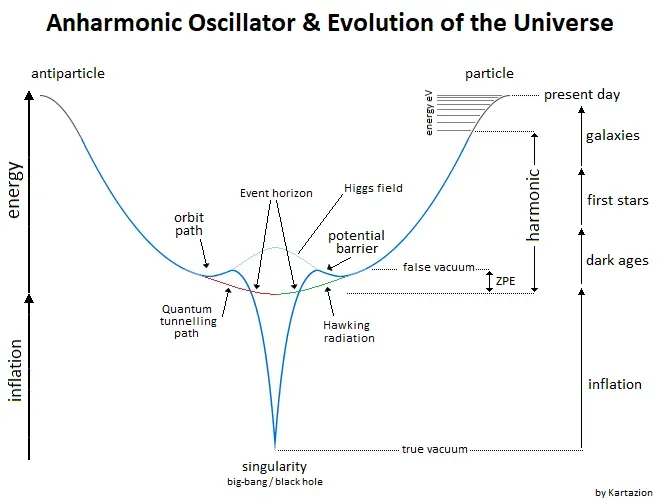
If you have never heard of quantum tunnelling, prepare to have your mind rearranged. In the classical world, if a ball does not have enough energy to roll over a hill, it simply stops. In the quantum world, particles can pass straight through that hill as if it were not there. Tunnelling refers to the ability of a subatomic particle to travel through potential energy barriers. This ability is due, in part, to the principle of complementarity, which holds that certain substances have pairs of properties that cannot be measured separately without changing the outcome of measurement. Particles, such as electrons and protons, have wave-particle duality; they can pass through energy barriers due to their wave characteristics without violating the laws of physics.
This is not just a laboratory curiosity. Tunnelling happens inside you, right now. A team from Surrey’s Leverhulme Quantum Biology Doctoral Training Centre used state-of-the-art computer simulations and quantum mechanical methods to determine the role proton tunnelling, a purely quantum phenomenon, plays in spontaneous mutations inside DNA. Proton tunnelling involves the spontaneous disappearance of a proton from one location and the same proton’s reappearance nearby. And here is where it gets wild. Proton transfer through quantum tunnelling is four times more likely than predicted by classical physics. Four times. Classical physics did not even come close.
DNA Mutations: Life’s Secret Written in Quantum Code
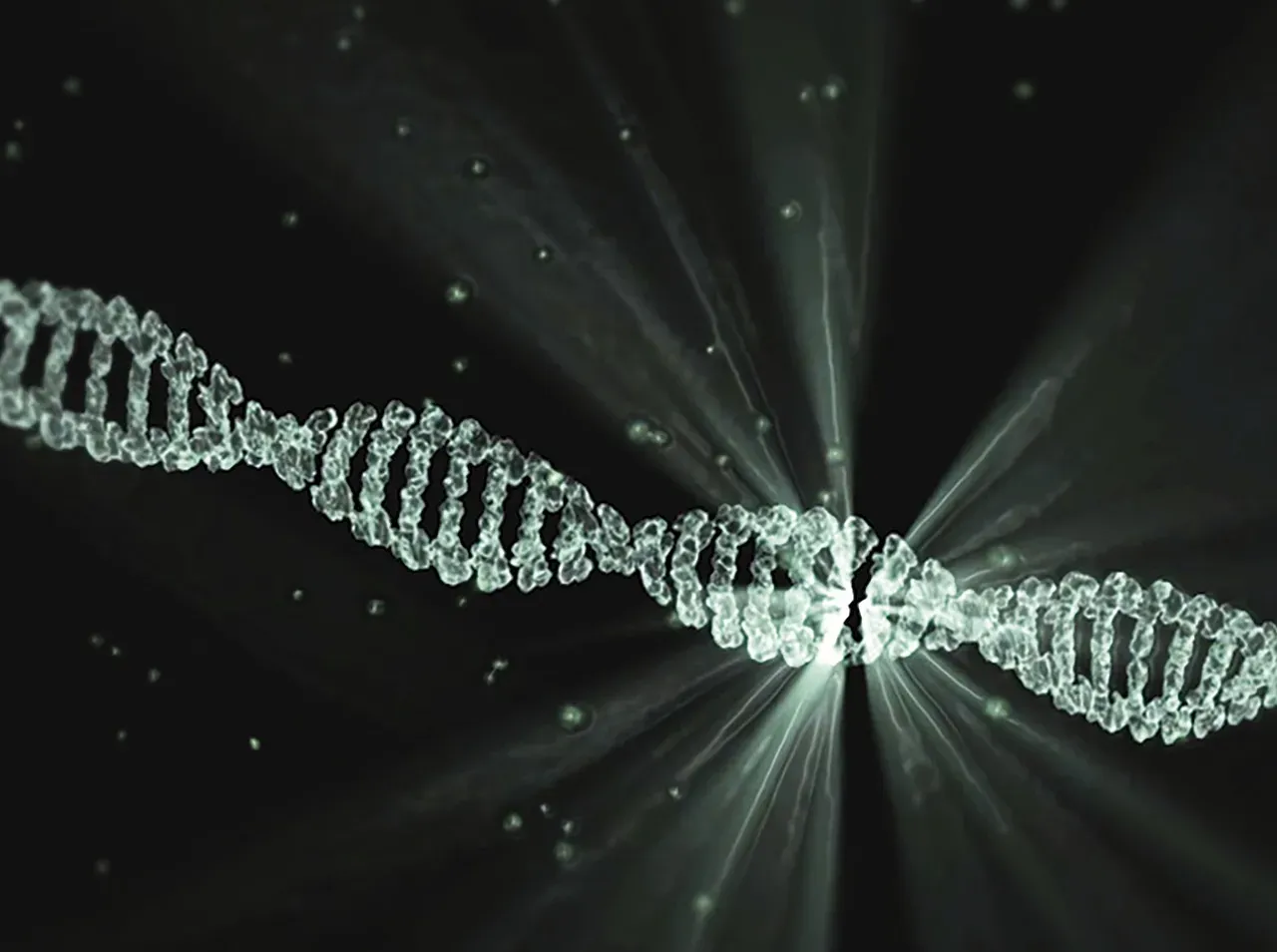
You might assume that DNA is rock-solid and stable, a perfect archive. In reality, it is constantly flickering at the quantum level. One of the most important topics in molecular biology is the genetic stability of DNA. One threat to this stability is proton transfer along the hydrogen bonds of DNA that could lead to tautomerisation, hence creating point mutations. This is not a bug in the design. It may, in fact, be one of evolution’s most powerful tools.
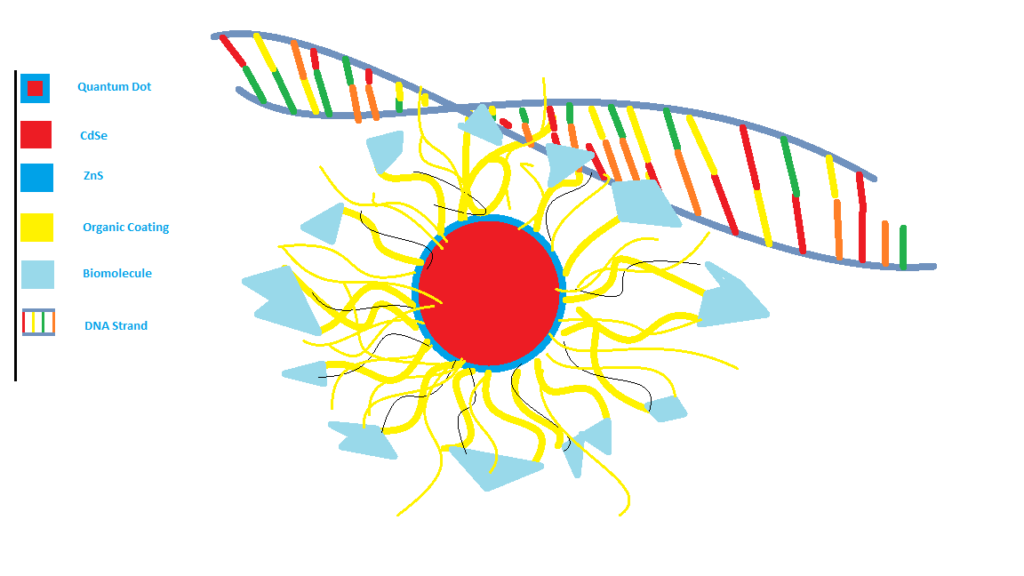
The research team found that atoms of hydrogen, which are very light, provide the bonds that hold the two strands of the DNA’s double helix together, and can, under certain conditions, behave like spread-out waves that can exist in multiple locations at once, thanks to proton tunnelling. This leads to these atoms occasionally being found on the wrong strand of DNA, leading to mutations. The remarkable implication here? The ease of proton tunnelling and the longevity of these intermediate states might even be relevant to studies on the origin of life, because the rate of early evolution is linked to the mutation rate of single-stranded RNA. Life may have literally written its earliest chapters in quantum ink.
Photosynthesis: Nature’s Near-Perfect Quantum Energy Machine
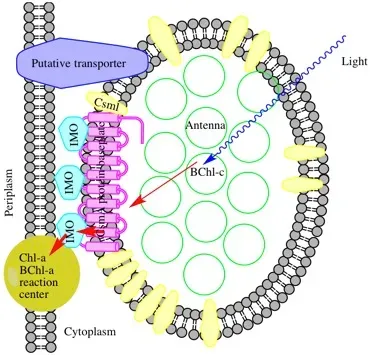
Let’s be real: if quantum effects were only responsible for rare mutations, you could still argue the connection to life’s origin was thin. But quantum mechanics goes far beyond DNA. Consider photosynthesis, the process that feeds almost every living thing on Earth. For decades, the efficiency of photosynthesis has baffled scientists. Plants convert sunlight into chemical energy with a remarkable success rate, approaching nearly all of the energy in initial transfer stages. Classical physics struggles to explain this efficiency; energy transfer should be hampered by disorder and loss at each step. However, mounting evidence suggests that quantum mechanics, specifically the phenomena of coherence and entanglement, plays a crucial role in optimizing this natural process.
This delocalization allows for the system to simultaneously explore several energy paths and use constructive and destructive interference to guide the path of the exciton’s wave packet. It is presumed that natural selection has favored the most efficient path to the reaction center. It is like a GPS that tests every possible route at the exact same moment and picks the fastest one instantly. Classical physics simply cannot do that. These studies suggest that, through evolution, nature has developed a way of protecting quantum coherence to enhance the efficiency of photosynthesis. Life did not stumble upon quantum mechanics. It may have deliberately evolved to harness it.
Birds and the Quantum Compass: Entanglement in Living Eyes

Imagine navigating thousands of miles without a phone, a map, or even sunlight. Migratory birds do exactly this, and the mechanism behind it is, to put it plainly, deeply strange. Experimental evidence suggests something extraordinary: a bird’s compass relies on subtle, fundamentally quantum effects in short-lived molecular fragments, known as radical pairs, formed photochemically in its eyes. The creatures appear to be able to “see” Earth’s magnetic field lines and use that information to chart a course between their breeding and wintering grounds.
When light strikes cryptochrome, it generates pairs of radicals – molecules with unpaired electrons. These radicals’ electrons become quantum-entangled, meaning their states are inextricably linked despite spatial separation. Earth’s magnetic field, though weak, subtly influences the spin states of these entangled electrons, altering the chemical reactions they undergo. This magnetic sensitivity translates into biochemical signals that the bird’s brain interprets as directional information. What you are looking at, in other words, is evolution building a biological quantum computer inside a tiny bird’s eye. If birds can maintain quantum coherence in their bodies, it challenges the assumption that quantum effects are too fragile to function in living organisms.
Enzymes, Smell, and the Quantum Machinery of Everyday Life
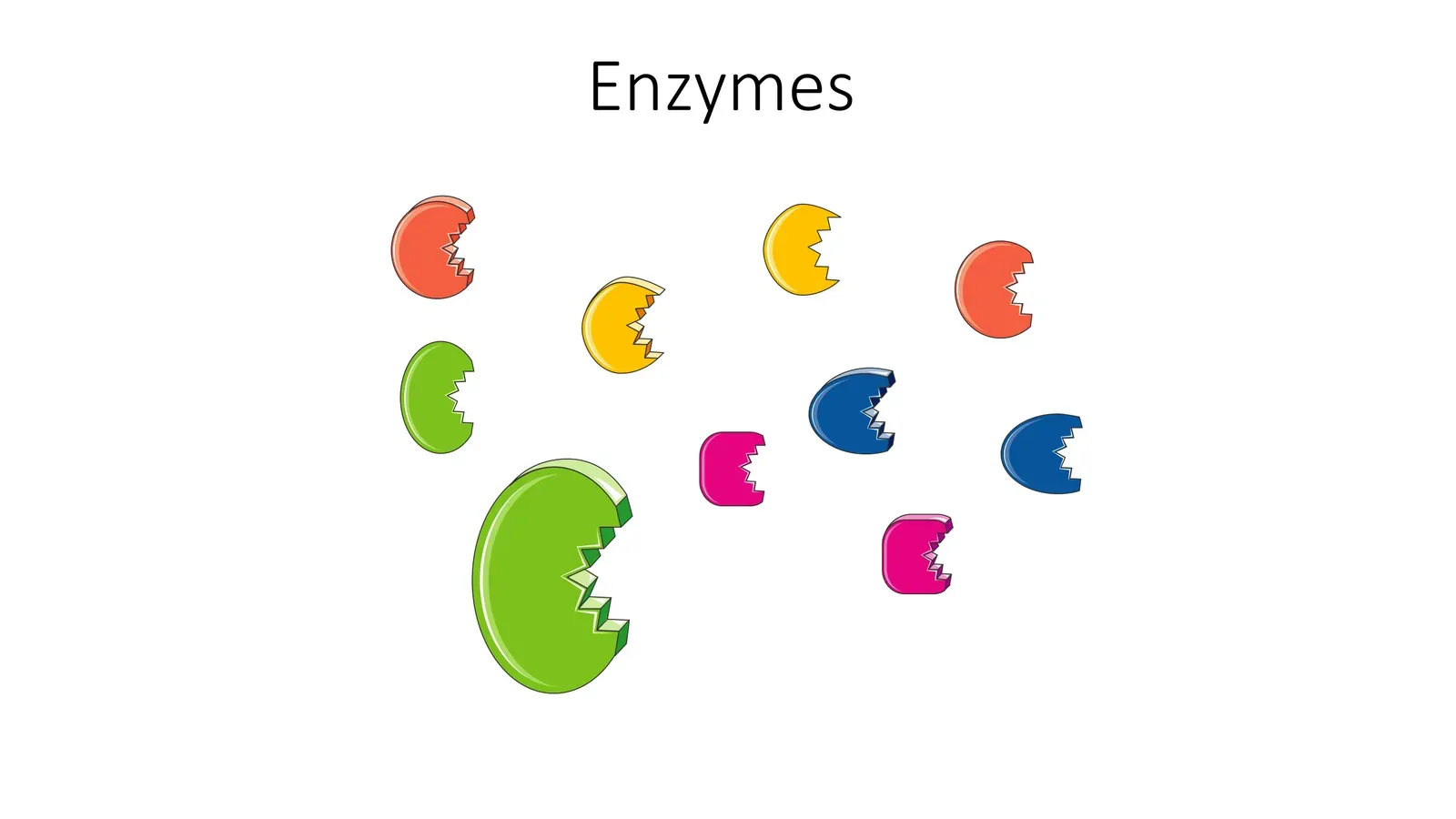
The deeper researchers look, the more quantum mechanics appears in the ordinary machinery of life. The remarkably fast reaction rates of enzymes are accelerated by tunnelling phenomena. The signalling in olfaction is also conjectured to be a tunnelling effect, enabled by the presence of an odorant with a signature quantum mechanical vibration. The superposition of excited states upon light excitation in photosynthesis supports long-lived coherent states, conjectured to explain the efficiency of energy transfer. Your nose, your energy production, your cellular metabolism – all of it may be quietly leveraging physics from the subatomic scale.
Photosynthesis, enzyme-catalyzed reactions, magnetic perception, the capture of smell and vision, DNA fragmentation, cellular breathing, mitochondrial processing, as well as brain thinking and consciousness, are all manifested within quantum superposition, quantum coherence, quantum entanglement, quantum tunneling, and other effects. It is hard to say for sure just how deep this goes, but the picture emerging is one where quantum physics is not a footnote in biology – it may be the hidden foundation. What remains indisputable is that the quantum dynamics undoubtedly taking place within living systems have been subject to 3.5 billion years of optimizing evolution. It is likely that, in that time, life has learned to manipulate quantum systems to its advantage in ways that we do not yet fully understand.
Conclusion: The Smallest Laws May Have Written the Biggest Story
When you step back from all of this, a picture forms that is almost too grand to fully absorb. The same laws that govern the bizarre behavior of electrons and particles may have been there at the very beginning, threading quantum magic through the chemistry of early Earth, nudging RNA to replicate, pushing photosynthesis toward impossible efficiency, and ultimately writing the genetic code of every living thing. Physics and biology are not separate kingdoms. They are deeply, fundamentally intertwined.
We are still in the early chapters of this story. The origins of life is a fascinating research topic that hinges upon an exciting new field of science that connects chemistry, physics, biology, and information science. Quantum biology can play an important role in explaining the behavior of living things. The tools are improving, the experiments are getting bolder, and the questions are getting sharper every year. Honestly, I think we are living through the beginning of one of the greatest scientific revolutions of the century, one that asks the most personal question of all: at your most fundamental level, are you also made of quantum physics? What do you think – does it change how you see yourself and the living world around you?