Imagine logging into a bank account that cannot be hacked, joining a video call that never lags across continents, or helping scientists simulate new medicines in minutes instead of years. All of these visions are tangled up with a technology that, for now, sounds more like science fiction than everyday life: the quantum internet. Behind the buzzwords lies a very real global race, with governments and tech giants quietly laying down the first strands of an entirely new kind of network. The stakes are enormous, because whoever masters secure quantum communication could reshape finance, national security, and the way we share knowledge. The story of the quantum internet is not just about faster computers; it is about rewriting the rules of connection itself.
The Strange Physics Behind an Invisible Network
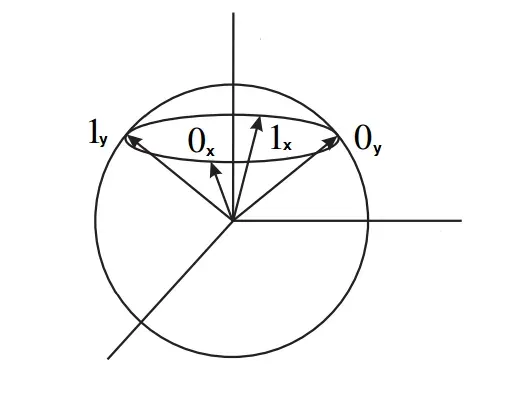
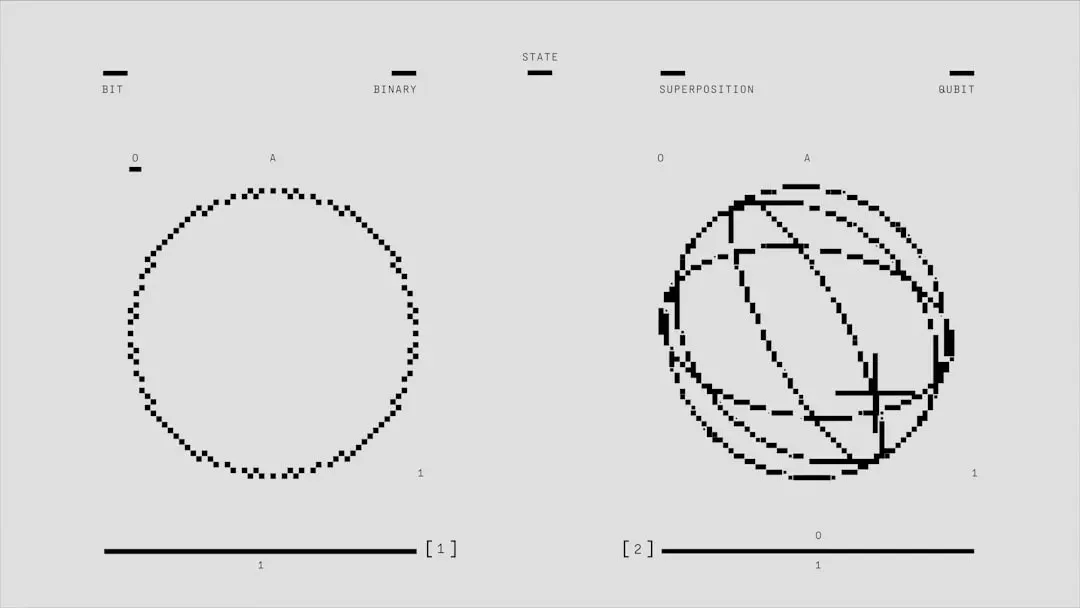
At the heart of the quantum internet are particles that behave in ways that seem almost deliberately weird. Instead of classic bits that are either zero or one, quantum devices use quantum bits, or qubits, which can be in a blend of zero and one at the same time. This hazy in‑between state, called superposition, lets quantum systems explore many possibilities at once, like a coin spinning in midair instead of landing on heads or tails. When qubits become linked through a phenomenon known as entanglement, the state of one instantly relates to the state of another, no matter how far apart they are.
For a storyteller like me, entanglement always feels like a long‑distance relationship written by a surrealist: change one partner’s mood and, instantly, the other somehow knows. In practice, this allows information to be shared in a way that is fundamentally different from sending signals down fiber‑optic cables. Instead of copying and forwarding data like passing notes in class, quantum networks “teleport” the state of qubits between distant nodes using shared entangled pairs and classical messages. The key twist is that any attempt to spy on this process disturbs the fragile quantum states, leaving clear fingerprints of eavesdropping.
From Lab Curiosities to Real‑World Quantum Testbeds
Quantum networking once lived solely on whiteboards and in isolated physics labs, but that era is ending fast. Over the past few years, research teams have linked quantum devices across cities, using fibers under streets and even satellites overhead to share entangled photons. Some experiments have connected dozens of kilometers of fiber, while others have beamed quantum signals between ground stations and orbiting spacecraft, effectively sketching the first outlines of a global quantum backbone. Governments in North America, Europe, and Asia are funding national quantum networks that act as testbeds, letting universities and companies trial early applications.
When I first visited a quantum optics lab, I expected gleaming sci‑fi machinery; instead, I found a maze of mirrors, lasers, and black boxes humming softly on a vibration‑damped table. It looked more like a chaotic art installation than the seed of a new internet. Yet those fragile beams of light represent the same core ideas that could one day underpin secure diplomatic communications or ultra‑reliable links between data centers. We are in the awkward adolescence of the technology: not quite ready for prime time, but far beyond the nursery stage of pure theory.
Why It Matters: Beyond the Hype and Headlines
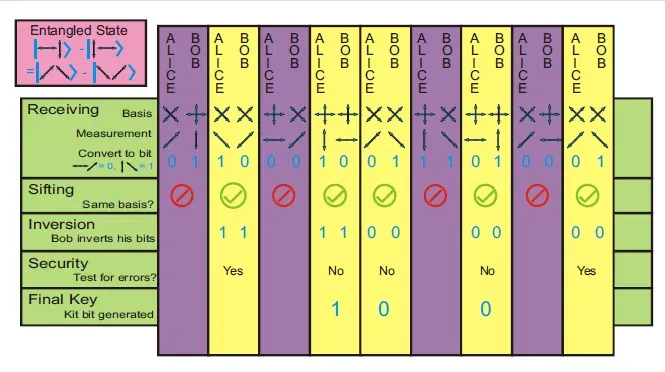
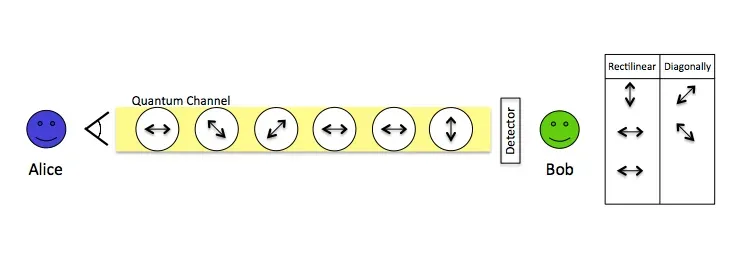
It is natural to ask whether the quantum internet is just another overhyped buzzword, like so many “revolutions” promised and forgotten. The blunt answer is that if powerful quantum computers become practical, much of today’s encryption could be broken, putting bank records, health data, and state secrets at risk. Quantum‑secured communication offers a counterweight, using the laws of physics rather than mathematical difficulty to protect information. If someone tries to intercept keys shared over a quantum channel, the act of measurement itself leaves unmistakable traces, forcing the keys to be discarded.
Compared with traditional networks, which rely on assumptions about how long it takes to crack a code, quantum networks build in tamper evidence from the ground up. That is a profound shift, and it matters far beyond spy agencies and banks. It could safeguard election systems, protect sensitive scientific collaborations, and secure critical infrastructure like power grids and air‑traffic control. In a world where data leaks and ransomware attacks have become almost routine, the promise of communication lines that reveal any intrusion is not a luxury; it is rapidly becoming a strategic necessity.
Everyday Life on a Quantum‑Enabled Internet
Despite all the talk of entanglement and cryptography, the real question most people care about is simple: how will this change my day? In the short term, you probably will not notice a new icon on your phone or a “quantum Wi‑Fi” option popping up in your router settings. Instead, the shift will be more like an invisible upgrade to the plumbing behind the scenes, quietly securing the channels between banks, hospitals, and government services. Your video call will not suddenly look like a futuristic hologram, but the encryption behind it might rely on keys distributed through quantum links between data centers.
Further down the line, as quantum computers mature and get linked through quantum networks, we could see new services that are hard to imagine from today’s vantage point. Joint simulations between hospitals and pharmaceutical labs might run across continents without exposing raw patient data. Climate models could be shared and refined in near real time between research centers, each contributing pieces of a huge quantum‑enhanced calculation. Think of it less like a new app store and more like a deeper foundation that allows entire industries – finance, health, logistics – to collaborate securely at a scale that would be risky on the classical internet alone.
How Quantum Networks Differ from Today’s Internet
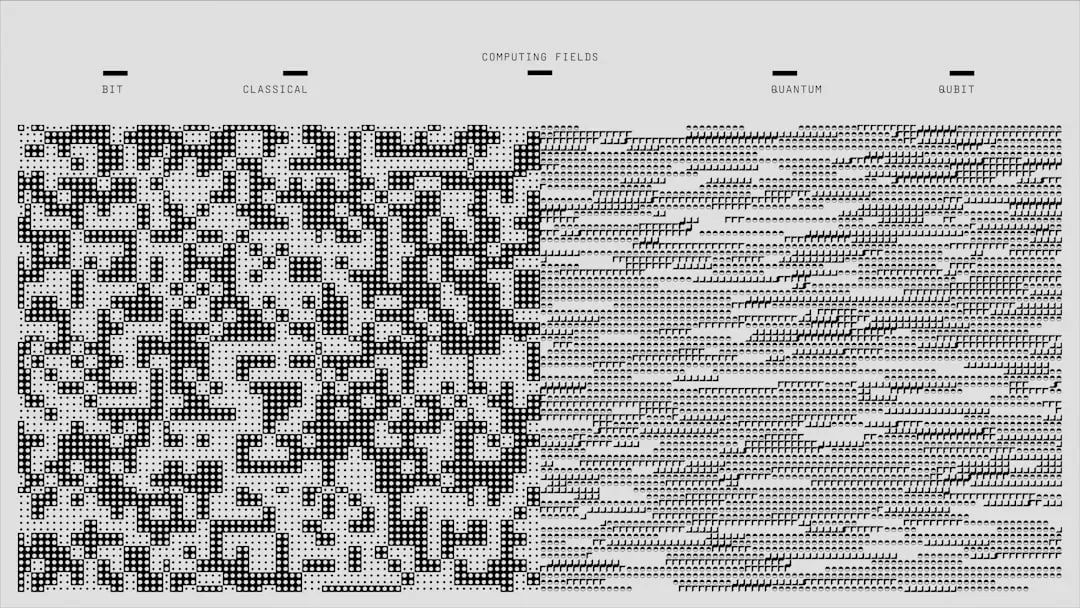
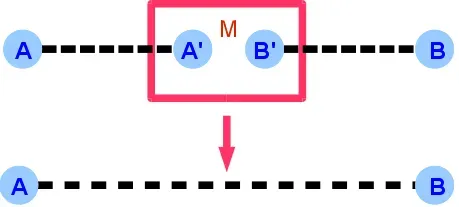
It is tempting to picture the quantum internet as a faster, shinier version of the network you already use, but that image is misleading. The classical internet is built around copying and routing bits, sending identical versions of files and messages through many paths. Quantum information, by contrast, cannot be copied perfectly, a rule known as the no‑cloning theorem, which forces engineers to design very different architectures. Instead of routers that duplicate data, quantum networks rely on specialized nodes that create and swap entanglement, stitching together long‑distance links from short‑range connections.
Because quantum states are so delicate, the distances they can travel in fiber or through the air are limited without clever tricks. Researchers are working on quantum repeaters – devices that extend entanglement step by step – to push beyond current ranges. The trade‑off is that quantum networks are not about streaming movies faster or downloading games in a blink; they are about enabling tasks like unbreakable key distribution and distributed quantum computing. In that sense, the quantum internet is less a competitor to today’s web and more a specialist partner, handling the most sensitive and computation‑heavy jobs while the conventional internet continues to carry memes, emails, and cat videos.
Global Race, Local Impact
Behind the technical jargon sits a very human story of competition, cooperation, and national ambition. Countries see quantum networks as strategic infrastructure, much like railways or power grids were in earlier eras. Major economies are investing billions of dollars into quantum communication projects, driven by concerns about cybersecurity and technological sovereignty. Alliances are forming, with cross‑border experiments linking labs in different nations to prove that entanglement can be shared on a planetary scale.
Yet the impact will not be limited to capital cities and defense corridors. As quantum infrastructure slowly spreads, regional research hubs, universities, and even some forward‑looking companies could tap into secure quantum links. That might bring new jobs in photonics manufacturing, cryogenic engineering, and software development to places that today have little connection to cutting‑edge physics. The global race could, if handled thoughtfully, translate into local opportunities – though there is also a risk that only a handful of tech‑rich regions will reap the earliest rewards.
The Future Landscape: Possibilities, Pitfalls, and Unknowns
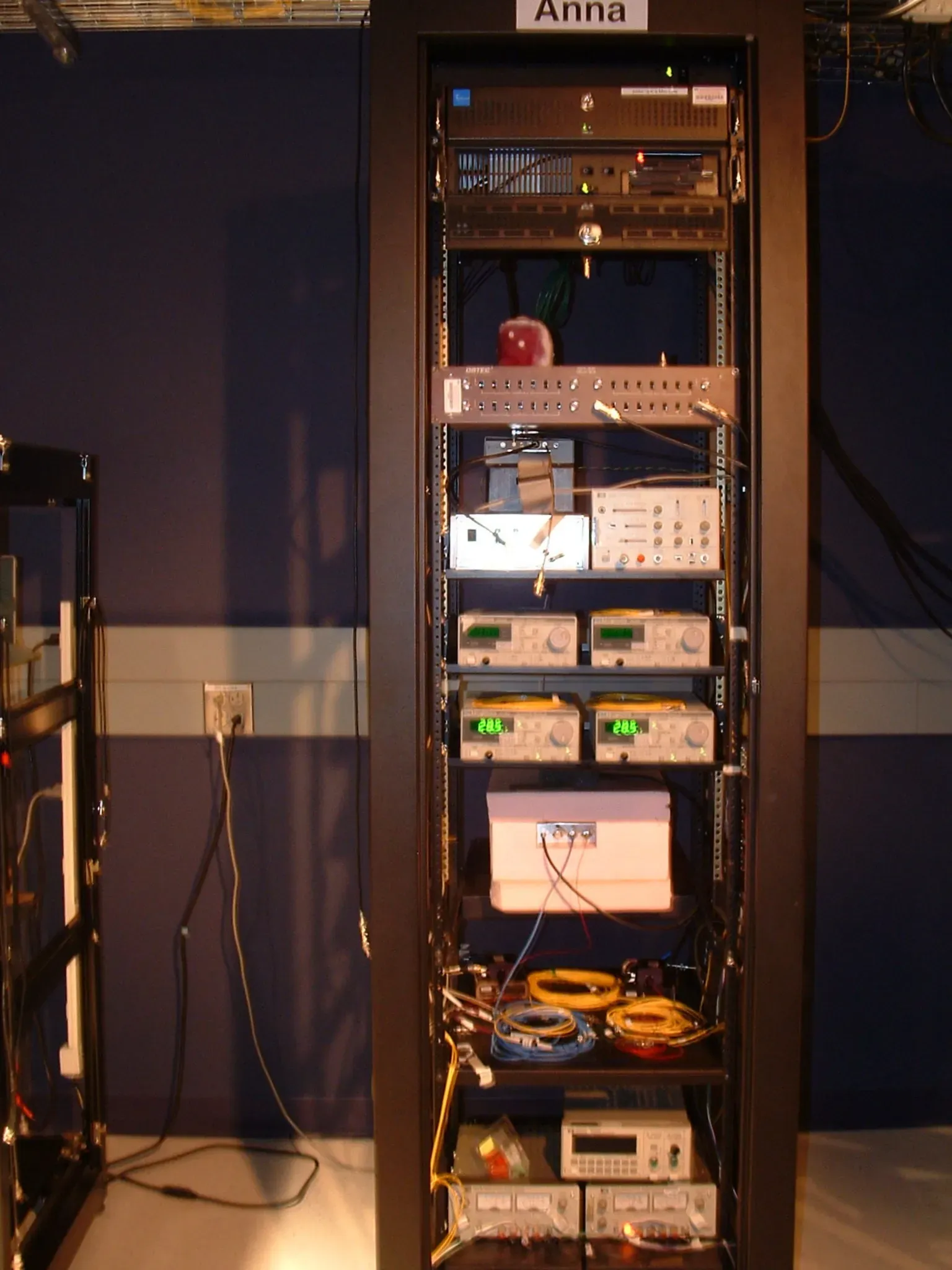
Looking ahead, the quantum internet sits at an uncomfortable crossroads between astonishing potential and very real obstacles. On the optimistic side, we can imagine networks that tie together clusters of quantum computers into powerful clouds, solving problems in chemistry, materials science, or optimization that stump today’s machines. These networks could support new types of sensing, using entangled states to measure time, gravity, or electromagnetic fields with unprecedented precision. On the cautious side, the hardware is fragile, expensive, and often confined to laboratory environments that look more like art restoration studios than server rooms.
There are also thorny social and ethical questions simmering beneath the engineering challenges. If quantum networks become critical for national security and financial stability, who gets access, and under what rules? Will the same companies that dominate today’s cloud landscape control the quantum backbone, or will new players emerge from universities and startups? Standards for interoperability, privacy, and responsible use are only beginning to take shape. The future quantum landscape will not be shaped by physics alone; it will depend just as much on policy choices, funding priorities, and public understanding.
What You Can Watch, Ask, and Support

For something as esoteric as the quantum internet, it is easy to assume that only physicists and policy makers have any role to play, but that is not quite true. As a reader, voter, or curious observer, you can start by simply paying attention: when your city, university, or country announces a quantum initiative, look beyond the buzzwords and ask what problems it is really meant to solve. Follow whether public investments in quantum communication come with education and training programs, or whether they mainly fund a few elite labs and corporations. The way these decisions are made now will shape who benefits later.
If you want to go a step further, you can support science‑literate journalism, public science museums, and education projects that demystify quantum technologies instead of treating them as magic. Talk to teenagers in your life about why subjects like optics, computer science, and engineering matter for the future shape of the internet they will inherit. Even small actions – attending a public lecture, sharing a clear explainer, encouraging a school to update its science curriculum – help build a culture that can handle complex technologies thoughtfully. The quantum internet will not arrive with a single dramatic switch‑on moment; it will seep into our lives piece by piece. How ready we are to question it, understand it, and steer it will depend partly on what we choose to pay attention to today.
Suhail Ahmed is a passionate digital professional and nature enthusiast with over 8 years of experience in content strategy, SEO, web development, and digital operations. Alongside his freelance journey, Suhail actively contributes to nature and wildlife platforms like Discover Wildlife, where he channels his curiosity for the planet into engaging, educational storytelling.
With a strong background in managing digital ecosystems — from ecommerce stores and WordPress websites to social media and automation — Suhail merges technical precision with creative insight. His content reflects a rare balance: SEO-friendly yet deeply human, data-informed yet emotionally resonant.
Driven by a love for discovery and storytelling, Suhail believes in using digital platforms to amplify causes that matter — especially those protecting Earth’s biodiversity and inspiring sustainable living. Whether he’s managing online projects or crafting wildlife content, his goal remains the same: to inform, inspire, and leave a positive digital footprint.