
There’s a quiet rebellion happening at the heart of physics, and it’s not about black holes or multiverses. It’s about you – the simple, stubborn fact that you have an inner life, that it feels like something to be you right now, reading this line. For a long time, mainstream physics tried to push that fact to the side, treating consciousness like a side effect that could be safely ignored.
But as our best physical theories have become more precise, that strategy has started to crack. From the puzzles of quantum measurement to the deep weirdness of information and entropy, consciousness keeps sneaking back into the conversation like an uninvited guest who refuses to leave. You don’t have to be mystical to see it; you just have to follow the science far enough that it begins to run into you.
The Strange Question at the Heart of Physics: Why Does Anything Feel Like Something?

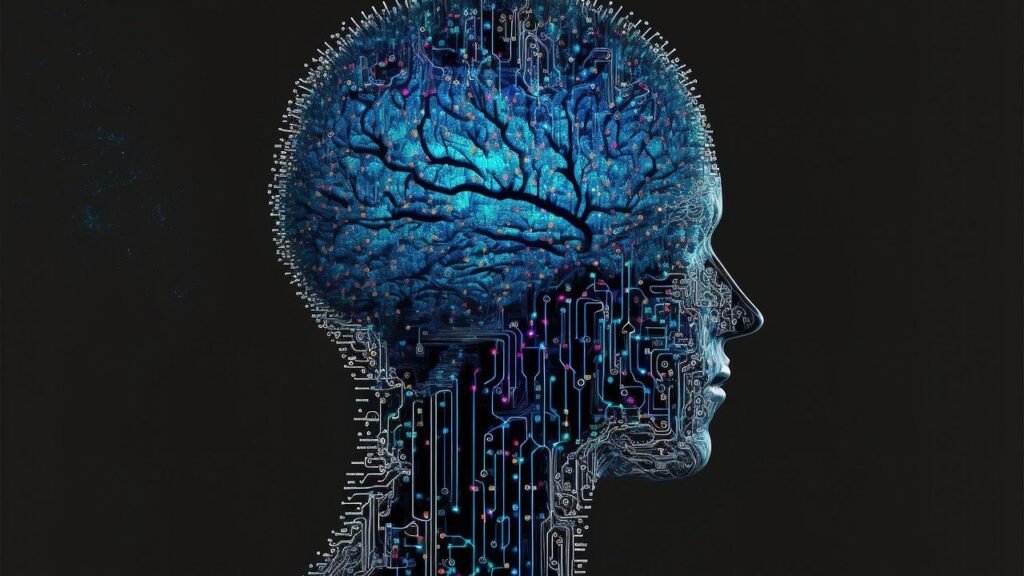
Imagine you could describe your brain in excruciating detail: every neuron, every molecule, every electron, all mapped out with perfect accuracy. You’d know where every particle is and how it moves. The odd thing is, that still doesn’t tell you what it’s like to be you from the inside. Physics is brilliant at describing behavior and structure, but it stays silent about the raw feel of a headache, the red of a sunset, or the pang of regret.
This gap has a name: the hard problem of consciousness. It’s not just a poetic complaint; it’s a technical, logical puzzle. If physics deals only in quantities – mass, charge, spin, energy – and all of those can be described from the outside, where in that picture does “what it feels like” fit? The more complete physics becomes, the louder that question gets, like background noise you can’t quite tune out anymore.
The Quantum Measurement Problem: When Observation Changes Reality
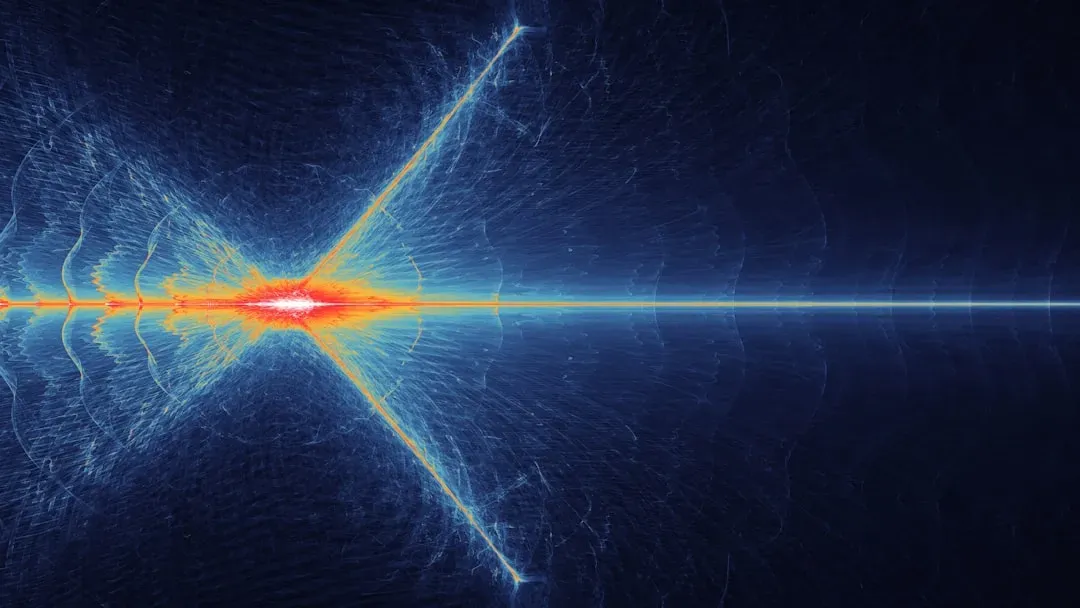
Quantum mechanics, our most successful theory of the microscopic world, makes a deeply unsettling claim: before measurement, particles do not have definite properties, only probabilities. A photon is not here or there; it’s in a superposition, a blend of possibilities. But when you measure it, you always get a definite result. Somehow, the fuzzy cloud of maybes snaps into a single, concrete “this.” Physicists call this jump the measurement problem.
Here’s where things get uncomfortable. What exactly counts as a “measurement”? A detector? A lab? A brain? Does the world become definite only when it interacts with a conscious observer, or is consciousness just riding along as a passive witness? Some interpretations bend over backwards to keep consciousness out of it, while others admit that the act of observation looks suspiciously like something a mind does. Either way, the puzzle has forced serious people to ask whether consciousness is merely in the universe, or somehow involved in how the universe shows up at all.
Decoherence and Why “Shutting Up and Calculating” Isn’t Enough
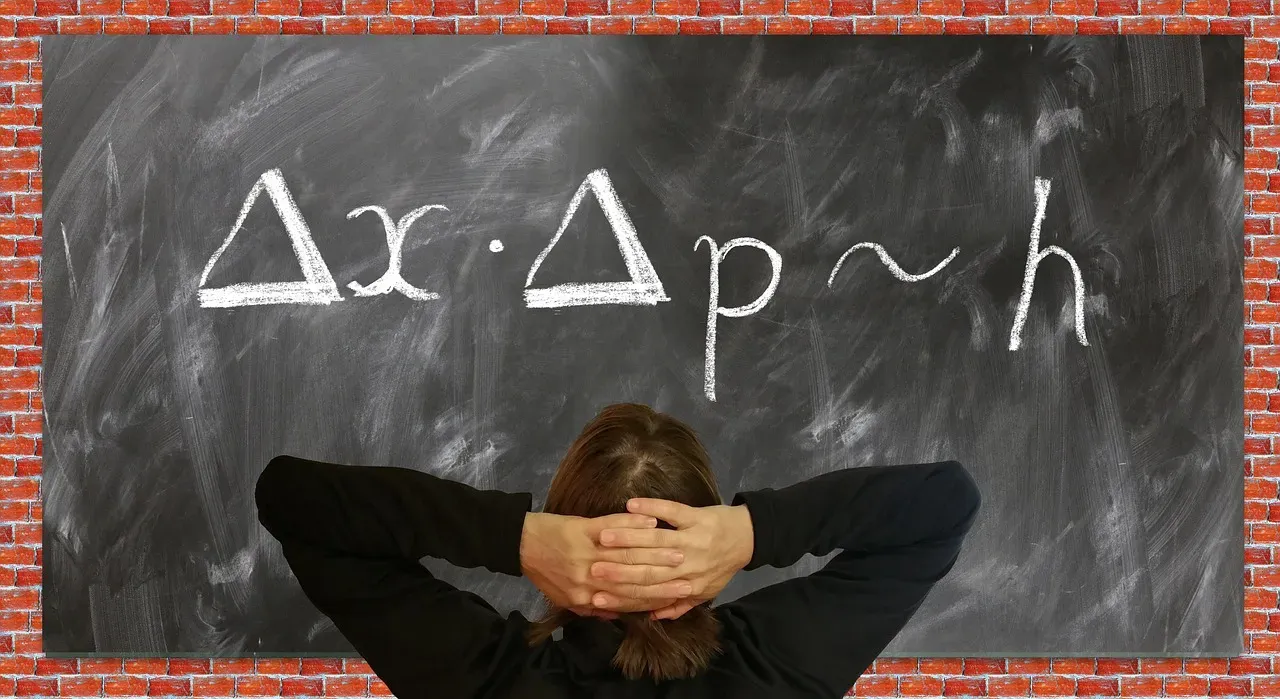
Over the last few decades, a powerful idea called decoherence has helped explain why the quantum world looks classical to us. When a delicate quantum system interacts with its messy environment – air molecules, radiation, your measuring device – its superpositions smear out and effectively “collapse” into stable-looking outcomes. On paper, this makes it easier to understand why we don’t see cats that are both alive and dead at once. The math is beautiful and the predictions work astonishingly well.
But decoherence doesn’t fully solve the measurement problem; it subtly hides it. The theory explains how probabilities become very sharp, but not how one specific result becomes real for an observer. There is still the unanswered question: why do I perceive this outcome rather than another equally valid one in the wave function? That lingering gap is exactly where consciousness sneaks back in, because physics can describe the evolution of waves and particles, but it does not yet explain why an observer experiences one particular world instead of many overlapping ones.
Information, Entropy, and the Mind as a Physical Process

Modern physics has fallen in love with information. Black hole research, thermodynamics, and quantum computing all tell the same story: information is not an abstract concept, it is a physical quantity that must obey strict laws. When you erase a bit of information, you generate heat; when you compress data, you pay an energy cost. That means your thoughts, memories, and decisions are not floating in some ghostly realm: they are deeply physical rearrangements of information in your brain.
This makes consciousness harder, not easier, to brush aside. If your mind is an information-processing process, and information itself is woven into the fabric of physics, then conscious experience is tied to how the universe handles and transforms information. Some researchers speculate that certain patterns of integrated information might be what consciousness actually is. Even if that’s only part of the story, it hints that experience might not be a weird exception to physical law, but one of the more intricate things that happens when the universe starts thinking about itself.
The Limits of Reductionism: Why Brains Aren’t Just Wet Clocks
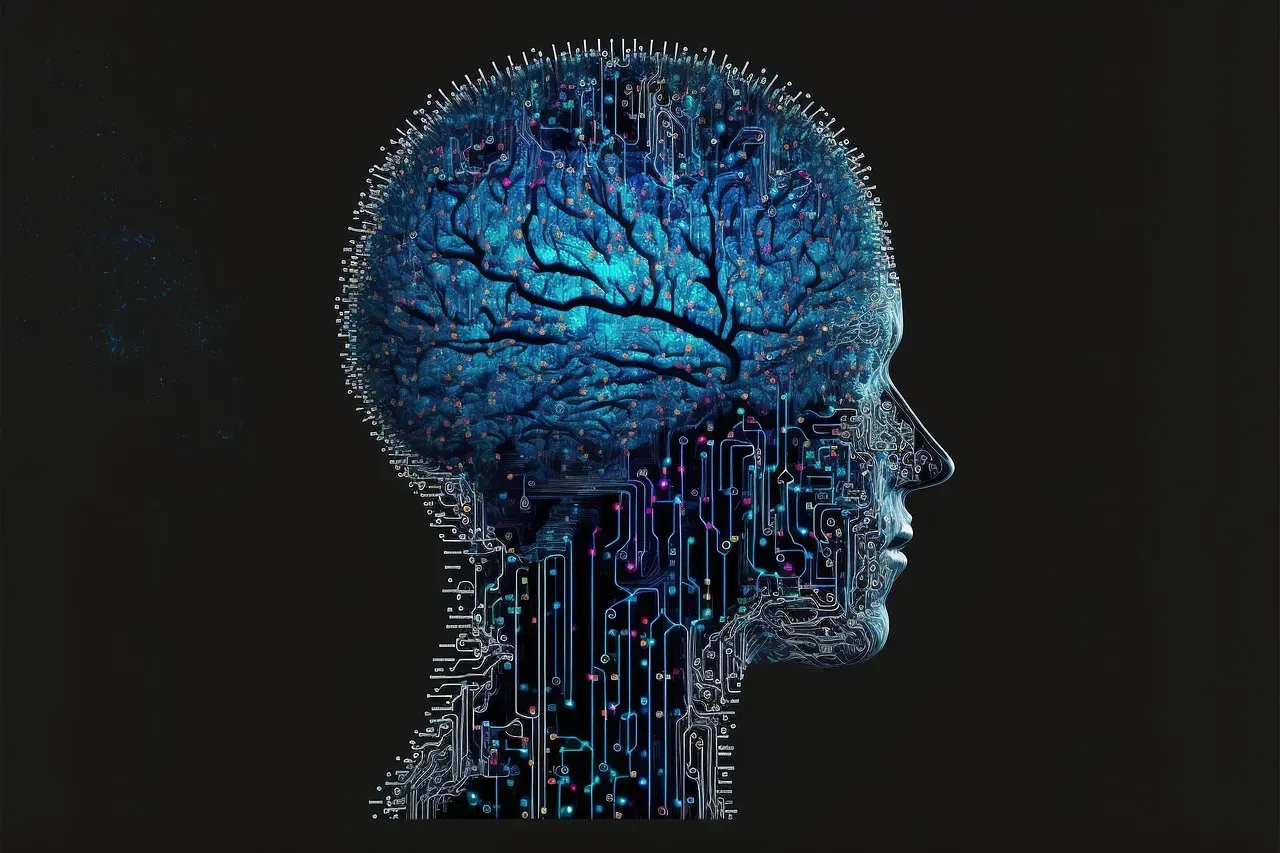
Physics is famously reductionist: to understand a system, you break it into smaller parts and study the basic rules those parts follow. This has worked astonishingly well for everything from stars to semiconductors. But when you apply the same approach to consciousness, something seems to slip through your fingers. A neuron is a cell. A network is connections. None of that, described from the outside, guarantees there’s an inner movie playing back at all.
Some philosophers argue that if we stick with pure reductionism, consciousness becomes an illusion. But that claim is self-defeating: if conscious experience is an illusion, it’s still an illusion experienced by someone. You can doubt the external world more easily than you can doubt the fact that something is happening in your awareness right now. This makes consciousness feel less like a decorative extra and more like a basic feature that any complete physics has to accommodate, the way it had to expand to include spacetime curvature for gravity.
Bold Proposals: From Panpsychism to Consciousness as a Fundamental Property

Faced with this tension, some researchers have chosen to adjust the story rather than ignore the problem. One radical idea is panpsychism, the claim that some primitive form of experience might be a fundamental property of matter, just like charge or spin. On this view, electrons are not tiny thinking beings, but they may have ultra-simple “proto-experiences” that, when combined in the right way in a brain, build up to rich consciousness. It sounds wild at first, but it has the advantage of not trying to pull experience out of pure non-experiential stuff.
Others argue for new frameworks that treat consciousness and physics as two sides of the same coin, related by deep laws we have yet to discover. Instead of adding mysticism, these approaches try to be brutally honest about the fact that subjective experience is part of reality, not a bug in our description. Whether they turn out to be right or wrong, they show that the problem of consciousness is now pressing hard enough that some physicists and philosophers are willing to revise their most basic assumptions about what the universe is made of.
Living with the Mystery: Why Consciousness Won’t Go Away

I remember the first time I really sat with this: I was reading about quantum measurement and suddenly realized that every experiment assumes someone somewhere will register a result. It felt like the universe was playing a strange game of hide-and-seek, constantly producing definite outcomes, but only ever revealed in the theater of a mind. Once you see that, it’s surprisingly hard to unsee. Dismissing consciousness as a side effect starts to feel like ignoring the canvas and only talking about the paint.
Maybe future physics will show that consciousness emerges naturally from known laws, or maybe we’ll have to expand the foundations again, the way we did with relativity and quantum theory. Either way, the days when you could do “serious” physics and treat consciousness as an optional extra are fading. At some point, any story about reality has to explain how it gives rise to a world that is not only measurable and predictable, but also actually experienced from the inside. When you think about it that way, is there any bigger physics problem than that?