You’ve probably fantasized about it at some point. Maybe during a boring afternoon or after watching a sci-fi classic. What if you could step into a machine and emerge in the past, or leap decades into the future? Time travel has captivated imaginations for over a century, from H.G. Wells to modern blockbusters. Yet here’s the thing: this isn’t just the stuff of fiction anymore. Physicists are actually wrestling with the mathematics of time travel, and some of their findings are downright mind-bending.
The universe, as we’re learning, might be stranger than we ever imagined. Einstein’s theories cracked open doors we didn’t know existed, revealing that time isn’t the rigid, unchanging thing we experience day to day. It bends, stretches, and under the right conditions, might even loop back on itself. So let’s dive in and explore what modern physics really says about journeying through time.
Einstein’s Gift: Time Dilation and the Gateway to Tomorrow
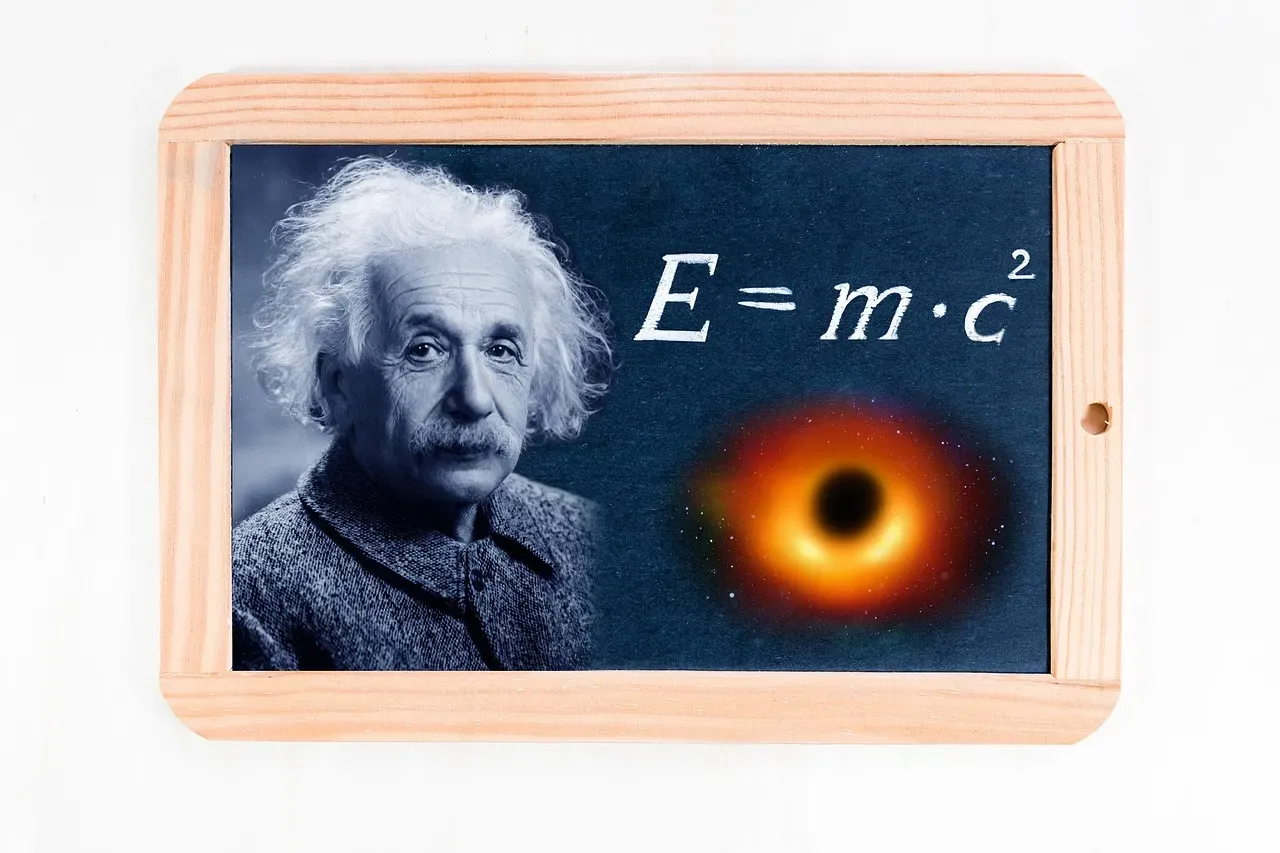
Albert Einstein’s 1905 theory of special relativity revolutionized modern physics and explains how speed affects mass, time, and space. Honestly, when you first encounter time dilation, it sounds like something someone made up after too much caffeine. Time dilation is the difference in elapsed time as measured by two clocks, either because of a relative velocity between them or a difference in gravitational potential between their locations. The faster you move, the slower your clock ticks relative to someone standing still.
Astronauts aboard the International Space Station age slightly less than people on Earth due to their high velocities and the effects of time dilation. This isn’t theoretical speculation. Russian cosmonaut Sergei K. Krikalev, over the course of his long career beginning in 1985, spent 803 days in space, aging 1/48 of a second less than his fellow earthlings. He traveled into the future, even if just by a fraction of a second. Imagine ramping that up to near light speed and you’d skip years, decades, even centuries.
The Twin Paradox: When Time Becomes Personal
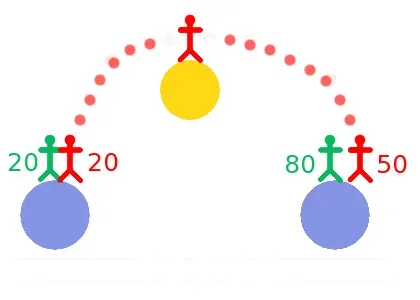
Let’s talk about one of the most famous thought experiments in physics. The twin paradox involves one of two twins carrying a clock departing on a rocket ship from the other twin at a certain time, and they rejoin at a later time, with the elapsed time on the clock of the twin on the rocket ship being smaller than that of the inertial observer twin. This means the traveling twin ages less.
An astronaut leaving on a deep space trip traveling at 95% the speed of light, with the astronaut’s clock measuring ten years, would reunite with their earth bound twin who has aged 32 years. The math checks out perfectly. This isn’t a trick or illusion caused by faulty clocks. This time effect is real and is not caused by inaccurate clocks or improper measurements, as time-interval measurements of the same event differ for observers in relative motion, with the dilation of time being an intrinsic property of time itself.
Wormholes: Cosmic Shortcuts That Could Bend Time
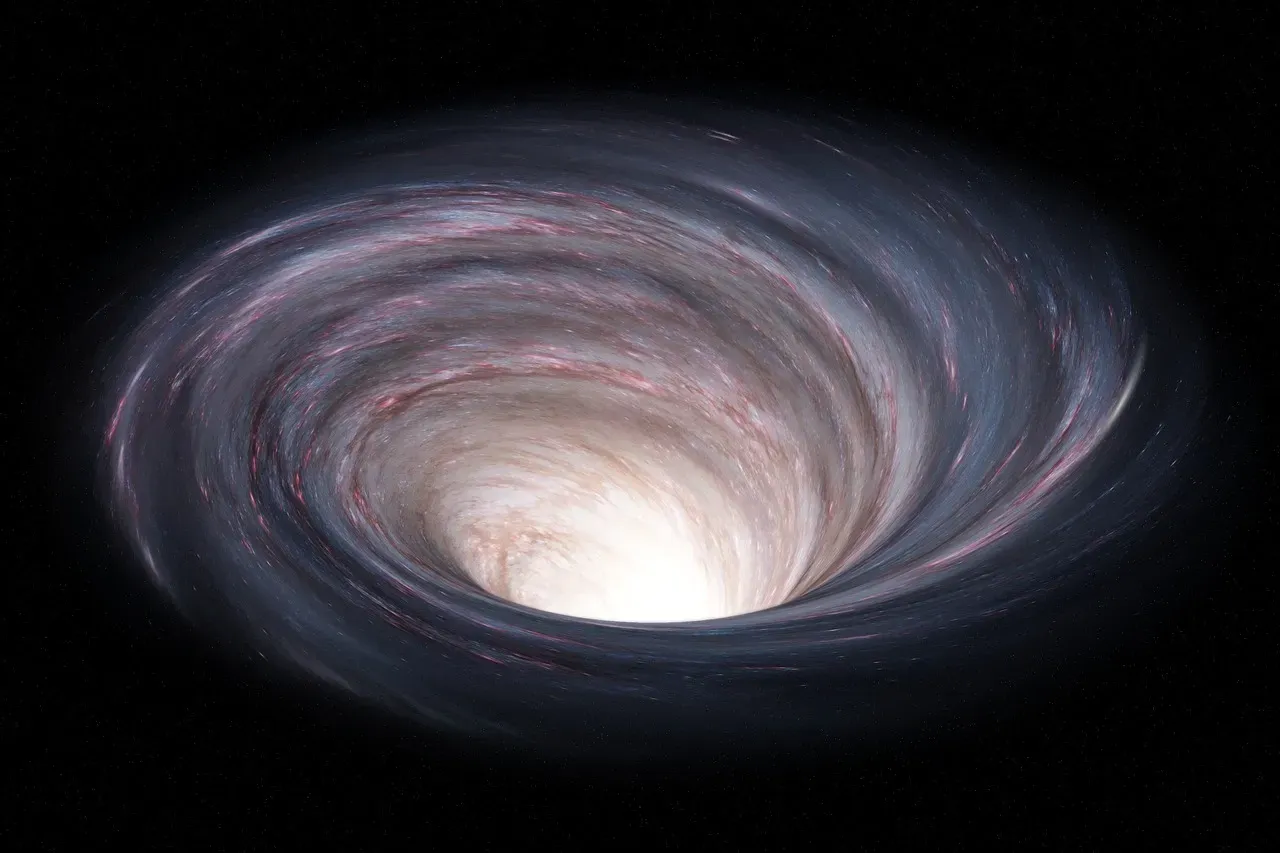
Now things get really wild. Einstein and physicist Nathan Rosen used the theory of general relativity to propose the existence of bridges through space-time connecting two different points in space-time, theoretically creating a shortcut that could reduce travel time and distance, with these shortcuts coming to be called Einstein-Rosen bridges or wormholes. Picture folding a piece of paper so two distant points touch. That’s essentially what a wormhole does to spacetime.
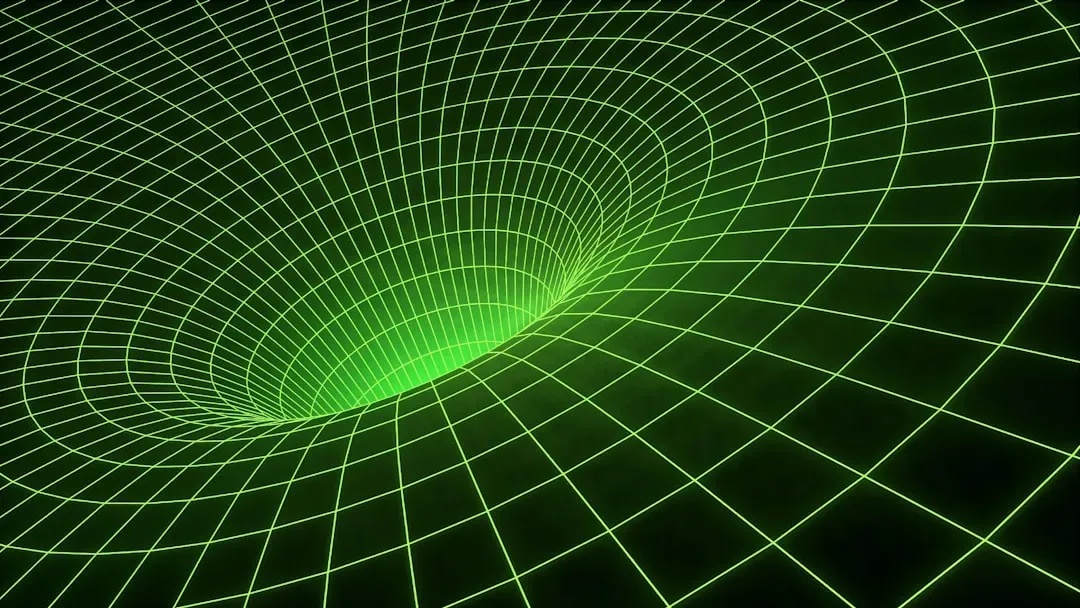
Wormholes connect two points in spacetime, which means that they would in principle allow travel in time as well as in space, and in 1988 Morris, Thorne and Yurtsever worked out how to convert a wormhole traversing space into one traversing time by accelerating one of its two mouths. Here’s the catch though. The predicted Einstein-Rosen wormholes would be useless for travel because they collapse quickly, and it’s not clear whether the exotic matter needed to stabilize a wormhole exists in the universe. The only way known to stabilize wormholes is with exotic matter, specifically matter that had negative mass, though negative matter does not appear to exist in the universe.
Closed Timelike Curves: The Mathematical Possibility of Backward Travel

In relativity, closed timelike curves theoretically allow a path through spacetime that loops back to its origin in time. Think of it as a path through spacetime that literally circles back to where and when it started. Physicists discuss the possibility of closed timelike curves, which are world lines that form closed loops in spacetime allowing objects to return to their own past, with known solutions to the equations of general relativity that describe spacetimes containing closed timelike curves such as Gödel spacetime.
Two physicists from the University of Queensland in Australia recently laid out a model for studying hypothetical time travel, with their work expanding on the Alcubierre spacetime first published by physicist Miguel Alcubierre over 30 years ago. The researchers are exploring how these theoretical constructs might function. Still, let’s be real: these remain extremely hypothetical, requiring conditions we haven’t observed in nature and may never be able to create.
Cosmic Strings: Exotic Structures That Warp Spacetime
In many proposed theories of the theory of everything that is supposed to explain all the laws of physics, thin strands of high-density materials left over from the early universe are mentioned, known as cosmic strings. These aren’t your garden-variety strings. Imagine incredibly dense, one-dimensional defects in spacetime itself, remnants from the universe’s violent birth.
Exact solutions of Einstein’s field equations for two moving straight cosmic strings show closed timelike curves that circle the two strings as they pass, allowing observers to visit their own past. In an analysis of gravitational lensing by two relativistic cosmic strings, the formation of closed timelike curves is unstable in the presence of particles, as a single graviton or photon in the vicinity is sufficient to bend the strings and prevent the formation of closed timelike curves. So even if cosmic strings exist, nature might have built-in safeguards against time travel.
Quantum Mechanics: The Paradox Killer?
Here’s where physics gets deeply weird. Recent findings published in Classical and Quantum Gravity reveal that traveling through time loops would prevent many classical time travel paradoxes, including the infamous grandfather paradox. Memory formation, closely tied to the increase of entropy over time, is inherently unstable on a CTC due to the reversal of the entropic arrow of time, with entropy decreasing during the journey’s second half, leaving the traveler unable to recall their experiences within the loop.
Research demonstrates how quantum mechanics ensures the self-consistency of time loops, showing that the energy levels of systems traveling on CTCs are quantized so that all processes remain coherent and self-correcting. The quantum realm follows a self-consistency principle, meaning the only histories of the Universe that actually happen are those where everything works out consistently. You couldn’t kill your grandfather because the universe would literally prevent you from creating that paradox. The math forces consistency.
The Grandfather Paradox: Why You Probably Can’t Change History

Let’s address the elephant in the room. The grandfather paradox involves traveling back in time and killing your grandfather, thereby preventing your own existence, requiring some circumstance to occur which makes you fail in this attempt. It’s been the ultimate objection to time travel for decades. How can you exist if you prevented your own existence?
In attempting to stop patient zero from becoming infected, you might catch the virus and become patient zero, or someone else would, as the salient events would just recalibrate around you, with events always adjusting themselves to avoid any inconsistency. Time travel may be theoretically possible, but findings reveal that altering the past is fundamentally impossible. The universe appears to have its own built-in editor, ensuring the story stays coherent no matter what you try.
Forward in Time: The Only Direction We Can Actually Go
Forward time travel, outside the usual sense of the perception of time, is an extensively observed phenomenon and is well understood within the framework of special relativity and general relativity, though making one body advance or delay more than a few milliseconds compared to another body is not feasible with current technology. We’ve done it. Not dramatically, and not with DeLoreans, yet the principle is solid.
GPS satellites that keep track of incredibly precise time work based on atomic clocks, which tick an extra 7 microseconds each day because those atomic clocks are on board satellites constantly whizzing through space at 8,700 mph. Engineers have to account for relativistic effects in everyday technology. Your smartphone navigation depends on understanding time dilation. If we could build spacecraft approaching light speed, we could send people centuries into the future during what would feel like a relatively short journey.
The Engineering Nightmare: Why We’re Not Time Traveling Yet
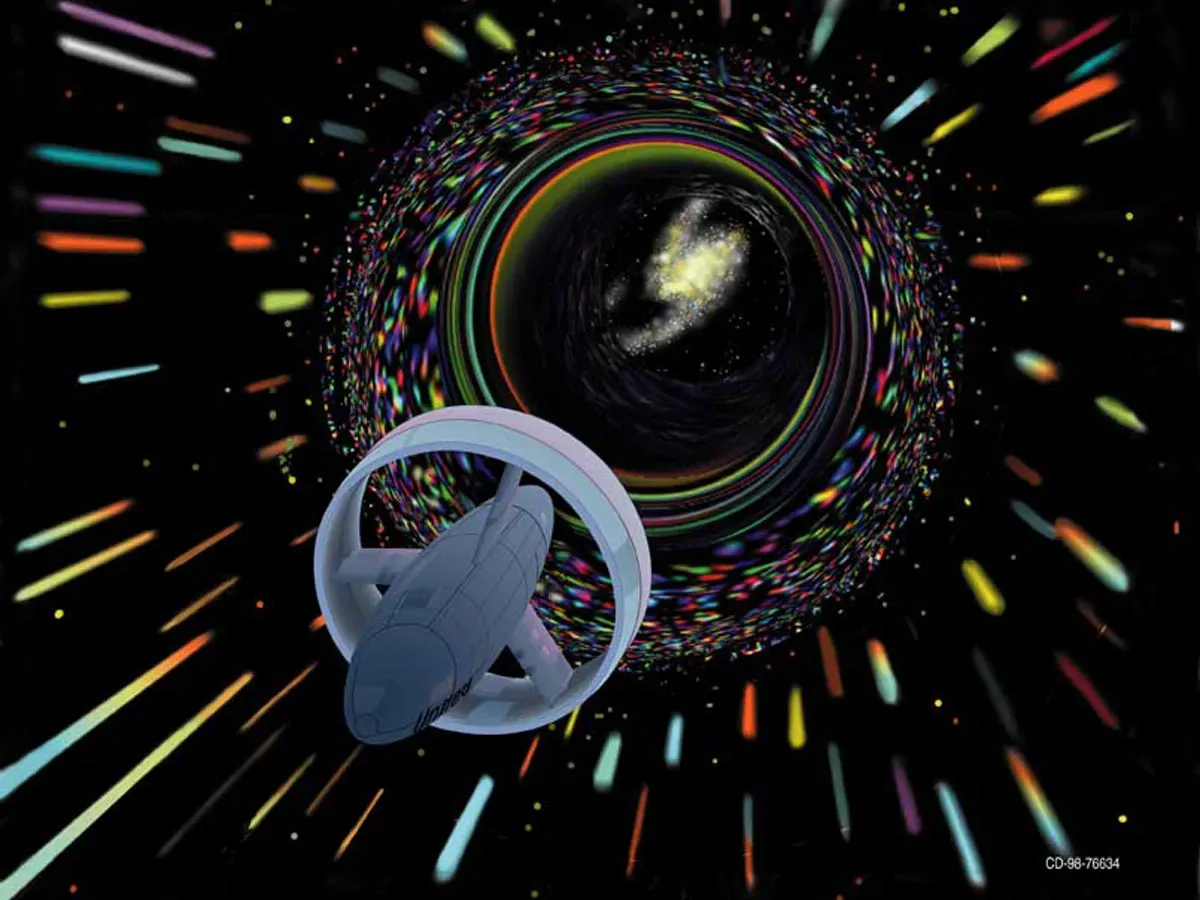
Even if the physics allows it, the engineering hurdles are staggering. For a civilization to time travel via wormholes or the cosmic string model you would need a spaceship that can withstand immense gravitational fields and travel at a significant fraction of the speed of light, with details of creating a matter-antimatter rocket that could travel at 99.9992 percent of the speed of light. We’re talking about energy requirements that dwarf anything humanity can currently produce.
As objects approach the speed of light, their mass effectively becomes infinite, requiring infinite energy to move, creating a universal speed limit with nothing with mass able to travel faster than light. You’d need exotic matter with negative mass, technologies to stabilize wormholes, and ways to generate unimaginable amounts of energy. We can barely get people to Mars. Time travel remains firmly in the realm of theoretical possibility rather than practical engineering.
The Future of Time: Where Do We Go From Here?
In 2024 and 2025, quantum physicists have made headlines by demonstrating time reversal in quantum systems and observing phenomena such as negative time in photon experiments, with these advances deepening our understanding of time’s nature and establishing foundational principles for future quantum computing and communication technologies. We’re chipping away at the mysteries, even if actual time machines remain science fiction.
While wormholes are interesting objects to think about, they still aren’t accepted in mainstream science, though black holes weren’t accepted when scientists first suggested they existed back in the 1910s. What seems impossible today might become accepted science tomorrow. The universe has surprised us before. Perhaps one day, someone will find a loophole we haven’t imagined yet, some way to slip through time without breaking the laws of physics.
Time travel to the future is real and well-understood, even if we can’t yet do it dramatically. Travel to the past remains one of physics’ greatest puzzles, tantalizing yet seemingly forbidden by the very structure of reality. Quantum mechanics might save us from paradoxes, and exotic spacetime geometries might offer pathways, yet for now, we remain trapped in the present, moving forward one second at a time. Perhaps that’s for the best. After all, changing the past could unravel everything. What do you think? Should we even try to time travel if we could?
Jan loves Wildlife and Animals and is one of the founders of Animals Around The Globe. He holds an MSc in Finance & Economics and is a passionate PADI Open Water Diver. His favorite animals are Mountain Gorillas, Tigers, and Great White Sharks. He lived in South Africa, Germany, the USA, Ireland, Italy, China, and Australia. Before AATG, Jan worked for Google, Axel Springer, BMW and others.