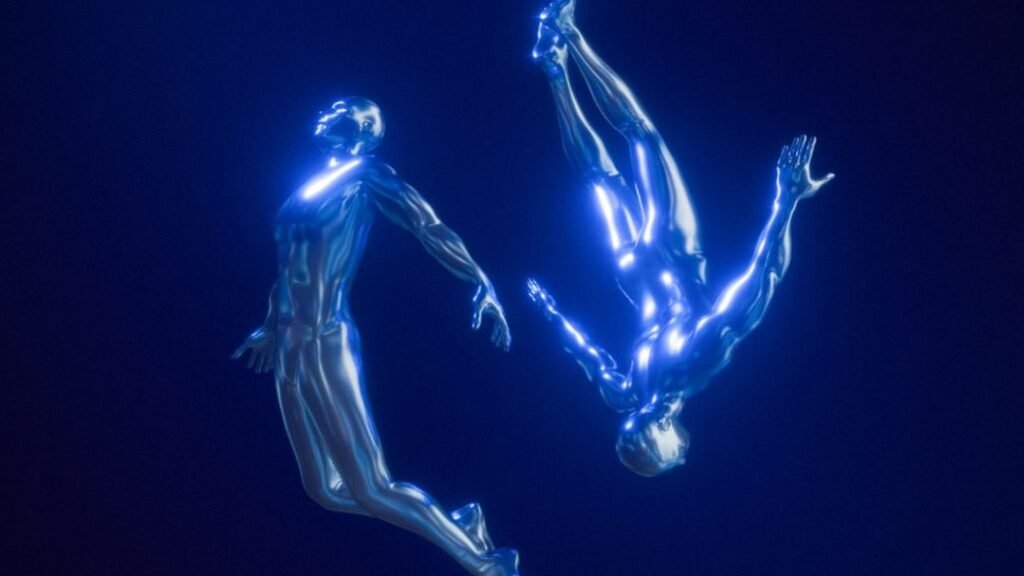

Every kid who’s ever tied a towel around their shoulders has quietly wondered the same thing: what if this actually worked? What if we really could leap off the ground, hang in the air, bend light around us, or walk through walls like it was nothing? In 2026, we carry computers in our pockets, edit genes, and play with quantum particles, yet the classic dream of having real superpowers still feels just out of reach.
The twist is that physics doesn’t just crush these dreams; sometimes it opens weird, fascinating doors. When you look closely, you find that the laws of nature do allow certain “superhuman” abilities in carefully limited, sometimes very inconvenient ways. The catch is that the versions we see in comics and movies are usually dialed up way past what the universe seems willing to tolerate. Let’s dig into what the science actually says about flying, invisibility, and a few other favorites – and where the line between imagination and reality really sits.
Why Superpowers Are Usually Terrible Physics
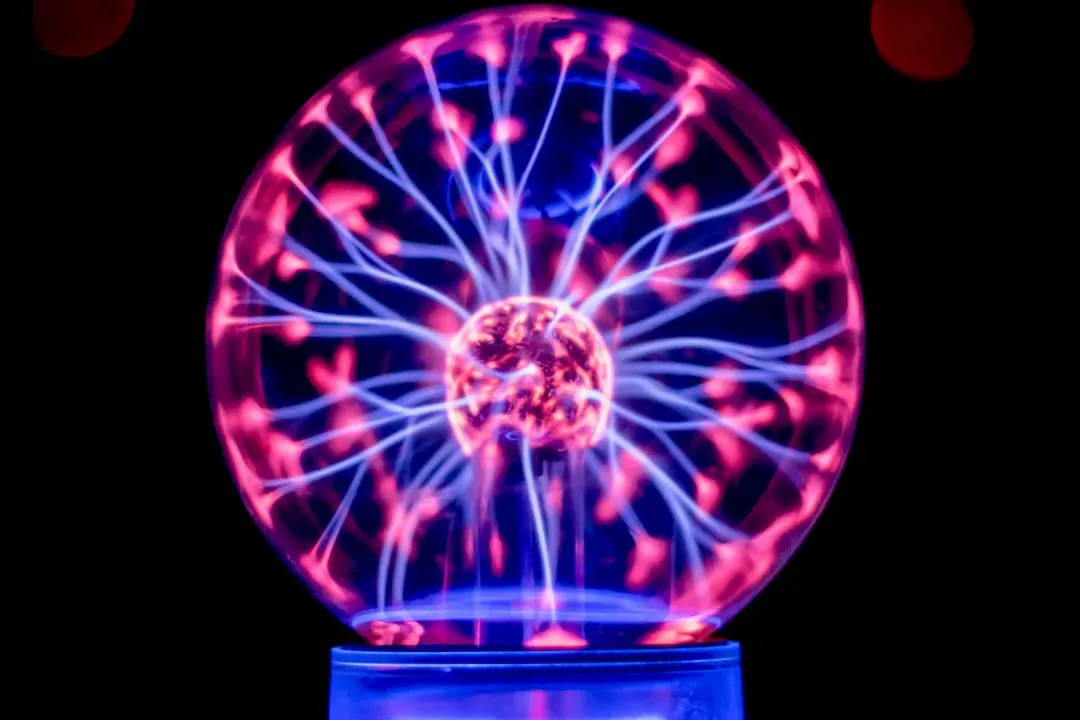
The harsh truth is that most classic superpowers casually ignore energy, momentum, and basic biology. When a hero rockets straight into the sky without any visible engines or fuel, the story quietly skips over the unimaginably large energy required to lift a human body against gravity and accelerate that quickly. In real physics, that energy has to come from somewhere: chemical fuel, nuclear reactions, sunlight, or something equally dramatic, and that has consequences.
Then there’s the problem of forces and side effects. If you stop a speeding car with your bare hand, the force that would normally crush the car’s passengers has to go somewhere – it would blast through your bones, the ground, or the air around you. Our bodies are not built to survive that kind of punishment, and even if your skin were indestructible, your squishy brain still sloshes around inside your skull. Superpowers as shown in fiction often work like magic: they produce huge effects without any realistic cost, and that’s where they part ways with physics.
Human Flight: How Much Energy Would It Really Take?
Imagine trying to lift yourself into the air just by willpower; physics immediately asks: what’s doing the actual work? Birds can fly because they’re light, their muscles are absurdly powerful for their size, and their wings push huge amounts of air downward to create lift. A human adult is heavier, less efficient, and not remotely engineered for flapping anything large enough to get off the ground.
To fly like a superhero – hovering in place, then zipping off in any direction – you’d need a way to push on something. That “something” might be air (like a jetpack), expelled mass (like a rocket), or electromagnetic fields interacting with the environment. In all cases, the energy demands are brutal. Even modern jetpacks burn fuel at an alarming rate and can only keep you airborne for a few minutes. So the idea of calmly cruising over a city for hours without a visible engine means either an unknown, extremely dense energy source or a serious violation of the conservation of energy.
Jetpacks, Wingsuits, and the Closest Things We Have Now
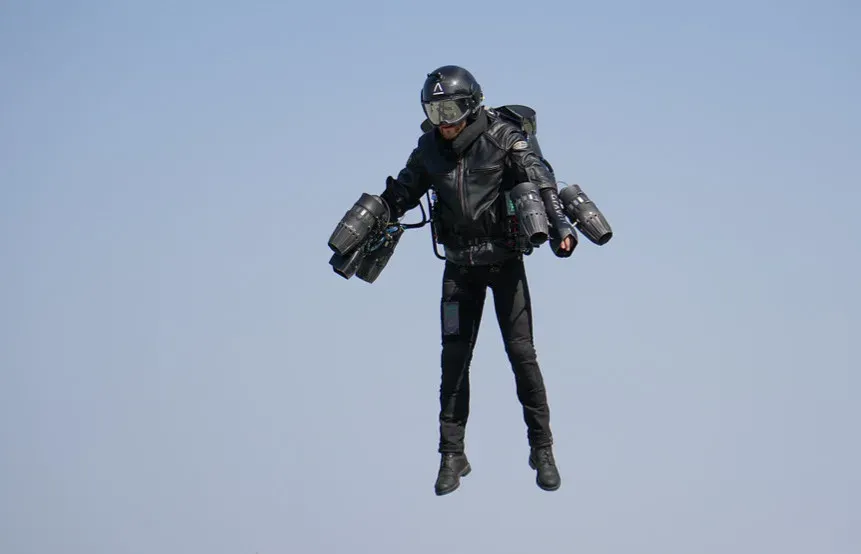
We’re not totally powerless, though. Modern technology has actually gotten us surprisingly close to some forms of “superhuman” flight – just not the clean, dramatic version from movies. Jetpacks, turbine-powered wingsuits, and electric vertical-takeoff aircraft already let skilled pilots blast into the sky, maneuver in three dimensions, and land on their feet. Watching them feels like watching a prototype superhero suit, because in a way, that’s exactly what they are.
The tradeoffs are huge: they’re noisy, fuel-hungry, mechanically complex, and dangerous if anything goes wrong. You need training, safety gear, and a careful respect for the limits of your body and your machine. None of that feels as magical as simply deciding to fly and doing it, but it’s the version that respects the laws of physics. If personal flight ever becomes a common thing, it will probably look more like smart, lightweight aircraft wrapped around our bodies than telekinetic hovering.
Invisibility: Bending Light vs. Just Hiding Cleverly

Invisibility might sound like pure fantasy, but physics actually has a clearer path here than with flying. Sight works because light bounces off objects and into our eyes, so if you can somehow steer light around an object without scattering it, that object could appear to vanish. This is the basic idea behind so-called “cloaking devices” based on exotic materials that interact with light in unusual ways.
Another approach doesn’t touch the light itself; it just tricks your brain. With carefully placed cameras and displays, you can make something look transparent by showing what’s behind it, synced in real time. This kind of optical camouflage already works in controlled setups: tanks, buildings, or even coats that blend into their surroundings with impressive accuracy. It’s not true invisibility in a strict physical sense, but it’s close enough for someone trying not to be noticed.
Metamaterials and the Science Behind Cloaking
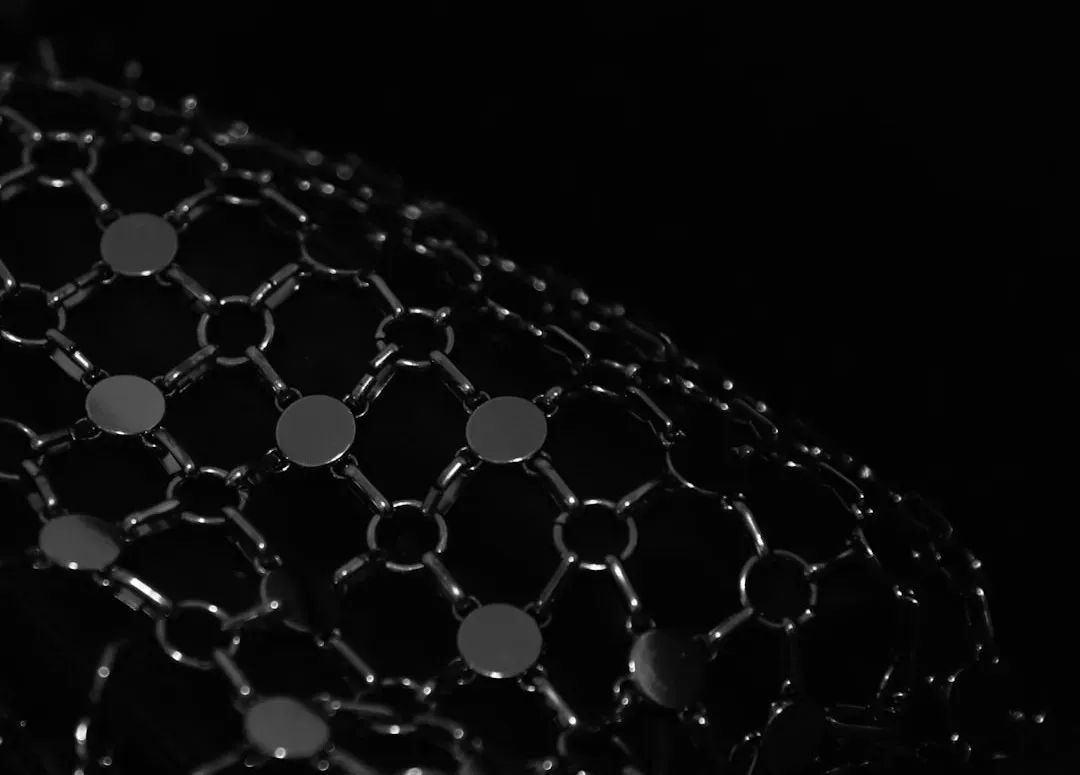
The most mind-bending research on invisibility revolves around metamaterials – artificial structures that can bend waves in ways natural materials can’t. By designing patterns smaller than the wavelength of light, scientists can control how electromagnetic waves flow through and around an object, steering them like water around a rock. In theory, with the right patterns, you can guide light around an object so it emerges on the other side looking unchanged, as if nothing was ever there.
In practice, the reality is much less cinematic. Most successful cloaking experiments so far have worked only at specific wavelengths (often outside visible light), from limited angles, and over very small regions. Making a full-sized human invisible from every direction, across the entire visible spectrum, while they’re moving, is beyond anything we know how to engineer. The math suggests partial cloaking is possible under strict conditions, but the full comic-book version pushes current materials and fabrication far past their limits.
Super Strength and the Limits of Bones and Muscles

Super strength sounds simple: just make the muscles stronger. But biology and physics are annoyingly stubborn. Human muscles already operate within reasonable limits of power for the materials they’re made of, and our bones, tendons, and joints are matched to that strength. If you scaled up someone’s muscle power by a factor of ten without changing anything else, they’d likely rip their own tendons or snap their bones the first time they tried to lift a car.
Even if you somehow reinforced the skeleton, the ground beneath you now has to handle the increased forces. Lift something incredibly heavy, and the stress transfers through your feet into whatever you’re standing on. That’s why even fictional heroes often end up cracking pavement or punching holes in concrete. There’s also the question of energy supply: moving massive loads quickly requires huge bursts of energy, which your metabolism cannot deliver without some entirely new source. Super strength isn’t impossible in concept, but it demands a total redesign of the body, not just “better workouts.”
Invulnerability, Impacts, and the Problem of Momentum

Being bulletproof or surviving massive explosions sounds like a simple matter of tough skin, but the physics of impacts is much nastier than that. If a bullet cannot penetrate, it still has momentum, and that momentum has to go somewhere. Most likely, it transfers into the body as a brutal shove, causing internal damage, organ tearing, or brain trauma even if the skin remains intact. Armor designers know this well: stopping penetration is one challenge, managing blunt force is another.
At higher speeds, like surviving a fall from a skyscraper, the energy involved is so enormous that even distributing it evenly through the body would be catastrophic. Water, air cushions, and crumple zones all work by extending the time over which the body decelerates, lowering peak forces. Without something to absorb that shock, invulnerability becomes less a matter of hard skin and more a requirement for nearly indestructible internal structures – and at that point, you’re something closer to a machine than a human.
Teleportation and Quantum Weirdness vs. Real Travel
Teleportation shows up in physics research in a very specific and very misleading form: quantum teleportation. Despite the dramatic name, it doesn’t move objects or people from one place to another. Instead, it transfers the quantum state of a system – information about how it’s configured – using entanglement and a classical communication channel. The original object stays where it is, and the receiving system ends up in a matching state, while the original state is effectively destroyed.
Teleporting an actual human the way movies show it would mean scanning the positions and momenta of an astronomical number of particles, transmitting that data, and rebuilding the person elsewhere atom by atom. Current physics suggests that kind of perfect copying is fundamentally restricted, and even if it weren’t, the required information and energy would be beyond anything our civilization can handle. So while quantum teleportation is a real, useful tool in secure communication, it’s not a practical recipe for stepping into a machine in one city and walking out in another.
Real-World “Superpowers” We Already Have
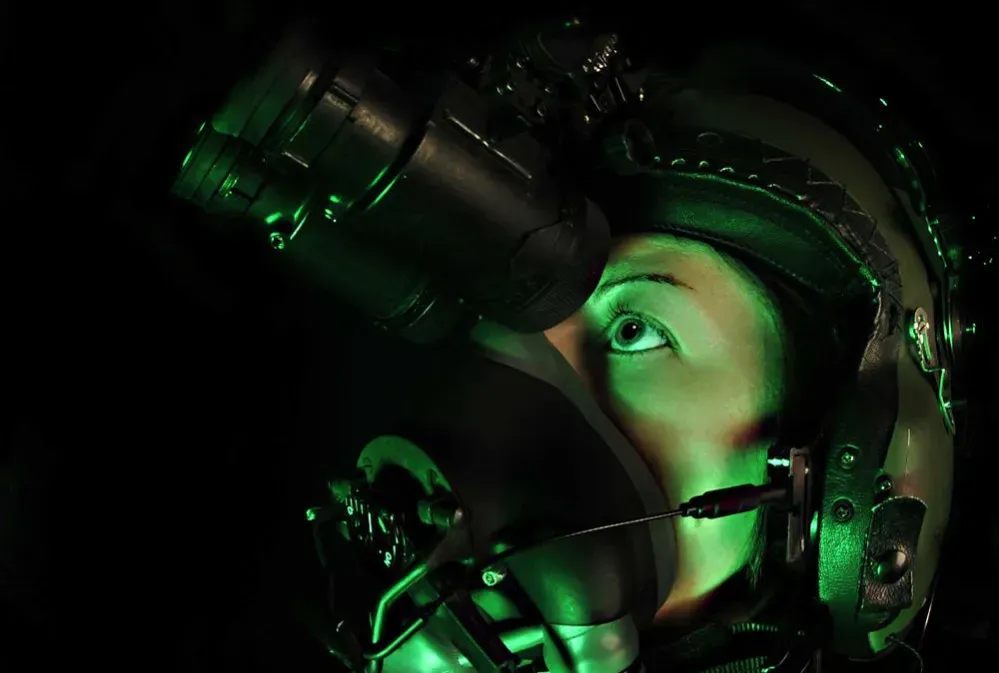
If we drop the demand that powers come from our naked bodies, the story becomes a lot more optimistic. Night-vision devices let us see in near darkness, exoskeletons help people lift heavier objects or walk despite paralysis, and advanced prosthetics can restore lost abilities in ways that would have looked supernatural a few generations ago. In medicine, targeted drugs and gene therapies can correct specific molecular defects, which is a kind of microscopic superpower all by itself.
Even sensing and processing information has gone far beyond organic limits. Satellites watch entire continents, machine learning systems detect patterns no human could track, and brain-computer interfaces are beginning to let people control devices using only their thoughts. Seen from the perspective of someone living centuries ago, we already live in a world filled with subtle, distributed superpowers – amplified by technology rather than granted by mysterious radiation or alien heritage.
Where Physics Draws the Line – and What Might Still Change
Physics doesn’t care about our childhood fantasies; it calmly enforces conservation laws, speed limits, and energy costs. Anything that violates those core principles – free energy, instantaneous travel, effortless flight without interacting with the environment – runs straight into a brick wall. Within those rules, though, there’s still a surprising amount of room to cheat around the edges and stretch what a human can do, especially when we mix biology, engineering, and clever use of materials.
Will we ever fly unaided like comic-book heroes or vanish completely at will? Based on what we know now, full, clean versions of those powers are extremely unlikely. But powered suits, adaptive camouflage, neural implants, and smarter machines will keep nudging us closer to a world where the gap between normal and “super” quietly narrows. The real question might not be whether we can bend physics to our desires, but which powers we actually want to live with as a society – because once they stop being impossible, they start being our responsibility. What kind of “super” future would you really choose if it were on the table?