
Physicists have been quietly rewriting our intuition about time for more than a century, and the latest experiments are forcing us to confront a deeply unsettling idea: your time and my time are not the same thing. The faster you move, the more stubbornly your own seconds refuse to keep pace with everyone else’s. What once sounded like a philosophical riddle now shows up in the code of GPS satellites, the lifespan of cosmic-ray particles, and the design of future spacecraft. Time dilation, once an abstract prediction scribbled on Einstein’s notebook, is now a measurable, engineerable feature of reality. And the more precisely we measure it, the stranger our everyday sense of “now” begins to look.
The Hidden Clues: When Clocks Disagree
The first real clues that time does not tick uniformly everywhere did not come from thought experiments about rockets, but from surprisingly down-to-earth clocks. In the 1970s, physicists flew ultra-precise atomic clocks on commercial airliners and compared them with nearly identical clocks left on the ground back home. When the airborne clocks returned, they showed a small but definite difference in elapsed time, exactly in line with Einstein’s predictions for moving clocks that run slow relative to stationary ones. It was as if the clocks had taken different paths through time itself, accumulating slightly different totals.
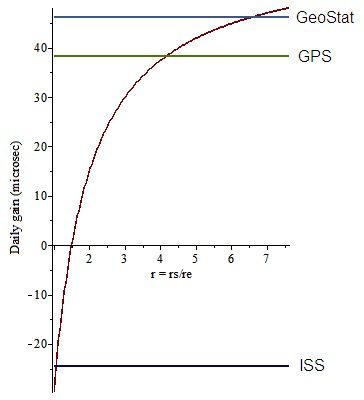
Today, we routinely see the same effect in technologies we depend on without thinking. GPS satellites orbiting Earth move fast enough and sit high enough in our planet’s gravitational field that their onboard clocks would drift by many microseconds per day if left uncorrected. Engineers have to build relativity directly into the system, compensating both for special relativity (motion) and general relativity (gravity) so that your phone can tell you where you are to within a few meters instead of being hopelessly lost. In other words, every time you navigate to a coffee shop, you are quietly relying on proof that time dilation is not just real but operational.
From Cosmic Rays to Particle Labs: Time Stretched to the Limit
One of the most startling demonstrations of time dilation comes from particles that should not survive long enough to reach us at all. High-energy particles from space slam into the upper atmosphere and create showers of short-lived particles called muons, which decay in fractions of a microsecond under normal conditions. Given their brief lifetime and the distance to Earth’s surface, you would expect almost none of them to make it down to sea level. Yet detectors on the ground register a flood of muons every second.
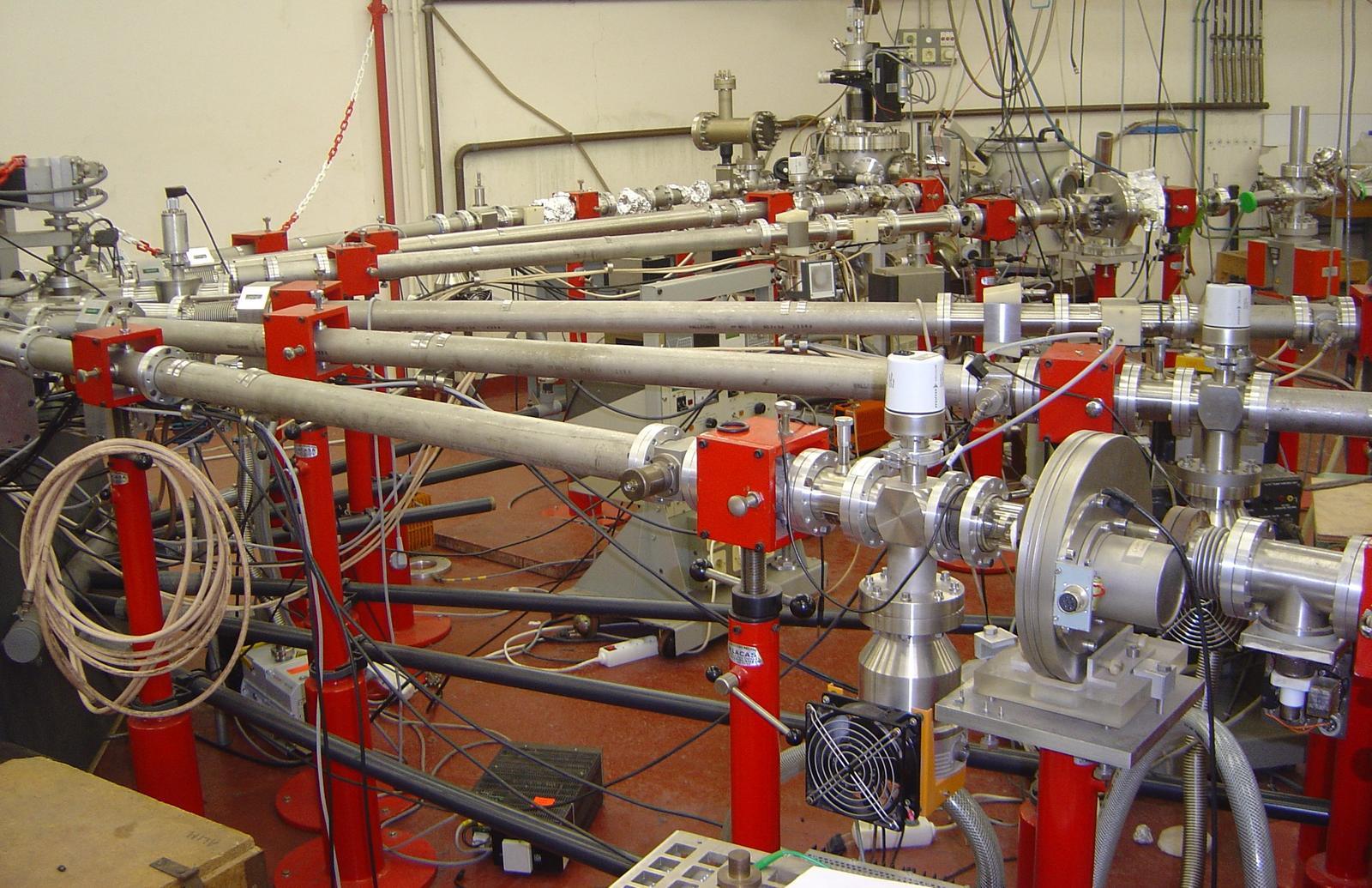
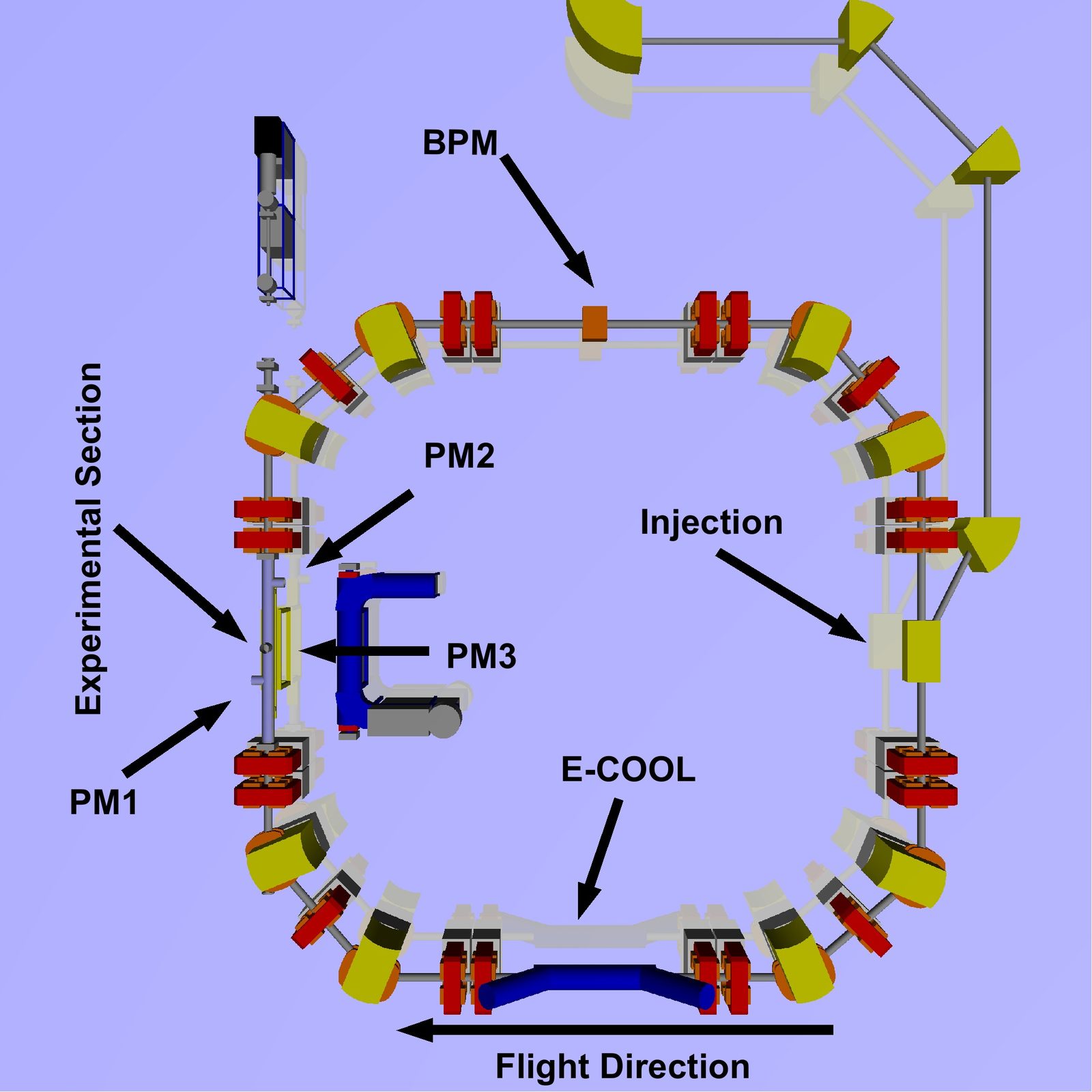
The explanation is that from our point of view, the muons are traveling so close to the speed of light that their internal clocks slow down dramatically, allowing them to live long enough to complete the journey. In particle accelerators, physicists push this effect even further, accelerating particles until their “effective” lifetimes in the lab frame are extended by factors of hundreds or thousands. These experiments do not just confirm the math; they turn time dilation into a controllable tool, letting scientists probe rare decays and exotic states of matter that would be impossible to study otherwise. In that sense, time dilation is not only a cosmic oddity but a workhorse of modern physics.
Riding the Rocket: How Time Dilation Warps Human Journeys
If you scale up from particles to people, the implications become both thrilling and unsettling. Imagine an astronaut on a near-future mission aboard a spacecraft that can cruise at a significant fraction of the speed of light. From the astronaut’s perspective, the onboard clock, their heartbeat, and their thoughts all feel perfectly normal; nothing seems slow. But compared with friends and family back on Earth, their time is effectively stretched, so that fewer years pass for the traveler than for those waiting at home. The classic science fiction trope of an explorer returning to find that decades or even centuries have passed on Earth is rooted in this very real effect.
Physicists call this scenario the “twin paradox”: identical twins part ways, one stays on Earth while the other travels on a high-speed journey and returns physically younger. There is no magic anti-aging happening; each twin simply follows a different path through space-time, accumulating a different amount of proper time along the way. In practice, our current spacecraft are far too slow to make dramatic age gaps, but even on the International Space Station, astronauts experience a minuscule version of this: they age slightly less than people on the surface. It is only a tiny sliver of a second over many months, but it underlines the same point – your path through the universe literally shapes how much time you experience.
Why It Matters: Rewriting Our Sense of Reality
It is tempting to treat time dilation as a cool footnote in physics, something that matters only to satellite engineers and particle physicists, but that would be missing the bigger story. Time dilation is a warning that one of our deepest assumptions – that there is a single, universal march of time experienced by everyone – is simply not true. Instead, the universe offers a patchwork of “nows,” each tied to a specific observer, speed, and gravitational environment. In everyday life, these differences are vanishingly small, so our brains stitch them into one shared timeline and call it reality.
When we push our technology and experiments to extremes, those tiny differences stop being ignorable and start defining what is possible. Whether we are synchronizing financial transactions across continents, coordinating deep-space probes, or building quantum communication networks, precise timekeeping becomes a strategic resource. Time dilation forces us to think carefully about what we mean by simultaneity, delay, and causality in a world where signals never move faster than light. In that way, the paradox of time dilation is less a curiosity and more a new foundation for how modern civilization keeps itself in sync.
Speculative Frontiers: Time Dilation and the Future of Space Travel
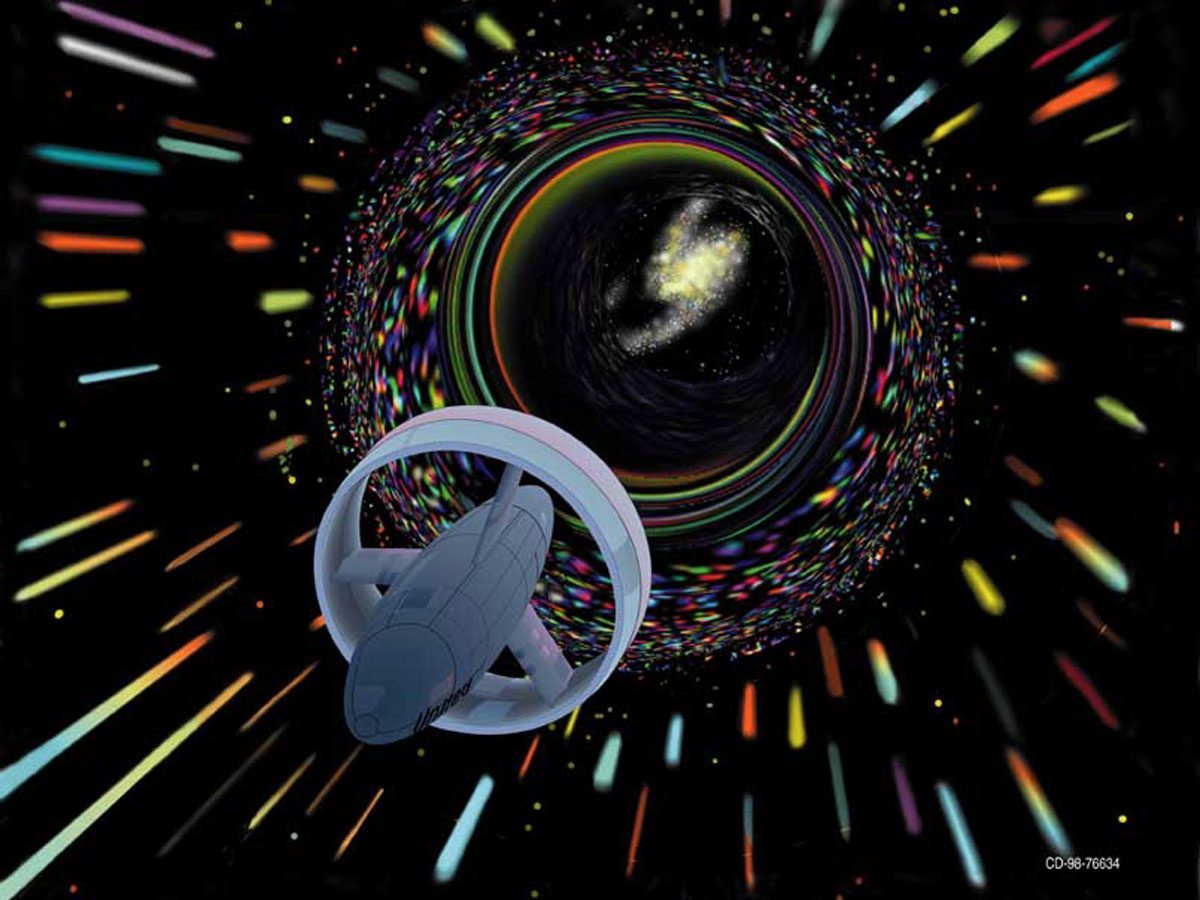
As space agencies and private companies sketch out missions to Mars and beyond, time dilation is moving from the whiteboard into mission planning. For journeys to nearby planets, the relativistic effects are small but not entirely negligible, especially as we contemplate faster propulsion systems like nuclear thermal rockets or, further down the road, beamed-sail concepts. If we ever field craft that can cruise at significant fractions of light speed on interstellar paths, the difference in experienced time between crew and mission control back home could become dramatic. A round trip that feels like a couple of decades on board could correspond to many more years having passed on Earth.
That prospect changes how we think about exploration, responsibility, and even intergenerational planning. Would you sign up for a mission knowing that, from your perspective, you might return to Earth only slightly older while whole generations have been born and died in your absence? Engineers and ethicists are already debating the psychological and social challenges of long-duration missions, and relativistic time gaps would add another layer. Future spacecraft might need not only radiation shielding and life support but also cultural archives and communication strategies designed for a world where “real time” contact becomes impossible. Time dilation, in other words, is not just a line in the mission physics; it is part of the human story of leaving home.
The Gravity Twist: Slower Time in Stronger Fields
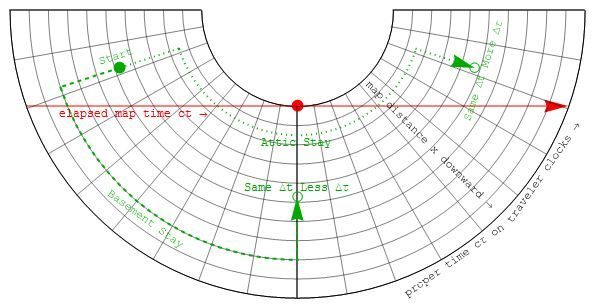
Speed is not the only way to bend time; gravity does it too, and that twist is already woven into our relationship with the planet beneath our feet. According to general relativity, the stronger the gravitational field, the more slowly time passes compared with regions of weaker gravity. That means a clock on a mountaintop really does tick a little faster than one at sea level, even though the difference is incredibly small. This effect has been confirmed with exquisitely sensitive atomic clocks separated by just a few dozen centimeters in height.
The practical consequences extend beyond clever lab tricks. Earth observation satellites, communication systems, and proposed satellite-based quantum networks all have to account for gravitational time dilation to stay synchronized. On a more speculative horizon, if humans eventually settle on other worlds or in large orbital habitats, subtle differences in local gravitational environments could make timekeeping standards a genuine point of negotiation. A Martian colony might have to juggle solar days, mission clocks, and relativistic corrections just to maintain a coherent timeline with Earth. The very idea of a universal “cosmic time” becomes less like a fact and more like a convenient fiction we agree to share.
Comparing Old Intuitions to New Physics: From Absolute Time to Space-Time
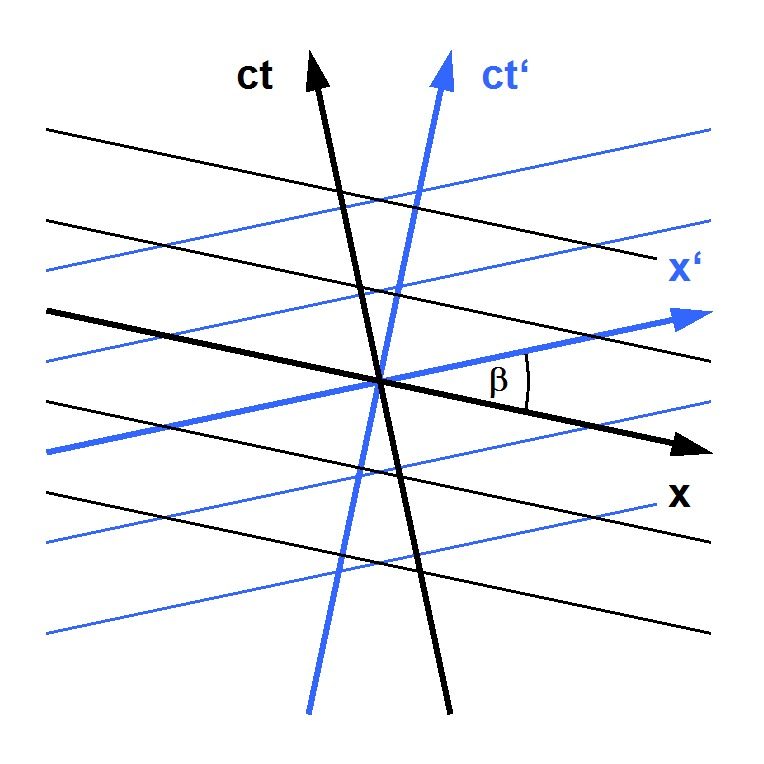
For most of human history, time was treated like a background stage on which events unfolded, steady and absolute for everyone everywhere. Mechanical clocks only reinforced this view, offering the illusion that we were finally tapping into a universal rhythm. Newtonian physics codified that intuition mathematically, with a time variable that marched forward identically for all observers, no questions asked. Under that framework, arguing that one twin could age differently from another simply by moving fast would have sounded nonsensical.
Einstein’s insight was to flip the script: instead of insisting on absolute time, he demanded that the speed of light remain constant in all reference frames and let time and space bend to make that possible. The result is space-time, a four-dimensional fabric where different observers carve up distances and durations in different ways but agree on the underlying geometry. Time dilation is not a glitch in this picture; it is a natural consequence of how the universe preserves its deeper symmetries. What feels paradoxical is really just our old intuition colliding with a more flexible, but more accurate, description of reality. In that sense, the story of time dilation is the story of physics learning to let go of comforting absolutes.
The Future Landscape: Technologies That Will Exploit Time Itself
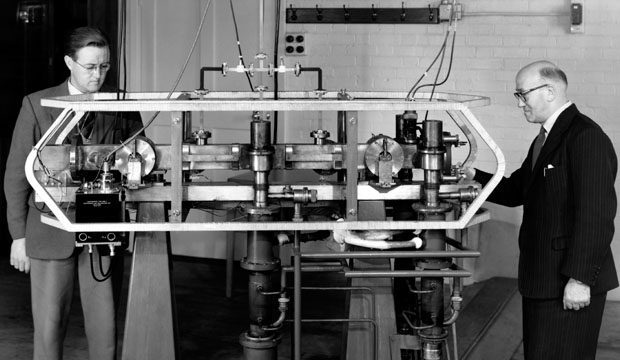
Looking ahead, time dilation is poised to move from something we correct for into something we might deliberately harness. Ultra-precise atomic and optical clocks are now so sensitive that they can detect tiny shifts in gravitational potential, turning time into a probe for underground structures, changing ice sheets, or subtle tectonic motions. Future navigation systems may lean on these “relativistic maps” as much as on traditional signals. In quantum technologies, controlling timing down to staggering precision will be critical for entangling particles over long distances, making relativistic effects directly relevant to the security of future communications.
If interstellar exploration becomes more than thought experiment, mission designers might start asking provocative questions: can we shape trajectories to trade travel duration in one frame for another, effectively choosing how much time passes for explorers versus those at home? Some futurists even flirt with ideas like using gravitational wells as crude “time vaults,” where storing objects or data in stronger gravity would make them age more slowly relative to the wider universe. Whether or not such concepts ever leave the realm of theory, they underline a key shift: time is no longer just what clocks measure, but something we can bend, map, and perhaps someday strategically deploy.
How You Can Engage: Thinking Differently About Every Second
Most of us will never board a near-light-speed spacecraft or tune a laboratory-grade atomic clock, but time dilation still quietly shapes the world we inhabit. One simple way to engage is to treat everyday technologies – GPS navigation, satellite imagery, precision timing in finance and power grids – as windows into a deeper reality, not just conveniences. Reading about current experiments that test relativity with ever higher precision, from space-based atomic clocks to muon observatories, can turn abstract equations into a living scientific narrative you can follow over the years. Supporting public science institutions, museums, and journalism that take relativity seriously helps keep these complex ideas in the public conversation.
You can also use time dilation as a mental tool, a reminder that your personal “now” is not the whole story but one thread in a much larger tapestry of space-time. That shift in perspective can foster a kind of cosmic humility without draining the wonder from daily life. After all, every time you glance at your phone’s map or watch a rocket launch stream, you are brushing up against a universe where speed and gravity literally change the flow of moments. Letting that sink in is a small but powerful way to stay connected to the frontier of physics.
Suhail Ahmed is a passionate digital professional and nature enthusiast with over 8 years of experience in content strategy, SEO, web development, and digital operations. Alongside his freelance journey, Suhail actively contributes to nature and wildlife platforms like Discover Wildlife, where he channels his curiosity for the planet into engaging, educational storytelling.
With a strong background in managing digital ecosystems — from ecommerce stores and WordPress websites to social media and automation — Suhail merges technical precision with creative insight. His content reflects a rare balance: SEO-friendly yet deeply human, data-informed yet emotionally resonant.
Driven by a love for discovery and storytelling, Suhail believes in using digital platforms to amplify causes that matter — especially those protecting Earth’s biodiversity and inspiring sustainable living. Whether he’s managing online projects or crafting wildlife content, his goal remains the same: to inform, inspire, and leave a positive digital footprint.