
Imagine tracing your ability to see a sunset, read a text message, or recognize a loved one’s face all the way back to a tiny, ancient, one-eyed creature that roamed prehistoric seas. It sounds like something from science fiction, honestly. Yet that’s exactly what researchers are now suggesting, and the implications are genuinely mind-bending.
This discovery reshapes how scientists think about the evolution of the eye, one of nature’s most complex and debated organs. There’s a lot more to unpack here than just a weird fossil finding, so let’s dive in.
Meet the Ancient One-Eyed Animal at the Center of It All
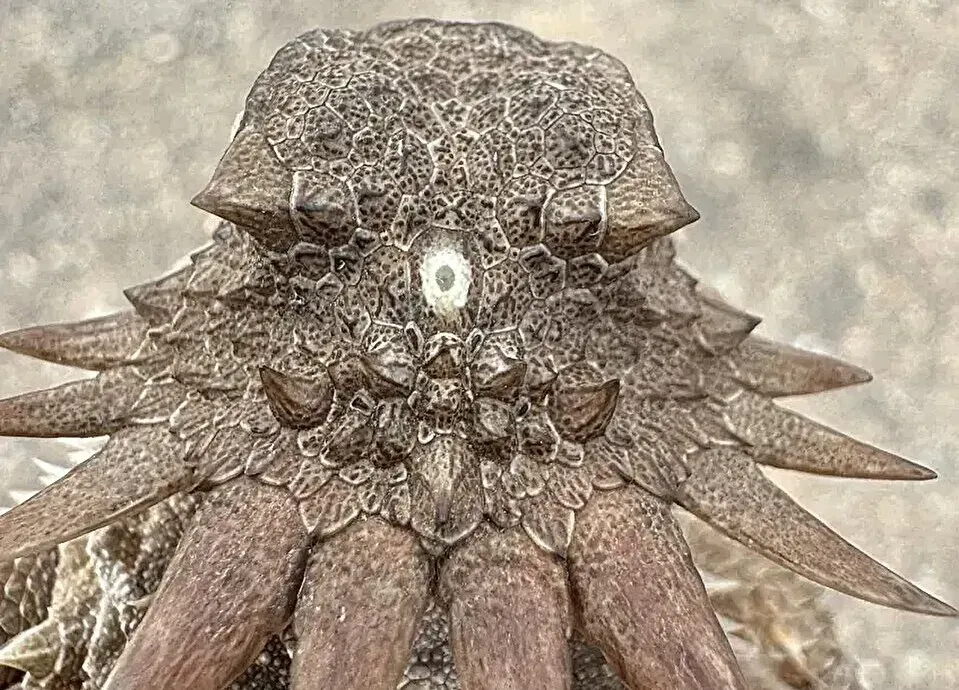
Here’s the thing about evolutionary biology: sometimes the most unassuming creatures carry the biggest secrets. The creature in question is a tiny, ancient animal from the Cambrian period, a time roughly five hundred million years ago when life on Earth was exploding into complexity at a dizzying rate. This organism possessed what scientists describe as a single, median eye, essentially a lone visual structure sitting front and center on its body.
What makes this particularly striking is that such creatures were long dismissed as evolutionary dead ends. Turns out, that assumption was dead wrong. Researchers now believe this one-eyed ancestor may have played a foundational role in the development of paired, complex eyes like the ones you’re using right now to read this article.
What Scientists Actually Found in the Fossil Record
The evidence comes from exceptionally well-preserved fossils, the kind that paleontologists spend careers hoping to find. These specimens show remarkable detail in the eye structure, giving researchers a rare window into soft tissue anatomy that rarely survives fossilization. It’s a bit like finding a perfectly intact flower pressed inside a book from half a billion years ago.
Crucially, the optical structure found in these fossils shares surprising similarities with the compound and camera-type eyes seen across modern animal groups, including vertebrates like us. The internal organization of the photoreceptor cells appears to echo blueprints that nature kept reusing across millions of years of evolution. That kind of deep continuity is rare, and honestly, thrilling.
Why the Single Eye Theory Changes Everything
For a long time, scientists assumed paired eyes evolved together from the start, developing symmetrically as a package deal. This new research challenges that assumption in a pretty fundamental way. The idea now gaining traction is that a singular, ancestral photoreceptive structure came first, and paired eyes emerged later as evolution refined and duplicated the original design.
Think of it like early software development. You build one working program, test it, and then fork the code into two parallel versions that evolve separately. That’s essentially what may have happened here, biologically speaking. If the single-eye hypothesis holds up to further scrutiny, it reframes the entire origin story of animal vision.
The Cambrian Explosion Connection
The Cambrian explosion is already one of the most fascinating chapters in Earth’s biological history. Within a geologically short window, nearly all major animal body plans appeared almost simultaneously. Eyes, limbs, shells, nervous systems – all showing up on the evolutionary stage within a relatively tight timeframe. The one-eyed creature fits squarely within this explosive moment of biological creativity.
Some researchers believe that the development of even primitive vision was a key driver of the Cambrian explosion itself. Once one animal could “see,” the evolutionary pressure on everything else around it skyrocketed. Predators became more effective. Prey needed better camouflage. The entire biological arms race arguably started with something as simple as a light-sensitive patch of cells.
The Link Between Ancient Photoreceptors and Human Vision
It’s hard to say for sure exactly how direct the line is from this ancient creature to our own eyes, but the molecular evidence is genuinely compelling. The types of proteins involved in photoreception, the opsins, appear to share a common ancestry across vastly different animal lineages. Researchers found traces of these ancient molecular signatures preserved in the fossil specimens’ structural organization.
What this suggests is that evolution didn’t reinvent the wheel every time a new eye type appeared. Instead, it borrowed heavily from an original template, adapting it across hundreds of millions of years. Roughly speaking, the eye you were born with carries echoes of some of the oldest visual machinery life ever invented. That’s not just scientifically interesting. That’s profound.
What This Means for Our Understanding of Evolution
Let’s be real, this kind of discovery forces scientists to revisit long-held models. Evolutionary biology loves a good assumption, and this finding tosses several of them into question simultaneously. The old narrative of paired eyes being the “original” vertebrate eye design may need significant revision.
This research also reinforces a broader principle in evolutionary biology: convergent evolution is far less common than we thought. Many traits we assumed evolved independently multiple times may actually share deep, common roots that we simply hadn’t traced far enough back. The eye, long held up as the ultimate example of convergent evolution, might actually be telling a much more unified story.
Conclusion: Looking Back to Understand How We See Forward
Few discoveries in evolutionary biology carry this kind of visceral, personal weight. The idea that the eyes you use every single day trace their lineage back to a single-eyed creature from the dawn of animal life is remarkable in the most literal sense of the word. It’s humbling, and I’d argue it’s also a little bit beautiful.
Science has a way of doing that, of making the familiar suddenly feel ancient and extraordinary. Every time you glance out a window or catch someone’s eye across a room, you’re using a tool that life spent hundreds of millions of years perfecting, starting from something almost impossibly simple. Not bad for a one-eyed creature most people have never heard of.
What do you think – does knowing the deep history of your own eyes change how you think about vision? Drop your thoughts in the comments.