
You’re sitting in your kitchen, maybe with coffee in hand, and somewhere miles beneath the surface of the ocean, water hotter than fresh lava is blasting out of the seafloor into absolute darkness. There’s no sunlight, the pressure is like stacking dozens of jumbo jets on your shoulders, and yet there are forests of tube worms, blind shrimp, and ghostly fish thriving as if this hellish place were a cozy neighborhood. It almost feels like a science fiction setting that somehow escaped into the real world.
For decades, scientists thought the deep ocean was mostly empty and lifeless, a quiet graveyard of sinking debris from the surface. Then hydrothermal vents were discovered and that idea shattered overnight. Suddenly, life was popping up where it absolutely “shouldn’t” exist, feeding not on sunlight, but on chemical energy from the Earth’s interior. These places don’t just rewrite our textbooks; they force us to rethink what “habitable” even means, not only on Earth, but on other worlds too.
Where the Earth Cracks Open: How Deep-Sea Vents Are Born
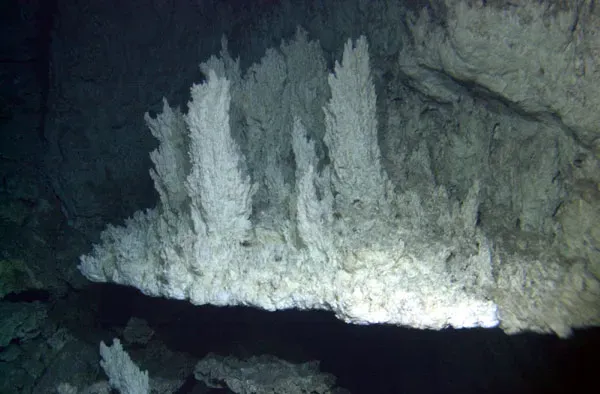
Picture the seafloor not as a flat, quiet desert, but as a giant scar where tectonic plates slowly tear apart. Along these cracks, seawater seeps deep into the crust, heats up as it brushes past hot rock or magma, and rushes back out like a boiling chemical cocktail. These are hydrothermal vents, and in the deepest parts of the ocean, they form towering chimneys belching hot, mineral-rich fluids into freezing water. Some plumes are so packed with particles that they look like underwater smoke, which is why they’re often called black smokers.
At the most extreme vents, temperatures can soar close to the boiling point of water under deep-sea pressure, while just a few centimeters away, the surrounding seawater is just above freezing. That razor-thin line between scalding and icy creates surreal gradients, where only the strangest, hardiest organisms can cling to life. To make it even wilder, all of this unfolds in total darkness, nearly impossible pressure, and crushing isolation from the rest of the ocean. It’s like the planet is quietly running its own bizarre experiment, hidden far beyond where sunlight can reach.
Life Without Sunlight: When Chemistry Replaces Photosynthesis
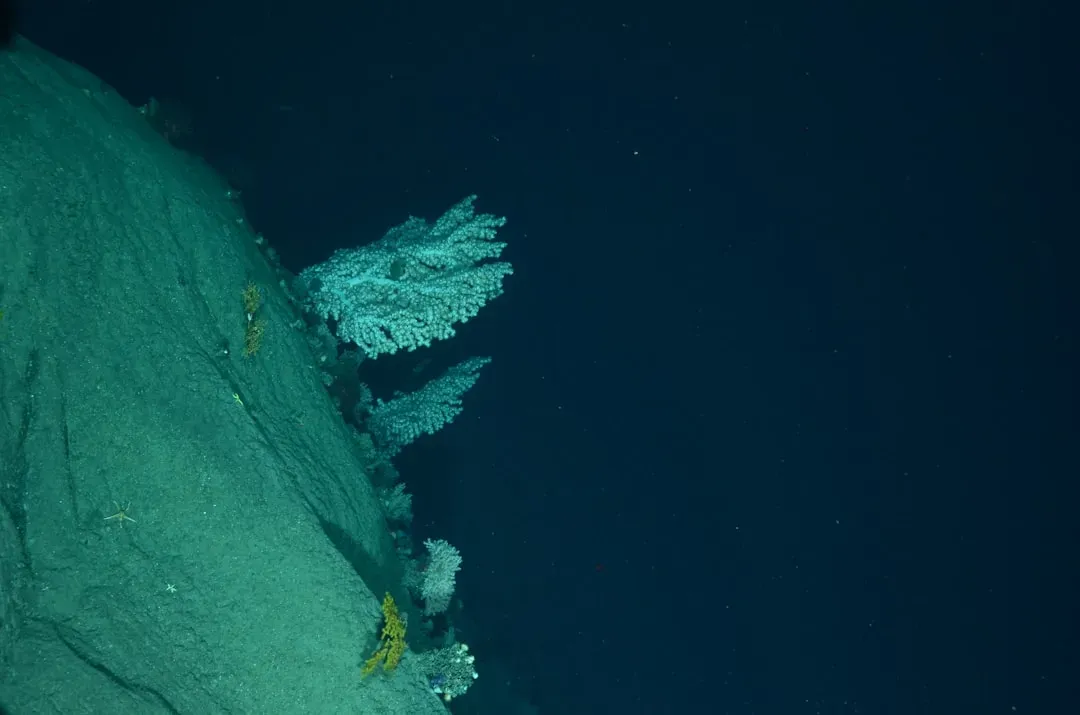
On the surface, life is powered by sunlight: plants capture it, animals eat the plants or eat the animals that eat the plants, and the whole web hangs on those rays. At deep-sea vents, that entire system collapses, because sunlight never gets there in the first place. Instead, vent ecosystems are built on something called chemosynthesis, where microbes use chemicals like hydrogen sulfide and methane as an energy source. Imagine a forest where the trees run on battery acid instead of sunlight and you’re not too far off.
These chemosynthetic microbes form the true base of the food web, coating rocks, floating in the water, or living inside the bodies of larger animals. They take the toxic, smoky vent fluid and turn it into organic matter, creating food in a place that should technically be a dead zone. Everything else, from giant tube worms to ghostly crabs, depends on this microscopic industry. That’s one of the most unsettling and thrilling ideas about vents: life doesn’t actually need sunlight, just a steady flow of usable energy, no matter how weird the source.
Creatures That Shouldn’t Exist: The Strangest Vent Animals
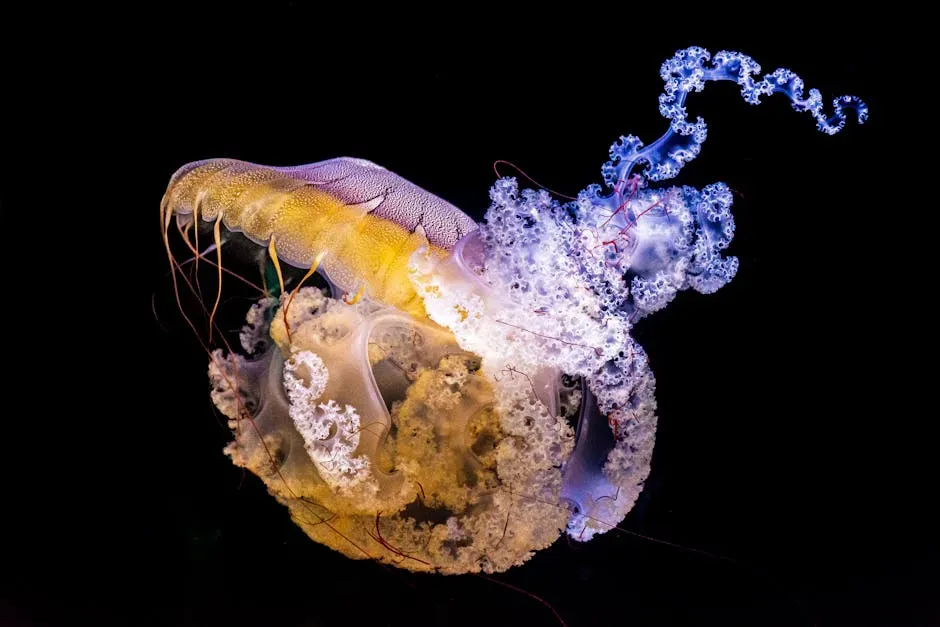
Walk through a vent field – if you could somehow survive it – and you’d think you were on another planet. There are tube worms that can grow taller than a human but have no mouth and no stomach, relying entirely on symbiotic bacteria inside their bodies to feed them. There are shrimp with light-sensing patches on their backs instead of conventional eyes, as if evolution took one look at the darkness and decided to improvise. Some clams and mussels at vents are bloated with internal bacteria that essentially farm chemicals for them, turning their insides into living factories.
One of the strangest discoveries in recent years is how many of these creatures are specifically adapted not just to survive in extreme conditions, but to absolutely require them. Many vent animals die if the temperature or chemistry shifts too far toward what we would consider “normal” ocean conditions. In other words, our cozy world is lethal to them, while their boiling, acidic, high-pressure environment is home. That flips our instinctive sense of what’s harsh and what’s comfortable completely upside down, and it hints at how flexible life can be when given enough time to adapt.
Boiling Yet Alive: How Anything Survives This Hellscape
To understand just how nuts vent life is, you have to imagine what it’s up against: pressures hundreds of times greater than at the surface, temperatures swinging from icy to near-boiling in a matter of centimeters, and chemicals that would poison most surface organisms almost instantly. Yet microbes have evolved proteins and cell membranes that stay stable where ours would just fall apart. Some of them, called hyperthermophiles, actually grow best at what we’d call extreme heat, shrugging off conditions that would sterilize most labs. It’s a bit like finding a plant that only blooms inside a volcano.
Larger animals have their own tricks. Tube worms use special hemoglobin to transport both oxygen and toxic sulfide without being poisoned, while vent mussels can regulate which microbes they host depending on which chemicals are available. Even the way some animals move is adapted to these tiny safe zones where temperature and chemistry are just right. They end up living in this narrow band between “too hot to exist” and “too cold and poor in chemicals to sustain them,” navigating an invisible landscape of gradients that our senses can’t even detect.
Fragile Oases on a Shifting Seafloor
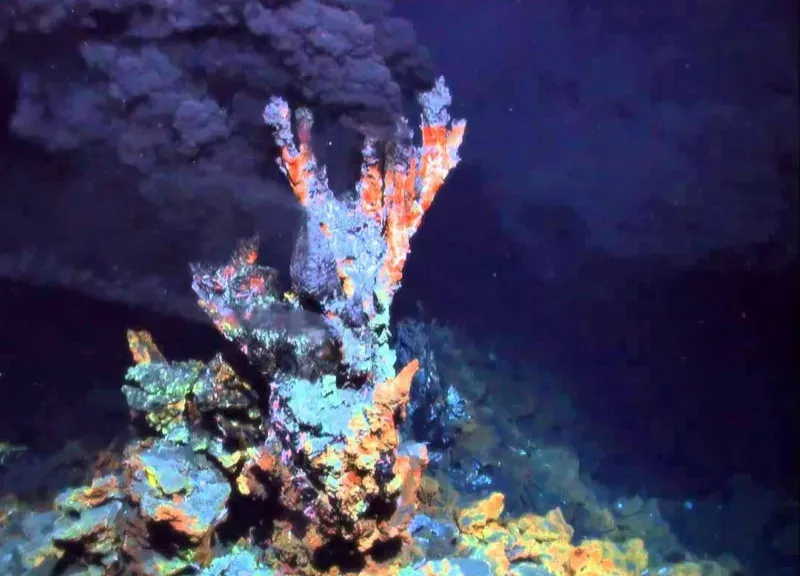
For all their toughness, vent ecosystems are also incredibly fragile in a different way: they depend entirely on the activity of the vents themselves. If a vent field shuts down because the underlying magma shifts or the crust seals up, the chemical buffet is over. Animals are suddenly stranded without their microbial food factories, and the community can collapse. Some species can drift to new vents, but those new homes might be miles away across cold, food-poor seafloor. It’s like living in a small town that disappears overnight and having to find the next town in total darkness.
What makes it even more precarious is that vent fields are patchy and unpredictable. New vents can appear within years after undersea eruptions, and others can go dormant just as quickly, forcing organisms to play an endless game of survival musical chairs. From a human perspective, they look like glowing oases in an endless desert, except the oasis can flicker and vanish without warning. That dynamic existence, balanced between resilience and instability, might be one of the reasons vent communities are so rich in unique species – evolution is constantly under pressure to innovate fast, or disappear.
Clues to Life on Alien Worlds
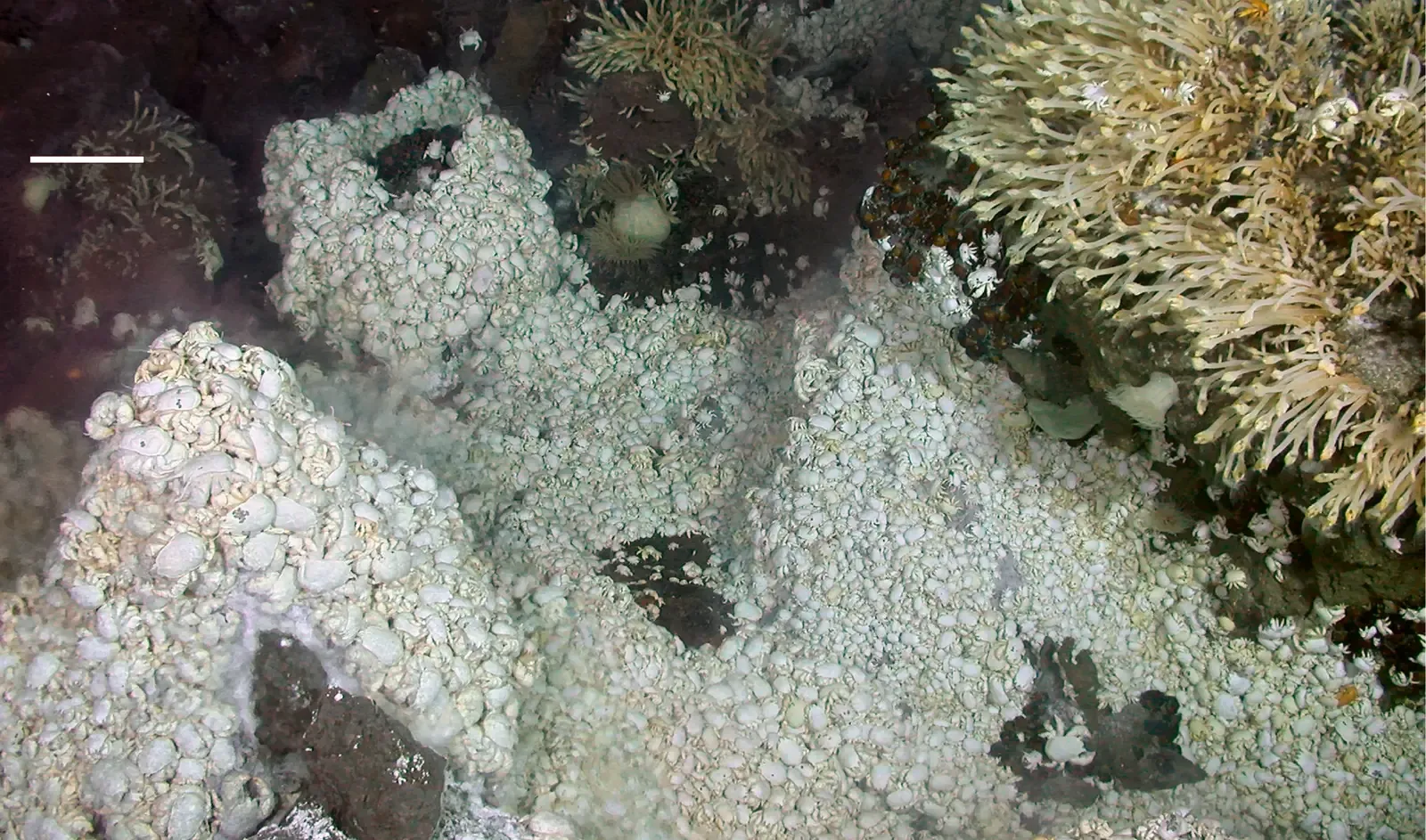
The deeper scientists look at hydrothermal vents, the more they start to resemble test cases for life far from Earth. Several icy moons in our solar system, like Europa and Enceladus, are believed to have global oceans under their frozen crusts, possibly with hydrothermal activity at the seafloor. If life can thrive at vents on Earth, fueled only by rock-water chemistry and no sunlight at all, then suddenly those distant oceans don’t seem so sterile. Instead, they start to look like potential siblings of our own deep sea, quietly simmering with possibilities.
Some researchers even think life on Earth might have originated around early hydrothermal systems, where rich chemical gradients could have powered the first primitive metabolisms. If that’s true, then the vents we see today are not just weird side notes – they’re echoes of life’s starting point. That idea is unsettling in the best way: the notion that the ancestors of everything from oak trees to humans might trace back to some microscopic chemists huddled around a volcanic crack in the ocean floor. When space agencies plan missions to sample plumes from icy moons, those invisible microbes are exactly what they’re hoping to find.
Why These Impossible Ecosystems Matter to Us
At first glance, what happens miles beneath the ocean, in darkness we’ll never personally see, might feel disconnected from daily life. But vent ecosystems are proof that life is far more flexible, inventive, and stubborn than we once believed. They expand the boundaries of where we think life can exist, reshaping how we search for it beyond our planet and how we understand it here at home. They also remind us that Earth still holds massive surprises, even now, when we act like we’ve mapped and measured everything that matters.
There’s also a more uncomfortable angle: growing interest in deep-sea mining, especially around mineral-rich vent fields, risks damaging these rare, poorly understood habitats before we truly grasp what we’re losing. When I first watched footage of a vent field, with its swaying tube worms and shimmering hot water, it felt less like a resource and more like a cathedral built by geology and time. These places are raw evidence that the universe is stranger and more creative than our assumptions. The real question is whether we’ll treat them as expendable curiosities, or as vital reminders that life doesn’t just adapt to the possible – it rewrites the rules of what’s possible in the first place.