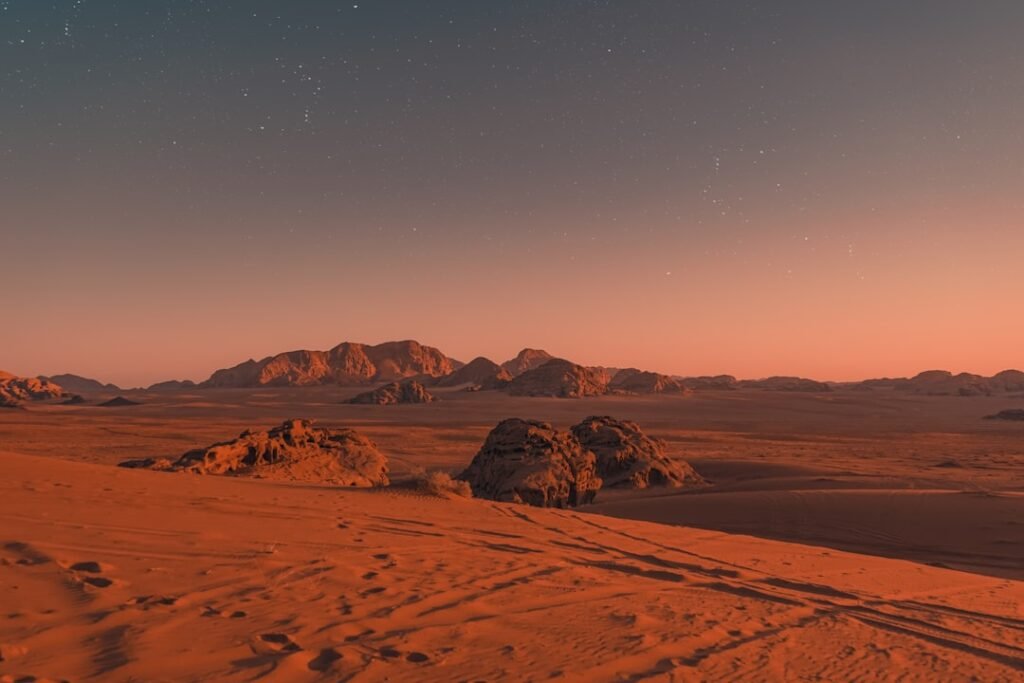
Wind howls across the Peruvian desert, where giant drawings—some longer than a football field—stretch across the arid earth, visible only from the sky. Imagine standing in the middle of nowhere and realizing that beneath your feet, someone thousands of years ago carved a message you can only read from the heavens. The Nazca Lines are one of the world’s greatest archaeological mysteries, stirring wonder and debate for decades. Are they art, ritual, or something even stranger? Their beauty and scale are matched only by the baffling questions they raise. Let’s journey into the heart of this enigma and see why science still can’t give us all the answers.
A Desert Canvas Unlike Any Other

The Nazca Lines are found in the Nazca Desert of southern Peru, a region so dry that rain barely visits. This bone-dry climate has preserved the lines for centuries, keeping them crisp against the reddish soil. Covering nearly 450 square kilometers, the lines form hundreds of shapes—animals, plants, geometric designs, and mysterious figures. Some are as small as a few meters, while others stretch over 300 meters long. Walking among them, you’d see little more than shallow furrows in the ground, but from above, they transform into astonishing works of art. The sense of scale is humbling; it’s as if ancient hands painted with the sky as their audience.
Discovery from Above: The Aerial Revelation

For centuries, the lines remained hidden in plain sight, blending into the landscape. It wasn’t until the 1920s, when commercial flights began passing over the region, that their true magnitude was discovered. Passengers gazed out airplane windows and saw the sprawling patterns, suddenly realizing these were not random scratches but intentional, massive designs. This aerial revelation was both shocking and exhilarating—it’s like stumbling onto a secret you can only see by leaving the ground. To this day, you can hop onto a small plane in Peru and experience the same awe those early pilots felt.
The People Behind the Lines: The Nazca Culture

The creators of these mysterious geoglyphs were the Nazca people, who flourished between 200 BCE and 600 CE. Living in an arid, unforgiving land, they developed ingenious ways to survive, including building underground aqueducts to bring water to their fields. The lines are a testament to their creativity and ambition. Despite lacking modern tools, they designed and executed massive figures with astonishing precision. Their society was rich in art, pottery, and textiles, hinting that the lines were part of a broader cultural tapestry. The Nazca’s deep connection to their environment is clear in every sweeping figure etched into the earth.
How Were the Nazca Lines Made?

The construction of the Nazca Lines wasn’t as complicated as it might seem at first glance, but it is still impressive considering the era. The Nazca people scraped away the sun-darkened pebbles covering the desert surface, revealing the lighter-colored soil beneath. By removing just a few inches of the top layer, they could create visible contrast that has lasted for centuries. Archaeologists believe that wooden stakes and simple ropes helped them plot straight lines and shapes, working much like modern surveyors. The remarkable accuracy, especially in larger and more complex designs, suggests careful planning and a communal effort.
Astonishing Animal Figures That Stun the Imagination

Some of the most famous Nazca Lines are the animal figures—giant monkeys with corkscrew tails, elegant hummingbirds, spiders, lizards, and even a whale. These designs pulse with life and personality, their curves and angles so precise that scientists have marveled at how they were created without an aerial view. The hummingbird, for example, stretches over 93 meters from beak to tail, its wings perfectly balanced. The monkey’s spiral tail is so distinct that it almost looks like a signature. These creatures seem to leap and crawl across the ground, as if frozen mid-motion for the ages.
Geometric Patterns and Mysterious Shapes

Beyond animals, the Nazca Lines feature endless geometric patterns: long, straight lines that run for kilometers, zigzags, trapezoids, spirals, and triangles. Some intersect and overlap, while others stand alone, cutting cleanly across the desert plain. The sheer scale and precision of these designs have led to wild speculation. Why create kilometer-long lines only visible from above? Some suggest they may have marked ceremonial paths, while others see them as astronomical calendars or giant maps. The geometric lines are as tantalizing as they are confusing, sparking endless theories and debates.
Human Figures: The “Astronaut” and Other Oddities

Among the animal and geometric forms, a few human-like figures stand out. The most famous is the so-called “Astronaut,” a figure with large eyes and an outstretched arm, waving from the hillside. Some see a friendly character; others claim it’s an alien visitor. There are also figures that seem to be dancers, hunters, or shamans, their shapes more abstract but full of personality. These human forms add a layer of mystery—what did they represent to the Nazca? Were they gods, ancestors, or just playful doodles? The answer remains elusive.
Rituals, Water, and Spiritual Meaning

One of the most widely accepted theories is that the Nazca Lines had religious or ritual significance. The Nazca people depended on water in a harsh desert, and many lines point toward ancient aquifers or follow underground water routes. Some researchers believe the geoglyphs were created as offerings to the gods, asking for rain or thanking them for life-giving water. Walking the lines may have been part of ceremonies, with participants tracing the patterns to invoke blessings. The desert itself became a temple, the lines prayers etched into the earth.
Celestial Connections: Ancient Astronomy?

Another popular idea is that the lines functioned as a giant astronomical calendar. Some lines align with the sunrise or sunset at solstices, and certain animal shapes may correspond to star constellations. The Nazca, like many ancient cultures, studied the sky closely for clues about the seasons and agricultural cycles. Could the lines have been used to track celestial events, helping the Nazca decide when to plant or harvest crops? While the evidence is intriguing, not all scientists are convinced, and the debate continues.
Theories That Push the Boundaries

The Nazca Lines have inspired some truly wild theories—everything from ancient airstrips for alien visitors to remnants of a lost advanced civilization. While these ideas capture the imagination, most archaeologists stick to earthbound explanations. Still, the sheer scale and visibility from the air have led many to wonder: were the Nazca trying to communicate with something—or someone—beyond their world? The mystery, it seems, is part of the enduring allure of these desert drawings.
Preservation Against Time and Nature

Despite being thousands of years old, the Nazca Lines are remarkably well-preserved. The desert’s dry climate, lack of wind, and rare rainfall have helped keep the lines intact. Yet, modern life poses new threats: roads, mining, and even careless tourists have damaged some geoglyphs. Conservation efforts are now underway to protect these irreplaceable wonders. Local communities and international organizations are working together, using drones and satellite imagery to monitor and safeguard the lines for future generations.
Modern Technology: Drones, Lasers, and Discoveries

Cutting-edge technology has revolutionized how we study the Nazca Lines. Drones soar above the desert, capturing high-resolution images that reveal new and previously unknown geoglyphs. Lasers scan the ground, mapping subtle features invisible to the naked eye. Archaeologists now use satellite data and computer modeling to piece together how the lines were made and what they might have meant. Each new discovery adds a layer of complexity, showing that the Nazca culture’s creativity was even greater than we imagined.
New Geoglyphs Found Every Year

Amazingly, the Nazca Lines are not a finished story—new figures are discovered almost every year. In the last decade, dozens of previously unknown geoglyphs have been revealed by drones and satellite imagery. Some are so faint they were missed for centuries, while others were hidden beneath shifting sands. These discoveries prove that the desert still holds secrets, waiting for the next curious mind or clever device to bring them to light. The excitement of discovery is alive and well in the Nazca Desert.
Symbolism and Artistic Expression

The artistry of the Nazca Lines goes beyond mere technical skill. The choice of animals, plants, and abstract forms reflects a symbolic language, one scholars are still trying to decode. Some think the figures were clan symbols, others see them as a way to tell stories or pass down myths. The lines show an understanding of proportion, movement, and space that rivals any modern artist. Their beauty is undeniable, even if their meaning remains just out of reach.
The Role of Community and Collaboration

Creating the Nazca Lines was not a solitary act. It required the cooperation of many people, working together over days, weeks, or even years. Imagine the planning, organization, and trust needed to lay out a design hundreds of meters long without ever seeing the whole picture. The lines are a testament to a society’s ability to work together for a shared goal, blending engineering, art, and spirituality. They reveal the power of community—something we often overlook in our focus on individual genius.
Comparisons to Other Ancient Geoglyphs

The Nazca Lines are not the only ancient geoglyphs in the world, but they are certainly the most famous. Similar earthworks can be found in Britain’s Uffington White Horse, Chile’s Atacama Giant, and the Blythe Intaglios in California. Each has its own mysteries and cultural context. Studying these sites together helps archaeologists understand why humans, across different times and places, felt compelled to write on the earth itself. The urge to leave a mark is universal, whether carved in chalk, stone, or desert soil.
The Nazca Lines in Popular Culture

Few archaeological sites have captured the popular imagination like the Nazca Lines. They appear in movies, TV shows, books, and video games, often as symbols of mystery and ancient wisdom. Theories about aliens and lost civilizations have made the lines a favorite topic for documentaries and pseudo-scientific speculation. Even so, their true story is more compelling than any fiction—the tale of a people who turned a barren desert into an eternal canvas.
Tourism and Economic Impact

Today, the Nazca Lines are a major tourist attraction, drawing visitors from around the world. Small planes buzz overhead, offering breathtaking views of the geoglyphs. Tourism has brought economic benefits to the local community, funding schools, infrastructure, and conservation. But it’s a balancing act—too much tourism can threaten the very thing people come to see. Responsible travel and sustainable tourism are essential to keeping the Nazca Lines safe for future generations.
The Ongoing Puzzle: Unanswered Questions

Despite decades of research, so many questions about the Nazca Lines remain. Why did the Nazca invest so much time and effort into making these giant figures? How did they plan their designs without aerial views? What stories did they hope to tell, and who were they for? Every answer seems to open up new mysteries, keeping the lines perpetually out of reach. The Nazca Lines invite us to keep asking, keep searching, and keep wondering.
Reflections on Human Creativity and Mystery

Standing before the Nazca Lines, you can’t help but feel a sense of humility and awe. These ancient geoglyphs are a reminder that the urge to create, to communicate, and to seek meaning is as old as humanity itself. The lines are both a message from the past and a challenge to the present: can we ever truly understand the people who made them, or the world they lived in? The Nazca Lines remain one of our greatest mysteries, a riddle written in stone and sand.