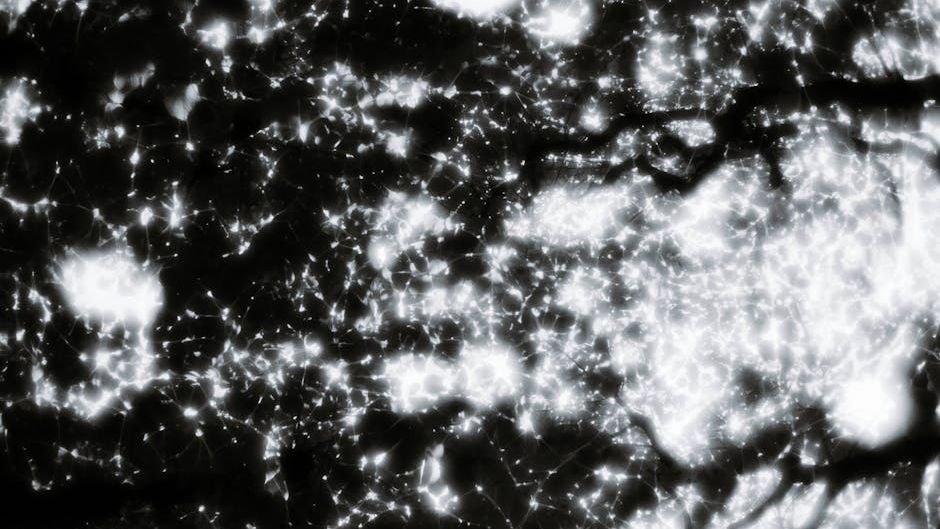

Look up at a clear night sky and you’re seeing only a tiny fraction of what’s actually out there. The stars, galaxies, and glowing nebulae that fill our view account for a surprisingly small share of everything the universe contains. Roughly 95% of the cosmos is made up of dark matter and dark energy, leaving just 5% as the familiar matter you can see around you.
That staggering imbalance has driven one of the most ambitious scientific hunts in history. Dark matter and dark energy are named for what scientists do not yet know about them. Dark matter makes up most of the mass found in galaxies and galaxy clusters, playing a major role in shaping their structure across vast cosmic distances. What follows is a closer look at what we know, how we know it, and why the question still keeps physicists up at night.
How the Idea of Dark Matter Was Born
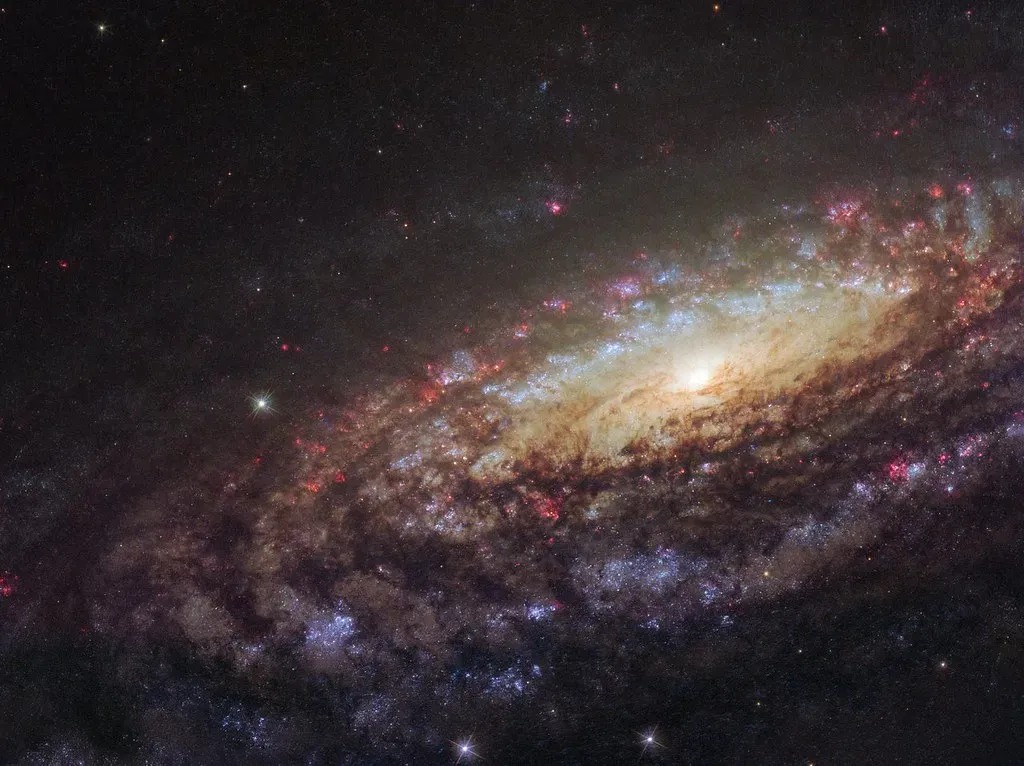
The story doesn’t begin with a dramatic discovery in a laboratory. It begins with a Swiss astronomer in the 1930s noticing something deeply strange about the way galaxies were moving. In the early 1930s, Swiss astronomer Fritz Zwicky noticed that many galaxies were moving far faster than their visible mass should permit, and this unusual motion led him to propose that some kind of invisible structure, dark matter, was supplying the extra gravitational pull needed to keep those galaxies intact.
For decades, the idea remained on the scientific fringe. That changed dramatically when American astronomer Vera Rubin turned her attention to spiral galaxies in the 1970s. That changed in the 1970s when Rubin observed this “missing matter” problem in spiral galaxies. She looked at the stars on the outer edges of the spirals, and to explain why these stars moved as fast as they did without flying into intergalactic space, there had to be a large amount of matter holding them in place. Not seeing any of this matter, Rubin concluded that these galaxies must be held together by dark matter, and her discovery provided such strong evidence that the concept was embraced by the scientific community.
What Dark Matter Actually Is (and What It Isn’t)
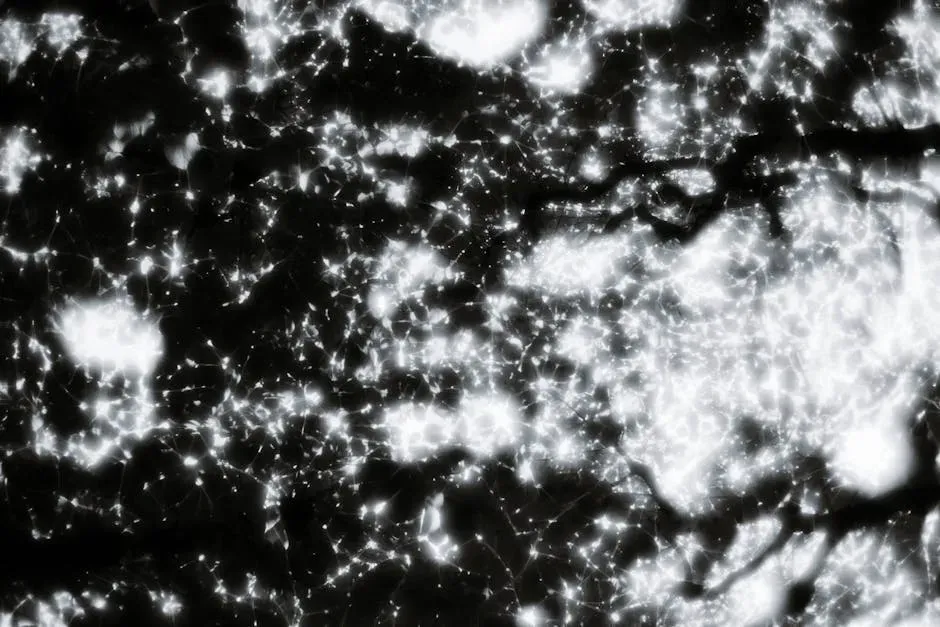
One common point of confusion is the name itself. Dark matter often causes confusion because of its name. Dark matter is not a dark color. Rather, it’s called “dark” because it’s invisible since it doesn’t absorb, reflect, or emit any light. It’s also not the same thing as dark energy, despite the similar label.
Dark matter doesn’t emit, reflect, absorb, or even block light, and it passes through regular matter like a ghost. It does interact with the universe through gravity, something that maps show with a new level of clarity. Evidence for this interaction lies in the degree of overlap between dark matter and regular matter, and observations confirm that this close alignment can’t be a coincidence but, rather, is due to dark matter’s gravity pulling regular matter toward it throughout cosmic history.
The Smoking Gun: Evidence That Convinced the World
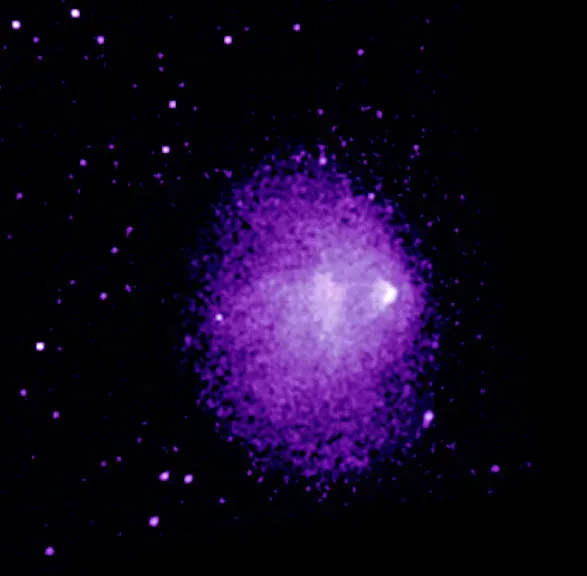
Among the most persuasive pieces of evidence is an event that happened billions of light-years away. In 2006, scientists observed the Bullet Cluster and discovered some of the best direct evidence for dark matter. This galaxy cluster, formally known as 1E 0657-56, was created when two large galaxy clusters collided in an extremely energetic event about 3.8 billion light-years from Earth, and during this collision, hot gas from one cluster interacted with hot gas from the other. Normal matter slowed down during the collision while the invisible mass sailed right through, leaving the two components clearly separated.
More recently, NASA’s James Webb Space Telescope has taken our understanding even further. Scientists using data from NASA’s James Webb Space Telescope have made one of the most detailed, high-resolution maps of dark matter ever produced, showing how the invisible, ghostly material overlaps and intertwines with “regular” matter, the stuff that makes up stars, galaxies, and everything we can see. Dense regions of dark matter are connected by lower-density filaments, forming a weblike structure known as the cosmic web, and this pattern appears more clearly in the Webb data than in earlier Hubble images, with ordinary matter tending to trace this same underlying structure shaped by dark matter.
Dark Matter’s Role in Building the Cosmic Web
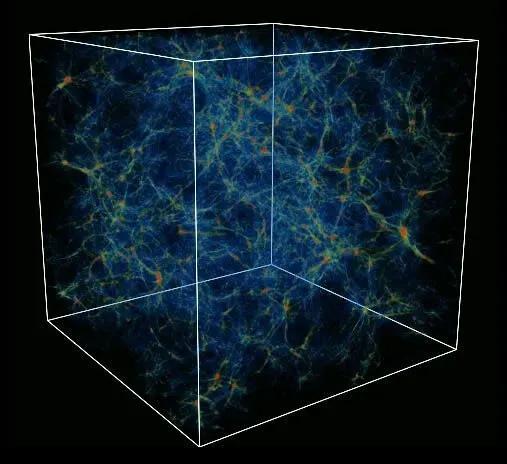
You can think of dark matter as the invisible scaffolding upon which everything you see was constructed. Dark matter is thought to serve as gravitational scaffolding for cosmic structures. After the Big Bang, dark matter clumped into blobs along narrow filaments with superclusters of galaxies forming a cosmic web at scales on which entire galaxies appear like tiny particles. Without this scaffolding, the universe would look nothing like it does today.
The formation of dark matter halos is believed to have played a major role in the early formation of galaxies. During initial galactic formation, the temperature of the baryonic matter should have still been much too high for it to form gravitationally self-bound objects, thus requiring the prior formation of dark matter structure to add additional gravitational interactions. We see galaxies in filaments or clusters only because dark matter formed these structures, while the luminous matter simply follows dark matter’s gravitational attraction.
The Leading Suspects: WIMPs, Axions, and Primordial Black Holes

Science has several strong candidates for what dark matter might actually be made of, though none has been confirmed. WIMPs are hypothetical particles that are big, heavy, and slow-moving. They don’t absorb or emit light or strongly interact with any other particles observed so far, and scientists think WIMPs interact with gravity and possibly other forces, but in a way that allows these particles to pass through normal matter almost seamlessly.
Axions offer a very different profile. Axions were initially proposed to solve the strong CP problem in quantum chromodynamics. QCD axions can be produced non-thermally in the early universe and constitute cold dark matter if their mass is in the micro-eV range. Then there’s a third possibility that’s gained renewed attention: primordial black holes are hypothetical black holes scientists think formed right after the birth of the universe, and they could be as small as an atom or as large as a supermassive black hole, with possible masses ranging from 100,000 times less massive than a paperclip to 100,000 times more massive than the Sun.
The Hunt Underground: Today’s Detection Experiments

Modern science has taken the search deep underground, literally. Managed by the Department of Energy’s Lawrence Berkeley National Laboratory, the LZ detector operates nearly one mile underground at the Sanford Underground Research Facility in South Dakota, and this deep location shields the experiment from cosmic rays and other interference, creating the ideal environment to hunt for these rare interactions. At the heart of LZ is a 10-tonne chamber filled with ultrapure, ultracold liquid xenon. If a dark matter particle, specifically a WIMP, hits a xenon nucleus, it releases energy, causing the atom to recoil and emit light and electrons, with highly sensitive sensors around the chamber capturing these signals and allowing scientists to reconstruct the interaction with extraordinary precision.
The LZ experiment has also delivered a remarkable bonus discovery along the way. The LUX-ZEPLIN experiment has analysed the largest dataset ever collected by a dark matter detector, setting new limits on what dark matter could be and achieving a major milestone: detecting neutrinos from the Sun’s core in a way never seen before. Meanwhile, other experiments are pushing into entirely different territory. Along with LUX-ZEPLIN, the Fermilab-hosted Axion Dark Matter eXperiment-Gen2 and SuperCDMS SNOLAB are second-generation dark matter search experiments, each designed to probe a different slice of the possible parameter space for dark matter particles.
What the Latest Findings Are Telling Us in 2026
The most exciting development of recent months came from NASA’s Fermi Gamma-ray Space Telescope. A University of Tokyo researcher analyzing new data from NASA’s Fermi Gamma-ray Space Telescope has detected a halo of high-energy gamma rays that closely matches what theories predict should be released when dark matter particles collide and annihilate, and the energy levels, intensity patterns, and shape of this glow align strikingly well with long-standing models of weakly interacting massive particles, making it one of the most compelling leads yet in the hunt for the universe’s invisible mass.
Researchers have also been probing something more fundamental: how dark matter behaves. Researchers from the University of Geneva and collaborating institutions aimed to see whether dark matter follows familiar behavior on the largest scales, or whether other forces might influence it. Their study, published in Nature Communications, indicates that dark matter appears to act much like ordinary matter, although they cannot yet rule out the possibility of an additional, previously unknown interaction. Verification from independent analyses and further observations in other dark matter-rich regions are needed to confirm these findings. Science, as always, moves carefully.
Conclusion: The Invisible That Shapes Everything Visible
Dark matter is not a fringe concept or a placeholder for ignorance. It’s the backbone of the universe as we know it, the reason galaxies hold together, the reason the cosmic web has its intricate shape, and the reason stars like our own Sun had any chance of forming at all. Although dark matter is abundant, it gives off, absorbs, or reflects no light, which makes direct observation extremely difficult, and scientists instead study its influence through gravity, which affects how galaxies move and how large-scale structures form.
The tools available in 2026 are better than they’ve ever been. Nearly everything in the universe is made of mysterious dark matter and dark energy, yet we can’t see either of them directly, and scientists are developing detectors so sensitive they can spot particle interactions that might occur once in years. Whether the breakthrough turns out to be a faint gamma-ray signal, a particle recoil deep underground, or something no one has thought to look for yet, the search for dark matter remains one of the most consequential scientific endeavors of our time. The universe kept this secret for nearly a century. It won’t keep it forever.