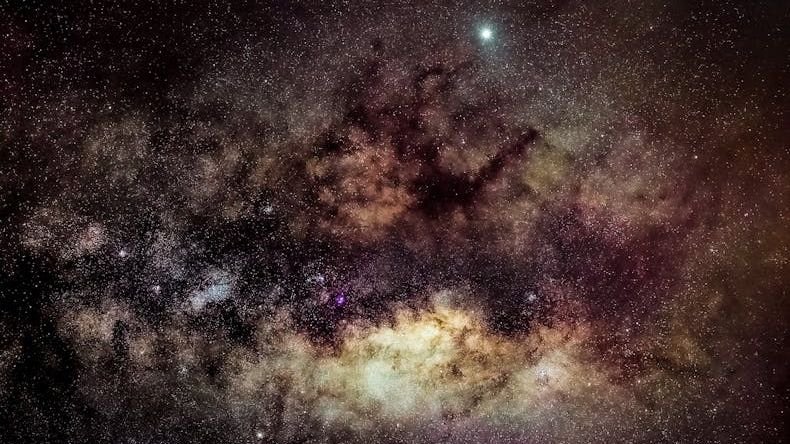

You are living in a universe where almost everything you can see, touch, or measure – every star, every planet, every ocean, every atom – makes up just a tiny fraction of what actually exists. Roughly speaking, the matter you know and can observe accounts for only about five percent of the entire universe. Everything else? Invisible. Unknown. Waiting.
It sounds like science fiction, honestly. Yet the evidence is overwhelming, and the scientific community has grappled with this unsettling reality for decades. Dark matter is not a fringe theory. It is one of the most firmly supported and simultaneously most baffling concepts in all of modern science. So buckle up, because this rabbit hole goes surprisingly deep. Let’s dive in.
A Universe Hiding in Plain Sight
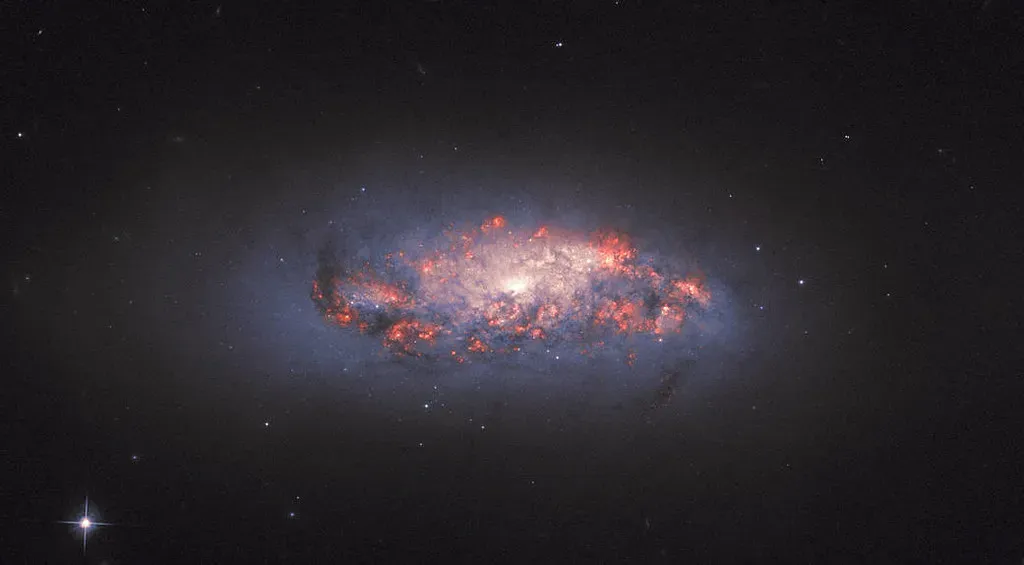
Dark matter is an invisible and hypothetical form of matter that does not interact with light or other electromagnetic radiation. Think of it like a ghost that can push furniture around but refuses to appear on camera. You can watch your chair slide across the floor, but the thing doing the pushing leaves no trace for your eyes to catch.
Dark matter seems to outweigh visible matter roughly six to one, making up about twenty-seven percent of the universe. The matter we know, which makes up all stars and galaxies, accounts for only five percent of the content of the universe. When you pair that with the fact that dark energy makes up approximately sixty-eight percent of the universe, what you get is a cosmos where the familiar, well-understood stuff is embarrassingly outnumbered. We are, in a very real sense, the minority here.
The First Clues: Fritz Zwicky and a Galaxy Cluster That Refused to Behave
In 1933, Swiss-born astronomer Fritz Zwicky published a paper describing an anomaly he observed while studying a cluster of galaxies known as the Coma Cluster. He noticed that the galaxies in the cluster moved too quickly for the gravity created by its observed ordinary matter. The galaxies should have been escaping the cluster, but instead they were staying together. After noting this discrepancy, Zwicky suggested that there might be an invisible form of matter that created the gravity holding these galaxies together.
Here’s the thing – nobody really listened. His work was largely ignored for decades, partly because his personality alienated colleagues and partly because his evidence, though suggestive, was indirect. It would take another brilliant mind, decades later, to finally force the scientific world to pay attention. That person was Vera Rubin, and her contribution changed everything.
Vera Rubin and the Galaxies That Refused to Slow Down
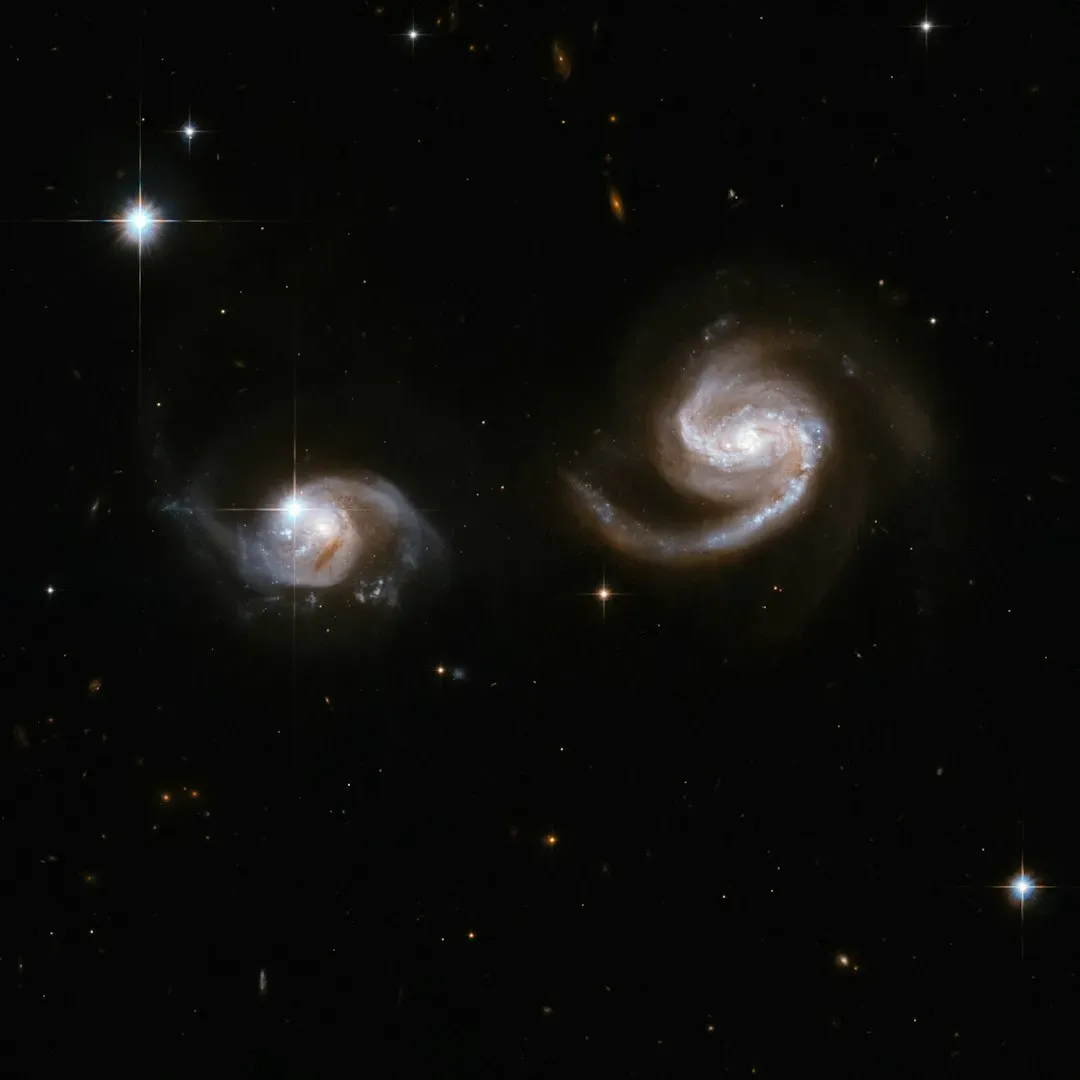
Using a sensitive new spectrograph developed by her collaborator Kent Ford, Rubin measured how fast stars orbit their galactic centers. What she found surprised everyone. Instead of slowing down the farther they were from the center, as planets do in our solar system, stars on the outskirts of galaxies moved just as fast as those near the core. The rotation curves were flat. According to the laws of gravity and visible mass, those outer stars should have been flung into space.
Her research showed that spiral galaxies rotate quickly enough that they should fly apart, if the gravity of their constituent stars was all that was holding them together. Because they stay intact, a large amount of unseen mass must be holding them together, a conundrum that became known as the galaxy rotation problem. Rubin’s calculations showed that galaxies must contain at least five to ten times more mass than can be observed directly based on the light emitted by ordinary matter. I think this is one of the most genuinely shocking discoveries in the history of science – the kind that quietly rewrites everything.
Why You Can’t See It: The Physics of Invisibility
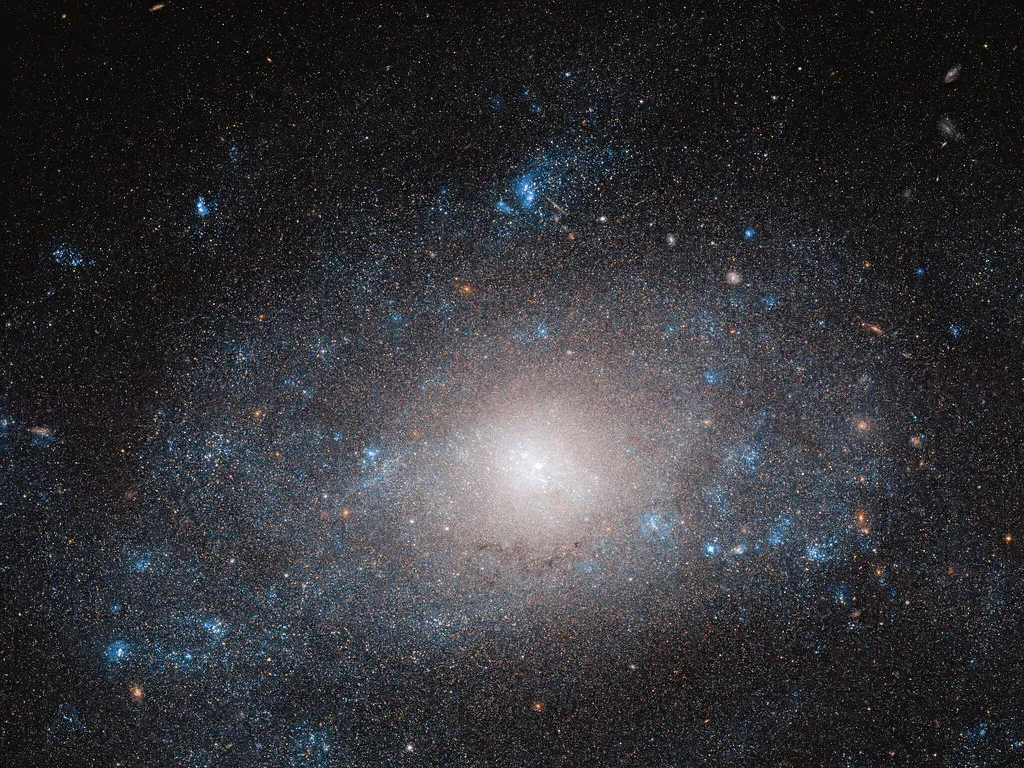
Unlike normal matter, dark matter does not interact with the electromagnetic force. This means it does not absorb, reflect, or emit light, making it extremely difficult to observe. Imagine you had a substance that passed right through every instrument you owned, left no heat signature, produced no light, and refused to bump into anything except through gravity. That is essentially what scientists are dealing with.
While dark matter interacts with ordinary matter through gravity, it does not seem to interact at all with the electromagnetic spectrum, including visible light. So dark matter does not absorb, reflect, or emit any light. While dark matter is invisible, it does have some things in common with ordinary matter: it takes up space and it holds mass. Because of this, we can see how it interacts with and influences ordinary matter throughout the universe, which is how we are able to study it. Gravity, it turns out, is the only language dark matter speaks to us in.
Gravitational Lensing: Seeing the Unseeable
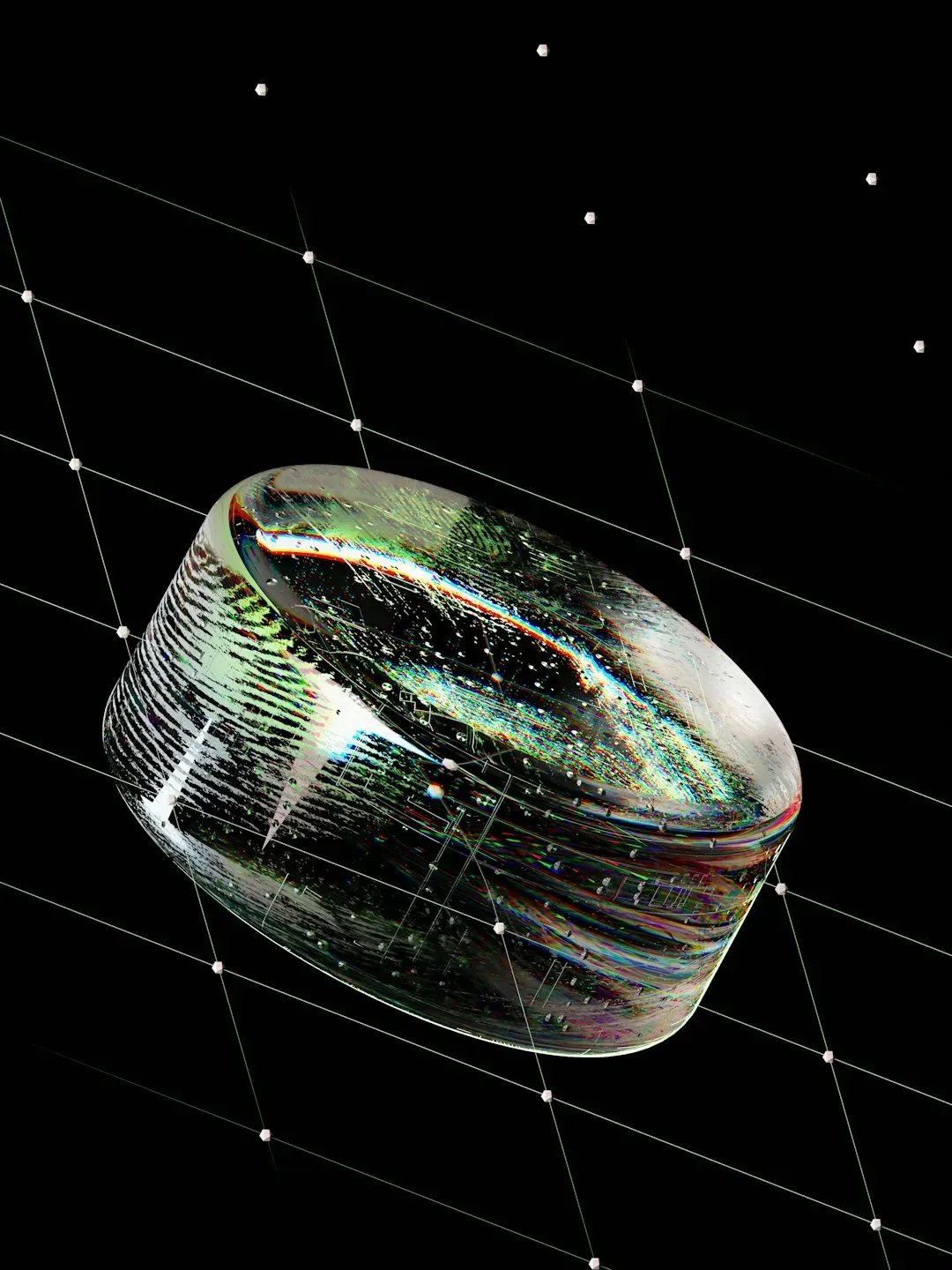
While dark matter does not interact with light, its gravity can bend light from distant galaxies, creating an effect called gravitational lensing. Studying galaxies distorted by gravitational lensing can help scientists better understand dark matter and its place in the universe. It is a bit like placing a glass lens in front of a distant candle. You cannot see the glass itself, but you can see how the candle’s light bends around it. The distortion tells you something is there.
As the light from distant galaxies travels to us, it must pass through the gravitational fields of other galaxies, and so we see distorted images of those distant galaxies. Ordinary matter does not account for the amount of distortion that astronomers observe. Dark matter alters the way that galaxies move. For instance, it causes the edges of galaxies to rotate more quickly than we would expect if galaxies contained only ordinary matter. Dark matter also acts like “gravitational glue.” It binds together clusters of galaxies that would otherwise break apart. That gravitational glue image, honestly, sticks with you.
The Leading Candidates: WIMPs, Axions, and Primordial Black Holes

So if dark matter exists, what is it actually made of? There are two leading particles that theorists have postulated to describe the characteristics of dark matter: WIMPs and axions. Weakly Interacting Massive Particles, or WIMPs, would be electrically neutral and roughly one hundred to one thousand times more massive than a proton. Axions, on the other hand, would have no electric charge and be extraordinarily light, possibly as low as one-trillionth of the mass of an electron. These are genuinely bizarre concepts, particles so different from anything you have ever encountered that they practically demand a new branch of physics.
Primordial black holes, which formed after the Big Bang, are also considered potential dark matter candidates. The memory burden effect may significantly extend the lifetimes of primordial black holes beyond Hawking’s prediction, allowing lighter ones to persist today. Besides particles like sterile neutrinos, axions, and WIMPs, primordial black holes, created from extremely dense conglomerations of subatomic particles in the first seconds after the Big Bang, represent another leading candidate for dark matter. In November 2025, the LIGO/Virgo/KAGRA collaboration reported an unusual gravitational wave from a black hole merger with source masses small enough to suggest evidence for a sub-solar-mass black hole population such as primordial black holes formed in the early universe. That is a very fresh and exciting clue.
The Hunt: Detectors, Dead Ends, and New Directions

Nearly everything in the universe is made of mysterious dark matter and dark energy, yet we cannot see either of them directly. Scientists are developing detectors so sensitive they can spot particle interactions that might occur once in years or even decades. These experiments aim to uncover what shapes galaxies and fuels cosmic expansion. Cracking this mystery could transform our understanding of the laws of nature. We are not exactly talking about a simple laboratory setup here. These detectors are buried deep underground to block out all the cosmic noise that could mimic a dark matter signal.
As of late 2025, there has been no confirmed detection of dark matter from standard WIMP searches. Instead, experiments have placed strong upper limits on the particle’s interaction cross-section with nucleons. As the WIMP parameter space has become increasingly constrained, focus has also shifted toward axion searches. These experiments, such as the Axion Dark Matter Experiment, typically use resonant microwave cavities rather than nuclear recoil targets. It is hard to say for sure whether we are close to a breakthrough or whether dark matter will keep eluding us for another generation. Still, the tools are getting sharper by the year.
Conclusion: Living With a Universe We Can Barely See
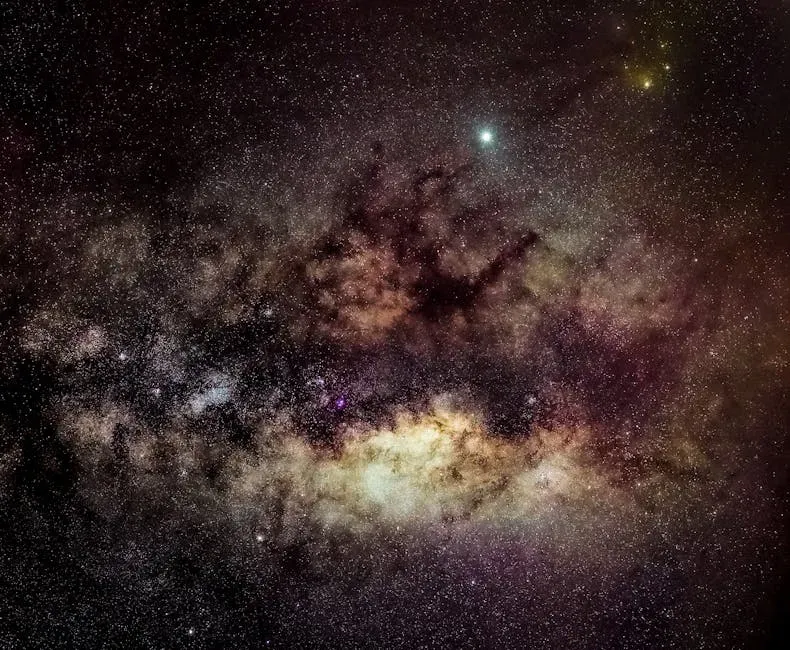
Here is what you are left with after all of this. You exist inside a cosmos where the visible, tangible matter beneath your feet and above your head represents less than one tenth of what is actually out there. Roughly ninety-five percent of the cosmos is made up of dark matter and dark energy, leaving just five percent as the familiar matter we can see around us. The universe, in its vast majority, is composed of things we have never touched, never seen, and cannot yet fully explain.
The question Vera Rubin helped frame – what is the universe actually made of – remains unanswered. Every galaxy we observe, every gravitational lens we measure, every simulation of cosmic structure confirms what her rotation curves first showed: the universe is dominated by something we cannot see. There is something both humbling and electrifying about that. Science has given us particle accelerators, space telescopes, and underground xenon tanks, and yet the most fundamental ingredient in the universe remains stubbornly out of reach.
Dark matter is not just a physics problem. It is a reminder that reality is far stranger and richer than the thin slice our senses can access. What do you think it would mean for humanity if we finally cracked it? Drop your thoughts in the comments – this is one conversation worth having.