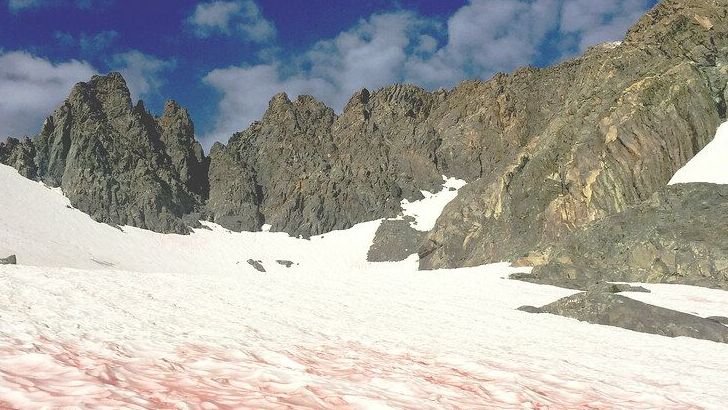

You’ve probably seen images of pristine white glaciers in documentaries or travel magazines. What you might not know is that some of these icy landscapes occasionally transform into something far more dramatic and unsettling. Imagine pristine snow suddenly stained with streaks of deep red, looking like something from a horror movie rather than a natural wonder.
This isn’t the result of some alpine accident or mysterious contamination. Scientists call it “blood snow” or “glacier blood,” though it also goes by the more whimsical name “watermelon snow.” Whatever you call it, this phenomenon is becoming increasingly important as researchers realize its connection to our changing climate. The crimson transformation occurring on glaciers worldwide might look supernatural, yet it reveals complex biological processes that could reshape how we understand ice melts and global warming.
What Exactly Is “Blood Snow”?
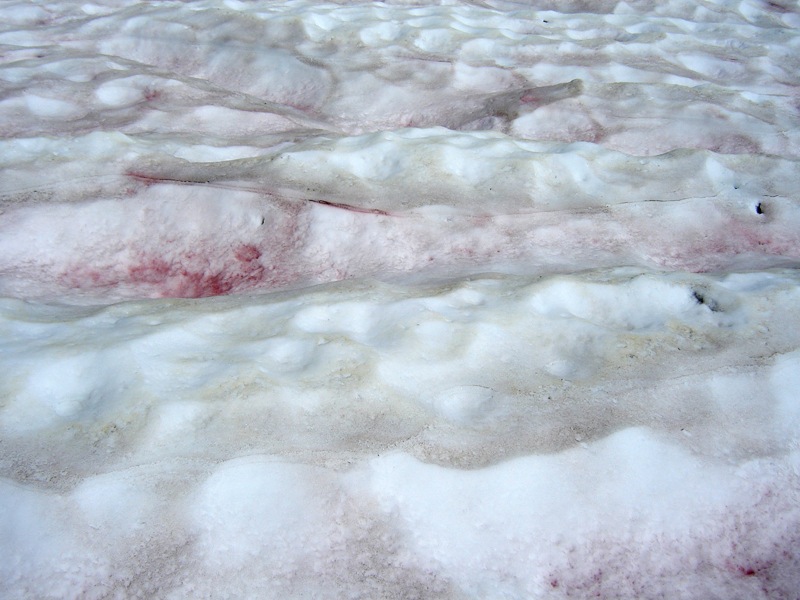
The mysterious red coloration is caused by blooms of Chlamydomonas nivalis, a species of green algae containing a secondary red carotenoid pigment called astaxanthin, along with the newly identified Sanguina nivaloides. Unlike most freshwater algae species, these organisms are cryophilic, meaning they actually thrive in freezing water. The irony here is striking: these are green algae that appear red.
The red pigment acts as a protective mechanism against intense visible and ultraviolet radiation while also absorbing heat, which provides the algae with liquid water as snow melts around it. Think of it as nature’s sunscreen with a heating system built in. When you compress the snow by stepping on it or making snowballs, the red becomes even more pronounced.
Algal blooms can extend to depths of 25 centimeters, with each microscopic cell measuring about 20 to 30 micrometers in diameter, roughly four times larger than a human red blood cell, and a single teaspoon of melted snow can contain over a million cells.
Where Does Blood Snow Appear?
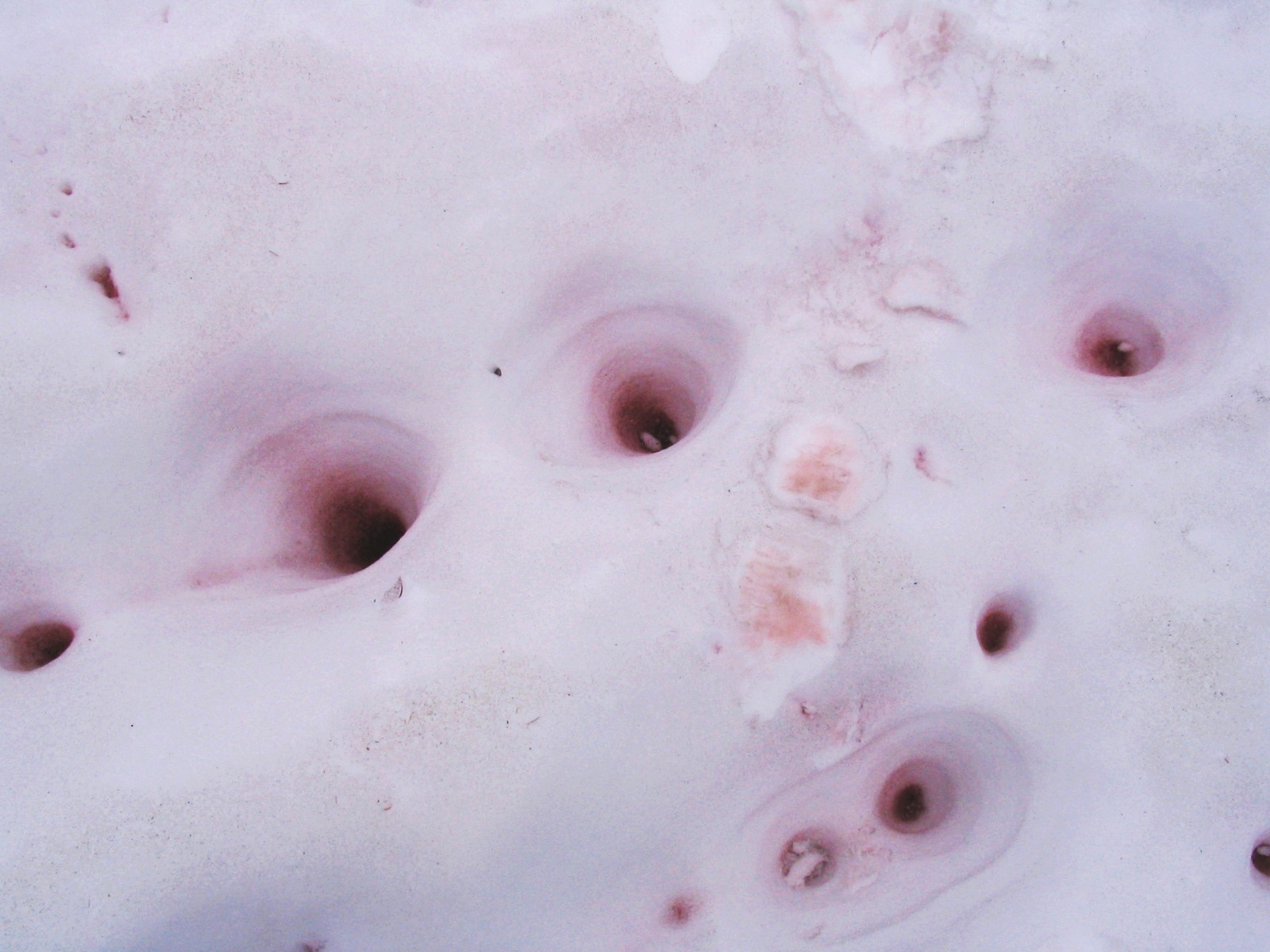
Blood snow commonly occurs during summer in alpine and coastal polar regions worldwide, particularly in areas like California’s Sierra Nevada at elevations between 10,000 and 12,000 feet where temperatures remain cold year-round. You’ll find this phenomenon across multiple continents, from the French Alps to Antarctica to the Rocky Mountains of North America.
Research shows that algae of the genus Sanguina, which causes red snow, appears exclusively at elevations above 6,560 feet, while other algae species dominate lower altitudes below 4,920 feet. This altitude preference isn’t random. The harsh conditions at higher elevations create the perfect environment for these specialized organisms to outcompete other life forms.
Recent studies found watermelon snow present on more than half of the 8,700 glaciers examined across North America. In some dramatic cases, algae covered nearly two-thirds of Alberta’s Bow Glacier surface area in 2020. These aren’t isolated incidents anymore; they’re becoming increasingly common sightings across the world’s frozen landscapes.
The Remarkable Biology Behind Red Algae
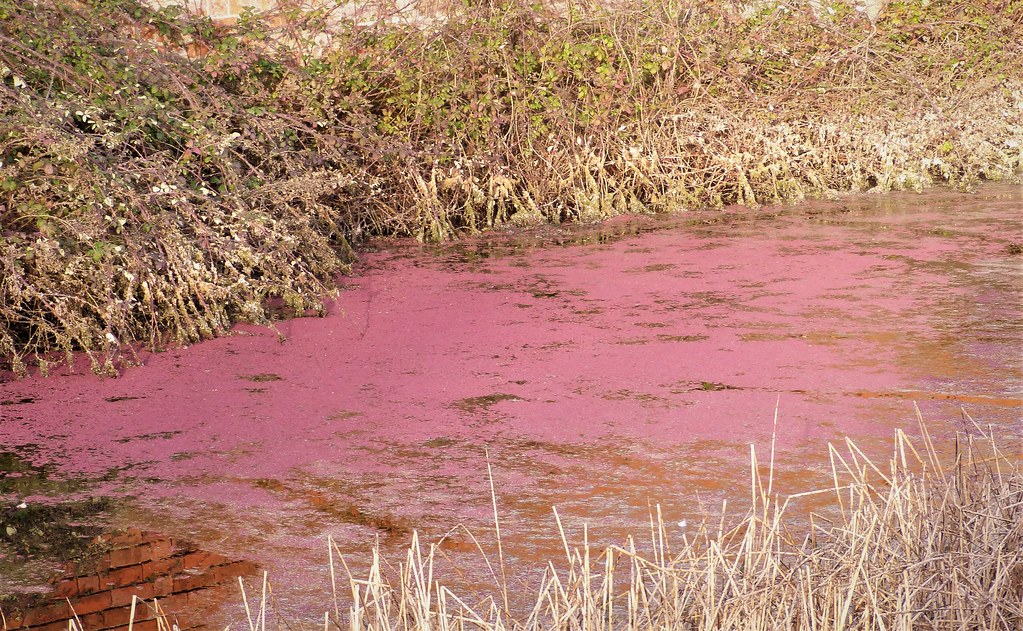
Each Sanguina nivaloides cell contains only one chloroplast, but its thylakoids fan out in multiple directions rather than aligning uniformly like most photosynthetic organisms, perfectly adapted to receive light reflected and diffused in snow like a hall of mirrors. This adaptation is absolutely genius from an evolutionary perspective.
During winter months, the algae remain dormant under snow cover, but spring brings nutrients, increased light levels, and meltwater that stimulate germination, releasing smaller green flagellate cells that travel toward the snow surface. Once these flagellated cells reach the surface, they may lose their flagella and form thick-walled resting cells or function as gametes that fuse to create zygotes.
The red carotenoid pigments don’t actually shield the cell nucleus from UV radiation as previously thought, but instead protect the algae from harmful free radicals in their intensely bright environment. It’s remarkable how these microscopic organisms have developed such sophisticated survival mechanisms for one of Earth’s most extreme environments.
Historical Documentation of the Phenomenon
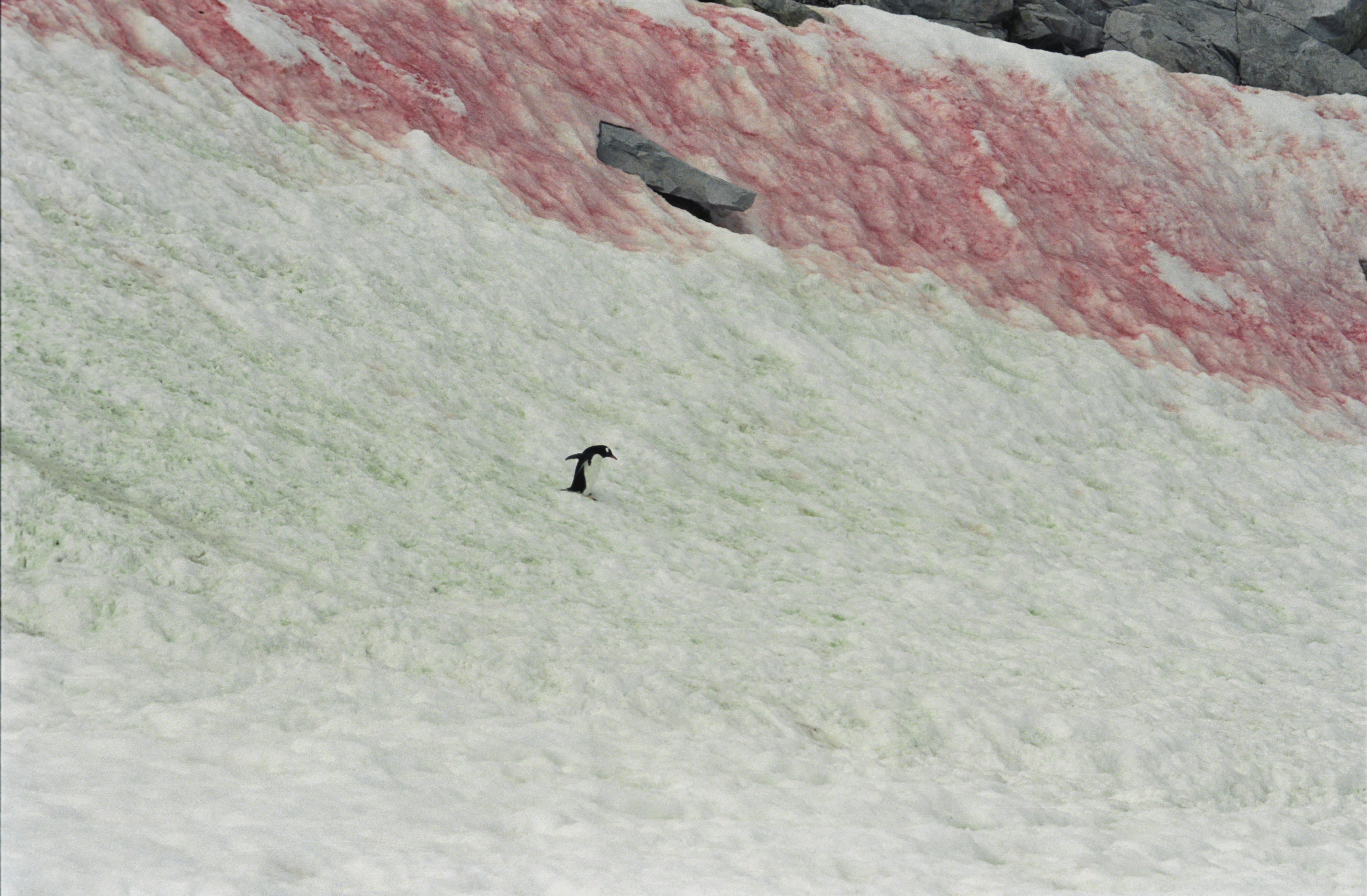
This phenomenon caught attention as far back as the fourth century BC when Aristotle first documented it. However, the most famous early scientific encounter occurred during a British expedition in 1818. Captain John Ross noticed crimson snow streaking white cliffs like streams of blood while rounding Cape York on Greenland’s northwest coast, and his landing party collected samples to bring back to England.
The Times newspaper reported on December 4, 1818, about this discovery of red snow from Baffin’s Bay, noting how the finding tested their credulity but appeared to be factual. Early theories wrongly attributed the coloration to meteoric iron deposits rather than biological causes.
Recent genetic studies reveal that what scientists called Chlamydomonas nivalis for 200 years actually belongs to a separate genus called Sanguina, which includes two species: S. nivaloides producing red snow and S. aurantia causing orange snow. This shows how much we’re still learning about these ancient organisms.
The Climate Change Connection
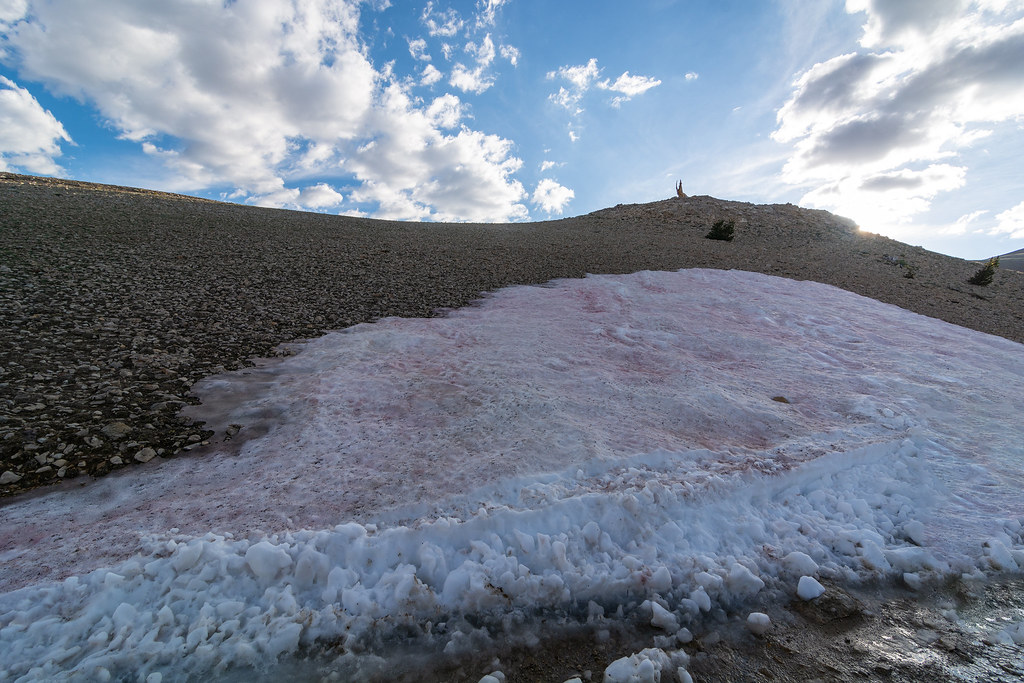
Scientists believe volumes of algae appear to be growing due to climate change, with higher carbon dioxide concentrations in the atmosphere favoring blooms. Researchers consider these algae probable markers of climate change, as their growth reflects rising CO2 levels and environmental changes. The relationship creates a concerning feedback loop.
Climate change accelerates both algal blooms and ice melting, with red algae appearing during warmer thaw periods when ice and snow melt more frequently. The warmer temperatures promote more algae growth, which causes snow to melt more quickly in what researchers describe as a vicious circle.
Mountain locals increasingly report seeing more red snow, though scientists acknowledge they don’t yet have enough quantitative data to measure this trend precisely. However, evidence indicates climate change seriously impacts these microscopic ecosystems, as extreme heat events in 2020 prevented algal blooms from forming entirely in some regions.
How Blood Snow Accelerates Melting
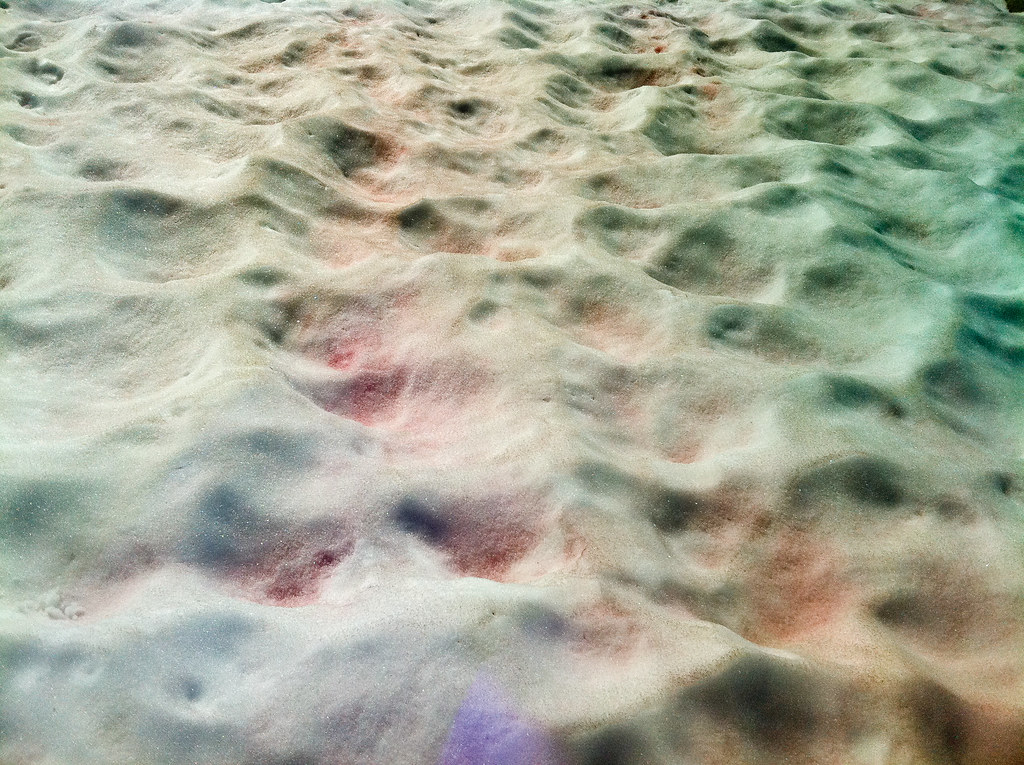
The presence of blood snow accelerates snowmelt because the algae’s red pigment reduces snow’s ability to reflect the sun’s heat. While clean snow reflects up to 99% of incoming solar radiation, snow algae decreases this reflectivity by about 20%, causing energy absorption rather than reflection due to the algae’s darker color.
Research across Iceland, Greenland, and Scandinavia found that red algae increases heat absorption by 13%. In Alaska, researchers estimate algae accounts for almost one-fifth of annual melt across large ice formations. These numbers might seem small, yet they represent significant additional melting on top of warming temperatures.
The more heat algae absorbs, the faster surrounding ice melts, and more melting allows algae to spread further, creating a self-reinforcing cycle of warming, melting, and algal blooming. Current estimates suggest red snow contributes an average of three centimeters of additional snow meltwater per season. That might not sound like much, yet across thousands of glaciers, it adds up quickly.
Global Impact and Future Projections
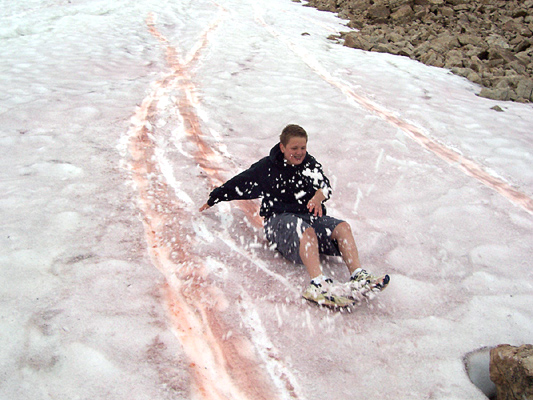
Red snow is potentially both a beneficiary of global warming and a catalyst for it, with scientists creating models to predict where this algae will likely appear and how it might synchronize with climate change. Research indicates algae proliferation can reduce snow’s reflective capacity by 13% during melt season, contributing to global warming.
The algae effect has implications for global climate models, which might need adjustment to incorporate algae-caused melting and its contribution to sea-level rise, particularly affecting Western United States water supplies that depend on snowpack. North Cascades spring snowpack already declined by 38% between 1938 and 2016, with projections showing an additional 38% to 46% decrease by 2050.
Recent satellite analysis found algae covering 5% of glaciers in northwestern North America, with coverage reaching 65% in some areas, contributing to melting by darkening snow and absorbing more solar radiation. As climate change warms regions, scientists expect snow algae bloom intensity to increase, likely affecting timing and magnitude of seasonal snowmelt.
Research Efforts and Unanswered Questions
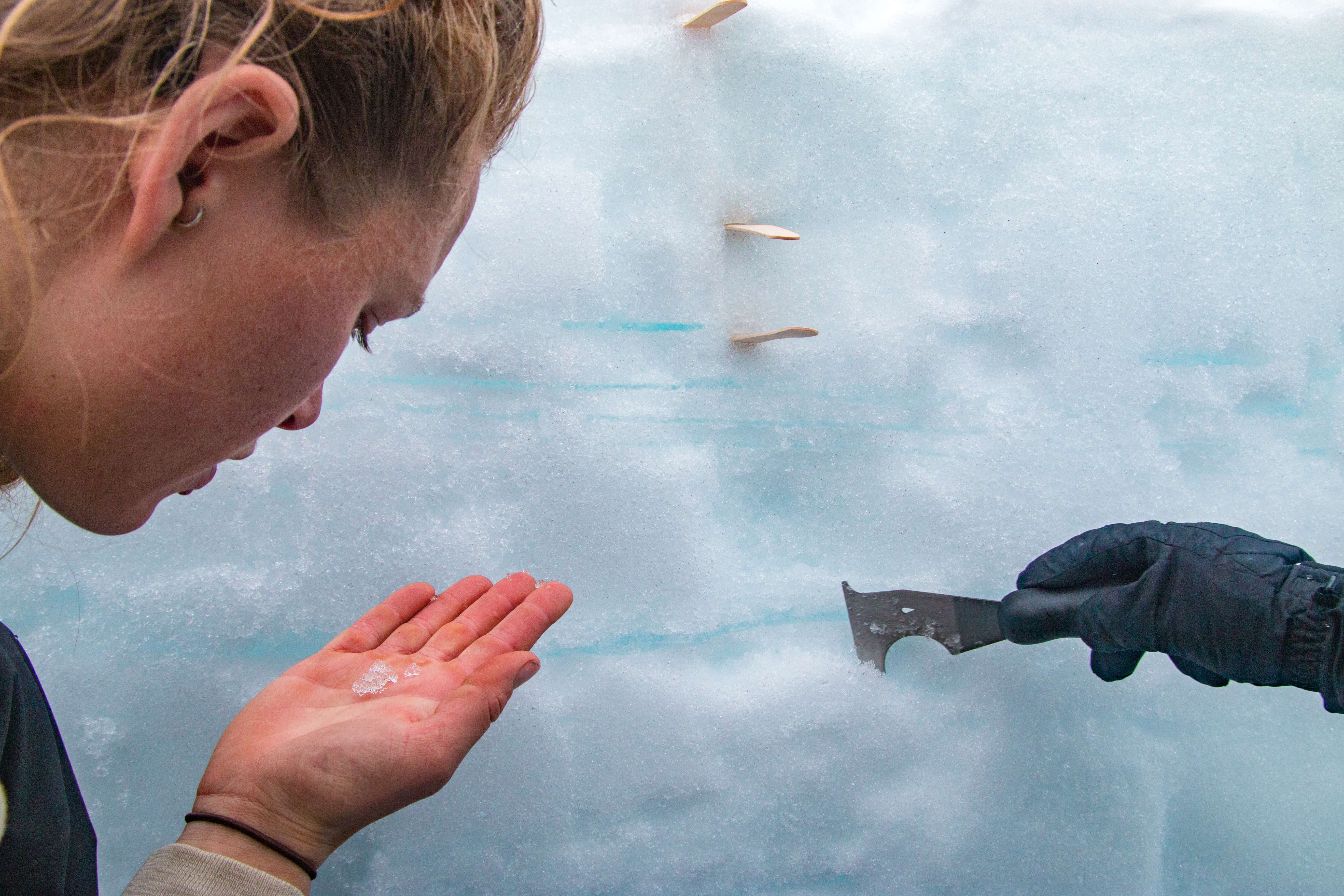
Scientists are racing to understand blood snow better before it’s too late, as snow volumes fall due to rising global temperatures hitting the Alps disproportionately hard, making this research both urgent and challenging since the study area is literally melting before researchers’ eyes. Current research initiatives span multiple continents and disciplines.
Many questions remain unanswered about what environmental conditions trigger algal blooms, how seasonal snow appearance and disappearance affects algal life cycles, and how blooms affect snowmelt and glacial retreat on large scales. Scientists emphasize the need for large-scale data collection to determine whether blooms are actually increasing over time before considering prevention methods.
Research teams worldwide are scrambling to understand how significant the algae effect might be and whether these organisms will flourish and spread as temperatures rise, with citizen science projects helping collect specimens from remote locations. The most ambitious snow algae initiative ever attempted aims to correlate chemical, genetic, and biological information with physical snow and ice properties, along with satellite measurements of bloom size.
Conclusion
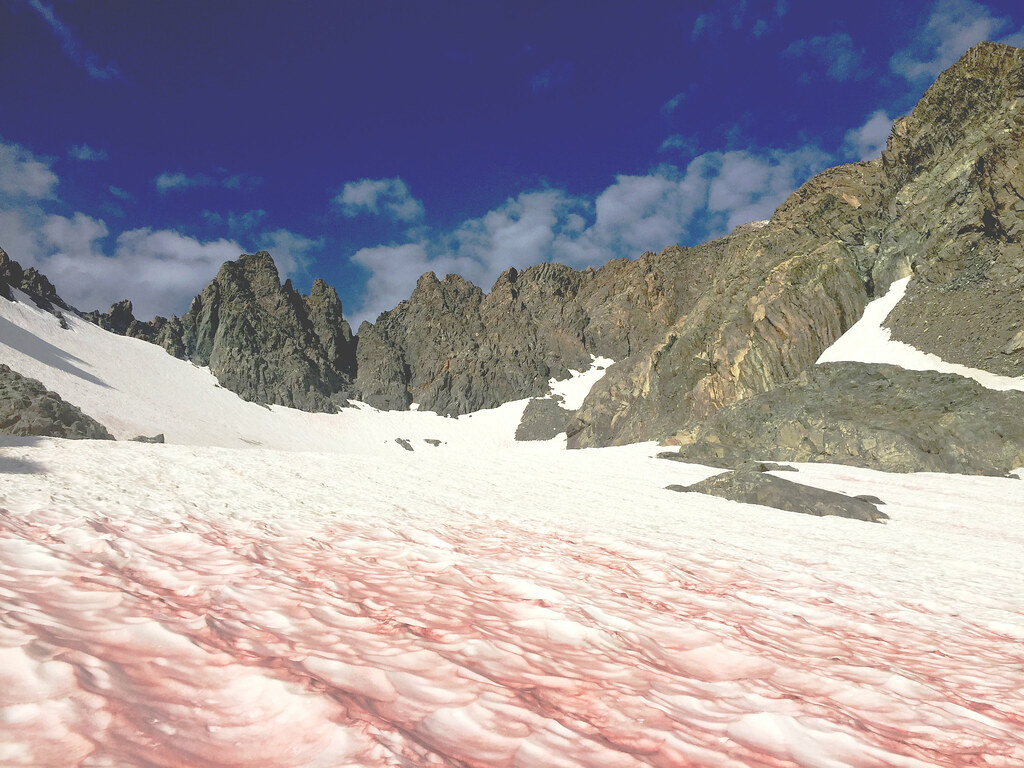
Blood snow represents one of nature’s most visually striking examples of how microscopic life adapts to extreme environments. Yet this ancient phenomenon has taken on new significance in our warming world. As one researcher put it, we don’t need more canaries in the coal mine, but snow algae serve as another warning indicator that we’re losing snowpack and glaciers that will impact our lives and countless other organisms.
While red snow represents a blossoming of life, it also signals the onset of a new normal that may affect many other species in cold regions. The crimson stains spreading across glaciers worldwide aren’t just beautiful curiosities; they’re biological billboards advertising our planet’s changing climate. Understanding this phenomenon could prove crucial for predicting future ice loss and preparing for the consequences.
What strikes me most about blood snow is how it perfectly illustrates nature’s interconnectedness. Tiny algae, invisible to casual observers, might play a surprisingly large role in accelerating global changes that affect us all. What do you think about this hidden factor in climate change? Tell us in the comments.
Jan loves Wildlife and Animals and is one of the founders of Animals Around The Globe. He holds an MSc in Finance & Economics and is a passionate PADI Open Water Diver. His favorite animals are Mountain Gorillas, Tigers, and Great White Sharks. He lived in South Africa, Germany, the USA, Ireland, Italy, China, and Australia. Before AATG, Jan worked for Google, Axel Springer, BMW and others.