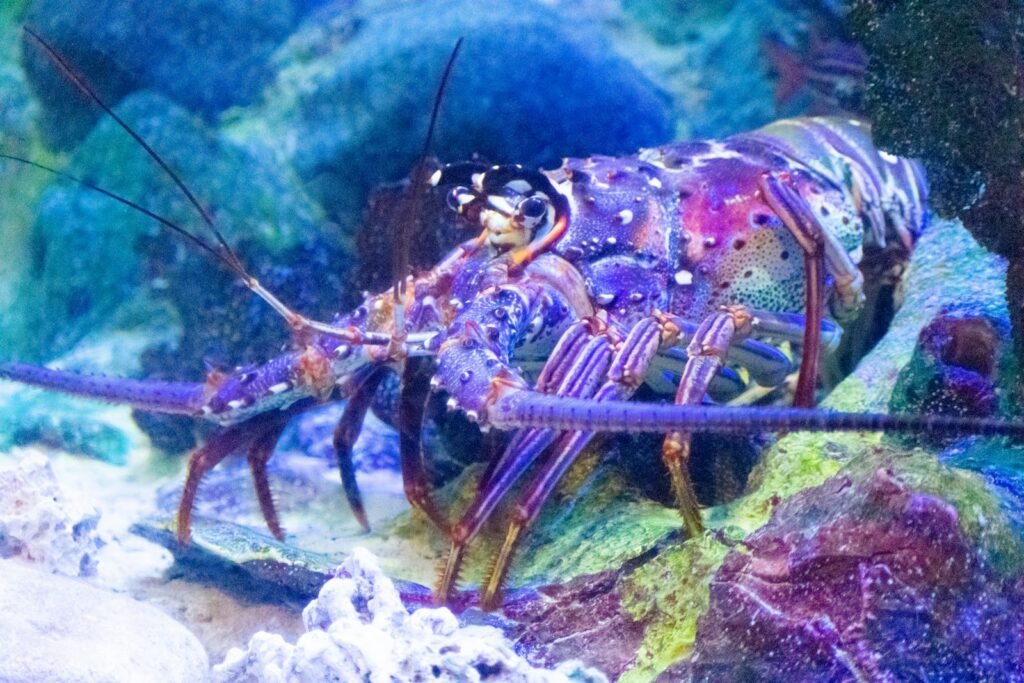

On a sunlit reef, where most eyes register a pretty blur of blues, a mantis shrimp is reading a hidden newspaper of light. Its gaze cuts the water into razor-thin slices of color and polarization, decoding messages most animals never notice. Biologists say its vision is less like a painter’s palette and more like a barcode scanner, snapping up information in fast, precise strips. Engineers have begun borrowing that trick, turning shrimp-style optics into cameras that can reveal disease, see through murk, and guide robots. The story here is part mystery, part blueprint: how a small crustacean became a quiet architect of the next generation of vision tech.
The Hidden Clues
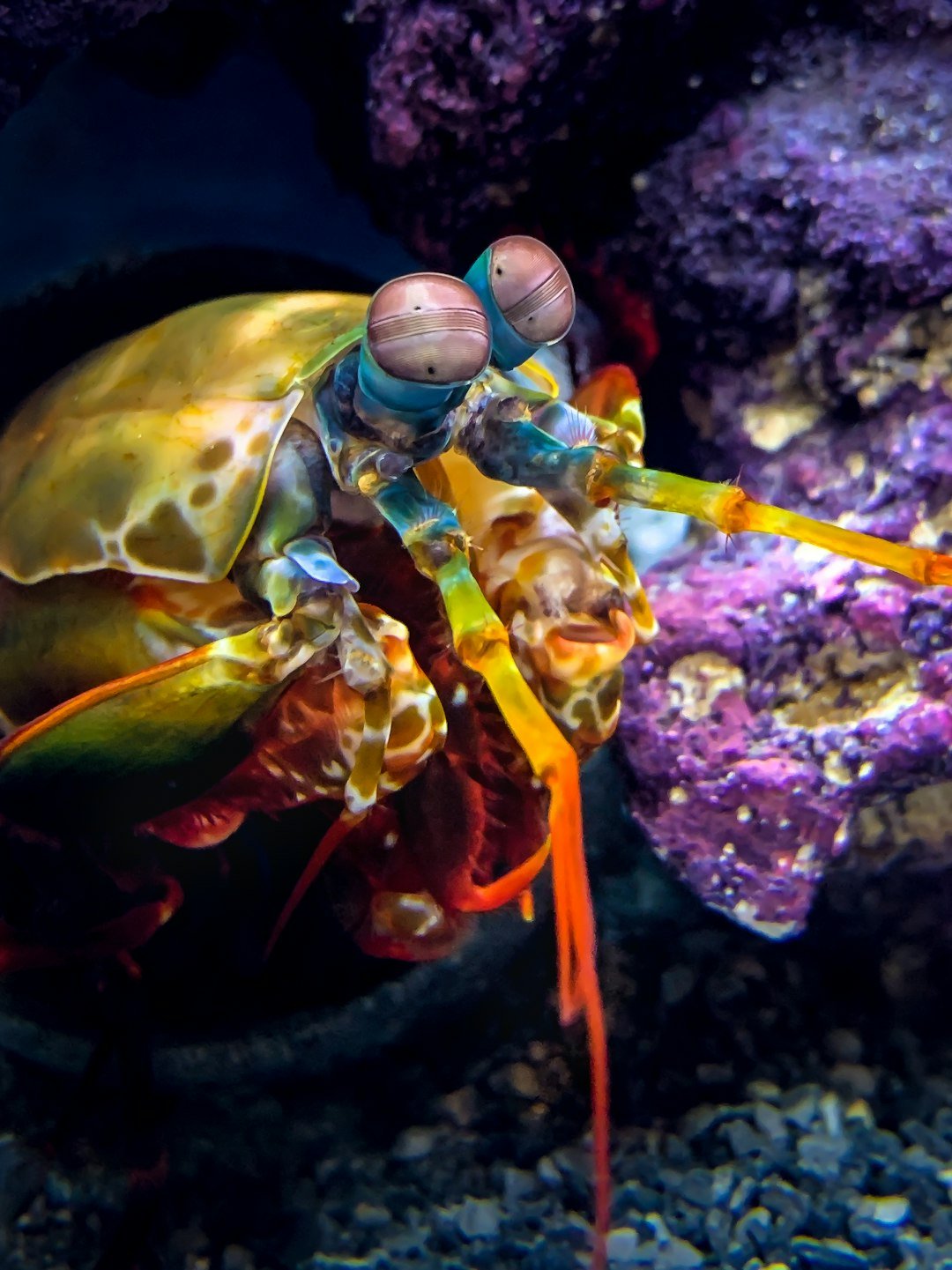
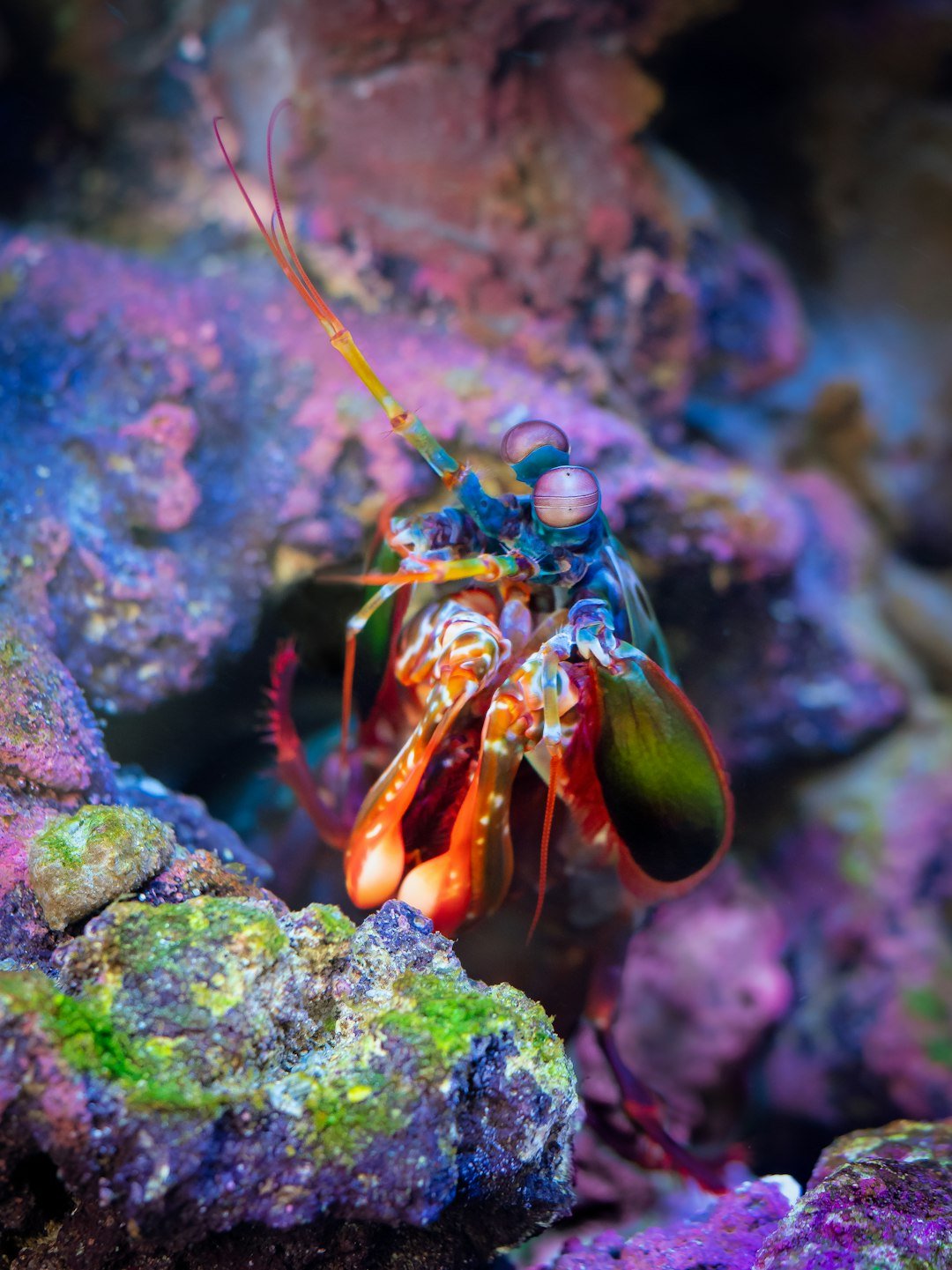
Walk a reef at noon and the water looks familiar – bright, busy, saturated – until you imagine what the mantis shrimp sees threading through it all. To this animal, certain shell patches and coral surfaces blaze with subtle signals encoded in polarization, like secret badges that switch on only for those who can read them. Each independent eye tilts and swivels, scanning the scene while the body barely moves, a spy’s periscope peeking over the lip of a world we think we know. The shrimp’s midband, a strip of specialized facets, slices the spectrum into many narrow bands so that color becomes data rather than decoration.
I once held a dive light over a tide-pool mantis and realized how clumsy my own sight felt – like trying to judge a symphony through a keyhole. You can’t help wondering what vital cues we miss every day because our eyes never evolved to notice them.
How a Shrimp Built a 16-Channel Eye
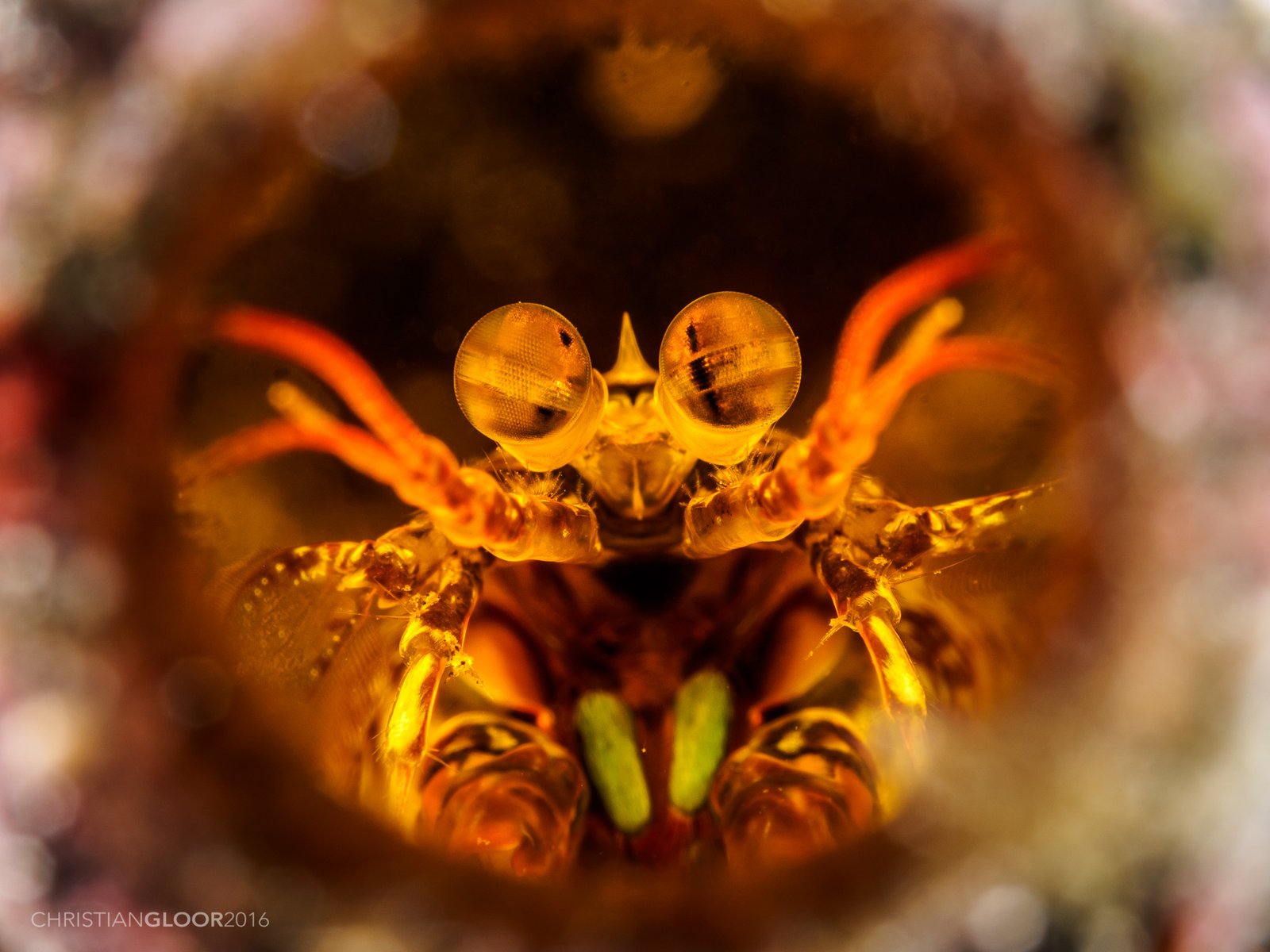
Mantis shrimp pack a startling lineup of photoreceptors – dozens of ommatidia arranged so that twelve to sixteen different photoreceptor types handle various aspects of vision while others detect linear and circular polarization. Tiny filters and pigments tune these receptors, shifting their sensitivity so the animal samples ultraviolet, visible, and into the red with remarkable granularity. Each eye also gives trinocular depth perception on its own thanks to overlapping fields, which is as wild as having two depth-calculating cameras in a single lens.
Instead of mixing three broad channels the way our vision does, the shrimp tags light in multiple slices, a bit like splitting a song into isolated tracks before recombining them. That architecture favors quick recognition over fine discrimination, allowing rapid decisions in a habitat where ambush and escape run on split-second timing. It’s a visual system built for speed, contrast, and coded messages, not gallery-style color subtlety.
From Ancient Tools to Modern Science
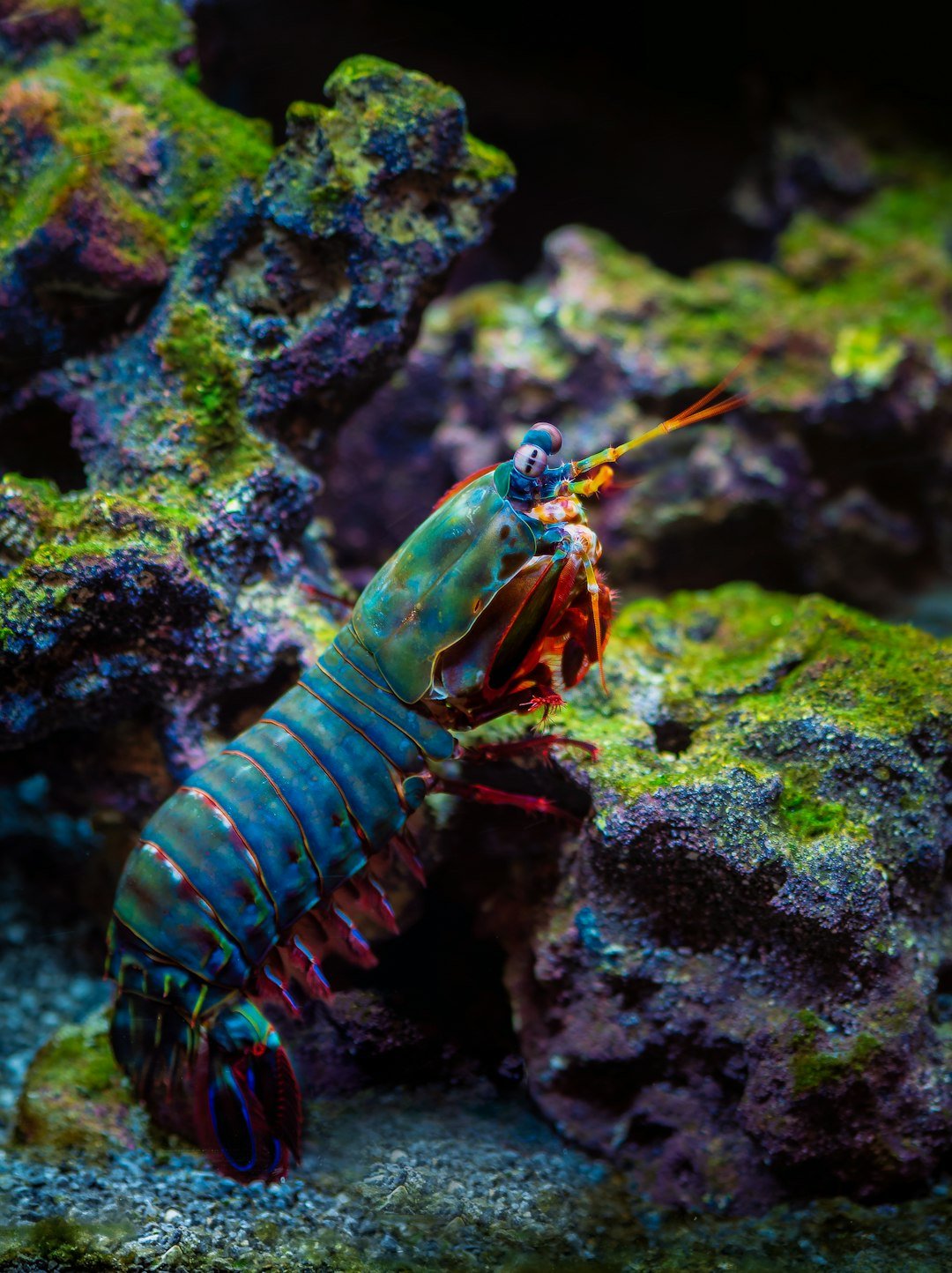
Evolution rarely wastes a good idea, and mantis shrimp are ancient experimenters, refining these optical tools over millions of years of arms races on the reef. Their prey and rivals hide behind camouflage, glare, and scattering, so polarization and narrow-band sampling became ways to pierce the fog of water and reflections. The outcome is a survival interface that surfaces patterns on fish scales, crustacean carapaces, and coral tissues that other hunters ignore. Modern labs have reverse-engineered parts of this interface, pairing micro-polarizers with compact sensors to mimic the shrimp’s knack for reading angles and spins of light.
What began as a curiosity in marine biology now informs imaging methods in medicine and materials science, where contrast and clarity can be the difference between guesswork and precision. This is the relay race of knowledge: nature builds the baton, humans pick it up, and new tools take shape.
Beyond Color: Polarization as a Secret Signal
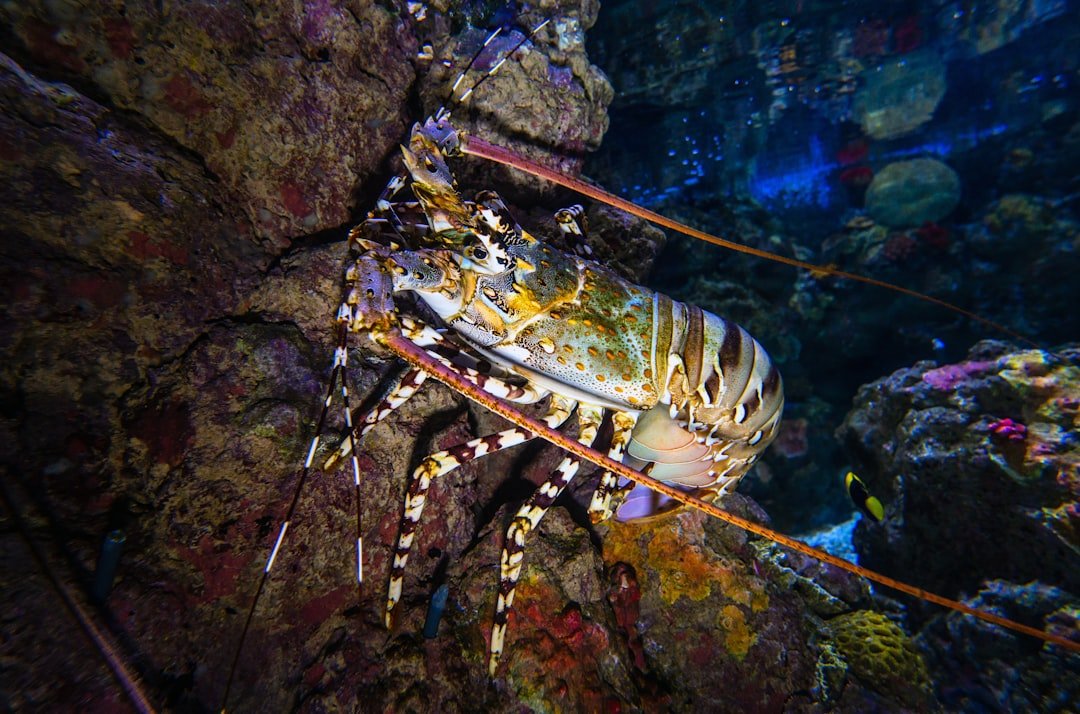
Polarization is the hidden grammar of light, and mantis shrimp read it fluently, including the circular forms that most animals ignore. In practical terms, that reveals edges in glare, highlights stress lines in transparent surfaces, and makes some biological tissues stand out as if outlined by an invisible marker. On the reef, researchers have found cuticular patches and eye regions that reflect distinctive polarization signatures, helping mantis shrimp recognize mates and rivals without broadcasting to predators. For human technology, this same layer peels back confusion in hazy water, fog, or highly reflective scenes where standard cameras struggle.
Add polarization to multiple color channels and you get a denser stream of information per frame, the visual equivalent of hearing both the melody and the rhythm section. It’s not just seeing more; it’s seeing differently, with cues that make decisions faster and safer.
Why It Matters
Most cameras, and our eyes, rely on three broad color channels that do a great job for everyday life but flatten subtle spectral differences. Hyperspectral systems counter that with dozens to hundreds of bands, yet they tend to be bulky, slow, and data-hungry, which limits field use. The mantis shrimp suggests a third path: a compact array that samples key spectral slices and polarization states to prioritize recognition over exact color matching. In ecology, that means spotting reef stress and algal blooms earlier by reading minute shifts in reflected light that standard RGB overlooks.
In medicine, polarization-aware imaging can boost contrast in tissues where structure and fiber orientation matter, potentially aiding surgeons and endoscopists working in tight, reflective spaces. The broader lesson is strategic sensing – collect the bits of light that carry the most meaning, and leave the rest on the cutting-room floor.
Lab Breakthroughs and Real-World Tests
Bio-inspired cameras now integrate micro-polarizers directly on sensors, measuring multiple polarization states in a single shot without moving parts. Paired with narrow-band filters, they mimic the shrimp’s layered channels to catch spectral and polarization cues at video speeds, not lab-slow scans. Early trials show improved edge detection through glare, crisper imaging in turbid water, and heightened contrast in biological samples that ordinary scopes wash out. Field engineers have mounted these systems on underwater robots to navigate nearshore silt and on drones surveying coastlines where reflective waves confuse GPS-free guidance.
In hospitals, research prototypes are exploring whether polarization contrast can help delineate suspicious margins where lighting, fluids, and motion normally conspire against clarity. The through-line is reliability in messy, real-world light, which is exactly the environment the mantis shrimp mastered.
The Future Landscape
Next-wave designs are turning to metasurface optics, stacking nanostructured elements that sort wavelength and polarization in devices thinner than a fingernail. Coupled with neuromorphic processors, these sensors could push decisions to the edge, flagging targets or anomalies without shipping every pixel to the cloud. Imagine small autonomous vehicles reading rip currents by their polarization signatures, or surgical tools that highlight risky fibers in real time with minimal computing overhead. The challenge is manufacturing at scale while maintaining precise alignment between spectral and polarization channels, because tiny errors cascade into noisy data.
Another hurdle is algorithmic: teaching machines to adopt the shrimp’s “recognition-first” strategy rather than brute-force color matching that chokes on bandwidth. If these pieces click, we’ll get cameras that feel less like gadgets and more like specialized senses tuned to the world’s hidden layers.
What You Can Do
Support coastal research programs that monitor reef health, because the same waters that shaped the mantis shrimp are barometers for climate stress. If you keep marine aquaria, source responsibly and avoid impulse buys of wild-caught species that may disrupt local populations and ecosystems. Back citizen-science efforts that log water clarity and algal blooms, since polarization-aware imagery works even better when paired with on-the-ground observations. Encourage public funding for bio-inspired sensors in environmental monitoring, emergency response, and medical imaging – fields where better vision directly translates to safer outcomes. And if you dive or snorkel, learn about polarization filters and reef-safe practices; the more we respect the light-scape of the ocean, the more it can teach us in return.
Suhail Ahmed is a passionate digital professional and nature enthusiast with over 8 years of experience in content strategy, SEO, web development, and digital operations. Alongside his freelance journey, Suhail actively contributes to nature and wildlife platforms like Discover Wildlife, where he channels his curiosity for the planet into engaging, educational storytelling.
With a strong background in managing digital ecosystems — from ecommerce stores and WordPress websites to social media and automation — Suhail merges technical precision with creative insight. His content reflects a rare balance: SEO-friendly yet deeply human, data-informed yet emotionally resonant.
Driven by a love for discovery and storytelling, Suhail believes in using digital platforms to amplify causes that matter — especially those protecting Earth’s biodiversity and inspiring sustainable living. Whether he’s managing online projects or crafting wildlife content, his goal remains the same: to inform, inspire, and leave a positive digital footprint.