
Every so often, physics delivers a result so strange it feels less like science and more like a dare: accept this, or admit your intuition is useless out there. From black holes that evaporate, to particles that are and are not in a place until we look, reality keeps shrugging at what seems “reasonable” to human brains. This article dives into a few of the most startling ways the universe flatly ignores our common sense, and how scientists learned to trust equations over gut feelings. Along the way, we will see that the story of modern physics is not one of making the world feel intuitive, but of learning to live with a cosmos that is under no obligation to be comforting. And yet, once you accept that, the picture that emerges is more beautiful, not less.
When Space Itself Refuses to Sit Still
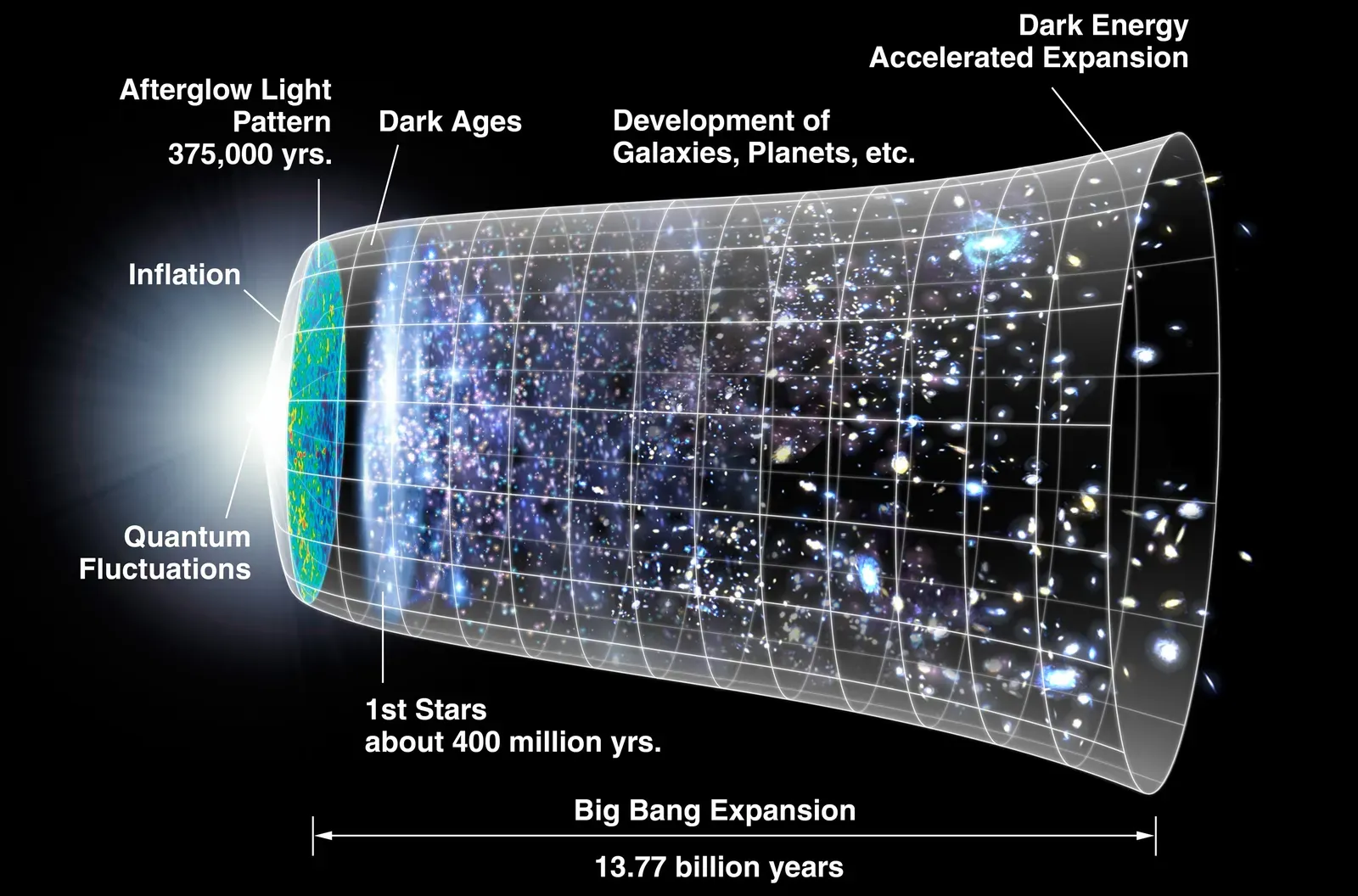
At first glance, the idea that empty space can stretch sounds like a word trick, not a physical claim. Yet observations of distant galaxies show that the fabric of the universe is expanding, and not just steadily but at an accelerating pace. Early twentieth-century astronomers expected a mostly static cosmos, or at least one whose changes were slow and gentle enough to fit their intuition. Instead, redshift measurements revealed that the farther a galaxy is, the faster it appears to be receding, as if space between galaxies were being pulled like taffy. The kicker was the late‑nineteenth‑century expectation that space was simply a stage, not a dynamic actor, which now looks quaint in hindsight.
By the late 1990s, surveys of exploding stars known as Type Ia supernovae showed that this expansion is speeding up, implying some mysterious “dark energy” driving the acceleration. No everyday analogy really captures this: balloons stretch because something pushes air inside; the universe accelerates outwards because of something baked into the structure of spacetime itself. When cosmologists plug observations into Einstein’s equations, the fit is good; when they try to attach a familiar story to it, the whole thing feels alien. The laws work, the numbers check, but they do not care whether we find their implications intuitive.
Gravity Bends Light Like Glass, and the Sky Agrees
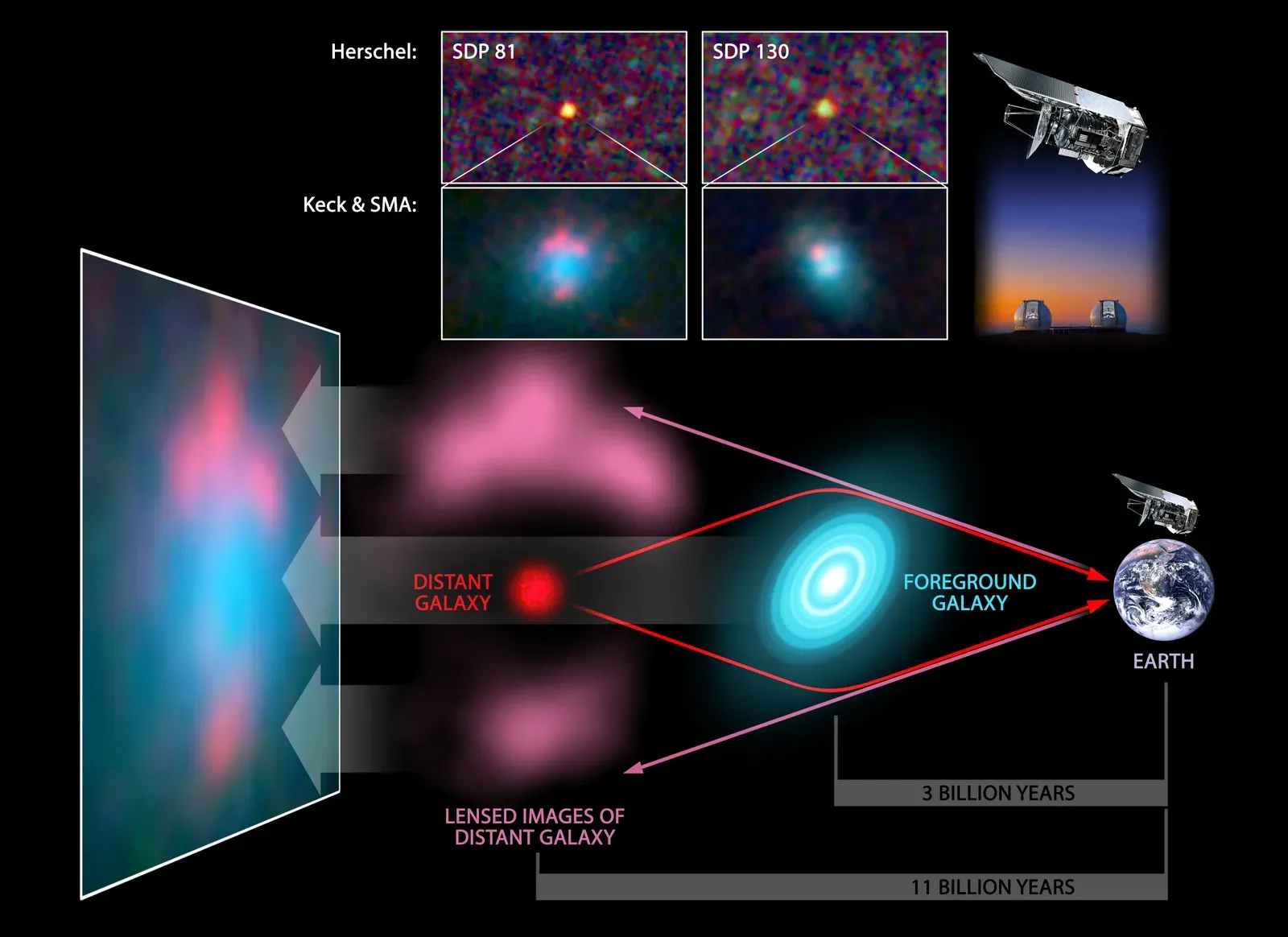
Most people grow up thinking of gravity as a pull between objects, like invisible strings tying apples to Earth and Earth to the Sun. General relativity tore up that picture by recasting gravity as geometry: massive objects curve spacetime, and light follows the curves. On paper this sounds almost poetic and vaguely metaphorical, until you realize the theory predicts that entire galaxies can act as lenses, magnifying and distorting the light from even more distant galaxies behind them. That is not something Newton’s clean, inverse‑square law intuition prepares you for.
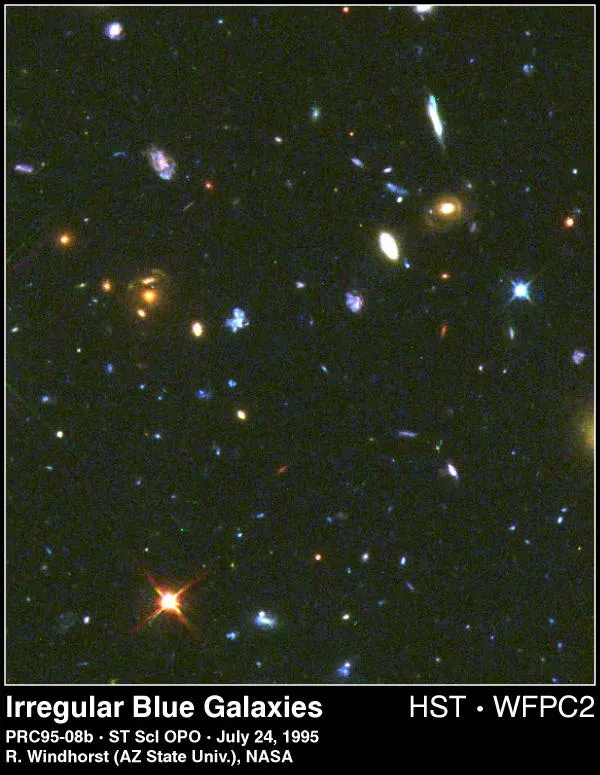
In modern telescope images, astronomers routinely see rings, arcs, and smeared streaks of light formed by this gravitational lensing effect. Some galaxy clusters turn into natural telescopes, revealing faint, early galaxies that would otherwise be invisible. This is nature using a rulebook that treats light like a marble rolling across a warped rubber sheet, while our everyday brains keep wanting it to be a straight line. Yet when researchers map the mass needed to produce the observed distortions, including contributions from unseen dark matter, the curved‑spacetime calculations keep matching what we see. Once again, the universe is not intuitive, but it is consistent.
Quantum States: When “Either–Or” Becomes “Both–And”
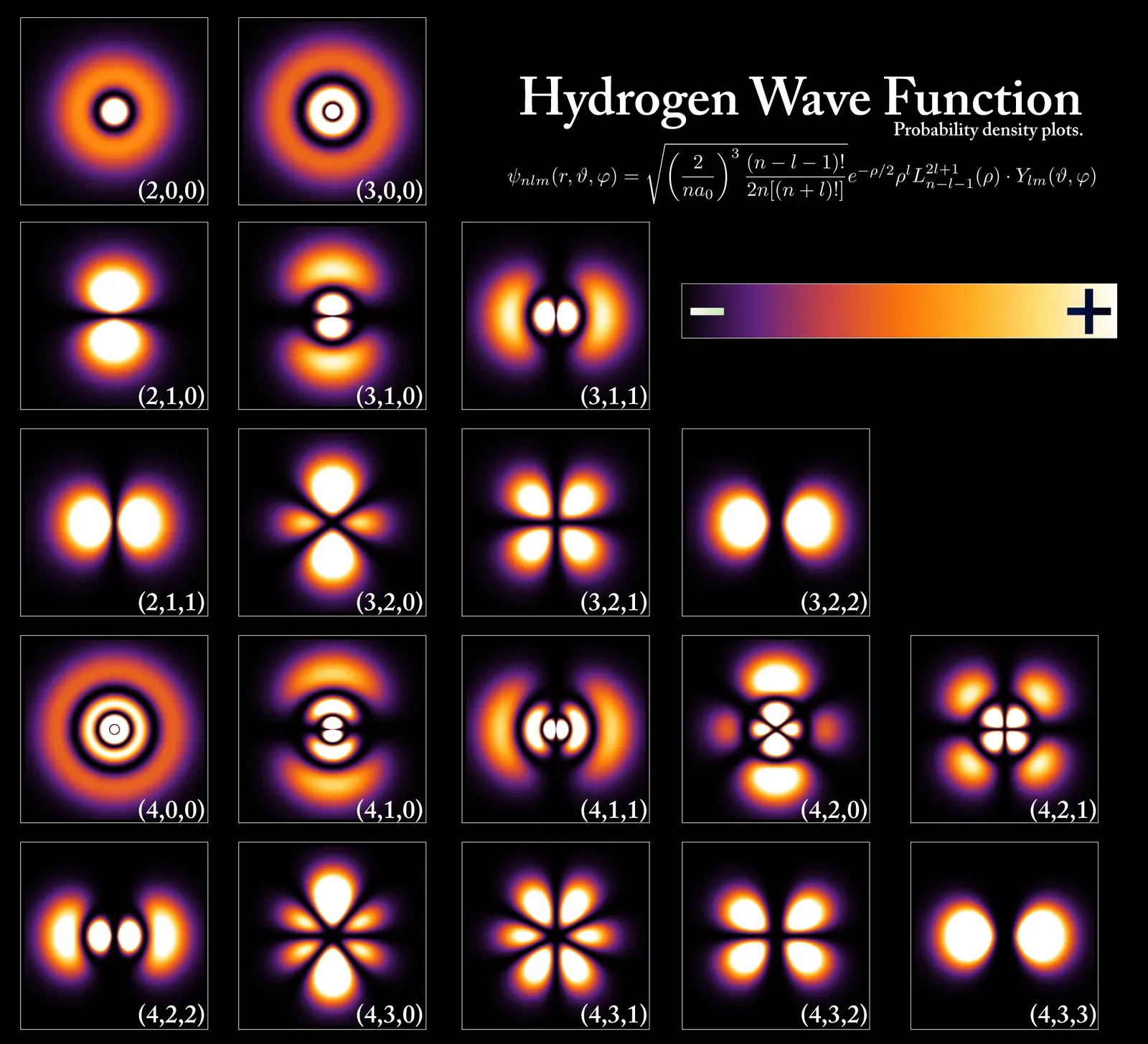
If there is one realm where human intuition fails almost completely, it is the quantum world. Experiments such as the double‑slit setup show that single particles like electrons or photons can behave like waves, interfering with themselves as if they passed through two paths at once. Our everyday categories of “here” versus “there” and “this” versus “that” simply do not apply cleanly at atomic scales. Instead, quantum theory describes particles in terms of probability waves that only collapse into definite outcomes when measured. The equations have been around for roughly a century, and they still feel like a dare to common sense.
Technologically, though, we already live with the consequences of these bizarre rules. The behavior of electrons in atoms underpins the periodic table, semiconductor physics, and the transistors that power computers and smartphones. Quantum tunneling, where particles slip through barriers that should block them, is not just an oddity; it is essential to devices like flash memory and scanning tunneling microscopes. So while every instinct screams that objects cannot be in multiple states at once, circuit diagrams and laboratory instruments quietly insist that, on small scales, that is exactly how the world operates.
Time Dilation: When Speed and Gravity Rewrite the Clock
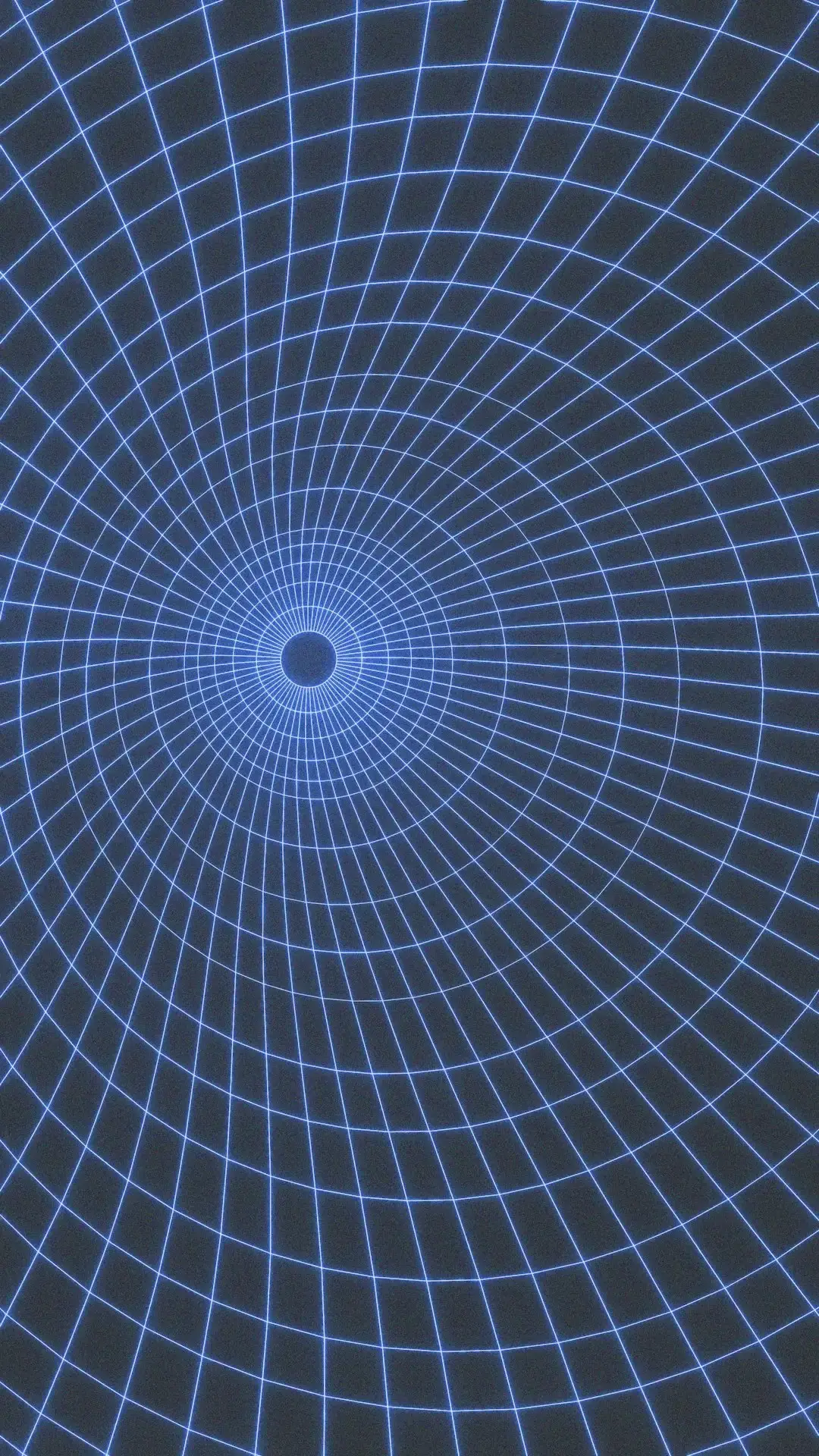
Our daily sense of time is so solid that people speak about it as if it were a river flowing at a single, steady rate. Special and general relativity shattered that picture by showing that time can stretch or compress depending on speed and gravity. Move fast enough, close enough to the speed of light, and a traveler’s clock will tick more slowly than those back home. Stand in a stronger gravitational field, such as closer to Earth’s surface compared with a high‑orbiting satellite, and time will again run a bit slower for you. None of this feels natural if your reference for reality is a kitchen clock.
Yet time dilation is not just an abstract thought experiment for sci‑fi plots. Global Positioning System satellites orbit Earth at high speeds and weaker gravity than the receivers on the ground, and their onboard clocks drift relative to ours by measurable amounts. Engineers have to correct for both forms of relativistic time dilation, or your navigation app would quickly become useless. High‑energy particle accelerators also rely on the effect: unstable particles produced in collisions live longer, from our perspective, because they are moving so fast. Far from being a philosophical curiosity, the warping of time is built into technologies we use every day, whether it makes gut‑level sense or not.
Black Holes: Where Our Equations Go to the Edge
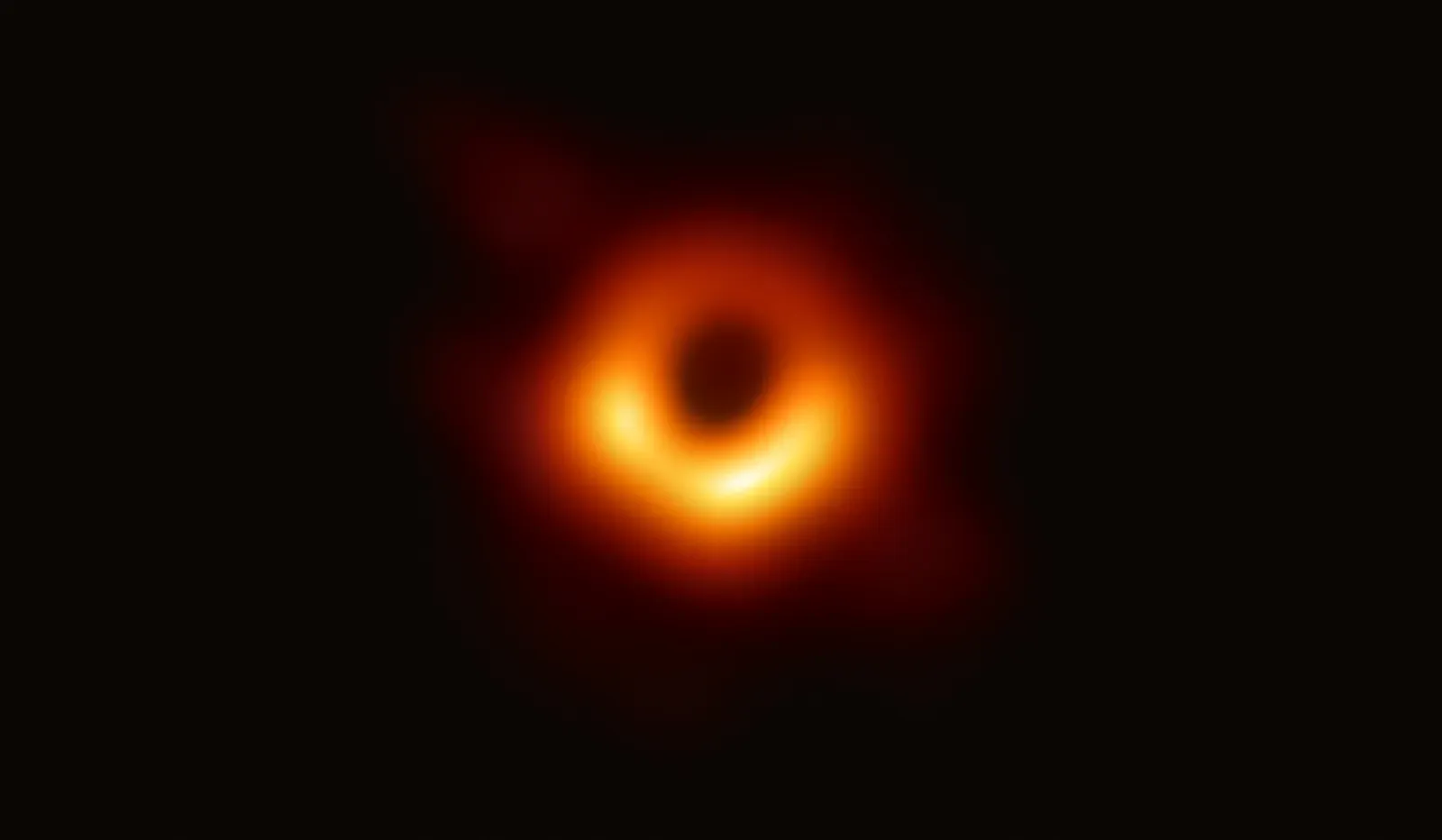
Black holes might be the most dramatic example of physics forcing us to accept something almost story‑book bizarre because the math and data demand it. General relativity predicts that if enough mass is compressed into a small enough region, spacetime becomes so curved that not even light can escape. For decades, many scientists treated them cautiously, as weird solutions to equations rather than certain residents of the cosmos. Then came observations of X‑ray binaries, stars whipping around invisible companions, and eventually images of the dark shadow of black holes themselves against glowing gas. Step by step, what once sounded like a thought experiment turned into a catalog entry in astronomy.
The weirdness did not stop there. Quantum considerations suggest black holes are not perfectly black; they can slowly evaporate through Hawking radiation, leaking energy over vast timescales. This leads to the black hole information problem: what happens to the information about the matter that fell in, if the hole eventually disappears? Entire careers in theoretical physics have grown around this tension between quantum mechanics and relativity. The universe, unfazed, simply goes on constructing black holes in galaxy centers and from collapsing stars, following laws that remain brutally consistent even where our understanding is still incomplete.
Dark Matter and Dark Energy: Most of the Universe Is Not What We Know
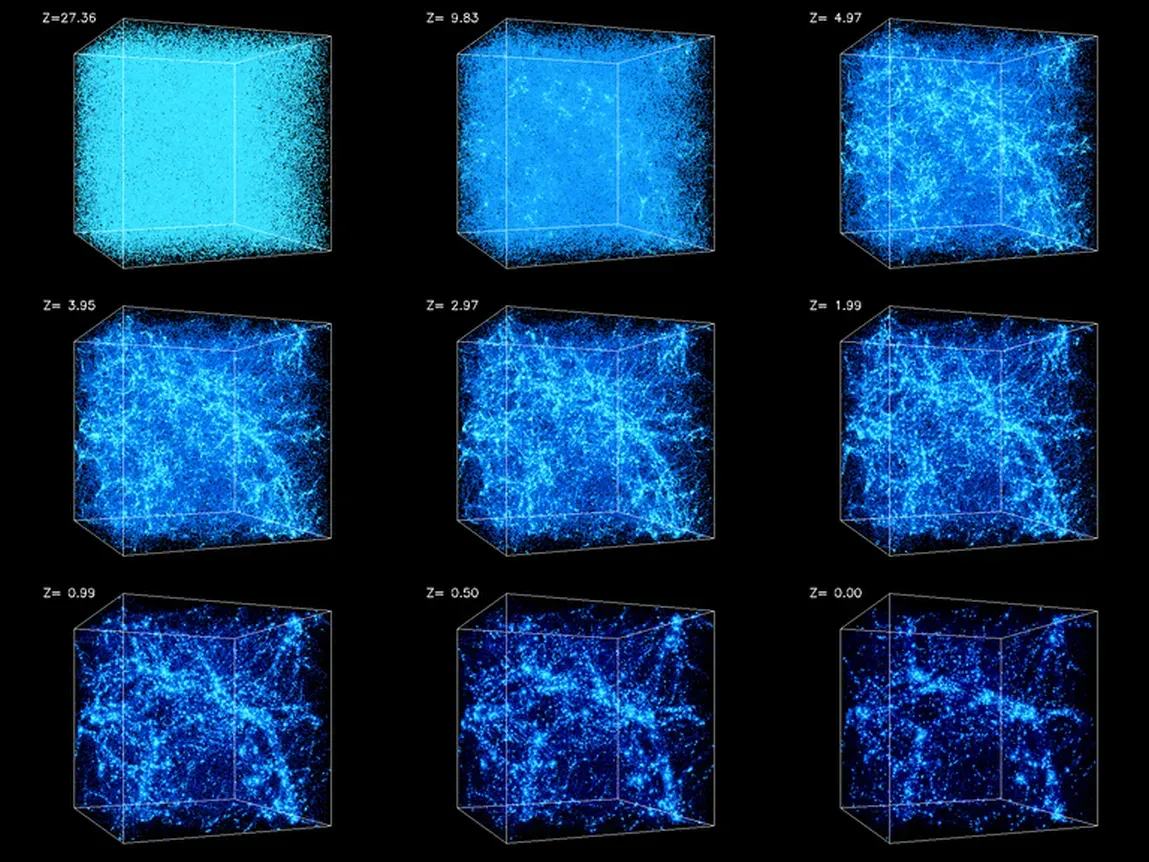
One of the most unsettling discoveries in modern cosmology is that the familiar stuff of stars, planets, and people makes up only a small fraction of the universe’s total energy budget. Measurements of galaxy rotation, gravitational lensing, and the large‑scale structure of cosmic filaments point to an invisible form of matter interacting mainly through gravity. This dark matter outweighs ordinary matter by several times, shaping how galaxies form and cluster. We do not yet know what particles make it up, only that its gravitational fingerprints are everywhere. In a sense, the universe is playing a game of hide‑and‑seek and winning.
Dark energy, driving the accelerating expansion, makes the picture even stranger, contributing the majority share of the universe’s total energy. Here we are, trying to make sense of reality using our tiny sliver of familiar matter, while the equations insist that most of the cosmos operates under terms we still cannot write down in detail. Astronomers and particle physicists have designed underground detectors, space missions, and huge surveys to probe these unseen components. Each new dataset refines the numbers but does not yet tell a simple, intuitive story. The laws of the universe are consistent in insisting that dark components exist, even if our imaginations lag behind.
Why Our Intuition Keeps Failing: The Deeper Significance
It is tempting to treat all of this strangeness as a long list of “fun facts” about a quirky universe, but there is a deeper lesson here. Human intuition evolved to handle throwing stones, reading faces, and walking across uneven ground, not weighing black holes or tracking spacetime curvature on cosmological scales. Our brains compress experience into rules of thumb, like “objects move in straight lines unless pushed” and “time flows the same for everyone,” which work well enough for survival but break down far from home. Modern physics is what happens when we stop asking what feels right and start asking what matches experiment, even when the answer feels alien. That methodological shift is more radical than any single equation.
Compared with earlier worldviews that put Earth at the center or assumed absolute space and time, today’s theories are humbling and empowering at once. Humbling, because they remind us we are not the measure of what is reasonable; empowering, because our species managed to build instruments and languages of mathematics that reach well beyond our native intuitions. The cultural impact is real: films, literature, and philosophy have absorbed ideas like time dilation, multiverses, and quantum uncertainty, often in simplified or distorted forms, but still echoing a central truth. Reality is under no obligation to match human expectations, and science’s job is to bridge that gap as honestly as possible.
Unanswered Questions and How We Might Learn to See Differently
Even with our current theories, some of the biggest questions hang stubbornly open, and they all poke at the limits of what we find intuitive. How exactly do you merge quantum mechanics with general relativity into a single framework of quantum gravity? What is the true nature of dark matter and dark energy, and could their properties force us to rethink what we mean by space and time themselves? These are not just technical puzzles; they hint that our current concepts might be as limited as pre‑relativity ideas of absolute time. It is entirely possible that the next major breakthrough will feel as jarring to common sense as the first quantum experiments did a century ago.
To make progress, physicists lean on a mix of precise experiments, astronomical observations, and theoretical models that are often far more abstract than anything in classical physics. The Large Hadron Collider, gravitational‑wave observatories, deep‑sky surveys, and tabletop quantum experiments all chip away at the unknowns from different angles. Over time, as new generations grow up with these ideas embedded in their education, some of what feels bizarre now may start to feel routine, the way continental drift or curved Earth once did. But that process will not change the underlying fact: the universe sets the rules, and we slowly learn to live with them.
How to Live with a Universe That Does Not Make Sense
For non‑physicists, it can be tempting to tune all of this out as too strange or too specialized to matter in everyday life. I remember sitting through my first serious lecture on quantum mechanics and feeling like the floor had tilted under my chair; nothing I thought I knew about cause and effect seemed safe anymore. What helped was realizing that confusion was not a failure, but a signal that I had reached the boundary of everyday intuition and was stepping into territory shaped by measurement and evidence instead. You do not need to derive equations to appreciate that courage: the willingness to let go of what feels obvious when the data say otherwise. In a small way, every act of curiosity pushes against the same wall.
If you want to engage more directly, you can follow results from observatories and particle labs, support science education and public observatories in your community, or simply resist the urge to demand that reality always feel comfortable. Read about new missions, attend public talks at universities or planetariums, and let yourself sit with the discomfort of not immediately “getting it.” Over time, patterns emerge, and ideas that once seemed impossible become part of your mental furniture. The laws of the universe will never adjust themselves to fit our sense of what is reasonable. But we can, slowly, learn to expand what “makes sense” means – starting with the next question you are willing to ask.
Suhail Ahmed is a passionate digital professional and nature enthusiast with over 8 years of experience in content strategy, SEO, web development, and digital operations. Alongside his freelance journey, Suhail actively contributes to nature and wildlife platforms like Discover Wildlife, where he channels his curiosity for the planet into engaging, educational storytelling.
With a strong background in managing digital ecosystems — from ecommerce stores and WordPress websites to social media and automation — Suhail merges technical precision with creative insight. His content reflects a rare balance: SEO-friendly yet deeply human, data-informed yet emotionally resonant.
Driven by a love for discovery and storytelling, Suhail believes in using digital platforms to amplify causes that matter — especially those protecting Earth’s biodiversity and inspiring sustainable living. Whether he’s managing online projects or crafting wildlife content, his goal remains the same: to inform, inspire, and leave a positive digital footprint.