Imagine building an entire worldview on rules that turn out to be local house customs rather than universal laws. That is the unsettling possibility now creeping into serious cosmology and fundamental physics: the idea that the deep constants we treat as absolute might shift from place to place in the cosmos. This is not just about obscure symbols in textbooks; these constants decide how stars burn, whether atoms hold together, and if chemistry – and therefore life – can exist at all. Over the last few decades, a mix of astronomical observations and bold theoretical work has quietly chipped away at the comforting assumption of perfect uniformity. The result is a picture of a universe that might be less like a clean, well-ordered machine and more like a patchwork quilt of slightly different physical realities.
When “Constants” Stopped Looking So Constant
For most of modern physics, the phrase “fundamental constant” has carried an unspoken promise: this number is the same everywhere and always. The speed of light in vacuum, the gravitational constant, the fine-structure constant that governs how light and matter interact – these have been treated as the bedrock. This assumption underpins everything from how we interpret light from distant galaxies to how we reconstruct the early universe.
That confidence began to wobble when astronomers realized that light from faraway quasars, passing through gas clouds billions of light-years away, could be turned into a precision test of whether those constants really match the ones we measure on Earth. By comparing the detailed fingerprints of atoms in those clouds to laboratory spectra, researchers found hints that a key quantity, the fine-structure constant, might vary very slightly across the sky. The potential differences are tiny – a change of just a few parts in a million – but if real, they would be profound, because a true constant is either identical everywhere or it is not fundamental in the way we thought.
The Fine-Structure Constant: A Cosmic Trouble-Maker

The fine-structure constant, often called alpha, is a dimensionless number that tells you how strongly light couples to charged particles such as electrons. If alpha were much larger, atoms would be smaller, chemical bonds tighter, and nuclear reactions inside stars very different; if it were much smaller, atoms would be flimsier, and some of the periodic table might never form. It is hard to overstate how much of familiar reality depends on this one number having the value it does.
Because alpha is so central, it is the natural suspect when you go hunting for variation in the laws of physics. Several teams have used large telescopes in Chile and Hawaii to look at absorption lines in quasar light that has passed through intergalactic gas. Some analyses have reported a curious pattern: in one direction in the sky alpha looks ever so slightly larger than on Earth, while in the opposite direction it looks slightly smaller. Other groups, using different data sets and analysis techniques, have found no convincing variation at all, setting tight limits instead. The debate has become one of the most intriguing tug-of-wars in modern astrophysics: is alpha really misbehaving, or are we simply pushing our instruments to their limits?
Quasar Spectra, Ancient Radioactivity, and the Hunt for Shifts
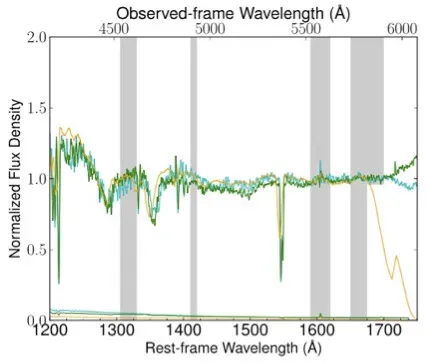
Testing whether constants vary is tricky because you cannot fly out to a distant galaxy and set up a lab bench. Instead, astrophysicists use nature’s built-in experiments. Quasars – the blazing hearts of young galaxies powered by supermassive black holes – act like cosmic backlights, shining through intervening clouds of gas. The atoms in those clouds absorb specific wavelengths of light, creating a pattern of dark lines that encodes the values of physical constants at the time and place where the light passed through.
Closer to home, geophysicists have turned to a very different archive: ancient radioactive deposits on Earth. A natural nuclear reactor that operated in Gabon about two billion years ago left behind isotopic ratios that depend sensitively on nuclear interaction strengths and, indirectly, on physical constants. Careful analysis of these rocks shows that any change in key constants over that timespan must have been extremely small, again constraining how wild the laws of physics are allowed to be. When you put the quasar data and the terrestrial evidence together, you get a mixed message: if variations exist, they have to be subtle, structured, and heavily constrained by both astronomical and geological records.
Theoretical Universes Where Constants Can Wander
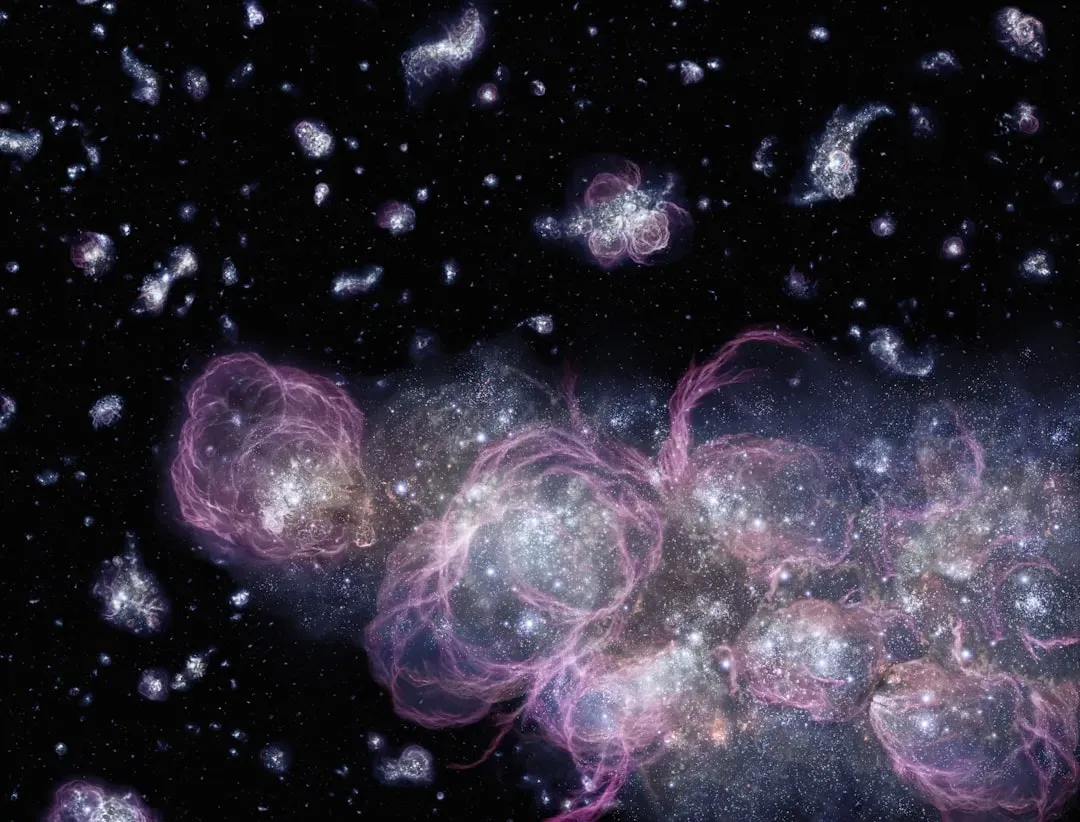
While observers argue over the data, theorists have been busy building frameworks in which varying constants are not only allowed but expected. Many modern ideas that go beyond the standard model of particle physics, such as string theory and related extra-dimensional models, naturally introduce scalar fields that can change in space and time. In these pictures, what we call a constant is really the value of some cosmic field, frozen into a particular configuration in our part of the universe but potentially different elsewhere.
Some versions of inflationary cosmology and multiverse scenarios go further and suggest that vast regions of the universe might have cooled into different “vacua,” each with different effective constants. In that view, we live in a pocket universe where the numbers happen to allow stable atoms and long-lived stars, because only such pockets ever develop observers who can ask questions. This is a deeply unsettling way to do physics, because it leans on selection effects instead of deriving constants from first principles, but it fits surprisingly well with the idea of locally varying laws. If observations ever firmly confirm spatial variation in constants, those once-speculative models will suddenly look much less like science fiction and much more like our best description of reality.
How Changing Constants Would Rewrite Cosmic History
If the laws of physics shift across space, even slightly, then the universe stops being a single stage set and becomes a landscape of different physical regimes. Star formation, black hole growth, and even the synthesis of elements in exploding stars could all proceed differently in regions with altered constants. A slightly higher fine-structure constant, for example, would change energy levels in atoms, altering cooling rates in collapsing gas clouds and therefore the masses of the stars that form there.
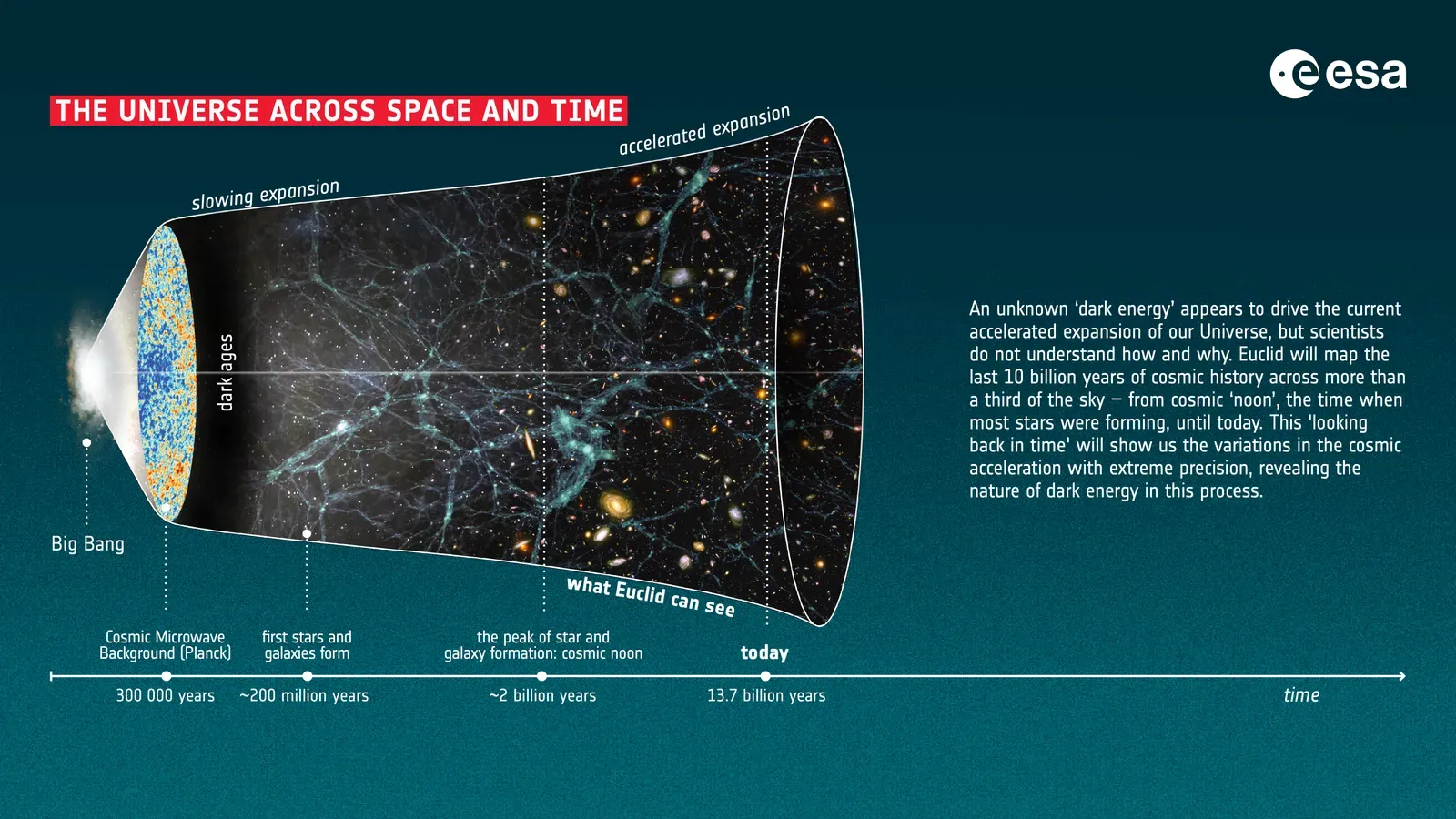
On the largest scales, varying constants could show up as subtle asymmetries in the cosmic microwave background or in how galaxy clusters grow over time. Cosmologists already map dark matter and dark energy by tracking the distribution of galaxies and distant supernovae; in principle, the same surveys could reveal fingerprints of spatially varying physics. Even life becomes part of the story: if chemistry is less friendly in some cosmic neighborhoods, then habitable planets might be rarer there. The idea that not only the geography but the physics of the universe could influence where life emerges adds an almost biological flavor to cosmology.
Beyond Textbook Symmetry: Why This Challenge Is So Radical
The suggestion that fundamental constants might vary cuts against a foundational instinct in physics: that the laws of nature are the same everywhere and everywhen. Historically, big breakthroughs have often come from promoting local regularities to universal principles, such as when the falling of apples and the motion of planets were united under a single law of gravitation. Einstein’s relativity doubled down on this move, insisting that the laws of physics look the same to all observers, no matter how they are moving, and this symmetry has been wildly successful.
If we now need to accept that what we thought were universal constants are actually environmental parameters, the philosophical ground shifts. Instead of a single, tightly constrained theory that predicts every number, we may end up with a meta-theory that allows a wide range of possibilities, with our universe being one realization among many. Compared with the older, cleaner picture, this can feel almost like giving up, but that reaction might say more about our aesthetic preferences than about the universe. There is a precedent: in planetary science, people once hoped to derive all planetary orbits and sizes from pure theory, but over time they accepted that much of what we see is contingent history rather than necessary law. The same kind of adjustment may be coming for fundamental physics if varying constants survive scrutiny.
Unresolved Clues, Conflicting Data, and the Road Ahead
Right now, the case for spatially varying constants is intriguing but not settled, and that uncertainty is exactly where science tends to get interesting. Some independent re-analyses of the quasar data have suggested that instrumental quirks, such as how different telescopes calibrate wavelength scales, could mimic the signal of varying alpha. Others argue that once these systematics are properly handled, a residual pattern remains that is hard to explain away. New spectrographs designed with extreme stability and calibration in mind are starting to come online, offering a more decisive test.
Beyond optical telescopes, radio and millimeter observatories are probing molecular lines that respond differently to changes in constants, providing independent cross-checks. Precision experiments on Earth, using atomic clocks and quantum sensors, monitor whether constants drift over years or decades, putting bounds on time variation that complement the spatial tests. Together, these efforts are converging on a simple but high-stakes question: are we seeing the first cracks in the idea of immutable laws, or just the artifacts of pushing our tools to their limits? The honest answer, for now, is that the jury is still out, and that is exactly why so many researchers are paying attention.
Why This Debate Matters Far Beyond Esoteric Theory
It is tempting to file all of this under “exotic cosmology” and move on, but that would miss how deeply the issue cuts into our understanding of reality. If the laws of physics are not globally fixed, then every measurement we make becomes, in some sense, a local weather report on the conditions of our particular cosmic neighborhood. That does not invalidate science, but it changes what we think science can ultimately explain: we may be mapping a landscape rather than uncovering a single underlying blueprint.
There is also a cultural and philosophical dimension that is hard to ignore. Many people, scientists included, find comfort in the idea that the universe runs on clean, timeless rules, like a perfect mathematical machine. A universe where those rules vary across space is stranger and more humbling, more like a wild ecosystem than a factory line. Accepting that possibility forces us to let go of a certain kind of intellectual security and embrace a messier, more contingent cosmos. Whether you find that prospect disturbing or exhilarating, it is a powerful reminder that even our most cherished scientific assumptions remain open to challenge by new evidence.
How Curious Minds Can Follow – and Pressure-Test – These Ideas

You do not need to be a professional physicist to engage with this unfolding story about the stability of the laws of nature. Publicly accessible preprints, university press releases, and outreach articles from observatories all offer ways to track new results on varying constants and related cosmological tests. When you encounter bold claims, you can look for the telltale signs of healthy science: independent confirmations, clear descriptions of uncertainties, and serious attempts to rule out mundane explanations.
Supporting basic research – through voting priorities, educational advocacy, or even simply paying attention to how these debates are reported – helps ensure that ambitious, long-shot questions like this keep getting asked. You can also bring these ideas into conversations about what science is and is not: a fixed collection of truths, or an evolving, self-correcting effort to understand a universe that may be stranger than we were taught in school. The next time you look up at the night sky, it might be worth wondering whether some of those distant stars are governed by slightly different rules than the ones in your physics textbook. And if they are, what does that say about how far our curiosity is willing to go?
Suhail Ahmed is a passionate digital professional and nature enthusiast with over 8 years of experience in content strategy, SEO, web development, and digital operations. Alongside his freelance journey, Suhail actively contributes to nature and wildlife platforms like Discover Wildlife, where he channels his curiosity for the planet into engaging, educational storytelling.
With a strong background in managing digital ecosystems — from ecommerce stores and WordPress websites to social media and automation — Suhail merges technical precision with creative insight. His content reflects a rare balance: SEO-friendly yet deeply human, data-informed yet emotionally resonant.
Driven by a love for discovery and storytelling, Suhail believes in using digital platforms to amplify causes that matter — especially those protecting Earth’s biodiversity and inspiring sustainable living. Whether he’s managing online projects or crafting wildlife content, his goal remains the same: to inform, inspire, and leave a positive digital footprint.