
A Discovery That Echoed Through Decades (Image Credits: Unsplash)
On a clear night in August 1977, a radio telescope in Ohio captured a fleeting burst of energy from space that defied explanation. The signal, dubbed the “Wow!” after astronomer Jerry Ehman’s handwritten note on its printout, pulsed strongly at the hydrogen emission frequency of 1420 MHz for 72 seconds before vanishing forever. Nearly five decades later, a team of astronomers has advanced a compelling natural theory to account for this enduring enigma.[1][2]
A Discovery That Echoed Through Decades
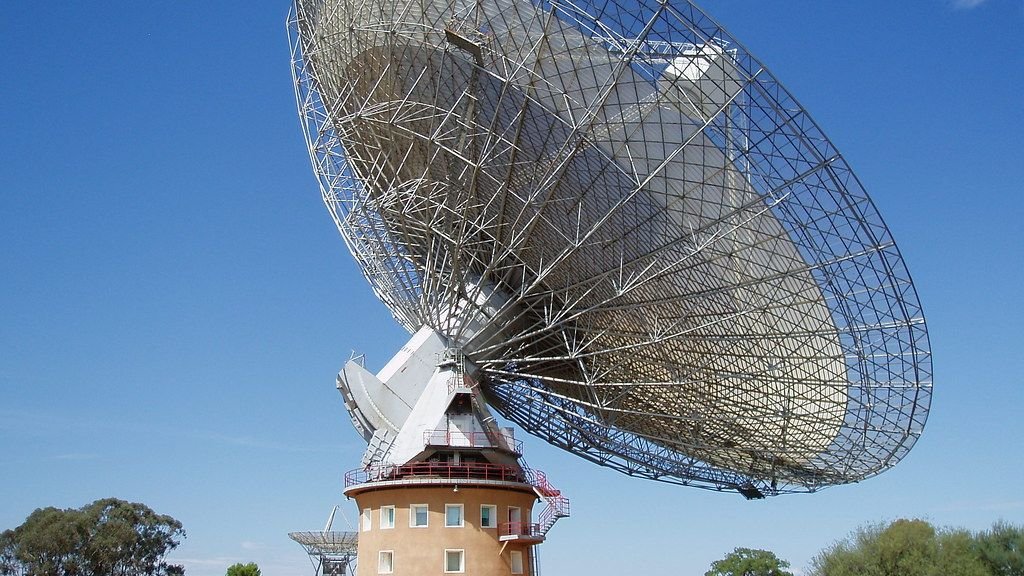
The Big Ear radio telescope at Ohio State University scanned the skies as part of early SETI efforts when it recorded the anomalous signal. Its printout showed a sequence of intensities peaking at “U,” equivalent to about 30 times the background noise level. Follow-up observations in the same sky region yielded nothing, fueling speculation from alien transmissions to comets and interference.[3]
Key characteristics set it apart: a narrow bandwidth around 10 kHz, precise alignment with the neutral hydrogen line, and galactic coordinates suggesting a source within the Milky Way. Decades of scrutiny failed to pinpoint repeats or earthly origins, keeping the event alive in astronomical lore.[4]
Clues from Modern Observations Emerge
Astronomers at the Planetary Habitability Laboratory revisited the puzzle using archived data from Puerto Rico’s Arecibo Observatory. Drift scans conducted between February and May 2020 at 1420 MHz revealed multiple narrowband signals near the hydrogen line, though two orders of magnitude weaker than the original. These emissions traced back to small interstellar clouds of cold hydrogen, or HI clouds.[1]
The detections shared traits with the Wow! signal, including frequency and bandwidth, but lacked its intensity. This pattern prompted researchers to explore what could amplify such emissions dramatically and transiently.[5]
Unraveling the Maser-Like Flare Hypothesis
The leading explanation posits a powerful transient event, such as a magnetar flare or soft gamma repeater outburst, bombarded a cold HI cloud. This intense radiation triggered stimulated emission, akin to a maser or superradiance, causing the hydrogen atoms to release a coherent burst at 1420 MHz. Led by Abel Méndez, the team stated: “We hypothesize that the Wow! Signal was caused by sudden brightening from stimulated emission of the hydrogen line due to a strong transient radiation source, such as a magnetar flare or a soft gamma repeater (SGR).”[1][5]
Magnetars, ultra-magnetic neutron stars, unleash rare flares capable of such effects. The alignment had to be precise: the flare’s beam striking the cloud just as the Big Ear beam swept past. This rarity accounts for the non-repetition, while the maser process matches the narrowband strength.[2]
- Narrow 10 kHz bandwidth from coherent hydrogen emission.
- Peak intensity exceeding typical HI signals due to amplification.
- Duration tied to flare-cloud interaction and telescope scan time.
- Frequency locked to rest-frame hydrogen line, shifted by galactic motion.
- One-off nature from transient trigger.
Updated Analysis Sharpens the Picture
In a follow-up study, researchers reprocessed long-unpublished Ohio SETI archival data with modern techniques. They refined the signal’s position to two narrow fields at right ascension 19h25m02s or 19h27m55s and declination -26°57′. Peak flux density climbed above 250 Janskys, with frequency at 1420.726 MHz – indicating a faster-moving galactic source.[3]
These revisions ruled out interference more convincingly and aligned with HI cloud signatures. Cold hydrogen clouds, the study confirmed, routinely produce similar narrowband features under the right conditions.[3]
Shifting Perspectives in the Search for Life
The theory reframes the Wow! signal as potentially the first documented hydrogen-line maser flare, a new class of astrophysical transient. It cautions SETI surveys about false positives from such rare alignments. While not universally accepted – some experts call it speculative – the hypothesis fits all data without invoking extraterrestrials.[2]
Key Takeaways
- The Wow! signal likely stemmed from a magnetar flare igniting a hydrogen maser in an interstellar cloud.
- Recent Arecibo and archival data uncovered analogous weaker emissions.
- Refined parameters point to a galactic, natural origin, reshaping SETI false-positive risks.
This breakthrough underscores how advancing technology illuminates past mysteries. It tempers cosmic wonder with prosaic physics, yet leaves room for true anomalies. What do you think – does this close the book on the Wow! signal? Share your views in the comments.