
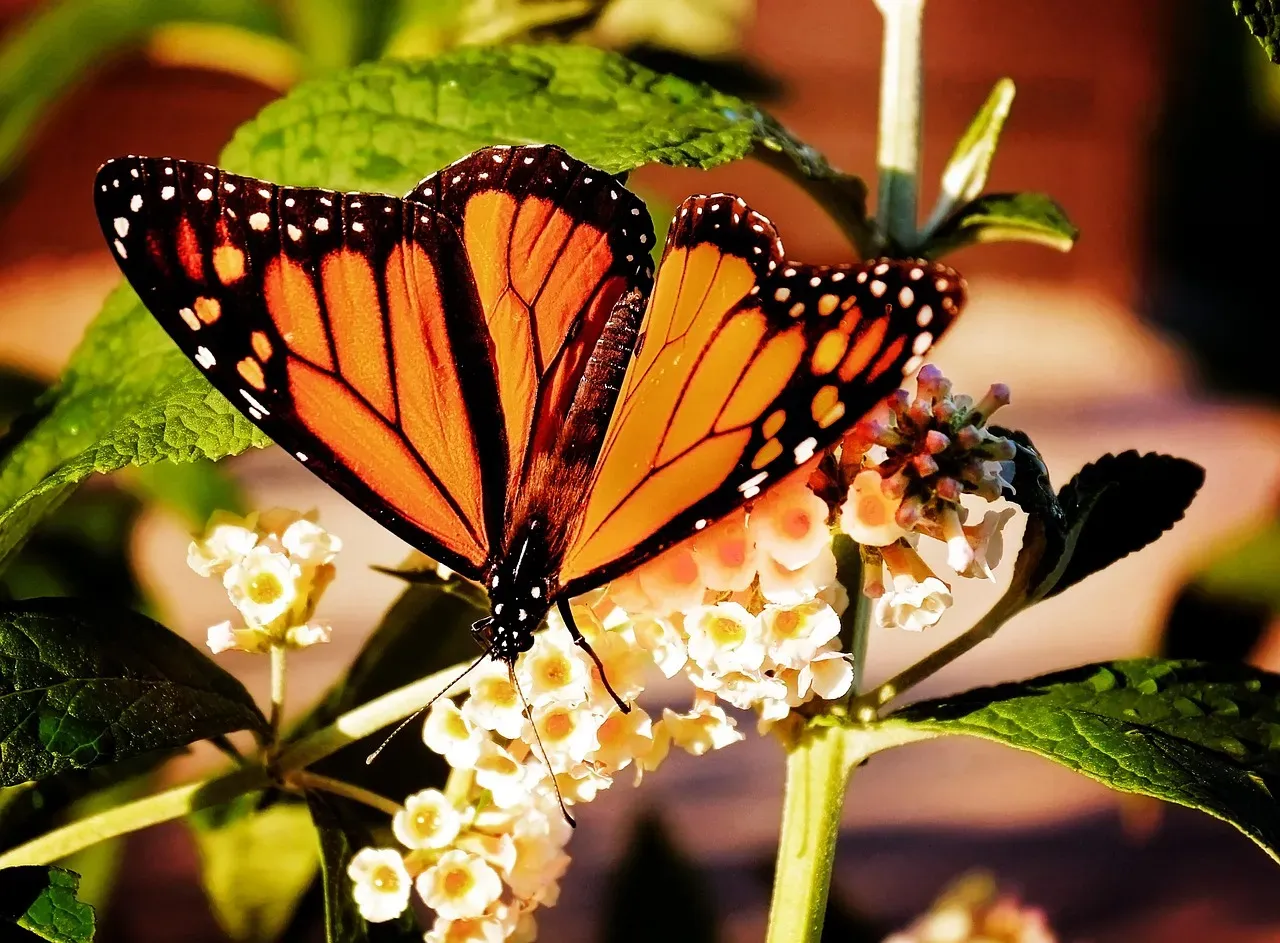
Picture this: a creature weighing less than a gram somehow navigates thousands of miles across an entire continent, arriving at a mountain forest it has never seen before. No GPS, no map, just instinct and a biological compass that scientists are still trying to fully understand. You’re right to be amazed, because monarch butterflies are pulling off one of nature’s most extraordinary feats every single year. Their journey defies logic and continues to challenge everything we thought we knew about migration.
These vibrant orange and black insects don’t just flutter around your garden looking pretty. They’re endurance athletes, navigators, and survivors rolled into one delicate package. Let’s be real, most of us need a smartphone to find our way to a new restaurant, yet monarchs can find a specific grove of trees in Mexico using nothing but the sun, magnetic fields, and sheer determination.
The Epic Migration: A Multi Generational Marathon
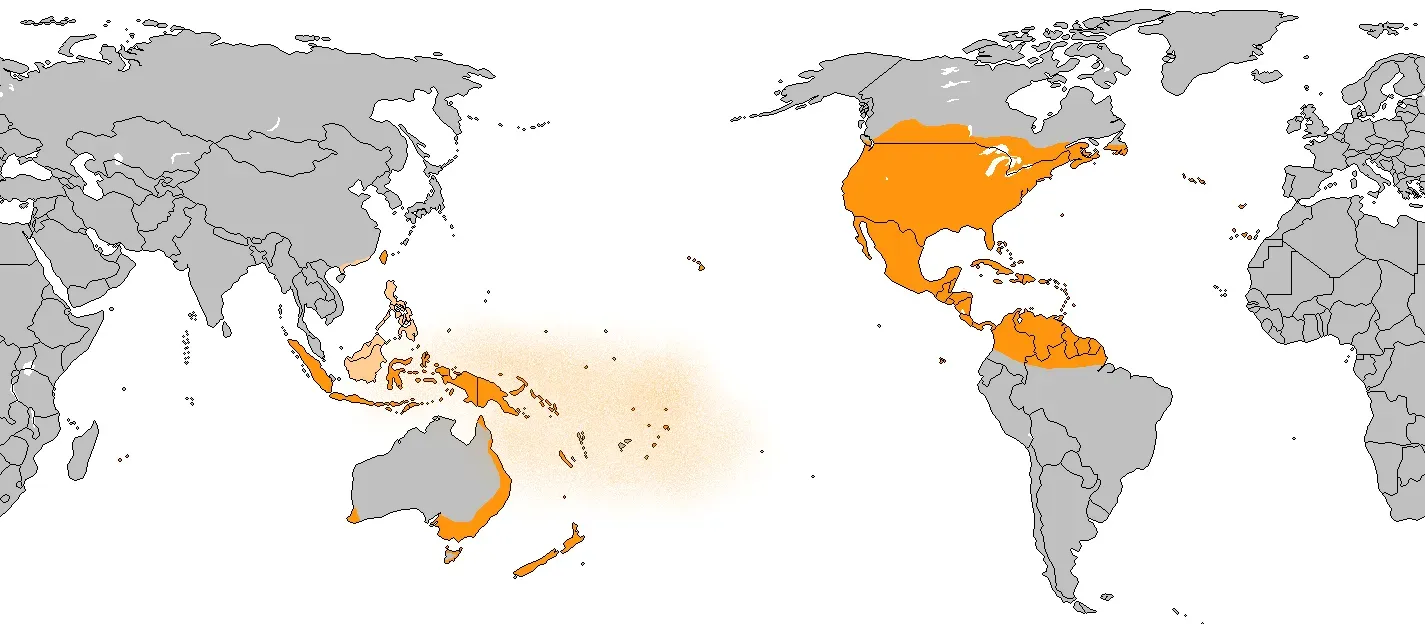
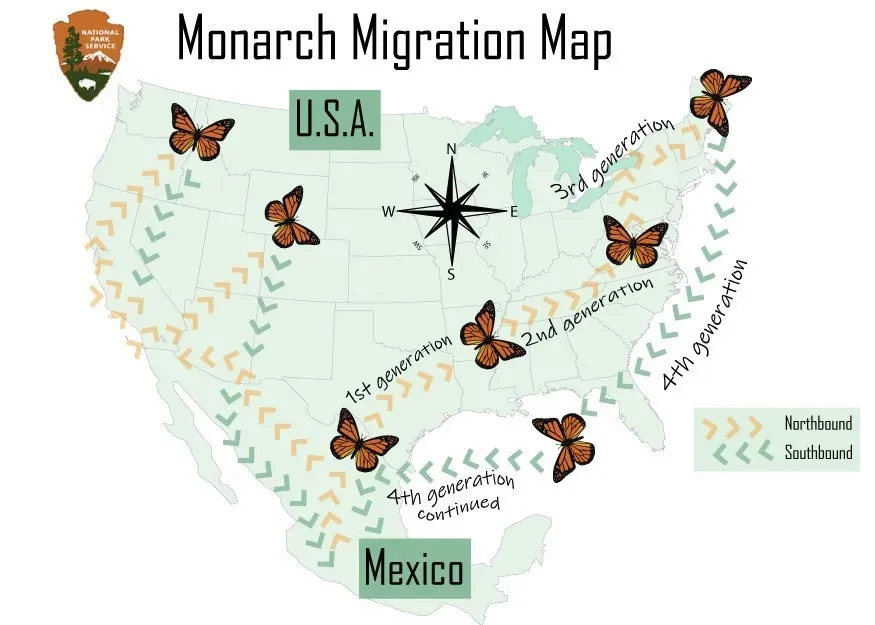
North American monarchs begin their southern migration in September and October, originating from southern Canada and the northern United States before traveling thousands of kilometers to overwintering sites in central Mexico. Think about that for a second. These butterflies, weighing less than a gram, fly between 2,000 to 3,000 miles to reach an overwintering location in Mexico. Some individuals have been recorded traveling even more impressive distances in a single day.
Monarchs can travel between 50 and 100 miles a day, and it can take up to two months to complete their journey. The most remarkable aspect? This migrating generation has never before been to Mexico, yet they know exactly where to go. It’s an inherited roadmap written into their DNA.
What makes this even more mind blowing is that the monarch is the only butterfly known to make a two-way migration as birds do. Western monarchs have their own route, traveling to coastal California instead of Mexico, though their journey covers shorter distances.
Four Stages of an Astonishing Transformation
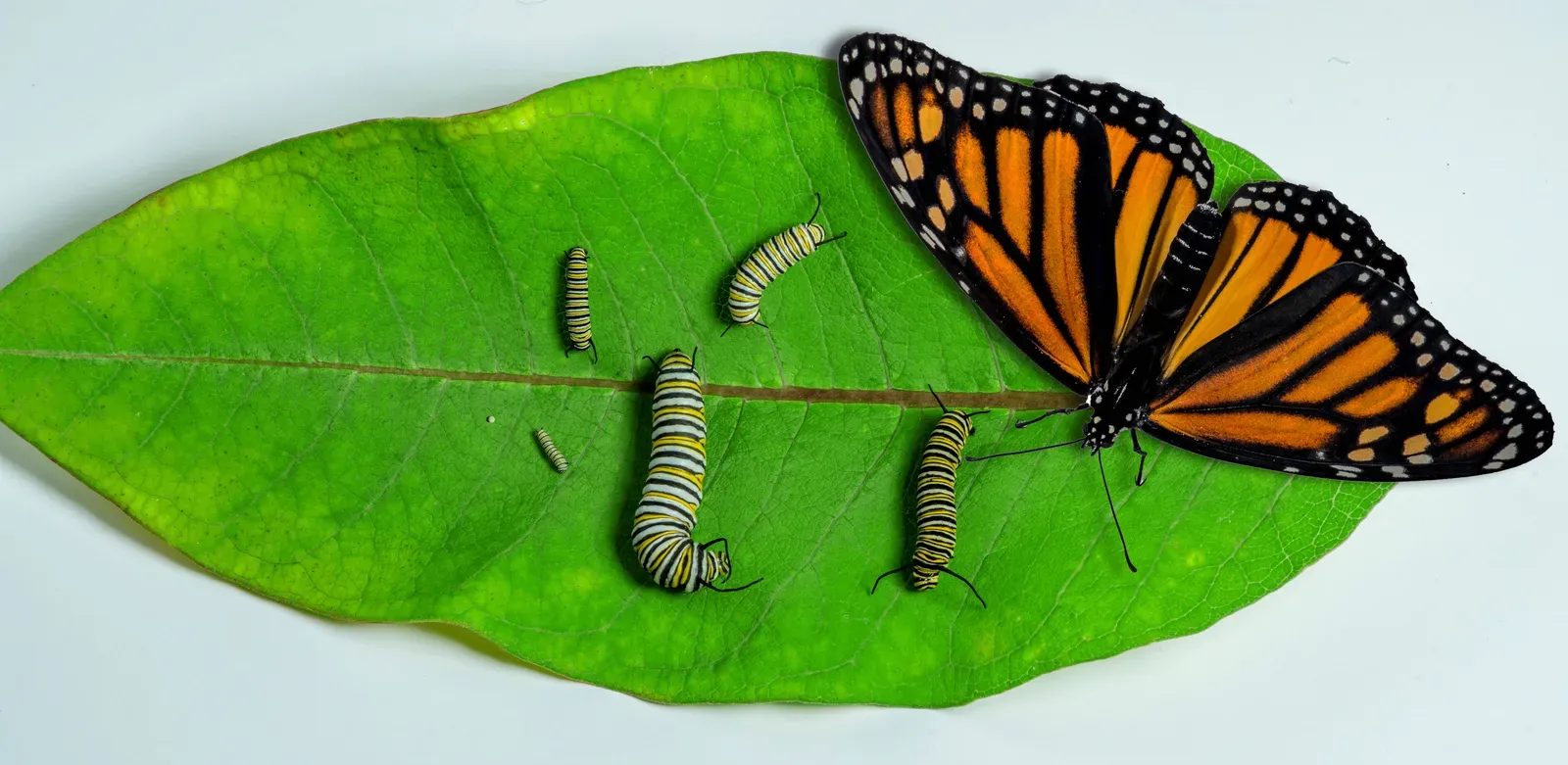
Monarchs undergo complete metamorphosis, meaning they have an egg, larva (caterpillar), pupa (chrysalis), and adult stage. Each phase tells its own story of survival and adaptation. Monarchs transition from eggs to adults during warm summer temperatures in as little as 25 days, extending to as many as seven weeks during cool spring conditions.
The egg stage lasts just a few days. Female monarchs lay eggs singly, most often on the underside of a young leaf of a milkweed plant during the spring and summer. These tiny eggs are barely visible to the naked eye, giving the caterpillar some protection from predators right from the start.
The entire larval stage in monarchs lasts from nine to fourteen days under normal summer temperatures. During this phase, the caterpillar is basically an eating machine. Monarchs have five larval instars and grow to almost 2,000 times their original mass. Imagine gaining that much weight in two weeks! The chrysalis stage is where the real magic happens, lasting about ten to fourteen days while the caterpillar completely reorganizes itself into a butterfly.
The Milkweed Connection: A Life or Death Relationship
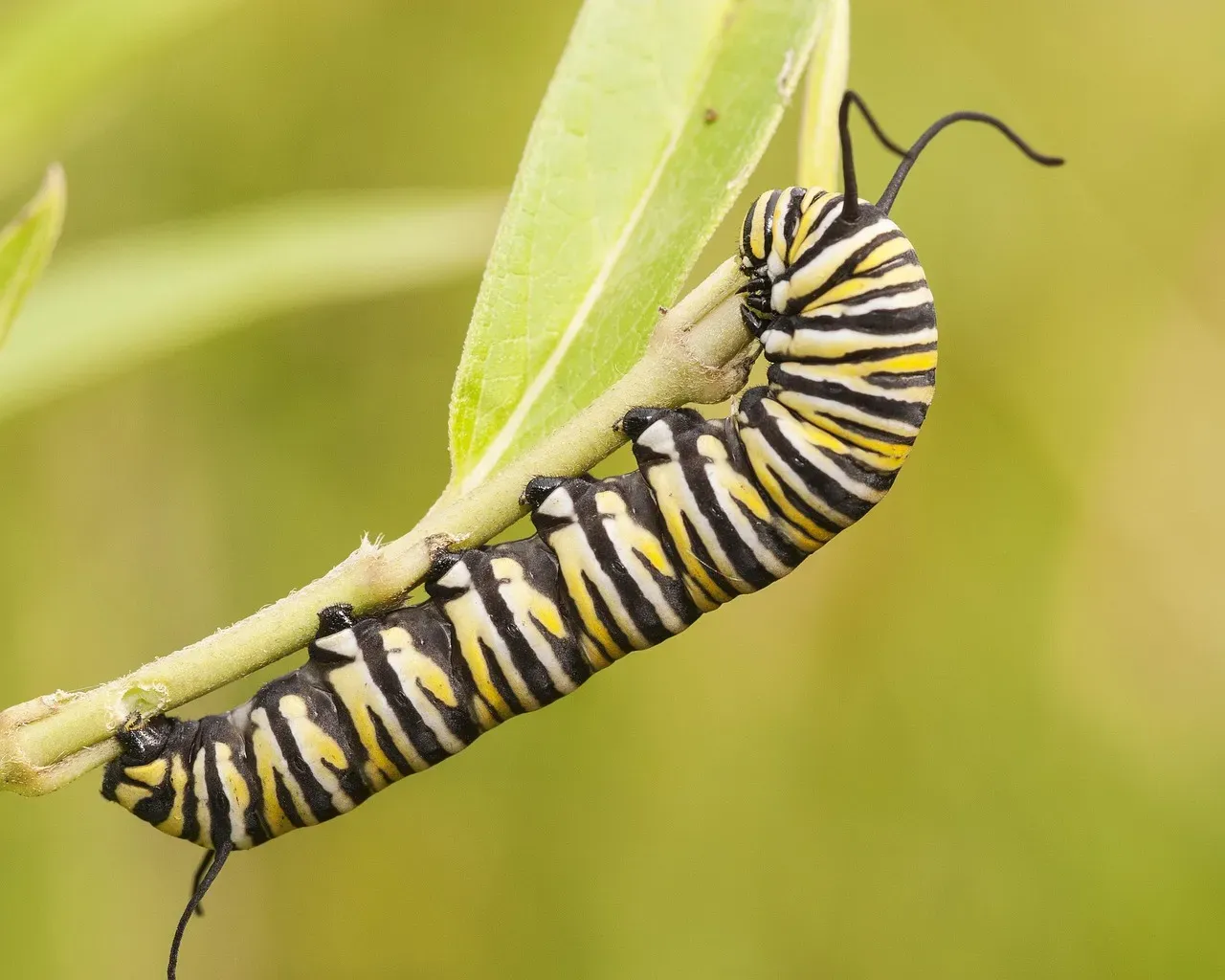
Here’s something crucial you need to understand: Monarch caterpillars only eat milkweed. Not some milkweed, not occasionally milkweed. Only milkweed. Period. This total dependence makes them incredibly vulnerable to habitat loss.
Monarch larvae only eat the leaves of the milkweed plants, but once they become adults they switch to feeding on the nectar of different plants including milkweed. The milkweed isn’t just food though. It’s also a defense mechanism. The plants contain toxins that make the caterpillars taste terrible to predators, a chemical shield that stays with them through adulthood.
The dramatic decline in milkweed across North America has become one of the biggest threats facing monarchs. Agricultural practices, especially the dramatic increase in the use of herbicide resistant crops that kill everything other than the resistant crop, including milkweed, have devastated monarch breeding habitat. Without milkweed, there simply cannot be monarchs.
Nature’s GPS: How Monarchs Navigate Thousands of Miles
Scientists have discovered that monarchs use multiple navigation systems, which honestly sounds like something out of science fiction. Monarchs use an antenna-based time-compensated sun compass to navigate during this long journey, in which eye-sensed directional daylight cues are integrated in the sun compass found in the midbrain central complex area and time compensated by antennal circadian clocks. Your antennae are your compass. Wild, right?
Even more impressive, migrants possess an inclination magnetic compass to help direct their flight equatorward in the fall, and the use of this inclination compass is light-dependent utilizing ultraviolet A/blue light between 380 and 420 nm. This magnetic compass acts as a backup system when the sun isn’t visible.
For migratory monarchs, the inclination compass may serve as an important back up system when daylight cues are unavailable, and may also augment hand in hand with the time compensated sun compass to provide orientation and directionality throughout the migration process. It’s honestly hard to believe such a tiny creature possesses navigation technology that rivals anything humans have invented.
Mexico’s Sacred Forests: The Ultimate Destination
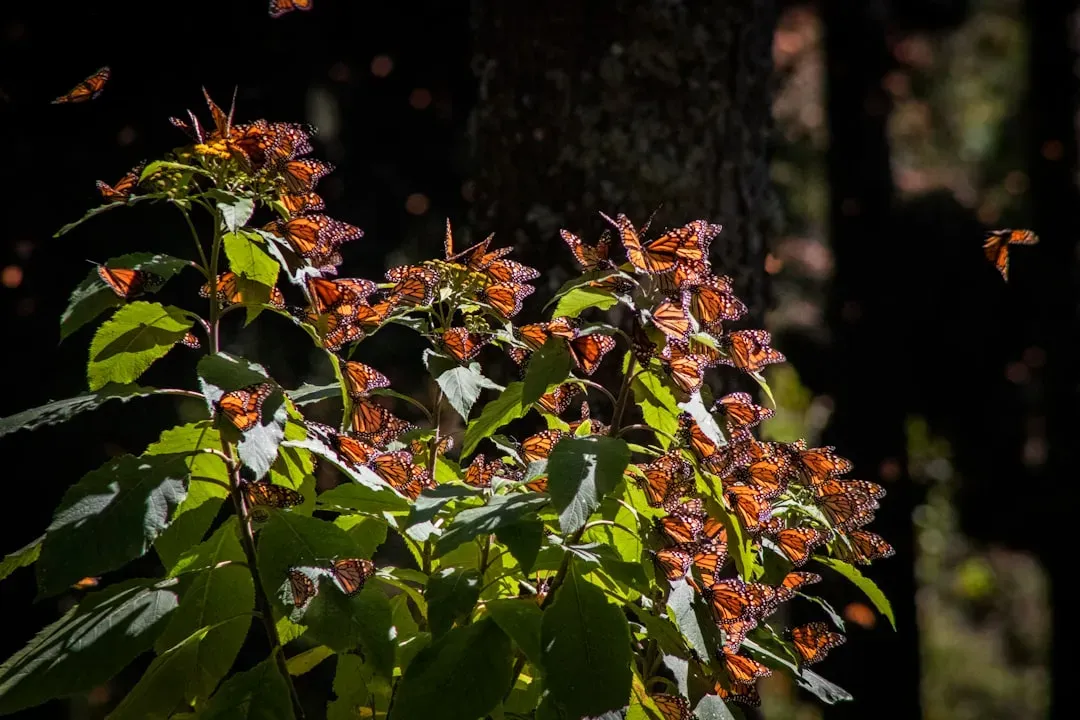
Monarchs in Mexico overwinter in high elevation oyamel fir forests in the Transvolcanic mountain range of central Mexico, typically at locations about 2 miles above sea level, or about 3,000 meters. These aren’t random forests. The conditions must be just right: cold enough to slow their metabolism but not so cold they freeze, with enough humidity and tree cover to protect them.
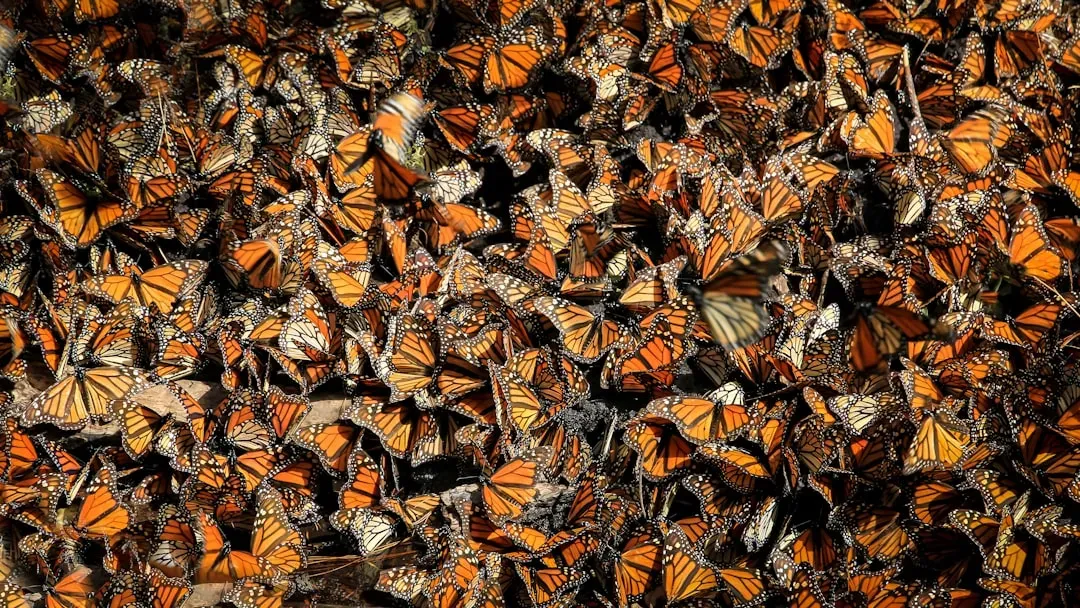
The butterflies arrive at their roosting sites in November, clustering together in massive aggregations that drape entire trees in living orange curtains. Scientists estimate between 10 and 50 million monarchs per hectare of land occupied at these overwintering sites. Imagine standing beneath trees covered with millions of butterflies, their wings creating sounds like falling rain.
The Monarch Butterfly Biosphere Reserve is located in the Trans Mexican Volcanic Belt pine oak forests ecoregion on the border of Michoacán and State of Mexico, 100 km northwest of Mexico City. These sacred sites represent the culmination of an incredible journey and the hope for future generations.
The Methuselah Generation: Monarchs That Live Nine Months

Most adult monarchs live just a few weeks during the breeding season. They mate, lay eggs, and die. Simple. The migratory generation? Completely different story. Adults in the migratory generation can live for up to nine months, roughly eight times longer than their summer cousins.
This extended lifespan is critical. This generation lives for approximately nine months and it is they who make the journey south to Mexico for the winter. Their bodies go into a kind of suspended animation called reproductive diapause, conserving energy for the long journey and the winter ahead.
The lower metabolism required in diapause (when they’re dormant during winter) is thought to be behind this extended life. These super butterflies emerge in late summer, fly to Mexico, spend the winter there, and then begin the return journey north in spring. Only then do they finally reproduce and complete their life cycle. It’s their one shot at perpetuating the species, and they don’t waste it.
A Population in Freefall: The Decline Crisis
The numbers are genuinely alarming. Monarchs have declined by more than 80% since the 1990s from central Mexico, and by more than 95% since the 1980s in coastal California. In early 2025, the 28th annual Western Monarch Count reported a peak population of just 9,119 butterflies this winter, the second lowest overwintering population ever recorded since tracking began in 1997.
The eastern population isn’t faring much better. The United States Fish and Wildlife Service published a proposed rule in December 2024 that would list the monarch butterfly as a threatened species, estimating the probability of extinction in the foreseeable future at 56 to 74 percent for the eastern monarch migratory population and 99 percent for the western migratory population.
These aren’t just statistics. They represent the potential loss of one of nature’s most spectacular phenomena. In the 1990s, nearly 700 million monarchs made the epic flight each fall from the northern plains of the U.S. and Canada to sites in the oyamel fir forests north of Mexico City. Now we’re measuring populations in the millions rather than hundreds of millions.
Climate Change and Habitat Loss: A Perfect Storm
Multiple threats are hammering monarchs from all directions. Legal and illegal logging and deforestation to make space for agriculture and urban development has already destroyed substantial areas of the butterflies’ winter shelter in Mexico and California, while pesticides and herbicides used in intensive agriculture across the range kill butterflies and milkweed. It’s death by a thousand cuts.
Climate change adds another devastating layer. Harsher winters in monarch overwintering sites have caused larger than usual die offs, and erratic weather may also delay the emergence of milkweed in spring and change the bloom time of flowering plants that provide resources to migrating monarchs. The timing of the entire migration depends on temperature cues and food availability. Disrupting these patterns throws the whole system into chaos.
By 2024, the eastern butterflies had declined by approximately 80 percent since the 1980s, and the western population was more imperiled, declining by 95 percent, with threats including the loss and degradation of breeding, migratory, and overwintering habitats, exposure to insecticides, and the growing impacts of climate change. We’re watching a natural wonder disappear in real time.
Revolutionary Tracking Technology Reveals Migration Secrets

Technology is finally catching up to the monarchs’ incredible journey. Project Monarch, a collaborative effort founded by Cellular Tracking Technologies and the Cape May Point Arts & Science Center, united over 20 partner organizations to deploy over 400 BlūMorpho transmitters on migrating monarchs during fall 2025. These tiny solar powered tags are light enough that butterflies can carry them without affecting flight.
In 2025, Project Monarch deployed over 400 solar powered ultralight transmitters on the thoraxes of that year’s southward migrating monarchs, tracking butterflies from locations throughout North America and the Caribbean to their overwintering sites in Mexico. The data collected is unprecedented, showing exactly how monarchs navigate, where they stop, and how weather conditions affect their journey.
This tracking technology has revealed things scientists never knew before. Individual butterflies can now be followed in near real time as they make decisions about when to fly, where to rest, and how to respond to changing conditions. The insights gained could prove crucial for conservation efforts aimed at protecting critical habitat along the migration corridor.
What You Can Do: Every Garden Matters
Here’s the good news: you can actually help. Planting native milkweed in your garden creates breeding habitat. Just make sure it’s native to your region, as different monarch populations rely on different milkweed species. Avoid tropical milkweed in areas where it doesn’t naturally occur, as it can disrupt migration timing.
Providing nectar sources is equally important. Late season flowers like goldenrod, aster, and liatris give migrating monarchs the fuel they need for their journey. Skip the pesticides entirely. Even organic pesticides can harm butterflies and other beneficial insects.
As of June 2025, at least 14 states had enacted legislation to protect, develop and restore habitat suitable for pollinators, and in April 2025, the Chicago Park District launched Project Monarch, a citywide initiative to conserve and celebrate monarch butterflies and their habitats, while many local jurisdictions throughout the United States have made commitments to increase monarch habitat. Individual actions, multiplied across millions of gardens and communities, add up to real change.
The monarch butterfly migration represents something precious and increasingly rare: a truly wild spectacle that spans an entire continent. These fragile creatures, lighter than a feather yet tough as nails, remind us that nature still holds mysteries worth protecting. Their decline serves as a warning about habitat loss, climate change, and the interconnectedness of ecosystems. Yet their resilience also offers hope. With concerted conservation efforts and widespread public support, we might just ensure that future generations can witness the miracle of millions of monarchs draping Mexican mountains in living orange each winter. What would the world lose if we let this wonder disappear? More than we can possibly imagine.