
You’ve probably wondered what makes you who you are. What sparks that inner voice, that feeling of being present in your own life? Your brain holds roughly 86 billion neurons, each firing and connecting in ways scientists are only beginning to understand. It’s like trying to decipher an impossibly complex code that rewrites itself every single day.
The relationship between your physical brain and your conscious experience remains one of the deepest puzzles facing modern science. Every memory you cherish, every thought you have right now as you read these words, emerges from electrical signals and chemical reactions happening inside your skull. How does that happen? Let’s dive into what researchers are discovering about the machinery of your mind in ways that might completely change how you see yourself.
Where Consciousness Actually Lives in Your Brain
For decades, scientists thought your frontal lobes were the command center of consciousness, the place where awareness itself lived. Turns out, that might have been wrong all along. Current research has found that the content of consciousness mainly originates from the hindbrain, the back regions of your brain that process sensory information.
Multiple senses all stimulate a critical region deep in the brain that controls consciousness. This discovery fundamentally shifts how we understand awareness. Your conscious experience isn’t happening in one place but emerges from coordinated activity across widely distributed networks. In humans and other mammals, the thalamocortical system is strongly involved in consciousness, whereas the cerebellum (despite having many more neurons) is not, which tells us consciousness isn’t just about having lots of brain cells.
The Battle Between Two Major Theories
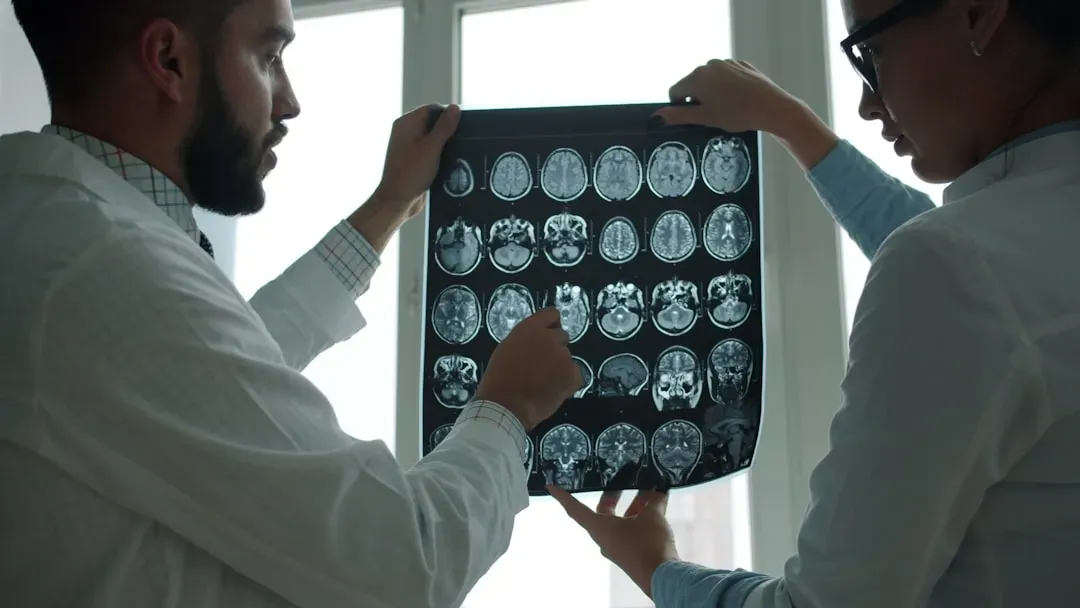
Scientists have been locked in a fascinating debate about how consciousness emerges. Two major theories went head to head recently in a massive experiment. An experiment seven years in the making has uncovered new insights into the nature of consciousness and challenges two prominent, competing scientific theories: Integrated Information Theory (IIT) and Global Neuronal Workspace Theory (GNWT).
Neither theory won outright. Instead, something unexpected emerged from the research. Scientists discovered that how we see may be more central to consciousness than how we think. The results were extremely mixed, showing just how much mystery remains in understanding our minds. Two theories recently went head-to-head in a scientific face-off, with results that challenged some of the central tenets of both theories and highlighted just how much mystery remains.
The Radical New Theory About Consciousness and Physics

Here’s where things get really wild. A paper published in Frontiers in Human Neuroscience presents new evidence indicating that conscious states may arise from the brain’s capacity to resonate with the quantum vacuum – the zero-point field that permeates all of space. This sounds like science fiction, right?
QED-based model calculations demonstrate that specific frequencies of the ZPF can resonate with glutamate, the brain’s most abundant neurotransmitter, with the resonant interaction taking place in microcolumns, cortical units made up of about 100 neurons bathed in a glutamate pool. What if your conscious experiences weren’t just neurons chattering but connected to fundamental properties of the universe itself? The idea remains controversial, yet it opens doors to thinking about consciousness in completely new ways. If the model proves to be correct, consciousness arises not merely from electrochemical signaling but from a bottom-up orchestration involving the brain’s resonant coupling to the ZPF.
Why Your Brain Can’t Be Reduced to Computer Code
You might have heard people compare brains to computers, but recent research suggests that’s fundamentally misleading. Consciousness emerges as something that emerges from a special kind of computing matter, not from running the right program. This biological computationalism proposes something radical.
Brains don’t run programs the way computers do – they are the computation, shaped by physics, energy, and tightly coupled processes across many scales. Think about that for a moment. Your awareness isn’t software running on biological hardware. The physical structure itself, the energy constraints, the continuous dynamics – all of it together creates consciousness. If consciousness depends on this kind of computation, then building synthetic minds may require new kinds of physical systems, not just smarter code. This has huge implications for artificial intelligence and whether machines could ever truly be conscious.
How Your Brain Decides Which Memories to Keep
Every day you’re bombarded with countless experiences. Most fade within hours. Some stick with you for life. How does your brain decide? Daytime events followed immediately by 5 to 20 sharp wave-ripples are replayed more during sleep and so consolidated into permanent memories. These ripples are like bookmarks your brain places on important moments.
Events followed by very few or no sharp wave-ripples failed to form lasting memories, with sharp wave-ripples being the physiological mechanism used by the brain to ‘decide’ what to keep and what to discard. It happens during those brief pauses in your day when your mind wanders. Long-term memories form through a layered series of molecular programs that gradually strengthen important experiences while allowing others to fade, relying on coordinated activity across the thalamus, cortex, and associated gene regulators.
The Surprising Discovery About Memory Formation Pathways
Scientists always assumed memories followed a simple path: short term first, then consolidation into long term. Wrong again. There is strong evidence of at least two distinct pathways to memory formation – one dedicated to short-term memories and another to long-term memories. This completely overturns decades of understanding.
Researchers blocked short-term memory formation in mice and found something shocking. When we repeated these experiments and used multiple tools and approaches to verify our findings, we were convinced that a parallel pathway to long-term memory formation that bypasses short-term memory must exist. You could potentially form lasting memories of events you don’t even consciously recall experiencing. The implications for understanding memory disorders and even trauma are enormous.
The Molecular Timers That Control How Long Memories Last
Your brain operates sophisticated timing mechanisms that determine whether a memory fades quickly or lasts a lifetime. By tracking brain activity during virtual reality learning tasks, researchers identified molecules that influence how long memories persist, with each molecule operating on a different timescale, forming a coordinated pattern of memory maintenance.
Memory formation begins in the hippocampus, where Camta1 and its downstream targets help keep that early memory intact, over time Tcf4 and its targets activate to strengthen cell adhesion and structural support, and finally Ash1l promotes chromatin remodeling programs that reinforce memory stability. It’s like your brain has multiple alarm clocks set at different intervals, each one strengthening important memories in waves. Unless you promote memories onto these timers, we believe you’re primed to forget it quickly.
How Stress Scrambles Your Memory Formation
Ever notice how anxiety makes everything feel threatening? There’s a neurological explanation. When mice experienced acute stress before learning, their brains formed larger and less specific memory traces, showing fear responses to safe stimuli that resembled threatening ones, a behavior linked to conditions like post-traumatic stress disorder.
Typically, memories are encoded in a small, selective group of neurons, but under stress, more neurons than usual were recruited, blurring the boundaries between safe and threatening cues, traced to the endocannabinoid system becoming overactive under stress. This helps explain why people with anxiety disorders sometimes struggle to distinguish between genuine threats and harmless situations. Your brain’s filing system gets overwhelmed, tagging too many things as dangerous.
Your Brain Has Five Distinct Eras You Pass Through
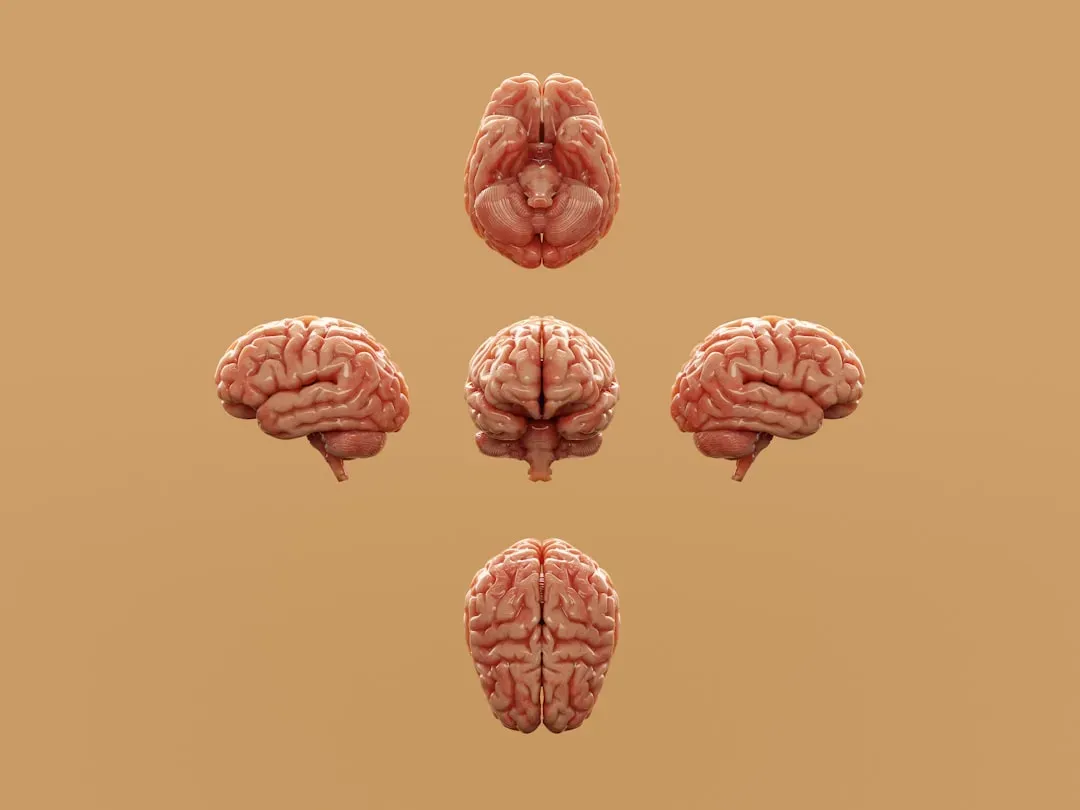
You’re not just aging steadily. Your brain reorganizes itself in distinct stages. Brain scans of thousands of people revealed that the human brain has five distinct eras, with turning points in the way it is organized occurring at age nine, 32, 66 and 83. These aren’t arbitrary numbers but reflect fundamental shifts in how your neural networks operate.
Across each of these stages – for example, the ‘adolescent’ period between age nine and 32 – people’s brains tend to experience the same types of changes. Think about how differently you processed the world as a child compared to your thirties. That’s not just wisdom or experience; it’s your brain physically reorganizing itself. Researchers discovered newly formed neurons and the precursor cells that birthed them in the brains of adults, some as old as age 78, which means your brain keeps making new neurons throughout your entire life, contradicting what scientists believed for decades.
What the Future Holds for Understanding Consciousness
Understanding consciousness is one of the most substantial challenges of 21st-century science and is urgent due to advances in artificial intelligence and other technologies, with consciousness research gradually transitioning from empirical identification of neural correlates to encompass a variety of theories amenable to empirical testing. We’re entering an unprecedented era of discovery.
Progress in understanding consciousness will reshape how we see ourselves and our relationship to both artificial intelligence and the natural world, usher in new realms of intervention for modern medicine, and inform discussions around both nonhuman animal welfare and ethical concerns surrounding the beginning and end of human life. Whether we’ll fully solve the mystery of consciousness remains uncertain. Some researchers worry we might be going in circles. Others believe we’re on the verge of breakthrough discoveries that will transform our understanding of what it means to be human. The tools are getting better, the theories more testable, and the collaborations more ambitious than ever before.
Your brain remains the most complex structure we know of in the universe, with mysteries that may take generations to fully unravel. Every new discovery seems to reveal ten more questions. The journey to understanding consciousness and memory isn’t just about science; it’s about understanding the very essence of human experience. What mysteries of your own mind are you most curious about?
Hi, I’m Andrew, and I come from India. Experienced content specialist with a passion for writing. My forte includes health and wellness, Travel, Animals, and Nature. A nature nomad, I am obsessed with mountains and love high-altitude trekking. I have been on several Himalayan treks in India including the Everest Base Camp in Nepal, a profound experience.