
Think about this for a second. You’re reading these words right now, processing information, making sense of symbols on a screen, maybe sipping coffee at the same time, all while your heart keeps beating and your lungs keep breathing. The organ making all that happen weighs less than a bag of flour and runs on the power of a dim lightbulb. I know it sounds crazy, but the human brain is arguably the most intricate structure we’ve discovered anywhere in the cosmos.
Scientists have spent decades trying to unravel how our brains actually work, and honestly, we’re still scratching the surface. Each new discovery seems to reveal ten more mysteries hiding underneath. From the sheer number of connections between brain cells to the energy efficiency that puts our best supercomputers to shame, the brain continues to defy our attempts to fully understand it. Let’s dive into what makes this three-pound marvel so remarkably complex.
A Universe of Connections Packed Inside Your Skull
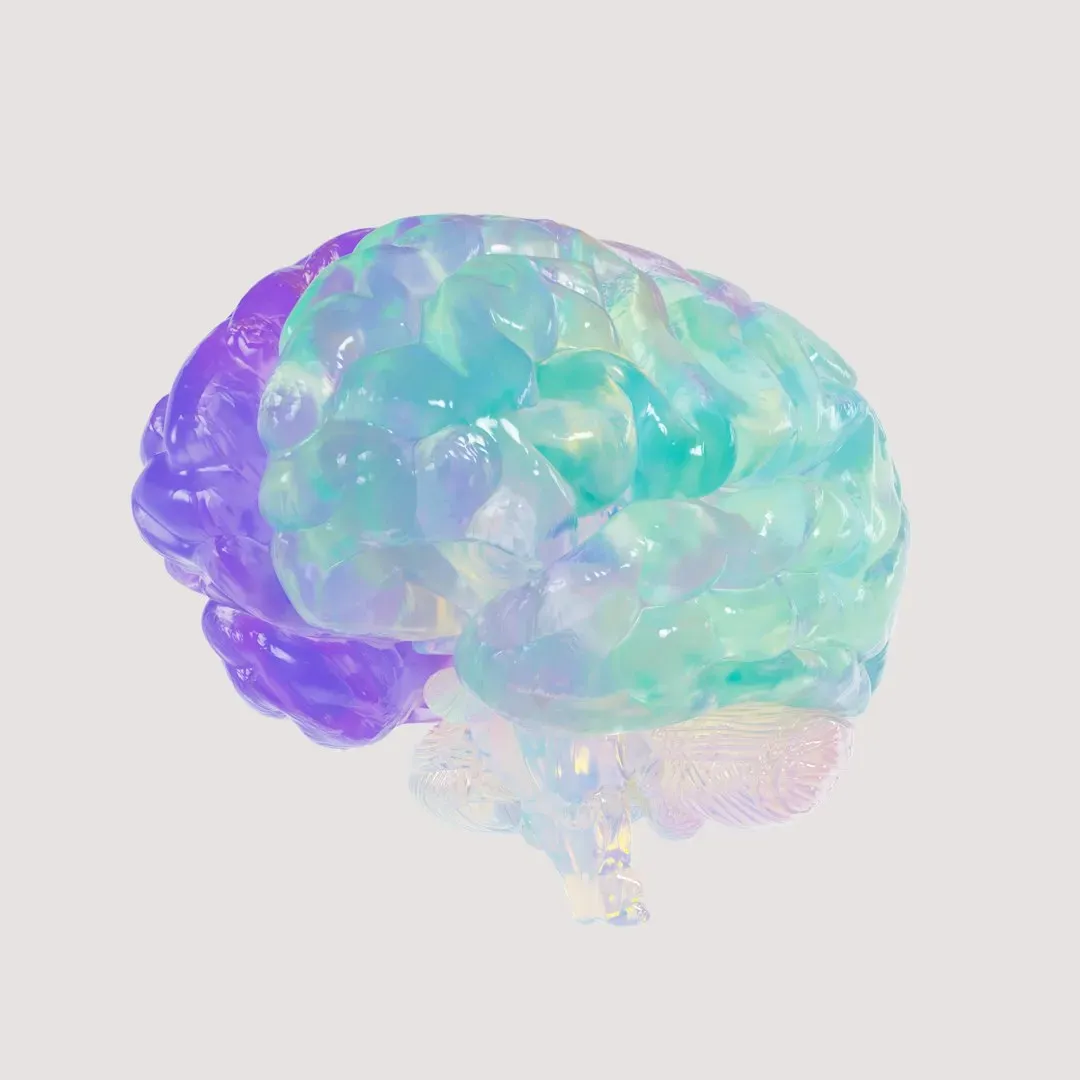
The human brain has 86 billion neurons connected by roughly 100 trillion synapses, making it one of the most complex objects in the known universe. To put that in perspective, your brain has 86 billion neurons, give or take – on the same order as the number of stars in the Milky Way. That’s already impressive, right? But here’s where it gets really wild.
Each one of those neurons doesn’t just connect to one other neuron. Up to 10,000 synapses are present in one nerve cell; the total number is 100 trillion. Think about that for a moment. We’re talking about connections numbering in the hundreds of trillions, all working together in a space roughly the size of two fists. A piece of brain tissue the size of a grain of sand contains 100,000 neurons and 1 billion synapses.
The sheer scale becomes even more mind-boggling when you consider what each synapse actually does. The number of synapses in the human brain is estimated to be nearly a quadrillion, or 1,000,000,000,000,000. And each individual synapse contains different molecular switches. If you want to think about the brain in terms of an electrical system, a single synapse is not equivalent to a transistor – it would be more like a thousand transistors. Let’s be real, that level of complexity is almost impossible to wrap your head around.
More Efficient Than Any Supercomputer Ever Built
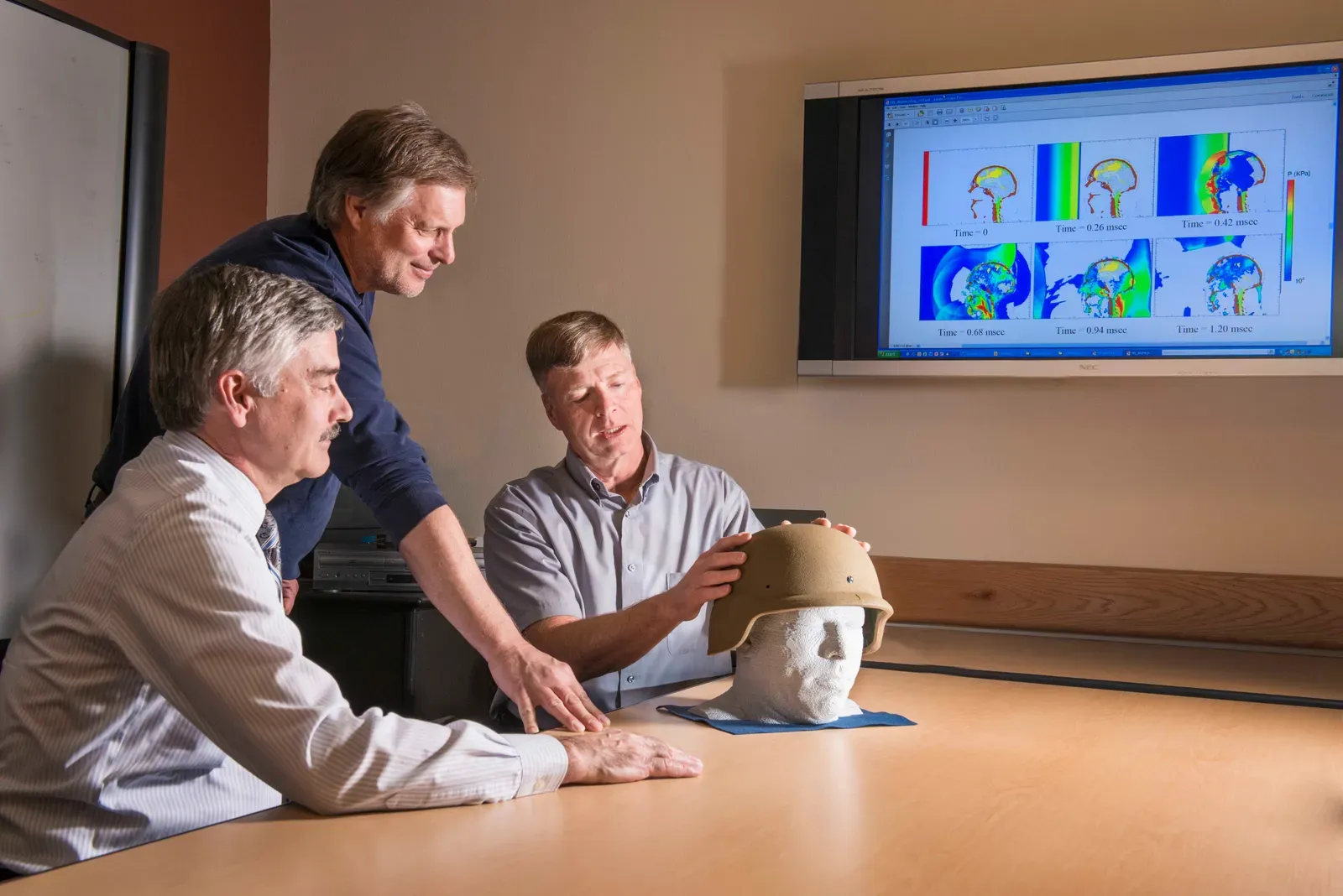
Here’s where the brain really shows off. Modern supercomputers are incredibly powerful machines, but they’re also energy-hungry monsters. A 100 petaflop supercomputer requires about 15,000,000 watts (enough power to support a city of about 10,000 homes), occupies an area of about an American football field of interconnected cabinets of CPUs, and requires a sophisticated and expensive cooling system to withdraw the large amount of heat produced. These behemoths need entire buildings just to house them.
Your brain, meanwhile? Your brain, even when solving a difficult physics problem, consumes about 15 watts (the power to keep lit a rather dim light bulb) and has a volume of about two fists. That’s it. Fifteen watts. Some recent estimates suggest the brain uses even less, around twelve watts for normal thinking activities. The efficiency gap is staggering when you really think about it.
Scientists estimate that an adult human brain carries out about one thousand trillion (1015) logical operations per second, which is known as a petaflop of computational ability. So we’re talking about computational power that rivals the world’s most advanced supercomputers, but using roughly a millionth of the energy. This raises a challenging and relevant biophysics question for 21st century science and society: what are the tricks that evolution has discovered and uses to achieve so much computation in such small volumes and with so little power?
The Brain Rewrites Itself While You’re Using It
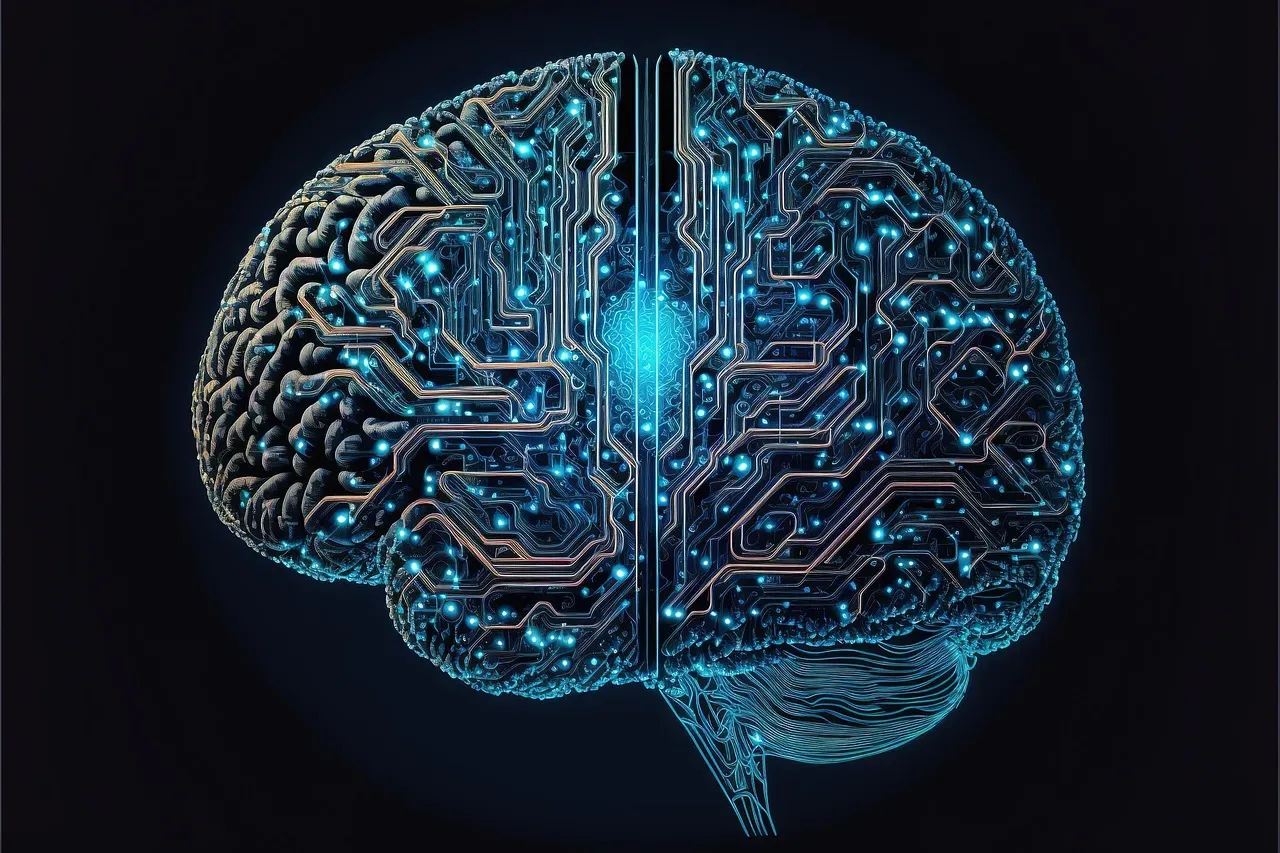
Computers are fixed structures. Sure, you can update software, but the hardware stays the same. The brain doesn’t play by those rules. The brain is being constantly transformed right up until old age. This ability, called neuroplasticity, means your brain is literally reshaping itself based on your experiences, thoughts, and actions.
When you learn something new, physical changes occur in your brain. During learning some thorns newly develop and others dissappear. These structural modifications aren’t just cosmetic. They represent the brain’s remarkable ability to adapt and reorganize neural pathways. Imagine if your laptop could physically rewire its circuits every time you learned a new skill. That’s essentially what your brain does constantly.
Evidence has slowly accumulated to suggest that adults can form new neurons, a process called neurogenesis. But this year researchers discovered newly formed neurons and the precursor cells that birthed them in the brains of adults, some as old as age 78. For years, scientists thought you were born with all the neurons you’d ever have. Recent discoveries in 2025 shattered that assumption entirely. The brain keeps surprising us with its capacity for renewal and adaptation.
What Makes Human Brains Uniquely Powerful
It’s not just about size or neuron count. Other animals have impressive brains too. What sets the human brain apart is how it’s wired and how efficiently those connections work. Human pyramidal neurons receive more synapses than in other species, particularly in L2/L3, suggesting that they integrate more synaptic information. We’re literally processing more information per neuron than other species.
The quality of those connections matters just as much as quantity. Although rodent glutamatergic synapses fail to release every fourth presynaptic action potential (25% failure rate), human glutamatergic synapses do not fail; every action potential results in glutamate release. Moreover, human glutamatergic synapses recover four times faster from depression. In other words, human brain cells communicate with near-perfect reliability and bounce back from activity faster than those of other mammals.
The connections, or synapses, among neurons in the human brain are not only more numerous but also more intricately patterned than anything that has ever been constructed to process information, including the most sophisticated supercomputer. That level of intricate patterning represents billions of years of evolutionary refinement. No computer engineer has come close to replicating it, despite decades of trying.
Still Barely Understanding How It All Works
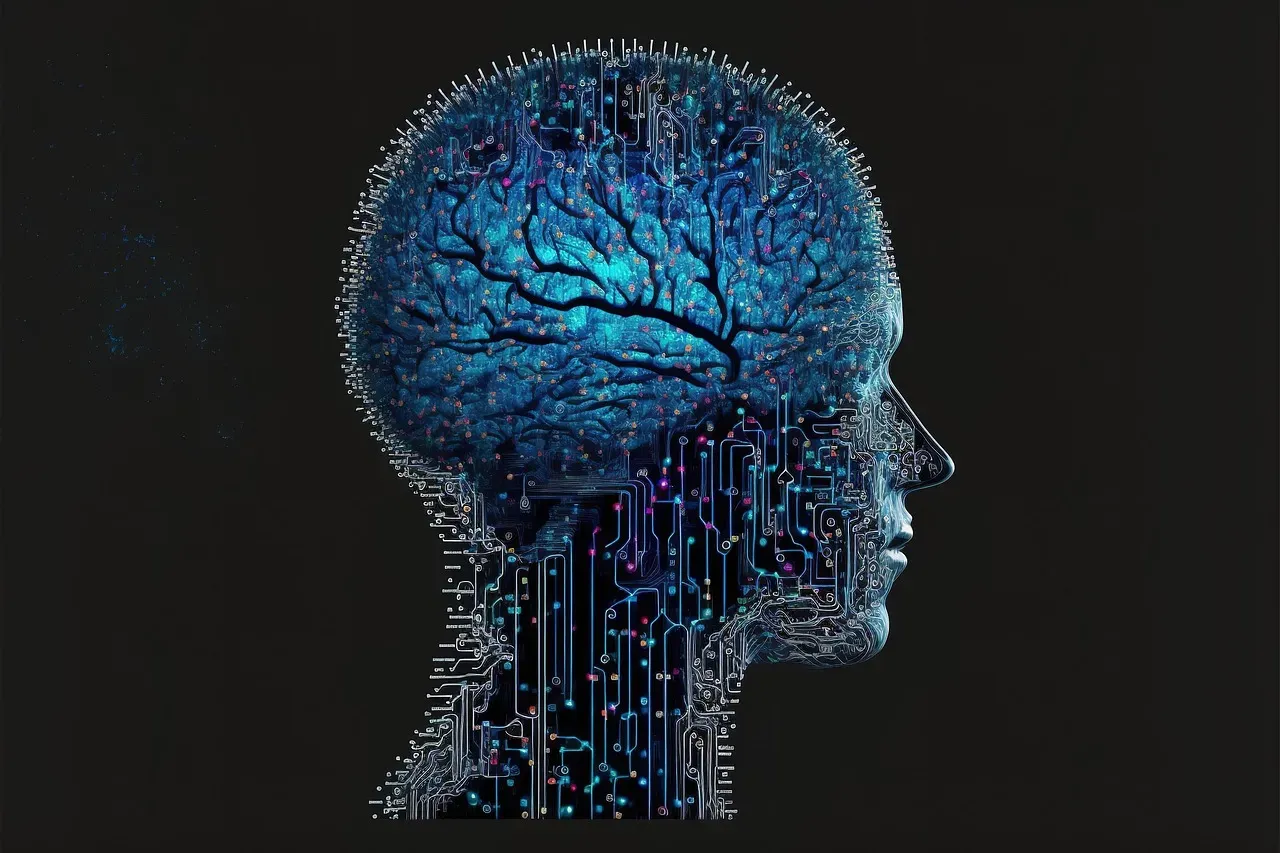
Brain computation is not only digital or analog, or a combination of both, but encompasses features in parallel, and of higher orders of complexity. Scientists are still debating fundamental questions about how the brain processes information. Is it like a digital computer? An analog system? Something else entirely? The answer seems to be all of the above and then some.
One of the biggest mysteries remains consciousness itself. The greatest mystery about the brain is how it creates consciousness. How does the activity of tens of billions of neurons create your experience of the world? We can map brain regions, trace neural pathways, and measure electrical activity, but we still can’t explain how all that physical activity generates the subjective experience of being you.
The greatest mystery about the brain is how it creates consciousness. How does the activity of tens of billions of neurons create your experience of the world? Scientists have many theories of consciousness, and two recently went head-to-head in a scientific face-off. The results were extremely mixed, challenging some of the central tenets of both theories and highlighting just how much mystery remains in the quest to understand our mind. Even with cutting-edge technology and brilliant minds working on the problem, consciousness continues to elude complete explanation.
Why This Complexity Matters for the Future
Understanding the brain’s complexity isn’t just an academic exercise. It has real implications for treating diseases, developing artificial intelligence, and expanding human potential. Researchers are now creating brain organoids and sophisticated models to study neurological conditions like Alzheimer’s and Parkinson’s. Multicellular Integrated Brains (miBrains) – replicate key features and functions of human brain tissue, are readily customizable through gene editing, and can be produced in quantities that support large-scale research. Although each unit is smaller than a dime, miBrains may be worth a great deal to researchers and drug developers who need more complex living lab models to better understand brain biology and treat diseases.
The pursuit of artificial intelligence has increasingly looked to the brain for inspiration. When AI developers mimic brain-like structures, they often achieve better performance with less computational power. Yet we’re still nowhere close to replicating the brain’s full capabilities. The gap between our best AI systems and a human toddler’s brain is staggering when you consider adaptability, creativity, and general intelligence.
Recent advances are accelerating our understanding, though. A massive international brain study has revealed that memory decline with age isn’t driven by a single brain region or gene, but by widespread structural changes across the brain that build up over time. Each discovery brings us closer to unraveling the brain’s deepest mysteries, even if each answer spawns new questions.
A Humbling Reminder of Nature’s Genius
Honestly, the more I learn about the brain, the more awe I feel. We’ve sent rovers to Mars, split the atom, and mapped the human genome, yet the organ sitting between our ears remains profoundly mysterious. The full universe of synaptic connections that takes form in any given human brain reflects the sum of the influences – genetic, nutritional, toxic, environmental, social, psychological, educational, and even accidental – that have all converged, unpredictably and irreproducibly, during the development of this particular brain. Every brain is genuinely unique, shaped by the totality of its owner’s experiences.
The complexity we’re discussing isn’t just about numbers. It’s about emergent properties that arise from trillions of interactions happening simultaneously across multiple scales. It’s about a system that can contemplate its own existence, experience emotions, create art, solve mathematical problems, and wonder about its place in the universe. No other object we’ve encountered in nature or built ourselves comes close to that level of sophistication.
So next time you’re pondering a difficult problem or appreciating a beautiful sunset, take a moment to appreciate the incredible biological machinery making it all possible. The human brain truly , a testament to billions of years of evolution and the remarkable potential packed into each of us. What do you think about the brain’s staggering complexity? Does it make you see yourself differently?