
Every night-shift nurse who feels wired at 3 a.m., every teenager who cannot fall asleep before midnight, every traveler stumbling through jet lag is bumping up against the same invisible force: the body’s internal clock. For decades, this clock was treated as a kind of biological background noise, a curiosity more than a cornerstone of health. Over the last few years, though, scientists have uncovered just how deeply this timing system reaches into every cell, shaping metabolism, mood, immunity, and even how well medications work. What once seemed like a vague idea about “morning people” and “night owls” is now a precise field called circadian biology, complete with Nobel Prize–winning discoveries and practical clinical spin-offs. The mystery is steadily giving way to a new kind of precision science, and it is quietly rewriting the way we think about almost every aspect of daily life.
The Hidden Clockwork Inside Your Brain
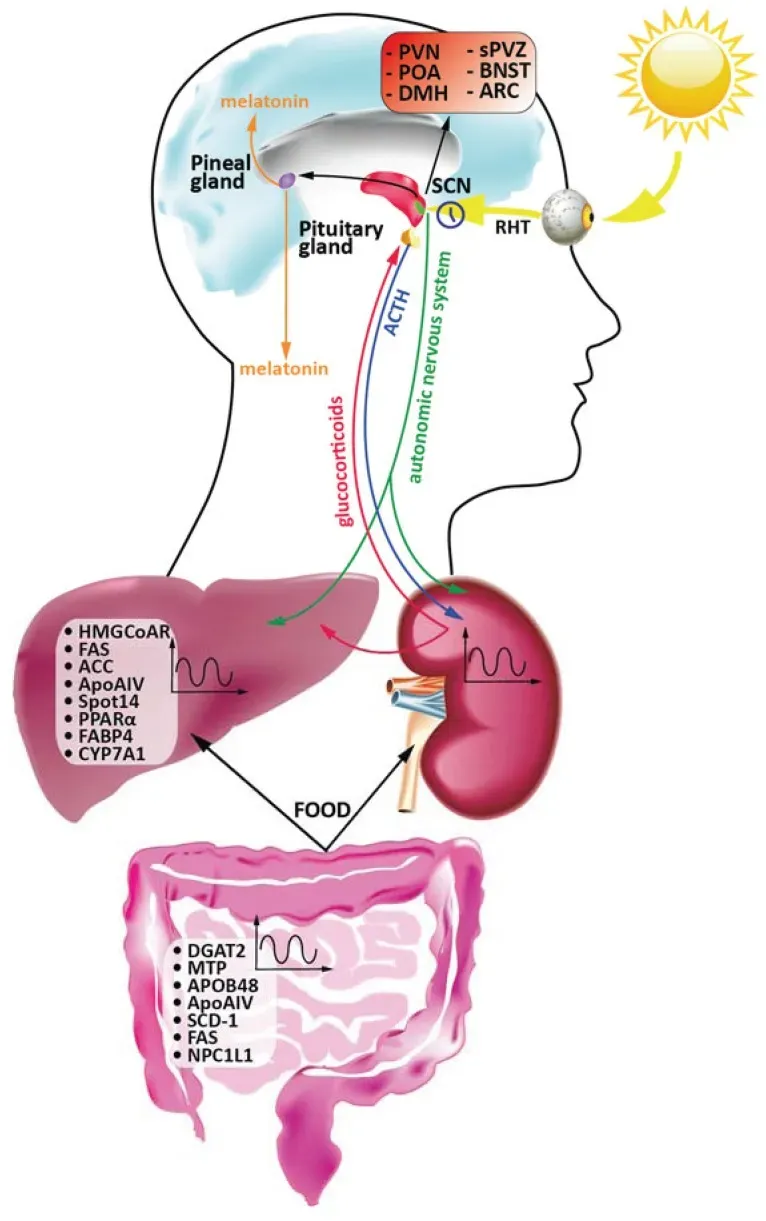
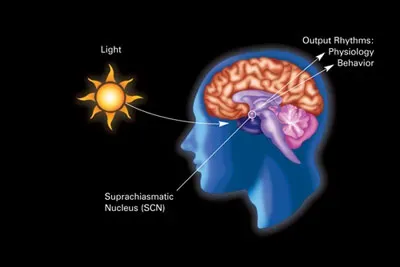
Buried deep in the brain, just above the crossing of the optic nerves, sits a tiny cluster of neurons known as the suprachiasmatic nucleus, the master clock that keeps the body on roughly a twenty-four-hour schedule. This speck of tissue, no larger than a grain of rice, orchestrates a symphony of chemical signals that rise and fall over the day, telling your body when to feel awake, when to release hormones, and when to start winding down. It listens most closely to light, especially bright blue-enriched daylight, which streams in through the eyes and resets its timing each morning. That is why a long day outdoors can feel so cleansing and why staring at a glowing screen at midnight can jolt the clock in the wrong direction. The feeling of being “out of sorts” after a night of poor sleep or a red-eye flight is really your brain’s timekeeper trying, and failing, to sync with a new schedule.
What makes this master clock even more fascinating is the way it negotiates with the rest of the body. Almost every organ – liver, heart, gut, skin – houses its own local clocks, molecular gears that tick in daily rhythms of gene activity. These peripheral clocks take broad direction from the brain, but they also respond to other cues like food timing, exercise, and temperature. When these signals align, the system runs smoothly, like traffic lights perfectly timed across a city. When they conflict, such as eating heavily in the middle of the night under harsh artificial light, the internal traffic snarls, and over time that chaos may contribute to disease.
How Your Cells Tell Time
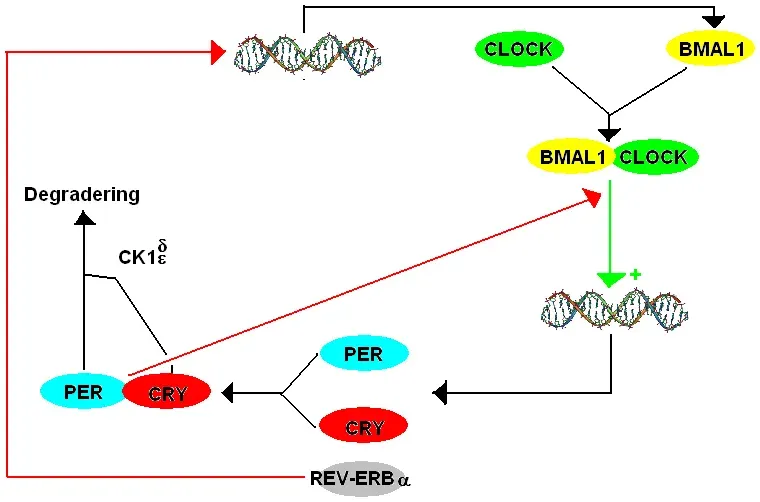
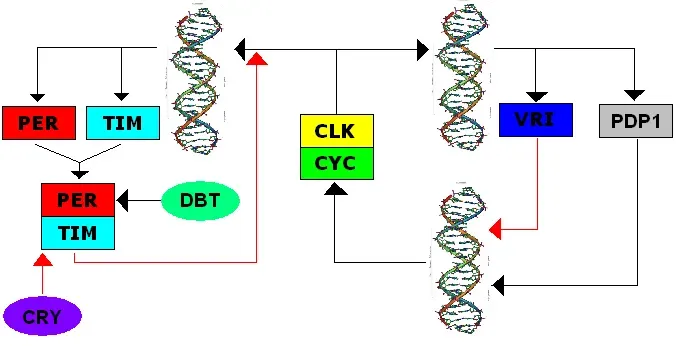
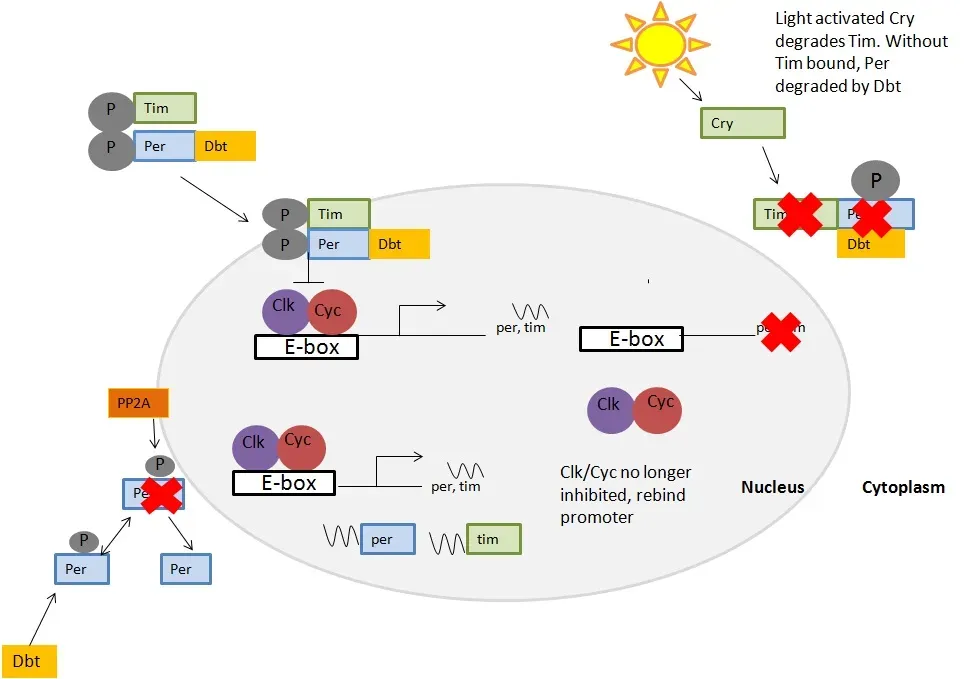
The internal clock is not just a metaphor; it is literally written into our DNA through a set of “clock genes” that turn one another on and off in a steady cycle. In the early hours, some of these genes ramp up, triggering a cascade of proteins that build through the day, then gradually shut themselves down toward night. This molecular see-saw creates oscillations that ripple through thousands of other genes, changing how cells handle sugar, repair damage, and respond to stress at different times. Researchers often describe it as a cellular schedule that dictates when your body is best prepared to digest breakfast, fight off pathogens, or consolidate memories from the day. Because almost every cell has this timing machinery, there is no single part of the body untouched by the internal clock.
Recent lab studies have shown that when these clock genes are disrupted – through genetic mutations, forced shift work, or extreme irregular schedules – problems begin to pile up. Mice with broken clock genes gain weight more easily, develop metabolic disorders, and even show higher rates of certain cancers compared with their normal counterparts. In humans, people with long-term circadian disruption, such as rotating night-shift workers, tend to have higher risks of cardiovascular disease, type 2 diabetes, and mood disorders. While those connections are complicated and influenced by many lifestyle factors, the pattern has become hard to ignore. The basic lesson is simple: when your cells lose track of time, their ability to protect and repair the body weakens.
Morning Larks, Night Owls, and Everything In Between
Not everyone’s internal clock runs on exactly the same schedule, and that variation shapes the familiar divide between morning larks and night owls. Some people naturally wake before sunrise feeling rested and sharp, while others hit their stride late at night and struggle with early alarms. Scientists call these tendencies chronotypes, and they stem from a blend of genetics, age, and environment. Teenagers, for example, tend to shift later, making early school start times feel brutally out of sync with their biology. As people age, many gradually drift earlier again, which helps explain why older adults often wake at dawn without an alarm.
This spread of chronotypes is not simply annoying; it has real-world consequences. When a night owl is forced into a rigid early schedule for work or school, they may experience what researchers call social jet lag, a chronic mismatch between internal time and social demands. Over years, this misalignment is linked to higher rates of depression, weight gain, and lower overall well-being. On the flip side, social structures built around only the earliest schedules can disadvantage those with naturally later clocks, from academic performance to job evaluations. Some companies and schools are beginning to experiment with more flexible or staggered start times, an acknowledgment that our internal clocks are not all cut from the same cloth.
Time Medicine: Why When You Do Things Matters
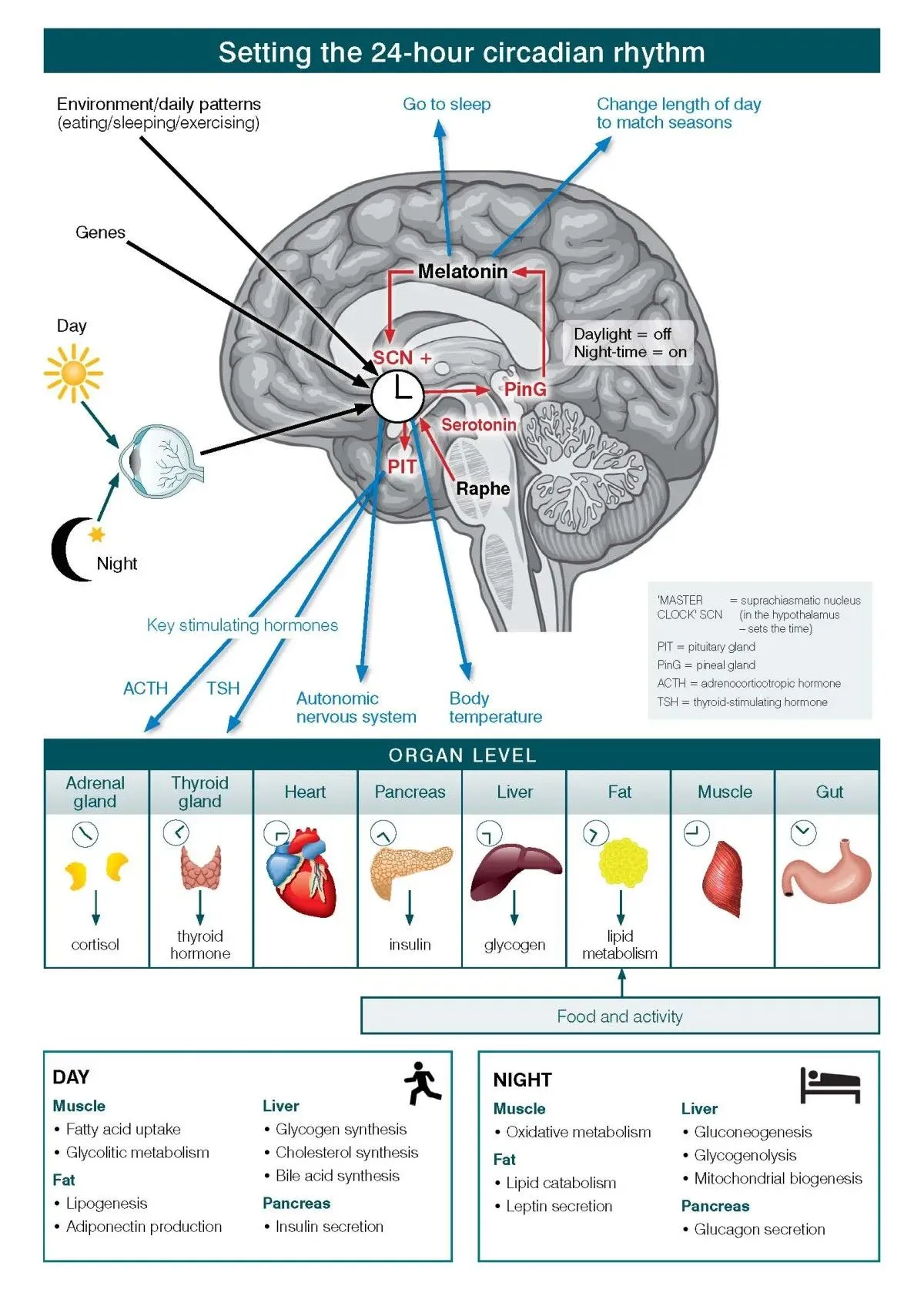
One of the most striking insights from circadian research is that timing can be as important as dose when it comes to health interventions. Many hormones, like cortisol and melatonin, follow daily cycles, and so do heart rate, blood pressure, and immune responses. That means a medication taken in the morning may be absorbed, distributed, and cleared by the body very differently than the same medication taken at night. Early clinical work in so-called chronotherapy suggests that timing blood pressure drugs, chemotherapy, or even asthma inhalers to a person’s internal clock can improve effectiveness and reduce side effects. In some studies, simply shifting a treatment by several hours has made the difference between tolerable and overwhelming toxicity.
Everyday habits fall under the same rule. Eating heavy meals late at night, for instance, can collide with the liver’s natural rhythm, which prefers to process nutrients during the active phase of the day. People who routinely eat most of their calories late, especially against a backdrop of irregular sleep, show higher rates of metabolic trouble, even when total calorie intake is similar. Exercise timing also matters: for some individuals, afternoon workouts may produce better blood sugar control or performance gains than identical workouts at dawn. While there is no one-size-fits-all schedule, the emerging message is clear – aligning what you do with when your body expects it can amplify the benefits.
Why This Internal Clock Really Matters
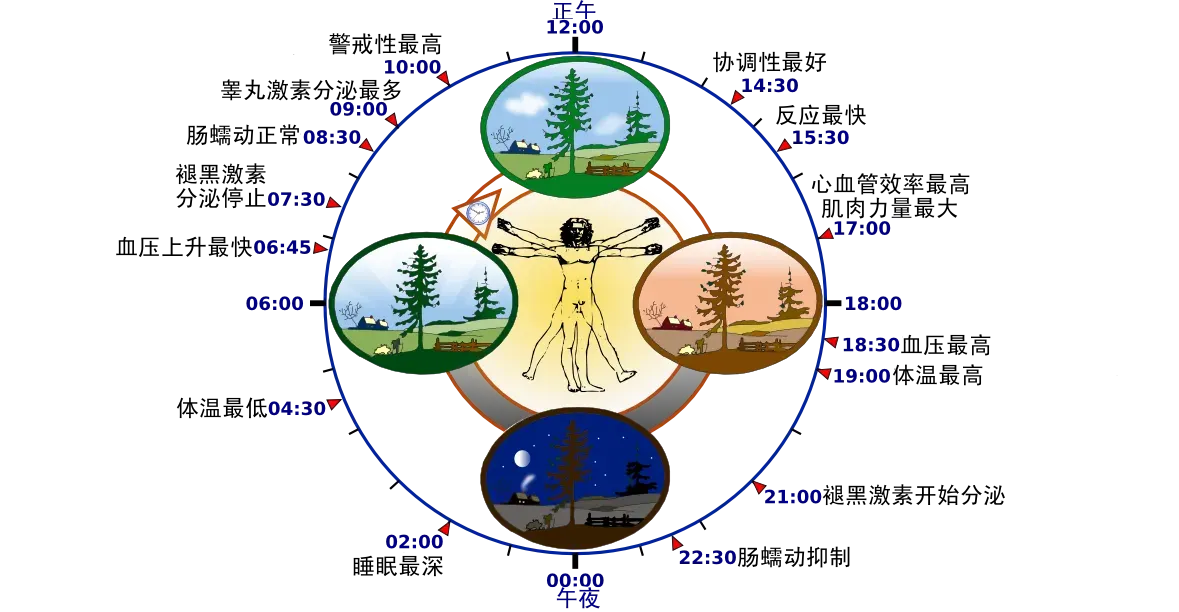
It might be tempting to treat the internal clock as a niche curiosity, but it is increasingly central to understanding modern health problems. Many of the issues dominating public health – obesity, diabetes, heart disease, burnout – are tightly intertwined with sleep loss and circadian disruption. The modern world is packed with timing shocks: late-night screen use, erratic work hours, instant food on demand at any time of day, and cities that never fully go dark. Each of these tugs at the clock, nudging it off balance in small ways that can accumulate over years. It is like constantly poking a finely tuned instrument and then wondering why the music sounds off.
Compared with traditional medical approaches that focus heavily on what we eat and which drugs we take, circadian science adds an often-overlooked dimension: when. Classic nutrition advice tells you what to put on your plate; circadian research asks whether your plate shows up at noon or at midnight. Conventional sleep advice says to get a certain number of hours; clock-based thinking emphasizes consistency and light exposure across days and weeks. This timing lens does not replace existing knowledge, but it sharpens it. Once you see how many processes depend on the internal clock, it becomes hard to justify pretending that time of day is a trivial detail.
Global Lives, Global Jet Lag
In an interconnected world, where flights span continents and emails arrive around the clock, the internal clock faces pressures it never evolved to handle. International travel is the most obvious jolt, leaving people groggy and disoriented as their clocks slowly adjust to new time zones. On a more chronic level, millions of people work nights, rotating shifts, or on-call schedules that continually scramble their circadian rhythms. Studies of long-term shift workers have found higher rates of certain cancers, metabolic diseases, and sleep disorders, prompting health agencies to recognize night-shift work as a potential risk factor. For those workers, the internal clock is not just an abstract concept; it is a daily obstacle that can strain health and family life.
Even without crossing a single time zone, social and economic forces can create a sort of permanent jet lag. Urban environments glow with artificial light, pushing bedtimes later, while early start times for schools and jobs yank wake-up times earlier. People at the lower end of the income scale often have the least control over their schedules and the most exposure to disruptive work hours, compounding existing health inequities. At a population level, this means circadian disruption is not spread evenly; it is layered on top of other social stresses. Thinking about the internal clock, then, quickly becomes a conversation about labor policies, urban design, and access to healthy light and dark, not just about personal lifestyle choices.
The Future Landscape of Clock-Based Science
Researchers are now racing to translate circadian insights into tools that can be used in clinics, workplaces, and everyday life. One emerging idea is the personal chronotype profile, a kind of timing fingerprint drawn from wearable devices, sleep logs, and even molecular markers in blood or saliva. With that information, doctors could one day schedule surgeries, cancer treatments, or vaccinations at moments when a patient’s body is most resilient. Drug companies are also exploring time-targeted medications, designed to release their active ingredients at specific phases of the internal clock. The long-term vision is a kind of twenty-four-hour precision medicine that treats time as a vital sign alongside heart rate and temperature.
Technology will likely play a big role in this landscape, for better or worse. Smart lighting systems that shift color and intensity across the day could help office workers and hospital patients stay closer to natural rhythms, even indoors. On the other hand, ever-more portable screens and round-the-clock connectivity threaten to erode the boundaries of night, especially for younger generations. Policymakers and employers will face tricky decisions about night work, school start times, and protections for circadian health, weighing economic demands against long-term health costs. The science alone cannot dictate those choices, but it can illuminate what is at stake when we bend the clock too far.
Simple Ways to Work With Your Clock
For all the complexity of circadian biology, some of the most powerful ways to protect your internal clock are surprisingly straightforward. Getting bright natural light in the first half of the day – especially within a couple of hours after waking – acts like a daily reset button, anchoring your brain’s master clock. Keeping a reasonably consistent sleep and wake schedule, even on weekends, helps the system stay stable instead of constantly chasing shifting targets. Limiting intense light exposure in the late evening, especially from phones and laptops held close to the face, gives melatonin a chance to rise and signals to the body that night has truly begun. Eating most of your calories during your active daytime period, rather than late at night, supports your metabolic clocks.
People who want to go a step further can pay attention to how their own energy and focus rise and fall across the day and schedule demanding tasks accordingly. If you notice that your sharpest thinking always happens mid-morning, that may be your internal clock telling you when your brain is primed for deep work. Supporting research, news coverage, and workplace policies that respect circadian health – such as discussions about school start times or shift-work protections – can also have ripple effects well beyond any single person’s habits. None of this requires a perfect schedule or a rigid lifestyle; it is about nudging your daily routines to cooperate, rather than compete, with the timing system that evolution has built into every cell. Once you begin to notice that hidden clock, the question quietly shifts from whether it governs your life to how you choose to live with it.
Suhail Ahmed is a passionate digital professional and nature enthusiast with over 8 years of experience in content strategy, SEO, web development, and digital operations. Alongside his freelance journey, Suhail actively contributes to nature and wildlife platforms like Discover Wildlife, where he channels his curiosity for the planet into engaging, educational storytelling.
With a strong background in managing digital ecosystems — from ecommerce stores and WordPress websites to social media and automation — Suhail merges technical precision with creative insight. His content reflects a rare balance: SEO-friendly yet deeply human, data-informed yet emotionally resonant.
Driven by a love for discovery and storytelling, Suhail believes in using digital platforms to amplify causes that matter — especially those protecting Earth’s biodiversity and inspiring sustainable living. Whether he’s managing online projects or crafting wildlife content, his goal remains the same: to inform, inspire, and leave a positive digital footprint.